
 Published on and written by Cyril Jarnias
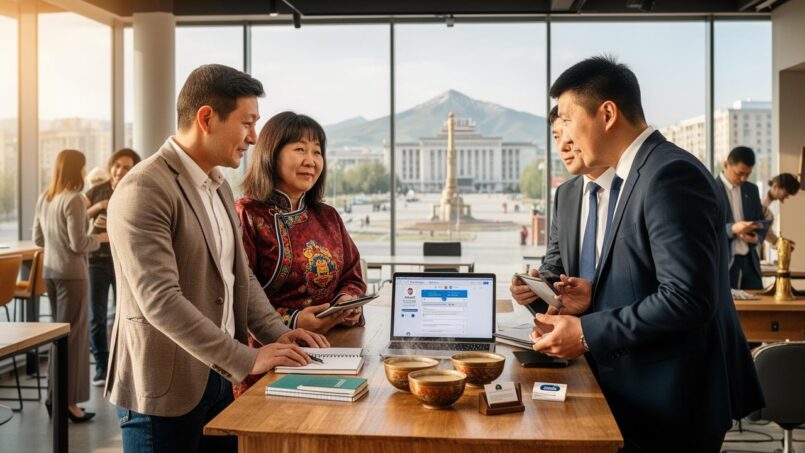
Settling in Mongolia for work means entering a world where nomadic heritage, hierarchy, hospitality, and rapid modernization constantly intertwine. For an expatriate, the key to understanding this country… and succeeding in your career here, is your network. Here more than elsewhere, opportunities are forged over a cup of milk tea, a dinner of khuushuur, or at a business event.
Building a professional network abroad goes beyond simply collecting contacts. It requires understanding the local culture, selecting the right meeting places, overcoming language barriers, and committing to a long-term approach.
Understanding the Landscape: Why Networking is Vital in Mongolia
Mongolia has approximately 3.5 million inhabitants, with nearly half living in Ulaanbaatar. Society remains heavily marked by nomadic pastoral life, clan solidarity, respect for elders, and a pronounced hierarchy in businesses. In this context, personal trust takes precedence over procedures and institutional reputation.
World ranking of the country in 2020 for ease of doing business, a level considered ‘easy’.
In the capital, the survival of many businesses literally depends on their personal relationships. Deals are rarely closed with a complete stranger; instead, people prefer a friend of a friend, a partner introduced by a Chamber of Commerce or a known institution. Family, school, and regional ties play a significant role.
For a foreigner in Mongolia, access to employment heavily depends on the network of contacts. Without a local network, progress is slow, if not impossible, while a strong network quickly opens doors, often through informal channels. This reality is reinforced by the local culture of trust and confirmed by international data: 70 to 80% of positions are obtained through networking, and academic contacts significantly increase chances.
Relationship Culture: Patience, Hierarchy, and Hospitality
Before rushing to events, you need to absorb some fundamentals of local business culture. Mongolia is described by many observers as a “relationship-oriented” culture. This implies several things in professional life.
In Mongolia, the boundary between professional and private life is fluid. A business partner can become a friend, and an invitation to dinner at home is often an integral part of the trust-building process. Hospitality is a core value: you are expected to accept tea, a meal, or a toast. Systematically refusing these signs of hospitality signals that you are not fully engaged in the relationship.
Hierarchy remains very pronounced: age, rank, and seniority matter. Major decisions are typically made at the top, sometimes outside formal meetings. In meetings, address the most senior person first, and avoid directly contradicting them in public. This doesn’t mean younger people have no say; in many companies, they are expected to propose ideas, but always with respect for form.
In Mongolia, social harmony and the concept of “saving face” are paramount. Direct confrontation, especially with a superior or a guest, is avoided. A frank refusal is rare; instead, polite and indirect formulations are used to express difficulty in following up, without saying so explicitly. It is essential to learn to decode these implicit signals.
Finally, patience is considered an indispensable virtue. Negotiations take time, as do decisions. Appearing rushed, demanding a quick answer, or putting pressure in meetings are behaviors that damage the relationship and can derail a project.
Khalkha Mongolian is the official language, spoken by the vast majority of the population. English is progressing, especially among urban youth and in internationally-oriented companies, but is far from universal. Russian remains present among older generations, while Korean is gaining ground, particularly among young people who have spent time in South Korea.
For an expatriate, don’t rely on English in every situation. Learning even basic Mongolian, such as greeting with “Sain bain uu?” and replying “Sain”, or a few polite phrases, demonstrates a respect for the culture that is highly appreciated. Studies on the integration of foreign professionals in Mongolia confirm that regular practice of the language, even at a basic level, significantly facilitates relationships with patients, colleagues, or clients.
Communication is often indirect for sensitive topics, but research also notes greater honesty and openness than elsewhere in Asia. Mongolians will avoid confrontation, but they appreciate clarity of intentions. The winning combination: polite, nuanced speech, but unambiguous about your objectives.
Business exchanges in Mongolia are structured by implicit social conventions. It is essential to start with “small talk” on neutral topics like the weather, local life, culture, or the harshness of winter in Ulaanbaatar, before getting down to business. Absolutely avoid topics considered taboo or inauspicious, such as death, illness, or accidents. Be prepared for your Mongolian interlocutors to ask personal questions (age, marital status, salary), even early in the relationship; this is generally a desire to build a connection, not indiscretion. However, a foreigner should remain cautious and avoid initiating these same personal topics, especially with officials.
Non-verbal language also has its codes: firm handshake, direct eye contact, warm smile. Do not point at someone with your finger, avoid touching the head – considered sacred in Buddhism –, respect personal space while accepting that a Mongolian may sometimes stand quite close to you. Stepping back abruptly can be perceived as rejection.
Laying the First Stones: Associations, Chambers, and Professional Clubs
Once these cultural fundamentals are in mind, the question becomes: where exactly to go to meet the right people? The good news is that even in a sparsely populated country, the economic scene in Ulaanbaatar is surprisingly dense with networking structures.
Among the most structured platforms are powerful business organizations like the American Chamber of Commerce or the Business Council of Mongolia. These structures offer expatriates direct access to both Mongolian decision-makers and foreign investors.
Here is a synthetic overview of some key players.
| Organization | Primary Role | Benefits for an Expatriate |
|---|---|---|
| American Chamber of Commerce in Mongolia (AmCham) | Promotion of Mongolia–U.S. business ties, advocacy, networking | Access to executives, sector-specific committees (mining, finance, energy, ICT), regular events |
| Business Council of Mongolia (BCM) | Platform for information, influence, and networking for 200–250 large companies | Monthly meetings, international forums, contacts with foreign delegations |
| MNCCI (Mongolian National Chamber of Commerce and Industry) | Network of regional chambers, business support | Territorial coverage, arbitration, contacts across 21 provinces |
| BNI Mongolia | Global business referral network | Weekly meetings, “give-and-receive” culture, ideal for entrepreneurs and consultants |
AmCham and BCM, in particular, structure a large part of the economic conversation in Ulaanbaatar. BCM organizes monthly meetings bringing together over 150 executives, knowledge-sharing sessions, foreign delegation visits, co-organizes forums like Discover Mongolia, and keeps its network engaged with a widely followed weekly newsletter. Being a member allows you not only to attend these gatherings but also, eventually, to speak and present your company.
AmCham Mongolia organizes its activities around thematic committees, offering expatriates targeted entry points for networking and influence in key sectors.
Committee dedicated to financial sector issues.
Focuses on cybersecurity, fintech, data, and e-commerce.
Brings together players in renewable energy and infrastructure.
Committee dedicated to the mining sector.
Corporate Social Responsibility.
Committee dedicated to bilateral relations.
Membership fees are significant but target company profiles rather than individuals: AmCham corporate members pay annual dues on the order of a few thousand dollars depending on whether the entity is Mongolian, international, or American. For an SME or a subsidiary, this investment is often justified by the visibility and the address book it opens.
Exploring Promising Sectors: Mining, Energy, Tourism, Digital
To develop a useful network, you also need to target sectors where the presence of expatriates and the demand for foreign skills are strongest.
Mining represents the primary attraction pole, with high salaries and a strong concentration of international experts. The flagship event of the sector is the Mongolia Mining trade fair, held annually since 2011 in Ulaanbaatar. It brings together 150 to 200 exhibitors (global majors, exploration companies, equipment suppliers, consulting firms) along with a large audience of engineers, investors, and policymakers.
This type of event concentrates numerous opportunities: booths, demonstrations, conferences, roundtables, and B2B meetings. For professionals such as engineers, consultants, corporate lawyers, or service providers, a few days spent at the Buyant Ukhaa Sports Palace – the largest indoor venue in the country – can be equivalent to several months of prospecting.
Other structuring events exist in energy, information technology, marketing, human resources, or renewable energy: specialized conferences, investment forums, sector summits. They attract both Mongolian companies seeking partners and foreign investors looking for projects.
International economic events focused on Mongolia, often organized in cities like London, offer the opportunity to build a professional network related to this country. This can be done even before physically going there, or while maintaining a presence in Europe or America.
Finally, don’t overlook less visible but highly active sectors: cashmere and wool (with structured industry associations), design, agribusiness, or ecotourism. Organizations like the Mongolian Wool Cashmere Association, SME promotion agencies, or designer associations weave their own network of trade shows, missions, and certification programs.
Leveraging Expat Networks: InterNations, Social Networks, and Daily Life
With fewer than 25,000 foreign residents, the expatriate community in Mongolia is small but tight-knit. Ulaanbaatar concentrates the vast majority of foreigners, which makes meeting people easier but also creates an insular bubble that you need to learn to move beyond.
One platform plays a central role: InterNations. The community dedicated to Mongolia gathers several thousand members and organizes monthly events at iconic venues in the capital: art galleries, rooftop lounges, hotel bars. These evenings mix diplomats, mining executives, teachers, humanitarian workers, entrepreneurs, and artists. They are designed to offer both a social space (finding friends, housing advice, schools, doctors) and a professional networking ground.
These platforms provide support at every stage of expatriation in Ulaanbaatar: before departure to ask practical questions, upon arrival to socialize, and then to network with expats or English-speaking Mongolians in your sector. They also facilitate the creation of thematic groups around activities like hiking, arts, cooking, or family outings.
Facebook plays a similar role, with groups like “Expats in Mongolia” or “UB Expats”. You’ll find apartment listings, job offers, service provider recommendations, but also calls for projects or participation in associations, NGOs, and cultural events. Again, those who contribute regularly – by answering, sharing information, offering help – gradually become identified as a resource within the community.
Partnering with NGOs, Universities, and Women’s Networks
Beyond business circles, Mongolia is full of international and local NGOs, cooperation projects, and professional networks that are as many gateways to civil society and the academic world. Numerous American, European, or Asian NGOs work in the country on diverse issues: health, environment, rural development, governance, education, social inclusion.
Participating in their public events, conferences, workshops, and training sessions opens unexpected perspectives: you come into contact with actors deeply embedded in the local fabric (associations, administrations, rural communities) and with foreigners who have been there for a long time, sometimes married to Mongolians, with a fine knowledge of realities outside the capital.
For expatriate women, the International Women’s Association of Mongolia (IWAM) is a key network. This mixed club, open to foreign and Mongolian women, organizes social gatherings and charity events. Participating allows you to quickly build a relational network beyond the professional sphere and meet influential women in various sectors such as education, health, diplomacy, or entrepreneurship.
International schools and universities are also nerve centers. The International School of Ulaanbaatar, the British School, and other English-language institutions attract expatriate families as well as an English-speaking Mongolian elite. School events – concerts, tournaments, conferences, galas – become meeting grounds with business leaders, NGO heads, and diplomats. Getting involved in parent-teacher associations, for example, is a discreet but effective way to expand your network.
Online Tools: Job Boards, LinkedIn, and Local Platforms
Even in a country shaped by the steppe, digital has taken hold. The internet is widely available, mobile networks are efficient, and a real economy of job platforms has developed. For an expatriate, these tools don’t replace physical meetings but usefully complement them.
Zangia claims hundreds of thousands of users on its local platform.
Other players, like Mongolia Talent Network, function more as recruitment and consulting firms. They focus on mid-level and senior positions in finance, marketing, IT, or design, and produce educational content for candidates. For an expatriate, being in their database, nurturing the relationship through regular exchanges, and participating in webinars is a way to exist in the landscape without necessarily relying on job ads.
LinkedIn has become an indispensable tool for skilled professions, IT, services, and management roles. Well-connected profiles are much more visible to recruiters. Active participation (comments, shares, publishing original content) significantly increases the volume of unsolicited inquiries. Furthermore, contacts from the same school or university are particularly willing to help out or recommend a candidate.
To target Mongolia, it is relevant to identify: local companies with an international dimension, NGOs, offices of major organizations (World Bank, UNDP, UN agencies), international firms established in the country, universities, as well as discussion groups dedicated to Mongolia or Ulaanbaatar. Creating a saved search for certain keywords (Mongolia, Ulaanbaatar, mining, renewable energy, cashmere, etc.) allows you to quickly spot positions and key people.
Daily Networking Practices: Meetings, Business Cards, Gifts
Beyond major events, building a network in Mongolia involves a multitude of micro-interactions, often codified.
In meetings, appointments are typically made one to two weeks in advance, by phone or email. With administrative bodies, a letter in paper format, sent in advance, is still well-regarded. Punctuality is expected from foreigners; your Mongolian counterparts may sometimes be more flexible, especially in public institutions, hence the importance of remaining flexible.
Classic Western-style attire (suit and tie for men, business suit or professional dress for women) is the norm. The deel, traditional clothing, is primarily worn during festivals or official events. A foreigner who wears it respectfully on an appropriate occasion sends a positive signal.
Exchanging business cards is a central step. Ideally, your cards should have one side in Mongolian and one side in English. Presenting them with both hands and taking a moment to look at the ones you receive demonstrates respect for your interlocutor. Systematically, jot down a few contextual details on the back (location, topic discussed) to help you personalize follow-up messages later.
Gifts also play an important role in consolidating relationships. These are not ostentatious presents, which are viewed poorly, but rather gestures of attention: specialties from your country, an illustrated book, a small cultural or corporate object. The symbolic value counts more than the price. Conversely, avoid sharp objects, overly personal gifts, or anything that could be seen as a bribe.
Building Deep Relationships: Mentorship, Local Sponsorship, and Alumni
In such a relationship-driven environment, limiting yourself to superficial contacts would be a mistake. The experience of many expatriates shows that what makes the difference in the long run is having a handful of more engaged ties: mentors, sponsors, trusted partners.
The literature on expatriation emphasizes the crucial role of mentors, both in the home country and the host country. A local mentor – supervisor, experienced colleague, influential entrepreneur, academic – can help you decode the codes, interpret the unspoken, and identify serious opportunities. They act as a “cultural interpreter,” “communication manager,” “information broker,” according to theoretical frameworks developed in studies on relations between expatriates and local employees.
Theoretical frameworks on expatriation
Mentorship is not a one-way relationship. Studies show it also benefits the mentor, broadening their understanding of international issues, strengthening their internal influence, and enriching their own network. In Mongolia, where initiatives like a national “Mentoring Institute” work to train ethical and socially engaged mentors, this practice is taking hold and can also reach disadvantaged entrepreneurs.
The majority of jobs are found through professional and personal networks.
To leverage this, an expatriate can: identify alumni from their own institution present in the country, via LinkedIn or alumni databases; contact Mongolian universities to offer guest lectures, workshops, occasional courses; spot local graduates of Western schools active in their sector. Relationships often start with informational interviews – a format quite popular in job searching – which allow you to explore a sector, a company, a career path, without direct recruitment pressure.
Opening Up to the Real Country: Countryside, Gers, and Rural Communities
Staying confined to Ulaanbaatar means seeing only part of the country. Yet many projects – mining, energy, tourism, agriculture – unfold in the provinces. Rural communities, structured around gers and livestock, have their own codes, sometimes far removed from the capital.
When visiting a nomadic family, it is essential to respect specific rules: do not step on the threshold, enter with your right foot, avoid touching the central poles of the ger, and wait to be shown your seat. To build lasting trust, especially in the extraction, infrastructure, or ecotourism sectors, participating in community events, supporting local associations or environmental projects, or attending local festivals is highly recommended.
Education and continuing training programs, sometimes supported by international agencies, travel across the country to combat illiteracy, develop language skills, and strengthen teacher capacities. Collaborating with these initiatives, even occasionally, exposes you to well-established contacts (local leaders, NGOs, provincial authorities) and enhances your credibility beyond the capital.
Personal Strategy: Structuring Your Network Development
In the end, developing a solid professional network in Mongolia requires a structured approach, combining several levels: business institutions, expatriate community, local actors, mentors, digital tools.
A newly arrived expatriate can, for example, set a six-month roadmap: regularly attend events of one or two networks (e.g., BCM and InterNations), join a relevant sector committee at AmCham or MNCCI, participate in at least one major industry conference, get involved in an association or educational initiative, conduct two or three informational interviews per month, and identify a local mentor and a remote mentor.
To strengthen robustness and legitimacy within a network (local, expatriate, or alumni), it is essential to move from a logic of consumption (seeking information, contacts, opportunities) to a logic of contribution based on reciprocity. This can take the form of sharing your contacts, connecting people, volunteering, or mentoring a young professional.
Mongolia, with its small population, its economic elite concentrated in Ulaanbaatar, and its blend of international openness and traditions, amplifies this dynamic: everyone eventually crosses paths. That’s a constraint… and an opportunity. By cultivating, with patience and sincerity, a network based on trust, respect for local codes, and generosity, an expatriate can not only succeed in their career but also become sustainably embedded in the fabric of this unique country.
Disclaimer: The information provided on this website is for informational purposes only and does not constitute financial, legal, or professional advice. We encourage you to consult qualified experts before making any investment, real estate, or expatriation decisions. Although we strive to maintain up-to-date and accurate information, we do not guarantee the completeness, accuracy, or timeliness of the proposed content. As investment and expatriation involve risks, we disclaim any liability for potential losses or damages arising from the use of this site. Your use of this site confirms your acceptance of these terms and your understanding of the associated risks.

Cyril Jarnias is an independent expert in international wealth management with over 20 years of experience. As an expatriate himself, he is dedicated to helping individuals and business leaders build, protect, and pass on their wealth with complete peace of mind.
On his website, cyriljarnias.com, he shares his expertise on international real estate, offshore company formation, and expatriation.
Thanks to his expertise, he offers sound advice to optimize his clients' wealth management. Cyril Jarnias is also recognized for his appearances in many prestigious media outlets such as BFM Business, les Français de l’étranger, Le Figaro, Les Echos, and Mieux vivre votre argent, where he shares his knowledge and know-how in wealth management.





