
 Published on and written by Cyril Jarnias
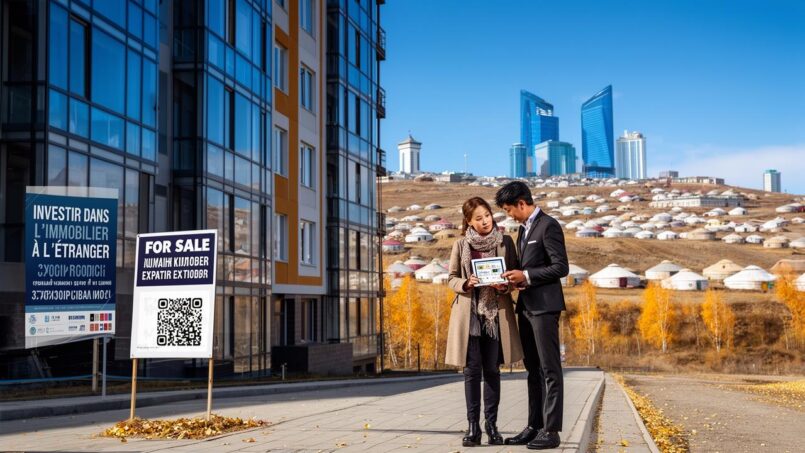
Moving to or Investing in Mongolia means embracing a constant balancing act: between endless steppes and Ulaanbaatar traffic jams, between nomadic life and the mining boom, between still-affordable rents and skyrocketing prices per square meter. For an expat, real estate is both the biggest expense and a real investment opportunity—provided you master the legal, tax, and practical rules.
Good to know:
This guide focuses on the real estate market in Ulaanbaatar, where most of the supply is located. It covers key expat concerns: the possibility of buying a property without owning the land, expected returns, target areas, financing options, and common mistakes to avoid.
Understanding the Mongolian Context Before You Invest
Before you sign a lease or a sales agreement, you need to understand the big picture: the economy, Ulaanbaatar’s demographics, market structure, and cost of living. It’s all connected.
Ulaanbaatar is home to roughly 46% of the country’s population—about 1.6 million people—and nearly all modern services: hypermarkets, shopping malls, cafés, international restaurants, coworking spaces, private clinics, and most international schools. The foreign community is small (fewer than 25,000 official residents from 120 countries), but heavily concentrated in the capital.
2.5
Foreign direct investment flows exceed $2.5 billion per year in Mongolia.
At the same time, Mongolia remains a low-average-income country. The average net salary in Ulaanbaatar is around 1.6 to 1.8 million MNT, or about $500, while an expat in the mining sector easily earns between $3,000 and $8,000 per month, often with housing included. This gap explains both how affordable rents are for foreigners paid in hard currency, and the intense pressure on the supply of quality housing.
A Two-Speed Market
Ulaanbaatar’s real estate market is deeply dual. On one side, very modern central districts, upscale residences, new large complexes, rents in dollars, and gross yields close to 9 to 11%. On the other side, vast ger districts clinging to the hills, where most residents lack running water, heat with coal, and live on land with fragile tenure status.
Tip:
For an expat investor, it is crucial to focus on the solvent segments of the market, such as city centers, expanding residential neighborhoods, or well-managed complexes. This strategy must account for the city’s structural constraints, including its geography—limited by mountains to the north and south—saturated road infrastructure, and extremely harsh winters.
Rent or Buy: How to Decide in Mongolia
For an expat, the first decision is often whether to rent or buy. Both options can make sense, but not for the same profiles or time horizons.
The Real Face of the Rental Market
In areas popular with foreigners—around Sükhbaatar Square, the State Department Store, new malls, or Zaisan—rents remain relatively attractive compared to major Western cities, though they are high by local salary standards.
Here is a summary of rental segments:
| Property type / Location | Average monthly rent (MNT) | Average monthly rent (EUR, approximate) |
|---|---|---|
| Studio in city center | ~ 1,000,000 – 1,300,000 | 350 – 450 |
| 1 bedroom in city center | 1,500,000 – 1,800,000 | 425 – 450+ |
| 1 bedroom outside center | 1,250,000 – 1,450,000 | 300 – 350 |
| 3 bedrooms in city center | 4,500,000 – 5,000,000 | 1,050 – 1,350 |
| 3 bedrooms outside center | 2,400,000 – 2,600,000 | 640 – 780 |
| 2-room “expat standard” central area (reference in USD) | $800 – $1,500 USD | $800 – $1,500 |
Add to that utilities, which are relatively moderate: for an apartment around 85 m², the total of electricity, heating, water, and waste typically runs between 248,000 and 273,000 MNT per month, or about $45 to $75 depending on the season and consumption.
Here are some overall ratios:
| Rental / Purchase Indicator | Average Value Mongolia |
|---|---|
| Gross rental yield in city center | 8.7 – 9.2% |
| Gross rental yield outside center | 8.9 – 11% |
| Price-to-rent ratio city center | ~ 11 – 12 |
| Price-to-rent ratio outside center | ~ 11 |
| Purchase price per m² city center (approximate) | €1,250 – €1,400 |
| Purchase price per m² outside center | €750 – €800 |
These figures show that the rental market offers high gross yields for investors while remaining affordable for an expat paid in hard currency. Renting is especially logical for a short or uncertain stay (a few years’ assignment, NGO contract, mining rotation): flexibility matters more than chasing yield.
When Buying Starts to Make Sense
When you are planning for the medium to long term (at least five to seven years on the ground, or purely for rental investment purposes), buying can become rational, for three main reasons.
Note:
The residential market in Ulaanbaatar has been rising steadily for nearly twenty years, with only one decline since 2005. Prices in dollars have almost tripled over the period, and recent years show double-digit annual increases, especially in central districts (Sükhbaatar, Chingeltei, Bayangol).
Second, the gross rental yield significantly exceeds what you see in most Western capitals. A gross yield of 9 to 11% in local currency, with a well-identified expat rental market and growing domestic demand (rising urban wages, urbanization, an emerging middle class), remains attractive—as long as you keep the currency risk in mind.
Finally, the legal framework allows full ownership of many types of property for foreigners (apartments, houses, parking spaces, garages), even though the land itself remains state-owned. This sets Mongolia apart from more restrictive markets where complex structures are needed.
What the Law Allows (and Prohibits) for Foreigners
The first specific feature for a foreign investor in Mongolia is the land tenure status. The rule is simple to state, but less simple to integrate into an investment strategy.
You Can Own the Building, But Not the Land
A foreigner can buy and fully own:
– an apartment (in an old or new building),
– a house (in a urban subdivision),
– a parking space,
– a garage or a commercial unit.
However, you cannot own the land in the strict sense. In the vast majority of cases, the land remains state property. Only adult Mongolian citizens can obtain a true land title.
Good to know:
Mongolian law allows foreigners to obtain a right of use over a plot for an initial period of 5 years, renewable once for an additional 5 years. This provision, intended to bypass the impossibility of land ownership for non-nationals, does not apply to Mongolian citizens, who are not subject to this limitation.
In practice, an expat who buys an apartment in a condominium becomes the full owner of that unit, with the right to occupy, rent, or resell it freely. For the land, it is the condominium (or a third party) that holds a more permanent land right. As long as the condominium is properly registered and managed, this is not a problem in the short term, but you must verify the land status when purchasing.
A Relatively Open Regulatory Environment
Apart from land, the framework for foreign investment is quite liberal. The Foreign Investment Law provides that a company with foreign capital (at least 25% foreign ownership) can be 100% owned by non-residents, except in a few regulated sectors. The minimum required capital is $100,000 (in cash, assets, securities, etc.).
Good to know:
Foreign investors enjoy the same tax benefits as domestic investors. They can set up a local LLC, acquire real estate under a company or individual name, and carry out operations such as share transfers or pledges. The main restrictions concern access to land ownership and certain strategic sectors, such as so-called ‘strategic’ mines and large state-owned enterprises, where foreign participation is capped.
On the tax side, Mongolia has signed double taxation treaties with 26 countries, including France. These treaties provide that income from real estate (rent, capital gains) is taxed in the country where the property is located. For a French tax resident investing in Mongolia, rental income will be taxed in Mongolia, with a tax credit mechanism in France to avoid double taxation.
Mapping Ulaanbaatar’s Districts for an Expat Investor
Not all square meters are equal in Ulaanbaatar. The differences in price, comfort, rental potential, and even air quality from one district to another are huge. For an expat, a few areas clearly stand out.
City Center: Sükhbaatar, Chingeltei, Bayangol
The Sükhbaatar district holds the central square, political institutions, grade A office towers, many recent residences, and most high-end services. Prices per square meter for new construction average over 5.6 million MNT, or about $1,600/m², with increases of more than 30% in one year in some segments. Older apartments here are sometimes even more expensive, especially the “first 40,000” Soviet-era units, which are very well located with large floor plans and high ceilings.
Example:
Around Peace Avenue in Ulaanbaatar, the Chingeltei and Bayangol districts form the extended commercial and residential center. Prices are high, though slightly lower than in Sükhbaatar for new real estate. Some well-located older properties have even seen increases of 20 to 30% recently. These areas are particularly interesting for an investor targeting the classic expat segment (young professionals, aid workers, teachers), as they offer good rental liquidity, sustained demand, and appreciation potential.
Affluent Suburbs: Khan-Uul and Zaisan
In the south of the city, Khan-Uul district and the Zaisan area attract both wealthy Mongolians and foreigners. Perched on the foothills, these residences offer panoramic city views, more greenery, and relative distance from the pollution of the lower districts—though the air remains very poor in winter.
12
Small units in secure complexes can yield gross returns above 12% in some Khan-Uul buildings.
However, there are downsides: heavy traffic during peak hours, car dependency, and for some villas in Zaisan, legal uncertainty due to proximity to protected areas (Bogd Khan National Park).
The Ger Districts: Tempting Low Prices, High Risks
Around the capital, except on the southern flank, vast neighborhoods of yurts and small self-built houses stretch out. Land prices (for Mongolians) were very attractive for a long time, and some families have gradually turned their plots into brick houses. But for a foreigner, directly investing in these zones makes little sense: fragile land tenure, lack of infrastructure (no sewer system or central heating), unpaved roads, and extreme air pollution in winter from coal burned in stoves.
These districts largely explain the huge demand for “modern” housing: if all residents of the ger districts were to be rehoused in buildings with basic services, an estimated 175,000 additional housing units would be needed.
Renting as an Expat: Practical Guide
Even if your goal is to buy, you will probably go through a rental phase when you arrive. This period is valuable for understanding the neighborhoods, testing the climate, and meeting reliable contacts.
Where and How to Search
Most expats use a mix of resources:
– local real estate agencies specializing in foreign clients (Mongolian Properties, M.A.D. Urban, RE/MAX, etc.);
– Facebook groups like “Expats in Ulaanbaatar” or “Housing in UB”;
– English-language classifieds in weeklies such as The UB Post, Mongol Messenger, or on international websites.
Good to know:
Agencies specializing in expats offer renovated apartments to Western standards, fully furnished. They sometimes include services like weekly cleaning, 24/7 security, an English-speaking hotline, and maintenance management. Agency fees are usually negotiated with the owner and included in the rent.
Contracts and Precautions
Residential leases are most often for one year. It is common for the landlord to require a security deposit of two to three months, sometimes payable in advance along with one or two months of rent. The practice of paying rent quarterly in advance still exists, especially for high-end apartments.
Note:
Before signing any document, it is crucial to check two specific technical points to avoid future problems.
– The heating system: an apartment connected to the district heating network is much more reliable and cost-effective than one relying on electric radiators, which can become a real financial drain when temperatures drop to –30 °C or –40 °C.
– Window and facade insulation: double or triple glazing, good seals, no drafts. Thermal comfort and your energy bill depend directly on this.
It is also wise to clarify in writing who pays for what: condominium fees, electricity, internet, water, parking, cleaning, air purifier filters, etc.
Buying in Mongolia: A Concrete Transaction Walkthrough
Once familiar with the market, some expats take the plunge and buy, either to live in or to rent to other foreigners and the local middle class. The purchase process is regulated but relatively fast.
The Five Main Steps of a Purchase
The classic process looks like this:
– 1. Property search
This can be done through an agency, online portals, or an expat network. At this stage, it helps to target clearly:
– a neighborhood: center vs. Khan-Uul/Zaisan vs. “attenuated” periphery,
– a property type: profitable studio, 2-/3-bedroom for expat families, large apartment for high-end shared housing,
– a budget per m² and a target yield.
2. Price negotiation
The listed price is not always fixed. The negotiation margin depends heavily on market tension in the area, how quickly the owner wants to sell, and the asset’s quality (old vs. new, condition of common areas, parking, etc.). Having a local agency that knows actual transaction prices, not just listings, is invaluable.
Good to know:
The signing of the deed can be very fast, allowing you to become the owner the same day if funds are available. The notary verifies the property documentation, but their audit is not exhaustive. It is therefore advisable to have a legal check done beforehand by a lawyer or experienced agency.
4. Payment of balance and registration in the buyer’s name
The buyer pays the remaining amount and the deed is registered in the new owner’s name. This is also the time to ensure that all transaction taxes and any outstanding condominium fees have been properly settled or accounted for as agreed in the preliminary contract.
Good to know:
After signing, a copy of the deed is filed with the district real estate registration office. The buyer receives an official title deed a few days later. This document is essential and will serve as legal proof for any future transactions, such as resale, mortgage, or inheritance.
Essential Checks Before Buying
The speed of the process should not overshadow the need for a proper “due diligence.” At a minimum, you need to:
– verify the current title’s regularity (no disputes, undisclosed mortgages, ongoing seizures);
– understand the building’s land status (right of use, duration, compliance with local zoning laws);
– analyze condominium fees, the building’s budget, and recent or upcoming renovations;
– confirm construction compliance (issued permits, adherence to planning rules, no demolition risk).
The major obstacle for a foreigner is access to the legal system: a constantly evolving legal framework since the 1990s, documentation in Mongolian, and sometimes opaque judicial practices. Hence the importance of being accompanied by a local lawyer familiar with transactions involving non-residents.
How Much Does a Purchase Cost and What Does It Really Yield?
To get a concrete idea, it helps to compare price levels with actual rents and key market indicators.
Price Levels by Area
Aggregated data for Ulaanbaatar gives the following ballpark figures:
| Location | Average price per m² (MNT) | Range (MNT) | Average price (EUR) approximate |
|---|---|---|---|
| City center apartment (average) | 5,000,000 – 5,600,000 | 3,000,000 – 8,000,000 | €1,250 – €1,600 |
| Outside center apartment (average) | 3,200,000 – 3,400,000 | 2,700,000 – 3,800,000 | €750 – €800 |
| Sükhbaatar (new) | ~ 5,610,000 | — | ~ €1,600 |
| Sükhbaatar (old) | ~ 5,670,000 | — | ~ €1,620 |
| Songinokhairkhan (new) | ~ 3,270,000 | — | ~ €930 |
| Songinokhairkhan (old) | ~ 3,000,000 | — | ~ €860 |
| Khan-Uul (new) | ~ 4,410,000 | — | ~ €1,260 |
| Khan-Uul (old) | ~ 4,800,000 | — | ~ €1,370 |
Compared to French prices, a square meter in Ulaanbaatar is on average 75 to 80% cheaper than in major French cities, but the upward trend is much stronger.
Yields and Sustainability Indicators
At the same time, average rents by property type offer attractive gross yields:
| Indicator (Mongolia, all cities) | Approximate value |
|---|---|
| Price / Income | 11 – 13 |
| Price / Rent city center | ~ 11 – 12 |
| Price / Rent outside center | ~ 10 – 11 |
| Gross yield center | 8 – 9% |
| Gross yield outside center | 9 – 11% |
| Fixed 20-year mortgage rate | 5 – 6% per year |
| Average net monthly salary (MNT) | ~ 1.6 – 1.8 M MNT |
For an investor buying in cash, a gross yield around 9–10% in MNT may seem very attractive. But you need to account for:
Note:
Several factors can impact the profitability of a real estate investment in Mongolia: operational costs not passed on to the tenant (condominium fees, maintenance, vacancy, management), a high inflation environment (historically around 8 to 14%), and the currency risk of a potential depreciation of the Mongolian tugrik against hard currencies like the dollar or euro—this currency has seen significant drops in value in the past.
For those financing with a local loan, the margin between gross yield (9–10%) and the borrowing rate (5–6%) leaves attractive leverage, provided you can absorb the currency risk if your income is in a foreign currency.
Financing Your Investment: Loans, Banks, and Currency Risk
Mongolia has a highly developed banking sector, but it is dominated by local banks: no foreign commercial bank has a branch network in the country. This has direct consequences for how an expat can finance a purchase.
Opening a Bank Account
The major banks (Golomt, Khan Bank, State Bank, Trade and Development Bank, XacBank, Bogd Bank) have services for foreign clients. Opening an account is relatively straightforward: a valid passport, a Mongolian residence permit, and sometimes an employment or business contract are enough. Some institutions require one or two ID photos, possibly certified documents.
Tip:
It is crucial to specify when opening the account if you need a bank card usable abroad, as some Mongolian bank offerings are limited to domestic use. Moreover, everyday banking operations such as internal transfers, cash deposits, and currency exchange are generally inexpensive.
Loans and Deposits: High Returns, High Volatility
Term deposits in tugriks offer among the highest interest rates in the world, but they must be weighed against inflation that has flirted with 14% and a structurally fragile currency. You cannot reasonably place all your wealth in MNT if your long-term projections are in euros or dollars.
8
Interest rate on loans from Mongolia’s affordable housing program for apartments under 80 m².
For a foreigner, access to these programs is limited. In practice, the options are:
– a standard local loan, with a large down payment (30–40% of the price) and a thorough analysis of income and assets;
– financing from your home country (e.g., a French bank) using guarantees in France;
– a cash purchase, possibly followed by a refinancing later, once the property is registered.
In any case, managing currency risk is central. An income in euros and a loan in tugriks creates a risk if the local currency depreciates sharply. Conversely, a loan in hard currency secured by a property valued in MNT exposes you to a different kind of mismatch if rents do not keep pace with the exchange rate.
Taxation: What an Expat Needs to Know
In terms of taxation, Mongolia has sought to make its framework clear and competitive, while signing bilateral agreements to reassure investors.
Income Tax and Property Tax
Employment income is taxed at a rate of 10% for tax residents. Non-residents are taxed at 20% on their Mongolian-source income. Social contributions, split between employer and employee, fund health insurance among other things.
For real estate income:
Good to know:
Rental income is subject to income tax at modest rates. Real estate sales are taxed at 2% on the total transaction amount, with no exemption for the primary residence. For companies, corporate income tax is progressive: 10% up to 3 billion MNT in profit, then 25% above that.
Dividends, interest, and royalties paid to a non-resident are generally subject to a 20% withholding tax, unless a more favorable tax treaty provision applies.
Tax Treaty with France
The treaty between France and Mongolia provides that income from real estate—rent, operating income, capital gains from sale—is taxable in the country where the property is located, i.e., Mongolia. For a French tax resident, this income must then be declared in France, with a tax credit equal to the tax paid in Mongolia. This greatly reduces the risk of double taxation.
Good to know:
For a Mongolian tax resident of French origin (stay >183 days/year and economic center of interest moved), it is necessary to analyze the break in tax ties with France, declare assets held abroad, and, if worldwide real estate assets exceed the thresholds, pay the French Real Estate Wealth Tax (IFI).
Living and Investing in Ulaanbaatar: Very Concrete Constraints
Investing is not just about yield tables. The daily reality of Ulaanbaatar heavily impacts the rental appeal of a property and your comfort if you plan to live there.
Extreme Climate and Pollution
Mongolian winters are brutal: –30 °C to –40 °C is not uncommon. In the capital, this harsh winter combines with some of the worst air pollution in the world, especially from December to February. The massive burning of low-quality coal in ger districts sends fine particulate matter soaring, sometimes 14 times above WHO recommended levels.
For a resident, this means: being informed of rights and duties related to your situation, participating in community life, and respecting established rules set by local authorities.
– buying air purifiers ($300 to $800 for a unit capable of handling 50 to 80 m², plus regular filter replacements);
– almost daily use of N95 or FFP2 masks;
– sometimes, temporarily leaving the city at the peak of pollution season, which must be anticipated in the budget.
Good to know:
Air quality and insulation directly influence the rental market. Apartments with good insulation, effective ventilation, on higher floors, or away from pollution sources have a clear competitive advantage and command higher rents.
Cost of Living and Realistic Budget
Overall, Mongolia is significantly cheaper than France: according to various sources, the cost of living is on average 40 to 50% lower. But this average hides a mixed reality.
Expenses break down as follows for a single expat in Ulaanbaatar:
| Expense category | Typical monthly budget (USD) |
|---|---|
| Housing (center apartment) | $800 – $1,500 |
| Groceries / supermarket | $300 – $500 |
| Transport (taxis, bus, fuel) | $50 – $100 |
| Eating out / restaurants | $200 – $400 |
| Air purifiers + filters | $50 – $100 |
| Internet + phone | $30 – $50 |
| Leisure (sports, cinema, outings) | $100 – $300 |
For a family of four, a budget of $3,500 to $4,500 per month is often cited for a comfortable lifestyle, excluding international school fees (an additional $2,000 to $4,000 for two children, depending on the school chosen).
15
The dollar price a French camembert can reach in Mongolia, illustrating the high cost of imported goods.
Health, Safety, and Integration
Public hospitals lack equipment and English-speaking staff. Expats almost exclusively use private clinics like SOS Medica, Songdo, or Intermed, where doctors trained internationally practice. The law requires foreigners staying more than six months to have valid health insurance. Most opt for an international policy including medical evacuation to a neighboring country.
On the safety side, Ulaanbaatar is generally not violent: crime consists mainly of pickpocketing on public transport and in tourist areas. It is still advisable to avoid some peripheral districts at night and to stay vigilant, especially for women alone.
Socially, expat life revolves around a few popular bars and restaurants, embassy events, and sports clubs. Networks like InterNations, the International Women’s Association of Mongolia (IWAM), and French-speaking groups help you quickly build a social circle.
Stay, Work, and Residence Procedures: Impact on Investment
Investing in property often means staying for a while, or at least traveling there regularly. So it is essential to understand the visa, work permit, and residence framework.
Visas and Work Permits
Entering Mongolia requires a visa, with rare exceptions under temporary regimes. French citizens can obtain a 30-day tourist visa on arrival. For longer stays, the most common is the work visa, coupled with a work permit and a temporary residence card.
Good to know:
The work permit application is initiated by the employer before arrival and can take from several weeks to three months. Upon arrival, the newcomer must, accompanied by their employer, report within seven days to the Ulaanbaatar immigration office with their passport, a photo, proof of residence, employment contract, medical certificates, a criminal record extract, and translated and legalized diplomas.
Work permits and residence permits are valid for one year and renewable. It is illegal to start working before these documents are in effect. Additionally, all foreigners must register within 48 hours of entering the country, under penalty of fines or even an exit ban until the situation is regularized.
Long-Term Residence and Citizenship by Investment
Permanent residency is only accessible after several years. After an initial residence permit, a foreigner must have lived in Mongolia for at least three years to apply for permanent resident status. The following will be reviewed:
Eligibility Criteria
To qualify for certain services or statuses, you must meet the following conditions, which demonstrate your integration and stability.
Cultural Integration
Knowledge of the Mongolian language and traditions, essential for communication and a deep understanding of the local context.
Legal Compliance
Understanding and respect for the current legal framework, ensuring all activities are conducted in compliance with the law.
Financial and Residential Stability
Presentation of documents proving stable income and housing (ownership or lease).
Financial Situation
Provision of bank statements to verify the solidity and regularity of your financial situation.
For investors willing to commit around $2 million to a project deemed strategic for the country’s development, the law provides for significantly greater facilities, potentially including direct citizenship. However, this avenue is reserved for a narrow circle of large-scale investors.
Concrete Strategies for an Expat Investor
In practice, how should you structure a real estate strategy in Mongolia as an expat?
Profiles and Possible Approaches
Several typical profiles can be identified.
The employee on a three- to five-year assignment, paid in hard currency, may prefer short-term renting (yearly renewable) in a central area, then consider buying if the assignment extends or to keep a foothold. A small, well-located apartment that is easy to rent out is often the most rational target.
Example:
A mobile expat with assets built up in their home country can opt for a pure rental investment. For instance, buying two or three small units (studios or one-bedrooms) in the same building located in a high-yield district of the Mongolian capital, such as Khan-Uul, Songinokhairkhan (undergoing gentrification), or Bayangol. This strategy aims for double-digit gross yields while accepting the long-term currency risk.
An entrepreneur planning to set up a service business for expats, tourism, or IT can buy mixed-use premises (offices + housing) through a Mongolian company with foreign capital. In this case, the combination of operating cash flow, property appreciation, and tax incentives linked to investment can become attractive.
Common Mistakes to Avoid
Several pitfalls frequently appear in expat testimonials.
The first is underestimating the climate and pollution when choosing a property. A beautiful but poorly insulated apartment, exposed to the wind or in a particularly polluted valley, can become unlivable in winter, destroying its rental appeal.
Tip:
It is crucial not to overestimate the market’s liquidity when reselling. While prices rise quickly, cycles can be volatile, strongly correlated with commodity prices and foreign investor appetite. Therefore, only commit capital you can truly afford to immobilize for the long term.
The third mistake is ignoring the legal risk around land tenure, especially for some projects built hastily on land with ambiguous status (public rights-of-way, protected areas, former landfills…). As everywhere, projects have been halted, permits revoked, and local or foreign investors burned.
Finally, it is dangerous to proceed without independent advice. Between the complexity of local law, the language barrier, and the temptation to use unqualified “facilitators,” the risks of unpleasant surprises are real.
In Summary: A Real Opportunity, But for Well-Equipped Investors
Real estate in Mongolia, and especially in Ulaanbaatar, offers a rare combination: prices per square meter still far below major capitals, high gross rental yields, strong demographic and urban pressure, and a legal environment that is generally open to foreigners.
But this opportunity comes with a price: extreme climate, severe pollution, volatile currency, evolving legal system, sometimes confusing local practices. For an expat, the key is to turn these constraints into manageable variables:
Tip:
To invest confidently in Turkey (note: original appears to have a typo—should be Mongolia), focus on established central or residential neighborhoods. Conduct a rigorous audit of property titles and the condominium’s situation before committing. Adopt a prudent financial approach: plan for a substantial down payment, diversify borrowings across currencies if possible, and absolutely avoid over-indebtedness in the local currency (MNT). Finally, choose a property that meets both your personal comfort criteria and those that make it an attractive rental asset to maximize your return.
Investing in Mongolia is not a “turnkey” project for an impatient saver. It is a strategy to pursue with method, by surrounding yourself with local professionals, relying on the tax treaty of your home country, and accepting a degree of macroeconomic uncertainty. For those already on the ground or seriously considering relocating, however, it is a genuine lever for portfolio diversification that can, over time, share in the growth—and transformation—of this unique country.

Cyril Jarnias is an independent expert in international wealth management with over 20 years of experience. As an expatriate himself, he is dedicated to helping individuals and business leaders build, protect, and pass on their wealth with complete peace of mind.
On his website, cyriljarnias.com, he shares his expertise on international real estate, offshore company formation, and expatriation.
Thanks to his expertise, he offers sound advice to optimize his clients' wealth management. Cyril Jarnias is also recognized for his appearances in many prestigious media outlets such as BFM Business, les Français de l’étranger, Le Figaro, Les Echos, and Mieux vivre votre argent, where he shares his knowledge and know-how in wealth management.





