
 Published on and written by Cyril Jarnias
Discovering local cuisine is an integral part of a successful relocation to Madeira. On this volcanic island set in the Atlantic, the cuisine tells the story of the fishermen, farmers, and merchants who shaped the territory. For an expat, understanding what’s on the plate, where to buy it, and how to eat it is also understanding the culture.
This guide offers a practical journey to discover the island’s cuisine, starting in Funchal. It explains how to decode a restaurant menu, which typical dishes to order, where to shop for groceries, and which culinary experiences not to miss. It also includes etiquette mistakes to avoid and tips for accessing the most prestigious fine dining restaurants.
Understanding the spirit of Madeiran cuisine
In Madeira, the cuisine is simple but rarely simplistic. It is built around three very visible pillars for a newcomer: the omnipresent sea, a very fertile land for agricultural products, and a tradition of conviviality where meals stretch out without rushing.
The emblematic dishes of an island are often built on fundamental local products like fresh fish, grilled meat, corn, or tropical fruits. They are then enhanced by recurring and simple seasonings, such as garlic, bay leaf, wine, vinegar, or fresh herbs. This approach, without frills, prioritizes clarity and intensity of natural flavors.
For an expat used to restaurant chains, the first surprise often comes from the strong presence of small family-run houses, taverns, and snack bars, alongside a few high-level fine dining tables. You effortlessly go from a bowl of steaming wheat soup in a market to a Michelin-starred tasting menu with a panoramic view of Funchal.
Markets, the ideal gateway for a newcomer
Before even booking a restaurant, going to the market allows you to quickly feel how Madeirans eat and cook.
Mercado dos Lavradores: the great theater of flavors
In the heart of old Funchal, the Mercado dos Lavradores plays the role of the city’s “belly.” This large 1940s building, adorned with azulejos, concentrates fish, fruit, vegetables, flowers, and local products.
On the ground floor, the fish market, usually open from 7am to 2pm Monday to Saturday, is arguably the best place to understand the importance of the sea in the local diet. You can see the strange peixe espada preto, the famous scabbardfish, a long deep-sea fish caught mainly by fishermen from Câmara de Lobos at depths of over 1,500 meters. You’ll also find tuna, octopus, squid, sardines, chicharros (small mackerel or jack fish), pargos (sea bream and porgies), as well as lapas (limpets), very typical shellfish of the island.
The market stalls of Madeira offer a perfect introduction to the diversity of tropical and local fruits on the island. You’ll find various varieties of passion fruit (yellow, purple, and elongated hybrids), small PGI bananas, papayas, mangoes, guavas, cherimoyas (AOP anona), monstera deliciosa, pitangas, prickly pears, pineapple-bananas, as well as chestnuts, sour apples from Ponta do Pargo, plums, and mountain cherries. This discovery allows you to familiarize yourself with these products before finding them in desserts or as sides in restaurants.
However, keep in mind that this market is also a major tourist attraction: some vendors inflate their prices, especially for exotic fruits. The products remain good quality, but for everyday use, many expats end up combining this market with supermarkets like Pingo Doce or Continente, which are very present in Funchal and well-stocked with fresh fish, bread, dairy products, canned goods, and imported items.
More “local” markets: Santo da Serra and Prazeres
To experience a market more geared toward locals than cruise passengers, several options are available.
The Santo da Serra agricultural market, open every Sunday, is a must-visit to buy seasonal local products and taste popular Madeiran specialties on site, such as sopa de trigo, milho frito, espetada, and bolo do caco, accompanied by regional drinks.
Further west, the Prazeres market, housed in a warehouse facing the church, gathers producers from Calheta and surrounding areas every Sunday. Again, fruits, vegetables, honey, handicrafts, chicken rotisseries, poncha stalls, music, and a very friendly atmosphere paint a faithful picture of rural Madeiran life.
For an expat, these Sunday markets have an advantage: they allow you to see which products are actually in season, try small dishes at low prices, and practice your Portuguese in an informal context.
Organic markets and small stands
In Funchal, a small organic market takes place at Largo do Restauração, near the statue of Zarco. It is particularly interesting for expats seeking fruits and vegetables from more sustainable farming.
All over the island, roadside stands sell local bananas, avocados, papayas, or maracujás. Prices are generally attractive, and the products have a freshness hard to match in supermarkets.
Walking into a tasca, snack bar, or traditional restaurant without knowing how to decipher the names can be confusing. However, a few dishes appear so often that they deserve to be mastered right away.
Espada, the scabbardfish that intrigues all newcomers
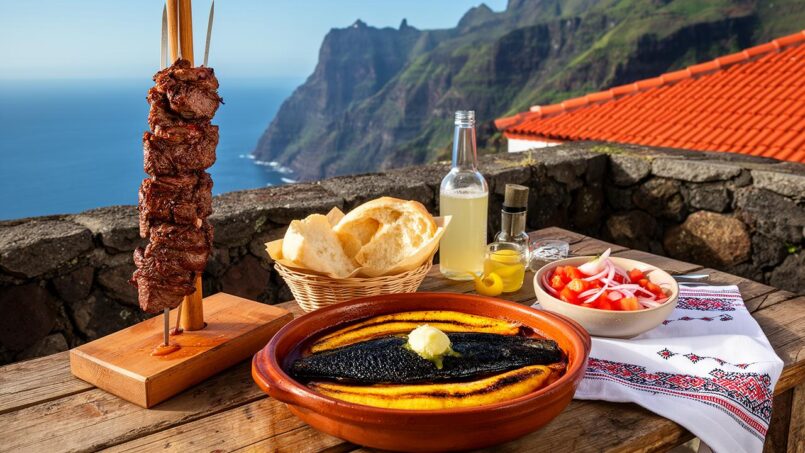
The peixe espada preto is, along with the banana, one of the island’s culinary symbols. Its appearance of a large black snake with sharp teeth may put you off, but its fillet, very fine and delicate, lends itself well to simple preparations.
The most famous combination is espada com banana: the fish, lightly breaded and fried, is served with local bananas, sometimes caramelized, and sometimes topped with a passion fruit sauce. Other variations offer a pure maracujá sauce or a passion-banana mix. You can also find espada cooked in escabeche or served with salads and vegetables.
Discover several Funchal restaurants that revisit the iconic espada (scabbardfish) dish with modern approaches and bold pairings.
Revisits this classic of Madeiran cuisine with a modern and innovative approach.
Offers a version with banana and maracujá, served in an authentic former salt warehouse with stone walls.
West of the city, this restaurant is renowned for its espada with passion fruit sauce, very popular with visitors.
Espetada, the party skewer
Another pillar of Madeiran cuisine, espetada is a grilled beef skewer, often considered the culinary soul of the island. Historically, the recipe originated in Estreito de Câmara de Lobos: locals would spear pieces of beef onto hollowed-out laurel branches before roasting them over embers. The seasoning remains minimal – coarse salt, garlic, bay leaf – but the flavor of the wood smoke and fresh laurel is unique.
Served at religious festivals, romarias, and large family gatherings, espetada is now ubiquitous in traditional restaurants. It often arrives hanging from a large metal hook above the plate, with its juices dripping onto the sides.
Classic accompaniments are milho frito (fried polenta cubes) and/or potatoes, sometimes rice and a salad. Garlic bolo do caco often accompanies everything. At village festivals, it is willingly washed down with red wine mixed with Laranjada, an orange soda produced on the island since the 19th century.
For an expat, espetada is an excellent learning ground for local conviviality: you order several skewers, share the side dishes placed in the center of the table, take your time, and chat. In Funchal, Casa Madeirense is considered an institution for grilled meat, while in the old town, Taberna Madeira serves espetadas in tapas format, smaller but full of flavor.
Advice for expats in Madeira
Carne de vinha d’alhos, a marinated heritage
Another historic recipe, carne de vinha d’alhos is a pork dish marinated in a mixture of wine, vinegar, garlic, bay leaf, salt, and spices, then slowly cooked. Originally, this marinade preserved the meat without refrigeration. Today, it is a staple of Christmas festivities, but it’s eaten year-round.
The recipe traveled with the Portuguese: it inspired vindaloo curries in India and similar preparations in Latin America. In Funchal, the restaurant Cica, located next to the Mercado dos Lavradores, is particularly recommended for this dish.
Soups, stews, and fishermen’s dishes
Soups play an important role in daily diet. Sopa de trigo, hearty, combines cracked wheat, beans, potatoes, carrots, and salted pork; you’ll find it especially at the Santo da Serra Sunday market. Sopa de tomate, tomato-onion with a poached egg, often serves as a comforting starter.
Five emblematic fish and seafood dishes are cited to illustrate the abundance of seafood in Madeira.
Sweets and fruits: the other side of the island
In the dessert department, bolo de mel takes the lead. This dark, dense cake, made from cane honey, spices (anise, clove, orange zest…) and often dried fruits, is associated with Christmas but available year-round. It keeps well, making it a practical travel souvenir… even for an expat heading back to the mainland for a few days.
Add to that a host of preparations involving tropical fruits: maracujá flans and puddings, cheesecakes topped with passion fruit coulis, perfumed cookies, anona sorbets and liqueurs, banana cakes and fritters, chestnut tarts and mousses from Curral das Freiras. In autumn, chestnuts take over streets and markets, roasted in braziers or turned into soup, cakes, jams, and homemade liqueurs.
The iconic bread: taming bolo do caco
For an expat, one of the reflexes to adopt is almost childlike: as soon as you see “bolo do caco” on a menu, order it at least once.
This flat, round bread, halfway between an English muffin and a potato pancake, is emblematic of Madeira and Porto Santo. Its name refers both to its shape (bolo, “cake”) and the hot basalt stone (caco) on which it was traditionally cooked. Its particularity: a dough made from wheat flour and sweet potato (batata doce), a legacy from a time when wheat was too scarce to be used alone.
Nowadays baked on griddles or thick pans, sometimes cast iron, it develops a thin, slightly charred crust and a soft, airy crumb with a subtly sweet flavor. It is almost always served hot, sliced in half and generously spread with garlic and parsley butter. In snack bars, it becomes a prego sandwich (steak) or hosts octopus, chorizo, cheese, bacon, or even pieces of espetada.
As an expat, it quickly becomes a staple at home too. You can buy good ones at the market or supermarket, reheat them in the oven or toaster, and fill them however you like. It’s an ideal base to “Portugalize” a quick lunch without tackling complicated cooking.
Learning to drink like a local: poncha, Coral, and Madeira wines
Discovering gastronomy also goes through drinks.
Poncha, more than an aperitif
Poncha is to Madeira what pastis is to Marseille or caipirinha to Brazil: a social ritual. This mix of sugarcane spirit (aguardente de cana), honey, sugar, and citrus juice (often lemon or orange) is traditionally prepared in a jar or pitcher, using a wooden stick called a mexelote, nicknamed caralhinho. The gesture of “beating the poncha” – beating, emulsifying – is part of the show.
Born probably in the 18th or 19th century, inspired by an Indian punch (pāñc) brought back by Portuguese and British sailors, poncha first took hold in the fishing village of Câmara de Lobos, in the form of poncha a pescador, a reviving drink to face the cold night at sea. It later became a symbol of conviviality, served in taverns, festivals, and family gatherings.
For an expat, it’s wise to keep in mind the potency of the aguardente (usually between 40 and 60% alcohol) and its sometimes deceptive sweetness. Fruit versions like maracujá or mandarin soften the taste without reducing its strength. It’s best sipped in small glasses, often well chilled.
Poncha benefits from a Protected Geographical Indication (PGI “Poncha da Madeira”), which requires the use of cane aguardente produced on the archipelago (notably in distilleries like Companhia dos Engenhos do Norte in Porto da Cruz or Ribeiro Seco).
Local beers and wines for everyday
Among lighter beverages, Coral, a pale lager brewed on the island, pairs perfectly with a plate of lapas, a bolo do caco, or an espetada. It’s often the first drink offered in a snack bar.
Madeira’s still wines, though little known internationally, are gaining popularity. Domains produce whites (mainly from verdelho), vibrant rosés like Atlantis or Seiçal, and reds that pair well with local cuisine. These wines, closer to international standards than fortified Madeiras, are perfect for a daily meal without needing to open a great age-worthy wine.
Madeira wine, a world to explore
It’s hard to live in Madeira without sooner or later encountering the fortified wine that bears the island’s name. Deliberately oxidized, heated, then fortified with neutral alcohol, Madeira wine develops over time aromas of burnt caramel, nuts, orange zest, dried fruits, and other smoky notes. Its high acidity makes it remarkably stable: some vintages keep for more than a century.
For an expat, the goal is not to know everything but to understand the main families, as they guide food and wine pairings.
Here is a summary table useful to keep in mind:
| Style / Main grape | Sugar level | Dominant notes | Recommended pairings (examples) |
|---|---|---|---|
| Sercial | Dry to very dry | Citrus, herbs, salinity, high acidity | Oysters, sashimi, grilled lapas, salads, fresh goat or sheep cheese, smoked espada |
| Verdelho | Medium-dry | Tropical fruits, spices, balance between acidity and body | Soups (onion, seafood bisque), charcuterie, foie gras, fried chicken, aged cheeses |
| “Rainwater” (blend) | Medium-dry, light | Dried fruits, nuts, softness | Almonds, olives, tapas, bistro cuisine, aperitif |
| Bual / Boal | Rich | Candied fruits, nuts, caramel | Fruit desserts, crème brûlée, milk chocolate, blue cheeses, honey cakes |
| Malvasia / Malmsey | Very sweet | Fig, caramel, chocolate, opulence | Rich desserts, dried fruits, Christmas cakes, powerful blue cheeses |
| Terrantez (rare) | Complex medium-dry | Great finesse, noble bitterness | Fine fish like espada, fish dishes in sauce |
In restaurants, it’s not uncommon to be offered a glass of Madeira as an aperitif or digestif. Some houses play pairings with local dishes: a dry sercial with lapas or smoked espada, a verdelho with caldeirada (fish stew), a boal with bolo de mel or a passion fruit dessert.
Funchal: from the popular tasca to Michelin stars
For an expat settled in Funchal, the city offers a particularly wide gastronomic spectrum, from the neighborhood table to the two-Michelin-starred restaurant.
Local institutions and good affordable addresses
Several addresses come up regularly in recommendations, each with its specialty.
Zarcos, a bit off the center (accessible by bus or taxi), is considered a Funchal institution. People come for the generous portions, friendly atmosphere, and specialties like milho frito and maracujá mousse.
In the city center, Rustikus offers a prato do dia (daily dish) at lunchtime for around €6.90, making it a popular address among locals. You may have to queue, but it’s an economical way to eat like Madeirans.
5 Sentidos, a recent gastronomic bistro, offers a weekday lunch menu for around €10. Its short menu focuses on a few refined preparations: grilled parrotfish, traditional bread with meat sauce as a starter, duck confit, and salted butter caramel chocolate tart with cherry for dessert.
Restaurante Dos Combatentes, one of the city’s oldest establishments, occupies a central position near shops and Blandy’s House. It offers a very varied menu, including vegetarian options like stuffed tomatoes.
Nearby, A Tendinha, a small snack bar with a simple front, displays its daily handwritten menu on a whiteboard. You eat Portuguese, home-style, and very cheap, amid a predominantly local clientele.
The maximum price per person for a meal at recommended restaurants in Funchal’s old town.
Still in the old town, Gavião Novo focuses on seafood: lapas, octopus stew, grilled fish. Restaurante do Forte, housed in a 16th-century fortress, offers more refined cuisine, with lobster risotto or parrotfish, in a historic setting just a few minutes’ walk from the main attractions.
Modern cuisine, Asian influences, and brunch
For those looking to alternate with something less traditional, Funchal has plenty of contemporary options.
Informal, on Rua dos Murças, revisits Portuguese cuisine with East Asian touches: ramen, tempura, creative small plates. Prices remain moderate, around €20 for two with drinks, making it a very affordable address for inventive food.
Kampo, run by chef Júlio Pereira, offers a seasonal menu in an open kitchen. The focus is on the product, treated with modernity. His signature dessert, a marriage of white chocolate, olive, and maracujá, illustrates this interplay between land and tropical fruits.
Mya Petit Café offers a photogenic brunch with elaborate toasts, refined pastries, and specialty coffees, in a decor designed for photos. It’s an address that provides an urban atmosphere familiar to expats, while blending perfectly into the local scene.
Ultra-fresh fish: choosing the right spot
If you absolutely insist on eating fish in the simplest and freshest way possible, a few landmarks help sort through the options.
Peixaria no Mercado, a restaurant near the Mercado dos Lavradores, focuses on a very careful seafood offering, using products directly from the market. You often start with an amuse-bouche of bread with seaweed butter, continue with braised kale in olive oil scented with kimchi or cod croquettes. The bill usually ranges between €20 and €40 excluding drinks.
More basic, Bela 5 Snack Bar, very close to the old town and the market, serves fish listed on a board (espada, dourada, tuna, grouper, bodo…) grilled to order, with potatoes and salad, for about €12 to €14. The decor is rudimentary, the plate generous, the freshness guaranteed.
Fine dining with stars: the other summit of the island
For a food-loving expat, Madeira offers a surprising density of restaurants distinguished by the Michelin Guide for a city the size of Funchal.
At the Desarma restaurant, on the 11th floor of the The Views Baia hotel, Chef Octávio Freitas offers a unique culinary experience. He reinterprets traditional island recipes in a gastronomic menu. The experience is heightened by an exceptional panoramic view. This is an address for special occasions, with prices ranging from €175 to €275 per person (excluding drinks), and advance reservation is highly recommended.
Il Gallo d’Oro, the only two-starred restaurant in Funchal, led by French chef Benoît Sinthon, is located in The Cliff Bay hotel. Its cuisine draws inspiration from the entire Iberian region but emphasizes local products, sometimes from the hotel’s garden. The establishment also holds a Michelin Green Star for its sustainable commitment, as well as a prize for its sommelier service. Menus range from €245 to €295 excluding drinks.
William, in the prestigious setting of Reid’s Palace, also holds a Michelin star. Chef José Diogo Costa develops a gastronomic cuisine that does not forget diners with special diets: vegetarian, vegan, gluten-free, and lactose-free options are integrated into the offer.
Casal da Penha, with its perched terrace, has received a Bib Gourmand, a Michelin award for excellent value for money. They serve daily fish, lamb chops, and other finely executed classics. Same recognition for Avista, also run by Benoît Sinthon from Les Suites at The Cliff Bay, which offers sharing plates like Algarve red shrimp or Spanish-style croquettes, all supported by a well-stocked cellar.
To complete this high-end picture, Armazém do Sal, nestled in a former salt warehouse with medieval decor, offers inventive cuisine based on local products (octopus carpaccio, espada banana-maracujá), with a price range from about €25 to €80 depending on menus and pairings.
Immersing through practice: cooking classes and farm-to-table experiences
A major asset for an expat wanting to go beyond tasting is the possibility of participating in culinary experiences guided by local chefs and guides.
Market tours and cooking workshops in Funchal
Several operators, including Eat & Walkabout, organize itineraries combining a visit to the Mercado dos Lavradores, selection of products with an expert guide, then a cooking workshop. You learn, for example, to make bolo do caco with garlic butter, espetada, atum em escabeche (marinated then fried tuna), lapas, or bolo de mel.
A typical class starts with a guided market tour to discover local products (tropical fruits, fish, vegetables, herbs). It continues with a hands-on workshop or cooking demonstration, sometimes in a privileged setting with a view of the city. Some packages include sending the recipes later in PDF or offer a souvenir apron.
Chefs like Filipe welcome participants to their quinta (estate) for more in-depth masterclasses (about five hours), sometimes preceded by a harvest in the family vegetable garden. A host like Sandra, nicknamed A Biqueira, shows home recipes passed down through generations. The idea is less to produce a perfect meal than to share gestures, stories, and a way of approaching products.
Farm-to-table tours and wood-fire cooking
Another very popular format is the “Farm to Table” tour. This typically includes a farm visit with harvesting of vegetables, fruits, herbs, a workshop on agricultural products, then preparation and a meal on site. Groups are usually small (two to ten people), with pickup from hotels or Funchal’s cruise port, in a comfortable minivan or minibus.
For an expat, it is useful to understand the predominance of certain ingredients like corn, sweet potato, banana, maracujá, chestnut, and aromatic herbs in local cuisine. It is also important to verify the real anchoring of seasonal practices, beyond tourist appearances.
Some experiences go as far as northern villages like Santana, where you can watch cooking demonstrations in a traditional kitchen with a wood fire, for example for bolo de mel.
Eating like a local: times, codes, and small mistakes to avoid
One of the main sources of misunderstanding for newly arrived expats comes neither from flavors nor prices, but from pace and etiquette.
Meal times
Breakfast remains light and fairly early (between 6am and 9am), especially for those who work. Lunch is still the main meal of the day for many, typically served between noon and 3pm. Dinner rarely starts before 7pm, and many restaurants only open their doors at that time, serving until 10pm.
Arriving at 6pm asking for a full dinner can lead to disappointment: the kitchen may not be ready, the team not in place. Conversely, showing up for lunch at 3:30pm greatly reduces the choice.
Service and use of utensils
Service is generally more discreet and less rushed than in North America or some large European cities. The server won’t come by every five minutes to ask if “everything is okay”; they will rather consider that the meal belongs to the table. Above all, they will almost never drop off the check without you asking for it. To leave, you need to politely call the server and ask “a conta, se faz favor.”
In a seated setting, using a knife and fork is the norm, even for foods often eaten with fingers elsewhere (fruit, pizza, fries). Eating with your fingers can be seen as uneducated, especially in traditional restaurants.
Customizing dishes
Local recipes are often considered untouchable. Asking to systematically remove certain ingredients or to change the garnish of a traditional dish can be misunderstood. Better, when you have dietary restrictions, to identify dishes on the menu that suit you rather than trying to “redesign” an emblem of Madeiran cuisine.
Little things to know
At the start of the meal, many restaurants automatically place bread, butter, sometimes olives or cheese. This cover is not always free: it may appear on the bill at the end. However, it is perfectly acceptable to refuse it upon arrival, to avoid paying for it if you don’t wish to enjoy it.
Patience is key during restaurant meals, as many dishes are prepared to order and establishments often operate with a reduced staff. Getting upset with the service because the meal is taking long goes against the local rhythm, which favors long meals and relaxed conversations.
Building your daily shopping bearings
For an expat, the question “where to shop?” comes up quickly. On this point, Madeira combines modern infrastructure and more informal networks.
Large supermarkets like Pingo Doce and Continente cover the essentials: fresh produce, canned goods, hygiene products, household items, and a fish counter that is often well-stocked. Pingo Doce in particular has several convenient locations in Funchal (La Vie, Anadia, Forum shopping centers, Lido area).
Markets complement basic supplies, especially for local fruits and vegetables, eggs, honey, flowers, and sometimes cheeses and charcuterie. Whether at the supermarket or market, opting for Portuguese brands (yogurts, cheeses, canned fish, charcuterie) often helps reduce the bill while gaining quality.
For freshly caught fish, buying at the Mercado dos Lavradores early in the morning remains a sure bet, provided you check freshness (clear eyes, red gills, subtle sea smell) and ask the vendor to clean and cut the fish (“limpo e cortado”). Current prices range around €8 to €15 per kilo for most fish, more for rarer species.
Funchal, culinary capital: a few addresses by craving
To summarize, here is a table that can serve as a memo for expats, without claiming to be exhaustive.
| Craving / Budget | Funchal address (examples) | Specialties or main interest |
|---|---|---|
| Very economical lunch | Rustikus, A Tendinha | Prato do dia, home cooking, local clientele |
| Simple fresh fish | Bela 5 Snack Bar, Gavião Novo, Peixaria no Mercado | Grilled fish, lapas, market dishes |
| Madeiran tapas | Taberna Madeira, O Americano, Jarana | Milho frito, espetadas in small portions, Iberian charcuterie |
| Modern affordable Portuguese cuisine | Informal, Kampo, 5 Sentidos, Tipografia | Creative plates, reworked local products |
| Special gastronomic occasion | Desarma, Il Gallo d’Oro, William, Avista | Tasting menus, panoramic view or exceptional setting |
| Romantic dinner | Villa Cipriani, Casal da Penha, Restaurante do Forte | Careful setting, sea view, refined cuisine |
| Traditional institution | Zarcos, Casa Madeirense, Restaurante Dos Combatentes | Generous portions, classic recipes |
| Brunch and “city” café | Mya Petit Café, Brunch Club | Late breakfast, pastries, contemporary ambiance |
| Sweet break / historic | The Ritz Madeira, Pastelaria Pau de Canela | Pastéis de nata, cakes, historic ambiance |
In parallel, the poncha taverns in villages like Serra de Água (Taberna da Poncha) round out the landscape, even if they are not in Funchal itself.
Tasting the island through food festivals
Another way to immerse yourself is to follow the calendar of product-focused festivals. Curral das Freiras celebrates the chestnut with a lively Festa da Castanha, combining soup, cakes, liqueurs, and savory dishes. Faial highlights anona, Jardim da Serra cherries, Madalena do Mar bananas, Ilha lemons. Paul do Mar organizes a grilled lapas festival, Santana a trout and cider trail.
The Saborea festival offers themed culinary trails (couscous, seafood, conventual pastries, fruits, tubers, breads) and a stand dedicated to regional wines and drinks. It’s an ideal opportunity for expats to discover a wide variety of local dishes in a short time and often at more advantageous prices than in restaurants.
Conclusion: taming Madeira through the fork
Living in Madeira is not just about enjoying the climate, landscapes, and cost of living; it is also, day after day, about taming a calendar of products, recipes drawn from the island’s maritime and agricultural history, and a very social way of sitting down at the table.
To integrate and fully enjoy life in Madeira as an expat, it is advisable to combine simple daily habits (like doing your market shopping on Sunday or lunching in neighborhood snack bars) with more in-depth culinary experiences (cooking classes, wine tastings). Adopting local gestures, like ordering the house poncha, sharing an espetada, or pairing a hot bolo do caco with a Coral beer, naturally becomes part of the integration routine.
In Madeira, gastronomy is neither a frozen folklore nor a simple tourist attraction: it constitutes a daily language. Learning it means gaining an additional key to understanding the island you have chosen as your new home.
A heritage project or a question? Contact us now to speak with a wealth management expert.
Disclaimer: The information provided on this website is for informational purposes only and does not constitute financial, legal, or professional advice. We encourage you to consult qualified experts before making any investment, real estate, or expatriation decisions. Although we strive to maintain up-to-date and accurate information, we do not guarantee the completeness, accuracy, or timeliness of the proposed content. As investment and expatriation involve risks, we disclaim any liability for potential losses or damages arising from the use of this site. Your use of this site confirms your acceptance of these terms and your understanding of the associated risks.

Cyril Jarnias is an independent expert in international wealth management with over 20 years of experience. As an expatriate himself, he is dedicated to helping individuals and business leaders build, protect, and pass on their wealth with complete peace of mind.
On his website, cyriljarnias.com, he shares his expertise on international real estate, offshore company formation, and expatriation.
Thanks to his expertise, he offers sound advice to optimize his clients' wealth management. Cyril Jarnias is also recognized for his appearances in many prestigious media outlets such as BFM Business, les Français de l’étranger, Le Figaro, Les Echos, and Mieux vivre votre argent, where he shares his knowledge and know-how in wealth management.





