
 Published on and written by Cyril Jarnias
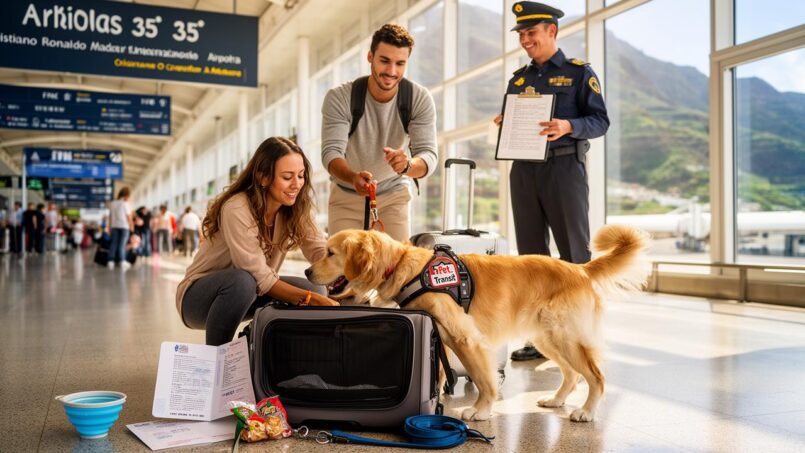
Moving to Madeira with your dog, cat, or another companion isn’t a vacation whim—it’s a real life project that requires long-term preparation. The island is generally very welcoming to animals, but it strictly enforces European and Portuguese rules on animal health, identification, and safety. Between veterinary paperwork, airline constraints, adapting to the subtropical climate, and finding pet-friendly housing, a poorly planned move can quickly turn into a headache.
This guide details the essential steps for a successful expatriation with a pet to Madeira. It covers preparing administrative documents, organizing air transport, managing health risks, adapting to daily life on the island, and provides a list of useful resources for new arrivals.
Understanding the Legal Framework for Pets
Before booking a plane ticket or an apartment in Funchal, it’s essential to understand who does what and what rules apply to bringing animals into Madeira.
Portugal applies EU regulations for dogs, cats, and ferrets. The competent authority is the DGAV. In Madeira, regional veterinary services are responsible, with the IFCN intervening for exotic and invasive species.
Madeira does not have a special quarantine zone: the region follows the same entry conditions as the rest of Portugal. In short, if your animal meets EU rules upon landing, there will be no quarantine. However, in case of non‑compliance (incomplete vaccinations, unreadable microchip, missing documents), authorities may refuse entry, send the animal back to the country of origin, isolate it in quarantine if facilities are available, or, as a last resort, order euthanasia—always at the owner’s expense.
Which Animals Can Accompany You to Madeira?
For air travel to Portugal, and therefore to Madeira, the practice is clear: only dogs, cats, and ferrets are generally accepted on commercial passenger flights. This is a key reality to accept if you live with birds, reptiles, or small mammals: they may not all be able to travel in the cabin or as checked baggage, and logistics can become much more complex.
Portuguese law defines a very broad “pet” category. It includes not only dogs, cats, and ferrets, but also small mammals (rabbits, rodents, hamsters, guinea pigs), some reptiles and amphibians, birds, and fish. For exotic species, special permits are often required. Moreover, keeping protected species is strictly regulated by the CITES international conventions on trade in endangered species.
There are, however, explicit bans: wolf hybrids, Savannah cats, and most Bengals (except those from the 5th generation onward) cannot be imported as ordinary pets. Likewise, introducing species on the Madeira Regional List of Invasive Species is only possible with special authorization, under a recent regional decree.
Identify, Vaccinate, Certify: The Mandatory Triad
From a regulatory standpoint, three pillars structure the entry of an animal into the European Union, and thus into Madeira: electronic identification, rabies vaccination, and official health documents.
Microchip: The Foundation of the Entire Process
Every animal accompanying you must be identified by an electronic microchip compliant with ISO 11784/11785 standards. This is an unencrypted transponder, typically 15 digits, readable by standard scanners at checkpoints. A clearly legible tattoo applied before July 2011 is still accepted, provided that the vaccination series has been continuous without interruption since that date.
Timing is critical: the microchip must be implanted before the rabies vaccine is given, or at the latest on the same day. If the veterinarian vaccinates first and then implants the microchip afterward, the vaccination is considered invalid for entry into the EU. In that case, the vaccination must be repeated after the microchip is implanted, and the waiting period restarted.
Rabies Vaccination: A Timeline Not to Be Missed
For dogs, cats, and ferrets, rabies is the only legally required vaccine for entry into Portugal. But behind this seemingly simple requirement, the schedule is very strict:
Minimum age in weeks for an animal to enter Portugal, corresponding to 12 weeks for the first vaccination plus a mandatory 21-day waiting period.
The first rabies vaccination, after microchip implantation, is valid for only one year from a travel rules perspective, even if the manufacturer indicates a longer duration of protection. Subsequent boosters may be recognized for a validity of 1 to 3 years, but on one condition: they must be administered before the previous injection expires. If a booster is given late, it is considered a new primary vaccination, with a new 21-day waiting period.
To prove vaccination continuity, it is necessary to keep not only the most recent certificate but also the complete vaccination history. This is especially important if you have moved between multiple countries.
Rabies Serological Test: Mandatory from Certain Countries
For animals coming from non‑EU countries considered at risk for rabies (so‑called “unlisted third countries”), an additional step is required: the rabies antibody titration test (RNATT). The veterinarian must take a blood sample at least 30 days after vaccination, and send it to an EU‑approved laboratory. The result must be at least 0.5 IU/ml.
Once the favorable result is obtained, a three‑month waiting period begins before entry into Portugal is allowed. This requirement does not apply if the test was performed while the animal was already in the EU and its vaccination has remained continuous.
The following table summarizes the main timelines:
| Step | Minimum Required Delay | Key Remarks |
|---|---|---|
| Minimum age for first rabies vaccine | 12 weeks | After microchip implantation |
| Wait after first vaccine | 21 days | Before any entry into EU/Portugal |
| Blood draw for serological test | ≥ 30 days after vaccine | Only for at-risk third countries |
| Wait after blood draw | 3 months | From the date of collection |
| Minimum age for entry into Portugal | 15 weeks (simple case EU/listed countries) | About 7 months from at-risk countries with serology |
EU Pet Passport or Health Certificate: Depending on Your Country of Departure
Travel documents depend on your point of origin. EU residents have a very handy tool: the European Pet Passport, issued by an authorized veterinarian in a member state. This document centralizes identification information, vaccinations, and possibly rabies titer results. As long as the passport remains up to date and boosters are done on time, it is valid for life.
For pet owners moving from a non‑EU country (e.g., United States, United Kingdom, Brazil), the required document is the EU Animal Health Certificate. It must be issued by an official veterinarian in the country of origin, often with endorsement from a national authority (such as USDA APHIS or DEFRA), and validated within 10 days before arrival in the European Union.
This certificate is used for entry control at the EU border, then remains valid for up to four months for travel within the EU, or until the rabies vaccine expires, whichever comes first.
Animal transport is considered non‑commercial only if you are not transferring ownership, not selling the animal, and it travels with you or within five days before or after your movement. Beyond five animals or for transport related to a sale or adoption, the commercial regime applies, requiring TRACES registration, specific certificates, and stricter controls.
Specifics of Entering Madeira
Administratively, Madeira follows Portuguese law. But in practice, the insular nature of the destination changes the logistics.
Entry Points and Mandatory Notifications
To enter the territory, animals must arrive at an officially designated Traveller Entry Point. For Madeira, this means passing through the island’s airport, where document and physical checks are carried out upon arrival.
It is mandatory to notify the arrival of animals in advance:
For all pets (dogs, cats, birds, small mammals, reptiles, etc.) entering non‑commercially, a communication or arrival notification form must be submitted to the entry point at least 48 working hours before landing.
Veterinary checks are not available 24/7 everywhere in Portugal. In Lisbon, for example, inspections for non‑commercial animals are not available between midnight and 6 a.m.. In Madeira, certain time slots are also closed (at the airport, the animal control service is reported closed from 00:00 to 7:00). It is therefore best to schedule your flight during a time when official veterinarians are present, or check the control hours in advance.
Special Cases Depending on Country of Origin
Some origins involve very specific rules. Dogs from Peninsular Malaysia must prove no contact with pigs and no stay in Nipah virus‑affected areas in the 60 days before travel, in addition to a specific serological test. Cats from Australia must not have lived in regions with Hendra disease cases in the 60 days prior to export.
To import a pet bird (not for production) into Portugal, regulations require individual identification by leg band or microchip, pre‑departure or post‑arrival quarantine, or avian influenza vaccination. Entry must be through an approved border post, often in Lisbon, followed by a period of domestic isolation after arrival. It is highly recommended to contact the DGAV or IFCN well in advance of the project.
Flight to Madeira: Cabin, Cargo, and Service Dogs
Once your documents are in order, you still need to organize the actual movement of the animal from your country to Madeira. Air travel is the most common method, sometimes combined with road or ferry.
Which Airlines Allow Flying with an Animal to Madeira?
Not all airlines serving the island accept animals. Some low‑cost carriers, like Ryanair, only allow service dogs. Others, such as KLM, Air France, Transavia, Lufthansa, and TAP Air Portugal, offer cabin or cargo transport options for dogs and cats (and sometimes other small domestic animals).
Each carrier sets its own weight and size rules, in compliance with IATA standards for transporting live animals. An animal reservation must be made at the time of ticket purchase or at least 48 hours before departure, as the number of animal spots in cabin and cargo is limited per flight. In case of connections with multiple airlines, confirmation must be obtained from each.
Traveling in the Cabin: For Small Animals
Animals traveling in the cabin are limited by weight, including the carrier. Most airlines flying to Madeira set this limit at 8 kg, animal plus carrier. The carrier must be soft, with a waterproof bottom, sufficiently ventilated (often at least 16% ventilated area), and especially sized to fit under the seat in front of the passenger, with approximate dimensions of 40–45 cm long, 30–35 cm wide, and 21–24 cm high.
The animal must remain inside its carrier for the entire flight, never be placed on a seat, and be clean, quiet, and apparently healthy. As a general rule, only one carrier is allowed per passenger.
Traveling in the Cargo Hold: For Larger Animals
Over 8 kg, or when the animal’s size exceeds cabin limits, travel takes place in a pressurized and climate‑controlled cargo hold, in a hard‑shell crate approved according to IATA rules (container requirement CR1 for dogs and cats). The crate must be large enough for the animal to stand without touching the ceiling, turn around, and lie down naturally. It must be made of hard plastic, metal, wood, or robust composite material, with a waterproof floor, ventilation on all four sides, and a securely locked mesh door.
Airlines apply weight limits for the animal plus crate combination, varying by destination. These ceilings are often 32 kg on some routes (e.g., TAP to the United States, France, the Netherlands, or Hungary) and can go up to 45 kg on others. Beyond these limits, transport may require specialized cargo freight.
Certain breeds classified as “potentially dangerous” must travel in reinforced crates (type CR82, in metal or reinforced wood) with additional requirements. Check‑in of the animal in the cargo hold usually must be done 3 to 4 hours before departure, depending on the airport.
Service Dogs: A Special Case
Guide dogs or assistance dogs receive special treatment. They travel in the cabin regardless of weight, are not confined in a crate, and remain attached to the passenger’s seatbelt, muzzled for medium to large dogs. Airlines generally require at least 48 hours’ notice, and final acceptance also depends on the dog’s behavior at the airport.
If the flight is full or cabin space is insufficient to safely accommodate a large dog, the airline may offer either a flight change or, in some cases, transportation in the cargo hold at no extra cost.
Banned or Heavily Restricted Breeds
Two categories of dogs pose particular problems for travel to Madeira:
– Brachycephalic breeds (flat‑faced) such as Pugs, Bulldogs, Boxers, and some varieties of Shar‑Pei, often excluded from cargo transport by airlines due to high risk of respiratory distress,
– Breeds classified as “dangerous” by Portuguese law: Pit Bull Terrier, American Staffordshire Terrier, Staffordshire Bull Terrier, Rottweiler, Fila Brasileiro, Dogo Argentino, Tosa Inu, as well as the Fila Brasileiro and certain mastiffs.
These dogs may be refused by some airlines or subject to reinforced crate conditions and an age limit (at least 6 months for some carriers). Upon arrival in Madeira, their status also entails additional obligations (sterilization, insurance, muzzle…).
Arriving in Madeira: Checks, Registration, and First Steps
Once your plane has landed at the island’s airport, you’re not completely in the clear yet. The first few days are crucial to bring your setup into compliance with Portuguese law.
Entry Check: Documents and Physical Examination
At the entry point, veterinary services verify the certificate or passport, the date of the rabies vaccination, any serological titer result, consistency of microchip numbers, and the arrival notification. A physical check of the animal (apparent health status, absence of signs of contagious disease) is part of the standard procedure.
If all of the animal’s documents are compliant, no quarantine is imposed, and it can leave the airport with you. However, in case of a serious anomaly (vaccine too recent, missing test, expired or contradictory documents), authorities may apply non‑compliance measures.
Registration in the National SIAC Database
If your stay in Madeira exceeds 120 days, dogs, cats, and ferrets must be registered in the Sistema de Informação de Animais de Companhia (SIAC), the national pet database. Registration costs €2.50 per animal and must be done through a veterinarian, who links the microchip number to your contact information.
Failure to register an animal can result in fines of €50 to €3,740. Although many municipalities prioritize information and voluntary regularization, checks have been strengthening since the legal recognition of animals as “sentient beings” in Portugal.
Local Registration at the Junta de Freguesia
For dogs, there is an additional formality: registration with the Junta de Freguesia, the parish council of your home area. This municipal register, sometimes associated with a modest annual fee (often less than €10), supplements the national SIAC. It helps manage licenses for particular categories of dogs (hunting, guard, reputedly dangerous breeds).
The table below summarizes these main post‑arrival obligations:
| Formality | Who is affected? | Deadline / Frequency | Indicative Cost |
|---|---|---|---|
| SIAC registration | Dogs, cats, ferrets | Within 120 days of arrival or birth | €2.50 per animal |
| Junta de Freguesia registration | Dogs | After arrival / address change | €5–20 per year depending on municipality |
| License for “dangerous” dogs | Breeds listed by law | Immediate then renewal | Variable + mandatory insurance |
Daily Rules: Leash, Muzzle, Allowed Areas
Everyday life with a pet in Madeira is generally comfortable, but the regulatory framework is real, especially for dogs.
In public spaces, the general rule requires a short leash held close to the owner. If a dog is off‑leash, the owner must ensure the safety of others, which very often means using a muzzle. All island municipalities may define supervised off‑leash areas for dogs, but currently, Madeira still has very few.
All dogs must wear a collar or harness with their owner’s contact information. Additionally, picking up their waste is mandatory and particularly enforced in urban and tourist areas, such as Funchal.
Access to beaches is sometimes restricted in summer. Several coastal walks remain open to leashed dogs, including the Santa Cruz promenade, the edges of Praia Formosa, and the pedestrian areas of Funchal. Restaurants and cafes generally accept animals on outdoor terraces, but rarely inside, unless explicitly stated as “pet friendly.”
Public transportation (buses, trains on the mainland, etc.) welcomes animals under conditions: cleanliness, no apparent illness, leash, and sometimes a muzzle for large dogs. Breeds classified as dangerous are often banned from public transport. In Madeira, bus services may accept small animals in carriers; it’s best to inquire on a case‑by‑case basis.
Housing and Pet‑Friendly Accommodations
The housing question is central to a successful expatriation with a pet. In Madeira, the rental market increasingly incorporates the pet‑friendly dimension, but it remains essential to verify each landlord’s policy in writing.
Vacation rental platforms list several hundred pet‑friendly properties on the island, often with very positive overall ratings (vast majority of reviews above 4.4/5). Some specialized services, like Plum, offer carefully selected houses and apartments in Funchal, fully furnished, with equipped kitchens, linens included, and 24/7 support.
Available accommodations include villas with pools, rural cottages, urban apartments, ecolodges, yurts, and modern studios. Many options offer a fenced garden, terrace, or direct access to hiking trails—features especially valuable when traveling with a dog.
For a long‑term stay, it is advisable to discuss conditions in advance: number of animals, possible cleaning surcharge, size or breed restrictions, liability in case of damage. Landlords may refuse certain so‑called “dangerous” breeds out of legal caution.
Animal Health in Madeira: Climate, Parasites, and Prevention
Settling permanently in a subtropical oceanic climate, with mild winters (around 17 °C) and moderate summers (around 25 °C), requires adapting your animals’ medical prevention. Madeira is a Mediterranean biodiversity hotspot, and its ecosystems—UNESCO‑listed laurel forests, volcanic coastal areas, agricultural zones—are home to many parasite vectors.
Main Parasitic Risks
Several threats frequently appear in veterinary consultations on the island:
– Heartworm disease (dirofilariasis), transmitted by mosquitoes, which attacks the heart and pulmonary arteries,
– Leishmaniasis, a severe disease spread by sandflies (very active at dawn and dusk),
– Tick‑borne diseases, such as ehrlichiosis and babesiosis, causing fever, joint pain, and anemia,
– Fleas and intestinal worms, common in animals with regular outdoor contact.
Prevention relies on regular treatments (spot‑ons, tablets, collars) and simple actions: checking the coat after outings, limiting walks during peak sandfly activity, using suitable repellents, and periodic deworming. Note that in Portugal, internal deworming medications are often primarily available at pharmacies rather than pet stores.
Thermoregulation: Heat, Humidity, and Heatstroke
Most pet dogs and cats feel comfortable in a temperature range between 15 °C and 27 °C, which matches Madeira’s climate fairly well. However, humidity, sunlight, and the island’s microclimates (cooler at higher altitudes, warmer and muggier on some coasts) can challenge some animals.
Many dogs tolerate temperatures above about 29–30 °C poorly, especially with high humidity. Beyond an internal temperature of about 40.5 °C, they risk heatstroke, with respiratory distress, weakness, diarrhea, convulsions, and possible coma. Puppies, seniors, brachycephalic breeds, thick‑coated dogs, or those with heart problems are especially vulnerable.
To limit risks, it is recommended to:
To ensure your pet’s well‑being during hot weather, favor walks early in the morning or in the evening, avoiding direct sun. Always provide fresh, clean water. Choose shaded routes and avoid hot surfaces like asphalt or dark sand. Never leave an animal alone in a parked car. Indoors, use fans, set up cool tiled areas, or offer a cooling mat.
Animals can also get sunburned, especially on the ears, nose, or paw pads. Specific sunscreens for animals exist and can be useful.
Adapting to the New Climate and Moving Stress
A change of environment, even to a generally mild climate, remains a source of stress for animals. Some dogs become lethargic in the first few weeks, while others become more agitated. Loss of appetite, refusal to go out, unusual barking, withdrawal, or apathetic behavior are signs to watch for.
To support this phase, it helps to: act methodically, communicate effectively, and mobilize the people involved.
– Keep as much of the pre‑move routine as possible (meal times, walks, play rituals),
– Set up a quiet corner with familiar items (bedding, baskets, toys, blanket),
– Allow gradual exploration of the new home, room by room,
– Remain emotionally available, avoiding transmitting your own stress.
At the same time, adapting to the island’s microclimate requires calibrating walk times and identifying the most suitable places: cooler wooded areas, shaded levadas, breezy coastal paths.
Veterinary Care and Animal Services in Madeira
One of Portugal‘s assets for pet owners is the recognized quality of veterinary medicine, often at lower rates than in many Western countries. Madeira is no exception, with a dense network of clinics, veterinary hospitals, grooming salons, and ancillary services.
The VETMEDIS group unites about 14 to 15 veterinary centers on the island of Madeira, in close partnership with the Veterinary Hospital of Madeira. This hospital is designed to offer a full range of care: advanced imaging (CT scan, endoscopy), rehabilitation center, species‑differentiated hospitalization, and 24/7 emergency service. The network’s partner clinics provide preventive medicine, general consultations, routine surgery, and organize transport to the hospital if needed.
The following table gives an idea of the care offerings organized around this network:
| Type of Facility | Main Services | Location |
|---|---|---|
| Veterinary Hospital of Madeira | 24/7 emergencies, advanced imaging, rehabilitation, hospitalization | Urban area (Funchal and surroundings) |
| VETMEDIS Centers (≈14 centers) | General medicine, preventive care, surgery, shop, grooming, transport to hospital | Multiple municipalities (Calheta, Caniço, Camacha, Câmara de Lobos, Ribeira Brava, etc.) |
| Independent specialized clinics | Exotic pet medicine, orthopedic surgery, cardiology, lab tests | Funchal, Caniço, São Vicente… |
| Pet grooming and spas | Hygiene, aesthetics, well‑being | Funchal, Caniço, other municipalities |
For nighttime or weekend emergencies, it is highly recommended to locate the nearest 24/7 facility upon arrival, note the phone number, and prepare an “emergency kit” (leash, muzzle, health record, carrier).
Alongside medical care, Madeira also offers pet‑sitting services, dog training (training schools operating since the early 2000s), and “pet taxis” to transport animals to clinics or airports. A service like “Pet Transportation Madeira” offers flexible trips around the island, including to the vet.
So‑Called “Dangerous” Breeds: Enhanced Obligations
If you live with a breed on the Portuguese list of “potentially dangerous” dogs, expatriation to Madeira must be prepared with extra care. The breeds concerned include: Pit Bull Terrier, American Staffordshire Terrier, Staffordshire Bull Terrier, Rottweiler, Fila Brasileiro, Dogo Argentino, and Tosa Inu.
Upon entry into Portugal, some dogs may require specific authorization and a declaration of responsibility. For stays over four months, sterilization is generally mandatory, unless documented pedigree exceptions apply. In public, these dogs must be muzzled and kept on a short leash. They are banned from most public transport. Owners must take out at least €50,000 in liability insurance and undergo a behavioral assessment.
In practice, these requirements add to air transport difficulties, as some airlines refuse to carry these breeds or require special crates. Prior contact with the DGAV and a specialized relocation company is strongly recommended before any decision to move.
Using Animal Relocation Services
For complex expatriations (long distances, multiple animals, exotic species, sensitive breeds, tight deadlines), using a specialized pet transport company can increase safety and peace of mind. Several international operators work to Portugal and specifically to Madeira, combining:
Our comprehensive services facilitate every step of transporting your pet to Madeira, ensuring safety, comfort, and compliance.
Management of certificates, validation by authorities, and booking necessary inspection slots.
Advice on IATA crates, choice of airlines, and routes to avoid certain hubs and minimize stopovers.
Complete transport service from your former home to your new home in Madeira.
Secure accommodation solutions if your pet needs to travel after you.
In parallel, Portuguese companies like Animal Transport EU or Portugal Pet Relocation already include Madeira in their network (with Funchal as the served airport), organizing domestic connections between Lisbon and the island, which simplifies transfers. These services come at a significant cost, but they prevent many common mistakes (expired form, wrong version of the certificate, missed 21‑day or 3‑month deadlines, etc.) that can lead to refusal of boarding or entry into the territory.
Activities and Walking Places with a Pet in Madeira
Once all paperwork is done, comes the reward: enjoying the island with your companion. Madeira offers a multitude of dog‑friendly walks, provided leash and cleanliness rules are respected.
Funchal offers several seaside walks, notably the waterfront near the cable car, the Lido promenade, and the edges of Praia Formosa. Further east, the Santa Cruz promenade is popular with locals for walking their dogs on a leash. The city also offers urban parks, such as Parque de Santa Catarina, which has large shaded areas with ocean views.
For hikers, many levada trails are suitable for dogs, including Levada dos Tornos near Funchal, the “Balcony of Ribeiro Frio” (PR11), the Fanal trails (PR13), or the São Lourenço peninsula (PR8). Forests like the Parque Florestal do Montado do Pereiro offer large areas for active dogs, even though a leash is still required.
The key is to adjust the length of hikes to the animal’s physical condition and profile, bring water, and protect against ticks and other parasites present in natural environments.
Anticipating the Evolution of EU Rules
By 2026, the EU framework for the movement of pets will be updated. The basics will remain the same—microchip, rabies vaccine, limit of five animals, serological tests for certain countries—but documents will be more strictly controlled and less tolerant of formal errors.
2024 commercial certificates remain valid until January 2026, when new models become mandatory. For animals from third countries, the certificate must explicitly attest that they come from areas with no reported rabies cases in the 30 days before travel. Additionally, birds will be subject to stricter identification and biosecurity rules.
For a medium‑term move to Madeira, it is therefore wise to check, at each preparation stage, the latest information published by the DGAV and the veterinary authorities of your country of origin, rather than relying on older testimonials.
In Summary: Prepare, Verify, Support
A successful expatriation to Madeira with a pet relies on a combination of administrative rigor, logistical planning, and sensitivity to animal welfare. In practice, this means:
For a departure to Madeira from a rabies‑risk country, start the process 5 to 6 months in advance. Check the microchip and rabies vaccination status. Strictly observe deadlines: 21 days after the first vaccination, 30 days before blood titer, 3 months after a successful titer, and 10 days of validity for the veterinary health certificate. Contact the airline before buying tickets, especially for large dogs or sensitive breeds. Notify arrival at the Madeira entry point 48 working hours in advance. After arrival, register the animal in SIAC and with the Junta de Freguesia. Finally, adapt walks, parasite prevention, and routine to the subtropical climate and island environment.
Madeira offers, in return for these efforts, a particularly pleasant living environment for animals: moderate temperatures, a wide variety of walks, good‑quality veterinary services, and a generally pet‑friendly culture. Well prepared, your companion can thrive here, making your move to the island a truly shared adventure.
Have a wealth management project or a question? Contact us now to speak with a wealth management expert.
Disclaimer: The information provided on this website is for informational purposes only and does not constitute financial, legal, or professional advice. We encourage you to consult qualified experts before making any investment, real estate, or expatriation decisions. Although we strive to maintain up-to-date and accurate information, we do not guarantee the completeness, accuracy, or timeliness of the proposed content. As investment and expatriation involve risks, we disclaim any liability for potential losses or damages arising from the use of this site. Your use of this site confirms your acceptance of these terms and your understanding of the associated risks.

Cyril Jarnias is an independent expert in international wealth management with over 20 years of experience. As an expatriate himself, he is dedicated to helping individuals and business leaders build, protect, and pass on their wealth with complete peace of mind.
On his website, cyriljarnias.com, he shares his expertise on international real estate, offshore company formation, and expatriation.
Thanks to his expertise, he offers sound advice to optimize his clients' wealth management. Cyril Jarnias is also recognized for his appearances in many prestigious media outlets such as BFM Business, les Français de l’étranger, Le Figaro, Les Echos, and Mieux vivre votre argent, where he shares his knowledge and know-how in wealth management.





