
 Published on and written by Cyril Jarnias
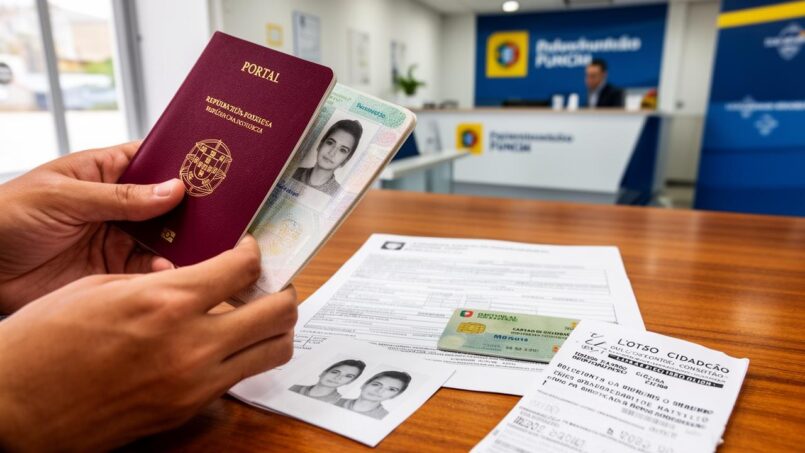
Getting the country’s passport in Madeira means fully entering Portuguese citizenship while enjoying the very concrete benefits associated with this travel document. Behind the administrative procedure lies a powerful key: the Portuguese passport is one of the strongest in the world for mobility, allows you to live and work throughout the European Union, and, starting in 2026, will be valid for ten years for adults. In Madeira, the procedure follows national rules, albeit with some practical particularities linked to the archipelago.
This guide details the complete process for obtaining a passport in Madeira: the steps to follow, where to submit the application, the list of documents to prepare, applicable costs, expected timelines, as well as handling special cases (minors, foreign residents, urgent requests, lost or stolen passport).
Understanding what the Portuguese passport entails
Before diving into the mechanics of appointments and forms, it is useful to know exactly what this document represents and what it allows.
The standard Portuguese passport is an electronic passport. It contains a chip with the holder’s biometric data (digital photo, fingerprints, signature) and is issued by the Instituto dos Registos e do Notariado (IRN), under the supervision of the Ministry of Justice. In the Autonomous Region of Madeira, the Direção Regional da Administração Pública (DRAPMA) manages the service locally, but the physical printing of all passports remains centralized in Lisbon by the Imprensa Nacional Casa da Moeda (INCM).
The Portuguese passport offers visa-free or visa-on-arrival access to approximately 187 countries, ranking it third in the world for its power in 2025.
Legally, it primarily confirms the status of Portuguese citizen and, by extension, European Union citizen: the right to reside, work, study, or settle in another EU country, facilitated access to certain healthcare systems, and simplification of many administrative procedures in Europe. Portugal allows dual nationality, meaning you can obtain this passport without renouncing your original nationality.
Currently, the validity is five years for people over four or five years old (two years for very young children). A reform planned for early 2026 will extend this validity to ten years for new electronic passports for adults over 18. Minors will retain shorter validity periods due to the rapid changes in their facial features.
Who can apply for a passport in Madeira?
The essential prerequisite for applying for the passport of the country in Madeira is being a Portuguese citizen, except for a few very specific cases concerning certain foreigners. The logic is simple: the passport does not create nationality, it materializes it.
Portuguese citizens
For a Portuguese citizen, the situation is clear: as soon as you have a Cartão de Cidadão (the Portuguese citizen card), you can apply for a passport. The law does not require a citizen to apply for one; some are content with the Cartão de Cidadão, which already serves as a travel document in much of Europe and some neighboring countries. But to leave this area, or simply to have a recognized international travel document, the passport remains essential.
Citizenship itself can have been obtained:
Portuguese nationality can be acquired in several ways: by birth in Portugal or abroad to Portuguese parents; by descent (direct descendant of a Portuguese parent or grandparent); by marriage or registered partnership with a Portuguese citizen, after three years of union; by naturalization, generally after five years of legal and regular residence (proposed reforms may extend this period); or in special situations, such as for people of Sephardic Jewish origin.
As long as a person has not completed their nationality process and obtained their Portuguese civil registry records, they cannot apply for a passport. Therefore, it is essential to clearly distinguish the citizenship process (often lengthy, ranging from several months to over two years) from the issuance of the passport, which is much faster once nationality is acquired.
Foreign residents in exceptional cases
The Portuguese legal framework provides for a few limited cases where a foreigner, legally residing in Portugal, could be issued a Portuguese travel document. This is not a standard citizen’s passport, but the IRN mentions this possibility for:
– stateless persons residing in Portugal,
– people unable to obtain a passport from their country’s authorities,
– nationals of countries that have no consulate or embassy in Portugal.
In these cases, the procedure is not simply done at the counter: the foreigner must first write to [email protected] indicating their full name and their Portuguese residence permit number. The IRN then analyzes the situation, sends a specific form, examines the justifications, and, if the file is deemed admissible, summons the person to a counter for biometric data capture.
These special documents remain the exception, however. For the vast majority of people living in Madeira, the normal path to a passport remains nationality. Issues of residence, permits, and stay fall under the AIMA (Agency for Integration, Migration, and Asylum), which issues certificates of residence duration used later in nationality applications, but does not manage passports in any way.
Where to apply for a passport in Madeira and Portugal?
One of the strengths of the Portuguese system is the multitude of service points. In Madeira, several options are available to those wishing to apply for or renew their passport, with specific channels depending on whether you are in the archipelago, on the mainland, or abroad.
In Madeira itself
On the main island, the reference location is the Loja do Cidadão da Madeira, the large “citizen’s shop” where several public services are concentrated. A specific IRN counter, often identified as the passport counter, handles applications. Regional information mentions a numbered counter (e.g., counter 15) in the Edifício Arriaga, in the heart of Funchal.
The Government of the Autonomous Region of Madeira serves as an administrative access point. Its offices accept passport and Cartão de Cidadão applications, in coordination with the IRN (Instituto dos Registos e do Notariado).
On the island of Porto Santo, which is smaller and less populated, the relay is through a Ponto de Atendimento ao Cidadão (PAC) located on Avenida Vieira de Castro. This service point allows both initiating a procedure under normal service and arranging home delivery, with delays and costs slightly adapted to insularity.
On the Portuguese mainland
If you travel to the mainland, the possibilities multiply:
– IRN offices,
– Conservatórias/Registos (civil registry offices),
– Lojas do Cidadão in many cities,
– passport counters at Lisbon and Porto airports for urgent requests.
For residents of Madeira who travel frequently, some urgent or express services are not available locally. Specifically, the “same-day” service is only provided at Lisbon airport.
For residents abroad
Portuguese citizens residing outside the national territory should contact the Portuguese embassy or consulate competent for their area of residence. These consular posts fulfill the same role as a Conservatória: identity verification, biometric data capture, sending information to Lisbon for passport production.
Standard consular fees for a passport issued outside Portugal are higher (generally 100 euros), with possible additional fees for postal delivery. In some cases, a 20% surcharge is added when the service is provided during mobile consular tours.
Making an appointment: a mandatory step
The passport application is made in person, which almost always requires an appointment. Portugal has centralized this system within a platform called SIGA and a mobile application sigaApp.
From Madeira, several options coexist.
To book an appointment for a passport in Portugal, use the portal siga.mj.pt. The user must first select the entity “Registos” or “IRN”, then the theme “Cidadão”. Next, they choose the specific reason related to the passport (application, renewal, or collection). The system then displays available service locations, such as the Loja do Cidadão da Madeira or another DRAPMA counter, along with time slots. After providing some personal data, the appointment is confirmed by email or SMS.
It is also possible to use the sigaApp application, downloadable on Android and iOS. The app not only allows you to book a slot but also to view real-time waiting times, take a queue ticket remotely for some services, and manage your appointments.
Several phone lines are available to get help, book an appointment, or be redirected to a video assistance service.
For any question regarding the Cartão de Cidadão. Available Monday to Friday, generally from 9am to 6pm.
For general information and assistance. Available Monday to Friday, generally from 9am to 6pm.
Note that some counters still accept requests without an appointment for urgent cases or during certain time slots, but the official recommendation remains to schedule a slot to avoid long waits or outright refusal of service.
Required documents: the central role of the Cartão de Cidadão
The key document for any passport application is the Cartão de Cidadão, the Portuguese electronic identity card. Without this document, it is impossible to start a normal procedure.
This Cartão de Cidadão has replaced, for several years, a series of previously separate documents: the old identity card (Bilhete de Identidade), social security card, tax number, national health service card, and voter card. Technically, it is a chip card that contains all this data and allows strong identification of its holder, including online.
For an adult, the passport application file in Madeira amounts to very little:
– Cartão de Cidadão or, failing that, a still valid Bilhete de Identidade,
– previous passport for a renewal, even if already expired,
– in some cases, a passport-style photo if the counter does not take a digital photo (but the general rule is that the photo is taken on-site).
When the previous passport has been lost or stolen, it is obviously no longer possible to hand it in at the counter; in this case, the applicant must sign a declaration of loss or theft, often on a form provided on-site, which allows the old document to be administratively canceled and a new one issued.
Minors and persons under guardianship
For minors, things are more regulated. The child must be physically present, accompanied by their parents or legal guardian. The documents to provide include:
For administrative procedures concerning a minor child, it is necessary to present: the child’s Cartão de Cidadão (or their residence permit if applicable), a valid ID for each parent or guardian, as well as proof of parental authority or guardianship if it is not obvious (e.g., custody judgment, birth certificate).
For adults declared incapable or placed under curatorship, the procedure is similar to that for minors: the protected person must appear with their legal representative, bearing their own ID documents and, if applicable, documents attesting to the guardianship.
How does the appointment go?
On the day, the passport applicant must arrive at least ten minutes before the scheduled time. In Madeira, as elsewhere, reception generally begins with taking a queue ticket, digital or paper, linked to the appointment.
Once at the counter, the IRN or regional service agent verifies identity using the Cartão de Cidadão, retrieves the old passport if it is a renewal, and has the necessary declarations signed (especially in case of loss/theft of the previous one).
What follows is largely standardized throughout the country:
– taking or validating the photograph,
– capturing fingerprints on a sensor,
– digital signature on a tablet,
– summary verification of civil status data and details that will appear in the passport.
When required, paper photos must meet strict standards: 35 x 45 mm format, white background, neutral expression, no glasses, and recent (taken within the last six months). However, most offices in Madeira and Portugal now take the photo directly on-site, saving the trip to a photographer.
Before finalizing, the agent asks you to choose the type of service desired (normal, express, urgent) and the method of collection or delivery (pick-up at the counter or home delivery). Payment is made immediately, in cash or by Multibanco card, sometimes by bank credit card; online bank payments are not accepted.
The applicant leaves with a receipt or collection slip, which will be needed to pick up the passport, or will serve as a reference for tracking a postal delivery.
How much does it cost? Rates in Madeira and elsewhere
Passport fees are uniform across the entire Portuguese territory, but vary depending on the chosen deadline and location. For Madeira, rates are aligned with those on the mainland.
Here is an overview of the main costs for residents of Madeira and mainland Portugal:
| Type of service (Portugal, Madeira, São Miguel, Terceira) | Indicative time | Base fee |
|---|---|---|
| Normal service | 5 working days | €65 |
| Express service | 2 working days | €85 |
| Urgent service | 1 working day | €95 |
| Urgent Lisbon airport (working day) | 1 day (or even same day) | €100 |
To these amounts, in case of postal delivery to home, a surcharge of €10 applies for an address in Portugal (mainland and islands, including Madeira). When the passport is sent to another European country or outside Europe, this surcharge can go up to €30.
For the archipelago of Porto Santo and some islands of the Azores, delays are slightly longer due to logistics, but prices remain the same:
| Zone | Normal service | Express service | Urgent service |
|---|---|---|---|
| Porto Santo, Faial, Pico, Santa Maria | 5 working days – €65 | 3 days – €85 | 2 days – €95 |
In parallel, there is a “frequent traveler” version of the passport, with 48 pages instead of 24, intended for those who quickly fill up visa pages. This option is more expensive:
| “Frequent traveler” passport (48 pages) | Normal service | Express | Urgent | Same day (Lisbon) |
|---|---|---|---|---|
| Fee | €100 | €120 | €130 | €135 |
Some special services also involve higher amounts. This is the case of the passaporte temporário, a temporary non-electronic passport valid for six months, reserved for extreme emergency situations when the electronic passport cannot be issued in time. This document costs approximately €150.
Standard fee for a passport applied for abroad via an embassy or consulate, excluding additional costs.
Timelines: what to really expect in Madeira
On paper, the legal deadlines for producing a passport are strictly regulated. In practice, technical or logistical factors, especially on an archipelago, can introduce some variability.
The legal processing time for a passport application in Madeira is five working days. However, in practice, the actual time can vary between five and ten days. This can be affected by several factors: the volume of applications, holiday periods, possible delays in flights between Lisbon and Funchal, weather conditions at Madeira airport, or technical issues at the passport printing center in Lisbon.
For express service, the legal promise is two working days in the Madeira/mainland zone, with an observed average of three or four days. Urgent service aims for one working day, with actual times often ranging from one to three days. In all cases, home delivery generally adds an extra day.
The normal time for an application filed abroad to distant destinations like the United States can reach thirty days.
For residents of Madeira who need to travel urgently, a common strategy is to book an appointment at a passport office at Lisbon or Porto airport. By arriving early in the morning and choosing the same-day service, it is possible to leave with your passport from late afternoon onwards (delivery slots are around 4:30pm–5:15pm for files completed before 11am).
Steps before the passport: citizenship and Cartão de Cidadão
For those who are not yet Portuguese citizens but live in Madeira, the bulk of the work is not about the passport itself, but about acquiring nationality and obtaining the Cartão de Cidadão.
The main paths to naturalization include legal residence (generally five years, with bills aiming to extend this to ten years for most non-Europeans), marriage to a Portuguese person for at least three years, or descent (Portuguese parent or grandparent).
Approximate fee in euros for a Portuguese nationality application for an adult.
Once nationality is recognized and registered in the Portuguese civil registry, the new entrant must apply for a Cartão de Cidadão. This card, mandatory within 20 days of birth for Portuguese citizens, is indispensable for any passport application. In Madeira, as elsewhere, it is applied for at IRN offices, Lojas do Cidadão, or, abroad, at consulates. The first Cartão de Cidadão entails the assignment of a civil identification number, a tax number, a social security number, and a healthcare system user number.
The passport is, ultimately, just the last step in this journey.
The passport
Special cases: minors, frequent travelers, emergencies, and losses
Real life always brings its share of special situations, which the Portuguese system handles with specific arrangements.
To travel outside the area where the identity card is sufficient, each minor must have their own passport. The procedures are similar to those for adults, but require the presence of parents or guardian. Written authorization may be required if the child travels without both parents.
For very frequent travelers, the 24 pages of the standard passport fill up quickly. The “frequent traveler” model with 48 pages is designed for them. It costs significantly more than a standard passport but avoids having to renew too often.
In cases of absolute emergency (medical travel, serious family obligations, crucial professional departure), two solutions exist. First, use the urgent or ‘same-day’ services at airport counters in Lisbon or Porto, by booking an appointment by email at the dedicated address and justifying the reasons and travel date. Second, if the deadline is too short for an electronic passport, opt for the ‘passaporte temporário,’ a simplified document valid for six months.
The loss or theft of a passport requires reporting it immediately, both to prevent identity fraud and to render the document unusable. The user must file a report with the local police, then go to the passport counter to declare the loss and simultaneously apply for a new document. Using a passport reported lost or stolen is punishable, and the document would be seized at borders anyway.
Paying for and collecting the passport: the final formalities
Payment of fees is always made at the time of submitting the application. In Madeira, as in the rest of Portugal, the usual payment methods are:
– cash,
– Multibanco debit card,
– sometimes bank credit card,
– check at some more traditional counters.
Remote payments by wire transfer or online banking are not provided for this specific service.
Once manufactured and arrived in Madeira, the passport can be collected without an appointment upon presentation of the receipt and an ID. The holder is generally notified by SMS. At some counters, a third party can collect it by presenting the slip and a valid ID, but this possibility depends on local rules.
When the postal delivery option was chosen, the passport is shipped to the address provided. The user must then ensure proper receipt of the registered mail, hence the importance of providing a complete and up-to-date address. It is recommended to keep the envelope and tracking references until the contents are verified.
Madeira, a specific setting but a national procedure
In the end, applying for the country’s passport in Madeira does not fundamentally differ from doing so on the mainland: same rules, same authority (the IRN), same base fees, same document requirements. What changes are essentially the practical aspects:
– the concentration of services in Funchal and at the PAC in Porto Santo,
– the possible impact of weather and air links on actual delays,
– the need for ultra-urgent applications to go through an airport on the mainland.
The procedure follows a consistent logic: you must be a Portuguese citizen, have a valid Cartão de Cidadão, book an appointment (via SIGA, sigaApp, or phone), appear in person for biometric data capture, pay fees that vary depending on the level of urgency, then wait a few days.
In this context, Madeira is not an “exotic case” but one of the most direct gateways to a passport among the most powerful in the world, with the added very concrete prospect, for adults, of only having to renew the document every ten years starting in 2026. For residents of the archipelago who have already passed the nationality stage, this passport is therefore less an administrative obstacle than a tool for freedom of movement, whether for traveling, studying, or building a life project elsewhere in Europe while remaining attached to Madeira.
A wealth management project or a question? Contact us now to speak with a wealth management expert.
Disclaimer: The information provided on this website is for informational purposes only and does not constitute financial, legal, or professional advice. We encourage you to consult qualified experts before making any investment, real estate, or expatriation decisions. Although we strive to maintain up-to-date and accurate information, we do not guarantee the completeness, accuracy, or timeliness of the proposed content. As investment and expatriation involve risks, we disclaim any liability for potential losses or damages arising from the use of this site. Your use of this site confirms your acceptance of these terms and your understanding of the associated risks.

Cyril Jarnias is an independent expert in international wealth management with over 20 years of experience. As an expatriate himself, he is dedicated to helping individuals and business leaders build, protect, and pass on their wealth with complete peace of mind.
On his website, cyriljarnias.com, he shares his expertise on international real estate, offshore company formation, and expatriation.
Thanks to his expertise, he offers sound advice to optimize his clients' wealth management. Cyril Jarnias is also recognized for his appearances in many prestigious media outlets such as BFM Business, les Français de l’étranger, Le Figaro, Les Echos, and Mieux vivre votre argent, where he shares his knowledge and know-how in wealth management.





