
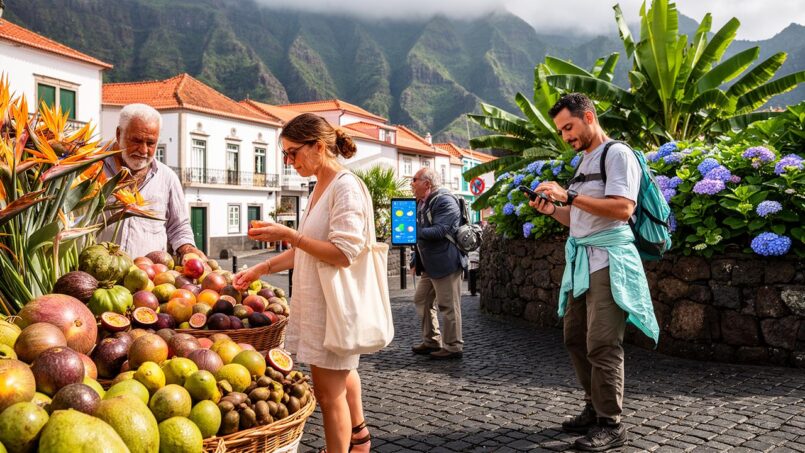
 Published on and written by Cyril Jarnias
Settling in Madeira means choosing an “eternal spring” facing the Atlantic. Mild temperatures, accessible sea almost year-round, generous light… On paper, it all seems simple. In the daily reality of an expatriate, however, the local climate imposes very concrete adjustments: understanding microclimates, managing persistent humidity, heating and ventilating your home intelligently, dressing in layers, and organizing your activities according to the rhythm of the seasons.
This article offers a practical overview, backed by precise climate data and technical tips, to help you truly live with Madeira’s climate rather than suffer through it.
Understanding Madeira’s “Eternal Spring”
The starting point is the very nature of Madeira’s climate. The archipelago is classified as humid subtropical, with a strong maritime influence. The sea, currents (Gulf Stream and Canary Current), and topography shape weather that is far more complex than a simple sunny postcard.
Average annual temperatures generally range between 18 and 24°C (64–75°F), with little seasonal variation. On the south coast, where Funchal is located, typical values go from about 17°C (63°F) in winter to 25°C (77°F) in summer. Winters are therefore mild, summers warm without being excessive, and snow is practically confined to the mountain peaks.
Very mild… but humid
In the capital, the atmosphere is naturally humid: the average relative humidity hovers around 75–78%, with values considered comfortable for most people (70–80%). The air is almost constantly charged with water vapor, but without the biting, penetrating dampness associated with winter humidity in some continental regions. This near‑constant humidity largely explains the island’s extraordinary thermal stability, but it also has direct consequences on housing and the respiratory health of newcomers.
Maximum number of sunshine hours per year in some areas, roughly 70% more than in Northern Europe.
Seasons marked by rain rather than cold
In Madeira, we talk less about “cold” and “hot” than about periods that are more or less humid. The year is broadly divided into two main phases:
The climate features two distinct seasons: a dry season, mainly from June to September, with very little rain, and a wetter season, from October to March, alternating showers, frequent clouds, and beautiful clear spells.
Data recorded in Funchal clearly illustrates this contrast. Summer is particularly dry, especially in July and August when average rainfall approaches 0 mm and there are only about two rainy days per month. Conversely, December is the wettest month, with over 100 mm of precipitation and an average of about a dozen rainy days. October and November follow suit, each with about a dozen rainy days.
A synthetic overview of annual trends in Funchal helps visualize this rhythm.
| Month | Avg. Temp. (°C) | Avg. Rainfall (mm) | Rainy Days (≈) | Avg. Sunshine (h/day) |
|---|---|---|---|---|
| January | ~19.0 | ~72 | 11 | 5 |
| February | ~18.8 | ~70 | 11 | 5–6 |
| March | ~19–20 | ~24–30 | 11 | 6 |
| April | ~20–21 | ~25 | 9–10 | 6–7 |
| May | 21.7 | 22 | 7–9 | 7 |
| June | ~22–23 | 10 | 7–8 | 7–8 |
| July | ~24–25 | ≈0–1.6 | 1–2 | 8 |
| August | 25.9 | ≈0–3 | 2 | 8 |
| September | ~24–25 | ≈10–15 | 7–9 | 7 |
| October | ~22–23 | ≈40–90 | 12 | 6 |
| November | ~21 | 97 | 12 | 5–6 |
| December | 20.1 | 103 | 13 | 5 |
(Values vary slightly by source, but the orders of magnitude remain consistent)
For an expatriate, this means you need to prepare more for managing humidity and rapid weather changes than for extreme heat or cold.
Microclimates: the island of “four seasons in one day”
Madeira is famous for its multitude of microclimates. From one village to the next, sometimes just a few kilometers apart, the weather, temperature, and humidity change dramatically. The volcanic, very rugged terrain is largely responsible: a mountain ridge cuts the island in two, forming a true climatic barrier between north and south.
South coast: the mildest, “easiest” to live in
The south coast—Funchal, Calheta, Ribeira Brava, Ponta do Sol, Machico—concentrates the majority of the population and expatriates. It enjoys a typically Mediterranean climate: drier, sunnier, more stable. Funchal is relatively sheltered from the wind, rainy episodes are less intense, and both air and sea temperatures remain very pleasant.
On the Mediterranean-like coastline, summers are warm with days around 26–27°C (79–81°F) and mild nights at 20°C (68°F). Winters are mild, with temperatures rarely dropping below 13°C (55°F). The sea temperature, reaching 21–24°C (70–75°F) in late summer and remaining around 18°C (64°F) in February, allows swimming year-round for the hardiest.
North coast: greener, wetter, windier
The north of the island—Santana, São Vicente, Porto Moniz—offers a very different face: lush green mountains, UNESCO-listed laurel forests, countless waterfalls… This luxuriance comes at a price: rain, fog, and wind. The humid air flow from the Atlantic “breaks” on the terrain, generously watering the northern slopes and maintaining an atmosphere that is often cooler and saturated with moisture.
In these regions, annual precipitation can be double that of the south, and wind sometimes reaches 100 km/h (62 mph) on the ridges. For an expatriate, living in the north means adopting a much stricter strategy against condensation and mold, and choosing construction materials, windows, and heating accordingly.
Mountain interior: coolness, fogs, and occasional snow
Between the iconic peaks like Pico do Arieiro and Pico Ruivo, or on plateaus like Paul da Serra, temperatures drop quickly with altitude. A difference of 10 to 15°C (18–27°F) compared to the coast is common: a 22°C (72°F) day by the sea can mean 7–10°C (45–50°F) with wind and fog on the summits. In winter, snow is not unusual in these areas.
For hikers and levada enthusiasts, serious gear is essential: waterproof clothing, warm layers, and appropriate footwear. For residents at altitude or in inland areas like Curral das Freiras, an efficient heating system and good insulation are crucial—much more central concerns than by the coast.
Eastern peninsula and humid west: extreme contrasts
At the eastern tip, the Ponta de São Lourenço peninsula displays an almost semi‑arid climate: violent wind, sparse vegetation, parched soils, very little rain. In the west, some plateaus instead retain moisture, creating a particularly wet environment, often shrouded in mist.
For an expatriate, these contrasts explain why advice on heating, ventilation, or even gardening must be tailored neighborhood by neighborhood, rather than reasoned at the island level.
Living in a Madeiran home: the real challenge is humidity
Most new residents in Madeira quickly discover that “mild climate” does not necessarily mean “comfortable home”. As in much of Portugal, the housing stock is old and often poorly insulated. Many buildings were constructed relying on the climate’s clemency rather than thermal performance: little insulation, single‑glazed windows, thermal bridges, limited natural ventilation.
Result: in a context of high ambient humidity, many expatriates see dark stains on walls, halos on ceilings, or moldy furniture appear… sometimes as early as their first winter.
Understanding the fatal trio: humid air + cold surfaces + daily steam
The phenomenon is simple: air laden with water vapor that meets colder surfaces (exterior walls, windows, poorly ventilated corners) deposits condensation. Day after day, this stagnant humidity feeds mold, fungi, and unpleasant odors.
Several factors worsen the problem:
Several common household conditions can lead to moisture buildup: cold, poorly heated rooms; still air in corners or behind furniture; poorly ventilated bathrooms and kitchens; enclosed glazed balconies used as greenhouses without ventilation; and drying laundry indoors without a dehumidification system.
The formula to keep in mind is clear: humid air + cold surface + daily activity = condensation and mold. To get out of it, you need to break at least one link in this chain, ideally all three.
The right parameters to aim for at home
The goal, in an apartment or house in Madeira, is to stabilize the indoor environment around a few simple benchmarks:
– living area temperature in winter between 18 and 21°C (64–70°F);
– overall relative humidity between 40 and 60%, ideally 40–50% during cold spells;
– absence of systematically cold and damp zones (corners, north walls, behind wardrobes).
A small digital hygrometer, very inexpensive, quickly becomes an essential tool to manage all this. As soon as the humidity level sustainably exceeds 60%, action is needed.
A three‑pronged plan: air out, heat, dehumidify
Residents’ experience in this type of climate shows that a triptych works particularly well: deliberate ventilation, moderate but continuous heat in key rooms, and active dehumidification when necessary.
| Axis | Main objective | Concrete means |
|---|---|---|
| Ventilate | Renew air, remove water vapor | Short, brisk openings; extraction in kitchen/bathroom; cross‑ventilation |
| Heat | Warm the air and especially the surfaces | Supplemental heating, heat pump, avoid freezing rooms |
| Dehumidify | Bring humidity back into a healthy range | Dehumidifiers, laundry management, reducing vapor sources |
Ventilating should not mean leaving a window ajar all day—which cools the walls without really drying the air. The most effective method is to open wide for 5 to 10 minutes, twice a day, preferably creating a draft between two opposite openings. This “shock” quickly renews the humid air without allowing the walls to cool deep down.
Procedure for effectively treating humidity in a space, from preparation to final adjustment of hygrometry.
Carefully close off the area to be treated to isolate the environment.
Apply a heat source at moderate intensity to start the treatment.
If necessary, complete with a dehumidifier to lower the humidity level above the floor.
The key role of dehumidifiers
In the Portuguese context, dehumidifiers have become a basic tool for many households during winter, including in Madeira. They help prevent the appearance of mold, purify the air, aid in drying laundry, and even reduce the feeling of cold—since less humid air feels more comfortable.
Generally, two main technologies are useful for an expatriate in Madeira:
– Compressor models, effective once the room is above 15°C (59°F), well suited for heated living rooms and bedrooms;
– Desiccant models, more relevant for cool rooms (basements, garages, sparingly heated bedrooms), and which also emit a slight warm airflow.
Sizing depends on room size and the amount of humidity to treat. A small unit (<16 L/day) is enough for a bedroom, while a living room or whole apartment will need models of 16 to 30 L/day. The important thing is not the maximum marketing value, but the ability to sustainably bring hygrometry into the 50–55% range.
Crucial point: air out before, then close doors and windows to let the machine work. Meanwhile, in closets and drawers, passive solutions (silica gel packets, calcium chloride salt trays) reduce musty odors, but do not replace a dehumidifier in living spaces.
Heating and energy efficiency: Madeiran particularities
Unlike Northern Europe, Madeira does not experience long freezing spells on the coast. Yet Portuguese statistics remind us that many households across the country struggle to keep their homes warm enough in winter, due to poorly insulated buildings and inefficient heating systems.
Madeira stands somewhat apart: heating needs are lower and residents heavily rely on small portable electric heaters, which are relatively effective for small volumes. The total energy consumed for heating therefore remains low, and the potential gains from a change of equipment are arithmetically less spectacular than on the mainland. For an expatriate, however, perceived comfort will depend heavily on the choices made in their own home.
Comfort temperatures and good practices
Portuguese regulations and studies generally set an indoor temperature of 18°C (64°F) in winter as a basis for calculation. In practice, maintaining 19 to 21°C (66–70°F) in living areas is often more comfortable, especially when the outside air is humid.
Lowering the thermostat by one degree can save up to 7% on heating consumption.
Which systems to prioritize for an expatriate?
Several modern solutions, already encouraged in Portugal, work particularly well in Madeira’s mild climate:
Up to 40% of a home’s heat loss in Madeira occurs through glazing, justifying an investment in high-performance windows.
The extreme mildness of the coastal climate often allows for a compromise: rather than a heavy heating system, one or two heat pump splits well placed, combined with minimal insulation and good humidity control, suffice to provide excellent comfort.
Ventilation, bathrooms, kitchens: critical rooms
In practice, humidity problems rarely appear uniformly. Certain areas of the home are structurally more vulnerable: windowless bathrooms, kitchens where cooking steam is not extracted, poorly ventilated enclosed balconies, north-facing bedrooms, closets against exterior walls.
Room‑by‑room strategies
In bedrooms, it is important to leave space between large furniture and exterior walls so that air can circulate. If windows are systematically steamed up in the morning, it is a warning sign: air out upon waking, possibly place a dehumidifier at night, and check the condition of window seals.
Mechanical extraction to the outside is essential to reduce water vapor and prevent mold. For optimal efficiency, close the door while showering, let the fan run for 10–15 minutes after, and wipe water off tiled walls.
In the kitchen, a range hood vented to the outside, used with every cooking session (not just for odorous dishes), limits moisture input to the rest of the home. Using lids on pots also helps control steam.
Managing laundry and enclosed spaces
The question of drying laundry is often tricky for expatriates used to powerful electric dryers in their home countries. In Madeira, many homes do not have one, and laundry tends to be hung on enclosed balconies or indoors. Without a proper plan, this quickly turns these spaces into veritable mold incubators.
For a healthy solution, use a dedicated room: close the door, air out briefly, then run a dehumidifier until humidity is below 55%. In closets, avoid overfilling them, use passive absorbers, and periodically open doors and drawers during dry weather.
Health, allergies, and air quality: an overall favorable environment
One of the often‑underrated assets of Madeira is the biological quality of its outdoor air. A study conducted in Funchal over several years established a pollen calendar: 42 pollen types were identified, with a main season from March to June and a second small peak in October–November. Yet the number of days when concentrations reached allergy risk thresholds remained very low, and significantly lower than in other European cities.
The most frequent pollens in Funchal are from Urticaceae (including Parietaria) and grasses. However, their critical levels were only exceeded a few dozen days over seven years. Researchers estimate that biological air quality there is rather good, making the island an interesting destination for many people with asthma or allergies.
Humidity, dust mites, and mold: the indoor challenge
Indoors, however, high humidity favors the two great enemies of the respiratory tract: dust mites and mold. Dust mites thrive as soon as hygrometry exceeds 50–60%, particularly in mattresses, pillows, carpets, sofas, and stuffed toys. Mold spores develop on walls, ceilings, bathroom grout, and poorly maintained window frames.
To reduce allergens, it is recommended to maintain humidity below 50% (ideally between 40% and 60%) and eliminate sources of stagnant moisture. Regular maintenance includes washing bed linen at 60°C (140°F), using anti‑dust mite covers, cleaning with damp cloths (avoid dusters), and vacuuming with a HEPA filter.
Adaptations for sensitive individuals
For expatriates prone to allergies and asthma, Madeira therefore offers a favorable outdoor basis but demands increased vigilance indoors. Monitoring humidity with a hygrometer, setting up a ventilation plan, and possibly using a HEPA air purifier (once humidity is under control) can make daily life significantly more comfortable.
Dressing and moving in a “four seasons in one day” climate
Living in Madeira is not just about managing your home; it is also adapting your wardrobe and daily organization to rapid shifts between sun, clouds, wind, fog, and light rain, especially as soon as you leave the seafront for the levadas and mountains.
The expatriate’s golden rule: thin layers
On the island, the true clothing “secret” is the principle of light layers. Rather than a single heavy coat, you assemble a breathable base (technical T‑shirt or natural fibers), an intermediate layer (thin sweater, light fleece, vest), and an outer windproof and waterproof shell. This layering allows you to constantly adjust your outfit when you leave Funchal in a T‑shirt and find yourself, an hour later, in the humid fog of the ridges.
Typical temperatures vary by region and season, allowing you to anticipate the climate differences to expect.
| Region / Season | Spring (°C) | Summer (°C) | Fall (°C) | Winter (°C) |
|---|---|---|---|---|
| South coast | 15–25 | 20–30 | 15–25 | 10–20 |
| Mountain areas | 15–25 | 25–35 | 10–20 | 5–15 (≈0 at base) |
| Hot interior regions | 15–25 | 30–40 | 15–25 | 10–20 |
These ranges, sometimes surprising at altitude and inland, explain why it is possible, on the same day, to sunbathe on a terrace in Funchal and then shiver on a wind‑swept trail just a few hundred meters higher.
Footwear and accessories: anticipating wet cobblestones and slippery trails
In daily urban life, the cobbled streets of Funchal and other coastal towns become extremely slippery when wet. Shoes with smooth soles or high heels therefore prove impractical, even dangerous. Sneakers or walking shoes with thick rubber soles provide much better grip.
For hikes on the levadas and in Madeira’s humid forests, it is crucial to wear trail shoes or hiking boots with excellent traction, as the ground is often muddy, uneven, and sometimes close to cliffs. Suitable gear also includes flexible pants, a compact waterproof jacket, a hat, and, for routes passing through tunnels, a headlamp.
Everyday life: a light jacket always within reach
Even in summer, evenings can cool down, and a persistent wind can pick up without warning. Many expatriates end up keeping a small windbreaker or vest in their car or bag on a daily basis. Conversely, in winter, it is not uncommon to have lunch outdoors in the sun in just a shirt on the south coast.
This constant play with microclimates requires a bit of discipline when leaving the house, but it also offers great freedom: with the right gear, virtually all outdoor activities are possible year‑round (hiking, swimming in the sea or natural pools, water sports, urban walks).
Outdoor activities: making the most of the climate without taking risks
Madeira’s climate is a blessing for nature lovers. The famous irrigation channels—the levadas—wind through over 1,300 miles, offering gentle‑gradient walking routes amid spectacular landscapes. An official network of over a hundred marked trails (PR) allows you to explore forests, mountains, and cliffs virtually all year round.
Choosing your season knowledgeably
Spring, from March to May, is often cited as the ideal time for hiking: temperatures hover around 17–22°C (63–72°F) on the south coast, rains become less frequent, and vegetation literally explodes with color. Summer, hot and dry, ensures maximum sunshine but can make some inland routes very hot, especially in sheltered valleys.
Winter, though rainy, is a practicable season for walking. You should anticipate mud, fog, and slippery ground. On the flip side, waterfalls are spectacular and trails are less crowded. Some levadas, such as those of 25 Fontes, do Rei, or do Alecrim, even gain in charm, provided safety instructions are followed.
Safety and weather: learning to turn back
The relative mildness of temperatures can give a false sense of security. Yet the terrain and microclimates make Madeira’s mountains potentially dangerous in bad weather: violent gusts, exposed ridges, sheer cliffs, occasional landslides, sudden flash floods in ravines.
A few reflexes are essential for expatriates who plan to integrate hiking into their routine:
– check the official weather forecast and, if possible, area‑specific information (south, north, highlands) before setting out;
– verify trail opening status, as some sections are regularly closed for maintenance, rockfall risks, or consequences of storms;
– avoid ridges and very exposed areas as soon as wind exceeds 40–60 km/h (25–37 mph);
– turn back if heavy rain is forecast in canyon or gorge areas, where flash floods can occur.
In case of a thunderstorm, apply the 30/30 rule: if the time between the lightning flash and thunder is less than 30 seconds, take shelter immediately. Then wait 30 minutes after the last rumble before moving on. For your safety, avoid exposed summits, isolated large trees, narrow ridges, bodies of water, and metal objects.
Practical organization of hikes
The terrain and the imbalance of public transportation sometimes make one‑way itineraries tricky. For some iconic trails, using a private shuttle or a guided outing solves the return problem while adding safety and providing commentary on the geology, flora, and history of the levadas.
Basic advice remains the same, even in a mild climate: bring enough water (at least 1–1.5 L per person, more in summer or on exposed routes), energy snacks, a charged phone (the European emergency number 112 works even without a local SIM), a small first‑aid kit, and a warm/waterproof garment, even if the weather is perfect at the start.
Settling in long‑term: integrating the climate into every choice
As weeks and months go by, an expatriate’s relationship with Madeira’s climate evolves. What first seemed idyllic—endless mildness—reveals its complexities: laundry that struggles to dry, walls blackening in corners, windows streaming in the early morning, a strange feeling of “damp cold” in a house that is nevertheless in the subtropics.
Choosing your neighborhood and type of housing
Understanding microclimates then becomes a valuable tool for guiding residential choices. A recent, well‑insulated apartment facing south on the heights of Funchal will not present the same challenges at all as a traditional house nestled against a north‑facing slope in a verdant valley. The former may require a higher initial investment but will offer stable comfort with little effort. The latter will demand a rigorous plan for heating, ventilation, and dehumidification to remain healthy all winter.
Before signing a lease or buying property, it is wise to carry out or consult a detailed inventory of condition. This step allows you to document in writing the state of the home (walls, floors, equipment, presence of mold, etc.) at the time of moving in. A complete and mutually signed inventory serves as a valuable reference to avoid any future disputes, especially regarding the return of the security deposit at the end of a rental or for negotiating the purchase price if work is needed.
– visit the home during the wet season (or at least inspect walls and ceilings for any signs of past condensation or infiltration);
– ask about existing heating, type of glazing, orientation, and ventilation of wet rooms;
– open closets and smell for any musty odors.
Integrating energy efficiency into your investments
Even though heating needs remain modest compared to other European countries, the general principles of energy renovation remain valid in Madeira: start with the building envelope (insulation, controlled airtightness, high‑performance windows), then improve systems (heat pump, mechanical ventilation possibly with heat recovery in very airtight homes), before considering more sophisticated equipment.
In a climate with low thermal amplitudes, a combination of three targeted actions can radically improve a home’s comfort. Insulating the roof, replacing old windows, and installing a reversible heat pump in the main rooms often transforms a damp, cold space into a healthy, warm interior. You can then live there in a T‑shirt in winter, without condensation or mold problems.
Gradually adopting local reflexes
Over time, most expatriates end up adopting habits very close to those of the locals: opening wide for a few minutes rather than leaving ajar, taking advantage of dry days to “purge” accumulated humidity, moving furniture slightly away from exterior walls as winter approaches, starting dehumidification at the same time as the laundry, regularly checking the roof and gutters if living in a house, monitoring the weather before any mountain outing.
These dozens of small adjustments, more than large technical investments, allow you to fully exploit the advantages of Madeira’s climate while minimizing its drawbacks.
Conclusion: making Madeira’s climate an ally
Madeira’s climate is neither a simple postcard setting nor an insurmountable obstacle. It is a complex subtropical system, dominated by remarkable mildness, persistent humidity, and strong contrasts between south coast, north coast, mountains, and arid peninsulas. For an expatriate, the key is to take it seriously without dramatizing:
To live well in this region, it is advisable to: integrate climate data into the choice of living location and type of housing; allocate a budget for insulation, efficient heating, and dehumidification; adopt a layered wardrobe and an organization adapted to microclimates; and take advantage of the outdoor air quality and year‑round outdoor activity possibilities.
Once these habits are established, the “eternal spring” of Madeira ceases to be a tourist slogan and becomes a tangible reality: that of an island where you often live with doors and windows open, where you walk through ancient laurel forests in winter, where you swim in a sea at 18°C (64°F) during the holiday season, and where, despite a few battles against mold, the climate remains a major asset of expatriate life.
A wealth management project or a question? Contact us now to speak with a wealth management expert.
Disclaimer: The information provided on this website is for informational purposes only and does not constitute financial, legal, or professional advice. We encourage you to consult qualified experts before making any investment, real estate, or expatriation decisions. Although we strive to maintain up-to-date and accurate information, we do not guarantee the completeness, accuracy, or timeliness of the proposed content. As investment and expatriation involve risks, we disclaim any liability for potential losses or damages arising from the use of this site. Your use of this site confirms your acceptance of these terms and your understanding of the associated risks.

Cyril Jarnias is an independent expert in international wealth management with over 20 years of experience. As an expatriate himself, he is dedicated to helping individuals and business leaders build, protect, and pass on their wealth with complete peace of mind.
On his website, cyriljarnias.com, he shares his expertise on international real estate, offshore company formation, and expatriation.
Thanks to his expertise, he offers sound advice to optimize his clients' wealth management. Cyril Jarnias is also recognized for his appearances in many prestigious media outlets such as BFM Business, les Français de l’étranger, Le Figaro, Les Echos, and Mieux vivre votre argent, where he shares his knowledge and know-how in wealth management.





