
 Published on and written by Cyril Jarnias
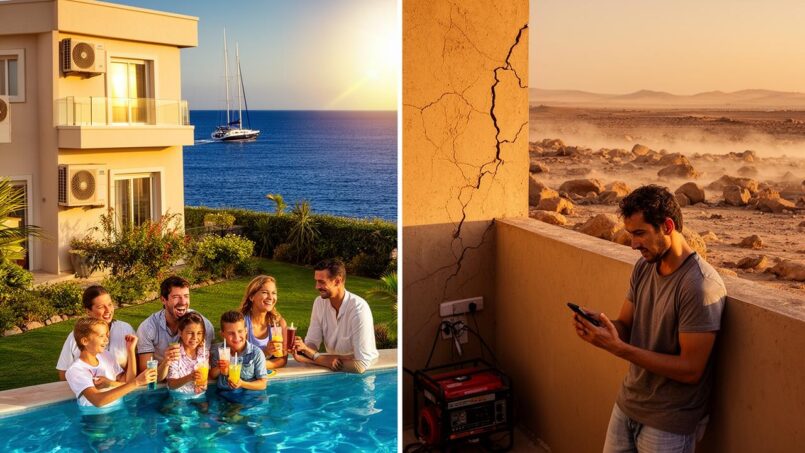
Djibouti is attracting more and more expatriates, investors, aid workers, military personnel, and humanitarian workers. On paper, the country ticks many appealing boxes: a strategic position at the mouth of the Red Sea, a logistics hub between Africa, the Middle East, and Europe, spectacular landscapes, a multilingual society, and a major international presence. But the daily reality is far more contrasted, with a high cost of living, uneven infrastructure, and an extreme climate.
This article provides a balanced analysis of the pros and cons of relocating to Djibouti, based on recent data (economic, climatic, social, and practical). Its goal is to offer concrete information to help you assess whether the country fits your life plan, without bias.
A micro-state with a unique geostrategic position
Covering an area of about 23,200 km² and with a population close to 1.1 million, Djibouti is one of the smallest countries in Africa. Its modest size contrasts with its strategic importance: the territory controls the entrance to the Red Sea, across from Yemen, along the Suez Canal route. This location makes the country a hub for maritime trade between Asia, Europe, and Africa.
That’s the percentage of Ethiopia’s imports—a landlocked country of over 100 million people—handled through the Port of Djibouti.
Another pillar: foreign military presence. Several countries have established bases or support facilities here, making Djibouti a regional security hub. This concentration of international interests explains the unusually high density of expatriates for a country of this size, including diplomats, military personnel, logistics specialists, humanitarian workers, and consultants.
A society at the crossroads of worlds
Djibouti is often described as a crossroads between Africa, the Arab world, and the Francophone sphere. The population is mainly composed of Somali (about 60%) and Afar (about 35%), along with Arab (notably Yemeni), Ethiopian, and European communities, especially French and Italian.
The official languages of Djibouti are French and Arabic. Somali and Afar are widely spoken. English is growing in business circles and among urban youth, but is not yet common among the general population. For a Francophone expatriate, this situation is advantageous. An English-only expatriate will often need to adapt through their professional environment, where English may be used, and through expatriate circles.
Islam is the state religion and is structuring in social life and the legal framework. This translates into modest dress codes, codified male-female relations, less tolerance for public displays of affection, and heightened sensitivity on religious matters. However, the country remains relatively open compared to some neighbors, notably due to the international presence and the French legacy.
A niche but real job market for expatriates
Djibouti’s strength lies less in the diversity of its economy than in its role as a service provider. Services account for nearly 60% to over 70% of GDP depending on sources, and the country mainly exports services (13 times more than goods). For a skilled foreigner, this orientation creates interesting employment niches.
Sectors that recruit foreigners
Opportunities for expatriates are concentrated in a few well-identified areas:
French expertise is in demand in Djibouti across several key sectors. In logistics and transport, for port management and support to humanitarian hubs like the WFP. For services to foreign military bases (security, maintenance, health). In major infrastructure projects (engineering, public works, railway maintenance). In renewable energy, with geothermal projects at Lake Assal or solar projects at Grand Bara. In telecoms and digital, linked to its position as a subsea cable hub. In education (teaching French, vocational training). Within NGOs for development and crisis management. And finally, in high-end tourism (hospitality, water sports).
Expatriates most often hold technical, managerial, or teaching positions. The national civil service and most local companies remain largely reserved for Djiboutians, for cost reasons and due to priority on local employment in a context where official unemployment is close to 28%.
Working conditions and corporate culture
The work week generally ranges between 40 and 48 hours. The official weekend is typically Friday-Saturday, although some international companies keep a Monday-Friday schedule. Jobs in logistics and military bases often involve shift work or on-call duties.
Management combines a hierarchical French administrative heritage with Arab and African relational codes. Respect for hierarchy is paramount; openly challenging a superior is poorly received. Decisions can be slow, negotiation is common, and personal relationships are key. Patience and cross-cultural adaptation are essential assets.
Expatriate contracts, particularly through large companies, NGOs, or foreign militaries, often include housing or a housing allowance, international health insurance, annual flight tickets, children’s school fees, and sometimes risk or hardship premiums. This type of package completely changes the economic equation of living in Djibouti.
A paradoxical cost of living: expensive for a developing country
One of the aspects that most surprises new arrivals is the price level. For a country classified as “lower-middle income,” where the median salary is around $230 per month, Djibouti shows costs close to, or even higher than, some more developed regional cities.
Snapshot of regular expenses
The available data paint a nuanced picture: living “like a local” by accepting modest consumption is relatively inexpensive; replicating a Western standard of living, with comfortable housing, air conditioning, international school, and imported goods, quickly becomes costly.
| Profile / indicator | Average monthly amount (USD) |
|---|---|
| Cost of living 1 person in Djibouti (country average) | 581 |
| Cost of living 1 person in Djibouti City | 586 |
| Total cost for family of 4 in Djibouti City (with rent) | 1,414 |
| “Tight” budget for 1 person (with rent) | ≈ 1,271 |
| “Comfort / luxury” level for 1 person (with rent) | up to ≈ 5,067 |
| Median net monthly salary (Djibouti City) | ≈ 233 |
In short: the estimated cost of living far exceeds the local average salary, which explains why expatriates live in a parallel universe, supported by salaries in foreign currency and specific allowances.
Housing: main budget drain
For an expatriate, housing in Djibouti City is generally the number one expense:
| Type of housing (Djibouti City) | Indicative monthly price |
|---|---|
| Studio/1-bedroom in city center (high-end source) | ≈ $1,200 to $2,000 |
| 1 bedroom outside city center (low-end source) | ≈ $166–$170 |
| 3 bedrooms in city center (low estimate) | ≈ $450–$500 |
| 3 bedrooms in city center (expat market, furnished) | $1,000–$1,500, or more |
| 3-bedroom villa (listing) | ≈ 265,000 DJF / month |
| 5-bedroom furnished villa (listing) | ≈ 450,000 DJF / month |
The gaps are explained by the market segmentation: on one hand, simple rental stock used by local middle classes; on the other, apartments and villas targeting foreigners, often managed by a few owners and agencies, with rents in dollars or indexed Djiboutian francs. Popular expat neighborhoods, such as Gabode or Haramous, concentrate the most expensive offerings, close to international schools, embassies, and main roads.
Overview of available accommodation options, from apart-hotels to hotels of different categories.
Widely used upon arrival, they charge rates comparable to those in major international capitals.
High-end options can be a significant expense, with nights reaching several hundred dollars.
More economical accommodations exist, but are often outdated and unevenly maintained.
Energy, water, and connectivity: air conditioning comes at a price
In a climate where temperatures regularly exceed 40°C, air conditioning is not a luxury but a basic need. This is reflected in the electricity bill, which can reach $150 to $200 per month for an average apartment, or more for a heavily air-conditioned villa.
| Expense category | Indicative monthly amount |
|---|---|
| Electricity, water, gas, trash (small apartment) | $150–$200 |
| Fixed internet (50–60 Mbps) | ≈ $25 or ≈ 10,500 DJF |
| Mobile data+voice plan | $65–$280 depending on usage |
Water is also expensive, two to three times more than in Ethiopia according to some analyses, which weighs on household and business costs. Access to drinking water relies partly on desalination projects and a pipeline from Ethiopia, but the resource remains scarce.
Food, transportation, and leisure: between local market and imports
Food expenses vary greatly depending on whether you adopt a local consumption pattern or one more oriented toward imported products.
| Food / leisure item | Average price (DJF) |
|---|---|
| Simple meal at a local restaurant | 1,500–1,750 DJF |
| Meal for two at a “mid-range” restaurant | ≈ 14,500 DJF |
| Dinner for two at an Italian restaurant in expat area | ≈ 15,000 DJF |
| Cappuccino in expat area | 650–1,500 DJF |
| Local draft beer (1 pint) | ≈ 1,000 DJF |
| Bottle of table red wine | ≈ 3,000 DJF |
| Cinema (international film) | ≈ 1,500 DJF |
Monthly food expenses are estimated at around $227 for a single person and nearly $600 for a family of four. Public transportation is inexpensive (bus ticket at 50 DJF, monthly pass around 3,800 DJF) but unreliable; taxis are much more expensive, with a 3 km ride around $10.
Education and healthcare: the big “plus” in an expat package
For families, access to quality international schools is a key issue, and a major budget item if the employer does not cover the costs.
| Type of education / healthcare | Indicative cost |
|---|---|
| International primary school (per year) | ≈ $4,000–$4,400 |
| ISD (American school, base year) | ≈ $3,500–$3,900 (example) |
| Private daycare/preschool (per month) | ≈ 60,000 DJF |
| International health insurance (per month) | $70–$400 |
| Private doctor visit | ≈ $21 |
| Box of antibiotics | ≈ 2,500 DJF |
Without employer coverage, maintaining a schooling level compatible with further studies abroad represents a significant investment.
A spectacular natural environment… and extremely harsh
In terms of landscapes, Djibouti is a unique playground for lovers of raw nature: salt lakes with surreal reflections (Lake Assal, Lake Abbe), volcanic depressions, desert plateaus like Grand Bara, relic forests like Day, coral coastline, isolated beaches. These assets delight divers, trekkers, and photographers.
But living daily in this setting also means dealing with one of the harshest climates on the planet.
Heat and drought: a real physical challenge
The country is classified as having a hot desert climate, with two main seasons: a relatively “cooler” period from October to April, where temperatures range between 22 and 30°C, and a hot, dry season (May–June then September–October) when thermometers climb between 30 and 40°C, sometimes higher, with burning sand winds, the khamsin.
Increase in the minimum temperature in Djibouti City over a thirty-year period.
For an expatriate, this means: adapting to a new culture, navigating different administrative systems, and often facing language challenges. Beyond practical aspects, expatriation can also offer unique opportunities for personal and professional growth. Expatriates must often rebuild their social network and find their place in an unfamiliar environment, which can be both enriching and demanding.
– possible chronic fatigue due to the heat,
– dependence on air conditioning,
– increased risk of dehydration and heatstroke,
– outdoor sports limited to a few early morning or nighttime hours.
Water stress and climate risks
Djibouti is one of the most water-scarce countries in the world: renewable resources are estimated at around 185 m³ per person per year, with no permanent rivers or freshwater lakes, under a climate of extreme evaporation. This scarcity, combined with low and irregular rainfall, leads to a succession of severe droughts and flash floods.
In 2022, around 170,000 people were affected by the worst drought of the century in Djibouti.
One-third of the population lives in high climate risk zones, and about 35% of the economy is structurally vulnerable to droughts and floods. For an expatriate in an urban area, these phenomena manifest as infrastructure disruptions, water cuts, food price increases, and logistical difficulties, rather than an immediate lack of food—the most exposed being rural populations and refugees.
Biodiversity under pressure, but the sea remains exceptional
Ocean warming and acidification threaten the Djiboutian coral reef. More than half of the coral cover could disappear in the coming years, according to some estimates. At the same time, desertification is eroding arable land that is already almost non-existent (less than 0.04% of the territory is cultivable).
Despite this, the coastline remains a major asset for expatriates: diving, snorkeling, whale or whale shark watching depending on the season, relatively preserved beaches. Access to these activities often goes through private clubs or hotels, with significant costs but a real quality of experience for those who can handle the heat.
Healthcare, security, and infrastructure: the real hard points
The decision to move to Djibouti cannot avoid serious consideration of the quality of the healthcare system, the level of security, and the state of infrastructure. It is on these aspects that the contrasts between well-supported expatriates and the local population are most striking.
Healthcare system: basic care locally, specialists abroad
Djibouti’s healthcare system relies on a network of primary care clinics, a few regional hospitals, and several facilities in Djibouti City, including Hôpital Général Peltier (the main public hospital) and a small number of private clinics. There is also a modernized French military hospital, but it is generally not open to the public.
Despite real progress since the late 2000s (reduction in maternal and child mortality, expanded coverage, support from WHO, UNICEF, and other donors), limitations remain severe:
– shortage of specialists in key fields (oncology, neurosurgery, advanced nephrology, etc.);
– equipment often outdated in the public sector;
– medical records sometimes still kept on paper in clinics;
– very uneven quality between facilities, especially outside the capital;
– international-level maternity care is hard to find, prompting many expat women to give birth abroad.
In case of a serious accident or complex illness, the most common scenario is medical evacuation to Nairobi, Addis Ababa, Turkey, Gulf countries, or Europe. Ambulances exist but are more a means of transport than true emergency units; outside Djibouti City, access to emergency services is very uncertain.
For an expatriate, this translates into several requirements:
– purchasing international health insurance including medical evacuation;
– budgeting for healthcare without relying on direct billing by clinics (cash payment is generally required, then reimbursement by the insurer);
– checking with the employer about evacuation protocols and medical partnerships.
Security: more stable than the region, but not without risks
Compared to its neighbors (Somalia, Yemen, Eritrea), Djibouti is often described as an island of political stability in East Africa, with relatively continuous governance and a deterrent international military presence. But this stability does not mean absence of threats.
Main security concerns are:
Several major risks to consider: the terrorist threat, due to the presence of groups like Al-Shabaab and the country’s involvement in Somalia; border tensions, particularly with Eritrea; common crime such as theft; and dangerous road traffic caused by poor road conditions, reckless driving, roaming livestock, and landmines in certain areas.
Embassy recommendations converge: avoid sensitive border areas, do not travel at night outside Djibouti City, do not use unregulated public transport, remain discreet in crowded places, and stay informed of security advisories.
The presence of a large international community, foreign forces, and security measures around embassy districts, hotels, and places frequented by expatriates contributes to a feeling of daily safety, provided you follow basic precautionary rules.
Infrastructure: a two-speed country
Djibouti perfectly illustrates what is called “leopard-spot development”: hyper-modern hubs limited to a few square kilometers around the port, free zones, the airport, and neighborhoods like Haramous, alongside vast urban or rural areas with very few services.
Djibouti City concentrates most infrastructure: better-maintained roads, mobile coverage, 4G, a few hospitals and clinics, international schools, banks, hotels, modest shopping centers. But even in the capital, more than a third of residents live in informal settlements with limited access to water, sanitation, and electricity.
Beyond, the road network quickly becomes unpredictable: dirt tracks, fragile bridges, risk of flash floods. Public transport is rudimentary, with overcrowded buses, approximate stops, and minimal regulation. For an expatriate, using a private vehicle or private transport services is almost essential, especially if working outside the center.
Expatriation in Djibouti is rarely anonymous. The foreign community, though numerically limited, weighs heavily on life in the capital. You meet military personnel of multiple nationalities, diplomats, employees of large logistics companies, teachers, NGO volunteers, consultants, and aid workers.
Expat circles tend to form around:
– major hotels and bar-restaurants frequented by foreigners;
– dive clubs and maritime activities;
– international schools and parent-teacher associations;
– social media groups (“Djibouti Expats,” professional forums, InterNations, etc.);
– coliving spaces and co-working spaces, which also target passing digital nomads.
Expat social life in Djibouti has two sides. On one hand, it is a major asset, quickly offering a support network, friendships, practical recommendations (medical or otherwise), and shared activities—valuable in a country with limited leisure options. On the other hand, it can become a limitation, as many expatriates remain confined to this community bubble, with limited contact with Djiboutian society beyond strictly professional or service interactions.
For those who make the effort to learn a few words of Somali or Afar, or improve their Arabic and French, and frequent local cafes, markets, or cultural associations, Djiboutians are generally welcoming, with a strong sense of hospitality. But this openness must be earned, with respect for codes, modesty, and sensitivities.
Family and children: education, healthcare, and living environment
For a family project, three questions arise: the quality of schools, accessibility of healthcare for children, and daily living conditions (heat, activities, safety).
A limited but real choice of international schools
Djibouti City concentrates the international education offerings. These include:
Djibouti offers a range of international schools, providing French, English, and multilingual programs to meet the needs of expatriate and local families.
French-language school in the AEFE network, from preschool to baccalaureate. Enrolls around 1,400 students and has a large community of expatriate families.
English-language school from preschool to secondary, with a focus on discovery, creativity, and problem-solving.
Includes institutions like the International School of Africa following US standards (Common Core).
Offer trilingual education (Arabic, French, English).
These schools allow educational continuity compatible with a later return to French, Anglo-Saxon, or international systems. Classes tend to be smaller than in public schools, facilities are better (computers, sports, arts), and the staff more international. But fees remain high for a local salary and are only sustainable if the employer contributes.
Children’s health and pregnancy: anticipate, always
As with adults, the implicit rule is: routine care locally, specialties and complex situations abroad. Vaccination, infectious diseases (especially malaria, whose incidence has risen sharply over the past two decades), and heat-related dehydration require particular attention.
Many expatriate couples opt for pregnancy and childbirth care outside the host country, due to the limitations of local facilities. This requires careful planning and robust, appropriate health insurance.
Environment and activities for children
Heat restricts outdoor activities, but possibilities exist: swimming pools, sports at private clubs or schools, sea outings (diving, snorkeling, whale watching), excursions to salt lakes and plateaus. The country is not an “urban playground” like capitals with parks, museums, and cultural centers, but offers a unique form of education through nature and geography.
The decisive factor will often be the family’s ability to live in a semi-desert environment, with a limited range of leisure activities, compensated by a strong school and expat community cohesion.
Administrative framework: visas, work permits, and residence
Djibouti is not a country where you “settle” easily without a structured project: assignment, contract, investment, or family reunification. Immigration legislation is rather strict and heavily tied to employment.
Entry visas: a mandatory step
Most foreigners need a visa to enter Djibouti. Several options exist: a classic visa through an embassy, a visa on arrival at Ambouli Airport, or an online eVisa. In practice, the electronic visa system has experienced glitches, with some applications not going through. Embassies often recommend obtaining the visa before departure.
Several types of visas (tourist, business, transit) are available on arrival, with varying durations from a few days to one year. Tax payments are made in cash (dollars or Djiboutian francs). Any extension while in country must be done with immigration services, under penalty of fines or an exit ban if the validity period is exceeded.
Work permits and residence permits
To work legally, a work permit is mandatory. It is requested by the employer, who must prove the need to hire a foreigner rather than a national. The procedure, handled by the Ministry of Labor and immigration services, can take several weeks. The permit is generally valid for one year, renewable.
A residence permit, often linked to the employment contract, is required. The status of family members (spouse, children) depends on that of the primary holder and is obtained through dependent visas.
Possibilities for long-term settlement outside a professional framework (retirement, residence based on passive income, etc.) are virtually non-existent. Pathways to long-term residency or naturalization are opaque and rarely pursued: they often require more than ten years of continuous legal residence, good integration, and genuine financial independence.
In short: Djibouti is a country for assignment-based expatriation, contracts, or targeted investment, not a haven for digital nomads seeking long stays without attachments.
Advantages and disadvantages: a lucid assessment
Compiling the data allows us to draw an honest picture of what expatriation to Djibouti entails.
What Djibouti truly offers expatriates
– A unique geopolitical experience: living at the heart of a global strategic crossroads, in contact with multiple armies, NGOs, UN agencies, logistics actors, and diplomats.
– A niche market for technical and managerial profiles: in logistics, energy, telecoms, engineering, education, or development, with attractive packages for some positions.
– An extraordinary natural environment: salt lakes, volcanic deserts, diving, whale shark watching, almost Martian landscapes accessible within a few hours’ drive.
– A plural and multilingual society: a mix of Somali, Afar, Arab, and French influences, relative openness to Francophones and professionals used to international environments.
– A close-knit expat community: dense social network, mutual support, shared activities, a feeling of a “global village” where everyone eventually knows each other.
The significant limitations and constraints
– A high cost of living for Western comfort: expensive expat housing, costly electricity, pricey international schools, high-priced imported goods, making packages including housing and schooling almost essential for a family.
– A grueling climate: oppressive heat for much of the year, coastal humidity, thermal stress impacting productivity and quality of life, dependence on air conditioning.
– A limited healthcare system: inability to treat many complex pathologies locally, need to plan for evacuation and care abroad, high-level maternity care difficult to find.
– Uneven infrastructure: modernity concentrated on a few kilometers around the port and upscale neighborhoods, unpredictable roads as soon as you move away, fragile public services in many areas.
– An unstable regional security environment: terrorist threats, border tensions, road risks, landmines in remote areas, constant need for vigilance and following security advisories.
– A demanding administrative framework: mandatory visas and work permits, residence strongly tied to employment, no real settlement program for retirees or self-employed individuals.
Who is Djibouti a good choice for?
Given all the above, Djibouti is particularly suitable for:
– professionals recruited with a solid expatriation package (housing, healthcare, flights, schooling);
– people motivated by geopolitical, logistical, or humanitarian issues;
– French or Arabic speakers comfortable in multicultural environments;
– extreme nature enthusiasts willing to deal with the heat and a sometimes rugged daily life.
Conversely, the country is less suitable for:
– those seeking a rich urban cultural life, abundant leisure infrastructure, or European-level healthcare within easy reach;
– retirees hoping for a free, long-term settlement without a professional anchor;
– self-employed individuals or freelancers without solid savings or clients in foreign currency capable of absorbing a cost of living higher than many other developing countries.
Djibouti is neither a cheap Eldorado, nor a five-star posting for urbanites craving comfort, nor an unlivable hell. It is a country of contrasts, where opportunities are very real for those who come with a clear project, a solid contractual framework, and a strong capacity for adaptation. Expatriation there is demanding, but can prove extremely rewarding—both personally and professionally—for those who accept its constraints as well as its promises.
Disclaimer: The information provided on this website is for informational purposes only and does not constitute financial, legal, or professional advice. We encourage you to consult qualified experts before making any investment, real estate, or expatriation decisions. Although we strive to maintain up-to-date and accurate information, we do not guarantee the completeness, accuracy, or timeliness of the proposed content. As investment and expatriation involve risks, we disclaim any liability for potential losses or damages arising from the use of this site. Your use of this site confirms your acceptance of these terms and your understanding of the associated risks.

Cyril Jarnias is an independent expert in international wealth management with over 20 years of experience. As an expatriate himself, he is dedicated to helping individuals and business leaders build, protect, and pass on their wealth with complete peace of mind.
On his website, cyriljarnias.com, he shares his expertise on international real estate, offshore company formation, and expatriation.
Thanks to his expertise, he offers sound advice to optimize his clients' wealth management. Cyril Jarnias is also recognized for his appearances in many prestigious media outlets such as BFM Business, les Français de l’étranger, Le Figaro, Les Echos, and Mieux vivre votre argent, where he shares his knowledge and know-how in wealth management.





