
 Published on and written by Cyril Jarnias
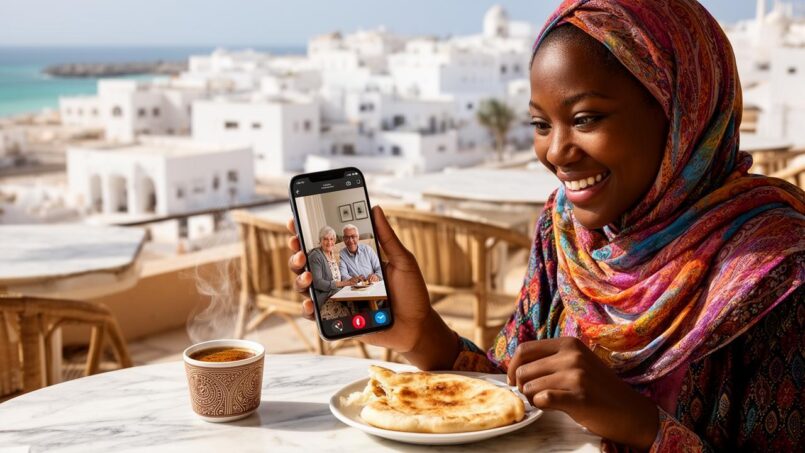
Between calls to family back in Europe, a few hastily sent WhatsApp messages, and an impromptu video call from a café, you quickly realize how much staying reachable from Djibouti shapes the entire experience of your stay. A pivotal country in the Horn of Africa and a major hub for undersea cables, Djibouti is paradoxically both very well connected to the rest of the world… and sometimes difficult for the average internet user to access, due to costs and still limited local offerings.
To keep in touch with your loved ones from Djibouti, several options exist: free Wi‑Fi, local SIM cards, eSIMs, calling apps, social networks, SMS, mail, or satellite. It is essential to consider local realities such as high prices, uneven coverage, cultural practices, and technical constraints to make the best choice.
Understanding the Digital Landscape in Djibouti
Before choosing a solution, it is helpful to know what to expect in terms of connectivity.
A Global Hub, but an Expensive and Uncompetitive Local Market
Djibouti is a nerve center for the global internet. The country hosts about a dozen major undersea cables (SEA‑ME‑WE, EASSy, SEACOM, AAE‑1, DARE1, etc.) that connect Africa to Europe, the Middle East, and Asia. The Djibouti Data Center houses these landings and the DjIX internet exchange point, at the heart of regional traffic.
Djibouti Telecom retains about 99% of the telecommunications market share in the country.
The authorities are trying to address this: gradual opening to competition, creation of a dedicated ministry for digital affairs, multi‑sector regulator, World Bank‑supported programs to expand broadband and public Wi‑Fi. But these changes remain gradual.
Who Is Connected, and How?
By the end of 2025, approximately 65% of Djibouti’s population used the internet, that is nearly 772,000 people. Conversely, about 35% of residents – around 400,000 individuals – remained completely offline, mainly due to cost and lack of coverage in rural areas.
On the mobile side, there were 616,000 active cellular connections, just over half the population. It is common for one person to have multiple lines, and some connections are limited to voice/SMS without data.
The table below provides a snapshot summary of this situation.
| Indicator | Approximate Value (End of 2025) |
|---|---|
| Internet penetration rate | 65% of the population |
| Number of internet users | 772,000 |
| Unconnected population | ~415,000 (≈ 35%) |
| Active mobile connections | 616,000 |
| Mobile connections / population | 51.9% |
| Share of mobile connections on 3G/4G/5G | 92.4% |
The majority of residents connect via mobile (3G/4G) rather than through a fixed line. Wired broadband (ADSL, fiber) is mostly reserved for businesses, government agencies, and affluent households, given the installation and subscription costs.
Connection Speeds and Quality
Available measurements show decent mobile and fixed performance for a developing country, although quality remains highly variable depending on location and time.
Overview of connection speeds and network coverage by geographic area.
Median download speed measured on mobile networks.
Median download speed measured on fixed connections.
Major cities like Djibouti City benefit from relatively stable 4G LTE.
Some rural areas, isolated coastlines, or the Danakil Depression may suffer from nearly nonexistent coverage.
For a video call with family, this means that in the city, the main services (WhatsApp, Zoom, Messenger, etc.) generally work, but it is wise to have a Plan B (simple audio call, SMS, or regular phone) when traveling outside urban centers.
Connecting via Wi‑Fi: Cafés, Hotels, Public Places
To stay in touch without blowing your mobile bill, using Wi‑Fi networks – free or included – is often the first strategy.
Free Wi‑Fi in the City and Popular Spots
Djibouti City has most of the access points. In cafés, restaurants, shopping centers, and hotels, it is common to find Wi‑Fi, sometimes open, often protected by a password provided to customers.
Some iconic places are regularly cited as offering reliable access:
– Upscale hotels like the Kempinski, known for its high‑speed Wi‑Fi (in addition to its private beach, pool, and gym). Handy for an important video conference or a long family call.
– The Palace Kempinski Mall, a shopping and leisure center, equipped with free Wi‑Fi throughout the site.
– Cafés like Café du Port or La Chaumière, which generally offer internet access to customers.
In other cities like Tadjoura, Wi‑Fi availability is more hit‑or‑miss but still exists. Free hotspots can sometimes be found around main squares or near tourist attractions. These access points are sometimes set up as part of public projects.
There are even surprising access points: a hotspot named “Navy_MWR_WiFi” is mentioned in Djibouti City, and the Lake Abbe area, though remote, has free Wi‑Fi linked to tourist activity.
Airports, Train Stations, and Universities
As elsewhere, the airport and some transport infrastructure (e.g., the Chabêlléï train station) offer public Wi‑Fi. They often require registration with an ID or phone number, and speed is regularly reported as slow. It is enough to send messages, share your location, or notify your arrival, but not always for a long video call.
Major Djiboutian universities also provide networks for their students. If you are on an academic exchange or research mission, this is a good way to communicate with your loved ones, provided you can connect (sometimes complex procedures, congestion during peak hours).
Apps for Finding Hotspots
To avoid wandering around looking for a network, collaborative apps are especially useful.
Discover useful apps to locate and connect to free and shared Wi‑Fi networks in Djibouti.
Lists many public and private access points thanks to user contributions. Allows you to search for a hotspot, view shared passwords, and download the map for offline use.
Automatically connects you to the best available free hotspot. A community shares tested and reliable networks, and free Wi‑Fi maps can be saved locally.
Specializes in connecting to networks protected by passwords shared by the community, ideal in areas where few networks are completely open.
In practice, combining these apps allows you to plan ahead: before a trip to Lake Abbe or the Goda Mountains, open the hotspot map, download the area, and identify cafés, hotels, or public spots along your route.
Local SIM Cards and Mobile Operators
To stay reachable at all times – not just near a café – buying a local SIM card is often the most effective solution.
Djibouti Telecom / Evatis: The Historic Giant
Djibouti Telecom, active since 1999, provides the vast majority of telecom services in the country under the Evatis mobile brand. The operator offers:
– 2G/3G/4G LTE mobile telephony.
– Fixed telephone and ADSL.
– Fiber optic offers for businesses and some households.
– Mobile money via Evatis Money.
The operator’s 4G network covers the main cities and routes, using standard frequencies (800 and 1800 MHz for 4G) compatible with most recent smartphones. 5G tests are underway, but no commercial offers are available yet.
Prepaid plans are numerous, with data packages ranging from a few dozen megabytes to over 100 GB, valid from one day to one month. Some offers combine data, voice minutes, and SMS. Prices range from about 100 DJF to 50,000 DJF.
The table below shows some typical examples of Evatis offers, useful for communicating with people abroad via the internet (WhatsApp, Messenger, VoIP calls, etc.):
| Plan Name (Examples) | Data Volume | Voice / SMS | Validity | Approx. Price |
|---|---|---|---|---|
| Express | 50 MB | – | 1 day | 100 DJF |
| Avantage | 250 MB | – | 2 days | 300 DJF |
| Confort | 1 GB | – | 3 days | 500 DJF |
| Classic | 20 MB | 30 min voice | 30 days | 500 DJF |
| Business Premium | 100 MB | 120 min voice | 30 days | 2000 DJF |
| Business Gold | 500 MB | 180 min voice | 30 days | 5000 DJF |
| Forfait Tranquillité Silver | 20 GB | 400 min voice | 30 days | 7000 DJF |
| Forfait Tranquillité Gold | 40 GB | 520 min voice | 30 days | 10,000 DJF |
| GPRS Confort (data only) | 20 GB | – | 30 days | 3000 DJF |
These offers are suitable for travelers who prioritize data to use their usual apps (WhatsApp, Signal, social networks, etc.). The downside remains the overall cost per gigabyte, which is still high by international standards: analyses mention prices that can approach 38 USD for 1 GB in some configurations, even though bundled plans are generally more advantageous than buying by volume.
SOMTEL / Somcable: A New Player Energizing the Market
SOMTEL, linked to the Dahabshiil group, represents the other face of mobile telephony in Djibouti. The operator is gradually rolling out its 3G/4G network, mainly concentrated in Djibouti City and a few urban areas.
SOMTEL focuses on low‑priced offers, with many daily, weekly, or monthly plans. These include:
– Unlimited data plans for short durations (24h, 48h, one week, one month).
– Packs with a set volume (e.g., 600 MB for one day, nearly 100 GB for a month).
– VIP bundles combining large data volumes with voice/SMS.
– 4G router offers for households, with unlimited monthly data.
The maximum advertised price for a mobile plan is 75 USD, typically corresponding to an unlimited data volume.
For a visitor on an extended stay in Djibouti City, SOMTEL offers an interesting alternative to Evatis, especially if you consume a lot of data for regular video calls with family. However, coverage outside major urban areas remains more limited than that of Djibouti Telecom.
How to Buy a Local SIM When You Arrive
For a traveler, the procedure is fairly standard:
– Obtaining a visa: an e‑visa is often required to enter the country, obtainable online before departure.
– Buying the SIM: you can get one at the airport, at Djibouti Telecom / Evatis or SOMTEL shops in the city, or sometimes at partner retailers.
– Registration: a passport is required to register the line, in compliance with local regulations.
– Activation: it can take 30 to 60 minutes at an airport kiosk, sometimes longer if the language barrier complicates the exchange.
Once the SIM is active, simply buy a data package suited to your usage. For a stay of a few weeks, a rough budget of 5 to 10 USD for the card, plus 10 to 20 USD for 2 to 5 GB of data, is a realistic estimate.
eSIM and Pocket Wi‑Fi: Stay Online Without Chasing Shops
For those who prefer to avoid airport queues or in‑store formalities, international eSIMs and travel Wi‑Fi routers are alternatives.
International eSIMs for Djibouti
Several global eSIM providers (such as Airalo, Earth Esim, MobilityPass, etc.) include Djibouti in their coverage zones.
Typical offers for a stay in the country revolve around:
– 15 to 30 USD for 1 to 3 GB of data, valid from 7 to 30 days.
– A premium of about 2 to 3 times the price of a local SIM for an equivalent data volume.
An emblematic offer is an “Orange Global” plan offered by Earth Esim:
A mobile plan offering 51 GB of data valid for 30 days for 24 USD. It includes the ability to share the connection (tethering) and is associated with a French phone number (+33), allowing you to make and receive calls and SMS. This plan does not provide a Djiboutian number.
These solutions have clear advantages for staying in touch with loved ones right after landing:
– Activation before departure, via a simple QR code.
– No risk of losing a physical SIM card.
– Keep your usual number on the main SIM (useful for banking codes, for example).
On the flip side, eSIMs specifically for Djibouti are generally data‑only: you do not get a local number for regular calls/SMS. And there is not yet an eSIM offering a real Djiboutian number with integrated local SMS.
Travel Routers and Portable Wi‑Fi
For globetrotters hopping between multiple countries, buying or renting a travel Wi‑Fi router (from TravelWifi or brands like Glocalme) can simplify things:
A single portable device can connect multiple devices (phone, computer, tablet). Multi‑country plans are particularly useful if Djibouti is just one stop on a longer trip. It is also possible to connect via secure Wi‑Fi from various places like a car, a café without a network, or a guesthouse lacking internet.
However, you must check the device’s compatibility with the frequency bands used in Djibouti (especially 800 and 1800 MHz for 4G) and carefully compare prices, which are often higher than those of local SIMs.
Calling and Messaging Internationally Without Breaking the Bank
Even though data already allows for a lot, sometimes it is simpler – or essential – to use a dedicated international calling service, especially when the person you are contacting does not use the internet.
International Calling Apps (Yolla, Talk360, mytello, Hablax, BOSS Revolution…)
Several services specialize in cheap international calls to and from Djibouti. They can be useful in two ways:
– To call your loved ones still in Djibouti from France, Canada, or elsewhere.
– To call from Djibouti to your contacts abroad, using a data connection or a local line.
A few examples of services and pricing conditions mentioned in available data:
| Service | Type of Service | Example Rate to Djibouti* | Key Features |
|---|---|---|---|
| Yolla | VoIP calling app | ≈ 0.395 USD/min | No connection fees, upfront pricing, keep your number, international SMS, free Yolla‑to‑Yolla, referral bonuses |
| BOSS Revolution | App and international calling service | ≈ 0.35 USD/min, 10 USD ≈ 29 min | On‑demand credit, 2 USD for new users, no surprise bills, regular promos |
| Talk360 | Calling app | Competitive rates (not detailed) | The recipient does not need internet or a smartphone |
| mytello | App and local access numbers (PSTN) | Calls via local number + small surcharge | First call free, works from mobile or landline |
| Hablax | VoIP app | Competitive rates (not detailed) | Simple interface, call quality emphasized |
Exact figures may vary; it is recommended to check the latest rates in each app.
These services allow you to call landlines and mobiles in Djibouti and abroad. To use them, you generally need to install an app, create an account, top up a few dollars, and then dial the number with the +253 country code for Djibouti.
Note that in some cases, there are also virtual calling card offers (or “calling cards 2.0”) claimed to reduce the bill by 90% compared to standard operator rates.
International SMS and Top‑Up
Beyond voice, these same platforms often offer :
To contact loved ones in Djibouti, you can send SMS at fixed rates, for example at 0.14 USD per message with some services. Another practical solution is remote top-up (international recharge): you can buy mobile credit online that will be directly credited to the recipient’s line on the ground. This allows them to call you back or connect to the internet easily.
When to Use These Services Instead of Data?
They are especially useful when:
– The person you need to reach does not have a smartphone or reliable internet access.
– VoIP call quality (WhatsApp, Messenger, etc.) is poor due to congestion or weak local network.
– You need to make a long call and prefer a known per‑minute cost.
– You want to keep your usual number while benefiting from international rates far below standard roaming from your home operator, which is often prohibitively expensive (over 10 USD per MB of data in some cases).
Staying in Touch via WhatsApp, Social Networks, and Messaging Apps
For a large portion of Djiboutians and travelers, staying in contact primarily happens through messaging apps and social networks.
Most Used Messaging Apps
Global statistics show that WhatsApp dominates the global landscape, with 3 billion monthly active users at the start of 2025. In Djibouti, as in most African countries, this app – along with Facebook Messenger, Instagram Direct, Telegram, and Snapchat – plays a central role in daily communications.
WhatsApp, Messenger, Instagram, or TikTok do not necessarily publish detailed usage figures by country, but we know that:
– Many locals exchange via WhatsApp for family, work, and community groups.
– Telegram and Signal are gaining popularity among those who prioritize privacy.
– The use of Snapchat is mainly among younger people.
To communicate easily with your loved ones from abroad, prioritize messaging apps (like WhatsApp, Messenger, etc.) to send messages, photos, or make audio/video calls. This only requires an internet connection, via Wi‑Fi or mobile data (3G/4G).
Growing Role of Social Networks in Djibouti
Social networks are not just for entertainment: they are becoming an important vector for social bonds and family exchanges, especially with the Djiboutian diaspora.
By the end of 2025, there were about 234,000 social media users in the country, nearly 20% of the total population. Not all use them primarily to communicate abroad, but these platforms clearly offer a privileged way to share news, photos, and videos.
A few indicative figures help situate the main players:
| Platform (≈ End 2025) | Users / Ad Reach | Share of Total Population | Observations |
|---|---|---|---|
| ≈ 102,000 to 155,000 | 8.6% to 13.6% | Strong presence of 25‑34 age group, male majority | |
| ≈ 36,300 | ≈ 3.1% | Rapid growth but still modest base | |
| TikTok | ≈ 234,000 (18+ years) | ≈ 30% of adults | Dominant platform among youth, massive usage |
| ≈ 99,000 | ≈ 12.7% of adults | More professional orientation | |
| Messenger | ≈ 43,400 | ≈ 3.7% | Often complementary to Facebook |
In terms of network market share (September 2025):
– Facebook: ~34.7%
– TikTok: ~20.9%
– Instagram: ~19.9%
– YouTube: ~11.2%
– X (formerly Twitter): ~9.7%
– Pinterest: ~2%
For a visitor, personal contacts are mainly reachable via Facebook, TikTok, WhatsApp, or Messenger. To maintain ties with Djiboutian professional contacts, LinkedIn is the most suitable network.
Traditional SMS: A Safety Net
Even though OTT apps (WhatsApp, Telegram) are gaining ground, SMS remains widely used in Djibouti, especially because it works on all types of phones, including basic models. It is a robust method for staying reachable when data is unavailable or too expensive.
The professional SMS (A2P) market is a bit different, but for the average user, it is simple: with a local SIM (Evatis or SOMTEL), you can send and receive SMS to and from abroad, provided you have enough credit.
Platforms like Twilio, Sinch, or MessageBird handle sending to Djibouti for businesses, which explains the frequent reception of confirmation SMS, security codes, or online service notifications.
Mail and Packages: Staying in Touch “the Old‑Fashioned Way”
Sometimes nothing beats a handwritten letter, a postcard, or a package of local products to share news “for real.” Sending or receiving mail from Djibouti is still entirely possible, provided you respect the many customs and postal regulations.
Basic Postal Rules for Djibouti
International postal services – whether USPS, European, or Australian posts – impose specific limits on shipments to Djibouti. Certain categories of items are prohibited, such as:
– Perishable infectious biological substances.
– Radioactive materials.
– In some express services, any kind of medication or batteries (including those built into devices).
Sending cash, securities, money orders, or negotiable instruments requires specific authorization from French exchange control authorities or must be routed through a bank.
Depending on the service used (international express, standard parcel, priority mail, etc.), you will need to attach customs forms (e.g., USPS forms 2976 or 2976‑A), comply with maximum weights and dimensions, and sometimes forgo certain valuable items (coins, jewelry, precious metals…) that are not allowed in certain categories.
Delivery Times and Services
Delivery times vary by provider and type of shipment:
An express service (EMS or equivalent) takes about 5 business days from Europe or North America. Standard postal parcels can take up to 20 business days, or even longer with customs checks. For a guaranteed and tracked door‑to‑door service, carriers like Aramex (via Massida Express), ParcelABC, Eurosender, or intermediaries like Parcel Monkey offer solutions suitable for individuals and businesses.
To stay in touch with loved ones, mail is therefore a relevant option for sending gifts, souvenirs, clothing, or important documents, provided you anticipate delays and check with the local post office or consulate for updated restrictions.
And If You Go Off the Beaten Path: Long‑Range Wi‑Fi and Satellite
Some stays in Djibouti involve truly isolated areas: humanitarian missions, scientific expeditions, offshore projects, etc. In these cases, mobile networks and public Wi‑Fi are no longer enough.
Traditional Satellite and New LEO Networks
For regions without terrestrial coverage, satellite solutions remain the ultimate safety net:
Different satellite technologies to ensure voice and data communications in isolated or mobile environments.
Systems in C, Ku, Ka, or L bands to connect remote fixed or mobile sites such as base camps or ships.
Iridium, Thuraya, or Inmarsat terminals for voice and low‑speed data, ideal for emergency messages and essential communications.
New networks like Starlink or OneWeb offering speeds up to 200 Mbps with reduced latency.
Providers like GlobalTT/IPSEOS supply these services in Djibouti, with contracts guaranteeing very high availability (SLA types 99.99%), 7/7 support, and customized options for businesses or NGOs.
Solutions exist for communicating (emails, secure VoIP calls, video conferences) from remote areas like the desert or at sea. However, the high cost of equipment and subscriptions primarily targets professional use or specific missions.
Long‑Range Wi‑Fi Solutions
Additionally, there are long‑range Wi‑Fi and microwave link systems that can connect an isolated site to a reliable internet connection several kilometers away. These technologies are often used in campus, village, or construction site contexts to share satellite or fiber connectivity across an area.
For an individual visitor, these options are generally not set up, but it is good to know they exist as part of development projects or industrial operations.
Culture, Social Practices, and Good Communication Habits
Staying in touch with loved ones from Djibouti is not just about speed and data plans; it also means respecting certain cultural codes in your interactions with locals and hosts.
Family, Hospitality, and Communication
Family holds a central place in Djiboutian society. Kinship ties, extensive and intergenerational, largely structure social life. This explains why communication is essential: frequent calls, messages, sharing family photos and videos.
Djiboutians are known for their great hospitality, shown through gestures like offering tea or coffee, sharing a meal, and taking time to chat. It is normal and accepted that you keep in touch with your distant loved ones during your stay. However, to respect this local conviviality, be careful not to stay absorbed by your phone to the point of seeming closed off to immediate interactions with your hosts.
Respecting Social Codes Online
On social networks as in daily life, certain topics are sensitive:
– Islam being the majority religion and highly respected, jokes or criticism on this subject are seen as deeply offensive.
– Political discussions about authorities, clans, or the colonial past should be approached with caution and tact, especially on public platforms.
In conversations, including messaging, a calm, polite, and indirect tone is appreciated. Aggressive exchanges, blunt criticism or personal attacks are frowned upon, especially when they take place in a digital space where they can spread quickly.
Protecting Your Digital Security
As elsewhere in the world, Djibouti is not immune to risks such as:
– Misinformation and rumors circulating via social networks.
– Harassment or cyberbullying.
– Fraud attempts via SMS or instant messages.
To maintain a peaceful communication, it is advisable to adopt a few simple habits. These reflexes help preserve the quality of exchanges and reduce potential tensions in relationships, whether personal or professional.
– Verify the reliability of sources before sharing information.
– Properly configure privacy settings on Facebook, TikTok, Instagram, or WhatsApp.
– Use end‑to‑end encrypted apps (Signal, WhatsApp) for sensitive conversations.
– Be wary of links and attachments sent by strangers, even if the message seems personalized.
Djiboutian authorities are also beginning to adapt their legal framework to these issues, notably by applying laws on hate speech or incitement on digital media.
Putting Together Your “Toolkit” to Stay in Touch
In practice, the best way to stay in touch with your loved ones from Djibouti is often to combine several options, depending on your profile, the length of your stay, and the places you visit.
For a short‑term tourist, a simple plan may suffice:
– eSIM activated before departure to have data immediately upon arrival.
– Heavy use of Wi‑Fi at hotels, cafés, and shopping centers for video calls and sending photos.
– Messaging apps (WhatsApp, Messenger, Instagram) as the main channel.
For an expat or long‑term stay:
Essential solutions for maintaining contact with your loved ones and managing your daily communications in an expatriation situation.
Buy an Evatis or SOMTEL SIM with a substantial monthly data plan for daily on‑the‑ground communications.
Subscribe to a service like Yolla, BOSS Revolution, or mytello to easily call family who don’t use the internet.
Extensive use of platforms (Facebook family groups, TikTok videos, etc.) to maintain long‑distance ties.
For a mission in an isolated area:
– Prior coordination with the host organization to find out if a satellite solution or specific local network is available.
– Provision of a satellite terminal (Iridium, Inmarsat, Starlink…) for emergency communications and tracking with the home base.
– Combination with a local SIM for periods spent in urban areas.
In all cases, a few principles remain valid:
To avoid high costs, it is advisable to avoid international roaming from your home operator. Favor Wi‑Fi hotspots when possible, but do not rely on them exclusively. Finally, always have a low‑tech backup plan, such as SMS, traditional voice calls, or even mail, in case the internet is unavailable.
—
Djibouti, despite its cost and infrastructure constraints, ultimately offers a fairly wide range of means to stay connected to the rest of the world. By doing a little research beforehand and cleverly combining Wi‑Fi, local SIM, eSIM, and specialized apps, it is entirely possible to maintain a close and regular link with your loved ones, whether they are in Paris, Montreal, or Addis Ababa, while immersing yourself in the local life of a fascinating crossroads country.
Disclaimer: The information provided on this website is for informational purposes only and does not constitute financial, legal, or professional advice. We encourage you to consult qualified experts before making any investment, real estate, or expatriation decisions. Although we strive to maintain up-to-date and accurate information, we do not guarantee the completeness, accuracy, or timeliness of the proposed content. As investment and expatriation involve risks, we disclaim any liability for potential losses or damages arising from the use of this site. Your use of this site confirms your acceptance of these terms and your understanding of the associated risks.

Cyril Jarnias is an independent expert in international wealth management with over 20 years of experience. As an expatriate himself, he is dedicated to helping individuals and business leaders build, protect, and pass on their wealth with complete peace of mind.
On his website, cyriljarnias.com, he shares his expertise on international real estate, offshore company formation, and expatriation.
Thanks to his expertise, he offers sound advice to optimize his clients' wealth management. Cyril Jarnias is also recognized for his appearances in many prestigious media outlets such as BFM Business, les Français de l’étranger, Le Figaro, Les Echos, and Mieux vivre votre argent, where he shares his knowledge and know-how in wealth management.





