
 Published on and written by Cyril Jarnias
Expatriating to Myanmar today is far from a “lifestyle” endeavor. The country is under the grip of a military junta, plagued by a diffuse armed conflict, travel restrictions, and deep political instability. Many governments classify the destination as “do not travel” or “avoid all travel” and even recommend their citizens leave while commercial flights are still available.
Although the country is not safe in the conventional sense, some expats still live in Yangon and certain areas, primarily for international, diplomatic, or humanitarian missions. The issue is no longer whether Myanmar is safe, but how to minimize risks when relocation is unavoidable or already decided.
This guide aims to provide a clear overview of the security context and offer concrete ways to organize yourself: choosing a city and neighborhood, managing travel, health, insurance, digital tools, your posture toward authorities, and an evacuation plan. The goal is not to reassure at all costs, but to give you the keys to make informed decisions and live daily life with a managed level of risk.
Understanding the context: a country in conflict, bright red warnings
Before any decision to expatriate, you must understand that Myanmar is considered an extreme-risk country. Several governments—United States, Canada, United Kingdom, Australia, Singapore, among others—formally advise against traveling there, or even staying. U.S. authorities classify Myanmar at Level 4 “Do Not Travel”, notably due to armed conflict, arbitrary authority, a weak healthcare system, landmines and explosive devices, and the risk of unlawful detention.
This red coloring on travel advisory maps has a very concrete consequence: most standard travel insurance policies automatically stop covering their insureds in a Level 4 country. In other words, you may be perfectly insured on paper… only to discover at the time of a medical evacuation or serious accident that your contract is no longer valid. This is a major factor to consider when choosing your protections.
An explosive political situation
Since the military coup in February 2021, Myanmar has been plunged into an internal conflict. The army, which overthrew the elected authorities, faces both historical ethnic armed organizations and more recent resistance groups, often grouped under the People’s Defence Forces. Hostilities are not confined to the borders: they affect many rural regions but also some urban areas.
The territory is fragmented by control zones that compete with the junta’s authority. The army uses heavy artillery and airstrikes, sometimes targeting villages, schools, hospitals, and displacement camps. Attacks and explosions are documented in major cities, with an average of more than twenty explosions per month in Yangon in 2024.
The junta declares and extends states of emergency, imposes martial law in dozens of townships, and imposes or lifts curfews depending on the situation. Even as a national state of emergency is lifted, new exceptional measures are decreed locally. Any medium- or long-term planning must therefore account for this unpredictability: an area that is relatively calm today can quickly become a combat zone or subject to severe restrictions.
Red zones, orange zones, “tourist kite”
Given this reality, foreign diplomatic missions distinguish several types of regions. Most advise against all travel in states like Kachin, Kayah, Kayin, Rakhine, Mon, and Chin, as well as in the Sagaing and Magway Regions or large parts of Tanintharyi and Shan. These are theaters of regular clashes, bombings, and widespread antipersonnel mines.
Some historic hubs like Yangon, Bagan, Mandalay, and southern Inle Lake remain more accessible with reception infrastructure, forming a “tourist kite” in the center of the country. However, they are not bubbles of total safety: attacks targeting official or military infrastructure also occur there, and the general situation remains tense.
An arbitrary legal environment
In addition to this physical insecurity, there is strong legal insecurity. Laws are applied discretionarily, arbitrary detentions are not uncommon, and criminal proceedings are far from international standards. Journalists, activists, and also foreigners have been arrested for such vague reasons as a critical post about a hotel or an online comment deemed offensive to religion.
Restrictions on freedom of expression apply beyond Myanmar’s borders. Publications on personal social networks from abroad can be used by the authorities. The legal framework is harsh: very broad defamation laws, the death penalty in effect, and prolonged pretrial detention in extremely difficult conditions.
One element not to overlook: military conscription, revived in 2024 and extended to broad age groups, both men and women. The junta reserves the right to prevent the departure of anyone considered mobilizable, including dual nationals. In a context of accelerated militarization, this further increases the risk of getting stuck.
Choosing where to live: Yangon, the only realistic option for a structured expatriation
In this chaotic landscape, Yangon appears as the only feasible landing point for a structured expatriation, provided it is backed by a robust employer (NGO, international organization, embassy, large company) and accompanied by a solid security setup.
Yangon remains a large metropolis where most expats concentrate their activities. The city is not free from danger, but the threats are of a different nature than those in border combat zones: lower direct risk of bombings, higher risks related to political tensions, travel restrictions, power outages, or security checks.
The most popular and safest neighborhoods
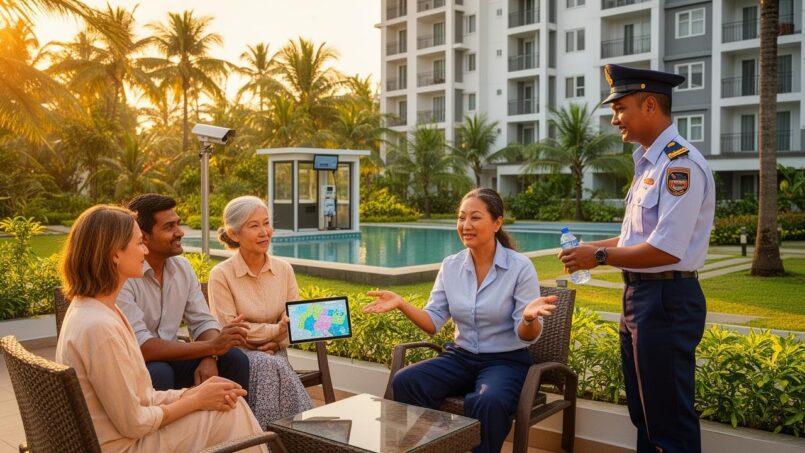
The neighborhoods favored by expats are those that combine relative comfort, better infrastructure quality, and enhanced security measures. Bahan—especially the area known as Golden Valley, Yankin, Kamaryut around Inya Lake, as well as gated residences like Star City in Thanlyin, consistently stand out. These areas concentrate newer condominiums with generators, guards, access controls, sometimes a pool and small gym.
The evolution of Yangon’s neighborhoods illustrates the residential choices available. Mayangon, closer to the airport and with new housing developments, is growing despite a still sparse service network. Conversely, Sanchaung attracts with its lively, urban atmosphere, but comes with higher density and more noise.
Choosing a neighborhood is not just about comfort: it affects your ability to remain operational in a crisis. A building with a properly sized generator, water tanks, vigilant guards, and located a reasonable distance from a private hospital will have a direct impact on your safety, especially during extended outages or city tensions.
Budget and type of housing
Myanmar remains, paradoxically, expensive for anyone wanting an “international” level of comfort and security. Rents for a decent apartment in Yangon can start around 600,000 to 800,000 kyats per month, but quickly rise for high-end residences. Many landlords require 6 to 12 months’ rent in advance, sometimes in cash and foreign currency, plus a deposit. This practice poses a major difficulty in case of a hasty departure: recovering the amounts paid is far from guaranteed.
An expat living comfortably in Yangon needs a monthly budget between 1,800 and 3,500 dollars.
It is highly recommended to use local real estate agents, often found through major platforms or expat Facebook groups. They know buildings truly suitable for a foreign audience and serve as a linguistic buffer with owners, for a commission equivalent to one month’s rent.
Check the resilience of the housing
In a country where power outages can reach several dozen hours per day, inspecting the home goes beyond aesthetics. It is essential to check for and assess the capacity of the generator, water reserves, quality of access (gate, guard, cameras), and overall building strength, especially after a recent earthquake that damaged infrastructure in some regions.
It is wise to visit the apartment at different times of day to assess ambient noise (monastery loudspeakers, traffic, barking) and observe the neighborhood. Daily safety also depends on what you don’t directly control: nearby open shops, traffic density, ease of access for a taxi or ambulance.
Moving around while limiting risks: the art of avoiding the wrong trip
In Myanmar, travel is one of the most sensitive aspects of daily life. The condition of roads, reckless driving, travel restrictions, as well as the presence of mines and explosive devices in some areas, sometimes turn a simple trip into a risk management exercise.
Roads, buses, cars: what it really means
Outside of Yangon, many roads are degraded, full of potholes, often unpaved, poorly lit at night, with minimal signage. Road safety standards are far from Western norms, and serious accidents are frequent. Add to that a troubling peculiarity: driving is on the right, but most imported vehicles have the steering wheel… on the right, which complicates overtaking and increases danger.
Trucks driven under the influence of alcohol or methamphetamines are regularly mentioned, especially during major festivals like the water festival in April. At night, lack of vehicle lighting—or improper use of headlights—is common. Without seat belts or child seats, even a minor collision can have dramatic consequences.
For expats, the use of cheap intercity buses is discouraged by some consulates. These buses are often overcrowded, travel at night, and may stop in the middle of nowhere during curfews, leaving passengers stranded on board. Shared taxis and minibuses, while more direct, present similar driving and safety issues.
Prefer taxis… but not just any way
In the city, taxis remain the preferred means for expats. It is essential to negotiate the fare before departing, as vehicles are not equipped with meters. The taxi’s condition (tires, seatbelts, driver behavior) should be quickly assessed. If the driver seems drunk, tired, or too pushy, it’s better to decline.
Assaults by drivers have been reported, especially at night near certain parks or lakes. Using ride-hailing apps, when they work, offers a higher degree of traceability, recommended especially for late returns. The principle remains to minimize solo travel at night and, if possible, opt for an identified, regular driver known to your employer or expat community.
Flying: an imperfect solution but often the least risky
For long distances between major cities, domestic flights remain in theory the fastest and least risky option, despite an aging fleet and infrastructure sensitive to security and weather hazards. Earthquakes and fighting have damaged roads and hospitals, making air travel even more relevant, when possible, than night buses.
Some regions are only accessible to foreigners by air, as land routes are closed or deemed too dangerous. It is crucial to remain aware that flight plans can change suddenly and airports may temporarily close due to attacks or cyclones. Therefore, it is recommended to always keep a time buffer in your travel planning.
Mines, checkpoints, and areas to avoid
One of the often underestimated risks concerns antipersonnel mines and unexploded ordnance. They litter many rural regions, especially in border states. Unmarked trails, fields, and isolated roadside areas must be strictly avoided. Foreign tourists have already been maimed after taking shortcuts in mountainous areas.
Military and police checkpoints punctuate roads between towns. Officers there rarely speak English. Always carrying your passport with a valid visa is essential. It is crucial to stay calm, answer briefly, never photograph installations or security forces, and comply with instructions without argument. The goal is not to assert a theoretical right, but to pass without incident.
Health and medical system: living with an evacuation plan in mind
Safety in Myanmar also plays out in hospitals. The public healthcare system ranks at the very bottom of international assessments, with under-equipped hospitals, a severe shortage of staff, and frequent medicine shortages. The political crisis has further exacerbated these weaknesses.
A two-tier system, but with clear limits
In Yangon and, to a lesser extent, Mandalay, a private sector has developed, with clinics and hospitals equipped with modern facilities, shorter waiting times, and sometimes expat doctors. Establishments like Pun Hlaing, Asia Royal, OSC, or international clinics (International SOS, LEO Medicare, etc.) are explicitly recommended for foreigners.
Consultations in the private sector are more expensive than in the public sector, but remain affordable for an expat (from a few tens to over a hundred dollars). However, for complex care such as major surgery or cardiology, local capacities are often limited. That’s why many expats and local elites opt for medical evacuation to countries like Thailand, Singapore, Malaysia, or India for serious problems.
Outside major cities, medical offerings collapse: lack of equipment, no specialties, sometimes counterfeit medications. A road accident in a rural area can quickly become a life-threatening emergency with no local solution.
Insurance: aim for international with evacuation included
In this context, international health coverage is not a luxury, it is the basic condition for expatriation. Expats overwhelmingly opt for so-called “offshore” or international contracts, with providers like Cigna, Allianz, AXA, or specialized regional insurers. These policies typically include:
– coverage for care in a broad Asian network,
– high benefit limits,
– and especially coverage for medical evacuation, including air ambulance.
Estimated cost of an emergency evacuation from Yangon to Bangkok if paid out of pocket, in dollars.
It is essential to verify in writing that the insurer agrees to cover a country classified as “do not travel” by governments, and that the evacuation clause applies to Myanmar. Many policies indeed exclude countries under sanctions or in a state of civil war.
Daily health prevention
Beyond insurance, prevention remains your best ally. The country presents a significant risk of dengue fever, malaria in some rural areas, foodborne and waterborne diseases (typhoid, cholera, etc.). A few simple principles are essential:
– get vaccinated before departure (hepatitis, typhoid, possibly Japanese encephalitis depending on profile),
– drink only bottled water,
– avoid ice of unknown origin,
– prefer busy restaurants well-rated by the expat community,
– adopt serious mosquito protection (repellents, long clothing in the evening, mosquito net).
It is recommended to travel with a stock of verified personal medications, as local supply can be erratic and counterfeit products circulate on the market. You should also maintain a complete small first-aid kit at all times, containing items such as antiseptic, bandages, an antipyretic, and an antidiarrheal.
Emergencies and numbers to know
Official emergency services exist, but their effectiveness remains very uneven. In Yangon, Mandalay, and Nay Pyi Taw, dedicated numbers are theoretically operational: 199 for police, 192 for ambulances, 191 for firefighters. In practice, delays can be long, paramedic training variable, and operators do not always speak English.
A network of many volunteer associations provides free or low-cost medical transport, but again the quality of medical care cannot be guaranteed. In some cases, taking a taxi yourself to a known private clinic is more effective than waiting for an ambulance. This is a trade-off to anticipate, by pre-identifying the nearest reference facility to your home and workplace.
For critical situations, support from international structures like International SOS is a considerable asset: they have a network of providers across the country, arrange transfers, and can coordinate an evacuation abroad.
Crime, scams, cyber scams: discreet but real threats
One peculiarity of Myanmar is that ordinary crime, particularly in Yangon, remains relatively low compared to other major regional capitals. Expats who have lived there sometimes mention a feeling of safety superior to that felt in some Western metropolises, outside the political context.
Ordinary risk: opportunistic theft and nighttime assaults
The most frequent crimes targeting foreigners are opportunistic thefts: a bag on a café chair, a phone left on a table, luggage forgotten in a hotel lobby. Pickpocketing is rare but exists in very crowded places. Thefts from poorly secured guesthouse rooms are also reported.
Although violent assaults are rare, robberies with bladed weapons, especially at night in poorly lit areas, and incidents involving taxi drivers are reported. It is essential to avoid traveling alone at night, limit alcohol consumption in unknown bars, and prefer identified transport over hailing random taxis.
In practice, the police system is more prompt to follow up on cases involving foreigners, which partly deters criminals from targeting expats directly. This does not excuse caution, but it nuances the feeling of constant danger.
Scams and scam centers
A much more alarming phenomenon, less visible to the average expat but revealing of the general climate, is the proliferation of online scam centers, especially in certain border areas (Myawaddy, Tachileik). Criminal networks lure victims with fake job offers in Southeast Asia, get them into Myanmar, confiscate their passports, and force them—under conditions sometimes akin to slavery—to carry out international digital scams.
For an expat traveling legally to Myanmar, the direct risk of being trapped in trafficking centers is low. However, these criminal practices underline the need to be wary of “too good to be true” job offers, often posted from neighboring countries like Thailand. Before any relocation, it is imperative to scrupulously verify the legal standing of the employer and the actual existence of the position offered.
Summary table: main threats and recommended posture
| Type of risk | Situation in Myanmar | Recommended posture for an expat |
|---|---|---|
| Armed conflict / attacks | Present in many regions, regular explosions in Yangon | Avoid border areas, limit travel outside major centers |
| Street crime | Opportunistic theft, rare but real nighttime assaults | Do not flash valuables, increased vigilance at night |
| Local scams | Gem scams, various frauds | Be wary of “deals,” avoid unnecessary purchases |
| Cyber scams and human trafficking | High in certain border areas | Ignore unclear job offers, verify employers |
| Judicial arbitrariness / detention | High risk if criticizing the regime or not following laws | Political self-censorship, formal respect of rules and instructions |
Managing the relationship with the Myanmar state: discretion and compliance
In a militarized and suspicious state, the expat’s safety largely depends on their ability not to attract the attention of the authorities. This involves a number of cautious behaviors, sometimes contrary to reflexes acquired in liberal democracies.
Visas, accommodation, registration
Flawless legal presence is the first line of defense. Myanmar requires a visa for most nationalities, with different categories (tourism, business, mission, meditation, etc.). E-visas exist for some categories, but rules change frequently. Expats generally rely on work permits or business visas sponsored by their employer.
It is mandatory for a foreigner to reside in officially registered accommodations with the authorities: hotels, approved guesthouses, declared residences. Informal rentals via platforms like Couchsurfing or Airbnb are illegal and expose you to penalties, potentially including detention and deportation. During checks, security forces do not hesitate to verify hotel registers and identity documents.
It is advisable to always carry your original passport and valid visa, along with paper and digital copies. This precaution is particularly useful due to the frequent presence of checkpoints and identity checks in the city.
Stay away from politics
Politics is an explosive subject. Demonstrations, even peaceful, have been suppressed with extreme violence, and public gatherings can turn violent within minutes. Any participation, even passive, in a march, sit-in, or vigil can expose you to a direct risk of injury, arrest, or even deportation.
The authorities also monitor social media. Criticizing the regime, mocking the junta, sharing content favorable to opposition groups—even from abroad—can be used against you during a phone check or at the border. Cybersecurity and terrorism laws are used to justify arrests and convictions, including of journalists or volunteers.
Before departure, clean your accounts and devices by deleting sensitive content. On the ground, be extremely cautious in all your communications, including private ones, and avoid any political comments in public. Maintain a low profile at all times.
Religion, particularly the majority Buddhism, benefits from very strict legal protection. Foreigners have been arrested or deported for tattoos considered disrespectful to Buddha, posters deemed blasphemous, or critical remarks about monks. The notion of “insult” to religion is interpreted very broadly, and the argument of cultural misunderstanding does not hold up in court.
Concretely, this means:
– avoid images or clothing that associate Buddha with festive or sexual contexts,
– adopt modest clothing in religious sites (shoulders and knees covered),
– remove all footwear—shoes and socks—before entering pagodas and monasteries,
– never obviously turn your back on a Buddha statue for a photo,
– refrain from any jokes about religion.
Norms of modesty and physical distance are also important: public displays of affection are shocking, physical contact is limited, the head is considered sacred, the feet impure. As many codes to integrate to avoid tensions and misunderstandings.
Building your safety bubble: technology, networks, routines
Faced with an unstable external environment, the expat in Myanmar must build a kind of personal safety “bubble”, combining digital tools, good practices, and social network.
Digital tools: communications, geolocation, identity
Communications in Myanmar are controlled by the authorities: regular outages, service blocks (Facebook, WhatsApp), surveillance, cybersecurity laws. In this context, a few principles are essential.
On the technical side, using encrypted messaging apps remains useful, keeping in mind that installing VPNs or certain tools can itself attract attention during a phone check. You must therefore find a balance between privacy protection and discretion, choosing recognized solutions without multiplying exotic tools.
These apps allow you to locally store essential numbers (embassy, doctor, insurer, relatives) and send a geolocated distress message with one click. Prefer those that work offline for the address book, to ensure their usefulness even during an internet outage or network saturation.
GPS trackers, in the form of beacons or connected watches, can help reassure loved ones, especially during intercity travel. Sharing your real-time location with a trusted person, ensuring the battery is charged before each trip, are micro-gestures that enhance safety, especially for families.
Integrating into the expat and local community
Isolation is a factor of vulnerability. In a city like Yangon, signing up for expat mutual aid platforms—specialized sites, social networks, forums—allows you to benefit from very concrete feedback: which hospital to choose for a given emergency, which taxi to recommend in a certain neighborhood, which reliable shops to use in case of supply disruption.
Online platforms like expat.com or Facebook groups dedicated to Myanmar offer practical information and real-time feedback (road conditions after bad weather, power outages, travel restrictions). These sources complement, but do not replace, the official safety instructions from your embassy.
Approaching the local community, beyond the professional circle, is equally important. Studies on expatriation show that the most effective social support comes from concrete local ties, not just virtual exchanges with friends back home. Getting involved in clubs, leisure activities, language classes, or neighborhood groups, while respecting political sensitivities, helps create an informal safety net.
Table: key elements of a personal “safety bubble”
| Pillar | Examples of concrete actions |
|---|---|
| Digital tools | Reasonable encrypted messaging, emergency app, GPS tracker, backups |
| Health and insurance | International coverage with evacuation, medical kit, up-to-date vaccinations |
| Secure housing | Building with generator, water reserve, guards, proximity to private clinic |
| Human network | Expat contacts, local colleagues, neighbors, embassy number |
| Evacuation plan | Exit scenarios, cash reserves, document copies, ready bag |
Anticipate the worst to live daily life more peacefully
In Myanmar, peace of mind does not come from an absence of danger, but from preparation. Having a detailed emergency plan is not a sign of paranoia; it is a way to mentally free yourself to live daily life without being crushed by anxiety.
Evacuation plan: write it in black and white
Every expat family should have a document, even a simple one, that clearly answers a few questions:
– How do we leave the country in a major crisis?
– Which city do we fall back to (Bangkok, Singapore, other)?
– Who finances the plane tickets in an emergency (employer, insurance, personal funds)?
– Where are the cash reserves stored, and in which currency?
– Who notifies whom (family, employer, embassy) and via which channels?
When embassies recommend departure, flights are already scarce and expensive, and borders can close. Evacuation assistance by states is neither guaranteed, nor free, nor prioritized for non-nationals. It is risky to count on a hypothetical airlift.
Home crisis kit
On the home front, having at least a few days of self-sufficiency in case of a lockdown is essential. This includes:
– a sufficient reserve of drinking water,
– non-perishable food for a week,
– a supply of essential medications,
– external batteries and lamps with spare batteries,
– some cash in multiple currencies, stored in several places.
In case of riots, sudden curfews, or localized violence, it is often safer to stay confined at home for several days than to try to move around. The ability to be self-sufficient, without going out or depending on local shops, constitutes an essential safety measure.
Managing mental load
Living in a tense environment, to the rhythm of security alerts and outages, requires solid mental hygiene. It is helpful to:
– limit compulsive browsing of anxiety-provoking social media,
– stick to a few reliable information sources (embassies, serious media),
– maintain “normal” life routines (sports, hobbies, socializing),
– arrange psychological support, especially for children and spouses who passively experience the expatriation.
A “responsible” expatriation contract ideally includes coverage for this support, on par with housing or schooling.
Taking stock: under what conditions can an expatriation remain “serene”?
Speaking of “serenity” for an expatriation in Myanmar is almost an oxymoron, given the context combining high risks: armed conflict, political instability, fragile health, failing infrastructure. Yet, on the ground, some expats manage to lead a relatively organized, sometimes even satisfying life, thanks to a set of protective factors.
You always find the same ingredients: a strong and very involved employer in the safety of its teams, international medical coverage with evacuation, robust housing in a targeted neighborhood, an active support network, and a well-tested emergency plan. Added to this are a personal posture of caution—low profile, scrupulous respect for laws and cultural norms—and an ability to accept an irreducible degree of uncertainty.
The real question for each expatriation candidate is therefore not “Is Myanmar safe?” but “Am I ready to operate in an environment where risk is structurally high, and do I have the means—financial, organizational, psychological—to manage it over the long term?”
Expatriation candidate
For certain profiles, notably humanitarian workers, diplomats, specialized consultants, or employees engaged in specific projects, the answer will be yes, subject to serious supervision. For others, simply looking for an exotic experience abroad, the answer should clearly be no, given the current state of the country.
Expatriating to Myanmar today means accepting to live knowingly on a knife’s edge: between fragility and resilience, between caution and openness to the world. Safety, here more than elsewhere, is not a given, but a constant work in progress.
Disclaimer: The information provided on this website is for informational purposes only and does not constitute financial, legal, or professional advice. We encourage you to consult qualified experts before making any investment, real estate, or expatriation decisions. Although we strive to maintain up-to-date and accurate information, we do not guarantee the completeness, accuracy, or timeliness of the proposed content. As investment and expatriation involve risks, we disclaim any liability for potential losses or damages arising from the use of this site. Your use of this site confirms your acceptance of these terms and your understanding of the associated risks.

Cyril Jarnias is an independent expert in international wealth management with over 20 years of experience. As an expatriate himself, he is dedicated to helping individuals and business leaders build, protect, and pass on their wealth with complete peace of mind.
On his website, cyriljarnias.com, he shares his expertise on international real estate, offshore company formation, and expatriation.
Thanks to his expertise, he offers sound advice to optimize his clients' wealth management. Cyril Jarnias is also recognized for his appearances in many prestigious media outlets such as BFM Business, les Français de l’étranger, Le Figaro, Les Echos, and Mieux vivre votre argent, where he shares his knowledge and know-how in wealth management.





