
 Published on and written by Cyril Jarnias
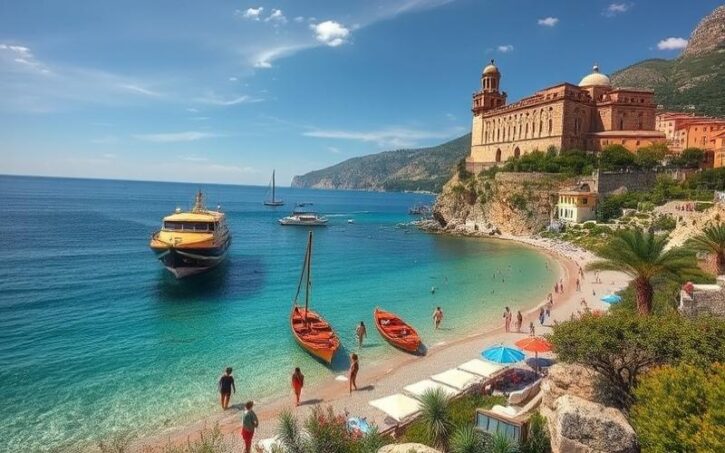
Greece, with its idyllic landscapes and Mediterranean climate, attracts many foreign investors eager to acquire a property under the Hellenic sun. However, buying real estate in this country of a thousand islands can prove to be a path fraught with pitfalls for the uninitiated. Between legal specifics, cultural particularities, and administrative subtleties, mistakes are easily made. This article will guide you through the main pitfalls to avoid so that your Greek dream does not turn into a financial nightmare.
Not Checking the Property’s Legality: The Risk of Hidden Illegality
One of the most costly mistakes when buying a property in Greece is failing to ensure its legal compliance. Indeed, many properties, especially in coastal or island areas, have been built without the necessary permits or in violation of urban planning regulations. This situation, while common, can have disastrous consequences for the unwary buyer.
Greek authorities have launched a major regularization campaign in recent years, but many properties remain in a legal gray area. Buying a non-compliant property can lead to substantial fines, the inability to resell the property, or even, in the most extreme cases, an obligation to demolish.
To avoid this trap, it is crucial to hire a lawyer specialized in Greek real estate law. They can carry out all necessary checks with the land registry and local urban planning services. They will ensure that the property has all the required permits and that it is not built on a protected or non-buildable area.
Good to know:
In Greece, approximately 30% of constructions are estimated to be in an irregular situation. A thorough check of the property’s legality is therefore essential before any purchase.
Underestimating the Importance of the Land Registry: The Key to a Secure Purchase
The Greek land registry system has undergone significant modernization in recent years, but there are still gray areas that can trap the uninformed buyer. Unlike other European countries, the Greek land registry is not yet fully digitized and centralized, which can complicate searches.
The common mistake is to rely solely on the seller’s statements or the documents provided without conducting thorough checks. However, it is not uncommon for the actual boundaries of a property to differ from those declared, or for undisclosed easements to encumber the property.
To avoid these inconveniences, it is essential to have a precise topographical survey of the land carried out by a licensed surveyor. This document will allow you to compare the actual boundaries with those recorded in the land registry. Furthermore, a thorough search of the land registry records will reveal any potential mortgages, easements, or other charges that could affect the value or use of the property.
It is also important to note that since January 2025, the Greek land registry has become the sole public land register, replacing the old land offices. This centralization aims to simplify procedures, but the transition is not yet fully complete in all regions.
Good to know:
The Greek land registry is undergoing major changes. In 2025, over 600 million documents still need to be digitized. It is therefore crucial to ensure that the land registry information for your property is up-to-date and correct.
Neglecting Tax Specifics: Beware of Unpleasant Surprises
The Greek tax system holds some surprises for foreign investors who are not prepared for them. A frequent mistake is failing to properly anticipate the tax burden associated with buying and owning real estate in Greece.
First of all, the purchase itself is subject to a property transfer tax. This amounts to 3.09% of the property’s value, whether new or old. This tax must be paid before the notarial deed is signed, and the notary must have proof of payment to proceed with the transaction.
Next, you need to consider the annual property tax, called ENFIA (Eniaios Foros Idioktisias Akiniton). This tax, the amount of which varies depending on the value and location of the property, can represent a significant expense for owners. In 2025, the base rate of ENFIA ranges between 0.1% and 1% of the property’s cadastral value, with surcharges for high-value properties.
Finally, for non-residents, it is important to be aware of the tax implications in their home country. Some countries have double taxation treaties with Greece, but the terms can vary.
Inadequate tax planning can therefore seriously erode the profitability of your real estate investment in Greece. It is highly recommended to consult a tax expert familiar with the specifics of the Greek system and international agreements to optimize your situation.
Good to know:
In 2025, the Greek government introduced tax incentives for foreign investors, including a 50% reduction in ENFIA for the first three years following the purchase for properties valued over 250,000 euros.
Ignoring Hidden Costs: The Real Budget for Your Purchase
A classic mistake when buying a property in Greece is focusing solely on the listed purchase price, without considering all the ancillary costs. These additional costs can represent a significant portion of the total budget and must be anticipated to avoid any unpleasant surprises.
Among these costs, we find in particular:
- Notary fees: they represent approximately 2% of the sale price (plus VAT).
- Land registry registration fees: approximately 0.5% of the sale price.
- Lawyer’s fees: between 1% and 2% of the purchase price (plus VAT).
- Real estate agent commission: generally between 2% and 4% of the sale price (plus VAT).
- Translation fees: all official documents must be translated into Greek by a sworn translator.
Added to these costs are potential renovation or upgrade expenses, particularly significant for older or traditional properties. It is crucial to have a full technical inspection of the property carried out before purchase to assess these potential costs.
Furthermore, for new properties, you need to be mindful of VAT. Since 2025, new homes are subject to 24% VAT in Greece. However, the Greek government has implemented an exemption system for certain types of properties, particularly primary residences for first-time buyers.
In total, these ancillary costs can represent between 10% and 15% of the purchase price. Not including them in your initial budget can seriously jeopardize your project or force you to scale back your ambitions.
Good to know:
For a property worth 300,000 euros, ancillary costs can easily reach 30,000 to 45,000 euros. It is crucial to include these costs in your financing plan from the start.
Underestimating the Particularities of the Local Market: The Importance of Local Knowledge
The Greek real estate market has specific features that can confuse foreign investors accustomed to other contexts. Not taking these into account can lead to costly misjudgments, both financially and in terms of quality of life.
First of all, you need to be aware of the significant disparities between different regions of Greece. Prices and market dynamics can vary considerably between major cities like Athens or Thessaloniki, popular tourist islands like Mykonos or Santorini, and mainland rural areas. In 2025, while the average price per square meter in Athens reaches 1,700 euros, it can exceed 6,000 euros in some areas of Mykonos.
Secondly, seasonality plays a crucial role in many Greek regions. In tourist areas, activity can be very intense during the summer season but almost non-existent in winter. This can have significant implications if you are considering seasonal rentals or plan to use the property as a second home.
It is also important to understand local trends in construction and development. Traditional Greek houses, while charming, may require significant work to meet modern comfort standards. Conversely, some recent constructions may lack character or build quality.
To avoid these pitfalls, it is crucial to spend time on the ground, meet local residents, and well-established real estate professionals. A thorough knowledge of the local market will allow you to make an informed choice and avoid disappointments.
Good to know:
In 2025, the Greek real estate market is experiencing a dynamic recovery, with an average price increase of 7.5% year-on-year. However, this growth is very uneven across regions, ranging from 2% in some rural areas to over 15% in sought-after neighborhoods of Athens.
Neglecting the Importance of Financing: The Pitfalls of Real Estate Loans in Greece
Financing your real estate purchase in Greece can prove to be a real headache if you are not prepared for it. Mistakes in this area can have serious long-term financial consequences.
First, you should know that Greek banks are generally more reluctant to grant real estate loans to non-residents. This caution is a result of the financial crisis that shook the country a few years ago. In 2025, although the situation has improved, lending conditions remain stricter than elsewhere in Europe.
For foreign buyers, it is often more advantageous to turn to banks in their home country. However, this requires a good understanding of the tax and legal implications of such a financial arrangement. It is crucial to ensure that the loan is compatible with Greek regulations on property ownership.
Another common mistake is failing to account for potential exchange rate fluctuations if your income is not in euros. An unfavorable exchange rate movement can significantly increase the real cost of your loan.
It is also important to fully understand the terms of your loan agreement. Greek banks tend to offer variable rates, which may seem attractive at first but can increase significantly over the life of the loan. In 2025, interest rates for real estate loans in Greece generally range between 3% and 5%, but can be higher for non-residents.
Finally, don’t forget to factor in the bank fees associated with the loan. These fees can include application fees, appraisal fees, and sometimes currency conversion fees if you borrow in a currency other than the euro.
Good to know:
In 2025, some Greek banks have started offering specific products for foreign buyers, with fixed rates over 10 years around 4.5%. These offers can be interesting, but require a thorough study of the terms.
Ignoring Cultural and Legal Specifics: The Subtleties of Greek Negotiation
Cultural and legal differences can be a source of costly misunderstandings when buying a property in Greece. Not taking them into account can not only complicate the transaction but also affect your future relationships with neighbors and the local community.
First, you need to understand that the pace of business in Greece can be different from what you are used to. Negotiations can take longer, with many informal discussions before reaching an agreement. Patience is key, and it is important not to rush things to avoid offending your counterpart.
Another crucial aspect is the concept of property ownership in Greece. In some regions, especially the islands, it is not uncommon for property rights to be complex, with assets passed down through generations without clear legal formalization. It is therefore essential to ensure that the seller has full rights to the property they are offering for sale.
Greek legislation on construction and urban planning can also hold surprises. For example, rules concerning seaside construction are particularly strict and can limit your renovation or extension plans. In 2025, Greek law prohibits any new construction within 50 meters of the shoreline and imposes severe restrictions up to 500 meters.
Finally, it is important to understand the role of the various players in a real estate transaction in Greece. The notary, for example, plays a central role and is responsible for many legal checks. However, unlike in some countries, they are not tasked with specifically protecting the buyer’s interests. This is why it is highly recommended to hire your own lawyer to defend your interests.
Good to know:
In Greece, the tradition of the “handshake deal” remains strong in some regions. However, for your legal security, always ensure that all agreements are formalized in writing and validated by a legal professional.
Conclusion: The Key to a Successful Investment in Greece
Buying real estate in Greece can be a rewarding and potentially lucrative experience, provided you are well-prepared. The common mistakes we have reviewed—from neglecting legal checks to underestimating hidden costs—can all be avoided with careful planning and the help of competent professionals.
The key to success lies in an approach that is both cautious and open. Cautious in the sense that every aspect of the transaction must be carefully verified and documented. Open because it is important to understand and respect the cultural and legal specifics of the country.
Remember that buying a property in Greece is not just a financial transaction; it is also an immersion into a rich culture and a unique way of life. By avoiding these common pitfalls and approaching your project with adequate preparation, you give yourself every chance to realize your Greek dream under the best conditions.
Disclaimer: The information provided on this website is for informational purposes only and does not constitute financial, legal, or professional advice. We encourage you to consult qualified experts before making any investment, real estate, or expatriation decisions. Although we strive to maintain up-to-date and accurate information, we do not guarantee the completeness, accuracy, or timeliness of the proposed content. As investment and expatriation involve risks, we disclaim any liability for potential losses or damages arising from the use of this site. Your use of this site confirms your acceptance of these terms and your understanding of the associated risks.

Cyril Jarnias is an independent expert in international wealth management with over 20 years of experience. As an expatriate himself, he is dedicated to helping individuals and business leaders build, protect, and pass on their wealth with complete peace of mind.
On his website, cyriljarnias.com, he shares his expertise on international real estate, offshore company formation, and expatriation.
Thanks to his expertise, he offers sound advice to optimize his clients' wealth management. Cyril Jarnias is also recognized for his appearances in many prestigious media outlets such as BFM Business, les Français de l’étranger, Le Figaro, Les Echos, and Mieux vivre votre argent, where he shares his knowledge and know-how in wealth management.





