
 Published on and written by Cyril Jarnias
Tourism plays a crucial role in the Greek economy, and its influence on the real estate market is undeniable. In recent years, Greece has experienced a true tourism boom that has had significant repercussions on the real estate sector. Foreign investors are flocking, drawn by the opportunities offered by this country of idyllic landscapes and rich cultural heritage. This article explores in detail how tourism is shaping the Greek real estate landscape, from paradise islands to dynamic urban centers.
The Crown Jewels: The Most Sought-After Tourist Areas
Greece is full of tourist destinations that attract millions of visitors each year. These high-traffic areas have become hotspots for real estate investment.
The Greek Islands: A Paradise for Investors
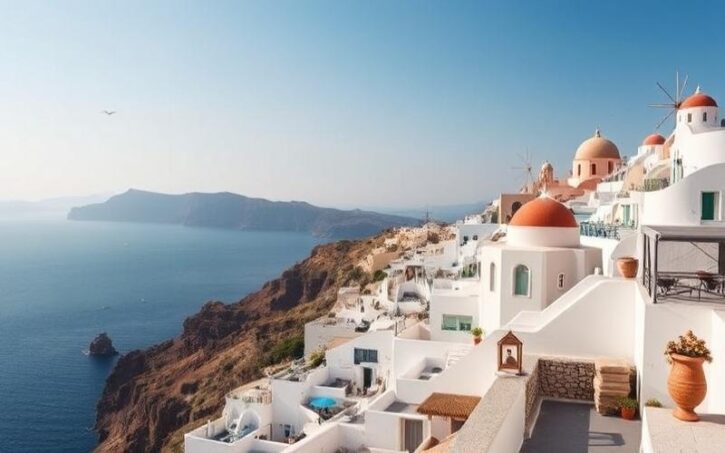
The Greek islands are without a doubt the stars of Hellenic tourism. Mykonos, Santorini, Rhodes, and Corfu are among the most popular destinations, attracting an affluent international clientele. Real estate on these islands is particularly sought after, with growing demand for luxury villas and high-end residences[6].
The Athenian Riviera: The New Greek Saint-Tropez
The southern coast of Athens, nicknamed the Athenian Riviera, is experiencing explosive growth. The neighborhoods of Glyfada, Voula, and Vouliagmeni have become prime investment areas for luxury real estate. Demand for properties with sea views in this region has skyrocketed, leading to a significant rise in prices[6].
Athens and Thessaloniki: Urban Renewal
Greece’s two largest cities are not to be outdone. Athens, in particular, is experiencing an impressive real estate renaissance. Entire neighborhoods are being renovated, and old buildings are being transformed into modern residences. Thessaloniki, the country’s second city, is also attracting investors thanks to its economic and cultural dynamism[9].
Good to know:
The Greek islands, the Athenian Riviera, and major cities like Athens and Thessaloniki are the most attractive areas for tourism-related real estate investment in Greece. These regions offer high return potential due to strong tourist demand.
Soaring Prices: When Tourism Drives Up Values
The massive influx of tourists and foreign investors has had a considerable impact on real estate prices in Greek tourist areas.
A Spectacular Post-Crisis Recovery
After the 2008 financial crisis, which saw real estate prices plummet drastically, the Greek market is experiencing a spectacular recovery. In some regions, prices have more than doubled in a few years. This increase is particularly pronounced in sought-after tourist areas[9].
Significant Regional Disparities
The impact of tourism on real estate prices is not uniform across the country. The most popular islands like Mykonos and Santorini have seen prices skyrocket, with increases of up to 90% since 2015. In Athens, the rise is more moderate but still significant, with an average increase of 30% over the same period[6].
The Phenomenon of Tourist Gentrification
In some highly touristy areas, a phenomenon of gentrification is observed. Local residents are gradually being pushed out by rising prices, replaced by foreign investors or second-home owners. This phenomenon is particularly visible in Athens neighborhoods like Koukaki or Exarchia, once popular and now undergoing a major transformation[9].
Good to know:
The rise in real estate prices in Greek tourist areas has been spectacular since the end of the financial crisis. This increase varies considerably by region, with peaks on the most popular islands and growing gentrification in some urban neighborhoods.
The Gold Rush of Short-Term Rentals
The tourism boom in Greece has sparked a veritable rush into rental investment, particularly in the short-term rental sector.
The Rise of Short-Term Rental Platforms
The advent of platforms like Airbnb has revolutionized the tourist rental market in Greece. Many property owners have converted their properties into short-term rentals, attracted by potentially high returns. This trend is particularly pronounced on the islands and coastal areas, where tourist demand is strong[4].
Attractive but Variable Returns
Rental yields in Greek tourist areas can be very attractive, sometimes reaching 8 to 10% in the best locations. However, these figures vary considerably depending on the season, location, and quality of the property. Investors must take into account the strong seasonality of Greek tourism, with the high season concentrated in the summer months[9].
Regulation, a Growing Challenge
Faced with the explosion of short-term rentals, Greek authorities have begun to implement stricter regulations. Restrictions on the number of rentable nights per year and the requirement to register properties for short-term rental have been introduced. These measures aim to preserve the balance between tourism development and the needs of local residents[4].
Good to know:
Short-term rental investment in Greece offers potentially high returns but requires a good understanding of the local market and current regulations. The seasonality of tourism and new regulations are key factors to consider.
The Golden Visa Program: A Catalyst for Foreign Investment
The Greek Golden Visa program has played a major role in attracting foreign investors to the country’s real estate market.
A Key to Europe
Launched in 2013, the Greek Golden Visa program offers a residence permit to non-European investors in exchange for a real estate investment of at least 250,000 euros. This threshold, one of the lowest in Europe, has made Greece particularly attractive to international investors[9].
Growing Success
The program has enjoyed growing success over the years. Between 2013 and 2024, more than 10,000 Golden Visas were issued, generating real estate investments worth several billion euros. Chinese investors have been particularly active, followed by Russians, Turks, and nationals from the Middle East[4].
Impact on the Real Estate Market
The influx of foreign investors through the Golden Visa program has had a significant impact on the Greek real estate market. It has contributed to rising prices in certain areas, particularly in Athens and the most popular islands. However, it has also stimulated the renovation and construction of new properties, improving the overall quality of the housing stock[9].
Good to know:
The Greek Golden Visa program has been a powerful catalyst for foreign real estate investment in Greece. With an attractive investment threshold of 250,000 euros, it has attracted thousands of investors, mainly from Asia and the Middle East, significantly contributing to the recovery of the Greek real estate market.
Challenges and Opportunities for the Future
The Greek real estate market, stimulated by tourism, faces several challenges but also offers many opportunities for the future.
Sustainability and Overtourism
One of the main challenges is reconciling tourism development with the preservation of the environment and cultural heritage. Some destinations like Santorini or Mykonos face problems of overtourism. Authorities and investors will need to work together to develop more sustainable and environmentally friendly tourism[6].
Diversification of Destinations
There are still many opportunities in lesser-known destinations. Islands like Tinos, Syros, or Lefkada are beginning to attract the attention of savvy investors. These destinations often offer better value for money and significant growth potential[6].
Year-Round Tourism Development
Greece is seeking to extend its tourist season beyond the summer months. The development of cultural, gastronomic, or wellness tourism could create new opportunities for real estate in regions less dependent on beach tourism[9].
Infrastructure Modernization
The Greek government has launched major infrastructure projects, including the renovation of the former Athens airport at Elliniko. These projects are expected to stimulate real estate investment in new areas and improve the country’s overall attractiveness for tourists and investors[9].
Good to know:
The Greek real estate market linked to tourism still offers many opportunities, particularly in lesser-known destinations and in the development of more sustainable and diversified tourism. The modernization of infrastructure and the extension of the tourist season open up new prospects for investors.
Conclusion: A Dynamic and Multifaceted Market
The impact of tourism on the Greek real estate market is undeniable and multifaceted. On one hand, it has stimulated a spectacular recovery of the sector after the financial crisis, attracting massive investments and contributing to the modernization of the housing stock. The most sought-after tourist areas have experienced significant price increases, offering interesting capital appreciation opportunities for early investors.
On the other hand, this rapid growth has created new challenges, particularly in terms of sustainability and balance between the needs of tourists and those of local populations. Regulation of the sector, especially concerning short-term rentals, has become a major issue.
For the future, the Greek real estate market linked to tourism seems poised for continued development, but likely more balanced and diversified. Savvy investors will be able to find interesting opportunities by exploring lesser-known destinations or betting on more sustainable and less seasonal forms of tourism.
Greece, with its unique cultural heritage, varied landscapes, and Mediterranean climate, remains a top destination for tourists from around the world. This enduring appeal, coupled with government initiatives favorable to foreign investors, suggests a dynamic future for the Greek tourism real estate market.
Disclaimer: The information provided on this website is for informational purposes only and does not constitute financial, legal, or professional advice. We encourage you to consult qualified experts before making any investment, real estate, or expatriation decisions. Although we strive to maintain up-to-date and accurate information, we do not guarantee the completeness, accuracy, or timeliness of the proposed content. As investment and expatriation involve risks, we disclaim any liability for potential losses or damages arising from the use of this site. Your use of this site confirms your acceptance of these terms and your understanding of the associated risks.

Cyril Jarnias is an independent expert in international wealth management with over 20 years of experience. As an expatriate himself, he is dedicated to helping individuals and business leaders build, protect, and pass on their wealth with complete peace of mind.
On his website, cyriljarnias.com, he shares his expertise on international real estate, offshore company formation, and expatriation.
Thanks to his expertise, he offers sound advice to optimize his clients' wealth management. Cyril Jarnias is also recognized for his appearances in many prestigious media outlets such as BFM Business, les Français de l’étranger, Le Figaro, Les Echos, and Mieux vivre votre argent, where he shares his knowledge and know-how in wealth management.





