
 Published on and written by Cyril Jarnias
Moving to Djibouti as an expatriate means choosing a small, strategic country at the crossroads of Africa, the Arab world, and French influence, with an extreme climate, a developing economy, and a highly regulated legal framework. This guide provides a concrete overview of what to expect before, during, and after your relocation.
Understanding the Country Before You Go
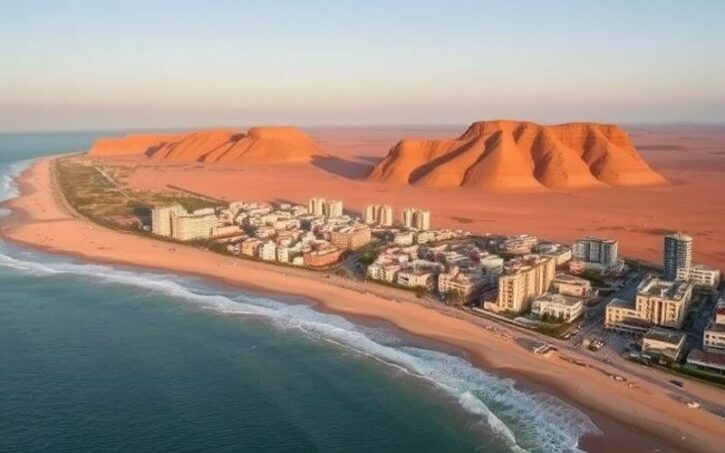
Djibouti is a small republic in the Horn of Africa, bordered by the Red Sea and the Gulf of Aden. The country’s economic, political, and social heart is Djibouti City, a port capital of a few hundred thousand inhabitants that concentrates most services, jobs, and infrastructure.
Djiboutian society is a blend of African, Arab, and French influences. It is mainly composed of the Somali (about 60%) and Afar (about 35%) ethnic groups, along with Arab (notably Yemeni), Ethiopian, and European (especially French and Italian) communities. Islam is the state religion, practiced by the vast majority of the population, and deeply influences social codes, daily life, and the country’s legal framework.
The national currency is the Djiboutian franc (DJF), pegged to the US dollar, with an exchange rate hovering around 177 DJF to 1 USD, or about 1,000 DJF to 5.6 USD. The country largely lives off its geostrategic position: foreign military bases, a deep-water port, a logistics corridor to Ethiopia, free trade zones, and port services structure the economy.
Climate, Environment, and the Best Time to Move
The first shock for a newcomer is often the climate. Djibouti is located halfway between the equator and the Tropic of Cancer and enjoys, or endures, a hot desert climate almost year-round.
A Country of Extreme Heat
Temperatures rarely drop below 68°F (20°C), even at night, and frequently climb above 104°F (40°C) during the day in the hot season. In Djibouti City, the supposedly “cool” period from December to February still sees afternoon temperatures around 84°F (29°C). From March onward, the mercury rises again, to around 95°F (35°C) in May, before becoming oppressive between June and September.
In coastal and lowland areas, the heat is accentuated by humidity, especially at the end of the hot season: September is often described as particularly grueling, with a combination of heat and mugginess that is difficult to endure without air conditioning. In summer, a hot, dusty desert wind, the khamsin, can reduce visibility and intensify the feeling of a furnace.
This is the altitude in feet of Djibouti’s highest point, the Moussa Ali volcano.
Rare but Violent Rains
Rainfall is low and irregular. Djibouti City receives barely 5 to 6.5 inches (130 to 165 mm) of rain per year, spread over about twenty days. Summer (June-August) is virtually dry. When rain does come, especially in autumn and spring, it often falls in violent, brief downpours, which can cause sudden flash floods in wadis and urban flooding. Some episodes have dumped more than the annual average in a single day.
Mountainous areas receive more rain (sometimes over 10 inches (250 mm) per year) and can be influenced by the Arabian Sea monsoon between July and September.
Sun, Sea, and Outdoor Activities
The country is among the sunniest in the world, with over 3,200 hours of sunshine per year. The sea is warm year-round, between 79°F (26°C) in winter and over 86°F (30°C) in summer. This allows for continuous swimming, diving, and snorkeling, with the added bonus of possibly observing whale sharks, whose seasonal presence makes Djibouti a renowned spot.
Djibouti offers a great variety of landscapes within a limited territory. You’ll find white sand beaches, mangroves, and semi-desert plains like the Grand Bara. The country also has iconic salt lakes, such as Lake Assal, the lowest point in Africa, and Lake Abbé, famous for its limestone chimneys. The Goda and Mabla mountain ranges offer green relief, while the Day Forest National Park is home to one of the last primary forests on the African continent.
When to Plan Your Move?
For a move, the challenge isn’t a week of tourism, but several months of adaptation. Sources agree: the most bearable period to arrive stretches from November to April, with an optimum between December and February. Days are then roughly between 77°F and 86°F (25°C and 30°C), nights are cooler, and the heat, though present, is significantly less overwhelming.
Moving in the middle of summer (June-August) should be avoided as much as possible. The heat can become dangerous to health, especially without effective air conditioning, and complicates administrative procedures, apartment viewings, and discovering the country. A move planned for the end or very beginning of the year also allows you to enjoy a slight greening of some areas after the rare rains, offering a less arid image of the country.
Cost of Living: What to Really Expect?
Djibouti is regularly perceived as “expensive” relative to the country’s level of development. For an expatriate, the cost of living is above that of many African countries, particularly for upscale housing, imported goods, international schools, and certain services.
Available data varies by source but shows a clear trend: living comfortably, especially with a family, requires a substantial budget.
Overview of Monthly Budgets
Average estimates for an expatriate are as follows (amounts in US dollars, including housing):
| Profile | Average Monthly Budget | Associated Lifestyle |
|---|---|---|
| Single expat | ≈ $2,400 – $2,450 | Decent comfort, no great luxury |
| Expat couple | ≈ $3,400 | Standard comfort |
| Family of 4 expats | ≈ $4,800 – $4,900 | Comfortable, but watch extras |
| Digital nomad | ≈ $5,800 | Large share for housing / coworking |
| Local | ≈ $1,380 | Average local standard of living |
Some sites suggest “budget” ranges starting at around $1,270 for a single person (including housing) and “luxury” levels beyond $5,000 per month. Reality will depend mainly on your type of housing, use of international schools, and consumption of imported goods.
Housing and Utilities: The Key Expense
Rents in Djibouti City are high relative to housing standards. A small sample of prices in Djiboutian francs (DJF) illustrates the situation:
| Type of Housing | Average Monthly Rent (DJF) | Notes |
|---|---|---|
| Furnished 485 sq ft (45 m²) studio, “normal” neighborhood | ≈ 189,000 | Furnished, average standard |
| Furnished 485 sq ft (45 m²) studio, expensive neighborhood | ≈ 187,000 | Paradoxically, little difference noted |
| 1 bedroom, downtown | ≈ 255,000 (120–390k) | Wide variation by address |
| 1 bedroom, outside downtown | ≈ 85,000 (40–130k) | More affordable options |
| 3 bedrooms, downtown | ≈ 176,667 (150–200k) | Relatively narrow range |
| 3 bedrooms, outside downtown | ≈ 264,000 (180–400k) | Villas and large apartments |
Utilities can also weigh heavily, especially with essential air conditioning:
| Type of Utilities | Estimated Monthly Cost (DJF) | Details |
|---|---|---|
| Electricity + water + garbage (≈ 915 sq ft / 85 m²) | ≈ 92,700 (58–127k) | Depending on AC usage |
| Utilities for 485 sq ft (45 m²) studio (1 person) | ≈ 120,000 | Intensive AC use |
| Utilities for ≈ 915 sq ft (85 m²) apartment (2 people) | ≈ 150,000 | Family / couple |
| High-speed internet (60 Mbps, unlimited) | ≈ 10,500 (9–12k) | Variable quality |
| Mobile plan + 10 GB data | ≈ 5,700 (3–6.5k) | Local SIM required |
In dollars, a decent apartment in the city quickly runs around $500 to $1,200 monthly for a single person or couple, plus relatively high energy bills.
Daily Consumption: Food, Going Out, Transport
Basic local products remain affordable, but anything imported (processed goods, alcohol, certain meats, Western products) comes at a premium.
A few benchmarks in DJF: The Djiboutian franc (DJF) is the official currency of Djibouti. It is pegged to the US dollar (USD) at a fixed rate of 177.721 DJF to 1 USD. This parity has been maintained since 1973. Banknotes in circulation are issued by the Central Bank of Djibouti and come in denominations of 1000, 2000, 5000, and 10,000 DJF. Coins, less used, are 1, 2, 5, 10, 20, 50, 100, 250, and 500 DJF.
| Item | Approximate Price |
|---|---|
| Inexpensive restaurant meal | ≈ 1,750 DJF |
| Business district lunch menu | ≈ 12,500 DJF |
| Italian dinner for two (expat area) | ≈ 15,000 DJF |
| Cappuccino in expat area | ≈ 1,500 DJF |
| Local draft beer (bar) | ≈ 1,000 DJF |
| 1.5L bottle of water (grocery) | ≈ 100 DJF |
| White bread (≈ 1 lb / 450 g) | ≈ 1,500 DJF |
| Chicken (≈ 1 lb / 450 g) | ≈ 1,470 DJF |
| Dozen eggs | ≈ 1,220 DJF |
Public transportation remains inexpensive but rudimentary. A local bus ride costs around 50 DJF. Taxis have a starting fare around 500 DJF, then a high per-kilometer cost (in practice, negotiation is the rule).
Gasoline costs about 310 DJF per liter. Owning a personal car is often considered almost essential outside the capital, but represents a significant investment, with a new compact-type vehicle costing several million DJF.
International Comparisons
Cost of living indices rank Djibouti rather in the “expensive” bracket for a developing country: about 44% more costly than Dammam, 32% more expensive than Memphis (USA), but 40% less costly than London, and at a level comparable to a city like Queenstown in New Zealand. In other words, an expat used to a large Western metropolis won’t necessarily be shocked, but a French speaker arriving from West Africa will perceive Djibouti as very expensive.
Job Market, Key Sectors, and Salaries
The Djiboutian economy revolves around a few key areas: port and logistics activities, services related to foreign military bases, infrastructure (railway to Ethiopia, free trade zones), telecommunications, energy, and development projects supported by international donors.
Opportunities for expatriates are generally concentrated in: high-demand sectors, multinational companies, international projects, management positions, and specialized professions.
– international organizations and NGOs (development, humanitarian);
– logistics, maritime, and port operations;
– infrastructure and construction projects;
– telecoms and certain financial services;
– education (international schools, sometimes university).
Overview of local salaries and typical packages for expatriates.
The average net monthly salary, across all professions, varies by source but is generally around a few hundred dollars.
Foreigners recruited as expatriates often benefit from a full package including salary in hard currency, housing allowance, international health insurance, and annual plane tickets.
These packages can also include covering children’s school fees and other benefits to compensate for the cost of living abroad.
During contract negotiation, it is crucial to include:
– the level of rents in neighborhoods favored by expats;
– the cost of an international school per child;
– private health insurance (with evacuation coverage);
– the price of annual plane tickets to return to your home country.
Without these benefits, a locally paid position can quickly become unattractive, even financially untenable.
Visas, Work Permits, and Residence: The Administrative Framework
Moving to Djibouti is not just about a tourist visa. To live and work legally, three documents are essential for a foreigner: an entry visa, a residence permit, and a work permit.
Types of Visas
Djibouti has implemented an eVisa system for short stays (tourism, business, family visits, transit), with authorized stays of 14 or 90 days. A visa on arrival is available for certain nationalities at Djibouti-Ambouli International Airport.
For an expatriation project, you need to aim for a long-stay visa:
– the short-term business visa allows for prospecting missions, meetings, project supervision, without direct local employment (validity 30 or 90 days);
– the work or long-stay visa is associated with a local employment contract and sponsorship by a Djiboutian employer;
– specific visas exist for students, diplomats, and officials.
Practical Steps for a Hired Expatriate
The most common practice is to secure a job before initiating visa procedures. The employer prepares an employment contract and often initiates the work permit and residence permit process themselves.
The main steps are as follows:
1. Obtain a long-stay entry visa through a Djiboutian embassy or consulate (or sometimes via a French consulate if no Djiboutian post is present in your country of residence).
2. Arrive in Djibouti and register with the competent authorities.
3. The employer submits applications for a work permit (to the Ministry of Labor) and a residence permit (to the Directorate of Immigration and Documentation in Djibouti City).
4. Provide supporting documents: passport (valid for at least 6 months beyond the planned departure date, with at least 2 blank pages), application form, ID photos, employment contract, degree certificates (often legalized), criminal record extract from your home country, medical certificate from an approved clinic in Djibouti, proof of financial means and housing (lease or reservation), etc.
5. Submit to biometric data collection (fingerprints, photo) according to current procedures.
Work and residence permits are generally valid for one year and must be renewed annually, preferably at least one month before expiration to avoid penalties.
Role and Obligations of the Employer
The company that recruits you must be registered in Djibouti, be in good standing fiscally, and justify hiring a foreign worker (e.g., lack of available local skills). It issues a sponsorship letter, a draft contract, and commits to:
As a foreign worker, you must keep your work and residence authorizations up to date. It is imperative to report any change in status (such as contract termination, change of position or address) to the competent authorities. Furthermore, in certain situations, the employer or employee may be required to assume repatriation costs for the employee and family at the end of the assignment.
Work permits are tied to a specific employer. Changing employers usually requires a new procedure with a new sponsorship file. Working outside the framework provided by the permit (different position, different employer, side activity) exposes you to sanctions up to deportation.
Spouse and Children: Family Reunification
A spouse and dependent children (often those under 18) can apply for a visa and residence permit as dependents of the primary work permit holder. You will need to prove:
– the validity of the primary parent’s residence and work permit;
– sufficient resources to support the family;
– suitable housing.
Required documents for an application include passports, photos, marriage and birth certificates (legally recognized and sometimes legalized), medical certificates, and criminal record extracts for adults. The validity of family members’ residence permits is generally aligned with that of the main applicant’s permit.
Staying Long-Term: Permanent Residence and Naturalization
Permanent residence in Djibouti is neither automatic nor simple. The texts mention possible avenues:
– long, uninterrupted legal residence (often more than 10 years), accompanied by good integration and financial autonomy;
– a significant investment in strategic sectors (infrastructure, energy, logistics) giving access to specific statuses via the Investment Promotion Agency;
– marriage to a Djiboutian citizen, which, under conditions, can lead to long-term residence, even naturalization.
Each case is treated on an individual basis, with no automatic guarantee, even after five or ten years in the territory.
Sanctions for Non-Compliance
Working without a permit or staying beyond the authorized duration of your visa exposes you to fines, deportations, and even future entry bans. Employers also risk significant penalties and prosecution. Authorities may also refuse a future visa in case of a negative record.
Finding Housing in Djibouti City: Neighborhoods, Types of Housing, and Solutions
For the vast majority of expatriates, life is concentrated in Djibouti City. This is where the main international schools, hospitals, embassies, hotels, and most of the real estate suitable for foreigners are located.
Neighborhoods and Areas to Know
Several areas frequently appear in listings:
Presentation of the main neighborhoods and areas of Djibouti City, with their characteristics for residents and expatriates.
Large residential neighborhood favored by expatriates, composed of several sections (Gabode 3, Gabode 5). It is close to the airport and various services.
Upscale residential sector housing international schools (QSI, Turkish, Saudi), embassies, and high-end housing.
Developing areas with residences, apart-hotels, and studios often aimed at a foreign clientele.
Historic and commercial heart of the city, close to the port, markets, hotels, and many services.
Vast, more popular peripheral area offering lower rents but generally lower housing standards and fewer expatriates.
Typology of the Market
Djibouti offers a combination of hotels, apart-hotels, furnished studios, and apartments for long-term lease. For example: hotels, apart-hotels, furnished studios, and apartments for long-term lease.
– apart-hotels like Waafi Corniche Hotel Apartments or JANO HOUSE APARTHOTEL, with services (cleaning, wifi, sometimes pool);
– apartments of 750 to 1,180 sq ft (70 to 110 m²), often with 2 or 3 bedrooms, in newer buildings near the sea or important mosques (like Oumousalama);
– studios of 215 to 485 sq ft (20 to 45 m²), furnished, in neighborhoods like Héron Marabout or Gabode.
Besides major international platforms (Airbnb, Booking.com, Expedia), there are local players in Djibouti for booking accommodations. These alternatives include agencies like African Land and Djiboutian websites specializing in apartment, vacation home, and room rentals.
For relocation, many expatriates opt for an apart-hotel or Airbnb for the first month, while looking for permanent housing through the local network or contacts (colleagues, the “Djibouti Expats” group on social media, etc.).
Real Estate Purchase and Taxation
For expatriates considering an investment, prices per square meter remain high for the region. In the capital, cited ranges are around:
| Location | Approx. Price per sq ft / m² (USD) |
|---|---|
| Downtown | ≈ $140 – $167 / $1,500 – $1,800 |
| Outside downtown (residential areas) | ≈ $111 – $149 / $1,200 – $1,600 |
Add to this a real estate transaction tax of around 7%. Taxation also includes:
– a corporate tax of 25%;
– a dividend withholding tax of 15%;
– an income tax scale with a top marginal rate of 40%;
– a standard VAT of 8%.
For a salaried expatriate, these aspects should be studied with the employer and possibly a tax advisor before any purchase project.
Opening a Bank Account and Managing Your Money
Djibouti operates largely in cash, especially outside the capital. However, it is entirely possible for a foreigner to open a local bank account, even as a non-resident, which can facilitate paying rent, school fees, and household staff salaries.
Conditions and Documents
Most banks require: proof of income, a good credit history, and collateral for loans.
– to be at least 18 years old;
– to provide an ID: passport or national ID card (for residents);
– sometimes a certified true copy of the passport authenticated by a Djiboutian embassy;
– two color ID photos;
– proof of address (electricity bill, residence certificate);
– a recent bank statement (6 months) from another bank;
– a completed and signed account opening form, often to be sent or submitted to the bank’s headquarters.
An initial deposit is required to activate the account, the amount varies by institution and currency. Accounts can be denominated in Djiboutian francs, but also in US dollars, euros, British pounds, or UAE dirhams, especially for diaspora-oriented accounts.
Banks Present and Services
Several institutions are mentioned:
Presentation of major banks and their digital and specialized services on the continent.
Recent bank focused on digital: MyCAC app, CACPay QR code payment, CAC Wallet e-wallet, web platform. Also offers payment terminals for merchants and displays exchange rates for many currencies.
Promotes solutions for the diaspora: multi-currency accounts, international debit cards, and fast, no-management-fee incoming transfers.
Offers a range of banking products: current accounts, savings accounts, term deposits, and “millionaire” investment products.
The banking landscape is complemented by various local banks and regional subsidiaries, offering extensive coverage.
It is technically possible to open some accounts remotely, but banks apply strict KYC policies and reserve the right to refuse clients based on their country of residence or risk profile.
For those who prefer guidance, specialized companies offer custom paid guides (in the form of PDFs detailing banks, procedures, documents, etc.). This type of service can help navigate administrative hurdles but does not guarantee account opening.
Health, Hospitals, and Insurance: A Critical Point
For an expatriate, the question of health in Djibouti is central. The local system remains fragile, even if the capital concentrates the best facilities.
Medical Offer and Limitations
Djibouti City has a few reference establishments:
– Peltier General Hospital (public);
– French military hospital (HIA Bouffard);
– private hospitals (three main establishments);
– private clinics and hospitals like FK Medical SDMS, often cited as the best current choices for expatriates.
Medical infrastructure is generally below Western standards, with a lack of state-of-the-art equipment, limited specialties, and difficulties in the supply of medicines. Outside the capital, healthcare is very limited, almost non-existent.
Emergency care is accessible, but treatment for serious conditions (cancer, major surgery, specialized intensive care, certain heart conditions) often requires evacuation to another country (Ethiopia, Kenya, Europe, Gulf countries). These evacuations quickly cost several tens of thousands of dollars.
Insurance and Prevention
For these reasons, it is strongly recommended that expatriates arrive with:
For a stay in Djibouti, it is essential to have international health insurance covering private care on-site and, crucially, medical evacuation. Vaccinations should be up to date, including hepatitis A and B, typhoid, and basic vaccines (tetanus, whooping cough, etc.). A yellow fever vaccine may be required depending on the itinerary. Finally, preventive treatment for malaria is recommended for exposed areas, on medical advice.
Frequent diseases include malaria, dengue, chikungunya, infectious diarrhea, hepatitis, and occasionally cholera or MERS-like fever cases. Tap water is not potable, and caution is advised with raw vegetables, ice cream, and other sensitive products.
Consultations at private clinics are usually paid for in cash. Some centers accept international insurance, but it remains common to have to pay upfront and then get reimbursed.
Schooling and International Schools
For expatriate families, the question of schools is decisive. The Djiboutian public system, largely inspired by the French model, suffers from quality issues and a high illiteracy rate. Hence the importance of international schools to guarantee educational continuity.
Overview of International Options
The capital houses several structures with an international focus, with very different profiles:
Overview of the main educational institutions offering international, French, or community programs in Djibouti, with their pedagogical and pricing specifics.
Non-denominational, non-profit school. American program in English, from kindergarten to secondary. Pedagogy focused on creativity, problem-solving, and international-mindedness. Annual fees: from $3,500 – $3,900.
Non-religious international network, located in Haramous. Accepts students from kindergarten to middle school. Curriculum focused on 21st-century skills and a ‘mastery learning’ approach. Annual fees: around $20,000.
For-profit, English-medium school, with reinforcement of French and Arabic. Modern campus, emphasis on technology, arts, and sports activities. Fees: mid to upper range.
Lycée d’État de Djibouti and Lycée français de Djibouti. French system, teaching in French up to the baccalaureate. Attended by local students and French-speaking expatriates.
Horn of Africa School (Catholic, Kenyan program), ‘Indian’ school, Turkish and Saudi schools in Haramous. National programs, varied religious and linguistic dimensions (Arabic, English).
Fees vary enormously, from a few hundred dollars a year for community schools to several thousand, even tens of thousands, for the most prestigious international schools. An average estimate of $4,000 to $6,000 annually per child in the private international sector is a good rule of thumb, excluding high-end options.
Practical Advice
Places are often limited, and priority may be given to certain profiles (children of diplomats, military personnel, large company employees). It is essential to:
For successful schooling abroad, it is crucial to contact institutions very early, sometimes up to a year in advance. You must check the main language of instruction as well as the certifications offered (like the International Baccalaureate, international accreditations, or French homologation). Finally, it is recommended to factor in anticipated school fees during salary negotiation with your future employer.
For younger children, private daycares and kindergartens exist, with costs around 60,000 DJF per month for preschool structures, but quality varies greatly.
Culture, Social Codes, and Daily Life
Beyond the rules, living in Djibouti means adapting to a culture strongly marked by Islam, a tradition of respect for elders, and a keen sense of hospitality.
Social Relations and Etiquette
Greetings are very important. A handshake, sometimes accompanied by a slight nod, is customary, supplemented by phrases like “As‑Salaam‑Alaikum” and “Wa‑Alaikum‑Salaam.” People often take the time to ask about the family before getting down to business.
In front of an elderly or respected person, lowering your voice, avoiding overly direct eye contact, and being reserved is a sign of deference. Between close individuals, displays of affection are more visible: hugs and kisses between men, light embraces between women.
Public displays of affection between men and women are frowned upon, especially outside areas frequented by foreigners. On the other hand, seeing two friends of the same sex holding hands is common and has no romantic connotation.
Hospitality is a core value. When invited, it is common to be generously fed and offered spiced tea (shaah) or strong coffee, sometimes accompanied by dates, pastries, or fruit. An outright refusal can be perceived as an offense; it is better to taste, then politely decline, explaining you are full. Remember to remove your shoes at the entrance and wait to be invited to sit.
Dress Code
The implicit rule is modesty. In the city, men often wear light trousers and long-sleeved shirts to protect themselves from the sun, women wear long dresses, skirts, or abayas, sometimes with a headscarf (shash). Not all young women cover their heads, especially in more open urban circles.
For an expatriate, it is recommended to:
– avoid very short or tight clothing, especially outside private places;
– plan for sleeves at least above the elbow and midi to long pants or skirts;
– reserve classic swimwear for hotel pools and private beaches, and wear a sarong or covering outfit when moving around.
When visiting mosques or religious sites, women are required to cover their heads, and all persons, men and women, must wear clothing covering arms and legs.
Religion and Calendar
The call to prayer punctuates the day five times. Friday is the most important day of the week, with many administrative offices and shops closing during the main prayer time.
During the month of Ramadan, most Muslims fast from dawn to sunset. Out of respect, it is highly advised for expatriates not to drink, eat, or smoke conspicuously in public during the day. Working and opening hours are often adjusted, with more activity shifting to the evening.
The major Muslim holidays, notably Eid al‑Fitr (end of Ramadan) and Eid al‑Adha (Feast of Sacrifice), as well as national holidays like Independence Day, strongly impact daily life (closures, ceremonies, possible traffic restrictions).
Practical Life: Hours, Food, Leisure
The work week typically runs from Sunday to Thursday, from 8 a.m. to 1 p.m., then from 2 p.m. to 5 p.m., with variations by sector. A good part of administrative tasks is handled in the morning, before the midday torpor and extreme heat.
The local cuisine is a blend of Somali, Yemeni, Ethiopian, and French influences, with typical dishes like skoudehkaris, stews (maraq), flatbreads (sabayad, lahooh), as well as dishes based on fish and camel. The capital also offers a wide variety of international restaurants, notably Lebanese, Chinese, Vietnamese, Italian, and Indian.
Alcohol is subject to strong restrictions: sale and promotion are prohibited in the public sphere, but it can be found in some hotels, bars, and restaurants catering to foreigners. Customs checks can be strict on imported quantities. Public drunkenness is severely punished, with penalties up to imprisonment.
Regarding leisure, expatriate social life revolves around a few places: upscale hotels (pools, bars, brunches), cafes with wifi, nearby beach areas (Plage de Soleil, Siesta Beach). Diving, snorkeling, excursions to Lake Assal, Lake Abbé, the Day Forest, or the Grand Bara are the must-do “postcard” activities. Indoor sports facilities exist but remain few and relatively expensive.
Security, Risks, and Behaviors to Adopt
Official assessments from Western chancelleries converge on a nuanced diagnosis: Djibouti is relatively politically stable and generally safe on a daily basis, but exposed to a non-negligible terrorist risk and local issues of opportunistic crime.
Terrorism and Areas to Avoid
Djibouti’s participation in the African Union mission in Somalia and the presence of foreign military bases make it a potential target for groups like Al‑Shabaab, which have already made public threats. Several countries (UK, Canada, USA) recommend caution, particularly:
– around military installations, official buildings, and diplomatic zones;
– in places frequented by foreigners: large hotels, restaurants, shopping malls, stadiums, places of worship;
– during major religious, political, or sporting events.
The border regions with Eritrea (Tadjourah, Obock, a 6-10 mile / 10–16 km strip) are subject to strong recommendations, often classified as areas to avoid or not travel to for non-essential stays, due to border tensions, landmine risks, and a reduced security presence.
Petty Crime and Precautions
Minor crime exists: pickpocketing, bag snatching, snatch-and-grabs from vehicles. Expatriates are encouraged to:
For your safety, it is recommended to avoid walking alone at night, particularly in poorly lit areas. Limit visible signs of wealth, such as luxury watches, jewelry, or designer bags. When in a car, keep valuables out of sight. Finally, be vigilant on isolated beaches at dusk, like Doralé and Khor Ambado.
Attempted burglaries of expatriate residences have been reported; carefully choosing your housing (guard, secure fence, shutters) and taking out home insurance are essential reflexes.
Traffic, Roads, and Landmines
Driving represents a significant risk. The widespread use of khat by some drivers, poor road quality (potholes, limited lighting), erratic vehicle maintenance, and the presence of pedestrians and animals on the roads create a high-risk environment for accidents.
Authorities and embassies recommend:
– limiting road travel outside urban areas at night;
– staying on main roads and paved routes;
– always wearing a seatbelt and checking the vehicle’s condition;
– refueling frequently: gas stations are rare outside major towns (Djibouti City, Ali Sabieh, Dikhil, Obock, Tadjourah).
Despite official declarations of cleared areas, landmines remain, notably in the northern regions (Obock, Tadjourah) and the south (Ali Sabieh). It is imperative to stay on marked roads and avoid off-road exploration without an experienced guide.
Sea, Piracy, and Maritime Security
The Djiboutian coast is near an area historically affected by piracy (Gulf of Aden, Western Indian Ocean). Most commercial ships now comply with strict security protocols, but for individual yachting, caution remains advised. Sea outings with reputable local operators are preferable, during the day and in good weather.
Relations with Authorities and Local Law
Certain local rules must be well understood:
– never photograph military installations, ports, airports, official buildings, bridges, or personnel in uniform;
– always ask for permission before taking photos of people, especially women;
– avoid sensitive political discussions (tribes, government, the army’s role, former colonial power) and critical remarks about religion;
– do not consume narcotics: penalties are severe, even for small quantities;
– know the emergency numbers (police, gendarmerie, ambulance).
Homosexuality, while not explicitly criminalized, is strongly stigmatized and likely to cause trouble if perceived as publicly visible. LGBTQ+ individuals must be particularly cautious and discreet.
Infrastructure, Digital, and Remote Work
Djibouti heavily invests in its role as a regional digital hub, but the daily reality is that of a country where internet is expensive and bandwidth is limited for intensive use.
Average advertised speeds are a few megabits per second, and connections can be unstable. Although fiber or 60 Mbps high-speed access exists theoretically, its actual quality varies by neighborhood and operator. Public wifi is scarce; it can be found in a few cafes (like Cafe Arta European or Startup Djibouti) and in some coworking spaces (for example at the Chamber of Commerce or during occasional events), which offer decent access.
For a company employee, this remains manageable. For a digital nomad dependent on heavy videoconferencing, large file transfers, and impeccable uptime, Djibouti is not yet a paradise. Coworking spaces are rare and rather oriented towards the local clientele; the nomad community is still embryonic.
Final Advice Before Taking the Plunge
Moving to Djibouti as an expatriate means dealing with strong contrasts: a high cost of living and modest local salaries, modern infrastructure over a few square miles and vast areas lacking services, high levels of sunshine and oppressive heat, cultural richness and political restrictions, daily friendliness, and a diffuse regional security threat.
To approach this country under good conditions, it’s better to:
For optimal adaptation, plan your arrival between November and April to benefit from a drier, more bearable climate. Negotiate an expatriation package including housing, international health insurance with evacuation coverage, plane tickets, and coverage of school fees. Meticulously prepare all administrative files in advance for visas, work, and residence permits. Seriously assess health (water quality, extreme heat, tropical diseases) and security risks (road conditions, border areas, terrorist threat). Learn a few basics of French or Arabic, as English is not widely spoken by the general population. Finally, respectfully immerse yourself in local social codes, the dominant religion, and customs to facilitate your integration.
In return, Djibouti offers the curious expatriate a unique cultural laboratory between Africa, the Arab world, and French heritage, spectacular, little-frequented landscapes, and the rare experience of a pivotal country in current geopolitical balances.
Disclaimer: The information provided on this website is for informational purposes only and does not constitute financial, legal, or professional advice. We encourage you to consult qualified experts before making any investment, real estate, or expatriation decisions. Although we strive to maintain up-to-date and accurate information, we do not guarantee the completeness, accuracy, or timeliness of the proposed content. As investment and expatriation involve risks, we disclaim any liability for potential losses or damages arising from the use of this site. Your use of this site confirms your acceptance of these terms and your understanding of the associated risks.

Cyril Jarnias is an independent expert in international wealth management with over 20 years of experience. As an expatriate himself, he is dedicated to helping individuals and business leaders build, protect, and pass on their wealth with complete peace of mind.
On his website, cyriljarnias.com, he shares his expertise on international real estate, offshore company formation, and expatriation.
Thanks to his expertise, he offers sound advice to optimize his clients' wealth management. Cyril Jarnias is also recognized for his appearances in many prestigious media outlets such as BFM Business, les Français de l’étranger, Le Figaro, Les Echos, and Mieux vivre votre argent, where he shares his knowledge and know-how in wealth management.





