
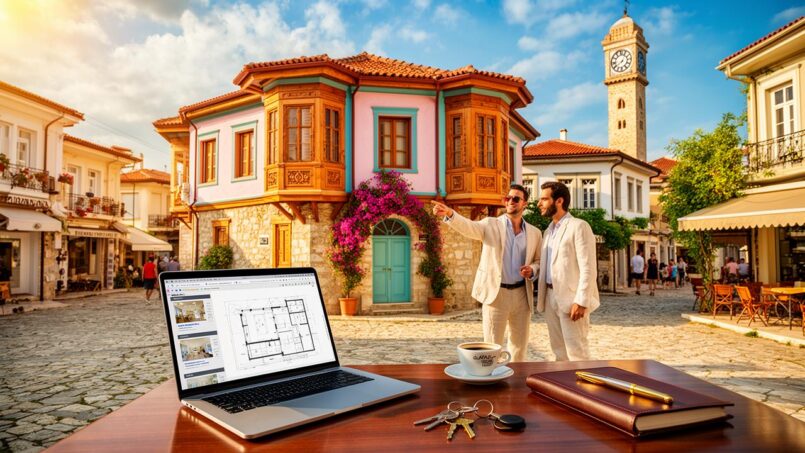
 Published on and written by Cyril Jarnias
Investing in real estate in Xánthi means betting on a market that is still little known, but driven by a rare combination of affordable prices, solid rental yields, and long-term development prospects. Far from the overheated markets of Athens, Thessaloniki, or the popular islands, this Thrace city is attracting more and more investors seeking profitability, stability, and a pleasant living environment.
This article provides a comprehensive analysis of the Xánthi real estate market, including prices, rents, taxation, and the economic context. It details key neighborhoods, evaluates the potential of long-term and short-term rentals, and identifies risks to consider for informed decision-making.
Xánthi: An Accessible Real Estate Market in an Expensive Greece
Xánthi, a city of about 73,000 inhabitants in northeastern Greece, stands out for its very competitive price-to-quality ratio. While the average residential price in Greece is around €2,500–2,600/m² and sought-after neighborhoods in Athens or the islands easily exceed €4,000, €7,000, or even €10,000/m², it is still possible to buy in Xánthi from around €500/m², sometimes around €1,000–1,500/m² for well-located properties.
Available data for Xánthi show a market where you can find anything from small houses for €45,000 to a wide variety of properties with very contrasting per-square-meter prices. This reflects a market that is still fragmented, but overall much more affordable than the national average.
Xánthi in the Greek Context
To properly situate Xánthi, we need to compare the region of Thrace and the city itself with the rest of the country. Regional figures confirm that Eastern Macedonia and Thrace remain well below the major centers and tourist islands.
| Area | Average House Price (approx.) | Average Price per m² (approx.) |
|---|---|---|
| Greece (national average) | $486,000 (approx.) | $243/ft² (approx.) |
| Thrace (region) | $264,000 | $132/ft² |
| Average 200 m² house in Thrace | €275,800 | €1,379/m² |
| Xánthi (city) | €217,400 | indicative level: ~€1,000–1,500/m² depending on sector |
| Alexandroupoli (Thrace) | €358,200 | €1,791/m² |
| Trigono (cheapest in Thrace) | €3,200 | €16/m² |
In this context, investing in real estate in Xánthi means positioning yourself in a secondary market where entry prices remain relatively low, while Greece as a whole has seen an increase of about 25% in prices since 2020, with annual progressions of 7–9% nationally.
Real estate prices in Xánthi have decreased by an average of 10% over the last measured year.
How Much Does a Property in Xánthi Cost? Prices, Segments, and Property Types
Listings recorded for Xánthi show a great diversity of products. You will find:
– Apartments in the city center or nearby suburbs, suitable for student rentals or young professionals.
– Traditional houses in the old town, which are very well suited for guesthouse projects or charming rentals.
– Modern family houses with gardens in quieter residential neighborhoods.
– Buildable land, including large plots (several thousand m²), for more ambitious projects.
The observed price ranges are very wide, due both to the variety of properties (size, condition, location) and the fact that the market is still not very uniform.
| Examples of Market Data in Xánthi | Observed Value |
|---|---|
| Floor price observed (listings) | ~€500/m² |
| Ceiling prices observed in some sectors | up to €2,200/m² |
| Specific listed prices (examples) | €92, €660, €945, €967, €1,540, €1,800, €2,045, €3,424/m² |
| Small house (example) | 1 bedroom, €45,000 |
| Size of identified properties | from 62 m² to 3,700 m² |
These raw figures should be read with caution: a price of €92/m² may refer to a very large agricultural or buildable plot requiring heavy work and development, while €3,424/m² could apply to a very central, renovated property or one with high tourist potential. But the general trend remains clear: investing in real estate in Xánthi costs significantly less than in tourist hubs or major metropolitan areas.
Neighborhoods and Strategic Areas in Xánthi
Even though the Xánthi market is not as finely segmented as that of Athens, several neighborhoods already stand out in the eyes of investors.
We can notably distinguish:
– The Old Town (Palia Poli) and the University–Historic Center area, where traditional houses, old buildings, cafes, museums, and a lively market are concentrated. This is where the most expensive properties per m² are often found, but also the highest tourist potential.
– Kimmeria, on the outskirts, a quiet and affordable neighborhood, close to the Democritus University of Thrace, interesting for student rentals or academic stays.
– Agios Nikolaos, a residential suburb relatively close to the center, suitable for families, with shops, schools, and restaurants.
– Nea Xanthi, a more modern area, close to main roads and commercial zones, convenient for residents with cars.
– Stavroupoli and neighboring sectors (Stavroupoli–Vafeika), further away, where average prices per m² remain among the lowest in the region.
| Xánthi Submarket | Profile | Price Level and Interest |
|---|---|---|
| Old Town – University | Historic, touristy, strong identity | Highest prices per m², strong potential for short-term rentals and high-end projects |
| Kimmeria | Quiet outskirts, close to university | Affordable prices, ideal for students and long-term |
| Agios Nikolaos | Residential suburb | Good family/price compromise, stable local demand |
| Nea Xanthi | Modern and connected area | Interesting for motorized professionals, good appreciation prospects with urban projects |
| Stavroupoli – Vafeika | Distant outskirts / villages | Lowest prices, more for long-term orientation or specific projects (eco-tourism, country house) |
For an investor, the key is to align the targeted neighborhood with the rental strategy: student, family, short-term tourist, or mixed.
Rents, Yield, and Local Purchasing Power: The Economic Mechanics of Xánthi
A central point in any decision to invest in real estate in Xánthi is the price/rent relationship. Market data allows us to measure both local solvency and the possible gross yield.
Rent Levels and Salaries in Xánthi
Average available rents show a city that is still relatively affordable for tenants, especially when compared to major metropolises. The following figures provide a useful snapshot.
| Type of Housing (Xánthi) | Average Monthly Rent | Indicative Range |
|---|---|---|
| 1 bedroom – city center | €350 | — |
| 1 bedroom – outside center | €270 | €250–280 |
| 3 bedrooms – city center | €433.33 | €400–450 |
| 3 bedrooms – outside center | €376.67 | €330–450 |
The average net monthly salary in Xánthi is estimated at €919.20. Related to average rents, this gives a market where a typical tenant spends between 30 and 40% of their income on housing, which remains sustainable without being excessively strained.
Rental Yields and Key Ratios
Specific indicators for Xánthi show gross yields around 5%, slightly above the Greek average (approximately 4.4–4.8% national average gross yield depending on the period, with a typical difference of 1.5–1.6 points between gross and net).
| Yield Indicator in Xánthi | Value |
|---|---|
| Gross yield city center apartment | 5.05% |
| Gross yield apartment outside center | 5.57% |
| Price/rent ratio (center) | 19.81 |
| Price/rent ratio (outside center) | 17.94 |
| Price to Income ratio | 6.12 |
| Average annual interest 20-year loan | 4.30% |
A price/rent ratio of about 18–20 means that in theory, an owner recovers the purchase price in 18–20 years of gross rents. Across Greece, a gross yield from 5.5% is generally considered “good,” while 6.5% represents an excellent level of performance. Xánthi is therefore in an interesting zone, especially for apartments outside the center, which combine lower prices with relatively stable rents.
This is the number of years of net income an average local household must dedicate to buy a standard residential property, according to the price/income ratio.
Short-Term Rentals in Xánthi: A Niche but Growing Market
Beyond standard rentals, investing in real estate in Xánthi also opens the door to short-term rentals, driven by regional tourism, the university, and growing interest in Thrace from visitors seeking authenticity.
Figures for the short-term rental market show a segment that is still modest but dynamic.
| Short-Term Market Indicators (Xánthi) | Value | Annual Change |
|---|---|---|
| “Rental demand” score | 57 | +3% |
| “Revenue growth” score | 76 | +4% |
| “Seasonality” score | 69 | +3% |
| “Regulation” score | 66 | +6% |
| Total active listings | 184 | +3% |
| Growth in active listings | — | +8% |
| Average occupancy rate change over 5 years | — | +3% |
| Average revenue change over 5 years | — | +5% |
| Average daily rate change over 5 years | — | –3% |
Two elements stand out clearly: occupancy and revenues are increasing, while the average daily rate is slightly declining. This reflects a market that is structuring itself: more listings, owners adjusting prices to remain attractive, and demand that is holding steady or even growing.
The supply structure is very clear: almost the entire short-term inventory consists of small entire homes, with an overwhelming majority of studios/one-bedrooms.
| Characteristics of Short-Term Listings in Xánthi | Share of Total |
|---|---|
| Airbnb only | 91% |
| Vrbo only | 4% |
| Both platforms | 5% |
| Entire home | 96% |
| Private room | 4% |
| Studio/1 bedroom | 76% |
| 2 bedrooms | 19% |
| 3 bedrooms | 5% |
| Availability 271–365 nights/year | 37% |
| Minimum stay 30+ nights | 58.7% |
| Wi-Fi and Internet | 94% |
| Air conditioning | 90% |
| Equipped kitchen | 88% |
| TV | 80% |
| Flexible or moderate cancellation policies | ~75% |
This structure reflects several phenomena:
To optimize your rental, prioritize medium- and long-term stays, since more than half of the listings require a minimum of 30 nights. Target a diversified clientele including not only tourists, but also students, professionals on assignment, families in transition, or remote workers. Ensure your offering is well-equipped with expected amenities like Wi-Fi, air conditioning, and a functional kitchen.
For an investor, this opens up two possible strategies:
– aim for year-round short/medium-term rental with a well-located studio or small one-bedroom, playing on schedule flexibility and a good occupancy rate;
– combine long-term rental for security (e.g. 9–12 month leases to students) and seasonal operation during summer vacations or festival periods (Xánthi Carnival, cultural events, etc.).
Real Estate Taxation in Greece: What an Investor in Xánthi Needs to Know
Investing in real estate in Xánthi remains subject to the same tax rules as everywhere in Greece. The recent reform of the Real Estate Tax Code has clarified and modernized a framework sometimes considered complex, but the investor must nevertheless seriously factor in transaction, operation, and holding costs.
Acquisition Costs: Taxes and Fees
For an “older” property (i.e., not subject to VAT), the transaction is primarily burdened by a transfer tax of 3% on the taxable value, plus a small municipal surcharge resulting in an effective rate of 3.09%. The calculation basis is not just the contractual price, but the “objective value” defined by the administration, whichever is higher.
In addition to this tax are necessary fees:
Buying real estate in Switzerland involves additional costs, typically representing 5% to 7% of the purchase price. Here is a breakdown of the main costs to anticipate.
Often between 1% and 2% of the purchase price. The notary is responsible for authenticating the deed of sale.
Tax of about 0.5% of the price for the official registration of the property in the cadastre.
Generally between 1% and 2% of the price, but these fees are often negotiable with the chosen professional.
Fees due to the real estate agency, often around 2% of the price for the buyer.
Include document translations, official certificates, or fees for a civil engineer for a technical inspection.
In practice, a buyer should budget for approximately 7% to 10% in additional costs. An example for a house worth €250,000 illustrates the order of magnitude well.
| Cost Item | Approximate Amount |
|---|---|
| Purchase price | €250,000 |
| Transfer tax (3.09%) | ~€7,725 |
| Notary + cadastre (~1.5%) | ~€3,750 |
| Lawyer (~0.8%) | ~€2,000 |
| Bank, accountant, other | €500–1,000 |
| Total estimate | ~€263,000–265,000 |
In Xánthi, where many properties are below €200,000, these amounts will be proportionally lower, but the percentage order of magnitude remains the same.
For new constructions sold directly by a developer, the standard VAT is 24%. However, a VAT suspension regime, extended until the end of 2026, allows many new sales to be taxed only through the 3.09% transfer tax. This issue should be verified case by case with a professional.
Recurring Taxes: ENFIA, Local Taxes, and Charges
Once the property is acquired, the owner must pay the ENFIA (Unified Real Estate Property Tax) each year. This is calculated based on a per m² rate, taking into account many parameters (zone, floor, age, use, etc.). Nationally, unit rates are around:
– €2 to €16.20 / m² for buildings;
– €0.0037 to €9.25 / m² for land.
The ENFIA property tax generally represents between 0.15% and 0.60% of the value of a standard real estate property each year. In Xánthi, where prices are moderate, its amount is therefore proportionally more advantageous than in more expensive areas. An additional progressive tax applies only if the total value of your taxable real estate assets exceeds €500,000, which mainly concerns large portfolios.
Added to this are:
– a municipal tax calculated on the “objective value” (between 0.025% and 0.035%), generally paid via the electricity bill;
– a local levy for cleaning and lighting services, calculated per m², again via electricity;
– condominium charges, which can represent €25–50/month for a small apartment, more for a high-end building;
– insurance costs (0.1–0.3% of the property value per year) and property management services if you delegate operation (8–12% of rents collected).
Taxation on Rents and Capital Gains
Rents are taxed as income. For individuals, from January 1, 2026, the new rental income tax brackets are as follows:
| Annual Rental Income Bracket | Tax Rate |
|---|---|
| €0 – €12,000 | 15% |
| €12,000.01 – €24,000 | 25% |
| €24,000.01 – €36,000 | 35% |
| Over €36,000 | 45% |
Before this date, another scale applies, but with similar orders of magnitude. The investor can deduct certain expenses (maintenance, loan interest, management fees) from taxable rental income.
For long-term leases signed within a specific period on properties under 120 m² that were previously vacant or used for short-term rentals, an incentive scheme provides an income tax exemption on rents for three years. This measure aims to encourage conversion from tourist use to residential rental.
Finally, on real estate capital gains, a separate tax of 15% is foreseen, but its implementation is suspended until December 31, 2026. In the short term, this makes trading or reselling even more attractive, even though the investor should anticipate a possible return of this tax beyond that date.
Financing and Golden Visa: What Structure for a Foreign Investor in Xánthi?
Even though the majority of transactions in Greece are concluded in cash, it is possible to use real estate credit to finance an investment in Xánthi, including for non-residents. The credit market, very cautious after the crisis, is gradually reopening.
Real Estate Loans for Foreigners
Greek banks (Alpha Bank, Eurobank, National Bank of Greece, Piraeus Bank, etc.) offer loan products intended for non-residents. Common conditions are as follows:
Key conditions and steps for obtaining a real estate loan in Greece, depending on residency status.
Generally 50–65% for non-resident non-Greeks, possibly up to 70–80% for Greek or Cypriot citizens.
Often limited to 15 years for non-residents, up to 25–30 years for residents.
Fixed rates offered for 3 to 15 years, then switch to variable rate indexed to Euribor with a bank margin of around 1.8% or more.
Around 4.3% for a 20-year loan according to reference data, varying by profile and bank.
Requirement for an AFM (Greek tax number), a local bank account, and a full file of income and assets, often more burdensome than in some Western European countries.
The foreign investor should also know that all real estate loans are subject to a state surcharge (0.12% for residences, 0.60% for other types of financing), integrated into the APR.
In Xánthi, given the price level, a credit purchase often requires a down payment of 35–40%, which remains more accessible than for equivalent properties in Athens or the islands.
Golden Visa and Investment in Xánthi
Xánthi is located in the so-called “B” zone for the Golden Visa program. The required investment threshold there is €400,000 for a property meeting current conditions (single property, minimum floor area, use limited to long-term rental if acquired under this regime). By comparison, in the most pressured areas (Attica, Thessaloniki, Mykonos, Santorini, etc.), the threshold has been raised to €800,000.
For a non-European investor, Xánthi offers a more affordable alternative than Athens or the expensive islands for obtaining a residence permit and access to the Schengen area. The local market is stable, rental yields are decent, and the urban quality of life is good.
It should be noted, however, that properties purchased through the Golden Visa cannot be operated as short-term rentals like Airbnb when in the €400,000 and €800,000 brackets. The model to favor will therefore be long-term rental (families, civil servants, students, etc.), which aligns rather well with Xánthi’s local demographics.
Economic Dynamics and Infrastructure Projects: Why This Matters for Real Estate
One of the points often underestimated by investors is the impact of public projects and structural investments on real estate value. Xánthi currently benefits from an impressive set of projects financed by European, national, and regional funds, which strengthen its attractiveness and economic resilience.
Road and Cross-Border Infrastructure
Several road modernization programs and cross-border axes are underway or in preparation:
– Maintenance and security works on national and regional roads (NR 1, NR 2, NR 14, roads to Thermes, Melivoia, etc.), totaling several million euros;
– Creation and modernization of strategic roundabouts (Abdera, Maggana, studies for Myrodato, Mandra, Zygos);
– Bridge project on the Xanthi–Stavroupoli axis, financed via INTERREG;
– Dimario–Rudozem axis and improvement of the Xanthi–Echinos–Bulgarian border link, within the framework of cooperation with Bulgaria.
Infrastructure projects strengthen Xánthi’s position as a key transit hub between Greece, Bulgaria, and the Balkans. This development directly supports regional trade, boosts tourism, and encourages the establishment of new businesses.
Water Management, Flood Prevention, and Networks
Significant investments are committed to hydraulic systems:
– Flood protection works on the Kosynthos river (€8M) and the Nestos;
– Cleaning and development of streams and torrents in several municipalities (Abdera, Mangana, Selero, etc.);
– Modernization of drinking water networks (Topeiros, Avatos–Olvio, Pilimata, Myki) with pipe laying, telemetry systems, leak reduction.
These projects, less high-profile than a tramway or highway, directly contribute to quality of life and safety, two elements that ultimately lead to better valuation of the affected neighborhoods.
Sustainable Urban Planning and City Policy
The municipality of Xánthi has developed a Sustainable Urban Development Strategy 2021–2027 with a budget of approximately €15M. Among the flagship projects:
The project includes the development of a large sports and recreational park in Evmirou/Evmiro, the creation or renovation of green spaces, squares (including Liberty Square) and bike paths, the restoration and securing of heritage buildings such as the P tobacco warehouse, as well as the improvement of the urban fabric in several key sectors.
In parallel, targeted investments aim at energy efficiency (renovation of schools, public buildings, Abdera community center, chamber of commerce, etc.), which aligns with the national trend of valuing high energy performance properties (A+ rated homes sell on average 12–15% more than energy-intensive ones).
For an investor, these transformations mean: an adaptation to new market trends, a diversification opportunity, and a potential for increased yield.
– a more pleasant urban environment, therefore more attractive to tenants;
– a likely decrease in vacancy rates in renovated sectors;
– better resilience of property values against economic cycles.
What Strategy to Adopt for Investing in Real Estate in Xánthi?
Faced with the abundance of data, the central question remains: how to build a coherent and profitable strategy in Xánthi? In practice, several approaches emerge, each with its own logic, time horizons, and specific risks.
Strategy 1: Small City Apartments for Long-Term Rentals
The first axis, very suited to the profile of a market like Xánthi, is to target small apartments (25–55 m², ideally up to 50–60 m²) intended for students, young professionals, or modest households.
National data show that: consumption trends have evolved significantly in recent years.
– small surfaces offer the best gross yield per m² (often 5.5–6.5%) because the rent per m² decreases less quickly than the price per m² as size increases;
– rents in Xánthi (€270–350/month for a studio/1-bedroom) remain perfectly compatible with the average local income around €920.
With a relatively low purchase price (e.g., €60,000–80,000 depending on location and condition), a gross yield around 5–6% is quite achievable, especially if the property is well renovated, properly insulated, and positioned close to the University, transport, and services.
This strategy relies on: innovation, employee engagement, and adaptation to market needs.
This type of investment offers relatively predictable cash flow, moderate vacancy by targeting a well-structured student market, and resale potential aligned with the real estate dynamics of the city and country over 5 to 10 years.
Strategy 2: Renovation of Old Properties in the Old Town for a “Charm” Positioning
The Old Town of Xánthi, with its cobblestone streets, neoclassical and Ottoman houses, boutique hotels, and taverns, offers an ideal playground for high-end renovation projects. National trends are clear: carefully renovated old apartments in historic urban centers are those experiencing the strongest price increases, sometimes 8–9% per year in major cities.
In Xánthi, this segment is still little exploited compared to the vast markets of Plaka in Athens or the Old Town of Rhodes. An investor capable of handling renovation costs on the order of €600–800/m² (national order of magnitude for quality refurbishment) can:
– transform an old property into a highly sought-after product for affluent local clientele, expatriates, or tourists seeking authenticity;
– aim for higher rents, even nightly or weekly stays;
– position themselves on a relatively rare heritage asset on a city-wide scale.
This approach requires expertise in heritage constraints, building permits, and regulations, particularly regarding short-term rentals, which may evolve. It is more suitable for patient profiles with a 10-year investment vision.
Strategy 3: Short- and Medium-Term Rentals, Between Regional Tourism and Professional Mobility
The market of 184 short-term listings in Xánthi, growing, signals that there is demand for stays ranging from a few nights to a few months. Between international students, visiting professors, professionals working on cross-border projects, tourists exploring Thrace, and families on extended stays, demand is not limited to summer weekends.
A possible strategy consists of:
– buying a well-located studio or 1-bedroom (old town, modern center, near the University or main axes);
– offering a flexible minimum stay (e.g. 3 to 7 nights in high season, 30 nights the rest of the year);
– maximizing the occupancy rate while staying within local and national rules for tourist furnished rentals.
This approach can offer a higher gross yield (5.5–7%, or even more), but it exposes you to demand volatility, regulatory risks, and requires very responsive operational management (cleaning, guest reception, review management). Remotely, it is essential to rely on a local manager, whose fees typically range between 8 and 12% of rents collected.
Strategy 4: Long-Term Oriented Golden Visa Investment
For a non-European investor primarily aiming for residence and mobility in Europe, investing in real estate in Xánthi via the Golden Visa is an interesting option. With a ticket of €400,000 for an eligible property, you remain well below the €800,000 thresholds required in Athens or Mykonos.
The possible strategy is to:
– acquire a building or a large high-quality apartment over 120 m² in a promising sector (center, old quarter, sought-after residential area);
– rent it out long-term to a family clientele or mid/senior-level professionals;
– consider the rental yield as a bonus relative to the main benefit: the residence permit and access to the Schengen Area for yourself and your family.
This approach assumes being satisfied with moderate net yields (often around 2.5–4%, depending on charges, ENFIA, and rental taxation) but with potential capital appreciation over several years, as Thrace and Xánthi catch up some of their lag behind the rest of the country.
Risks, Constraints, and Mistakes to Avoid
Like any real estate investment, investing in real estate in Xánthi carries risks that must be identified and, as much as possible, controlled.
Several categories of risk emerge from the market analysis and recent Greek experience.
Market and Liquidity Risks
Even if Greece shows a national upward trend, the reality of regional markets can be more contrasting. Xánthi, as a secondary city, is exposed to:
– lower liquidity: it may take longer to resell a property than in Athens;
– a risk of a growing gap between quality properties (well-located, renovated, well-insulated) and “average” or poorly maintained ones, increasingly difficult to sell;
– partial dependence on the local economy (university, agri-food activities, public employment) and the cross-border situation (relations with Bulgaria, trade flows).
The city benefits from a solid demand base, driven by its residents, its students, and regional tourism. This resilience is further reinforced by a significant increase in public investments.
Regulatory and Tax Risks
Greece is rapidly modernizing its real estate tax framework, which is generally a good thing (more clarity, digitalization of procedures, alignment with European standards). But this also means:
– possible changes in short-term rental taxation, already increasingly tightly regulated in Athens;
– genuine complexity of declarations (E9, ENFIA, rent declarations, etc.) which requires working with an accountant or tax advisor;
– the need to strictly comply with rules (no “under the table” cash to reduce taxes, no illegal or unregularized constructions, etc.), under penalty of serious later complications.
Technical and Legal Risks on Properties
In a country where part of the housing stock is old, the following problems are frequent:
Several factors can compromise the legal regularity of a real estate property. These include work or extensions carried out without a building permit and not regularized, incomplete or poorly transcribed title deeds during the transition to the modern cadastre, as well as the possible existence of easements, mortgages, or tax debts attached to the property.
To limit these, the ideal approach includes:
– a thorough check at the land registry/cadastre by a specialized lawyer;
– a technical audit by a civil engineer (structure, compliance, energy performance, conformity to permits);
– refusing to sign any contract without being certain that the property is legally and technically in good order.
Management Risks and Underestimating Costs
Many foreign investors underestimate:
– the real cost of a quality renovation (€600–800/m² is a realistic starting point, without going into great luxury);
– common charges (“koinochrista”), sometimes high in certain buildings;
– the impact of ENFIA and municipal taxes on net profitability;
– the difficulty of managing tenant relations, maintenance, and accounting remotely.
Relying on professionals (local agency, property manager, lawyer, accountant) allows you to avoid most unpleasant surprises, but you must account for this in your net yield calculation.
Conclusion: Xánthi, a Coherent Regional Opportunity for a Patient Investor
Investing in real estate in Xánthi means accepting to step off the beaten path of the Greek market. You give up the prestige of the Acropolis with a sea view or the white houses of the Cyclades, but you gain:
Investing in Patras offers several advantages: significantly lower entry prices than in other Greek markets; attractive gross yields, around 5–5.5%, in the upper range of Greek provinces; an urban environment constantly improving, supported by tens of millions of euros in infrastructure projects, urban developments, and European programs; a stable rental demand base driven by residents, students, regional tourism, and professional mobility; and a more accessible Golden Visa entry ticket for non-Europeans than in the country’s star markets.
This market is not without risks: more limited liquidity, dependence on a regional economy still in transition, the need for very serious monitoring of regulations and taxation. But for an investor aiming for geographic diversification, stable yield rather than speculative flips, or even a lifestyle or semi-residence project in an authentic city, Xánthi ticks many boxes.
The key to success lies in a structured approach: choose the right strategy (small rental apartments, heritage renovation, Golden Visa, or mixed), surround yourself with a competent lawyer, engineer, and accountant, integrate all costs and taxes into your calculations, and accept investing over a realistic horizon of 7 to 10 years.
Real estate investment advice
In a country where the major markets have already largely recovered – and sometimes exceeded – their pre-crisis levels, regional cities like Xánthi likely represent the “second wave” of Greek real estate opportunities. Provided you understand the terrain well, respect the rules, and prioritize quality over simply hunting for low prices, investing in real estate in Xánthi can become a winning long-term bet.
Disclaimer: The information provided on this website is for informational purposes only and does not constitute financial, legal, or professional advice. We encourage you to consult qualified experts before making any investment, real estate, or expatriation decisions. Although we strive to maintain up-to-date and accurate information, we do not guarantee the completeness, accuracy, or timeliness of the proposed content. As investment and expatriation involve risks, we disclaim any liability for potential losses or damages arising from the use of this site. Your use of this site confirms your acceptance of these terms and your understanding of the associated risks.

Cyril Jarnias is an independent expert in international wealth management with over 20 years of experience. As an expatriate himself, he is dedicated to helping individuals and business leaders build, protect, and pass on their wealth with complete peace of mind.
On his website, cyriljarnias.com, he shares his expertise on international real estate, offshore company formation, and expatriation.
Thanks to his expertise, he offers sound advice to optimize his clients' wealth management. Cyril Jarnias is also recognized for his appearances in many prestigious media outlets such as BFM Business, les Français de l’étranger, Le Figaro, Les Echos, and Mieux vivre votre argent, where he shares his knowledge and know-how in wealth management.





