
 Published on and written by Cyril Jarnias
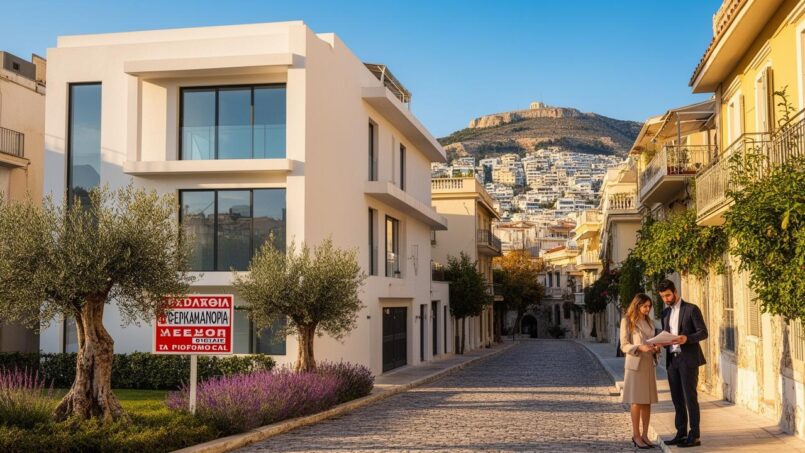
Located just three kilometers from central Athens, nestled at the foot of Mount Hymettus and surrounded by pine trees, Výronas is increasingly checking the boxes on investors’ radars. Long overshadowed by the Greek capital’s star neighborhoods, this lively, green, and well-connected suburb is starting to attract a savvy audience seeking solid returns rather than glitz.
The Vyronas market combines an overall Athenian dynamic, appreciation potential tied to the metro, still-affordable prices, and an interesting niche for short-term rentals, making it a sector worth analyzing in detail.
Výronas, a Rising Athenian Suburb
Výronas is not just an anonymous suburb. Named in honor of Lord Byron, a major figure of Philhellenism, it is a fully integrated urban municipality within the Athenian fabric, in the Attica region. Life here is typically Greek, far from the tourist showcases of Plaka or Kolonaki, yet with direct access to both the city and nature.
Mount Hymettus, covered in pines, borders the neighborhood and offers hiking trails, panoramic views over the entire metropolitan area, and a real breath of fresh air just minutes away. In the streets, local markets, traditional taverns, and cafés filled with residents remind you that this is everyday Athenian life, not a postcard backdrop.
In terms of urban planning, Výronas remains dense and fully urban, but with a human scale. The population is approximately 59,000 according to the 2021 census, with an age structure dominated by active residents aged 15 to 59, which naturally fuels rental demand, both long-term and medium-stay.
An Athenian Market in a Phase of Controlled Expansion
To understand Výronas‘ potential, the suburb must be placed within the overall dynamics of Athens. After a historic collapse between 2007 and 2017 – nearly a 50% drop in real prices in the capital – the market has entered a catch-up cycle.
In the first quarter of 2025, residential prices in Athens were still up 7.6% year-on-year, a pace exceeding inflation and most major eurozone cities. Nationwide, prices rose 10% year-on-year in the third quarter of 2025, according to ELSTAT, the Hellenic Statistical Authority.
A set of indicators paints a scenario of prolonged growth:
Over ten years, the expected increase in apartment prices in Athens approaches 45%.
The price structure confirms this underlying trend. At the start of 2026, a typical 80 m² apartment in Athens sells for around €240,000, representing an average price of roughly €2,900–3,200/m². The core market is very clear: about 80% of residential purchases fall between €180,000 and €350,000, with highly sought-after surfaces of 60 to 100 m².
The city remains highly contrasted, however. Prime neighborhoods like Kolonaki or Glyfada soar beyond €5,000/m², while more working-class areas such as Patisia or Plateia Attikis still trade around €1,700–2,100/m². In between lies a set of “intermediate” neighborhoods undergoing gradual gentrification, including Výronas – prime hunting ground for investors seeking a better yield/appreciation potential ratio.
Výronas: One of the Most Affordable Sectors in Southern Athens
Recent data clearly places Výronas as one of the cheapest entry points in southern Athens. In February 2025, the neighborhood recorded an average price of €2,505/m², making it the most affordable area among all southern suburbs – where the average is closer to €3,946/m², with peaks over €7,400/m² in Vouliagmeni.
The contrast with other sectors along the southern axis is stark:
| Area (Southern Suburbs) | Average Price €/m² (Feb 2025) |
|---|---|
| Vouliagmeni | ≈ €7,438 |
| Glyfada (estimated center) | ≈ €4,250 (2024 median) |
| Palaio Faliro | ≈ €3,916 |
| Výronas | €2,505 |
At the scale of the Athenian market, Výronas sits slightly below the capital’s averages (€2,944/m² across all neighborhoods according to Indomio early 2025), while benefiting from the upward dynamic seen in the eastern and southeastern parts of the city.
Concretely, the range of listings already gives an idea of entry tickets:
| Property Type | Surface Area | Asking Price | Approx. Price per m² |
|---|---|---|---|
| Building | 296 m² | €450,000 | ≈ €1,520/m² |
| Apartment | 58 m² | €255,000 | ≈ €4,395/m² |
| Apartment | 94 m² | €376,000 | ≈ €4,000/m² |
| Apartment | 152 m² | €669,000 | ≈ €4,400/m² |
We immediately see two realities: on one hand, older buildings or renovation lots offered at still-low unit values; on the other, new or heavily renovated apartments that in price per square meter approach already gentrified areas like Pagrati or Neos Kosmos.
This duality – older stock ripe for renovation and premium new products – creates a favorable environment for differentiated investment strategies.
Strategic Accessibility, Boosted by the Metro Effect
One of the key drivers of Výronas‘ rising profile lies in its connection to the rest of the metropolitan area. Three kilometers from the center, close to major arteries and benefiting from Athens’ transport network, the suburb already enjoys good accessibility, but it is the arrival of the new Metro Line 4 that is a game-changer.
Future routes of this line, widely discussed in Athens, are redrawing the map of “bankable” neighborhoods. Areas once considered secondary – Kypseli, Galatsi, and notably Výronas – are seeing an influx of buyers anticipating the value jump linked to the new network.
Home prices near future Metro Line 4 stations in Athens have risen by 12 to 18% over two years.
International syntheses provide orders of magnitude that shed light on what Výronas could become as Line 4 materializes.
| Distance to New Station | Typical Price Premium | Peak Impact Horizon |
|---|---|---|
| 0–500 m | +25 to +35% | ≈ 1 year after opening |
| 500 m–1 km | +15 to +25% | ≈ 2 years after opening |
| 1–2 km | +8 to +15% | 3–5 years |
A meta-analysis of 23 studies also shows that the most interesting zone on average is often between 300 and 800 meters from a station, where accessibility benefits outweigh direct nuisances.
To maximize capital gains in Vyronas, it is advisable to target micro-sectors that will be within the “golden crown” around the new stations, without being directly adjacent to metro entrances. Experience from cities like Berlin, Vienna, Paris, or major Indian cities shows that the most significant real estate gains often occur during the construction phase, or even before opening, when the market anticipates and prices in the value of future infrastructure.
An Attractive Living Environment, a Driver of Rental Demand
Beyond the numbers, a neighborhood’s ability to attract and retain tenants rests on more qualitative factors. From this perspective, Výronas has assets that explain its growing appeal.
The living environment, firstly, combines urbanity and nature. The immediate presence of Mount Hymettus, with its pine forests and viewpoints over Athens, is a strong argument for families or active individuals sensitive to outdoor activities. Being able to go from one’s apartment to a hiking trail in minutes, then back down into the city, is a luxury rarely accessible at this price point.
For an authentic experience of daily Athenian life, away from the tourist crowds of the historic center, explore the associative fabric, local events, and social spots (cafés, taverns, markets) of Vyronas. This local atmosphere is especially sought after by digital nomads and slow travel enthusiasts.
Finally, the municipality’s demographic structure – a strong majority of working-age population, a notable proportion of residents born locally but also people from other Greek regions or abroad – creates a stable demand base. Active workers employed in the center or nearby major hospitals and universities see in Výronas an interesting compromise between still-affordable rents and accessibility.
The Rental Market in Vyronas: A Structured Airbnb Niche and Long-Term Prospects
A detailed snapshot of the short-term rental market in Výronas over the period May 2024 – April 2025 provides a clearer understanding of the ground reality. There are 62 active listings, a modest volume by Athens standards, confirming it is a niche rather than a saturated hotspot.
The composition of this supply is very homogeneous:
– over 98% of listings are for entire homes;
– approximately 93.5% are apartments or condominiums;
– 58.1% are one-bedroom units; 1 and 2 bedrooms represent 92% of the supply.
The supply is concentrated on small urban dwellings (studios, one-bedrooms), a segment that generally offers the best gross returns, as observed in markets like Athens, Bulgaria, and Cyprus.
In terms of performance, the figures are far from negligible.
| Airbnb Performance Segment (Výronas) | Median Monthly Revenue | Occupancy Rate | ADR (Average Daily Rate) |
|---|---|---|---|
| Top 10% of listings | > $1,818 | > 82% | > $120 |
| Top 25% | ≥ $1,341 | ≥ 67% | ≥ $75 |
| Median | ≈ $845 | ≈ 45% | ≈ $57 |
| Bottom 25% | ≈ $493 | ≈ 27% | ≈ $43 |
Over the year, seasonality is clear but manageable: October, September, and August form the peak, with average monthly revenues around $1,297, a 55.4% occupancy rate, and an ADR of $92. In the low season (January–March), average monthly revenues remain around $748, with 37.7% occupancy.
This profile, combined with the fact that nearly 76% of listings are available more than 181 days per year and a quarter are rented more than 181 days, suggests interesting cash-flow potential for those who can position their property in the upper range of quality and price.
Nearly 70% of Vyronas visitors are international, limiting dependence on the Greek market.
In the medium term, the combination of the future Line 4, Athens’ ongoing development, and tourists’ search for more authentic neighborhoods could increase Výronas’ visibility on the short-term rental market, provided regulatory developments regarding furnished tourist rentals are closely monitored – already heavily regulated in the center.
How Does Vyronas Compare to Other Athenian Neighborhoods?
Even though the most granular yield-per-neighborhood data covers other areas (Pagrati, Exarchia, Petralona, Metaxourgeio, Kypseli, Neos Kosmos), they serve as useful benchmarks for gauging Výronas’ positioning.
Here is an overview of the major balances in a few central or near-central neighborhoods popular with investors:
| Neighborhood | Average Price €/m² | 3-Year Increase | Gross Rental Yield (Long-Term) |
|---|---|---|---|
| Pagrati | ≈ €2,400 | +35% | 5.5–6.5% |
| Exarchia | ≈ €2,100 | +42% | 6–7% |
| Petralona | ≈ €2,200 | +38% | 5.5–6.5% |
| Metaxourgeio | ≈ €1,800 | +48% | 6.5–8% |
| Kypseli | ≈ €1,700 | +40% | 6–7.5% |
| Neos Kosmos | ≈ €2,300 | n.d. | 5–6% |
With its €2,505/m², Výronas sits roughly between Pagrati and Neos Kosmos in price, but probably below them in terms of gentrification level. Therefore, one can reasonably expect gross long-term rental yields close to the 5.5–6.5% range, or even higher for well-renovated small units, given that across Athens, renovated apartments of 50 to 100 m² are already appreciating by 7–9% per year in value.
This is the rental yield percentage below which the least attractive neighborhoods for an investor in Athens lie.
In this context, Výronas appears as an intermediate link in the Athenian hierarchy: more affordable than the hype neighborhoods, more expensive than the very working-class western areas, but endowed with rapidly improving fundamentals.
Acquisition Costs, Taxation, and Net Yield in Vyronas
Investing in Greece requires anticipating a set of fees and taxes that impact net profitability. Athens is no exception, and Výronas follows the same rules.
On acquisition, one must factor in: needs analysis, selection criteria definition, supplier evaluation, contract negotiation, and performance indicator setup.
– a transfer tax (FMA) of 3.09% on the taxable price for existing properties;
– notary fees around 1–1.5% of the price;
– registration fees (cadastre/land registry) of 0.5–1%;
– legal fees between 0.5 and 1.5%;
– agency commissions of about 2–3% + VAT.
The initial financial outlay can rise by 30% or more when adding acquisition and renovation costs.
Once an owner, the investor must pay the ENFIA annually, the Greek property tax, calculated according to a per-square-meter grid that considers location, building age, surface area, and level. Added to this is a municipal fee (TAP), collected via the electricity bill, representing between 0.025 and 0.035% of the property’s objective value, modulated by a coefficient linked to age. Finally, municipalities may apply a small additional tax per m² via the energy bill.
Maximum tax rate on rental income received, after deducting expenses, according to the progressive income tax scale.
Studies conducted on comparable markets like Bulgaria or Cyprus show that the difference between gross yield and net yield often ranges between 1.2 and 1.8 percentage points, a range transferable to Athens given similar levels of expenses and taxation. Thus, a gross yield of 6.5% in Výronas could reasonably translate into 4.7–5.3% net before income tax, and more like 3.5–4.5% after taxes for a well-structured investor.
Financing a Purchase in Vyronas: Down Payments, Mortgages, and Public Programs
The foreign investor targeting Výronas today has a relatively wide range of financing solutions, even if conditions remain stricter for non-residents.
Greek banks grant mortgages to both residents and non-residents, within relatively conservative loan-to-value ratios. For a non-resident buyer, the bank typically finances only 60–65% of the property’s market value, requiring a 35–40% equity contribution excluding fees. For resident Greek or Cypriot citizens, this ratio can reach 70–80%.
Interest rates vary from 3% to 6.5% depending on profile, duration, and rate structure (fixed then variable, or variable from the start). The maximum term is generally 15 years for a non-resident, and can go up to 30 or 40 years for a resident, provided the youngest co-borrower is under 75 at loan maturity.
The typical pattern from practice shows that a down payment of around 40–45% of the price, plus 8–10% in fees, is a realistic baseline to remain competitive, especially in a market where a significant share of transactions is still done in cash.
For Greek residents or foreigners already established, the public program “Spiti Mou II” offers reduced or zero-interest loans for a first home purchase. It covers up to 90% of the price, capped at €190,000, subject to age (25-50) and income conditions. This scheme supports demand in affordable neighborhoods like Vyronas and can contribute to the appreciation of the existing housing stock.
Legal Framework: A Relatively Protective but Demanding Environment
Legally, Greece offers foreigners – both European and non-European – the possibility of acquiring full ownership (freehold) of real estate, without the need for a local nominee in non-sensitive areas. Výronas, located within the Athens metropolitan area, is not among the border sectors subject to a special permit from the Ministry of Defense.
The typical process for an investor in Výronas nonetheless involves a few essential steps:
Buying real estate in Greece involves several essential administrative and legal steps. First, obtain a Greek tax number (AFM), then open a local bank account to facilitate transactions and tax deductions. It is highly recommended to hire a specialized lawyer to verify property titles at the Land Registry (Ktimatologio), ensure no mortgages or disputes exist, and check the building’s urban planning compliance. Once an offer is accepted, a preliminary contract is signed with a deposit (usually 5 to 10% of the price). The sale is finalized by signing the final deed before a notary, followed by registration with the cadastre.
A power of attorney allows delegating the entire process to a local advisor, an important point for non-resident investors who prefer to avoid multiple trips.
Golden Visa: Vyronas, a Choice to Handle with Caution
The question of the Golden Visa cannot be avoided in an investment analysis for Athens. The Greek residency-by-investment program has significantly influenced the market, especially in the €250,000–300,000 range, where nearly two-thirds of transactions are said to be by foreigners seeking a residence permit.
However, the rules have been tightened recently. In the most sought-after areas – Athens, Thessaloniki, Mykonos, Santorini, and certain islands – the minimum threshold has jumped to €800,000 for a single property, while the rest of the country is now at a floor of €400,000 (subject to special cases for renovations of historic buildings or commercial-to-residential conversions at €250,000).
The €800,000 threshold for the Golden Visa applies to inner Athens and several neighboring municipalities. The exact status of Vyronas, a southeastern suburb, is not clearly detailed and may partially fall under the €400,000 threshold. It is therefore imperative to have a lawyer confirm the exact classification of both the property and the municipality before any investment explicitly aimed at this program.
In any case, the economic trade-off is clear: for a pure yield investor not seeking residency, buying in Výronas makes sense mostly for tickets well below these thresholds, with a goal of cash-flow and capital gains, not optimizing a Golden Visa application.
Risks and Points of Vigilance Specific to Athens… and Therefore to Vyronas
Like any market in a catch-up phase, Athens exposes the investor to a series of risks that would be dangerous to ignore, including in Výronas.
On the macro-economic front, Greece remains a heavily indebted country, with a debt-to-GDP ratio near 200%, and an unemployment rate still high, around 15%. A significant portion of skilled youth has emigrated, raising long-term questions about the solvency of certain real estate market segments.
At the micro level, several elements warrant attention:
Buying real estate in Athens carries specific risks: bureaucracy lengthens verification times, especially for older properties; many properties have undeclared modifications or discrepancies with official plans; property tax (ENFIA) can be reassessed upwards significantly; and condominium fees, often underestimated, are high (about €1,200/year for 100 m²).
Added to this is a phenomenon well documented by the Bank of Greece: foreigners pay on average 22% more than locals for comparable properties, a “foreign surcharge” due to lack of market knowledge and an unfavorable negotiating position. In Výronas, where prices are already attractive, the challenge will be less about avoiding a bubble than about not entering significantly above market value.
Building a Relevant Investment Strategy in Vyronas
Given this contrasting landscape, how should one concretely approach a real estate project in Výronas?
A first approach is to position oneself on the “yield–capital gain” axis. In the southern coastal areas, gross yields have compressed to around 3.5–3.8%, as prices rose faster than rents. Conversely, in neighborhoods still undergoing transformation, yields of 6–8% remain accessible, at the cost of betting on the area’s evolution.
Summary of key factors favorable to a mixed investment strategy for the municipality of Vyronas.
A price per square meter around €2,500, representing an attractive entry point into the market.
Accessibility ensured by the immediate proximity of the future Metro Line 4 in Athens.
A robust base of local residential demand, guaranteeing a stable traditional rental market.
A niche for short-term tourist rentals that is still relatively unsaturated, offering yield potential.
– In long-term rentals, target renovated small apartments (50–70 m²) close to transport routes, capable of generating 5.5–6.5% gross yield;
– In short-term rentals, leverage the international clientele seeking a more “local” stay, by positioning in the quality segment (high rating, good design, smooth check-in) that characterizes the top 25% of the neighborhood’s performing listings.
In Athens’ central neighborhoods, the price difference between a renovated and unrenovated property can reach 40%. A realistic scenario involves buying an older apartment in Vyronas below €2,000/m², investing €600 to €800/m² in renovations, to obtain a finished product that can be valued around €3,000/m² in the medium term, particularly within the perimeter of future Metro Line 4 stations.
The investor must however account for the fact that renovation costs are also rising, due to material inflation and increased energy performance requirements. Studies mention a markup of up to 30% on certain projects to bring a property up to current standards, especially in insulation and heating/cooling systems.
What Role for Vyronas in a Diversified Portfolio?
Finally, it is essential to place an investment in Výronas within an overall wealth strategy. Specialized analyses emphasize that Athens – and by extension neighborhoods like Výronas – should only constitute a segment of a balanced portfolio, rather than an “all-in.” Recommendations revolve around an allocation of 10–15% of total invested capital in this market, complemented by other countries, currencies, and asset classes.
The neighborhood of Vyronas presents an intermediate risk profile: riskier than an established city center, but less speculative than the tourist islands. Its potential is supported by two main levers: the metro line and the gradual rise in living standards in Athens.
For an investor willing to dive into the Athenian reality – administrative complexity, taxation to master, sometimes heavy renovation work – Výronas today offers what many European markets no longer offer: still-reasonable prices in a major capital, above-average yields relative to the eurozone, and genuine appreciation potential backed by heavy infrastructure.
The key will be to surround yourself with solid local contacts (lawyer, engineer, property manager), reject unrealistic yield projections, and remain disciplined in micro-localized analysis: in Výronas as elsewhere, the quality of the street, the building, and the condominium will make the difference between a merely decent investment and a truly remarkable one.
Disclaimer: The information provided on this website is for informational purposes only and does not constitute financial, legal, or professional advice. We encourage you to consult qualified experts before making any investment, real estate, or expatriation decisions. Although we strive to maintain up-to-date and accurate information, we do not guarantee the completeness, accuracy, or timeliness of the proposed content. As investment and expatriation involve risks, we disclaim any liability for potential losses or damages arising from the use of this site. Your use of this site confirms your acceptance of these terms and your understanding of the associated risks.

Cyril Jarnias is an independent expert in international wealth management with over 20 years of experience. As an expatriate himself, he is dedicated to helping individuals and business leaders build, protect, and pass on their wealth with complete peace of mind.
On his website, cyriljarnias.com, he shares his expertise on international real estate, offshore company formation, and expatriation.
Thanks to his expertise, he offers sound advice to optimize his clients' wealth management. Cyril Jarnias is also recognized for his appearances in many prestigious media outlets such as BFM Business, les Français de l’étranger, Le Figaro, Les Echos, and Mieux vivre votre argent, where he shares his knowledge and know-how in wealth management.





