
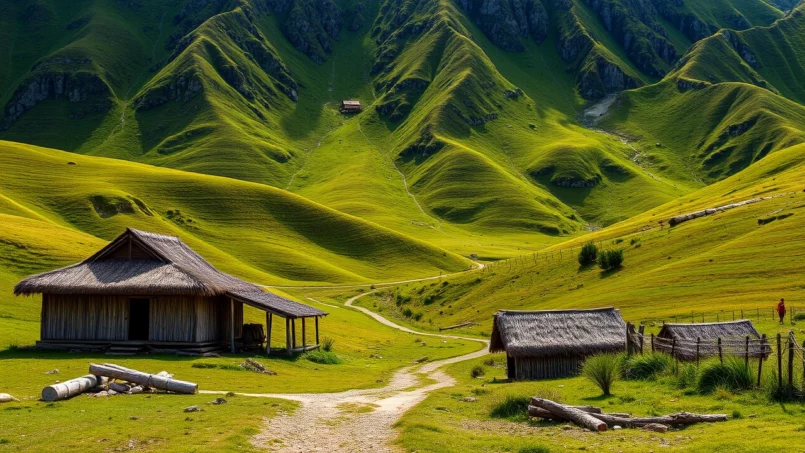
 Published on and written by Cyril Jarnias
The idea of moving to Myanmar as an expat is alluring with its golden pagodas, pervasive Buddhist culture, the kindness of its people, and an overall low cost of living. But behind this postcard image, the current reality is far more complex and, above all, dangerous. Since the military coup of February 2021, the country has been plunged into internal conflict, with deep political instability, armed clashes, travel and communication restrictions, and an already fragile healthcare system under severe strain.
Many governments classify Myanmar as a ‘do not travel’ or ‘avoid all travel’ destination. Any decision to relocate there must be made with extreme caution, with full awareness of the risks, and with a solid contingency plan.
This guide aims neither to encourage nor to discourage you from going, but to provide as realistic an overview as possible of living conditions for an expatriate, based on data available before and after the coup.
Understanding the Political and Security Context
The first question to ask before any expatriation project in Myanmar is that of security. The situation bears no resemblance to that of a simply “developing” country. We are talking about a state ruled by a military junta, at war against multiple armed groups, with a risk level far exceeding most other destinations in Southeast Asia.
Since the army seized power in 2021, the state of emergency has been extended. Active fighting pits the army against ethnic armed groups and People’s Defence Forces in many regions, including border and rural areas. Attacks and bombings have also hit major cities like Yangon, Mandalay, and Nay Pyi Taw. Territorial control is fragmented and contested, with documented use of artillery and airstrikes.
Travel advisories issued by several countries are unequivocal: the risk level is judged “extreme”, with official recommendations to avoid all travel, or even to leave the country when still possible. Simultaneously, the militarization of society has intensified, notably with the activation of the People’s Military Service Law which imposes mandatory military service on a broad segment of the Burmese population, including men and women, for several years.
For an expatriate, the environment is characterized by diffuse insecurity including curfews, checkpoints, frequent document checks, risks of armed incidents on certain routes, presence of anti-personnel mines in rural areas, and risks of arbitrary arrests (targeting especially journalists and activists). Add to this intrusions into private life: surveillance of communications, phone searches, and control of social media.
In this context, most large international companies have reduced or suspended their operations and repatriated their staff. Those who remain are generally humanitarian workers, employees of NGOs, a few international organizations, or well-established companies, often with very strict security protocols.
Visa, Entry, and Administrative Risks
Before even imagining renting an apartment in Yangon, you must go through the visa step. Myanmar is not a country where you arrive with just a passport to “see on the ground”. The general principle remains unchanged: a visa is mandatory for most nationalities, with some exceptions limited to short stays for certain ASEAN nationals or neighboring Asian countries.
Myanmar offers several visa types: tourist, business, social, religious, and a ‘meditation visa’ for monastery stays. For tourist visas and some business visas, an e-Visa system is available, with processing in about three working days, allowing entry through main international airports (Yangon, Mandalay, Nay Pyi Taw). Visa on arrival exists for certain nationalities, under specific flight or period conditions, but these rules change frequently. It is essential to consult official sources for the most current information before your trip.
For an expatriation project, it is obviously the business visa that is central. Legally speaking, there is not a standalone “work permit”, but a combination of a business visa, a Stay Permit, and sometimes a Multiple Journey Special Re-entry Visa. A standard business visa typically allows a stay of 70 days. For long stays, you must then apply for a Stay Permit of several months (up to a year), and a re-entry visa if you leave the country.
Several constraints must be anticipated: invitation from a local company or organization, recommendation letters, proof of registration of the Burmese company. There is zero tolerance for activities perceived as political or journalistic. Foreign reporters or travelers perceived as journalists have already been turned away, arrested, or deported, sometimes with equipment confiscation.
Another sensitive point: Myanmar does not recognize dual citizenship. A person with, for example, a Burmese passport and a Western passport may be considered solely as a Burmese citizen by the authorities, which could expose them to mandatory military service, limit foreign consular assistance, and complicate any attempt to leave the country in a crisis.
Finally, keep in mind that the legal framework can change rapidly, as seen during the pandemic (suspension of e-Visas) or after the coup (tightening of controls). A long-term relocation plan must therefore incorporate the possibility of sudden restrictions: border closures, suspension of certain visa types, stricter controls on foreigners.
Cost of Living: A Poor Country, but an Expensive Capital for Locals
On paper, Myanmar appears as a country with a relatively low cost of living compared to Western standards, but reality is much more nuanced. The country remains one of the poorest in Asia, with a GDP per capita of about $1,242 per year, and an average net salary around $260 to $280 per month. In Yangon, the average is around $278, whereas “standard” monthly expenses for a single person can easily exceed $600 including rent.
For an expat with an international salary, the cost of living can seem affordable. However, for the local population, price increases due to inflation, currency depreciation, and supply difficulties make life much harder. It’s important to understand these purchasing power gaps and the social impact of certain consumption habits.
In Yangon, various estimates give an average cost of living (housing included) in the range of $600 to $1,200 per month for a single person, depending on lifestyle. A couple will be more around $1,600, a family of four around $2,200 to $2,600, still including housing. For expats, some calculations set an average budget close to $800 per month, but this assumes a fairly local lifestyle and compromises on housing and leisure. A “classic expat” comfort (modern apartment, regular outings, international school for children) quickly drives up the bill.
Snapshot of Cost of Living in Yangon
Here is a summary table of some monthly financial benchmarks, excluding exceptional crisis situations:
| Profile | Estimated Monthly Cost (USD) | Details (includes housing) |
|---|---|---|
| Single person – tight budget | ≈ 460 | Modest studio, local meals, few outings |
| Single person – average comfort | 800 – 1,200 | Decent apartment, mix of local/international restaurants |
| Single person – high-end | up to 2,600 | Modern condo, frequent leisure activities, imported goods |
| Couple | ≈ 1,600 | Larger housing, shared expenses |
| Family of 4 | 2,200 – 2,700 | 3-bedroom rent, comfortable life (excluding int. school) |
| Average net salary Yangon | ≈ 280 | Very limited purchasing power, < 1 month of average expenses |
This snapshot illustrates a key point for a prospective expatriate: Myanmar may seem cheap, but the gap between local incomes and urban costs is huge. A properly compensated expat will live well; a freelancer paid poorly or in local currency can find themselves in difficulty very quickly.
Housing: An Expensive, Uneven, and Very Particular Market
Housing is one of the major expense items for expatriates, and the Burmese market operates very specifically. Long marked by a severe shortage, it opened up with the influx of foreign investment in the 2010s, leading to a construction boom, especially in Yangon and Mandalay. The political crisis then dampened high-end demand, but the market remains far from fluid.
Options range from villas with gardens to apartments in older buildings, to modern condominiums and serviced residences. Expatriates often favor neighborhoods considered safe and practical, close to international schools and shops: in Yangon, areas like Bahan or Kamaryut are often cited, while more peripheral areas (Hlaing, Thanlyin) offer lower rents but with longer commutes and less developed infrastructure.
Rent Levels: From Modest Old Stock to Luxury Condos
Depending on location and standard, rents vary enormously. Available data shows quite wide ranges.
| Type of Housing in Yangon | Location | Average Monthly Rent (USD) |
|---|---|---|
| Cheap Studio / 1 bedroom | Outside center | 130 – 150 |
| Standard 1 bedroom | City center | 340 – 400 |
| “Expat” segment 1 bedroom | Sought-after neighborhood | 400 – 600 |
| Standard 2 bedrooms | City | 450 – 800 |
| 3 bedrooms center | City center | 600 – 950 |
| Cheap 3 bedrooms | Outside center | 230 – 730 |
| Furnished high-end condo | Yangon | 1,500 – 3,000+ |
In other cities, like Mandalay or Nay Pyi Taw, amounts may be slightly lower, but as soon as you aim for “international” standards (generator, 24/7 security, pool, gym, modern furniture), rents skyrocket.
Beyond the rent amount, landlords often demand 6 to 12 months’ rent paid in advance, frequently in cash and sometimes in dollars, in addition to a security deposit. This represents a considerable sum to mobilize upon arrival. Moreover, in case of a hasty departure for safety or health reasons, it can be difficult to recover these amounts.
Housing Quality and Technical Constraints
Another important dimension: the actual condition of properties. Recent buildings often offer appreciable services (guard, pool, small gym, generator for power cuts), but they remain concentrated in certain neighborhoods and their maintenance can degrade over time. Older, more affordable buildings frequently suffer from water pressure problems, leaks, power cuts without backup, and very basic finishes.
Noise pollution (loudspeakers from monasteries, Buddhist community halls, road traffic, stray dogs) is frequent. It is highly advisable to visit a property at different times of the day and in the evening to assess the actual noise level before committing.
Finally, the concept of land ownership is particular: as a rule, foreigners do not buy land outright, but possibly leasehold rights (long-term lease), with the possibility for the state to reclaim the land at term. For an expatriate, renting remains the norm in any case.
Water, Electricity, and Internet: Living with Outages
The infrastructure in Myanmar remains that of a long-isolated country, with a fragile electrical grid and uneven water distribution. In some cities, including Yangon, it is common to alternate several hours with power and several hours without. Sources mention, for example, cycles of four hours with electricity, then eight hours without, and in some regions up to twenty hours of outage per day.
Power produced by a generator can cost ten times more than grid electricity for an expatriate.
Order of Magnitude for Bills
Basic expenses (electricity, water, garbage) for a standard 80-90 m² apartment, excluding generator use, run around $40 to $80 per month, with strong variations depending on air conditioning use. Water is the cheapest and most stable item. In contrast, during prolonged outages, the cost of fuel for a generator can soar.
For fixed internet, prices range from 15,000 kyats/month for a basic speed (8 Mbps) to $20-25/month for about 60 Mbps (often theoretical speed). The actual speed is frequently well below advertised. Furthermore, authorities can cut or slow the network in certain areas for political or security reasons. Using a VPN is common to bypass blocks, but these services can themselves be disrupted.
Food: Eating Local, Western… and Safely
Myanmar offers a rich and varied cuisine, dominated by Burmese dishes but also influenced by Chinese, Indian, Japanese, and Korean gastronomy. In Yangon in particular, the restaurant offering has diversified: cafes, rooftop bars, international restaurants, fast-food chains.
For an expatriate, eating out can remain affordable if you favor simple establishments: a meal in a small local restaurant can cost around $2 to $3, while a full dinner for two in a mid-range establishment runs around $15 to $20. An international fast-food style meal will be more around $5 to $6.
In Yangon, traditional markets like Thiri Mingalar Market offer low prices for fruits, vegetables, meats, and fish, but raise hygiene questions. In contrast, supermarkets and large chains, although more expensive, guarantee better traceability for sensitive fresh products (dairy, meats) and offer imported goods for expats or locals wishing to maintain a Western diet, although the latter are sold at a significant price premium.
Examples of Food Prices
| Product / Service | Average Price (USD or MMK) |
|---|---|
| Simple meal, local restaurant | ≈ 2.2 USD |
| 3-course meal for 2 (mid-range restaurant) | ≈ 17.7 USD |
| Local draft beer (bar) | ≈ 1 USD |
| Cappuccino (expat neighborhood) | ≈ 5,000 MMK |
| Bread for 2 people (1 day) | ≈ 3,000 MMK |
| 500g boneless chicken | ≈ 7,500 MMK |
| 1 liter whole milk | ≈ 1,500 MMK |
| 12 eggs | ≈ 25,600 MMK |
| 1 kg tomatoes | ≈ 8,000 MMK |
| 1 kg apples | ≈ 20,000 MMK |
The main caution concerns food safety: approximate refrigeration, broken cold chain, non-potable water, uneven hygiene standards at street stalls. The basic rule to limit risks: drink only bottled water, avoid ice cubes of uncertain origin, favor very busy stalls (fast food turnover) and restaurants rated by the expat community, especially for meat and dairy products.
Transportation: Getting Around in a Country with Fragile Infrastructure
Myanmar does not have a modern, easy-to-understand public transport system for a newcomer. In Yangon, a bus network exists, very cheap (a few hundred kyats for an urban trip), but difficult for a foreigner to use: signage in Burmese, limited online information, stops sometimes changing without notice. For most expatriates, taxis or cars with drivers remain the preferred way to get around.
Apps like Grab allow you to order a taxi with a fixed fare set in advance, avoiding negotiation. However, their availability can be affected by the political situation or network restrictions. In the absence of an app, it is essential to negotiate the price with the driver before getting in, knowing that prices quoted to foreigners are often inflated.
For long trips, air travel remains, in theory, the most practical mode. But the rise in domestic flight prices, the outdated nature of part of the fleet, and risks linked to the conflict (attacks, airport closures) complicate matters. Intercity buses are economical but often run overnight, sometimes stopping by the roadside during curfew hours, which is not without risk. Roads are frequently in poor condition, poorly lit, and a non-negligible proportion of drivers do not meet minimum safety standards.
In Myanmar, traffic is dangerous due to a mix of driving on the right with right-hand drive vehicles, frequent lack of seat belts, vehicle overloading, heavy traffic in Yangon, and too common alcohol or drug consumption while driving.
In summary, for an expatriate, daily mobility will likely be based on a combination of taxi / car with driver in major urban centers, and plane or buses from reputable companies for intercity travel, with constant attention to safety.
Health: An Under-Resourced System, International Insurance Essential
Even before the political crisis, Myanmar’s healthcare system was ranked among the least performing in the world by the World Health Organization. Infrastructure is very unevenly distributed, concentrated in major cities like Yangon and Mandalay, with a level of care far below Western standards, both technically and in terms of hygiene.
Public hospitals are inexpensive but often overcrowded, poorly equipped, and short-staffed, with little English spoken. Private clinics offer better service, more experienced doctors, a bit more English, and shorter wait times, but at a higher cost, payable in cash upfront. Many expats prefer them for routine medicine.
For any serious illness, delicate surgical procedure, serious accident, or high-risk pregnancy, the usual strategy for affluent expatriates is to be evacuated to a better-equipped neighboring country – often Thailand (Bangkok, Chiang Mai) or Singapore, or even India or Malaysia for certain types of care. Hence the crucial importance of international health insurance that covers not only on-site care but also medical evacuation.
Examples of Medical Costs and Constraints
| Service / Product | Indicative Cost (MMK) |
|---|---|
| Short consultation with a private doctor | ≈ 33,600 |
| Antibiotics (box) | ≈ 56,000 |
| Cold medicine (6 days) | ≈ 14,000 |
Some common medications are available, but the risk of counterfeits and poor-quality products is real. It is strongly advised to come with a supply of essential treatments (chronic illnesses, specific contraception, etc.) and to obtain necessary prescriptions before departure.
The country combines several threats: vector-borne diseases (dengue, malaria, chikungunya, Zika), water and foodborne illnesses (typhoid, cholera, hepatitis), animal rabies, tuberculosis, and avian flu. Access to potable water is limited, air pollution is seasonal, and the hot, humid climate is taxing on the body.
Before any move, a complete vaccination check-up is essential, as well as a consultation at a travel medicine center to determine recommended vaccines (Hep A/B, typhoid, Japanese encephalitis, etc.) and any useful preventive treatments depending on the region of residence.
Education: Expensive International Schools, Weak Public System
For families with children, the schooling question is decisive. The Burmese public system, largely inherited from the colonial period then reshaped by decades of dictatorship, suffers from many ills: low budget, very lecture-based teaching, rote memorization, corruption in some exams, obsolete materials, large disparities between city and countryside. It is generally not considered an acceptable option for expatriates, except in very special cases.
This is why most expatriate children attend international schools, mainly concentrated in Yangon and, to a lesser extent, Mandalay and Nay Pyi Taw. These institutions offer different curricula (British, American, Cambridge, IB, French, Singaporean, Canadian, etc.), with teaching mostly in English, sometimes bilingual.
This is the annual cost in dollars for a child in primary school at a good international school in Shanghai.
Most “package” expatriate contracts provide for partial or full coverage of tuition fees by the employer. If not, it is imperative to budget this line item precisely before committing, at the risk of seeing your budget explode.
Work, Employment, and Taxation: A Difficult Environment to Decipher
The Burmese job market, already limited before 2021, has become particularly complicated for foreigners. The sectors where expatriates are most often found are humanitarian work and NGOs, international organizations, some foreign private companies (telecoms, energy, distribution, finance), teaching (especially English and subjects in international schools), high-end tourism (heavily impacted by the crisis), and media (with significant legal and security risks since the coup).
One recurring recommendation is not to go abroad without a job prospect. It is advisable to secure a contract before departure, with an employer capable of handling essential administrative and legal procedures, such as obtaining the visa, stay permit, and complying with tax obligations.
Tax Framework for Expatriates
Tax-wise, Myanmar distinguishes several categories: national residents, foreign residents, non-resident foreigners, and non-resident Burmese citizens. Simplified, a person (regardless of nationality) is considered resident if domiciled or if they stay at least 183 days in the country during the fiscal year. Residents are, in principle, taxed on their worldwide income, while non-residents are taxed only on their Myanmar-sourced income, with different rates and deductions.
Income tax is progressive, with a maximum rate of 25%. Allowances (basic allowance, spouse without income, children, dependent parents) are reserved for residents. Non-residents are not entitled to them. A capital gains tax (about 10%) and a tax on rental income (about 10% of rents) also apply.
In practice, many expatriates are paid via structures abroad, sometimes in combination with a reduced local salary, which further complicates matters. One must also consider the Double Taxation Avoidance (DTA) agreements that Myanmar has signed with several countries (India, Singapore, UK, South Korea, Thailand, etc.), which may reduce withholding tax on interest, royalties, etc.
Given the complexity of the system, the political climate, and recent changes (notably the end of certain exemptions for non-resident Burmese citizens), consulting a specialized tax advisor is highly recommended before accepting a position.
Banking and Money: A Still Largely Cash-Based Economy
Myanmar remains a very heavily cash-based economy. A large part of the population does not have a bank account, the use of bank cards is far from widespread, and ATM withdrawal limits are often low, with frequent breakdowns. At the same time, the local banking system seeks to modernize, with online services, e-wallets, and products more suited to foreigners.
As an expatriate, it is generally possible to open a kyat account. Conditions include presenting a valid passport, a valid visa, a local address, and sometimes a letter from the employer. Some banks also require a documented minimum stay duration and a modest initial deposit. This account allows receiving transfers, withdrawing from ATMs, and can come with a debit card.
International transfers remain regulated and may require documentation (employment contract, pay slips, etc.). In this context, many expatriates maintain an account abroad (for example in their home country or a regional financial center like Singapore) and use platforms like Wise or Payoneer to receive payments in foreign currency, then transfer to Myanmar.
The volatility of the local currency, inflation, and sudden regulatory decisions (for example the temporary ban on domestic use of the dollar) add a non-negligible level of financial risk. It is prudent to avoid holding most of your assets in kyats and to distribute liquid assets across several instruments and jurisdictions.
Social Life, Culture, and Environment: Cultural Riches, Political Hostility
On a human level, Myanmar remains a country of great cultural richness. Yangon, for example, is described as a vibrant metropolis, blending colonial architecture, modern buildings, and traditional markets. The population is predominantly Buddhist, with many ethnic (Bamar, Chinese, Indians, hill tribes) and religious (Christians, Muslims, Hindus) minorities.
Daily life is strongly marked by religion (pagodas, monasteries, festivals like Thingyan or Thadingyut). Social codes prioritize respect for elders, politeness, group harmony, and avoiding any loss of “face.” In the professional environment, this translates into often indirect communication, an aversion to conflict, and hierarchical, slow decision-making processes.
For an expatriate, this requires a real adaptation effort: avoid public criticism, remain calm even when frustrated, scrupulously respect rules in religious places (proper attire, removal of shoes, respectful attitude towards monks and images of the Buddha), learn a few words of Burmese to facilitate interactions outside tourist areas, and accept that not everything is negotiated with the same directness as in the West.
Expat social life organizes around clubs and associations, cultural events, and meeting places like bars and restaurants frequented by foreign communities. It also includes professional and friendly networks, as well as leisure activities such as sports clubs, hiking or running groups (like the Hash House Harriers), art workshops, and book clubs.
However, testimonies indicate that making friends, especially beyond the expat circle, can take time, due to the language barrier, but also the political climate: many Burmese are wary of speaking openly about sensitive topics with foreigners for fear of reprisals. The country is also described as hostile to LGBTQ+ people, with laws inherited from the colonial era criminalizing homosexual acts and a conservative social environment.
On the environmental front, one must integrate the humid heat (tropical monsoon climate), the pronounced rainy season (floods, landslides), seasonal air pollution, risks of earthquakes and cyclones. The country is considered vulnerable to climate change, with impacts already visible on the most fragile populations.
Should You Really Move to Myanmar Today?
At the end of this overview, a question arises: under current conditions, is Myanmar a reasonable destination for a typical expatriate, whether a salaried employee, a freelancer, or a family seeking adventure? The factual elements all point in the same direction: the country is going through a period of great danger, marked by political violence, armed conflicts, freedom restrictions, the weakness of the healthcare system, and major legal and economic instability.
Unlike other Southeast Asian countries, moving to Myanmar today is not a typical family project but a high-risk mission, justifiable only for specific engagements (humanitarian, diplomatic, journalistic) or strategic positions with assured security. For a project focused on quality of life and children’s schooling, it is not a prudent option.
For those who, despite everything, are considering moving there or extending an already-begun stay, some key takeaways emerge:
For an expatriation to Myanmar, it is crucial never to go without a contract formalizing all guarantees (housing, international health insurance including evacuation, children’s schooling, and possible psychological support). You must also establish a clear emergency plan, including embassy contacts, exit routes from the country, and financial reserves held abroad. Continuous monitoring of alerts and security advisories issued by your home country’s authorities is essential. Finally, adjust your expectations: expatriating to Myanmar is not a “lifestyle” but a personal and professional commitment in a complex and demanding context.
Myanmar remains a country of rare beauty and cultural depth, but for now, it is also a minefield in both the literal and figurative sense. The best service a guide addressed to potential expatriates can provide is not to sugarcoat this reality.
Disclaimer: The information provided on this website is for informational purposes only and does not constitute financial, legal, or professional advice. We encourage you to consult qualified experts before making any investment, real estate, or expatriation decisions. Although we strive to maintain up-to-date and accurate information, we do not guarantee the completeness, accuracy, or timeliness of the proposed content. As investment and expatriation involve risks, we disclaim any liability for potential losses or damages arising from the use of this site. Your use of this site confirms your acceptance of these terms and your understanding of the associated risks.

Cyril Jarnias is an independent expert in international wealth management with over 20 years of experience. As an expatriate himself, he is dedicated to helping individuals and business leaders build, protect, and pass on their wealth with complete peace of mind.
On his website, cyriljarnias.com, he shares his expertise on international real estate, offshore company formation, and expatriation.
Thanks to his expertise, he offers sound advice to optimize his clients' wealth management. Cyril Jarnias is also recognized for his appearances in many prestigious media outlets such as BFM Business, les Français de l’étranger, Le Figaro, Les Echos, and Mieux vivre votre argent, where he shares his knowledge and know-how in wealth management.





