
 Published on and written by Cyril Jarnias
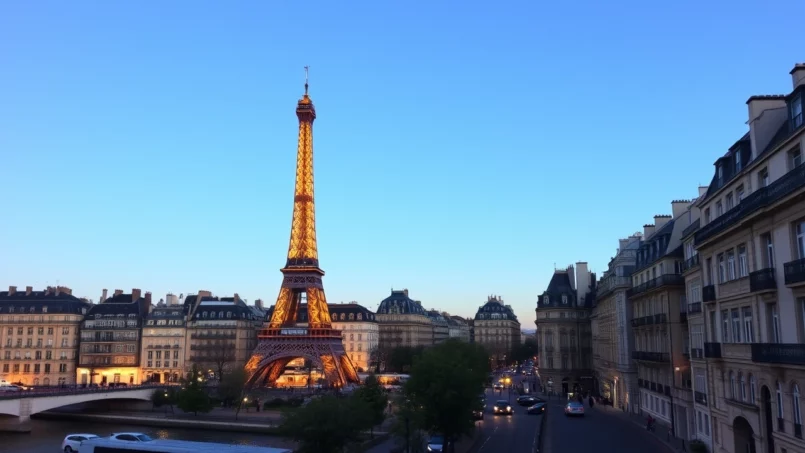
Investing in Parisian Real Estate is as fascinating as it is intimidating. High prices, dense regulations, housing pressure, and the influx of international investors sometimes make it feel like a field reserved for insiders. However, data shows that, with proper preparation, a Parisian investment remains one of the most solid investments in the world for those seeking to preserve capital, diversify assets, and generate rental income.
The real estate market is coming out of a correction and stabilizing. Prices are slightly below their 2020 peak and interest rates have become manageable again. Rental demand remains significantly higher than supply, indicating opportunities exist but the market has become more selective.
This article reviews key market figures, strategic neighborhoods and districts, potential yields, the real costs of a purchase, the tax and regulatory framework, as well as the major trends that will shape investment profitability in the coming years.
An expensive Parisian market, but more accessible than it seems
The Parisian real estate market has never been cheap. In September 2024, the average price per square meter was around €10,936, with an increase of about 3% over one year. For 2025, Paris notaries estimate the average price for older apartments around €9,530/m², a level approximately 11% below the 2020 peak. In other words, the market has corrected, not collapsed.
Sales are picking up: nationally, nearly 893,000 transactions were recorded over twelve months up to May 2025, with forecasts rising to 925,000 for 2025, then 960,000 for 2026. In Paris, the number of sales rebounded by over 12% year-over-year in early 2025, while the average selling time dropped to about 59 days, compared to 74 a year earlier. The best properties continue to sell very quickly, sometimes at the listed price.
Average rate for new mortgage loans in 2025, according to forecasts from the Banque de France and the ECB.
Paris, a market of scarcity more than a bubble
The fundamentals of the Parisian market remain dominated by scarcity: little available land, very little new construction, a stable population within the city but a metropolitan area of over 11 million inhabitants, and undiminished global appeal (Paris welcomed nearly 10 million visitors in the summer of 2022, over 30 million annually internationally).
Authorities estimate the risk of a speculative bubble is low, as there is neither a credit explosion nor massive speculative frenzy. The main problem is a housing shortage bubble, with housing starts at historically low levels (equivalent to the 1950s) and rising costs due to environmental and energy standards for new construction and renovation.
Price prospects are on the rise, but without a surge: most scenarios project growth of 1 to 2% per year until 2026, then rather 2 to 3% per year by 2030, representing a total appreciation of around 15 to 20% by the end of the decade. A moderate pace, but consistent with a “safe haven” market where security and value preservation are sought more than speculative gains.
Prices, rents, and yields: what to realistically expect
On paper, average gross yields in Paris hover around 4 to 5%, with considerable disparities from one district to another, even from one micro-zone to another. In practice, investors must primarily choose between asset appreciation (center, prestigious districts, ultra-prime) and yield (peripheral districts, transitioning sectors).
A snapshot of prices and rents by district
Data from Meilleurs Agents, SeLoger, and notaries allows for a simplified comparison of some representative districts. The values below are recent order-of-magnitude figures.
| District | Iconic Neighborhoods | Avg. Price €/m² (approx.) | Avg. Rent €/m² (approx.) | Indicative Gross Yield |
|---|---|---|---|---|
| 1st (Louvre) | Palais-Royal, Les Halles, Place Vendôme | ~€11,800–€13,200 | ~€35–€36 | 2.5–3.5% |
| 4th (Hôtel-de-Ville) | Le Marais, Île Saint-Louis, Notre-Dame | ~€12,800 | ~€36 | 3–4% |
| 6th (Luxembourg) | Saint-Germain-des-Prés | ~€14,800–€16,700 | ~€37–€38 | ~2.7% |
| 7th (Palais-Bourbon) | Eiffel Tower, Invalides | ~€14,700 | ~€37 | 2.5–3% |
| 10th (Enclos-St-Laurent) | Gare du Nord, Canal Saint-Martin | ~€9,100–€9,700 | ~€32 | 3–4% |
| 15th (Vaugirard) | Beaugrenelle, Montparnasse | ~€9,000–€10,400 | ~€31–€32 | 4–5% depending on size |
| 17th (Batignolles-Monceau) | Ternes, Batignolles | ~€10,200–€10,700 | ~€33 | 3.6–8.5% depending on size |
| 18th (Butte-Montmartre) | Montmartre, Goutte-d’Or | ~€8,800–€9,500 | ~€29–€30 | 4.1–6.8% |
| 19th (Buttes-Chaumont) | Mouzaïa, La Villette | ~€7,800–€8,600 | ~€28 | 4–5.9% |
| 20th (Ménilmontant) | Belleville, Gambetta | ~€8,100–€8,600 | ~€28–€29 | 3.8–6.3% |
A classic structure is observed: central districts (1st to 8th) show very high price levels, equally high but rent-capped rents, which compresses yields to around 2 to 3.5%. Conversely, outer districts (18th, 19th, 20th) combine more accessible purchase prices with still solid rents, commonly allowing for 4 to 6% gross yield, or even more for certain studios.
Concrete examples of yields by property type
Some market studies provide detailed, quantified cases, useful for understanding the potential based on property size. In the 15th arrondissement, a sector highly sought after by families and young professionals, for example:
| Apartment Type (15th) | Average Purchase Price | Average Monthly Rent | Approximate Gross Yield |
|---|---|---|---|
| Studio | €245,000 | €1,160 | ~5.7% |
| 2-room apt. | €437,000 | €1,700 | ~4.7% |
| 3-room apt. | €699,000 | €2,480 | ~4.3% |
| 4-room apt. | €1,050,000 | €3,350 | ~3.8% |
At the other extreme, in more popular sectors like the 18th or 20th, the “small budget / decent rent” combination significantly improves profitability.
| Example (18th) | Purchase Price | Monthly Rent | Approximate Gross Yield |
|---|---|---|---|
| Studio | €193,000 | €1,180 | ~7.3% |
| 2-room apt. | €345,000 | €1,590 | ~5.5% |
| Example (20th) | Purchase Price | Monthly Rent | Approximate Gross Yield |
|---|---|---|---|
| Studio | €210,000 | €1,580 | ~9.0% |
| 2-room apt. | €355,000 | €1,400 | ~4.7% |
These figures illustrate a fundamental rule widely confirmed by data: smaller units (studios, 2-room apartments) in vibrant, well-connected neighborhoods generally offer the highest yields, particularly in the 17th, 18th, 19th, and 20th arrondissements.
Gross yield, net yield, and investment payback horizon
At an aggregate level, a study highlights the following Parisian averages:
| Property Type (Paris overall) | Average Price | Average Monthly Rent | Indicative Gross Yield |
|---|---|---|---|
| Studio | €227,700 | €1,290 | ~6.8% |
| 2-room apt. | €442,600 | €1,900 | ~5.1% |
| 3-room apt. | €699,000 | €2,800 | ~4.8% |
| 4-room apt. | €1,039,000 | €4,180 | ~4.8% |
| 4+ rooms | €1,985,000 | €7,650 | ~4.6% |
On average, for the entire city, the price-to-rent ratio (all properties combined) gives a “payback” period by rents of about 29 years. But this value does not account for fees, taxes, and potential renovation work. Once these elements are included, the net yield typically falls 1.5 to 2 percentage points below the gross yield.
The median net yield of a rental investment in Paris, ranging from 2% in the center to 4.5% in the periphery.
Understanding neighborhood by neighborhood: prestige, growth, and potential
Talking about “investing in Parisian real estate” only makes sense if we distinguish the very different profiles from one district to another. Data shows three main families of sectors: ultra-prime, transitional/intermediate, and high-yield periphery.
Ultra-prime sectors: prestige and safety, compressed yield
Districts like the 6th, the 7th, the most sought-after parts of the 1st, 4th, or 8th concentrate the most vertiginous prices, high-quality Haussmannian heritage, and an affluent international clientele.
In the 6th, Saint‑Germain‑des‑Prés and the surroundings of the Luxembourg Gardens trade on average around €15,000 to €16,700/m², with peaks over €27,000/m² for exceptional properties. The 7th, with the Eiffel Tower, Invalides, and Musée d’Orsay, shows comparable prices, sometimes up to €30,000/m² for certain prized addresses.
In Paris, rents for furnished apartments in older buildings (built before 1946) are subject to regulatory ceilings per square meter, which vary by district and type of housing. For example, in the 6th arrondissement, ceilings are approximately €46.6/m² for a studio, €40.7/m² for a 2-room, €38.8/m² for a 3-room, and €36.1/m² for a 4-room or larger. In the 7th arrondissement, they are approximately €45.7/m² for a studio, €40.4/m² for a 2-room, €38.3/m² for a 3-room, and €40.2/m² for a large apartment.
These levels leave little margin: one generally stays around 2.5 to 3% gross yield for standard leases, sometimes a bit more for setups with civil law leases (bail Code civil) for diplomatic or executive clientele. The interest in these sectors lies mainly in price stability, liquidity upon resale, and the potential for value-add through quality (high-end renovations, energy performance, architectural character).
Intermediate neighborhoods: balance between price and rental demand
Many districts offer a more interesting compromise between asset appreciation and yield. This is the case for the 9th (Opéra, Saint‑Georges), 10th (République, Canal Saint‑Martin), 11th (Bastille, Oberkampf), 14th (Montparnasse, Alésia), 15th, northern 16th (Victor‑Hugo, Trocadéro), or the 17th (Batignolles, Ternes, Plaine‑Monceau).
Maximum price per square meter in the 17th arrondissement of Paris, reached in the Ternes and Plaine-Monceau neighborhoods.
The 10th has seen its prices rise by about 20% over ten years, driven by the renaissance of Canal Saint‑Martin and the centrality of the Gare du Nord and Gare de l’Est. The Porte Saint‑Denis – Paradis area stands out with an estimated increase between 25 and 35% over the past decade, making it a typical “growth + yield” investment sector.
The 11th, densely served (25 metro stations, a record in Paris), attracts students, young professionals, and creatives. About 60% of transactions involve apartments under 50 m², with strong tension for studios. Prices there are slightly below €10,000/m² in many streets, with rents around €32/m²: a mix that allows targeting 4 to 5% gross on well-positioned small units.
Peripheral districts: high yields and capital gain potential
The 18th, 19th, and 20th arrondissements are the preferred playground for yield-seeking investors, with a perceived higher risk but significant upside potential in certain pockets.
Analysis of price gaps, rental yields, and demand dynamics between different neighborhoods.
The price per square meter varies considerably, from over €11,000 (up to €15,000 at Lamarck-Caulaincourt) in Montmartre, to around €8,000 in sectors like La Chapelle or Marx Dormoy.
Average yields range from 4.1% to nearly 7%, with some studios exceeding 7% gross yield.
Driven by a mix of tourists, students, young professionals, and an affluent clientele in gentrified micro-neighborhoods (Jules-Joffrin, Grandes-Carrières).
The average property value has increased by approximately 21.7% over the last decade.
The 19th combines accessible prices (around €7,800–€8,600/m² on average) and a high tenant rate (nearly 69% of housing). Villas in La Mouzaïa are listed close to €15,000/m², but sectors like Pont‑de‑Flandre remain around €7,000/m², with an estimated gross yield above 4.5%. Investors target both families (Buttes‑Chaumont) and young people (La Villette, Ourcq).
The 20th, finally, is an emblematic district of social diversity: Belleville, Gambetta, Ménilmontant, Père‑Lachaise. The average price is around €8,100–€8,600/m², up to 20% less than in more central districts. Yet, demand is strong, and gross yields are frequently between 3.8 and 6.3%. Micro‑zones like Saint‑Blaise or Belleville are identified by analysts as pockets of future growth, with projected price increases of 2 to 4% per year in the coming years.
Long-term rental, civil law lease, or tourist rental: what to choose?
A strong specificity of rental investment in Paris lies in the diversity of possible arrangements: unfurnished or furnished long-term rental, civil law lease for high-end international clientele, furnished tourist rental (Airbnb type) or medium-term stays. Each model has its advantages, its tax constraints, and above all a very different regulatory environment.
Long-term rental: backbone of the wealth-building strategy
The classical rental – unfurnished or furnished – remains the backbone of most investments. In Paris, the housing shortage is such that vacancy risks are very low for a well-located, well-managed property: most agencies observe relocation times of 2 to 4 weeks for a correctly priced apartment.
The city having implemented rent controls, each property is subject to a reference rent (increased or not) per square meter, which limits increases and constrains profitability in the most expensive neighborhoods. It is still possible to apply a rent supplement for “exceptional” characteristics (view, terrace, high ceilings…), but this lever is discussed case by case and can be contested.
Demand is particularly strong for three types of properties:
To optimize a rental investment in Paris, it is strategic to adapt the property type to the specifics of each neighborhood. Prioritize studios and 2-room apartments in young, dynamic, well-connected sectors, like the 10th, 11th, 15th, 17th, 18th, 19th, and 20th arrondissements. For families, focus on 3- and 4-room apartments in residential districts known for their quality of life, such as the 14th, 15th, 16th, and 17th. Finally, for a high-end clientele (diplomats, expatriate executives, senior managers), large, high-standard furnished apartments in the 1st, 4th, 6th, 7th, 8th, and 16th arrondissements are best suited.
In all cases, furnished rental benefits from a more advantageous tax treatment than unfurnished rental (LMNP or LMP regime), with higher deductions or the possibility to depreciate the property under the real regime.
Civil law leases: flexibility and higher rents for a targeted clientele
Faced with the increasing complexity of the regulated rental market (Alur law, rent control, strengthened tenant protection), more and more investors are turning to so-called “Civil Code” leases for furnished long-term rentals, but outside the framework of standard residential leases.
These contracts, governed by the French Civil Code, are often used to house diplomats, executives of multinational companies, or expatriates, via relocation or management companies. They generally offer:
– Greater freedom in setting the rent (often above standard ceilings).
– More flexible lease durations.
– A solvent tenant profile managed by a company or international organization.
In expensive districts like the 6th or 7th, a civil law lease can reach €44–€45/m², or more depending on the property and negotiation, thus exceeding regulated rent ceilings. This practice improves rental yield but involves more complex regulation and special attention regarding the legal qualification of the lease.
Tourist rental and the “anti‑Airbnb” law: an increasingly regulated model
Furnished short-term rental (Airbnb, Booking, etc.) was long the El Dorado for some investors, with yields potentially rising between 6 and 8%, or even more on small units. But Paris is a laboratory for regulation in France, and the game has radically changed.
Since 2017, any furnished short-term rental must be registered with the town hall and display a number in the listing. Primary residences can be rented for up to 90 days per year (the city lowered the cap, formerly 120 days). Beyond that, or for secondary residences, a change-of-use authorization is required, very difficult and costly to obtain, often conditional on “compensation” measures (creation of equivalent residential surface area).
The Le Meur law (or law n° 2024‑1039), nicknamed the “anti‑Airbnb law,” which came into effect in early 2025, further strengthens the system:
A law creates a mandatory national register with a unique identification number for all tourist rentals. It strengthens the powers of municipalities, which can now reduce the maximum rental duration, establish quotas per neighborhood, or prohibit this activity in certain buildings. Co-ownership associations can also prohibit it by a two-thirds vote. Offenders face fines of up to €100,000, and online platforms face heavy penalties for publishing non-compliant listings.
On the tax side, the law drastically reduces the advantages of the micro‑BIC regime for tourist furnished rentals:
– For “unclassified” furnished rentals (typical case of an individual): allowance reduced from 50 to 30%, with an annual revenue cap lowered to €15,000.
– For “classified” furnished rentals (official tourist furnished rental): allowance reduced from 71 to 50%, revenue cap reduced to €77,700 (instead of €188,700).
Energy obligations are also tightening: as with long-term rentals, properties rated G on the DPE can no longer be rented since 2025; F-rated will be banned in 2028, E-rated in 2034, including for tourist rentals (excluding primary residences rented occasionally). Owners of energy sieves who were counting on Airbnb to circumvent long-term rental bans see this path gradually closing.
In practice, investment solely oriented towards short-term rentals in Paris becomes a game reserved for very professional operators, capable of absorbing the costs of compliance, classification, management, and especially navigating a changing legal framework. For an individual investor, the most prudent strategy remains structuring a project viable for long-term rental, and considering tourist rental as a potential complement, not the foundation of profitability.
Real costs of buying property in Paris: beyond the purchase price
Focusing solely on the price per square meter is a common mistake. In France, and particularly in Paris, additional purchase costs, financing costs, and recurring charges weigh heavily on the overall investment performance.
Acquisition costs: notary, transfer taxes, agency
For an older property (which represents the vast majority of the Parisian stock), notary fees – which mainly include transfer taxes – represent about 7 to 8% of the purchase price. In detail, they include:
– Transfer taxes, around 5.8% of the price, composed of a departmental tax (~4.5%), a municipal tax (~1.2%), and a small national tax (~0.09%).
– The notary’s remuneration, calculated on a decreasing scale (3.870% up to €6,500, 1.596% from €6,501 to €17,000, 1.064% from €17,001 to €60,000, 0.799% above), sometimes with small discounts on very large amounts.
– Out-of-pocket expenses (administrative costs for copies, cadastral extracts, certificates, etc.), on the order of €400 to €800.
– The real estate security contribution (approximately 0.10% of the price).
For a new property (less than five years old, sold by a developer), these fees drop to about 2–3% of the price, with VAT at 20% (sometimes 5.5% in certain zones) partly replacing transfer taxes. But the supply of new housing within Paris proper is extremely limited, making this type of product rare and often very expensive.
Agency fees, typically between 4% and 6% in Paris, are most often included in the listed price (mention “FAI” for Frais d’Agence Inclus – Agency Fees Included). For precise yield calculations, it is crucial to know if you are basing them on the “net seller” price (excluding fees) or the “FAI” price (including these fees).
Financing: down payment, processing fees, guarantees, and insurance
French banks typically require a minimum down payment of about 10% of the project cost for residents, but non‑residents often must contribute 20 to 30%, sometimes more depending on profile, nationality, and income complexity. Banks also limit the overall debt ratio (loan payments / income) to about 33–35%.
The main costs related to the loan are:
– Processing fees, often between €500 and €1,000, sometimes expressed as a percentage of the loan amount (~1%).
– Guarantee fees (mortgage or lender’s privilege), for registering the security, around 0.5 to 2% of the loan amount.
– Borrower’s insurance (death‑disability), almost mandatory, representing 0.20 to 0.50% of the borrowed capital per year.
For large cases (over €800,000), non-residents often go through specialized brokers who can negotiate financing with private banks, sometimes with ‘assets under management’ logic (requirement to entrust the banker with capital to manage in parallel, to the tune of 20 to 50% of the loan).
Specialized brokers for non-residents
Recurring costs: local taxes, co-ownership, maintenance
Once an owner, the investor must factor in each year:
– Property tax, a local tax on ownership, on the order of €500 to over €3,000 per year depending on the size and location of the property.
– Residence tax, now abolished for primary residences, but maintained for secondary residences and vacant properties (often €300 to €2,000 per year).
– Co-ownership charges, covering maintenance of common areas, insurance, possibly collective heating, concierge, elevator, etc. In Paris, they frequently range from €20 to over €100/m²/year. For a 60 m² unit, budget on average about €3,000 per year (€250/month).
– Home insurance (multi‑risk), about €240/year on average for an apartment in Île‑de‑France, plus possible non-occupant owner insurance.
– Property management fees if you delegate (5 to 10% of the rent collected), sometimes with additional letting fees.
To these charges add the routine maintenance costs and major works, decided in co-ownership meetings (facade cleaning, roofing, elevator, energy renovation…). A prudent rule is to set aside at least 1 to 1.5% of the property’s value per year for maintenance and medium-term renovations, especially in older buildings.
Taxation: rental income, capital gains, and wealth
French taxation is technical but relatively predictable. For an investor in Paris, three main blocks matter: taxation of rental income, tax on capital gains upon resale, and the possible real estate wealth tax (IFI) for high-net-worth individuals.
Rental income: unfurnished vs. furnished rental
The same apartment will not be taxed the same way depending on whether it is rented unfurnished or furnished.
In the case of an unfurnished rental, rents are declared as “property income”. Two regimes exist:
– The micro‑property regime, if gross annual rents do not exceed €15,000: a flat-rate allowance of 30% on revenues, no deduction of actual expenses.
– The real regime, above this threshold or by election: deduction of actual expenses (loan interest, works, local taxes, insurance, management fees, etc.), with the possibility to generate a deficit offsettable against other property income, or even against overall income within certain limits.
In furnished rental, rents are taxed under the category of BIC (industrial and commercial profits):
For revenues below €77,700, the micro-BIC regime applies with a 50% allowance (reduced to 30% for unclassified tourist furnished rentals after the reform). Beyond that, the real regime is mandatory. It notably allows depreciation of the property and furniture, which can neutralize income tax for several years, particularly under the LMNP (Non-Professional Furnished Landlord) status.
Social charges (or solidarity levy) complete the tax: for non‑residents affiliated with a European or Swiss social security system, a contribution of 7.5% applies. For other non‑residents, the standard rate of 17.2% is added to the income tax.
Capital gains on resale: a system highly incentivizing long-term holding
In case of a sale with a gain, the capital gain is taxed at a base rate of 19%, to which, for non-exempt individuals, social charges of 17.2% (or 7.5% for EEA/CH affiliates) are added. But a system of allowance for length of ownership progressively reduces this taxation:
For income tax (19% rate): no allowance during the first 5 years, then a 6% allowance per year from the 6th to the 21st year, and 4% in the 22nd year. The capital gain is totally exempt after 22 years of ownership. For social charges (17.2%): no allowance for the first 5 years, then 1.65% per year from the 6th to the 21st year, 1.6% in the 22nd year, and 9% per year from the 23rd to the 30th year. Social charges disappear completely after 30 years of ownership.
The primary residence also benefits from total capital gains exemption. Specific regimes also exist for certain non‑residents selling a former home in France within ten years of departure.
In practice, this means an investor who holds their property for 20 to 25 years can exit virtually tax‑free on the capital gain, reinforcing the long-term logic of Parisian investment.
IFI: the real estate wealth tax
For net real estate assets in France exceeding €1.3 million, the Impôt sur la Fortune Immobilière (IFI) applies. For non‑residents, only properties located in France enter the tax base.
The scale is progressive, from 0.5% to about 1.5% depending on the bracket, with a 30% allowance on the value of the primary residence. Debts contracted for the acquisition or improvement of properties are deductible, making the use of credit a tool for managing the taxable base.
Many wealthy investors therefore arbitrate between equity financing (better cash flow from rents, no interest expense) and partial credit financing (reduction of the IFI base, better overall diversification).
Energy regulation: the DPE as the new central criterion
In recent years, the energy performance diagnosis (DPE) has evolved from a simple technical indicator to a major determinant of property value and liquidity.
Figures show a real polarization:
– Well‑rated properties (A to C) trade at a premium of 10 to 15% compared to similar poorly rated properties, even up to 15 to 25% for A-rated housing.
– Energy sieves (E, F, G) suffer, conversely, a discount of 5 to 15%, with weaker demand and growing sales difficulties.
Regulation reinforces this dichotomy:
Since this year, G-rated housing is banned for rental, followed by F-rated in 2028 and E-rated in 2034.
In Paris, where a large part of the stock is old, this constraint is heavy: co-ownerships must vote for sometimes very costly works (insulation, heating system changes, ventilation, windows). Estimates for upgrading an old apartment range between €10,000 and over €40,000 depending on size and complexity.
Number of homes that would exit the ‘energy sieve’ status thanks to the DPE reform planned for 2026.
For an investor, two strategies emerge:
– Either target well‑rated properties from the start, more expensive to buy but less risky and more liquid, with an added long‑term value.
– Or deliberately buy poorly rated properties at discounted prices, with an ambitious renovation plan aiming to significantly improve the DPE, and thus capture part of the future revaluation.
In any case, ignoring the DPE today means taking a major risk on the property’s value and ability to be rented in the medium term.
Infrastructure and Grand Paris: where are the future value pools?
The other major engine of transformation in the medium and long term is the vast project of Grand Paris Express: over 200 km of new metro lines, 68 stations, and a metropolis being reconfigured around interconnected hubs.
The history of real estate markets shows that the arrival of a metro station or improved accessibility often translates into a price increase of 5 to 15% within a radius of about 500 meters, all else being equal. Projections around certain new stations (Saint‑Denis Pleyel, plateau de Saclay, Pont‑de‑Flandre, etc.) anticipate annual growth of 2 to 5%.
For the investor specialized in Paris intra‑muros, this means two things:
Pay attention to the city’s fringes, particularly in the northeast (18th, 19th, 20th arrondissements) and northwest (17th), which interface with heavily invested metropolitan towns like Saint‑Ouen, Saint‑Denis, Aubervilliers, and Clichy. Understand that the notion of “good location” is no longer limited to just the historic central neighborhoods but now includes these areas undergoing full reconfiguration. They may seem less glamorous at first glance but carry strong catch‑up and valuation potential.
Databases like that of Apur (BD Projets) list millions of square meters of projects (housing, offices, public facilities, shops) planned until 2030 in the Greater Paris Metropolis, with about 60% around the new Grand Paris Express stations. This environment, combined with Paris’s climate commitments (carbon neutrality by 2050, scaling up of clean transport, eco‑designed neighborhoods), helps solidify the long‑term use value</strong of well‑connected and high‑performing housing.
Conclusion: investing in Paris, a marathon rather than a sprint
Investing in real estate in Paris is neither seeking a quick jackpot, nor hoping for double‑digit rental yields as in some mid‑size cities or abroad. It is accepting the idea of a capital‑intensive, technically regulated investment, but supported by fundamentals rarely found elsewhere:
– A structural rental demand exceeding supply.
– A market globally recognized as a safe haven for capital.
– A legal and notarial framework very protective of property ownership.
– A moderately upward price trajectory, supported by scarcity and international appeal.
– Decent gross yields, which can become very interesting on well‑targeted small units in good peripheral neighborhoods.
The key to turning this potential into concrete success lies in a few principles:
To invest in Parisian rental real estate, it is crucial to: choose a district and a micro‑zone in line with your risk profile and horizon (trade‑off between prestige and yield); factor in all costs (acquisition, financing, management, and works) into your budget; anticipate the impact of the property’s energy performance and plan necessary renovations; master the complex regulation (rent control, lease types, tourist rental, taxation); and finally, surround yourself with professionals experienced with investors, especially international ones (notary, buyer‑oriented real estate agent, broker, tax advisor).
With such an approach, investing in Parisian real estate resembles less of a gamble and more of a patient wealth‑building exercise: a marathon, where one aims for solidity, diversification, and transmission, rather than a speculative sprint. In an uncertain world, this combination of stability, liquidity, and visibility still makes Parisian real estate a unique asset in the global landscape.
Disclaimer: The information provided on this website is for informational purposes only and does not constitute financial, legal, or professional advice. We encourage you to consult qualified experts before making any investment, real estate, or expatriation decisions. Although we strive to maintain up-to-date and accurate information, we do not guarantee the completeness, accuracy, or timeliness of the proposed content. As investment and expatriation involve risks, we disclaim any liability for potential losses or damages arising from the use of this site. Your use of this site confirms your acceptance of these terms and your understanding of the associated risks.

Cyril Jarnias is an independent expert in international wealth management with over 20 years of experience. As an expatriate himself, he is dedicated to helping individuals and business leaders build, protect, and pass on their wealth with complete peace of mind.
On his website, cyriljarnias.com, he shares his expertise on international real estate, offshore company formation, and expatriation.
Thanks to his expertise, he offers sound advice to optimize his clients' wealth management. Cyril Jarnias is also recognized for his appearances in many prestigious media outlets such as BFM Business, les Français de l’étranger, Le Figaro, Les Echos, and Mieux vivre votre argent, where he shares his knowledge and know-how in wealth management.





