
 Published on and written by Cyril Jarnias
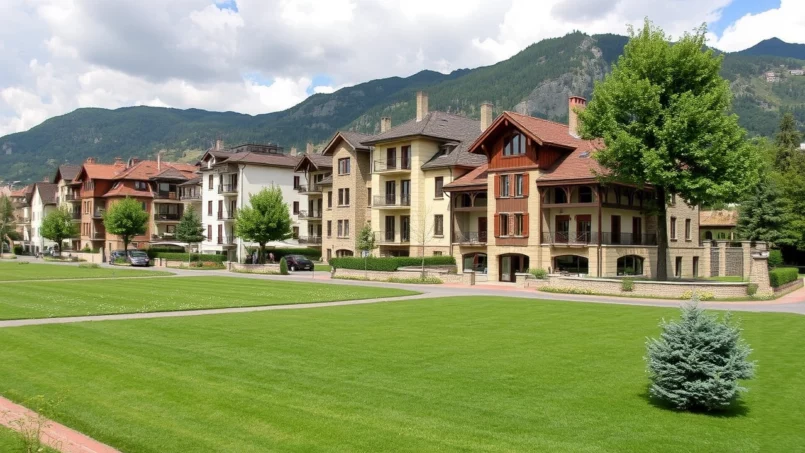
Nestled at the foot of the Vercors, Chartreuse, and Belledonne mountain ranges, Grenoble has established itself as one of France’s most interesting cities for real estate investment. “Capital of the Alps,” the country’s second-largest research hub after Paris, ranked the top major student city by L’Étudiant, a metropolis awarded the European Green Capital label… These are not just marketing slogans: they translate concretely into housing demand, prices, rents, and appreciation prospects.
To invest in Grenoble, it is crucial to determine the location, property type, and rental strategy (unfurnished, furnished, or short-term). It’s also essential to factor in regulatory constraints, particularly energy-related ones, in a market undergoing transformation due to the ecological transition, new rental rules, and the growth of higher education and tech.
A transforming but structurally sound real estate market
Grenoble’s residential market enters the 2025‑2026 years in a paradoxical context. On one hand, the city, like the rest of the country, is feeling the effects of rising interest rates, inflation, and tighter credit. On the other, it benefits from a very solid demand base, fueled by students, researchers, engineers, families, and remote workers attracted by the mountainous setting.
The number of buyers on the real estate market is approximately 15% higher than the number of properties available for sale.
At the same time, prices are not soaring: they are generally stabilizing, with even a slight recent decline over twelve months of about -0.6%. However, the Isère notaries observe a moderate increase for the year 2025: +1.8% for apartments and a similarly measured increase for houses, confirming a rather healthy, non-speculative market.
This apparent contradiction is explained by increasingly clear segmentation:
Values are rising or holding firm in well-served and ecologically efficient sectors (Presqu’île, eco-districts…), while areas with older, poorly insulated housing stock or a degraded image are feeling more pressure from new energy and regulatory standards.
The national economic context (rising interest rates, bank caution) caused a slight slowdown in transactions in 2025 after several years of very high demand. Experts anticipate a continuation of this price stabilization phase for 2026, with marked disparities depending on neighborhoods and the environmental quality of properties.
Grenoble: A demographic and economic foundation very favorable to investors
Beyond market cycles, real estate attractiveness depends first on the territory’s dynamism. From this perspective, Grenoble ticks almost all the boxes.
A young, dense, and rental-oriented metropolis
The city proper has about 157,000 to 158,000 inhabitants, at the heart of a metropolitan area of roughly 670,000 to over 700,000 people. The population is growing, with annual growth around +0.6 to +0.7% and a median age of 33, making it a significantly younger city than the national average.
The housing stock is largely oriented towards rental:
– 96,773 households recorded.
– 83,902 primary residences (nearly 87% of the stock), 3% secondary residences.
– 59 to 60% renters, a high proportion for a city of this size.
– Distribution of primary residences by size:
– 15.5% studios;
– 21.1% 2-room apartments (T2);
– 28.8% 3-room apartments (T3);
– 21.6% 4-room apartments (T4);
– 13.1% 5-room apartments (T5) and larger.
For an investor, this profile means a very large and diversified pool of tenants: students, young professionals, researchers, families, low-income households, shared housing… with an existing stock that is already significant but under pressure.
A major university hub: Driver of rental demand
Grenoble is regularly ranked among the top 3 French university cities and was even elected best student city in France for the 2022‑2023 academic year. The metropolitan area hosts:
With about 60,000 to 65,000 students, Grenoble is a major university hub in France, internationally recognized for the quality of its education and research.
Nearly 59,000 students. Ranked in the top 100 worldwide in the 2020 Shanghai Ranking.
Includes Grenoble INP, Grenoble École de Management (GEM), IAE, Sciences Po Grenoble, and numerous specialized schools.
Between 60,000 and 65,000 students, including 15% international students.
The main campuses are located in Saint‑Martin‑d’Hères and Gières, but the entire city lives to the rhythm of this population. The student housing shortage is recurrent: in 2022, barely over a hundred dedicated social housing units were delivered for more than 60,000 students. Private residences show occupancy rates close to 90%.
This structural tension in the student housing market translates into:
– strong demand for furnished studios, 1-bedroom, and 2-bedroom apartments;
– growing success of shared housing in 3-bedroom, 4-bedroom apartments or houses;
– student rents around €450 to €600 per month for a studio or room in a residence, and around €300 to €400 for a room in a shared apartment.
For a landlord, this means a low vacancy risk for well-located small apartments, especially near tram lines A and B, the train station, the city center, Saint‑Martin‑d’Hères, Berriat/Saint‑Bruno, or the hyper-center.
A European-level economic and technological ecosystem
Investing in property in Grenoble also means betting on an extremely robust and future-oriented economy. The metropolis brings together:
Industry represents about 16% of the local economy, one of the highest levels in France.
The large companies and research centers present form a foundation of skilled jobs particularly favorable for real estate: STMicroelectronics (6,000‑7,000 employees), Schneider Electric (5,000‑6,000), Caterpillar, Air Liquide, HP France, Roche Diagnostics, BD, Atos, Capgemini, Soitec, Lynred, GE Hydro, Orange Labs, not to mention the five major European research centers (ESRF, ILL, EMBL, LNCMI, IBS) and the GIANT innovation campus which brings together 10,000 researchers and 10,000 students.
Concurrently, the start-up ecosystem is one of the most dynamic in France:
– 475 active start-ups and scale-ups;
– nearly €4 billion in venture capital raised since 2000 (including €1.8 billion for deeptech alone);
– 44% of start-ups classified as deeptech;
– over 7,800 jobs created;
– a 5-year survival rate of 60%.
This concentration of highly qualified, often young, international, and well-paid profiles creates specific demand for:
Discover our selection of quality apartments, designed to meet the needs of mobile professionals and researchers in the Grenoble region.
Apartments located near major research and innovation centers: Scientific Presqu’île, Europole, La Tronche, Meylan, and Inovallée.
Comfortable and well-insulated homes, immediately close to public transport and bike paths for your daily commute.
Fully furnished and equipped properties for medium-term stays, ideal for fixed-term contracts, post-docs, or professional assignments.
A green and well-connected city: A key rental argument
Grenoble was the European Green Capital 2022, the first major French city to adopt a climate plan as early as 2005. Local policies translate into:
– more than 400 km of bike paths (up to 450 km according to recent sources), making Grenoble the most “bikeable” city in France;
– 29% of working residents commuting to work on foot or by bicycle;
– a dense tram network (lines A, B, C, etc.), complemented by an efficient bus network;
– widespread 30 km/h speed limits and a low-emission zone (ZFE) across 27 municipalities;
– 17% of consumed energy from local and renewable sources (hydroelectricity, biomass, district heating);
– 90% of collected waste being recovered.
For a tenant, this means reduced transport costs and an appreciable quality of life. For an investor, proximity to tram, bus, or bike-share stations becomes a major valuation criterion, alongside energy performance.
Price levels, rents, and yields: Where does Grenoble stand?
To invest, one must obviously look at the price/rent ratio and potential profitability. On this front, Grenoble is significantly below Lyon or Annecy in terms of prices, but with higher yields.
Purchase: An entry ticket still affordable
Various sources converge on a consistent order of magnitude:
– Average price per sq m for an older apartment: between €2,500 and €2,700/sq m (observed ranges from ~€2,000 to €4,000/sq m depending on neighborhoods).
– Average price per sq m for a house: around €3,400 to €3,600/sq m.
– Recent trend: overall increase of about 19% over 5 years, with growth of 7 to 11% on older properties depending on the sector.
More detailed data shows significant gaps:
| Sector / Property Type | Average Price (Older Stock) |
|---|---|
| Apartment Grenoble (general) | ~€2,467 to €2,700/sq m |
| House Grenoble | ~€3,400 to €3,616/sq m |
| Polygone Scientifique / Presqu’île | ~€4,000/sq m |
| Jouhaux and affordable neighborhoods | ~€2,200/sq m |
| Hyper-center / Notre‑Dame / Caserne de Bonne | €2,700 to €3,200/sq m |
| Saint‑Martin‑d’Hères (campus) | €2,300 to €2,600/sq m |
| Eaux‑Claires / Teisseire | €2,000 to €2,500/sq m |
In practice, one can find:
– older 2-bedroom apartments starting at €105,000 (with renovations needed);
– older 3-bedroom apartments around €140,000;
– for new builds, on the Scientific Presqu’île, prices rather between €3,800 and €4,200/sq m.
Compared to Lyon, Grenoble remains significantly more accessible: the average price per square meter for an apartment is about €4,800 to €5,000 there, compared to higher prices in Lyon. Although rents are also more expensive in Grenoble, the overall financial effort for housing is lower for a comparable standard of living.
Rents and rental profitability
On the rental front, Grenoble shows moderate rents but driven by strong demand pressure:
– Average monthly rent per sq m (apartment): about €13/sq m, with a range of €9 to €23/sq m depending on the area and quality.
– Average rent per sq m for a house: around €11.9/sq m.
Some useful indicators:
| Property Type (Older) | Average Purchase Price | Average Monthly Rent | Approx. Gross Yield |
|---|---|---|---|
| 1-room (Studio) | €81,200 | €500/month | ~7.3% |
| 2-room (T2) | €131,000 | €680/month | ~6.2% |
| 3-room (T3) | €175,000 | €850/month | ~5.8% |
| 4-room (T4) and larger | €247,500 | €900/month | ~4.4% |
On average, market studies reveal:
– an overall gross yield around 5.1 to 5.6% for the city;
– yields of 4 to 5% in central sectors and more legacy-type properties;
– peaks of 6‑7%, even up to 8‑9% in neighborhoods undergoing redevelopment (Eaux‑Claires, Teisseire, Saint‑Bruno, Villeneuve) or with well-optimized shared housing.
At the city level, the average time to “pay off” a property through collected rents is about 18 to 19 years. This situation places the Grenoble market among the most balanced in the Île-de-France and Auvergne-Rhône-Alpes regions for a long-term investor.
Financing weight and borrowing capacity
Credit accessibility obviously conditions investment. Observed figures indicate:
– Average interest rates over 20 years around 3.6 to 3.9% (with a range of 3.5 to 3.85%).
– Average net salary in Grenoble: about €2,400 monthly.
– Price-to-income ratio of about 7.
– Credit payments representing about 50% of income for a typical household buying an average property, hence a significant need for personal funds.
For non-residents, French banks typically finance 70 to 80% of the price (excluding notary fees), over 10 to 20 years, with an obligation to repay before age 75 and taking out borrower’s insurance.
In this context, a down payment of 15 to 20% significantly improves financing conditions and the ability to secure the best deals, especially as buyer competition remains strong in certain segments (studios, well-located small units, houses in the first ring).
The best neighborhoods to invest in Grenoble
One of Grenoble’s advantages is the great variety of neighborhoods: historic hyper-center, recent eco-districts, changing popular sectors, residential suburbs, green peripheral towns. Each area offers a different tenant profile, prices, and yields.
Hyper-center, Notre‑Dame, Jardin de Ville, Championnet
This is the city’s beating heart: pedestrian streets, Place Grenette, Notre‑Dame, shopping streets, student bars, immediate proximity to trams and services. We add Championnet, a lively neighborhood with strong “art de vivre” appeal, backing onto the Caserne de Bonne.
– Investment typology: studios, 1-bedroom apartments, furnished 2-bedroom apartments.
– Target audience: students, young professionals, researchers, urban tourists.
– Prices: €2,700 to €3,200/sq m on average for older stock, sometimes more in the most sought-after buildings.
– Rents: €16 to €18/sq m for a well-located studio/1-bedroom.
– Gross yield: often 5 to 6.5%.
Strengths: very sustained demand, almost no vacancy for well-managed small units, sought-after architectural heritage, shops and cultural venues.
Limitations: sometimes older condominiums with high maintenance fees, potential nuisances (noise, bars, events), rare parking, highly variable energy performance. New constraints on energy sieves have a direct impact: a DPE F or G rating must undergo heavy renovation to remain rentable.
Berriat – Saint‑Bruno – Europole
West of the center, this vast sector around the train station, the Berriat district, and Place Saint‑Bruno is undergoing redevelopment. Historically working-class and industrial, it now attracts start-ups, third-places, students, young managers, with strong social diversity.
For a profitable rental investment, target the following typologies: older T2 to T4 apartments, shared housing, small rental buildings, and furnished apartments. The ideal target audience is composed of young professionals, master’s or PhD students, Europole employees, and roommates. Acquisition prices range from €2,500 to €2,900/sq m. In shared housing, an individual room can be rented for €450 to €550 per month. This strategy offers an attractive gross yield of 6 to 7%, which can often be exceeded with well-optimized shared housing.
Strengths: very good accessibility (tram A, train station, buses), proximity to the center, cultural dynamism, potential for value appreciation with renovations and urban projects.
Points to watch: still mixed image on some streets (traffic, nuisances), heterogeneous building quality, necessity for very fine-grained street-by-street selection and particular attention to security and property management.
Île Verte / Paul Mistral / Caserne de Bonne
These residential areas offer a calmer, greener environment while remaining close to the center and amenities. Île Verte is bordered by the Isère River, with many large apartments and a family-oriented clientele; Paul‑Mistral benefits from the large park of the same name and proximity to the stadium and sports facilities; the Caserne de Bonne is France’s first urban eco-district, nationally awarded.
– Typology: 3-bedroom, 4-bedroom apartments, large apartments, sometimes townhouses.
– Target audience: families, managers, medical professionals, civil servants.
– Prices: €2,600 to €3,000/sq m (more expensive at Caserne de Bonne).
– Rents for 3-bedroom apartments: €850 to €1,100/month.
– Gross yield: 4.5 to 5.5%, sometimes a bit more on optimized properties.
Strengths: tenant stability, high quality of life, green spaces, good reputation, strong valuation of properties with good DPE ratings. In areas like Caserne de Bonne, energy performance and the “green” image are strong legacy assets.
Limitations: higher entry ticket, more modest yield than in redevelopment zones, competition from owner-occupiers.
Saint‑Martin‑d’Hères and Gières: The student hub
East of Grenoble, Saint‑Martin‑d’Hères and Gières concentrate a very large part of the campuses. This is where most university residences, faculty buildings, libraries, and sports facilities are found.
– Typology: furnished studios, 1-bedroom/2-bedroom apartments, shared housing in 3-bedroom/4-bedroom apartments.
– Target audience: students, PhD candidates, young researchers.
– Prices: €2,300 to €2,600/sq m.
– Rents: furnished studio €450 to €600/month.
– Gross yield: 6 to 7%.
This property benefits from structural student demand, thanks to its access by tram lines B and C and its immediate proximity to university faculties. It also offers great ease of rental, whether furnished under a standard annual lease or via a mobility lease.
Points of caution: significant tenant turnover (academic year), risk of summer vacancy if the property is not repositioned for short-term or mobility leases, attention to building quality and energy-hungry 60s-70s condominiums.
Eaux‑Claires, Teisseire, Mistral, Villeneuve: The changing neighborhoods
To the south and southeast, these long-neglected neighborhoods are the subject of large urban renewal operations and redevelopment policies (national priority, reduced VAT at 5.5% on some new developments).
– Typology: 2-bedroom, 3-bedroom apartments, sometimes large family apartments, buildings from the 60s-80s.
– Target audience: young professionals, low-income families, student shared housing on a tight budget.
– Prices: €2,000 to €2,500/sq m.
– Rents: 2-bedroom apartment €550-€750/month.
– Gross yield: 6 to 7%, or more, subject to a negotiated purchase and relevant renovations.
Strengths: attractive entry prices, favorable tax schemes for new builds (reduced VAT, sometimes Pinel) and for older properties to renovate (Denormandie), potential for upgrading as the living environment improves.
The investment presents risks linked to a still fragile image and perception of insecurity in certain neighborhoods like Villeneuve or Teisseire, as well as the risk of rental vacancy if the property is poorly positioned or the building is too degraded. It is essential to evaluate street by street and to work with a professional who knows the area perfectly.
Presqu’île scientifique, Europole, innovation districts
The Scientific Presqu’île and the areas around Europole constitute Grenoble’s high-tech showcase: GIANT campus, grandes écoles, laboratories, headquarters of international groups. It’s also a vast area of real estate projects (offices, housing, shops) with very high-quality new developments.
– Typology: new 1-bedroom/2-bedroom apartments, Pinel scheme properties, BBC/RE2020 standard programs.
– Target audience: young engineers, managers, researchers, expats, sometimes advanced-cycle students.
– Prices: €3,800 to €4,200/sq m for new builds.
– Rents for new 2-bedroom apartments: €700 to €850/month.
– Gross yield: 4 to 5%.
Strengths: long-term visibility, construction quality, reduced maintenance fees, excellent energy performance, ease of renting to a solvent clientele, potential for legacy resale value.
Limitations: high entry prices, lower short-term yields than renovating older properties; one must adopt a clearly long-term, legacy-building strategy.
Peripheral towns: Meylan, La Tronche, Seyssins, Sassenage, Fontaine…
Around Grenoble, several towns offer an attractive compromise between greenery, tranquility, and accessibility:
– Meylan, La Tronche: highly sought after by managers, doctors (university hospital), employees of technology parks (Inovallée), families. Higher prices, legacy orientation, strong tenant stability.
– Seyssins, Seyssinet‑Pariset, Sassenage, Fontaine, Échirolles, Eybens, Gières: varied profiles but good tram/train/bus access, proximity to employment hubs, continuous improvement of public spaces.
In these towns, houses with gardens or large apartments with outdoor space are particularly in demand, especially since the widespread adoption of remote work. The gross yield is generally a bit lower than in the center on paper, but compensated by low vacancy and better rental security.
Older vs. New Build: How to decide in Grenoble?
The Grenoble housing stock is mostly older, with many buildings from the 1950s to 1980s. New construction exists but remains limited in volume, concentrated on a few projects (Presqu’île, eco-districts, GrandAlpe, urban renewal projects). The choice between older and new build strongly depends on your strategy.
Investing in older properties: Purchase price, location, and renovation potential
Older properties attract with: The authenticity of its traditions and heritage.
– lower prices per sq m than new builds;
– a more central location (hyper-center, Berriat, Saint‑Bruno, Île Verte, historic neighborhoods);
– significant value-add potential through energy renovation, layout optimization, creating shared housing, enhancing character.
In return, one must: ensure that commitments are respected and that stakeholders benefit from real collaboration.
Buying an older home requires anticipating potential major renovations (insulation, heating, electricity, common areas) and dealing with new energy rules: homes rated G are already banned from rental, F-rated ones will be banned in 2028, and E-rated ones will be progressively penalized by 2034. Condominium fees, often high in poorly maintained old buildings, must also be considered.
In a market like Grenoble, where environmental sensitivity is strong and the municipality multiplies “low-carbon” initiatives, an older property renovated to high energy performance can command a real value premium. Aid like MaPrimeRénov’ and tax schemes like Denormandie (purchase + renovations in certain neighborhoods) enhance the appeal of this strategy.
Investing in new builds: Energy performance and tax benefits
New developments, especially on the Presqu’île, in parts of the GrandAlpe project or eco-districts, offer:
– optimal energy performance (RE2020 standard);
– reduced energy consumption and condominium fees;
– builder guarantees (completion, 2-year, 10-year);
– reduced notary fees (2 to 3% vs. 7 to 8% for older properties);
– the possibility, under certain conditions, to use the Pinel scheme (Grenoble is in zone B1).
The flip side is higher prices per sq m and slightly lower immediate yields. The Pinel scheme, whose tax advantages are gradually decreasing, can still make the operation attractive if the property is well-located and rented at a level consistent with the local market. However, be careful not to overpay for a poorly located new build just for the tax break.
In summary, in Grenoble:
– A renovated older property in a dynamic neighborhood close to transport is often the best yield/appreciation compromise, especially under the furnished LMNP regime.
– New builds are more suited to profiles seeking a secure legacy investment, simplified management, and willing to accept a moderate yield.
Energy and climate regulation: A central pivot of the strategy
One of the crucial points for any Grenoble investor is now the energy quality of the property. Between the Climate & Resilience Law, the RE2020 regulation for new builds, the growing impact of Low Emission Zones (ZFE), and resident awareness, ignoring this parameter amounts to taking a major economic risk.
National rules impose: the standards to be met in different areas and the obligations of citizens and institutions.
Starting January 1, 2025, renting out homes classified DPE G is prohibited. Homes classified DPE F will be progressively banned from rental starting in 2028. For homes classified DPE E, strengthened constraints will apply between 2030 and 2034, with an obligation to carry out renovations to continue renting them. In some cases, an energy audit is mandatory before a sale or rental listing.
Energy-inefficient properties (the infamous “energy sieves”) are seeing their value drop or require heavy renovations to remain competitive. Conversely, homes rated A, B, or C will be increasingly sought after, particularly by young households and climate-conscious managers, who are very present in Grenoble.
For an investor, three strategies emerge:
For a profitable rental investment compliant with new energy regulations, three approaches are recommended. Prioritize buying already efficient properties (new, recent, or renovated), although more expensive, to ensure stable legacy value without regulatory risk. Opt for acquiring properties requiring deep renovation at a negotiated price, allowing an energy class jump (e.g., from F/G to C/D) by combining renovations, public aid, and strong added value upon resale or re-rental. Finally, strictly avoid segments too complex to improve, such as very degraded buildings, stalled condominiums, or areas where renovation costs are not justified by market value.
In Grenoble more than elsewhere, alignment between ecological transition and real estate strategy has become a mandatory step: the city is heavily investing in soft mobility, energy renovation, greening,… and thus directs residential demand towards virtuous properties.
Once the area and property type are chosen, the rental strategy remains to be decided. Grenoble allows playing on several fronts, provided regulations are well understood.
Long-term rental: Unfurnished or furnished
The classical rental remains the basis for many investment projects, especially for those seeking stability.
– Unfurnished rental offers:
– leases of 3 years renewable (thus good visibility);
– limited tenant turnover costs;
– tax regimes like micro‑foncier or real (with the possibility of property deficit in case of major renovations).
– Furnished rental (LMNP status) is particularly suited to Grenoble:
– very strong student and young professional demand;
– possibility to rent for more for equivalent square footage;
– advantageous taxation (micro‑BIC with an allowance or real regime allowing deduction of expenses and depreciation);
– flexibility via the mobility lease (1 to 10 months) for students, interns, or researchers, which fits perfectly with a university and scientific city.
With average rents of €13/sq m and gross yields often between 5 and 7%, long-term furnished rental remains one of the best levers for profitability in Grenoble, especially for studios, 1-bedroom, 2-bedroom apartments near the tram or campuses.
With a very large student population, a tight market, and still affordable prices per sq m in some neighborhoods, shared housing is a particularly profitable strategy:
– Rent per room from €325 to €550/month depending on the neighborhood and quality;
– Gross yields frequently exceeding 7‑8%;
– Distribution of non-payment risk across several roommates.
Neighborhoods in Grenoble and Saint-Martin-d’Hères with strong potential for rental investments, particularly due to the presence of large apartments.
A dynamic and sought-after sector, ideal for shared housing or family rentals.
Developing neighborhoods offering good rental investment opportunities.
University town adjacent to Grenoble, very attractive for student and young professional rentals.
Certain blocks in the hyper-center, where large apartments are numerous, are particularly well-suited.
– the layout (sufficient bathrooms, convivial living spaces);
– the rules of shared housing (joint lease or individual leases, solidarity, charge distribution);
– the level of service expected by students and young professionals (WiFi, common areas, decoration).
Short-term rental and Airbnb: Potential and constraints
Grenoble has a solid but not saturated short-term rental market:
– Approximately 1,300 to 2,000 active listings depending on the season;
– Median occupancy rate around 63%, with 230 nights booked per year on average;
– Average annual revenue of about €14,000 per property;
– Average nightly rate around €60.
The clientele is predominantly French, representing over 70% of people in high-performing neighborhoods.
But this segment is now heavily regulated:
– National cap of 120 days/year for a primary residence (with the possibility for municipalities in tight zones to lower it to 90 days).
– Registration obligation, under penalty of fines up to €50,000.
– Rules on change of use for secondary residences, sometimes with compensation (creating or converting sq m into primary residence).
– Changing tax rules: reduction of micro‑BIC allowances for tourist furnished rentals.
– In Grenoble and the metropolis, rent caps on the classic residential stock (rent control effective since early 2025).
For an investor, this means that short-term rental should be considered:
– either as a complementary strategy (e.g., occupying the property part of the year and renting it seasonally the rest, within legal limits);
– or within a very controlled framework (in a tourist residence, a properly declared apartment, possibly coupled with a professional activity under LMP).
The possibility of switching the property to a classical long-term furnished rental in case of regulatory tightening should be part of the initial plan.
Taxation and legal frameworks: Pinel, Denormandie, LMNP…
Grenoble, classified in zone B1, is eligible for several incentive schemes. When used well, they can significantly improve the net performance of your investment.
Pinel and new builds: To be used judiciously
The Pinel scheme allows, by investing in a new or similar home (under location and rent conditions), to benefit from a tax reduction spread over time. In Grenoble:
– It is potentially interesting for well-located developments (Presqu’île, GrandAlpe, eco-districts), where real rental demand justifies the capped rents.
– It becomes risky if one overpays for a property in an area where supply exceeds demand or if the Pinel rent cap is disconnected from the market.
The gradual decrease of Pinel advantages reinforces the importance of not investing “for the tax carrot”, but first for the quality of the property, the address, and the rental demand.
Denormandie: Renovating older properties in certain neighborhoods
The Denormandie scheme, an alternative to Pinel targeting older properties to renovate in specific zones, fits particularly well with the profile of many Grenoble neighborhoods:
To benefit from the scheme, the property must be located in specific sectors of Grenoble, such as the hyper-center, Notre‑Dame, Berriat/Saint‑Bruno, Eaux‑Claires, Teisseire, or Vigny Musset. The required renovations must represent at least 25% of the total property cost and significantly improve its energy performance.
In a city where part of the housing stock is aging but very well located, Denormandie allows combining:
– purchase at a discounted price;
– energy performance upgrade;
– income tax reduction.
LMNP, micro‑BIC and real regime: The ally of furnished rentals
The status of Non-Professional Furnished Landlord (LMNP) remains the most used framework for studios, 1-bedroom and small furnished units in Grenoble:
Income from furnished rentals is taxed as business profits (BIC). Two regimes exist: the micro-BIC, with a standard deduction of 30% to 50% on rents, and the real regime, which allows deducting all expenses (loan interest, renovations, etc.) and depreciating the property and furnishings, thus strongly reducing the taxable base over several years.
In a market with gross yields of 5 to 7%, this tax differential can transform an average operation into a highly performing investment, provided rigorous accounting is maintained, often with the help of an accountant.
Other frameworks: SCI, unfurnished rental, property deficit
For more legacy-oriented projects or family structures, the SCI (civil real estate company) can be relevant, especially for:
– pooling contributions;
– preparing for transfer;
– managing multiple properties.
It is generally coupled with unfurnished rental (taxation under income tax), allowing in case of renovations to use the property deficit to reduce taxation on rental income and then on overall income within certain limits.
Specific risks in Grenoble: To know before buying
No market is without risk. Grenoble has some specificities not to be ignored.
Natural risks, soil pollution, and archaeological constraints
The municipality is located in seismic zone 4 (medium hazard), which implies anti-seismic standards for new constructions and, for older buildings, particular attention to structure and insurance.
Certain areas are subject to risks of ground movement or rockfalls, notably:
– part of the Championnet neighborhood (rues de Turenne, Pierre‑Arthaud, Paul‑Dijon);
– portions of Boulevard Gambetta;
– the intersection of Quai Créqui / Boulevard Édouard‑Ray and some sectors along the cliffs (Via Ferrata).
Furthermore, the city lists about 1,000 polluted or potentially polluted sites, representing nearly 9% of the municipal territory. On these lands (former industrial wastelands, landfills…), soil studies and sometimes decontamination operations are required before construction.
The northeast of Grenoble (Saint‑Laurent sectors, Île Verte, part of the historic center, Notre‑Dame) is classified as a presumed archaeological zone. Any construction or development project within this perimeter may require specific administrative authorizations or prior archaeological assessments.
For an investor, these constraints are not prohibitive, but they require:
– precise analysis of the Local Urban Plan and easements before buying;
– incorporating potential extra costs (studies, specific works);
– working with professionals familiar with these risks (notaries, surveyors, engineers).
Safety image and ground reality
The city has been the subject of recurring reports on insecurity (drug trafficking, gang violence). Certain areas like parts of Saint‑Bruno, Villeneuve, or Mistral have indeed been affected by organized crime phenomena.
However, many testimonials and indicators show a more nuanced reality, with:
– progressive improvement in neighborhoods benefiting from urban renewal programs;
– strong community and citizen association presence;
– rental demand that remains high, even in reputedly “difficult” sectors, as long as the quality/price ratio is attractive.
For an informed real estate investment, it is crucial not to buy without in-depth analysis. This involves visiting the property at different times of day, talking with neighborhood residents, relying on the advice of a local real estate agent, and analyzing available crime statistics for the relevant sector.
Growing financial and regulatory constraints
Finally, Grenoble is not immune to national trends:
– rent control since early 2025 across Grenoble Alpes Métropole (reference rents plus a margin cannot be exceeded, except for a regulated supplement);
– limitation on rent increases for properties poorly rated in DPE (F, G);
– potential increase in transfer duties (notary fees) decided by some departments;
– pressure on tourist rentals (Airbnb) through tightening regulations (“anti‑Airbnb” law, quotas, strengthened penalties).
These factors argue in favor of strategies:
– medium/long-term, accepting the idea that price stabilization or even slight erosion may occur in the short term before a new appreciation phase;
– diversified (property types, neighborhoods, rental modes) to smooth risks;
– professionalized, with continuous regulatory and tax monitoring.
How to secure your project: Role of local professionals
In such a rich and complex environment, surrounding oneself with local specialists is not a luxury, but a performance lever.
Several types of actors can be involved:
– Grenoble real estate agencies (Immo de France CIFV Isère, G&K immo, Le Fichier de la Construction Grenoble, etc.):
– detailed knowledge of micro-markets (street by street);
– realistic estimation of sale prices and rents;
– information on condominium status, urban projects, local risks;
– support on compliance (DPE, diagnostics, renovations) and rental marketing.
These companies assist the investor in defining their strategy (yield, duration, tenant type), property selection (including off-market), managing renovation and refurbishment work, and setting up professional property management.
– Financing brokers and banks:
– structuring loans adapted to non-residents or investor profiles (interest-only loans, amortizing loans, modulation);
– negotiation of rates, borrower’s insurance, guarantees.
– Tax and legal advisors:
– choice of framework (LMNP, SCI, Pinel, Denormandie, property deficit…);
– optimization of French and, where applicable, international taxation;
– anticipation of succession and transfer issues.
In a dynamic but demanding market like Grenoble, these partners can make the difference between a poorly calibrated operation and a profitable and serene investment over the long term.
In conclusion: Why and how to invest in Grenoble today
Grenoble presents a rare profile on the French real estate map:
The Grenoble rental market is structurally driven by a strong population of students, researchers, and a young population that is predominantly tenants. Entry prices, between €100,000 and €150,000, remain reasonable compared to other regional metropolises. Average gross yields are 5 to 6%, reaching 7 to 8% in good neighborhoods or with specific structures. Appreciation prospects are supported by a cutting-edge economy and major urban and ecological projects.
Conversely, the investor must contend with:
– an older housing stock often energy-inefficient, needing upgrading to remain rentable;
– constantly evolving regulations (rent control, limits on tourist furnished rentals, progressive ban of energy sieves);
– local risks (seismic, soil pollution, safety image of some neighborhoods) requiring a precise analysis of each asset.
To take advantage of this context, an effective strategy in Grenoble generally relies on a few simple principles:
For a successful rental investment in Grenoble, prioritize small, well-located units (studios, T2, shared housing) near transport and activity hubs. Target properties that are energy efficient or have renovation potential, leveraging appropriate tax schemes (LMNP under real regime, Denormandie, targeted Pinel). Evaluate the trade-off between older properties to renovate (for yield and added value) and new builds (for security and low maintenance). Finally, adopt a medium/long-term vision, considering the current price stabilization as a market entry opportunity.
In a country where many major cities see their profitability eroding, investing in real estate in Grenoble remains a particularly solid option for those who take the time to understand the terrain, rigorously select locations, and build a project coherent with the ongoing ecological and regulatory shifts.
Disclaimer: The information provided on this website is for informational purposes only and does not constitute financial, legal, or professional advice. We encourage you to consult qualified experts before making any investment, real estate, or expatriation decisions. Although we strive to maintain up-to-date and accurate information, we do not guarantee the completeness, accuracy, or timeliness of the proposed content. As investment and expatriation involve risks, we disclaim any liability for potential losses or damages arising from the use of this site. Your use of this site confirms your acceptance of these terms and your understanding of the associated risks.

Cyril Jarnias is an independent expert in international wealth management with over 20 years of experience. As an expatriate himself, he is dedicated to helping individuals and business leaders build, protect, and pass on their wealth with complete peace of mind.
On his website, cyriljarnias.com, he shares his expertise on international real estate, offshore company formation, and expatriation.
Thanks to his expertise, he offers sound advice to optimize his clients' wealth management. Cyril Jarnias is also recognized for his appearances in many prestigious media outlets such as BFM Business, les Français de l’étranger, Le Figaro, Les Echos, and Mieux vivre votre argent, where he shares his knowledge and know-how in wealth management.





