
 Published on and written by Cyril Jarnias
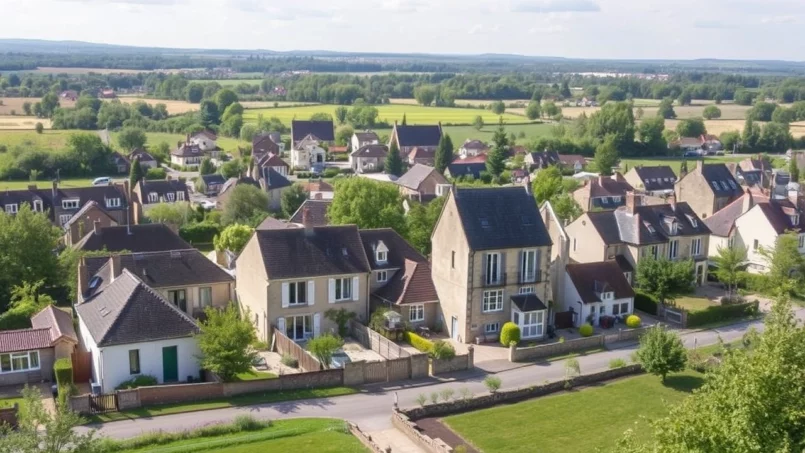
Niort is ticking more and more boxes on investors’ radars. As the capital of the Deux-Sèvres department, the French capital of mutual insurance companies, a green city integrated into the Marais Poitevin Regional Natural Park, it combines quality of life, economic dynamism, and still reasonable prices. In a context where large metropolitan areas are often becoming unaffordable, investing in real estate in Niort appears as a credible alternative for seeking yield without sacrificing security.
This city presents an attractive real estate market with high rental demand and yields above the national average, supported by ambitious urban programs. To succeed, it is essential to thoroughly understand these local dynamics and build a solid, tailored investment strategy.
An attractive living environment that supports rental demand
Niort is neither a megalopolis nor a small countryside town. With approximately 59,000 to 60,000 inhabitants within the city proper and over 100,000 in the urban area, it occupies a rare intermediate position: large enough to offer all services, compact enough to remain fluid, affordable, and “livable.”
The TGV high-speed train connects Niort to Paris in just over two hours, offering a fast link to the capital.
The natural environment is not just a marketing argument. Niort is entirely included within the Marais Poitevin Regional Natural Park, nicknamed the “Green Venice.” This situation, rare for a city of this size, contributes to its image as a natural city. It is, moreover, ranked among the ten greenest cities in France according to the National Observatory for Quality of Life, supported by a local policy focused on soft mobility and a carbon neutrality target by 2040.
The city attracts a significant volume of visitors, estimated between 200,000 and over 500,000 per year (even up to 850,000 according to some sources). This figure, although variable, represents notable traffic for its size, particularly interesting for seasonal investments or furnished tourist rentals related to the Marais Poitevin.
The perception of quality of life is also confirmed by national rankings, where Niort appears in the leading pack of medium-sized cities where it is pleasant to live, especially for families.
Stable demographics, favorable for a diversified rental market
For an investor, demographic trends are a key indicator. In Niort, the population is growing slightly: approximately +0.4% per year according to some data, +4.27% over eleven years, or even +0.2% per year over a six-year period in other surveys. In short, the city is neither declining nor booming, but experiencing controlled growth, which limits the risks of both a bubble and decline.
The median age of the population is about 42 years old. Approximately 32% of residents are under 30, and nearly 29% are over 60. Those aged 15-29 represent 18.5% of the population and students a little over 9%. This balanced demographic structure generates diverse rental demand: studios and one/two-bedroom apartments for young people and students, three/four-bedroom units for young professionals and families, and adapted housing or serviced residences for seniors.
Data on households confirms this diversity. The number of households is approximately 33,500 in the city proper, over 58,000 at the urban area level. More than half of households consist of a single person (up to 50.76% according to some sources), and nearly 40% of households are single-person. This explains the strong demand for small apartments, particularly in the city center and well-served neighborhoods.
This sociology combines with a high rate of renters. According to sources, between 42.97% and 50.9% of inhabitants are tenants, with homeowners occupying around 41.6% to 48% of housing. For an investor, this means a market where renting is a strong norm and not a marginal segment.
A solid economic fabric, driven by mutuals and the service sector
If Niort attracts, it’s not just for its landscapes. Its economy plays a decisive role in the stability of the real estate market. The city is known as the French capital of mutual insurance companies: MAIF, MACIF, MAAF, Groupama have their headquarters or major offices there. The entire insurance sector employs over 12,000 people locally, making Niort the fourth-largest financial hub in France in terms of transaction volume.
Number of new business creations recorded in the area for the year 2022.
The median annual income ranges between €22,620 and €24,766, with neighborhoods where the standard of living exceeds €26,000 and others where it falls to around €17,600. In summary, Niort remains a city of the middle classes, neither very wealthy nor very poor, which corresponds well to a stable “basic” rental market without speculative spikes.
A housing stock dominated by primary residences
The housing stock in the city proper revolves around 33,500 to 35,000 units. The share of primary residences is overwhelmingly high, between 88.4% and 88.9%, i.e., nearly 30,000 homes. Secondary residences represent about 2.4–3% of the stock, vacant housing around 8.7%.
The distribution of housing shows a dominance of large properties (4 rooms and more represent over 57%), but a significant share of small units (studios and 2-room apartments represent nearly 22%) allows for yield-oriented rental strategies. Apartments constitute 41.8% of the stock versus 57% for houses, with the latter representing up to 77% of primary residences according to some sources.
For an investor, this composition has two major consequences. First, houses with gardens remain highly sought after by families, particularly in residential neighborhoods like Sainte-Pezenne, Souché, Clou-Bouchet, or Goise-Champclairot. Second, the large number of single-person households, young people, and students supports strong demand for one and two-bedroom apartments, especially in the city center and near employment or university hubs.
Real estate prices in Niort: Still affordable but clearly trending upwards
One of Niort’s assets is remaining much cheaper than large metropolitan areas, while already having recorded significant value appreciation. Various sources converge on an average slightly above €2,000/sq m, with nuances depending on segments, reference years, and calculation methods.
The current order of magnitude can be summarized as follows:
| Indicator | Indicative value |
|---|---|
| Average / median price per sq m overall | €2,000 – €2,100 |
| Average house price | ~€2,000 – €2,150 |
| Average apartment price | ~€1,900 – €2,200 |
| Low range (all properties) | ~€1,400/sq m |
| High range (all properties) | ~€3,300/sq m |
| Increase over 5 years (overall) | +36 to +59 % |
Some statistics mention an average price of €2,047/sq m with +4.97% over one year and over +59% over five years. Others mention a jump of about +42% over five years. FNAIM data as of January 1, 2026, indicates an average of €2,166/sq m, with +9% over twelve months and +5.4% over three years.
What clearly emerges is that Niort is no longer a “bargain” city: the increase is already well underway, especially for apartments.
Niort Real Estate Market Observer
| Property type | Median €/sq m | 1-year change | 5-year change |
|---|---|---|---|
| House | ~€2,016 | +4 % | +25 to +30 % |
| Apartment | ~€2,562 | +14 % | +38 to +78 % |
| Older property (all) | ~€1,930 | 0 % | +29 to +34 % |
| New build (all) | ~€2,725 | -10 % | +64 % |
The trend is particularly marked for small apartments: studios can exceed €3,400/sq m on average, even reaching €4,300/sq m for new one-bedroom units. This reflects the high pressure on spaces intended for students, young professionals, and furnished rentals.
Houses show more contained but steady growth, with prices generally between €1,400 and €2,600/sq m depending on size, condition, and location, with some recent sales exceeding €3,000/sq m for renovated or well-located properties.
Rents and yields: Niort above regional and national averages
In terms of rental, Niort stands out with particularly attractive gross yields in the current French context. Nationally, the average gross yield is around 4.8% and nears 4.5% in Nouvelle-Aquitaine. In Niort, according to sources, the average gross yield ranges between 6.6% and over 7.03%, with peaks at 8% or even more in certain neighborhoods or with targeted strategies.
A few key figures help frame the market:
| Indicator | Indicative value |
|---|---|
| Overall average monthly rent per sq m | ~€12.9/sq m |
| Median apartment rent (excluding charges) | €10/sq m |
| One-bedroom (median) | €14/sq m |
| Two-bedroom (median) | €10/sq m |
| Three-bedroom+ (median) | €9/sq m |
| Average apartment rent (range) | €6 – €18/sq m |
| Average house rent (range) | €8 – €14/sq m |
| Rent increase over 1 year (apartments) | +3.9 % |
| Rent increase for one-bedrooms over 5 years | +21.4 % |
| Average gross yield (Niort) | 6.6 – 7.0 % |
| “Dynamic” gross yield | 5 – 7 %, can exceed 8 % |
It is interesting to compare these figures to other cities in the region: some indicators suggest, for example, a gross yield of about 5.2% in Niort, versus 3.8% in Nantes or 4.1% in La Rochelle, which remains advantageous for yield-oriented investors.
The number of buyers is 8% higher than the stock of properties for sale, reducing the risk of rental vacancy.
A tight but still accessible market: How to position yourself on the neighborhood map
The key to a good investment in Niort lies in the choice of neighborhood and product, depending on your strategy (yield, appreciation, a mix of both). The city presents several sub-markets with different dynamics.
City center: Appreciation and high liquidity
The historic center concentrates a quarter of the city’s inhabitants. It is home to the Medieval Keep, covered markets, Place de la Brèche, numerous shops and restaurants, cultural facilities, and immediate proximity to the train station. It is the most in-demand sector, with very strong rental demand: many agencies indicate that listings rarely stay on the market for more than a week.
Older buildings, often with character, are well-suited for furnished rentals, short-term lets, or a clientele of young professionals. The center is also targeted by renovation programs like Denormandie under the national Action Cœur de Ville program, which can open up tax leverage in exchange for renovation work.
In trendy neighborhoods, purchase prices are higher (around €2,000 to €2,200/sq m on average). However, the high rental tension allows for gross yields close to 8% on well-chosen one and two-bedroom apartments, as well as good medium-term appreciation potential.
Goise – Gare – Clou-Bouchet – Souché: Yield / security compromise
The train station area and adjacent residential neighborhoods, such as Goise-Champommier-Champclairot, Souché, or Clou-Bouchet, constitute a prime playing field for those aiming for a good price per sq m – rent ratio, with a profile of rather stable tenants (employees of mutuals, hospital staff, middle-class families).
Prices are generally lower here than in the hyper-center. In Goise-Champommier, some sources mention levels between €900 and €1,800/sq m. This differential allows for gross yields of 7 to 8% on one/two-bedroom units, and sometimes double digits on small multi-family buildings or co-living setups.
The renovation of the Goise/Gare sector is gradually improving the urban environment, which can favor the revaluation of properties purchased today. The accessibility to transportation, schools, and shops strengthens the attractiveness for tenants.
Tour Chabot – Gavacherie – Ribray: Transforming neighborhoods to watch closely
To the west of the center, the Tour Chabot / Gavacherie area runs along the Sèvre Niortaise river and includes several pockets of greenery, wetlands, and parks. It’s a neighborhood in full transformation, driven by emblematic projects like the Port Boinot eco-district and the vast urban renewal program at Ribray.
Led by the urban community, the Ribray project is a land recycling operation aiming to create a sustainable intergenerational neighborhood. It will mix family housing, student housing, and senior housing. The selected developer is Sogeprom (a subsidiary of Société Générale), with an architectural team focused on carbon neutrality and the use of bio-sourced materials (wood frame, straw, hemp, cellulose insulation, raw earth plaster, green roofs).
The program notably includes 17 four and five-bedroom houses with gardens and garages, a large public wooded park of over 8,000 sq m. Everything is designed to promote shared use of spaces and social and generational mix.
For the investor, the interest is twofold: benefit in the long term from a transformed neighborhood, where property values should increase, and target products well-suited to local demand (students, seniors) in an enhancing landscape setting. This type of operation shows that Niort is not content with static urban planning but invests in pilot neighborhoods with advanced environmental standards.
Family residential neighborhoods: Sainte-Pezenne, Les Brizeaux and similar areas
To the west, Sainte-Pezenne offers a setting sought after by families: many single-family homes, gardens, proximity to the Sèvre river and pedestrian paths, while remaining just minutes from the center. The neighborhood has over 4,800 inhabitants and attracts households seeking tranquility without suburban exile.
To the south, the Les Brizeaux neighborhood is characterized by its residential atmosphere and its affordable traditional houses. It is ideal for a so-called “good family father” rental investment strategy. This approach involves acquiring a 90 to 120 sq m house with a garden, to rent to a stable family. It thus offers correct profitability and a low vacancy rate.
In these neighborhoods, prices per sq m are generally lower than in the center, which improves the yield on family rents which, even if moderate, are regular and not very volatile.
Peripheral economic hubs: Chauray, Mendès-France, business parks
To the east, Chauray and the Mendès-France area concentrate several business parks and corporate headquarters, notably in insurance and services. New developments are numerous there, with recent apartments, often eligible for tax schemes (LMNP, formerly Pinel, managed residences…).
For an investor, these sectors are a logical target for classic rental or furnished rental to professionals. The yields are competitive, demand is driven by proximity to employment hubs, and the risk of vacancy remains contained.
Older, new build, rehabilitation: Which type of product to favor?
The price structure shows a clear gap between older and new build properties. For older properties, median prices are around €1,930/sq m, virtually stable in the short term but up about 30% over five years. For new builds, the median revolves around €2,725/sq m, with an impressive progression over five years (+64%), but a recent decline over one year (-10%), a sign of market adjustment or a change in product mix.
For investors, three main product families emerge.
Older properties to renovate or optimize energetically
Older buildings in the center and historic neighborhoods often offer the best price/yield combination. In return, they require dealing with energy standards (progressive ban on renting properties with G then F energy ratings) and sometimes heavy renovation work.
In the Sablières neighborhood in Niort, an old housing complex for railway workers was converted into a 48-unit residence (one to three-bedrooms), eligible for the land deficit scheme. The units, including balconies, gardens, and parking, exceed €230,000, illustrating how the tax advantage is integrated into the price. This project shows how the land deficit allows for reducing taxable rental income, linked with schemes like Denormandie, by rehabilitating old buildings like barracks or industrial sites.
In this category, programs like “Caserne Largeau” or “Niort Land Deficit 10 min from the city center” target investors willing to assume a higher entry ticket in exchange for tax optimization and a revalued property in a transforming neighborhood.
Energy-efficient new builds
New developments in Niort are multiplying, with residences meeting RE 2020, RT 2012, or BBC standards. They are found both in the city and nearby towns, with deliveries spread until 2027–2028. Entry prices start around €83,000–€105,000 for studios, €150,000–€170,000 for two-bedrooms, €250,000–€300,000 for three-bedrooms, and more for houses.
The main advantages of investing in new-build real estate in Niort, with a focus on profitability and attractiveness.
Benefit from energy compliance, reduced notary fees (2-3%), and lower maintenance costs in the short term.
A slightly lower gross yield than optimized older properties, but compensated by greater ease of resale.
A highly attractive property for tenants sensitive to energy performance and modern comfort.
Serviced residences – particularly student and senior residences – constitute a distinct segment. Student residence programs, sometimes minutes from the university hub, offer units under the LMNP regime starting at €87,000–€105,000 for studios, or around €134,000 for small two-bedroom units. For seniors, a dedicated residence offers two-bedroom units around €168,000–€171,000 for about forty square meters, meaning a high price per sq m (over €4,000/sq m), but integrated into a commercial lease and externalized management scheme.
Intermediate stock: Small units in well-located neighborhoods
A constant emerges from regional data: studios and small two-bedroom units (15–35 sq m) generally offer the best gross yields. In Niort, with over 50% single-person households, nearly 9% students, and a high tenant rate, this segment is particularly relevant.
By positioning in well-located one/two-bedroom units (center, train station, near mutuals or university hubs), purchased in the €1,800–€2,200/sq m range and rented around €12–€14/sq m, it is possible to easily achieve gross yields between 6.5% and 8% before management fees, banking on very low vacancy.
Financing, brokers, and additional costs: The overall equation to master
The gross yield, even if attractive, is not enough to judge the relevance of an investment. The cost of financing, acquisition fees, renovation costs, and taxation must be factored in.
In Niort, loan rates follow national trends, with scales that, depending on profiles, could go down to around 3–4% over 20 years for the best applications in the recent context, or, for earlier data, significantly below 2%. Online brokers like HelloPrêt operate locally and handle putting banks from the city and surrounding area in competition, negotiating not only the rate but also ancillary conditions (early repayment penalties, borrower’s insurance, payment flexibility).
Acquisition costs to anticipate for a €150,000 older property, i.e., about 7 to 8.5% of the price.
To this must be added the property tax – in Niort, some tables place it around 30% of the cadastral rental value on average, meaning a non-negligible annual expense –, the residence tax for secondary residences or non-primary furnished rentals, and potential management costs. In Nouvelle-Aquitaine, property management generally charges 6 to 9% of collected rents, plus one month’s rent for tenant placement. Prudent investors also budget a provision for rental vacancy of 4 to 8% of annual rents, even though in Niort, market tension keeps vacancy structurally low.
Taxation and schemes: How to optimize a Niort-based investment
The interest of Niort, compared to already saturated markets, also lies in its compatibility with several tax schemes and advantageous regimes.
On one hand, investments in older properties to renovate can fit within the land deficit or Denormandie framework (in Action Cœur de Ville zones), allowing part of the renovation costs to be deducted from overall income, within certain limits, or to benefit from tax reductions in exchange for renting.
New residences, student, senior, or serviced residences are eligible for the Furnished Non-Professional Landlord (LMNP) status under Industrial and Commercial Profits (BIC). Two tax regimes are possible: micro-BIC (with a standard 50% deduction) or the real regime (allowing depreciation of the property and furniture, as well as deduction of real expenses like notary fees, loan interest, and renovation costs). The status remains ‘non-professional’ and limits the impact on social contributions if annual rental income is below €23,000 per member of the tax household.
In a context where French taxation may seem complex for non-residents – with a minimum income tax of 20%, social contributions of 17.2% (or 7.5% for certain European nationals affiliated outside France), property tax, potentially wealth tax on real estate above €1.3M – it is often wise to be assisted by an accountant, a tax lawyer, or a wealth management advisor familiar with real estate structures (SCI, LMNP, land deficit, etc.).
Risks, constraints, and good management: Points of caution in Niort
No market is without risk, and Niort is no exception. For the investor, several points deserve particular attention.
In Niort, many older properties are rated G or F on their Energy Performance Certificate (DPE) and will be progressively banned from rental. A low-priced purchase may hide the obligation for costly energy renovation work to remain rentable. It is essential to properly prepare your project, especially since aid from the city and the Nouvelle-Aquitaine region is available for insulation and performance improvement.
The second point concerns micro-locations. Even in a medium-sized city, the differences in neighborhood quality, accessibility, and sociology are real. Buying at a good price in a stagnant, poorly served, or socially struggling neighborhood can result in difficult yields to realize and a complicated resale. Conversely, paying too much for a property in an already highly valued sector can significantly reduce the effective yield. The price differences per sq m between Niort and its neighboring towns – Aiffres, Bessines, Chauray, Magné, or Saint-Symphorien – show how much the local context influences value.
Risks such as flooding, clay soils, moderate seismic risk, or proximity to Seveso sites, although common in France, can affect insurance premiums, impose mandatory work, or influence buyer perception. Before any purchase, it is essential to consult local prevention plans and conduct a risk diagnostic (ERNMT/ERRIAL).
Property management: A local ecosystem already well-structured
For investors, especially those who do not live locally, the ability to delegate management is essential. Niort, without being Bordeaux or La Rochelle, nevertheless has a developed network of professionals: real estate agencies, property managers, syndics, and specialized concierge services.
Overview of local and regional players specialized in real estate property management, for unfurnished rentals, furnished rentals, or short stays.
Local structures offering management of unfurnished rentals, furnished rentals, and short-term stays.
Players specifically positioned in the Niort market, with digital tools for real-time tracking of income, interventions, and bookings.
Nouvelle-Aquitaine has over 300 management and concierge companies, several of which are active in Niort and the Deux-Sèvres.
Key functions – tenant search, inventory checks, rent collection, tax declarations, maintenance – can thus be fully outsourced, for fees in line with regional standards. This professional network reduces the management burden and opens the Niort market to remote investors, whether from the Paris region, other French regions, or abroad.
Niort in the regional landscape: A profitable alternative to metropolitan areas
To measure the interest of investing in real estate in Niort, it is useful to place the city in the context of Nouvelle-Aquitaine. At the regional level, the median price per sq m is around €1,900–€2,000, with strong disparities between Gironde (over €3,100/sq m) and Dordogne (around €1,770/sq m). Niort is slightly above the departmental average but remains well below coastal and metropolitan hubs like Bordeaux or La Rochelle.
Monthly rent/price ratio in the region, equivalent to a theoretical annual gross yield of 4.5–5%.
For an investor concerned with balancing their portfolio, Niort can thus play the role of a “yield pocket” in a strategy where other cities provide more capital appreciation but lower immediate profitability. Data on rental tension, economic stability, and ongoing urban projects further reduce the perception of risk.
Building your strategy in Niort: Some concrete approaches
Based on these elements, several investment scenarios emerge.
A first profile involves targeting one/two-bedroom units in the center or immediate proximity to the train station and employment zones, for classic furnished rental or moderate turnover (young professionals, students, mutual company employees). The goal is to maximize gross yield while maintaining an acceptable management level. In this niche, contained entry prices and high tension allow for envisioning yields above 7%, while keeping financial tickets affordable.
This profile targets houses with gardens in family neighborhoods (e.g., Sainte-Pezenne, Souché, Les Brizeaux). Gross profitability there is often a bit lower, but it is compensated by great tenant stability (settled families, low turnover, longer leases) and good resale prospects to owner-occupiers. This offers an attractive balance between yield and security over the medium to long term.
A third, more “patrimonial-tax” profile, favors rehabilitation operations in barracks or old buildings, eligible for the land deficit or Denormandie. These schemes require a higher entry ticket and professional assistance but allow coupling building revaluation, tax optimization, and alignment with the neighborhood restructuring dynamic.
Nearly 29% of the local population is over 60 years old, which explains the interest in senior residences under LMNP.
In all cases, success will come from a fine analysis of the micro-location, a precise estimate of necessary work (especially on energy performance), optimization of the tax structure, and the use of local professionals for financing, management, and tenant placement.
Conclusion: Niort, a medium-sized city becoming a playground for patient investors
Investing in real estate in Niort is no longer a marginal bet. Figures from recent years show sustained price growth, constantly rising rents, high rental tension, and gross yields significantly above those of many large French cities. All this in a city with a solid economic fabric, driven by mutuals and services, integrated into an exceptional natural environment, and committed to ambitious urban projects.
To succeed in overseas investment, it is crucial to move away from metropolitan reflexes and adopt a precise strategy. This implies not buying a property at any price and in any location, but specifically targeting the right neighborhoods. It is also essential to thoroughly understand the needs of different potential tenant profiles (students, young professionals, families, seniors), and to fully integrate parameters related to housing energy performance and local taxation.
At this price, Niort offers a rare combination in the current French landscape: a market still accessible, already well-oriented, with high yields and sufficient demand depth to serenely consider 10 or 15-year strategies. For those looking to diversify their real estate portfolio without succumbing to the prices of metropolitan areas or the coast, the capital of the Deux-Sèvres now deserves a full place on the shortlist of investment destinations.
Disclaimer: The information provided on this website is for informational purposes only and does not constitute financial, legal, or professional advice. We encourage you to consult qualified experts before making any investment, real estate, or expatriation decisions. Although we strive to maintain up-to-date and accurate information, we do not guarantee the completeness, accuracy, or timeliness of the proposed content. As investment and expatriation involve risks, we disclaim any liability for potential losses or damages arising from the use of this site. Your use of this site confirms your acceptance of these terms and your understanding of the associated risks.

Cyril Jarnias is an independent expert in international wealth management with over 20 years of experience. As an expatriate himself, he is dedicated to helping individuals and business leaders build, protect, and pass on their wealth with complete peace of mind.
On his website, cyriljarnias.com, he shares his expertise on international real estate, offshore company formation, and expatriation.
Thanks to his expertise, he offers sound advice to optimize his clients' wealth management. Cyril Jarnias is also recognized for his appearances in many prestigious media outlets such as BFM Business, les Français de l’étranger, Le Figaro, Les Echos, and Mieux vivre votre argent, where he shares his knowledge and know-how in wealth management.





