
 Published on and written by Cyril Jarnias
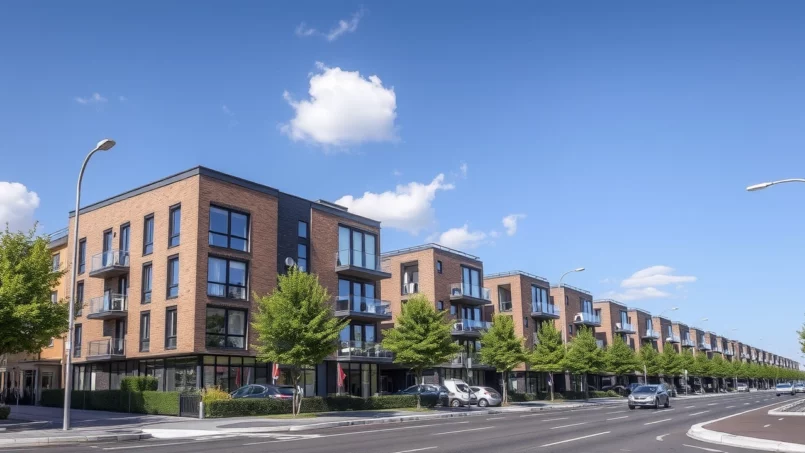
Montreuil has established itself in just a few years as one of the rising stars of Greater Paris. Long seen as a working-class, industrial town at the eastern gates of Paris, it is now at the heart of metropolitan dynamics: arrival of new metro lines, major urban projects, exploding rental demand and a marked increase in prices. Investing in Montreuil real estate can therefore be very relevant… provided you have a good grasp of the numbers, the neighborhoods, and the risks.
This article provides a comprehensive analysis of the Parisian market, including prices, rental yields, and ongoing urban projects. It aims to help investors select the right property, in the right area, based on an informed investment strategy.
Montreuil, a spillover market from Paris now a destination in its own right
At the gates of Paris (6.6 km from the center), in the department of Seine‑Saint‑Denis (93), Montreuil belongs to the Greater Paris Metropolis and the inner suburbs. With approximately 110,000 to 111,000 inhabitants, it is the second most populous city in the department and one of the most significant in Île‑de‑France. Its demographics show strong growth: +23 to +25% over a decade depending on sources, with recent annual growth of about +1%.
The city is structured into two main zones: Bas‑Montreuil in the southwest, in almost direct continuity with the 20th arrondissement, and Haut‑Montreuil to the north and east, on the Romainville plateau. Within these, around forty neighborhoods with very different profiles, from the gentrified sector bordering Vincennes to the transforming areas of the north.
Montreuil is home to between 3,000 and 7,500 businesses, helping to stabilize local employment.
For an investor, this means a solid demographic base, a diversified economy, a substantial job pool, and an attractiveness that goes far beyond a simple “bedroom suburb” role.
A young, dense, and predominantly renting city
Before looking at the price per square meter, it’s useful to understand who lives in Montreuil and how.
The population is young: the median age is around 36–37 years. Nearly 40% of residents are under 30, and about a quarter of the population is between 30 and 44 years old. Families are very present, with over 27,000 families recorded, and a significant proportion of couples with children and single-parent families. This structure creates a strong and varied demand for housing, from studios for students to large family apartments.
Regarding housing, the city has just over 52,000 to 53,000 dwellings, of which about 93% are primary residences. Second homes remain marginal (around 1–2%) and the vacancy rate is limited (approximately 5–5.5%). This is a first indicator of pressure on the existing housing stock.
With only 36% owner-occupiers, Montreuil has over 60% renters. This high proportion of renting households constitutes a significant pool and guarantees solid demand for buy-to-let investors.
Housing is predominantly apartments (around 80% to 83% of the stock), with houses representing only about fifteen percent. The most common sizes are 2-bedroom and 3-bedroom units: about a quarter of primary residences have 2 rooms and a third have 3 rooms, ahead of 4-bedroom units (around 18–19%) and large dwellings of 5 rooms or more (just over 11%).
This balance between small and medium-sized units is interesting for diversifying an investment strategy: studios and 2-bedrooms for a target of young professionals and students, 3 and 4-bedrooms for families or shared accommodation.
A market that is expensive, tight… and in a correction phase
Montreuil is now significantly more affordable than central Paris, but price levels remain high for Seine‑Saint‑Denis. The city stands as a “high-end” spillover market for the 93 department.
Where do prices per square meter stand?
Data varies by source and date, but paints a clear trend: a sharp rise over the long term, followed by a recent slowdown.
We can summarize some key benchmarks as follows:
| Indicator | Key Value | Source / Period |
|---|---|---|
| Overall average price per m² (all types) | ~€6,200–6,600 | 2024–early 2026 |
| Average apartment price (FNAIM) | €6,081/m² | January 1, 2026 |
| Average house price (FNAIM) | €6,244/m² | January 1, 2026 |
| Overall median price | ~€6,100–7,100/m² | 2024–2025 |
| 5-year change | +44 to +55% | depending on segments |
| 3-year change (FNAIM index) | –9.8% | 2023–early 2026 |
| Gap vs. departmental average (93) | +37% (Montreuil price vs. €3,888/m²) | FNAIM |
We therefore observe two contradictory movements:
– Over 10–15 years, prices literally exploded, sometimes doubling in some areas.
– Over the last 2–3 years, we see a clear decline or stabilization, with drops of around 10% in some segments, notably houses.
Rising interest rates reduce real estate purchasing power, lead to a significant drop in transaction volume over two years, and often force sellers to lower their selling prices.
Apartments vs. houses: what dynamics?
To refine the analysis, we must differentiate between apartments and houses, which don’t always react in the same way.
| Property Type | Median / Average Price per m² | Observed Range | Recent Trend |
|---|---|---|---|
| Apartments (existing) | ~€5,600–6,100/m² | ~€3,600 to 7,300/m² | slight decrease or stabilization |
| Apartments (new build) | ~€5,050/m² | high variation by development | marked decrease vs. 2019 |
| Houses (existing) | ~€4,900–6,200/m² | ~€3,300 to 7,000/m² | more pronounced decline (–10 to –12% over some periods) |
| Houses (new build) | ~€4,700/m² | ~€4,200 to 6,000/m² | more niche market |
Apartments hold up better than houses, driven by structural rental demand and a more accessible entry-level for first-time buyers and investors. Houses, more expensive to buy, have corrected more since the 2020–2022 highs.
For an investor, negotiation opportunities may be stronger on houses, but liquidity and market depth remain higher for apartments.
Significant price disparities depending on the neighborhood
Montreuil is far from homogeneous. Between the most upscale sectors bordering Vincennes and the transforming neighborhoods in the north, price differences can almost double.
In 2024, for example, we see the following approximate ranges:
| Zone / Neighborhood | Indicative Average Price per m² | Profile |
|---|---|---|
| East Bas‑Montreuil | ~€8,000/m² | most expensive area, highly sought-after, bordering Paris/Vincennes |
| West Bas‑Montreuil | ~€7,500/m² | “village” atmosphere, lofts, strong gentrification |
| Solidarité – Carnot | ~€7,700/m² | lively, young neighborhood, close to Paris |
| City Center / Town Hall – Croix‑de‑Chavaux | ~€7,200/m² | commercial heart, very well-served |
| Villiers – Barbusse – Paul Signac | ~€6,300/m² | good price/quality of life compromise |
| North and East Montreuil | €4,500 to 5,200/m² | still affordable areas, in transition |
Micro-neighborhoods near the Bois de Vincennes or the most central metro stations frequently show values above €8,000/m² for some properties, even more for character homes.
Conversely, areas like Bel‑Air or some parts of Haut‑Montreuil remain below the municipal average, sometimes by 20 to 25%, but present more risks (neighborhood reputation, potential vacancy, building quality, perceived insecurity).
A very tight and structurally supportive rental market
For an investor, rental market tension is a key indicator. In Montreuil, everything points to an extremely demanding market.
Available ratios generally indicate around 10 out of 10 for “rental tension” in some barometers, meaning significantly more applicants than available listings. Several platforms list thousands of active searches for a very limited volume of properties for rent or sale. On some sites, a property sells on average in less than two months (around fifty days).
Rent levels: what yield to target?
Rents in Montreuil are also high for the department, but remain attractive compared to Paris.
We generally see these approximate ranges:
| Indicator | Average Value | Observed Range |
|---|---|---|
| Overall average rent per m² | ~€22–25/m² / month | ~€18 to 40/m² depending on property & location |
| Average apartment rent | ~€22.5/m² / month | ~€17 to 31/m² |
| Average house rent | ~€24.1/m² / month | ~€16 to 37/m² |
In a typical simulation cited in the data, a budget of €200,000 would allow the purchase of about 31 m². Rented on the free market at around €22.5/m², this would yield a rent of about €700 per month, or a gross yield close to 4.2%. Under a Pinel scheme in zone A bis, with a rent cap of €17.43/m², the same property would generate nearly €540 per month, bringing the gross yield down to around 3.2%, in exchange for a tax advantage.
The maximum gross rental yield achievable in Montreuil, reached by studios and small furnished units in some areas.
Profitability vs. valuation: a balance to strike
The rapid rise in prices in recent years has mechanically compressed yields: rents have increased, but much slower than sale prices. Data shows, for example, that the average gross yield would have dropped from about 4.1% to 3.4% between 2016 and 2021, with price growth averaging around 6% per year, while rents increased by only about 1 to 1.5% per year.
The example of the investor in Montreuil illustrates a strategy based on a calculated balance, likely between the acquisition price, the property’s appreciation potential, and the specificities of this city’s rapidly transforming local market.
– accepting a moderate current yield, especially in the most sought-after areas,
– counting on medium to long-term appreciation, fueled by major transport and urban renewal projects,
– while selecting property types that allow for some cash-flow optimization (furnished rentals, shared accommodation, well-sized units).
Transport projects that change the game
One of the main drivers of Montreuil’s future attractiveness lies in the transformation of its transport network. The city was already well-served by metro line 9 (stations Porte de Montreuil, Robespierre, Croix‑de‑Chavaux, Mairie de Montreuil), as well as a substantial bus network. But the Grand Paris Express and several line extensions are significantly improving accessibility.
Among the key structural elements:
Current and future projects to develop the public transport network and improve the city’s connectivity.
Extension opened to Montreuil‑Hôpital and La Dhuys, reducing travel time to Châtelet to about 20 minutes.
Future service via two stations (Montreuil‑Hôpital and La Dhuys), creating a fast orbital route around Paris and improving connections with hubs like Saint‑Denis and Champigny.
Extension towards Val de Fontenay with several stops in Montreuil (Aristide Briand, Montreuil‑Hôpital, Route de Romainville, Rue de Rosny, boulevard Théophile Sueur…).
Potential extension projects towards the Grands Pêchers area.
Discussed extensions into Haut‑Montreuil.
These new stations have a direct impact on the real estate market: neighborhoods immediately surrounding future stations see their attractiveness rise, with prospects for capital gains. This is the case, for example, around Montreuil‑Hôpital or La Dhuys.
For an investor, a key location criterion becomes: aim for a property within a 10-minute walk of a current or planned metro or tram station. This is where rental demand is strongest and appreciation most likely.
Major urban projects: the city’s move upmarket
Beyond transport, Montreuil is heavily investing in the redevelopment of its city gateways and neighborhoods.
Porte de Montreuil: from road interchange to metropolitan square
The Porte de Montreuil, straddling Paris, Bagnolet, and Montreuil, is the subject of a vast transformation project. The goal: convert a gigantic traffic circle into a large metropolitan square of 3.5 to 4.5 hectares, calmed, greened, and mixed-use.
The project “The Collective for Climate”, winner of an international call for projects, aims to create a zero-carbon neighborhood, with about 60,000 m² of construction combining:
Over 1.5 hectares of green spaces and 700 trees planted or preserved in the development project.
This type of redevelopment has direct repercussions on the adjacent Montreuil neighborhoods, notably Bas‑Montreuil and the Porte de Montreuil area: improved image, increased land values, arrival of new shops and services.
ZAC Boissière‑Acacia and new residential neighborhoods
In the north of the city, the ZAC Boissière‑Acacia plans the construction of about 1,200 housing units, along with shops, a 23-classroom school group, sports facilities, daycare centers, and public spaces. All connected to future transport lines.
Several new-build developments are available in Montreuil, with 2-bedroom units starting from around €250,000. 3 and 4-bedroom units, particularly in Bas-Montreuil and around Croix-de-Chavaux, require higher budgets. The market shows a recent decline in new-build prices, indicating a search for a new equilibrium.
For an investor, new-build under Pinel can offer an attractive tax framework, but one must factor in the often high purchase price and the rent caps (€17.43/m² in zone A bis), which reduce the gross yield compared to optimized existing properties.
Neighborhoods under the microscope: where to invest in Montreuil?
All investor profiles can find what they’re looking for in Montreuil, provided they choose the right neighborhood. Available data reveals several profiles.
Bas‑Montreuil: the gentrified showcase
Bordering the 20th arrondissement and Vincennes, Bas‑Montreuil is the star area. It features former workshops and factories converted into lofts, small houses with gardens, character older buildings, and some newer residences. The commercial streets are full of cafes, restaurants, boutiques, and cultural venues.
Prices here are among the highest in the city, often around €7,500 to 8,000/m², or more for exceptional properties. The clientele consists of senior executives, artists, freelancers, many of whom are former Parisians.
For an investor, Bas‑Montreuil is a safe bet: strong demand, low vacancy, easy resale. However, the gross yield is rather modest, especially for new Pinel properties. This area is more geared towards capital preservation and long-term appreciation than immediate cash flow.
City Center – Town Hall – Croix‑de‑Chavaux
Around the town hall and Croix‑de‑Chavaux station (line 9), the city center concentrates administrative functions, shops, services and a recent shopping center. Transport access is excellent, and public facilities are abundant (schools, sports facilities, community life).
The average price per square meter in this area is around €7,100.
This area particularly interests families and young professionals seeking an urban lifestyle. For an investor, it’s fertile ground for long-term rentals, especially 2/3-bedroom units and student or young professional shared accommodation.
Intermediate residential neighborhoods: Villiers‑Barbusse, Paul‑Signac, Murs à Pêches
Further north and east, neighborhoods like Villiers‑Barbusse, Paul‑Signac, or Signac–Murs à Pêches offer a more residential and often greener atmosphere, with more houses, small apartment buildings, and gardens.
Prices are more accessible, around €6,000 to 6,500/m², while benefiting from good transport connections and an attractive quality of life (proximity to Parc des Beaumonts, Murs à Pêches, decent schools…).
For an investor targeting a family clientele or a shared accommodation strategy in a large apartment, these neighborhoods represent a good compromise between purchase price, rent, and appreciation potential, especially as transport and renewal projects unfold.
Haut‑Montreuil and transforming neighborhoods: La Boissière, Ruffins, La Noue, Bel‑Air
The north and east of Montreuil bring together neighborhoods long neglected by investors, but now at the heart of metropolitan projects. La Boissière, Les Ruffins, La Noue, Bel‑Air… these areas mix large housing estates, detached houses, 70s–80s condominiums, and new developments.
Prices here are the lowest in the city, often between €4,500 and 5,200/m², representing discounts of 20 to 30% compared to Bas‑Montreuil. The arrival or reinforcement of tram and metro stations (T1, line 11, future line 15) is gradually changing the game.
These neighborhoods are the preferred playground for “dynamic” investors willing to accept a bit more risk (neighborhood reputation, potential vacancy, building heterogeneity) in exchange for:
– a more affordable price per m²,
– potentially higher gross yields,
– and appreciation potential if the urban transformations succeed.
Particular attention must be paid to the energy performance rating, the quality of the condominium, and the socio-economic profile of tenants.
Montreuil lends itself to different types of real estate investments. The choice depends on the investor’s profile, their tax situation, and their investment horizon.
Existing property needing renovation: the yield + appreciation lever
Given the price gap between new and existing properties, and the geography of rents (less regulated in existing properties outside specific schemes), investing in existing property requiring renovation is often cited as the best yield/appreciation compromise.
Renovation costs, depending on the work level, fall within the following ranges:
| Type of Renovation | Indicative Cost per m² Renovated |
|---|---|
| Light makeover | from ~€240/m² |
| Light renovation (refresh + minor improvements) | from ~€490/m² |
| Complete renovation | from ~€860/m² |
| Major renovation (structure, reconfiguration, structural work) | from ~€1,200/m² |
For a 70 m² 3-bedroom, a budget of about €25,000 to 30,000 may suffice for a light to intermediate renovation, allowing you to:
– upgrade the property (kitchen, bathroom, floors, paint),
– improve its energy rating (which is becoming essential, as F and G-rated properties are gradually being banned from rental),
– and position it in the upper range of the local rental market.
Under a furnished rental LMNP status, with depreciation of the property and renovation costs, a significant portion of the rent can be tax-free for several years, significantly improving net profitability.
New build and Pinel: a more patrimonial bet
The new-build market in Montreuil has developed in recent years, with several developments in areas like Bel‑Air, Bas‑Montreuil, or Croix‑de‑Chavaux. However, prices were very high between 2019 and 2022, before partially correcting.
The Pinel scheme in zone A bis, applicable to Montreuil, imposes a rent cap of €17.43/m² and compliance with tenant income conditions. This rent may be below market rate, but the tax reduction, combined with the security of a new and energy-efficient property (with a favorable EPC), compensates for this constraint.
This type of investment is better suited for profiles seeking:
– an attractive tax advantage,
– a long-term vision with low need for technical management,
– a very qualitative location (close to metro, shops), to secure re-letting and resale.
However, one must accept a gross yield often lower than that of a purchased existing property.
With a very young population, a university technical institute (IUT), proximity to major Parisian universities, and excellent transport access, Montreuil is attracting more and more students and young professionals.
Three niches stand out:
Presentation of different rental formulas to optimize your real estate investment in Montreuil, depending on property type and target audience.
Apartment of 18 to 25 m², ideally located near the metro. Offers a high gross yield but is subject to rent control and may involve more frequent tenant turnover.
Highly sought-after by young couples or single professionals with a larger budget. A stable option with a targeted clientele.
Properties with 3 to 4 bedrooms, well-laid out, particularly relevant in Croix-de-Chavaux, city center, or near Montreuil-Hôpital. Allows for pooled rent income.
Shared accommodation often allows for increasing the total rent by 20 to 40% compared to a classic family rental, at the cost of slightly more complex management. It’s an interesting avenue to offset rising acquisition prices.
Taxation: LMNP, property deficit, Pinel
As Montreuil is in a tight urban zone and eligible for several schemes, the investor has several tax levers:
– LMNP (Furnished Non-Professional Landlord) under the real regime: depreciation of the property, renovation work, furniture, deduction of loan interest, management fees, etc. This scheme often allows neutralizing tax on rental income for 8 to 10 years;
– Property deficit on existing properties with renovation work: for unfurnished rentals, it’s possible to deduct part of the renovation costs from overall income, which is interesting for highly taxed taxpayers;
– Pinel (or Pinel+) for new builds: tax reduction conditional on rent and tenant income caps, suitable for profiles wanting a turnkey solution with little renovation work.
The choice between these options should be based on personal tax situation, borrowing capacity, and appetite for managing renovation work.
Additional costs: notary fees, property tax, charges
Beyond the property price, one must factor in all costs to calculate the real profitability of an investment in Montreuil.
Notary fees: new vs. existing
For the same sale price, notary fees are much higher for existing properties than for new builds. For example, for a 70 m² apartment at €419,300:
– new build: about €7,800 in fees (just under 2%), split between taxes, notary’s fees, and disbursements;
– existing property: about €29,000 in fees (nearly 7%), mainly due to higher transfer duties.
This difference must be factored into the financing plan and the new/existing comparison.
Local taxation: property tax and residence tax on second homes
The property tax in Montreuil is relatively heavy compared to other towns. The rates voted by the city remain higher than the average for similar towns and have seen sharp increases over the last fifteen years. As an indication, an average amount of around €2,800 in annual property tax is mentioned for some properties, but this figure varies greatly depending on the cadastral rental value and surface area.
The residence tax is abolished for primary residences but remains due and is increased by 60% for second homes. This local surtax particularly impacts investors who keep a pied-à-terre unoccupied part of the year.
Add to this the Household Waste Removal Tax (TEOM), which can be passed on to the tenant in unfurnished or furnished rentals, but must be anticipated in the calculation of charges.
Risks and points of caution
Investing in Montreuil is not just about riding the Greater Paris wave. Several risk factors must be considered.
The Montreuil real estate market presents opportunities but also specific risks to consider. The central neighborhoods and Bas-Montreuil, already highly valued, offer more limited potential for price growth in the short term. Unemployment remains high in some neighborhoods, which can affect tenant solvency and banks’ risk perception. The rental market is regulated, limiting rent increases, especially for small units. Part of the older housing stock is energy-inefficient (F or G ratings), requiring renovation work to remain rentable. Finally, local taxation, with rising property tax and a revision of cadastral rental values, can impact profitability.
These elements do not call into question the city’s overall appeal, but they require rigorous selection of the property and neighborhood, as well as good anticipation of renovation work and taxation.
How to build an investment strategy in Montreuil?
By cross-referencing price, rent, transport, and urban project data, we can outline several typical investor profiles.
For a cautious patrimonial profile, it is advisable to focus on Bas‑Montreuil, city center, or areas near Vincennes, on quality properties (2/3-bedrooms, character older buildings, or well-located new builds). The gross yield is moderate (3–4%), but liquidity is strong and appreciation potential is supported by scarcity. For a balanced profile, it is recommended to target intermediate neighborhoods like Villiers‑Barbusse, Paul‑Signac, Signac‑Murs à Pêches, or certain parts of La Noue. Buying an existing property for light renovation, as a furnished LMNP or for shared accommodation, allows targeting a gross yield of 4–5% and benefiting from appreciation prospects due to transport and urban renewal. For a dynamic profile, it is suggested to explore Haut‑Montreuil, La Boissière, Ruffins, or certain sectors of Bel‑Air, focusing on perimeters near future tram or metro stations. Investing in properties with high reconfiguration potential (large 3/4-bedrooms, 70s/80s buildings to renovate) accepts higher risks in exchange for a target yield above average and a bet on urban transformation.
In all cases, some constants emerge for a successful investment in Montreuil:
To maximize the chances of success for a rental investment, it is crucial to respect several criteria. Choose a property located within a 10-minute walk of an existing or planned metro or tram station. Scrupulously examine the Energy Performance Certificate (EPC) and accurately estimate the cost of bringing it up to standards. Analyze the micro-neighborhood: presence of shops, schools, sense of safety, and general atmosphere to assess its future attractiveness to tenants. Prioritize sizes that match local demand (like 2/3-bedrooms or large 4-bedrooms for shared accommodation) rather than atypical, overly large, or too small properties, to ensure good resale liquidity. Finally, optimize net profitability by using appropriate tax regimes, such as LMNP, property deficit, or the Pinel scheme.
Conclusion: a mature market, but still rich in selective opportunities
Investing in Montreuil real estate means entering a market already well-established in the Paris region landscape, which has seen a strong price increase but continues to benefit from many objective advantages: immediate proximity to Paris, enhanced transport access from the Grand Paris Express, a solid economic fabric, a rich cultural life, a young and growing population.
In the most prominent neighborhoods, rental yield is no longer exceptional and prices are high. A solid investment strategy is therefore essential. It must be based on precise figures, tax optimization, and a proven ability to select the right locations.
For the patient investor, capable of thinking with a 10–15 year horizon, Montreuil remains one of the most interesting markets in the Paris region: appreciation leverage linked to transport, potential for further gentrification in some neighborhoods, structurally strong rental demand. Provided one remains selective, properly manages costs, and doesn’t confuse media hype with real profitability, the city still has strong cards to play in a Greater Paris-oriented real estate portfolio.
Disclaimer: The information provided on this website is for informational purposes only and does not constitute financial, legal, or professional advice. We encourage you to consult qualified experts before making any investment, real estate, or expatriation decisions. Although we strive to maintain up-to-date and accurate information, we do not guarantee the completeness, accuracy, or timeliness of the proposed content. As investment and expatriation involve risks, we disclaim any liability for potential losses or damages arising from the use of this site. Your use of this site confirms your acceptance of these terms and your understanding of the associated risks.

Cyril Jarnias is an independent expert in international wealth management with over 20 years of experience. As an expatriate himself, he is dedicated to helping individuals and business leaders build, protect, and pass on their wealth with complete peace of mind.
On his website, cyriljarnias.com, he shares his expertise on international real estate, offshore company formation, and expatriation.
Thanks to his expertise, he offers sound advice to optimize his clients' wealth management. Cyril Jarnias is also recognized for his appearances in many prestigious media outlets such as BFM Business, les Français de l’étranger, Le Figaro, Les Echos, and Mieux vivre votre argent, where he shares his knowledge and know-how in wealth management.





