
 Published on and written by Cyril Jarnias
Investing in real estate in Nice means betting on one of France’s most dynamic cities, in a market driven by international tourism, land scarcity, strong rental demand, and solid appreciation prospects. However, it is also a complex market, highly segmented by neighborhood, governed by dense regulations (furnished rentals, DPE, taxation, renovation), and increasingly marked by climate-related issues.
This article provides a comprehensive analysis of the Nice real estate market, neighborhood by neighborhood, with the most recent data. It also details the French rules applicable to buying, financing, renovation work, and taxation, for a fully informed investment.
Why Nice Attracts So Many Real Estate Investors
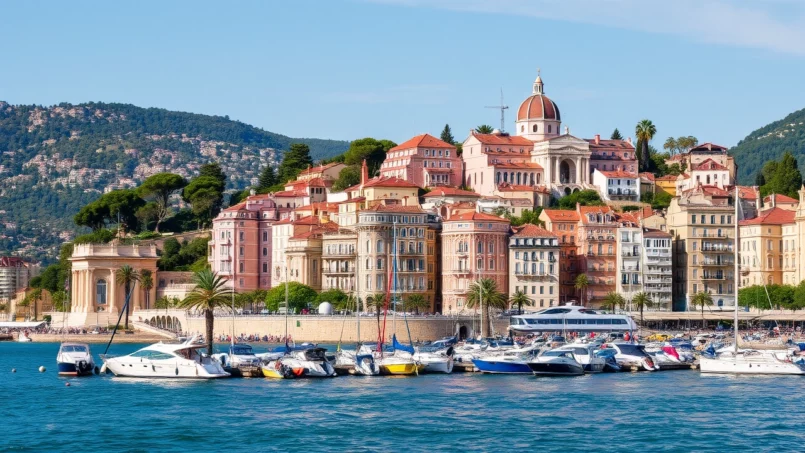
Nice combines a series of structural advantages that explain the strength of its real estate market. The city, France’s fifth largest, has about 348,000 inhabitants, at the heart of a metropolitan area of 570,000 people, in a territory squeezed between the Mediterranean Sea to the south and mountains to the north. This geography mechanically restricts possibilities for new construction and maintains price pressure.
The demographic profile is diverse: nearly half the population are renters (49.6%), 20–44 year olds represent over 40% of residents, joined by students, executives, retirees, expatriates, and second-home owners. Over 12% of the housing stock consists of second homes and 13% of vacant homes, fueling a chronic deficit of long-term rental supply.
Nice welcomes about 5 million visitors per year, making it the second most touristic city in France.
The result, on the real estate side, is clear: the market is considered a “safe haven” for international investors, with a market tension index at its highest (10/10) and a number of buyers 20% higher than the number of available properties. Prices have risen by about 15% over 3 years, with an increase of about 3% in 2024, and no real estate bubble warning was identified as of mid-2025.
Price Levels and Average Yields in Nice
In 2025, the average price per square meter in Nice ranges from 5,120 to 5,500 € for all homes, with a median around 4,720 €/m². Apartments sell for an average of around 5,500 €/m², houses – rarer – for around 6,800 €/m².
In terms of Parisian-area rents, average monthly rents are around 17–19 €/m², with a median of 17 €/m². For instance, a two-bedroom rents for around 1,200 € per month, while a three-bedroom in the hyper-center typically negotiates between 1,800 and 3,000 € per month.
Gross yields vary by source and the segment analyzed: around 4.4–5.2% on average for the city, with very marked differences depending on property size and neighborhood. Studios and small units are the most profitable, while large family homes offer lower yields but better long-term capital comfort.
Here is a simplified overview of the order of magnitude for Nice as a whole:
| Property Type (Entire City) | Average Purchase Price (€) | Average Monthly Rent (€) | Indicative Gross Yield |
|---|---|---|---|
| Studio | 157,400 | 650–740 | 5.1–5.6% |
| 1 Bedroom (T2) | 265,000–270,000 | 940–1,000 | ≈ 4.3–4.5% |
| 2 Bedrooms (T3) | 390,000 | 1,350–1,450 | ≈ 4.2–4.4% |
| 3 Bedrooms (T4) | 598,000 | 1,750–1,990 | ≈ 3.5–4.0% |
In practice, it’s generally necessary to subtract 1.5 to 2 percentage points to approximate the net yield, once fees, taxes, insurance, work, and management costs are factored in.
Understanding the Price Map: Key Neighborhoods and Strategies
The Nice market is extremely segmented. Two apartments of identical size can see their value vary by threefold depending on whether they are located in Carré d’Or, Mont Boron, Gambetta or Pasteur. Investing in real estate in Nice therefore requires thinking neighborhood by neighborhood.
The Very High-End: Carré d’Or, Promenade des Anglais, Mont Boron, Cap de Nice
Carré d’Or, around Place Masséna and close to the Promenade des Anglais, is the most expensive sector in Nice. The chic shopping streets, Belle Époque buildings, immediate proximity to the sea and grand hotels like the Negresco make it a highly sought-after prestige sector for tourists and wealthy residents.
Prices start around 10,000 €/m² and can climb to 12,000–15,000 €/m² for apartments with a view of Place Masséna or the sea. Studios quite commonly start around 350,000 €. The average gross rental yield is around 3.7%, with high occupancy rates thanks to tourism and accessibility.
Just opposite, the Promenade des Anglais and Quai des États-Unis form the “showcase” of Nice. The most beautiful apartments facing the Baie des Anges can reach 15,000 to 20,000 €/m², levels comparable to some Parisian neighborhoods. Noise from traffic on lower floors has long been a drawback, but redevelopment work, the tramway, and reduced car traffic are gradually improving comfort, supporting prices.
Mont Boron and Cap de Nice represent the segment of high-end villas and apartments with panoramic sea views, sometimes compared to “Nice’s Hollywood Hills”. Houses there often range between 1 and 5 million euros, with prices per square meter mostly between 7,600 and 15,600 €/m², or even above 15,000 €/m² for Cap de Nice. Supply is extremely limited: we’re talking about a few dozen properties for sale at any given time, and any new construction is heavily constrained by urban planning, sustaining a steady rise in values.
In these sectors, the challenge is less about rental yield than preserving and growing capital in the long term. Gross yields on apartments in Mont Boron, for example, are around 3.4%, but scarcity and international demand ensure significant capital appreciation potential over several years.
The “Prime Residential” Sectors: Cimiez, Musiciens, Port, Jean Médecin / Center
Cimiez, on the heights near the center, concentrates grand Belle Époque residences, upscale villas, open views, and a very residential environment. Prices there often range between 5,500 and 8,700 €/m² for apartments, and around 6,200 €/m² for villas. According to some data, averages are around 5,300 €/m² for an apartment, with an average gross yield over 5% and pockets, like Roquebillière, potentially reaching nearly 9.6% due to still reasonable purchase prices but sustained rents. It’s a sector favored by families and professionals, combining patrimonial stability and interesting profitability if bought at the right price.
Located between the train station, downtown, and the sea, the Musiciens neighborhood is a sought-after residential sector, particularly among expatriates and retirees. It is characterized by Belle Époque and Art Deco architecture, an upscale atmosphere, and housing mostly in co-ownership buildings. Apartment prices vary between 3,700 €/m² and 8,500 €/m², with an average around 5,600 €/m². With an average rental yield of about 4.5% and strong demand (occupancy rate close to 94%), this neighborhood is a solid choice for a long-term rental investment or for establishing a future primary residence.
The Port (Vieux Port / Le Port) is currently experiencing rapid gentrification. The quays mix a popular atmosphere, boating, yachts, and new trendy restaurants. Apartments with port-facing façades have prices slightly lower than those on the Promenade, but still high: around 8,000 €/m², with an overall range of 5,600 to 11,500 €/m² for the neighborhood. The average for apartments is around 5,800 €/m², for a gross yield of about 4.1%. Above all, major pedestrianization and greening projects (transforming a parking lot into a pedestrian space, redevelopment of Place Île de Beauté) are set to enhance its attractiveness and appreciation potential.
Finally, the Jean Médecin / Nice Center sector corresponds to the commercial heart: Avenue Jean Médecin, Place Masséna, proximity to the MAMAC museum, Acropolis, the new Promenade du Paillon urban park. It’s a typically French sector, appreciated by locals and expatriates alike. Prices per square meter vary from 5,700 to 13,000 €/m² depending on location and building quality. For short-term rentals, this sector is an excellent compromise: data for Nice indicates an average daily rate around 100–110 €, for a possible annual income of about 29,000 € and summer occupancy rates approaching 100%.
Neighborhoods on the Rise: Gambetta, Libération, Riquier, Saint‑Roch, Vernier, Valrose
For those seeking a better yield/entry price ratio, some intermediate sectors are experiencing strong momentum.
Gambetta – which includes the sub-neighborhood Fleurs Gambetta, close to the sea, shops, and tram – directly benefits from major infrastructure projects: the Nice Saint‑Augustin multimodal hub, Eco‑Vallée, Grand Arénas, tram line extensions, improved access to the airport and business district. Prices there mostly range between 5,500 and 10,800 €/m², with an average around 5,200 €/m² for apartments and average yields close to 4.6%, with a range from 3.7 to 5.8% depending on property type. Monthly price increases exceeding 1.7% in early 2025 illustrate the appreciation potential.
A former working-class neighborhood, Libération is undergoing an urban transformation marked by sustainable regeneration projects and the conversion of its old train station. This dynamic, combined with an ‘urban village’ spirit, attracts strong investment. Demand is very high, with properties often selling above asking price, with prices per m² ranging between 5,500 € and 9,000 € (average around 4,650 €) for rental yields close to 4.9%.
Riquier, east of the center, benefits from proximity to the port and Mont Boron, as well as large green spaces like the Mont‑Boron forest. Prices there are still a bit more accessible: from 5,000 to 9,000 €/m² according to sources, with averages around 4,600–5,000 €/m² for apartments. Gross yields for furnished rentals are generally between 3.9 and 5.7%, with an average close to 4.9%. The neighborhood, with about 12,500 inhabitants, particularly attracts young professionals and investors due to this good price/location compromise.
Further east, Saint‑Roch and Vernier represent evolving sectors, where the presence of young households and new infrastructure supports rental demand. Saint‑Roch shows prices per square meter between 5,000 and 9,000 €/m², for an average of about 4,200 €/m² and a gross yield of about 5.3%. Vernier, around 4,100 €/m² on average, offers yields near 5.3%. These neighborhoods remain more affordable than the center while benefiting from tram service, making them serious options for those targeting a “value” investment over the long term.
Valrose, finally, is a university neighborhood with green spaces and elegant architecture. It is particularly well-suited for student rentals. Prices there are around 4,570 €/m² for an apartment, with a gross yield close to 5%. For an investor seeking relatively stable rental flow, betting on students, it’s a sector to examine closely, provided management of furnished student leases and tenant turnover is well mastered.
Sectors Undergoing Renewal or with High Potential: Fabron, Arenas, Pasteur, Saint‑Augustin
Fabron, to the west, holds a unique place. It’s a residential hillside neighborhood, highly sought-after for its sea views and modern residences with pools and parking. Many new developments are being built there, including luxury residences like Blue Pearl Fabron, offering apartments with gardens and panoramic views. Prices for high-end properties can range from 5,500 to 10,000 €/m², some portals listing villas and penthouses between 880,000 € and over 40 million euros for the most exceptional properties. On average, apartments are around 5,300 €/m² for a yield of about 4.5%. It’s a sector very suited to second homes, wealthy expatriates, and international clients seeking a sea view.
The Arenas business district, near the airport, has per m² prices (3,600 to 5,000 €) below the Nice average. Integrated into the Eco-Vallée project, this evolving sector, which will become denser and greener, can be relevant for purchasing small units intended for local employees, anticipating its future upscaling.
Pasteur, to the east, is one of the most affordable neighborhoods in Nice, with prices still around 3,000 €/m² according to some sources, and a range of 4,600 to 8,000 €/m² in other datasets. Apartments are bought there on average around 3,400 €/m², with an estimated average gross yield of just over 6%, one of the highest in the city. The neighborhood benefits from easy access to the university hospital, fueling rental demand from healthcare staff and medical students. The flip side: a more working-class environment, sometimes less attractive to an international clientele, and often a greater need for renovation work.
Saint‑Augustin, on the southwestern coastline, is often described as less attractive to date, with prices ranging from 3,700 to 7,300 €/m². But its proximity to the Saint‑Augustin transport hub and redevelopment projects for the Var plain could make it an interesting entry point in the medium term, especially for long-term rentals aimed at working professionals.
Old Nice and Seasonal Rentals: High Potential, Constraints to Master
Old Nice (Vieux‑Nice / Vieille Ville) is the historic heart, with a maze of medieval streets, bordered by Cours Saleya and a stone’s throw from the Promenade des Anglais. Its heritage charm makes it a “hotspot” for short-term rentals. Prices can far exceed Nice averages: between 6,000 and 15,000 €/m² depending on location and condition, with averages of about 8,600 €/m² for a house and a little over 6,000 €/m² for an apartment.
Rental performance there is impressive for seasonal rentals: 2023/2024 data shows typical rentals occupied around 288 nights per year, i.e., an occupancy rate close to 79%, among the highest in France. In winter, an apartment can rent for 800 € per month, while in summer, the same property can easily go for around 1,000 € per week. Across Nice, the average daily rate for tourist rentals was around 103 €, for a gross annual income of about 29,000 € and summer occupancy peaks nearing 100%.
However, Old Nice has several constraints: old buildings without elevators, few terraces, frequent need for work, night noise, higher petty theft rates, and limited car access. Average gross yields for apartments are estimated around 4.1%, but can be significantly higher for properties optimized for seasonal rentals. One must also now integrate a strict regulatory framework on furnished tourist rentals.
Furnished Rentals, Airbnb and Regulations in Nice
While seasonal rentals were long the “holy grail” for investors in Nice, the regulatory framework has significantly tightened, as in other major French cities, even if the city remains a bit more flexible than Paris on some points.
Any short-term rental must be declared to the town hall and be assigned a registration number to be displayed on platforms. Seasonal rental contracts are limited to 90 days per year per tenant. A series of habitability and safety rules (smoke detectors, electrical standards, sanitation) applies, and condominiums can adopt internal bylaws prohibiting or limiting these uses.
Income from furnished rentals is taxed as BIC (Industrial and Commercial Profits), usually under the LMNP status. Two tax options exist: micro-BIC (with a 50% allowance) or the actual profit regime (deduction of expenses and depreciation). Social contributions of about 17.2% apply, with some exceptions.
Added to this is the energy constraint: since January 2025, homes rated G on the Energy Performance Diagnostic (DPE) can no longer be rented out. Those rated F will follow in 2028. In an old housing stock like Nice’s, this means a growing share of properties will need thermal renovation to remain eligible for rental, whether seasonal or annual.
Faced with these rules, investor strategy is evolving. Many are turning to: other investment opportunities.
– Medium-term furnished rentals (3 to 8 months) for students, remote workers, interns.
– Long-term furnished or unfurnished rentals, offering less peak season income stability but more regularity year-round.
– A mix of occupancy (second home part of the year, rental the rest) when legally permissible.
The key is to secure upfront the project’s compatibility with the condominium bylaws, town hall, DPE, and the chosen tax regime.
Renovation in Nice: Costs, Constraints, and Appreciation Potential
Investing in real estate in Nice very often means investing in older properties. France has one of Europe’s oldest housing stocks and Nice is no exception, with its Belle Époque, Art Deco buildings, Provençal villas, and small condominiums from the 60s–80s.
Renovation costs are therefore a central parameter of the business plan. In the Nice region, for an apartment or house, the following order of magnitude can be considered:
| Type of Work | Indicative Cost in Nice (€/m²) |
|---|---|
| Light Refresh | 250–500 |
| Partial Renovation (Kitchen, Bathroom) | 600–900 |
| Complete Renovation | 1,200–2,500 (or more) |
| Major Renovation (Structure) | 1,500–2,500+ |
For a 60 m² unit downtown, a complete renovation can easily exceed 90,000 €. For a 150 m² villa with garden and pool, one can reach 300,000 € in work for a comprehensive upgrade (including energy). On a scale of a 100 m² house, costs can range from 90,000 to 400,000 € depending on scope.
The most costly items are often:
Cost estimates for the most common and impactful renovation work, based on quality services.
15,000 € to 30,000 € and more for a high-end setup.
Easily beyond 20,000 € in case of major renovation.
Between 12,000 € and 20,000 € for an approx. 80 m² home.
Insulation work, window replacement, heat pump installation, etc.
Renovations in Nice are also governed by:
– The Local Urban Plan (PLU) and, for protected areas (Old Nice notably), stricter heritage rules.
– The obligation for prior declaration or building permit depending on the scope of work.
– Condominium rules for anything concerning common areas, façades, structures.
In return, a well-renovated older home can benefit from several appreciation levers:
Renovating an older property offers several strategic advantages: it attracts an international clientele that appreciates the blend of old charm and modern comfort, improves the Energy Performance Diagnostic (DPE) to ensure durable rental and position in the “green” housing market, and allows targeting the high-end segment for better value per m², higher rents, and reduced vacancy rates.
National public aid (MaPrimeRénov’, eco-PTZ, CEE, reduced VAT on certain work for primary residences) mainly concerns owner-occupied primary residences and is more restricted for second homes or seasonal rentals. Furthermore, parameters change quickly, with some funds suspended or redirected. For an investor, the main point is to integrate a realistic renovation budget with a safety margin of 10 to 20%, to hire insured local contractors (decennial insurance), and to prioritize work that improves structure, energy efficiency, kitchen, and bathroom – those offering the best return on investment upon resale or rental.
Financing and Mortgage Credit for a Purchase in Nice
Financing is another essential pillar of an investment project in Nice. The good news is that France offers a relatively stable credit system, open to non-residents, and interest rates have recently begun to decline.
In 2023–2024, rates had exceeded 4% on average due to inflation, before gradually falling back to around 3.5% by mid-2025, with prospects of 3–4% for the best profiles in 2026. For a 500,000 € purchase financed at 80%, a rate drop from 4.35% to 3.5% represents savings of about 200 to 300 € per month in repayment.
French banks grant loans to both residents and non-residents. However, the lending conditions (rates, down payment, guarantees) are not the same for these two categories of borrowers.
– Personal down payment generally required: 20–30% of the price, even 30–50% for non-EU.
– Total debt ratio (all monthly payments combined) capped at 33–35% of income.
– Usual terms: 6 to 25 years, with a norm around 20 years.
– Products mainly at fixed rates, offering good budgetary visibility.
Private banks in France can offer financing up to 100% of a real estate investment amount to non-residents, subject to placing their assets with the bank.
The costs to anticipate, excluding the property price, are significant:
| Cost Item | Order of Magnitude |
|---|---|
| Notary Fees (Existing Property) | 7–8% of price |
| Notary Fees (New Build) | 2–3% of price |
| Registration Duties | Included in notary fees |
| Processing / Bank Fees | 0.5–1% of loan amount |
| Brokerage Fees (Optional) | ≈ 1% of loan amount |
| Borrower’s Insurance | ≈ 0.5% of borrowed capital/year |
| Guarantee / Mortgage Fees | A few percent of the loan |
In addition to these acquisition costs are recurring charges: property tax, possibly residence tax (for second homes), condominium fees, maintenance (often 1 to 2% of the property value per year), home insurance (around 275–500 €/year depending on size).
For an international investor, an important point is protection against currency risk. A loan in euros aligns the financing currency with that of the asset, constituting a natural “hedge”, even if rental income (in euros) reinforces this coherence.
Taxation of Real Estate Investment in Nice
Investing in real estate in Nice means entering the French tax system, with several levels of taxation: rental income, capital gains, local taxes, potential real estate wealth tax (IFI).
Rental Income: Furnished or Unfurnished
Income from unfurnished rentals is taxed under the category of property income. One can choose:
– The micro‑property regime (if annual rents ≤ 15,000 €) with a flat-rate allowance of 30%.
– The actual profit regime, which allows deduction of actual expenses (loan interest, work, local taxes, insurance, management, etc.).
Income from furnished rentals is taxed as BIC (Industrial and Commercial Profits). Under LMNP, two options exist:
– The micro‑BIC, with a flat-rate allowance of 50% on rents.
– The actual profit regime, allowing deduction of all expenses and depreciation of the property and furniture, which can neutralize tax for several years.
Rate of social contributions applied, with possible adjustments for some non-residents of the European Economic Area.
Real Estate Capital Gains
In case of resale with a capital gain, French taxation combines a 19% tax and social contributions of 17.2%, for a potential charge of 36.2%, with a progressive discount based on holding period:
– 0% allowance before 6 years.
– 6% allowance per year of ownership from the 6th to the 21st year, then 4% in the 22nd year for the 19% tax portion (full exemption from this tax after 22 years).
– Full exemption from social contributions after 30 years.
Surtaxes of 2 to 6% can be added for the highest gains. Bilateral tax treaties (e.g., with the United States) in principle avoid double taxation, but it is prudent to seek tax advice.
Local Taxation and IFI
Property tax is due each year by the owner, whether resident or not. Residence tax is being phased out for primary residences, but remains for second homes and some vacant homes.
The Real Estate Wealth Tax (IFI) applies if the net value of your real estate assets exceeds 1.3 million euros. The scale is progressive, from 0.5% to 1.5%. You benefit from a 30% discount on the value of your primary residence. For calculation, you can deduct certain debts, such as current loans or renovation expenses.
For a non-resident concentrating investments in Nice and the French Riviera, IFI becomes a subject with a property portfolio of a gross value nearing 2 million euros, depending on the financing structure. Using credit leverage (mortgage) reduces the taxable net asset.
Purchase Process in France: What to Know Before Signing
The acquisition process in France is highly regulated by law and overseen by the notary, a public official. In Nice as elsewhere, it generally follows several major steps over 3 to 4 months:
After the accepted offer, the process follows several mandatory steps: signing a preliminary sales agreement fixing price and conditions, payment of a security deposit (about 10%) with the notary, and a 10-day cooling-off period for the buyer. This is followed by a 2 to 3-month period for notarial formalities and obtaining the loan. The sale is finalized by signing the authentic deed at the notary’s office, full payment, and handover of keys.
For a foreign investor, some additional points of attention:
Plan for certified translation of certain documents (civil status records, proof of income) if necessary. Opening a French bank account strongly facilitates payment of fees, taxes, and loan repayments. Check and adapt, if necessary, your marital regime or holding method (direct, via an SCI, etc.) to optimize succession and taxation. Include a financing contingency clause in the preliminary agreement if the purchase truly depends on obtaining the loan.
The total transaction cost (notary fees, duties, bank fees, broker, etc.) is often between 10 and 15% of the price for an existing property financed with credit, which requires planning for a medium/long-term holding horizon to amortize these costs.
Risks and New Variables: Climate, Subsoil, Insurance
A less visible but increasingly structuring aspect for investment in Nice concerns climate and geotechnical risks, particularly on the coastline and the Var plain.
Climate change leads to sea level rise (international projections of +0.3 to +1.1 meters by the end of the century depending on scenarios), an increase in the frequency and intensity of extreme events (rain, storms, heatwaves), and greater exposure to marine submersion and coastal erosion. In coastal areas, this can translate into:
Climate risks directly influence the real estate market and insurance contracts. Home insurance premiums are higher in exposed areas. Contracts may also include higher deductibles or coverage exclusions for very high-risk zones. In the real estate market, price discounts are observed for properties located in low-lying, highly exposed areas. Conversely, sectors at higher elevation, less vulnerable, may see price increases, a phenomenon termed “climate gentrification.”
Nice presents a particular case with its airport built on landfill from the Var delta, resting on thick alluvial deposits over 100 meters deep, which are gradually settling. Satellite measurements (InSAR) indicate subsidence that has slowed but continues, on the order of 16 mm/year in the 1990s, then 8–9 mm/year in the 2010s. While not directly threatening classic residential housing in the short term, this type of data reminds us that certain artificialized sectors of the Nice coastline present structural risks that will be increasingly taken into account by insurers and public authorities.
Although demand for waterfront properties remains strong, the growing challenges related to erosion and marine submersion should encourage investors to integrate these long-term risks into their acquisition and management decisions.
– Consult risk information documents carefully (PPR, mandatory rental information, diagnostics).
– Systematically compare insurance costs and deductibles between different neighborhoods.
– Integrate long-term thinking on the property’s resilience to floods, heatwaves, ground movement risks.
Nice is investing heavily in resilience projects: urban parks (extension of the Promenade du Paillon park by 8 hectares, creation of a 30-hectare landscaped park in the Var plain), de-sealing, strengthening of green spaces (+5% surface area in 2025), and ramping up solar power (increasing photovoltaic production from 25 GWh to 110 GWh by 2026, then 300 GWh by 2030). These investments should ultimately benefit the affected neighborhoods and support their attractiveness.
Medium-Term Perspective: What Strategy for Investing in Nice Today?
Five-year projections forecast a moderate but sustained continuation of real estate price increases in France, around +23% by 2029. Nice should be above this average, with a target of 6,200–6,800 €/m² on average by the end of the decade, i.e., annual growth of around 4–5%. Luxury properties and premium locations (waterfront, Mont Boron, Carré d’Or, renovated Old Nice) are expected to be even more performant, with increases potentially reaching 25–30% over the period.
In this context, some broad strategic lines emerge for investing in real estate in Nice:
The gross rental yield in prestigious Nice sectors like Carré d’Or or Promenade des Anglais.
– For an investor seeking a good yield/risk compromise, neighborhoods like Cimiez (excluding the very high-end), Musiciens, Gambetta, Libération, Riquier, Port, Saint‑Roch, Vernier, or Valrose offer more accessible prices, gross yields between 4.5 and 6%, and appreciation potential linked to urban projects and rental demand.
– For a more opportunistic investor, Pasteur, certain parts of Arenas or Saint‑Augustin constitute low entry points, at the cost of a less high-end environment and often significant work. Gross yield can exceed 6%, but building selection and rental risk management must be very rigorous.
For those interested in seasonal rentals in Nice, the sectors of Old Nice, the Port, Carré d’Or, Jean Médecin, and those immediately adjacent to the Promenade remain highly sought after. However, it is crucial to build a robust economic model that integrates regulation (90-day limit per tenant, mandatory registration, energy performance diagnostic), taxation (BIC regime and social contributions), as well as the cost of management, whether personal or delegated to a specialized manager.
Beyond geographical choice, the success of an investment in Nice rests on a few essential principles: a detailed market analysis by micro-sector, prudent budgeting including work and charges, a rental strategy compatible with the legal and energy framework, secure financing, and above all a long-term vision. In a structurally tight and internationalized market like Nice’s, it is the most disciplined and well-informed investors who will fully benefit from the city’s potential in the coming years.
Disclaimer: The information provided on this website is for informational purposes only and does not constitute financial, legal, or professional advice. We encourage you to consult qualified experts before making any investment, real estate, or expatriation decisions. Although we strive to maintain up-to-date and accurate information, we do not guarantee the completeness, accuracy, or timeliness of the proposed content. As investment and expatriation involve risks, we disclaim any liability for potential losses or damages arising from the use of this site. Your use of this site confirms your acceptance of these terms and your understanding of the associated risks.

Cyril Jarnias is an independent expert in international wealth management with over 20 years of experience. As an expatriate himself, he is dedicated to helping individuals and business leaders build, protect, and pass on their wealth with complete peace of mind.
On his website, cyriljarnias.com, he shares his expertise on international real estate, offshore company formation, and expatriation.
Thanks to his expertise, he offers sound advice to optimize his clients' wealth management. Cyril Jarnias is also recognized for his appearances in many prestigious media outlets such as BFM Business, les Français de l’étranger, Le Figaro, Les Echos, and Mieux vivre votre argent, where he shares his knowledge and know-how in wealth management.





