
 Published on and written by Cyril Jarnias
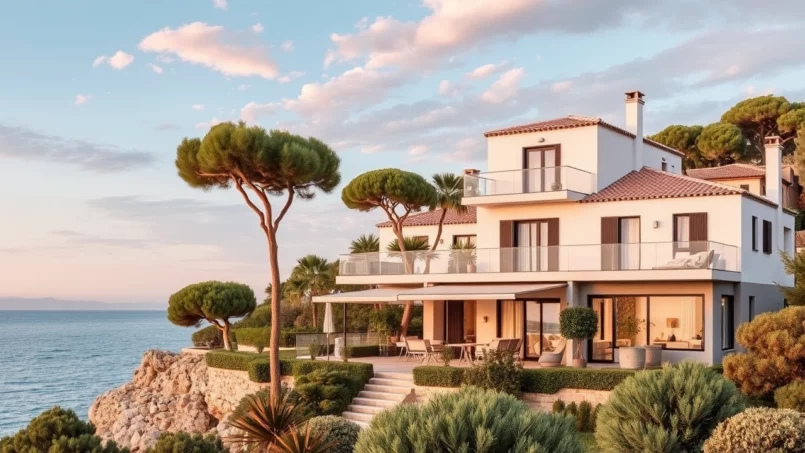
Between Nice and Cannes, facing the Mediterranean and just minutes from Sophia Antipolis, Antibes concentrates almost everything real estate investors are looking for: a postcard setting, strong rental demand, massive influx of tourists, a high-end market, and long-term price stability. The flip side is price per square meter close to those of Paris, moderate yields, and tightening regulations, especially concerning short-term rentals and energy performance.
The Antibes real estate market is attractive, but success depends on a strategic approach. It is essential to carefully choose the neighborhood and property type, and to define a suitable rental strategy. The investment must include an analysis of prices, rental yields, as well as the applicable tax and regulatory aspects.
Antibes, a strategic location between sea, tech, and tourism
Antibes is the third-largest city in the Alpes-Maritimes department, with approximately 73,000 inhabitants, a median age of 45, and a median annual income around €29,000. The city holds a particularly strategic position on the French Riviera, exactly between Nice and Cannes, and about twenty minutes from Nice Côte d’Azur International Airport.
This is the number of companies based in the Sophia Antipolis technology park, the largest in Europe, located near Antibes.
On the coastline, five marinas, including Port Vauban – the largest yachting harbor in Europe – anchor an economy oriented towards the sea, luxury yachting, and high-end international tourism. The city welcomes approximately 5 million tourists per year, with a summer peak that swells the population to nearly 175,000 people. In Juan-les-Pins, the jazz festival, beaches, and nightlife reinforce this continuous flow of visitors.
This combination of sea–tourism–tech creates a fairly unique environment in France: a real estate market in high demand twelve months a year, where primary residences, second homes (over 30% of the housing stock), and all types of rental investments coexist.
An expensive, tight, and generally bullish real estate market
The Antibes market is distinguished by its extreme tightness. There are about 61,400 housing units, of which over 37,000 are primary residences. Tenants represent 41.4% of households. The number of buyers is estimated to be 19% higher than the number of available properties: an imbalance that fuels price increases and typically shortens selling times.
Over five years, prices have increased by approximately 29%, far exceeding the 15 to 20% rise observed across the French Riviera for high-end real estate. Since the 2000s, the increase has been around 50%, partly driven by the arrival of foreign buyers, particularly from Northern Europe and Italy.
In 2025, the market remains dynamic but shows some signs of slowing down: average selling times have gone from about 75 days to 90 days, even as prices continue to rise. Antibes retains its status as a safe-haven asset: corrections remain small and forced sales are still rare.
Price levels: apartments and houses
Available data gives a clear picture of the high price level, with variations depending on property type.
| Property Type | Average Price per m² (different ranges / dates) |
|---|---|
| Apartment (overall) | ~€5,213/m² (range €3,207–€7,668/m²) |
| Apartment (2025 trend) | ~€6,013/m² (+4.9% year-on-year) |
| House (overall) | ~€6,753/m² (range €4,146–€9,982/m²) |
| House (2025 trend) | ~€7,219/m² (+5.5% year-on-year) |
A 120 m² home typically sells for around €800,000, but can easily exceed €2 million once you add a sea view, pool, and prestigious address. The average entry ticket for a purchase is often cited around €385,000 for a standard property.
The price per square meter in Antibes significantly exceeds the national average (approx. €2,900/m²) and that of many major French cities. It is comparable to Cannes or Nice for apartments, and often exceeds these cities for the most prestigious properties.
Quick comparison with some neighboring cities
| City | Average Apartment Price per m² (order of magnitude) |
|---|---|
| Antibes | ~€5,200–€6,000/m² (more in sought-after sectors) |
| Nice | ~€4,866–€5,100/m² |
| Cannes | ~€5,400–€6,100/m² |
| Marseille | ~€3,500/m² |
| Toulon | ~€3,000/m² |
| Avignon | ~€2,250/m² |
Antibes is clearly positioned in the upper tier outside Paris, especially in its most sought-after neighborhoods.
Neighborhood mapping: where to invest in Antibes?
The city is far from homogeneous. Depending on whether you are aiming for a rental yield, a pied-à-terre, or a luxury second home, the choice of neighborhood and property type changes radically.
Cap d’Antibes: prestige, villas, and the very high end
Cap d’Antibes is one of the most exclusive residential areas in France, on par with Saint-Jean-Cap-Ferrat or parts of Saint-Tropez. This peninsula, largely occupied by villas, is subject to particularly strict urban planning rules.
Prices there reach peaks.
| Cap d’Antibes | Average Price per m² |
|---|---|
| Apartment | ~€8,443/m² |
| House / villa | ~€15,394/m² (with peaks at €15,000/m² and above) |
The “luxury” segment starts around €1.5 million for a villa of about 150 m² on 1,500 m² of land, and exceptional properties can sell for up to €20–23 million. In private estates like “Les Hauts de la Garoupe,” plots are often 1,500 m² with 3 to 4-bedroom villas, pool, and garage.
This sector is best suited for heritage investment and the very wealthy international clientele. Gross rental yields are often lower (2.5–4% long-term), but scarcity and global demand ensure very strong price retention.
Old Antibes: historic charm and Airbnb
The old town, encircled by ramparts, charms with its narrow streets, markets, village houses, and a very Provençal atmosphere. It features almost exclusively apartments.
Prices there are high but generally remain lower than those on the Cap.
| Old Antibes | Apartment Price per m² (order of magnitude) |
|---|---|
| Average | ~€6,389/m² |
| Upper floor “standard” | ~€4,500/m² |
| With rooftop terrace | ~€5,500/m² |
Old Antibes is also one of the epicenters of seasonal rentals. There are over 1,100 Airbnb listings, with an occupancy rate around 72%, an average nightly rate of about €128, and an average annual revenue exceeding €34,000. The clientele is very international (a large majority of foreign visitors, many British), which enhances rental liquidity.
Juan-les-Pins: seaside resort and seasonal rentals
Juan-les-Pins, part of the Antibes municipality, lines up beaches, bars, restaurants, and nightlife. It is one of the most popular spots for vacation rentals, especially during summer and the jazz festival.
| Juan-les-Pins | Average Price per m² |
|---|---|
| Apartment | ~€6,200/m² |
| House | ~€7,800/m² |
The housing stock consists mainly of seaside apartments, sometimes with views, and some houses. More than 800 short-term rental listings are active there, with indicators close to those of Old Antibes: high seasonality, high occupancy, high daily rates.
For an investor targeting seasonal rentals, Juan-les-Pins represents an optimal compromise, combining strong tourist demand, lasting appeal, and a controlled acquisition budget.
Benefits from strong and regular tourist traffic, guaranteeing significant rental potential for investors.
Offers an interesting price-quality ratio compared to other French Riviera spots, allowing for a more accessible investment.
A renowned and lively seaside resort, its appeal ensures property appreciation and long-term investment profitability.
Residential and family neighborhoods: Fontonne, Bréguières, Badine, Constance…
Around the center and coastal areas, several residential sectors offer more “classical” opportunities, often interesting for long-term rentals aimed at families or employees of Sophia Antipolis.
Some orders of magnitude for prices:
| Neighborhood | Average Price per m² (apartments) |
|---|---|
| Ponteil (near center/beach) | ~€7,002/m² |
| Les Cougoulins–Rastines | ~€7,510/m² |
| La Constance | ~€6,400/m² |
| Saint-Maymes–Lauvert | ~€6,300/m² |
| Les Trois Moulins | ~€6,200/m² |
| Pont du Lys | ~€5,700/m² |
| L’Estagnol | ~€5,800/m² |
| La Badine | ~€4,500–€5,500/m² |
| Les Bréguières | ~€4,000–€4,500/m² |
| Rabiac Estagnol | ~€3,300–€4,400/m² |
| Combes | ~€3,500–€4,000/m² |
| La Croix Rouge | ~€3,000–€3,500/m² |
La Fontonne and Les Bréguières have grown significantly due to their proximity to Sophia Antipolis, making them natural targets for housing workers from the technology park. Les Semboules, a neighborhood built about thirty years ago, remain among the most affordable and constitute an entry point for first-time buyers or small investors.
Downtown, Albert 1er, Port Vauban: mix of residents and tourists
Downtown and Albert 1er Boulevard attract more French year-round residents, while the Ilette waterfront or areas near Port Vauban appeal more to foreigners for second homes. Around the harbor, an apartment in good condition with a sea view can sell for an average of around €4,700/m², with peaks up to €7,000/m² for perfectly located properties.
Rental yields: between 3% and 5.5% depending on the segment
Investing in real estate in Antibes is not just about capital appreciation. Rental profitability must be examined closely, as high prices mechanically push gross yields down, especially for family or prestige properties.
Overall yields and average rents
Several sources converge toward an average gross yield of around 3.8% in Antibes, with an overall range of 3–4% depending on neighborhoods and property types. The best ratios are typically found on smaller units, especially studios.
Rents are clearly above the national average.
| Type of rented property | Average monthly rent per m² | Observed range |
|---|---|---|
| Apartment | ~€16.7/m² | €12–€25/m² |
| House | ~€20.2/m² | €14–€26/m² |
Concretely, a studio of about 22 m² rents for around €690 per month, while a three-room apartment of 65 m² is around €1,090–€1,100.
Profitability by type of housing (long-term rental)
The following data, based on average prices and rents, illustrate the logic of the Antibes market well.
| Type | Average Price | Average Monthly Rent | Estimated Gross Yield |
|---|---|---|---|
| Studio apt. | ~€126,446 | ~€590 | ~5.6% |
| 2-room apt. | ~€199,475 | ~€790 | ~4.75% |
| 3-room apt. | ~€289,733 | ~€1,112 | ~4.61% |
| 4-room apt. | ~€362,149 | ~€1,309 | ~4.34% |
| 5-room apt. | ~€394,924 | ~€1,000 | ~3.0% |
| 2-room house | ~€358,666 | ~€850 | ~2.8% |
| 3-room house | ~€512,537 | ~€981 | ~2.3% |
| 4-room house | ~€557,575 | ~€1,225 | ~2.6% |
| 5-room house | ~€659,883 | ~€1,600 | ~2.9% |
The conclusion is clear: studios offer the best gross yield, followed by two and three-room apartments. Houses, more expensive to purchase, show weaker yields but respond to a different wealth-building logic.
For a strictly profitability-oriented investment, a small, well-located apartment (downtown, Old Antibes, Juan-les-Pins, near Sophia Antipolis) is generally more relevant, especially if considering co-living or furnished rentals.
Seasonal rentals and Airbnb: high flow, but increasing regulation
With nearly 3,800 to 4,000 active listings on platforms, Antibes is a very developed market for short-term rentals. The majority of listings are for entire apartments (nearly 98%), often one-bedrooms and two-bedrooms for 2 to 4 travelers.
Average indicators show:
– occupancy rate around 69%
– about 252 nights booked per year
– average nightly rate of about €130
– average annual revenue around €32,000 per property
Agencies specializing in seasonal rentals generate significantly higher revenues thanks to price optimization, quality photos, effective platform promotion, and the addition of hotel-like services.
The most profitable sectors for seasonal rentals are Old Antibes and Juan-les-Pins, which concentrate both high tourist demand, beach proximity, and liveliness. Gross yields can then climb between 4% and 6%, sometimes more on very well-located small units managed professionally.
However, one must factor in regulatory evolution, as short-term rentals are increasingly regulated, with mandatory declaration, potential limitation on the number of nights, and penalties for non-compliance (fines that can reach tens of thousands of euros for overuse or false declaration).
Investment strategies: seasonal, long-term, furnished or unfurnished?
Investing in real estate in Antibes requires choosing between several rental models, each with a different balance of yield, risk, and management burden.
Seasonal rentals: leveraging income, but marked seasonality
The tourist season runs from April to November, with peak season concentrated between mid-July and mid-August, when prices soar. In practice, a well-positioned property can aim for profitable occupancy for 16 to 20 weeks per year, sometimes more thanks to long weekends in the shoulder seasons. Winter revenues exist, but rates often drop to a third of summer prices.
This model suits well:
– studios and two-bedrooms near beaches or Old Antibes
– properties with sea view, terrace, pool, parking
– investors capable of delegating to a concierge service or ensuring very active management
Management commissions can reach 30 to 40% of revenues in seasonal rentals.
Long-term rental: stability and simpler taxation
Classic rental, unfurnished or furnished, provides regular rents year-round, with less daily management. It attracts:
– workers employed at Sophia Antipolis or in the metropolitan area
– French or expatriate families
– retirees wishing to live year-round under the sun
Gross yields are more modest, but the absence of prolonged vacancy secures cash flow. Regulations are more stable than for seasonal rentals, even though energy rules (DPE, progressive bans on renting energy-inefficient homes) also apply.
Furnished or unfurnished: trade-off between taxation and tenant profile
Furnished rentals allow for higher rent levels and are well-suited for a mobile clientele (expatriates, young professionals, researchers, students, professionals on assignment). They mainly open the door to the “Bénéfices Industriels et Commerciaux” (BIC) tax regime, with the possibility of depreciating the property and furniture under the “LMNP” (Non-Professional Furnished Landlord) status, which can significantly reduce taxation on rental income.
Unfurnished rental, subject to the “Revenus Fonciers” (Property Income) regime, mainly attracts tenants looking for long-term housing, which reduces the frequency of furniture renewal. However, tax-wise, it offers fewer optimization opportunities than a furnished rental with equivalent income, especially if one remains within the “Micro-Foncier” framework.
In both cases, a large part of success depends on the quality of management: tenant selection, maintenance, responsiveness to technical issues, compliance monitoring.
New builds, VEFA, and tax schemes: the role of recent programs
Antibes hosts several new construction projects, often located in residential neighborhoods like Jules Grec, Le Puy, or areas near the roads to Sophia Antipolis. These developments offer modern amenities (generous terraces, green spaces, high energy performance like RT 2012 or RT 2020, sometimes pool and rooftop).
New construction comes at a higher price – typically a premium of about 15% compared to existing properties – but benefits from reduced notary fees (2–3% instead of 7–8%), ten-year warranties, and better energy efficiency, a non-negligible asset in the face of new constraints on energy-inefficient homes.
Standard French tax schemes remain applicable depending on the case:
– Pinel law (or Pinel+ depending on the schedule) for rental investment in certain new-build zones
– LMNP status in managed residences (tourism, students, seniors) or for classic furnished rentals
– Malraux regime or property deficit for renovation in protected sectors of the old town
– bare ownership schemes for specific wealth management structures
Antibes is located in a zone eligible for tax breaks on new builds, which can allow for a tax reduction of up to 21% of the invested amount in exchange for a commitment to long-term rental and rent caps.
Legal framework, acquisition costs, and taxation not to be overlooked
Buying a property in France, and therefore in Antibes, involves mastering a set of additional costs and legal rules that significantly impact the financing plan.
Notary fees and transaction costs
So-called “notary fees” – which in reality are mostly taxes – typically range between 7 and 10% of the price for an existing property, and between 2 and 3% for a new-build property under VEFA (sale of future completion), to which VAT (generally 20%) already included in the listed price is added.
These fees include:
– transfer taxes (approximately 5.8% of the price in most departments), paid to the state and local authorities
– the regulated remuneration of the notary, calculated in brackets based on the price
– disbursements to pay various parties (land registry, cadastre, surveyor, etc.)
– a real estate security contribution (0.10% of the price)
The buyer must also account for possible agency fees (in practice 5–6% of the price, sometimes included in the “FAI” price), mortgage brokerage fees, borrower’s insurance, and, if desired, costs for additional technical inspections.
Rental income taxation: unfurnished, furnished, resident or non-resident
Rental income is taxable in France, whether the owner is a resident or non-resident.
For unfurnished rental, the rent is classified as “Revenus Fonciers” (Property Income). Two main tax regimes apply to this income.
– Micro-Foncier if annual gross rents remain below €15,000, with a flat-rate deduction of 30%
– the standard regime, mandatory above that threshold, which allows deduction of actual expenses (renovation works, loan interest, co-ownership fees, property tax, etc.), at the cost of heavier accounting
For furnished rentals, it falls under BIC (business profits), with:
– Micro-BIC as long as turnover remains below a certain threshold, with a 50% deduction (or 71% for certain classified accommodations)
– the standard regime allowing deduction of expenses and depreciation of the property and furniture
The LMNP (Non-Professional Furnished Landlord) status is particularly appreciated by investors, as depreciation can bring the taxable result close to zero for many years, despite high rents.
Non-residents are taxed on their French rental income under a specific progressive scale (starting at 20%, then 30% above a certain threshold) applied to the net income. They are also subject to social contributions, the rate of which can be adjusted depending on their affiliation with a European social security system. To avoid double taxation on the same income, it is crucial to refer to the tax treaties signed between France and the taxpayer’s country of residence.
Local taxes, capital gains, and possible wealth tax
Antibes, like any municipality, levies an annual property tax (“taxe foncière”) on owners. The residence tax (“taxe d’habitation”) is being phased out for primary residences but remains due for second homes, sometimes with surcharges in high-demand areas.
Upon resale of a rental property or a second home, the real estate capital gain is taxed at 19% in France, to which social contributions are added. Deductions for the holding period progressively reduce the taxable base, leading to a total exemption from capital gains tax after 22 years, and from social contributions after 30 years.
For real estate assets exceeding €1.3 million in net value in France, the “Impôt sur la Fortune Immobilière” (IFI, Real Estate Wealth Tax) may apply, with progressive rates.
Financing: impact of interest rates and borrowing capacity
Mortgage interest rates, after a sharp rise in 2023–2024, have stabilized around 3–3.5% over 20 years. In practice, French banks generally require that the total repayment burden does not exceed about one-third of the household’s income, and ask for a larger down payment from non-residents (often 20–30% of the price, or even more in some cases).
In Antibes, where purchase prices are high, the debt-to-income ratio / down payment couple quickly becomes a central issue. Investors must therefore simulate cash flow precisely by including:
– loan repayments
– co-ownership fees (sometimes high in residences with pool, concierge, elevator)
– property tax, insurance, regular maintenance
– periods of rental vacancy, especially with seasonal rentals
A gross yield around 3.5–4% can erode quickly if charges and management fees are not anticipated. This is one reason why co-living, tax-optimized furnished rentals, and high-value seasonal rentals managed by a concierge have developed so much: they help improve net yield.
Management and concierge: a key factor in a tourist market
Many property owners in Antibes live abroad or elsewhere in France. Remote management of a property, especially for short-term rentals, can quickly become complex. Hence the emergence of a true ecosystem of management agencies, Airbnb concierges, and property management companies specialized in the French Riviera.
Their scope of intervention covers:
Discover our complete range of services designed to simplify the management of your seasonal rental and maximize your profitability.
Complete handling of guest check-in, including key handover and detailed check-in/check-out inventories.
Professional cleaning service after each departure, laundry, and handling of minor repairs to keep your property in perfect condition.
Listing and synchronization of your ad on major platforms (Airbnb, Booking, VRBO) to maximize your visibility.
Dynamic price adjustment and booking strategy to optimize your occupancy rate and revenue throughout the year.
Personalized guest welcome and phone assistance available 24/7 to answer all their questions or emergencies.
Accurate tracking of income and expenses, with preparation of necessary documents for your tax declarations.
The cost of these services can represent 20% of rents for simple rental management, up to 35–40% for full-service seasonal management. For the investor, it’s a trade-off between net yield and peace of mind. A good manager can, however, sufficiently increase rental revenue (through better pricing, higher occupancy rates, top ratings) to partly offset their commission.
Regulatory environment: energy performance and tourist rentals
Beyond taxation, the other major issue for the future of the Antibes market concerns environmental standards and rules governing short-term rentals.
On the energy front, the climate law provides for a schedule of progressive restrictions for the most energy-consuming homes, with bans on renting out for class G, then F and E in the coming years. Even though the Mediterranean climate limits heating consumption, many old buildings in the center or on the coast will need to be renovated to remain eligible for rental.
To combat pressure on permanent housing, a national registration service has been established. Municipalities can now limit the rental duration of a primary residence (e.g., 90 days/year), require a registration number, and impose heavy fines for non-compliance.
For now, Antibes remains less restrictive than some major cities like Paris, but the general trend is toward tighter regulation, hence the importance of staying informed locally before building an economic model entirely based on short-term rentals.
Should you invest now in Antibes or wait?
In 2025, investing in real estate in Antibes takes place in a paradoxical context: interest rates are beginning to stabilize, price increases are slowing, selling times are lengthening a bit, but the market remains structurally tight and prices are still high.
Several elements argue in favor of a purchase in the coming years:
Structural demand remains very strong, driven by tourism, Sophia Antipolis, retirees, and second homes. The international status of the French Riviera and the prestige of Antibes form a long-term value foundation. Rental yields, although moderate, remain competitive for such a sought-after area. A price stabilization phase can open up negotiation margins, particularly on overpriced properties or those requiring work.
Other factors call for caution:
– the risk of a moderate correction if demand weakens further or if interest rates rise again
– rising renovation costs, especially for energy efficiency, to comply with rental standards
– regulatory uncertainty surrounding furnished tourist rentals
– a significant down payment and bank solvency requirement, given price levels
Ultimately, Antibes is not a market for short-term speculation. It is a territory for heritage investment, where the horizon must be long-term, and where success comes from an extremely selective approach: carefully choosing the neighborhood, property type, rental mode, and overall envelope (price + fees + works).
Summary: who is real estate investment in Antibes really for?
Investing in real estate in Antibes is coherent for several profiles:
– a heritage investor looking for a rare, well-located asset, with strong long-term resale value, even if it means accepting moderate profitability
– a rental investor targeting small apartments in the city center, Old Antibes, or Juan-les-Pins, capable of generating 4–5.5% gross yield through furnished rentals, co-living, or seasonal rentals
– an expatriate or a Sophia Antipolis employee who wants to buy their primary residence, while keeping a perspective for future rental
– a second-home buyer planning to partially monetize their property via short-term rentals, relying on a professional concierge service
The Antibes real estate market, due to its seaside, international, and expensive nature, offers great resilience of value over time. In return, it is less suitable for investors seeking very high yields, a low entry ticket, or perfect liquidity.
The essential thing, for those wishing to take the plunge, is to build a project detailed down to the last detail, including all costs (notary, agency, loan, charges, works, taxation, management), to plan for a horizon of at least 10 to 15 years, and to surround oneself with professionals experienced in this particularly unique territory of the French Riviera.
Disclaimer: The information provided on this website is for informational purposes only and does not constitute financial, legal, or professional advice. We encourage you to consult qualified experts before making any investment, real estate, or expatriation decisions. Although we strive to maintain up-to-date and accurate information, we do not guarantee the completeness, accuracy, or timeliness of the proposed content. As investment and expatriation involve risks, we disclaim any liability for potential losses or damages arising from the use of this site. Your use of this site confirms your acceptance of these terms and your understanding of the associated risks.

Cyril Jarnias is an independent expert in international wealth management with over 20 years of experience. As an expatriate himself, he is dedicated to helping individuals and business leaders build, protect, and pass on their wealth with complete peace of mind.
On his website, cyriljarnias.com, he shares his expertise on international real estate, offshore company formation, and expatriation.
Thanks to his expertise, he offers sound advice to optimize his clients' wealth management. Cyril Jarnias is also recognized for his appearances in many prestigious media outlets such as BFM Business, les Français de l’étranger, Le Figaro, Les Echos, and Mieux vivre votre argent, where he shares his knowledge and know-how in wealth management.





