
 Published on and written by Cyril Jarnias
Arkansas real estate in 2025 is shaping up to be a sector in the midst of change, blending flourishing opportunities with new challenges. As the state continues to benefit from stable economic growth, real estate market trends reveal notable developments, including a growing interest in rural properties and renewable energy. The outlook for investors and buyers is shaped by a combination of technological advancements, demographic shifts, and new legislation, promising a dynamic and ever-evolving environment. In this context, the rise of smart homes and the adoption of environmentally sustainable practices are emerging as key elements for understanding the future direction of the local real estate market.
Appeal of Small Real Estate Markets in Arkansas
Current and Predicted Trends in Small Real Estate Markets in Arkansas
Small real estate markets in Arkansas are increasingly attracting buyers and investors in 2024, a trend expected to continue into 2025. Affordability remains a key factor, with average prices well below the national average, around $200,000 for a single-family home.Factors of Attractiveness
The quality of life, characterized by preserved natural landscapes and a less stressful pace of life, appeals to city dwellers seeking a more peaceful setting. Local initiatives, such as downtown revitalization programs, enhance the appeal of these markets.Demographic and Economic Growth
Some rural areas are experiencing moderate but stable population growth, driven by urban exodus. The local economy, though less dynamic than in big cities, benefits from the development of sectors like agribusiness and tourism.Impact of Remote Work
Remote work has increased demand in small markets, with buyers now favoring more spacious and cheaper homes. This trend is expected to persist, supported by improved internet infrastructure in rural areas.Policies Influencing the Market
State policies, such as tax incentives for real estate investors and subsidies for renovations, could further stimulate these markets. Local regulations, more flexible than in urban areas, also facilitate development projects.Outlook for 2025
In 2025, Arkansas’s small markets should continue to benefit from their affordability and attractive living environment. However, price pressure could intensify if demand exceeds available supply.Risks and Opportunities
Investors should monitor changes in interest rates and zoning policies, which could affect project profitability. Buyers, meanwhile, will find opportunities in booming secondary cities.Good to Know :
In 2025, small real estate markets in Arkansas are attracting more buyers due to property affordability, with an average price of $150,000, and an increasing quality of life in small towns. The population growth rate is around 2% annually, reflecting growing interest in these regions. Local development initiatives, such as infrastructure improvements and subsidies for green renovations, strengthen the appeal of these markets. The rise of remote work has reshaped buyer preferences, favoring rural areas with larger spaces and competitive prices. Economically, Arkansas is experiencing stable growth, supported by dynamic local industries and a low cost of living, encouraging investors to look at these developing markets. State policies, such as tax breaks for new residents, also encourage an influx of new inhabitants, thus stimulating real estate demand.
Impact of Major Local Companies on the Real Estate Economy
Influence of Major Companies on Real Estate in Arkansas
Major local companies play a key role in Arkansas’s real estate dynamics. For example, Walmart, headquartered in Bentonville, has boosted residential and commercial demand in the region, leading to price increases and urban expansion.Examples of Notable Companies
Tyson Foods and J.B. Hunt also have a significant impact. The establishment of their headquarters or plants has attracted workers, increasing pressure on the rental market and driving the construction of new housing. Conversely, a plant closure can cause a drop in prices.Effects on Demand and Infrastructure
The presence of these companies creates increased demand for housing, but also for commercial spaces and services. Municipalities often invest in infrastructure to meet these needs, such as roads or schools.Implications for Employment and Growth
The arrival of a major company boosts local employment, which strengthens the economy and supports the real estate market. However, over-reliance on a single industry, such as logistics or agribusiness, can make the region vulnerable.Outlook for 2025
If companies like Walmart or Tyson continue their expansion, real estate will keep growing. Conversely, restructuring could slow this dynamic. Investors should monitor the strategic announcements of these key players.Industrial diversification remains a challenge for stabilizing the real estate market. Regions that attract new industries, such as technology, could see their resilience strengthened.
Finally, local economic attractiveness policies will play a determining role in balancing real estate growth and sustainability.
Good to Know :
In Arkansas, major local companies have a crucial impact on the real estate economy, as shown by examples like Walmart or Tyson Foods, whose headquarters lead to increased demand for housing and commercial office space, boosting real estate prices in Bentonville and Springdale. The expansion of these companies not only stimulates the construction of new projects but also the development of necessary urban infrastructure to accommodate the influx of employees and their families, thus influencing residential density and public services. The decisions of these economic giants, whether to increase their presence or reduce operations, have direct implications for local employment and the state’s diversified economic growth. In 2025, the expansion or contraction strategies of these major players will continue to shape the real estate market, requiring responsive urban planning to balance housing demand and appropriate infrastructure.
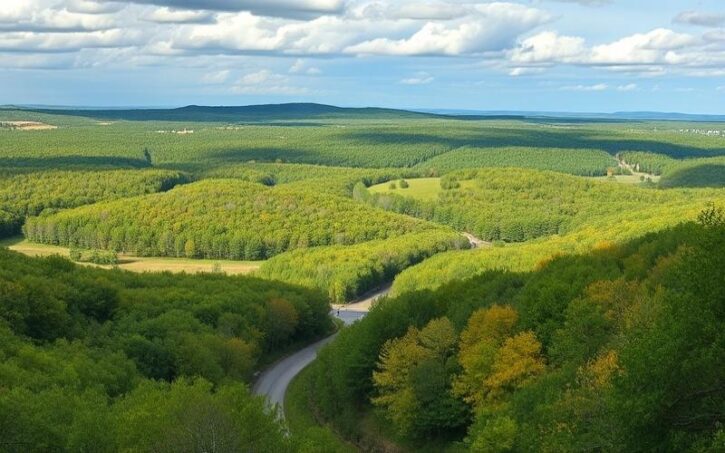
Trend Toward Low-Priced Rural Properties
Economic and Social Factors
Remote work has transformed residential choices, pushing many city dwellers toward rural areas of Arkansas to take advantage of lower real estate prices and a quieter lifestyle. Price levels in rural areas are significantly lower than in urban zones, with gaps potentially reaching 50%. Moderate interest rates and financing programs specific to rural properties have also facilitated homeownership.Evolution of the Rural Real Estate Market
Between 2020 and 2024, prices for rural properties in Arkansas increased by 15%, but remain well below national averages. Forecasts for 2025 indicate a moderate increase of 5 to 8%, driven by growing demand. Some regions, like the Ozarks or the Delta, still offer low-price opportunities, with land available for under $10,000.Opportunities and Challenges for Buyers
Buyers benefit from reduced acquisition costs and an improved quality of life, with access to nature and close-knit communities. However, infrastructure (high-speed internet, roads) may be limited in some areas, and public services less accessible than in the city.Advantages of Rural Living
Beyond attractive prices, residents enjoy a less stressful environment, low crime rates, and an overall lower cost of living. Outdoor activities and natural landscapes add significant intangible value.Good to Know :
In 2025, the appeal of low-priced rural properties in Arkansas is reinforced by remote work, allowing buyers to move away from expensive urban centers. Rural land remains on average 30% cheaper than its urban counterparts, offering a more accessible option for those looking to invest. With low interest rates and easier financing for rural areas, many families consider these properties a viable alternative. Prices for rural properties have shown a moderate increase of 5% per year, with a similar forecast for the future. Living in these regions offers advantages such as an improved quality of life, a natural environment, and a close-knit community, although challenges exist, including access to modern infrastructure. For buyers, it is essential to accurately assess opportunities and ensure the presence of adequate services to meet their daily needs.
Infrastructure Development and Welcoming New Residents
Transportation Infrastructure
Arkansas launched several major projects in 2025 to improve its transportation infrastructure. Among them, the extension of Interstate 49 and the modernization of regional rail networks aim to facilitate travel and freight transport. Investments have also been made in bridge renovation and widening secondary roads to reduce congestion.Modernization of Public Services
To meet growing demand, the state has accelerated the modernization of public services. Electrical grids have been strengthened with renewable energy solutions, while drinking water systems have been expanded. Rural areas now benefit from high-speed internet access, thanks to partnerships with local providers.Incentives for New Residents
Municipalities offer attractive programs, such as tax breaks and relocation subsidies, to encourage new residents to settle in Arkansas. Some cities even offer job assistance or vocational training to facilitate integration.Managing Urban Expansion
To prevent uncontrolled growth, strict urban planning regulations have been implemented. Authorities encourage sustainable construction and preserve green spaces, while developing mixed-use neighborhoods to maintain a high quality of life.Impact on the Real Estate Market
Housing demand has increased, leading to a moderate rise in prices, especially in suburban areas. Family homes and eco-friendly residences are particularly sought after, reflecting the priorities of newcomers.Demographic Changes
The influx of residents is changing the state’s demographic composition, with a younger and more diverse population. This energizes the local economy but also poses challenges in terms of social and educational services.Community Dynamics
New infrastructure and initiatives strengthen bonds between residents. Cities are organizing more community events to foster integration and maintain a spirit of solidarity.Good to Know :
In Arkansas, infrastructure development in 2025 focuses on significant improvements such as the widening of Interstate 49 and the expansion of the rail network, promoting better regional connectivity. Local initiatives are also modernizing public services with projects to renew water and electrical networks, and extending fiber optics to provide high-speed internet access even in rural areas. To attract new residents, tax incentives are offered and affordable housing projects are launched, while integrating green spaces to maintain quality of life. These actions are already leading to a moderate increase in real estate prices, particularly in suburbs where single-family homes are especially popular. This development is expected to change the local demographics by attracting a younger and more diverse population, thus impacting the state’s economic and social landscape.
Disclaimer: The information provided on this website is for informational purposes only and does not constitute financial, legal, or professional advice. We encourage you to consult qualified experts before making any investment, real estate, or expatriation decisions. Although we strive to maintain up-to-date and accurate information, we do not guarantee the completeness, accuracy, or timeliness of the proposed content. As investment and expatriation involve risks, we disclaim any liability for potential losses or damages arising from the use of this site. Your use of this site confirms your acceptance of these terms and your understanding of the associated risks.

Cyril Jarnias is an independent expert in international wealth management with over 20 years of experience. As an expatriate himself, he is dedicated to helping individuals and business leaders build, protect, and pass on their wealth with complete peace of mind.
On his website, cyriljarnias.com, he shares his expertise on international real estate, offshore company formation, and expatriation.
Thanks to his expertise, he offers sound advice to optimize his clients' wealth management. Cyril Jarnias is also recognized for his appearances in many prestigious media outlets such as BFM Business, les Français de l’étranger, Le Figaro, Les Echos, and Mieux vivre votre argent, where he shares his knowledge and know-how in wealth management.





