
 Published on and written by Cyril Jarnias
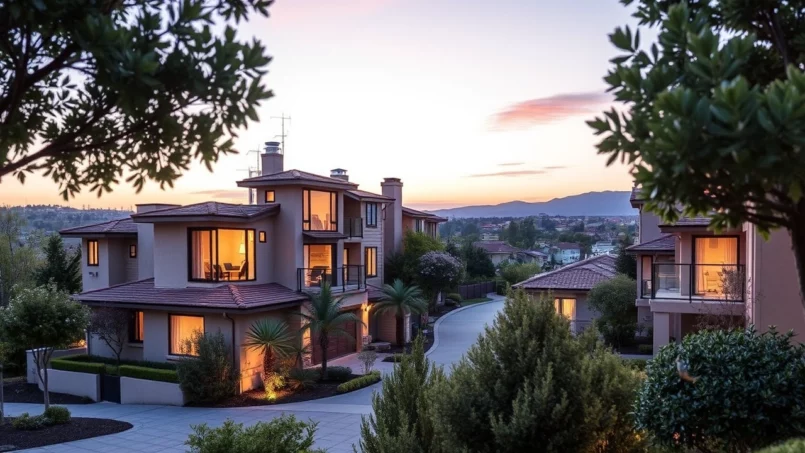
Investing in Real Estate in Los Altos means positioning yourself in one of the most sought-after residential markets in Silicon Valley. An affluent city with some of the highest-rated public schools in California, located just minutes from the headquarters of Google, Apple, LinkedIn, and Meta, it offers everything tech executives are looking for: safety, a green environment, a walkable downtown, and excellent school infrastructure.
The median home sale value in Silicon Valley is close to $4.5 million.
A Ultra-High-End Market, Yet Structurally Tight
Los Altos has just over 28,000 to 31,000 residents, with a median household income exceeding $200,000 or even $250,000 depending on the source. Over 80% of adults hold a college degree, the majority work in tech or high-value services, and the city boasts a AAA financial rating. In other words, the socio-economic profile is extremely solid.
Demand is strong, but the housing supply is structurally limited due to very restrictive zoning inherited from the city’s history as a semi-rural refuge. The housing stock is dominated by low-density single-family homes, with very few apartment buildings and limited commercial activity. Condos and townhomes exist but represent only a modest fraction of available properties.
The result is stratospheric prices, but also a remarkable resilience to downturns. Over the 2015–2025 period, the median price per square foot increased by an average of about 5.1% per year, and over the last five years, the effective annual increase exceeds 7%. Even if some recent years have shown a slight temporary decline in price per square foot, the underlying trend remains clearly upward, driven by a chronic shortage of supply and demand fueled by the tech economy.
Key Price Figures
We can summarize the profile of the Los Altos residential market with the following data:
| Indicator (citywide) | Recent Approximate Value |
|---|---|
| Typical home value (Zillow-type index) | $4,378,430 |
| Average home value | $4,597,006 |
| Median sale price (all types) | $3,993,000 – $4,500,000 |
| Q4 median sale (single-family homes) | $4,680,000 |
| Q4 average sale price (single-family homes) | $4,806,114 |
| Median price per square foot (city) | ~$1,705 – $1,830 |
| Sale-to-list price ratio (Q4 homes) | 111% |
| Median annual price change (city) | ~+0.13% |
| 3-year median price change | +1.45% |
This table masks nuances: while the overall median changes little year over year, some segments have recently seen spectacular jumps. In Q1 2025, for example, the average price surged about 30% in areas like North Los Altos or South of El Monte compared to the same quarter the previous year.
A Very Active Seller’s Market: Few Days on Market and Frequent Bidding Wars
For anyone investing in real estate in Los Altos, the sales dynamics are a key factor. The market is described as “moderately competitive” by some indicators, but these terms are misleading when you look at the data.
In Q4 2025, 77% of homes sold with an average sale price representing 111% of the original list price.
We can illustrate this dynamic with the main sales speed indicators:
| Market Speed Indicator (Homes) | Recent Value |
|---|---|
| Median Q4 days on market | 8 days |
| Average Q4 days on market | 14 days |
| Historical city average (all properties) | ~27 days |
| Average offers per property | 3 |
| Share of sales above list (Q4 homes) | 77% |
| Sale-to-list price ratio (city) | ~102% current |
| Market Action Index (ref. week) | 64 (strong seller’s market) |
These figures reflect a very favorable environment for sellers, despite some micro-signals of normalization (price per square foot slightly down year-over-year, median days on market lengthening slightly compared to some very tight periods). For an investor, this means:
– potentially quick resale cycles,
– but an often difficult acquisition phase, with bidding wars, multiple offers, and contingency clauses sometimes waived by the most aggressive buyers.
The Weight of Schools and Quality of Life in Valuation
Real estate value in Los Altos is not just about proximity to tech companies. Quality of life and especially the school system weigh heavily on demand.
The city is served by the Los Altos School District for elementary and middle school, and by the Mountain View–Los Altos Union High School District for high schools. Many elementary schools boast math proficiency rates far exceeding national averages. A few examples illustrate the level:
| Elementary School (Public) | Grades | Students | Student/Teacher Ratio | Math Proficiency |
|---|---|---|---|---|
| Covington Elementary | K–6 | 441 | 20:1 | 94% |
| Bullis Charter School | K–8 | 1,058 | 16:1 | 93% |
| Springer Elementary | K–6 | 335 | 20:1 | 93% |
| Oak Avenue Elementary | K–6 | 332 | 21:1 | 92% |
| Loyola Elementary | K–6 | 334 | 17:1 | 87% |
| Gardner Bullis Elementary | K–6 | 259 | 16:1 | 86% |
In total, 22 public schools in the area are rated “good or better” by GreatSchools, plus 11 private and charter schools. High schools (Los Altos High School, Mountain View High School, Homestead High School…) regularly rank among the best in California. This academic excellence, combined with proximity to Stanford, partly explains why so many wealthy families are willing to pay a very high premium for housing.
For an investor, this translates into: informed decision-making based on market trend analysis and historical asset performance.
– stable rental demand from families prioritizing the “school” criterion,
– better price resilience during economic downturns,
– and a sustainable valuation premium for properties in good school districts.
Neighborhood Mapping: Where to Invest in Los Altos?
Investing in real estate in Los Altos is not the same depending on whether you are in North Los Altos, Central Los Altos, or South Los Altos. The seven official neighborhoods have distinct price and liquidity profiles, plus many micro-neighborhoods with very strong identities.
Major Neighborhoods and Their Median Prices
Price data by neighborhood provides a first reading grid:
| Official Neighborhood | Median Home Price | Listing Price / Sq Ft | Avg Days on Market | Notable Features |
|---|---|---|---|---|
| North Los Altos | $2,100,000 (offer median) / ~$5.27M (typical price) | $1,620 | 76 | Officially more affordable, near San Antonio Center, parks, strong recent appreciation |
| Central Los Altos | $4,593,000 | $1,915 | 20 | Most expensive neighborhood, very family-oriented, high owner-occupancy rate |
| Old Los Altos | $3,447,500 | $1,767 | 32 | Historic charm, immediate proximity to downtown |
| South Los Altos | $4,324,000 | $1,830 | 23 | Large lots, upscale residential atmosphere |
| Blossom Valley | $3,498,950 | $1,802 | 30 | Mid-range segment, limited supply |
| Woodland Acres – The Highlands | $3,795,000 | $1,563 | 36 | More “country” feel, views, highly sought after for tranquility |
| Miramonte–Springer / Cuesta Park* | ~$2,695,000 – $2,943,000 | ~$1,900 – $2,047 | ~19–30 | Straddles Los Altos/Mountain View, good accessibility |
– Some areas like Miramonte–Springer or Cuesta Park are sometimes counted with Mountain View, but they directly interest investors targeting the Los Altos school zone.
Two observations stand out:
Central Los Altos and the Country Club–Loyola area represent the ultra-high-end segment, with median prices from $4.5 million to over $6 million and exceptional performance. North Los Altos, while officially cheaper, shows strong appreciation potential (nearly 7%) and benefits from a convenient location near downtown and shopping.
Micro-Neighborhoods with High Heritage Value
Beyond the numbers, certain micro-neighborhoods have a personality that particularly interests long-term investors.
Overview of the main Los Altos neighborhoods, highlighting their unique characteristics and investment potential.
Historic homes and charming architecture, walking distance to downtown. Ideal for heritage value and lifestyle, especially with high-end renovations.
Numerous mid-century modern homes by Joseph Eichler, highly sought after. Home staging and style-respecting renovations can generate significant resale premiums.
Large ranch-style homes on big lots, near the Rancho Shopping Center. A stable population, ideal for high-end rental investment.
Village atmosphere with a mix of old, new, and luxury residences. Ongoing modernization projects promise medium-term appreciation.
Wooded settings, open views, and a semi-rural atmosphere close to tech hubs. Good balance between natural surroundings and appreciation potential.
A savvy investor cross-references this information with days on market data, inventory trends, and the sale-to-list price ratio to identify pockets of tension or, conversely, slightly calmer segments.
Los Altos Hills and the “Hill Premium”
Adjacent but legally distinct, Los Altos Hills plays in an even higher category. Strict zoning prohibits lots under one acre, very limited commercial activity, a fabric of immense properties often hidden behind long driveways: everything is designed for privacy and exclusivity.
That’s the average number of days needed to sell a home in this real estate market.
For an investor:
– It’s a territory better suited for a “capitalized” primary residence than for pure rental yield: the bet is on land scarcity, the setting, and the ultra-wealthy clientele’s ability to pay ever more for large properties.
– Building equity is at the heart of the strategy: large down payment, shorter-term credit, high-end renovation work, possibly renting out dependencies (guest house) to generate additional income.
Long-Term Rentals: A Narrow, But Solvent Market
Approximately 81% of homes in Los Altos are owner-occupied, leaving only about 19% of renter households. The number of active rental properties on the market is modest (around a dozen or so in some periods, with a monthly variation of about +15%), with a median rent in the order of $7,300 per month. Other data sets give a wider range, from about $2,900 to $9,000 depending on size and quality.
The rental landscape can be summarized as follows:
| Rental Indicator (Citywide) | Recent Values |
|---|---|
| Number of available rental properties | 13–15 approx. |
| Median monthly rent | ~$7,300 |
| Observed rent range | $2,900 – $9,000 |
| Annual median rent change (city) | ~+1.37% |
| 3-year change | -2.05% |
| Share of rental housing (all households) | ~19% |
For an investor targeting rental profitability, two realities must be integrated:
The gross rental yield on a $4 million home rented for $10,000 per month in Geneva, before expenses and taxes.
This is why using a professional property management company (like Esquire Property Management Group or other local firms) is widely recommended. In a market where each month of vacancy represents losses of several tens of thousands of dollars in potential rent, a good manager who optimizes occupancy rate, carefully screens applicants, and handles maintenance becomes a “cost” that protects profitability.
Migration Flows: A Market Mainly Driven by Local Demand
Although Los Altos is a coveted national destination, home search statistics show that most buyers come… from the area itself. About 75% of residents looking to move wish to stay in the same metropolitan area, sometimes transferring their equity from one neighborhood to another (for example, leaving a small lot in Old Los Altos for a larger plot in South Los Altos, or conversely moving closer to downtown).
Conversely, among buyers from outside, certain markets stand out:
– Knoxville tops the list of outside cities looking to move to Los Altos,
– followed by Honolulu and Santa Barbara.
Some residents leaving Los Altos relocate to cities like Sacramento, Miami, or Portland. This move allows them to convert the strong appreciation of their Los Altos home into a purchase offering more square footage or a lower cost of living, illustrating a classic real estate arbitrage between capital appreciation and quality of life.
For the investor, this dynamic means that demand is not solely dependent on trends or a “fashionable” clientele: it is rooted in the economic structure of Silicon Valley, which reinforces market resilience.
The Weight of Local Taxation: A Key Factor for Profitability
Investing in real estate in Los Altos means dealing with heavy property taxes. The median effective property tax rate is around 1.22%, slightly above the U.S. median (1.02%) and in line with the California average (1.21%). But because property values are very high, the absolute amounts become particularly significant.
According to market data:
| Area | Median Home Value (approx.) | Median Effective Rate | Median Annual Property Tax |
|---|---|---|---|
| Los Altos (city) | ~$1.68M (tax reference value) | 1.22% | ~$19,731 |
| Los Altos Hills | ~$2.81M | 1.21% | ~$32,723 |
| Santa Clara County | ~$717,300 | 1.31% | ~$21,537 |
| United States (average) | ~$235,294 | 1.02% | ~$2,400 |
In zip codes 94022 and 94024, median bills run even higher, exceeding $20,000 to $22,000 annually for Los Altos, and over $33,000 to $36,000 for Los Altos Hills.
In addition to property taxes, owners must budget for various local charges: a 14% hotel tax for short-term rentals, a Utility Users Tax on electricity, gas, water, and telecom consumption, a sales tax of about 9%, and often costly insurance (wildfire, earthquake, etc.). The cost of insurance, especially against fire or earthquakes, can be a major expense in risk-prone areas.
For an investor, this reality has several implications:
– net profitability must be calculated precisely, incorporating property taxes and any occupancy taxes for short-term rentals,
– optimizing tax equity (checking assessments, using specialized property tax appeal firms) can generate substantial savings,
– the “immediate positive cash-flow” model is harder to achieve; many bet on long-term appreciation rather than high current yield.
Investment Strategies Suited to Los Altos
Given the amounts involved, investing in real estate in Los Altos is generally reserved for profiles with substantial existing wealth or a high borrowing capacity. Several strategies emerge, each with its strengths and limitations.
1. Primary Residence as a “Long-Term Investment”
This is likely the most common scenario locally: a household buys a home to live in for 10, 15, or 20 years, betting on:
– neighborhood appreciation,
– land scarcity,
– quality of schools and living environment.
In practice, the strategy involves:
To succeed in high-end real estate investment, several key steps are recommended. It is advisable to enter the market with a substantial down payment, often around 30% to 40% of the purchase price in this segment. Neighborhood selection should be strategic, prioritizing areas combining school quality, good accessibility, and strong appreciation potential, as illustrated by the historical performance of North Los Altos and Old Los Altos. To maintain property value, it is essential to carry out, over the years, structural renovations on the kitchen, bathrooms, energy performance, and landscaping. Finally, approaching retirement, an arbitrage is necessary: sell to capitalize on appreciation and relocate to a cheaper market, or opt for refinancing to free up liquidity while keeping the property.
This strategy is poorly suited for a purely financial investor, but it is extremely relevant for a couple looking to both house themselves and “park” a significant portion of their wealth in real estate.
2. High-End Rental Purchase (Homes or Townhomes)
On paper, buying a home or large townhome to rent out seems less attractive given the modest gross yield. But in certain situations (expatriates, startup executives, families in professional transition), demand for furnished or unfurnished high-end rentals remains strong.
Keys to success:
For a successful rental investment in Los Altos, target properties located in close proximity to renowned schools or downtown (such as Old Los Altos, North Los Altos, or certain parts of Central and South Los Altos). Engage an experienced property manager to minimize vacancy periods and optimize rent levels. Systematically budget for recurring costs of repairs and upgrades, as the local clientele is demanding. Finally, structure your financing prudently to avoid strongly negative cash flow in the event of rising interest rates or taxes.
Some investors choose to build a small portfolio of 2 or 3 rental properties, often with a lower level of financial leverage than in other regions, which reduces sensitivity to rate fluctuations.
3. Investment in Condos and New Developments
Condos and new small buildings remain rare, but ongoing projects illustrate an interesting evolution:
– The 40 Main Street project plans 15 luxury condos in the heart of downtown, with sizes ranging from 829 to over 2,300 square feet, complemented by ground-floor retail. This type of asset, very central, can offer an interesting combination of heritage value and rental placement, particularly for households without children or investors seeking simplified management.
– On El Camino Real, new mixed-use developments like Prometheus’ project at 5150 El Camino Real introduce nearly 200 additional housing units in 5-story buildings and townhomes. These projects, well-served and close to major arteries, may offer a slightly lower entry ticket than an independent home, though with substantial HOA fees.
These products allow exposure to the Los Altos market with reduced initial capital compared to buying a high-end single-family home. However, they often offer a tighter yield and involve dependence on HOA rules.
4. Affordable Housing and Impact Investing
The 330 Distel Circle project is emblematic: the city’s first 100% affordable complex, 90 homes for households earning between 30% and 80% of the area median income, built with wood frame, environmental certification, and mixed financing (tax credits, county subsidies, etc.).
While this is not an investment accessible to individuals (the developer EAH Housing is an institutional affordable housing player), the existence of such projects shows that it is possible to participate in housing efforts through specialized funds, REIT-type vehicles focused on affordable housing, or on a smaller scale, building accessory dwelling units (ADUs) in one’s own backyard.
In a city where the tension between market prices and the payment capacity of non-millionaire households is strong, these strategies can combine moderate financial return with social impact.
Financing: High Requirements and Product Choices
Even for wealthy investors, the question of financing remains central. In California, and especially in a city like Los Altos, entry tickets require very substantial down payments. Banks are particularly attentive to borrowers’ financial strength, overall debt-to-income ratio, and the quality of the asset being financed.
Some principles drawn from the recent California context:
Main credit products and their characteristics for acquiring rental properties.
Require a minimum down payment of 15% to 25%, which can be higher for multi-unit properties or risky profiles. Rates are generally 0.5 to 1 point higher than for primary residences.
Loans exceeding conforming limits, standard in this market. Require excellent credit scores and down payments that can reach 30%.
The main criterion is the property’s rental income capacity to cover the debt. Particularly of interest to professional investors who already have a rental portfolio.
With a projection of mortgage rates trending slightly downward toward 6% by 2026 at the California level, the cost of credit may ease slightly, but the affordability question will remain acute: the projected homeownership rate statewide is around 18%, meaning over 80% of California households cannot buy at the median price.
Risk Management: Stock Market Volatility, Natural Hazards, and Regulation
Another element to factor in when considering investing in real estate in Los Altos is the intimate link between this market and the health of financial markets. Many tech executives fund their down payments with sales of stock or options. Recent episodes have shown that more difficult access to this savings can lead to canceled purchases, even forfeiture of six-figure deposits just before closing.
However, even during these “nervous moments,” the local fundamentals (supply scarcity, schools, location) have so far allowed the market to bounce back once stock market volatility subsides.
Other risks to consider include:
Real estate investment in California is subject to specific natural hazards (wildfires, floods, heat, high winds) that influence insurance and property values. The regulatory framework, including AB 1482 on rent control, seismic standards, and environmental constraints, generates costs but also secures the market. One must also anticipate strengthening ecological standards, especially for renovations of older properties.
A rigorous due diligence should therefore include:
– verification of wildfire and flood risks,
– review of permit and renovation history,
– analysis of easements, rights-of-way, and zoning constraints,
– precise assessment of upgrade costs (structure, safety, energy efficiency).
Outlook: Moderate but Robust Growth
At the California level, forecasts for 2026 suggest a moderate increase in the median price (about +3.6% statewide), slightly higher sales (+2%), and a macroeconomic environment of sluggish growth (GDP +1%, employment +0.3%, inflation around 3%). Within this framework, Los Altos should retain its status as a “blue-chip” market: expensive, somewhat illiquid, but supported by an exceptional economic base.
Specific projections for the city point to an increase of about 4.3% in average home values over one year, and a gain of about 27% over ten years. These figures are obviously not guarantees, but they give an idea of the magnitude of the trend, provided you don’t buy at any price and maintain investment discipline.
For a savvy investor, the key takeaways are clear:
Investing in Los Altos is based on a logic of long-term wealth appreciation, not immediate cash flow. Neighborhood and school zone selection are paramount, often more than the street itself. It is crucial to integrate property taxes from the very first calculations to avoid a drop in real profitability. Finally, active management—including targeted renovations, tax optimization, and monitoring of natural risks—is essential to preserve and increase property value.
Investing in real estate in Los Altos ultimately comes down to buying a sustainable entry ticket into the residential heart of Silicon Valley. It is a costly bet, demanding in capital and rigor, but historically it has largely rewarded those who have played it with method and patience.
Disclaimer: The information provided on this website is for informational purposes only and does not constitute financial, legal, or professional advice. We encourage you to consult qualified experts before making any investment, real estate, or expatriation decisions. Although we strive to maintain up-to-date and accurate information, we do not guarantee the completeness, accuracy, or timeliness of the proposed content. As investment and expatriation involve risks, we disclaim any liability for potential losses or damages arising from the use of this site. Your use of this site confirms your acceptance of these terms and your understanding of the associated risks.

Cyril Jarnias is an independent expert in international wealth management with over 20 years of experience. As an expatriate himself, he is dedicated to helping individuals and business leaders build, protect, and pass on their wealth with complete peace of mind.
On his website, cyriljarnias.com, he shares his expertise on international real estate, offshore company formation, and expatriation.
Thanks to his expertise, he offers sound advice to optimize his clients' wealth management. Cyril Jarnias is also recognized for his appearances in many prestigious media outlets such as BFM Business, les Français de l’étranger, Le Figaro, Les Echos, and Mieux vivre votre argent, where he shares his knowledge and know-how in wealth management.





