
 Published on and written by Cyril Jarnias
Nestled on the Connecticut coast, about 60 miles from New York, the town of Fairfield offers much of what real estate investors are seeking today: an upscale residential setting, some of the best public schools in the country, direct access to Manhattan by rail and highway, and rental demand driven by both families and two major universities. But to invest wisely here, you must accept two realities: prices are high, and the pressure on supply is not going away.
This analysis provides an overview of the market, pricing and rental dynamics, key neighborhoods, local taxes, and major urban projects underway. It aims to help a French-speaking investor make an informed assessment of the opportunity to invest part of their capital in the real estate of this town.
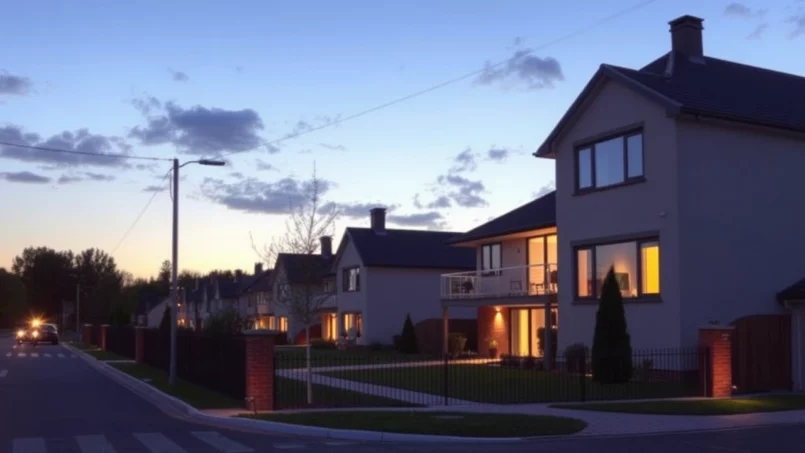
A Highly Sought-After Residential Town
Fairfield belongs to the very prosperous Fairfield County, often described as the wealthiest county in Connecticut. The town has around 62,000 residents, a growth of about 4% over the 2010‑2020 decade, and a clearly affluent socio-economic profile: the median household income exceeds $140,000 per year, and more than two-thirds of adults hold at least a bachelor’s degree.
The percentage of the housing stock made up of single-family homes, often on large lots.
Downtown features local shops along nearly two miles of pedestrian streets, diverse restaurants, local museums, and performance venues. On the nature side, the town manages about 170 acres of public parks, five town beaches, two marinas, two public golf courses, about thirty tennis courts, and a natural sanctuary spanning over 150 acres. This quality of life is reflected in surveys: 90% of adults report being satisfied with their place of residence, 69% consider themselves to be in excellent or very good health, and average life expectancy exceeds 82 years.
The presence of Fairfield University and Sacred Heart University — over 17,000 full-time students — adds a collegiate layer to this residential landscape and steadily fuels rental demand in certain neighborhoods.
A Tight Sales Market with Strong Appreciation
Recent figures confirm Fairfield’s status as a “premium” market. Town-wide aggregated data show:
| Key Indicator | Approximate Value |
|---|---|
| Median sales price (entire town) | ~ $975,000 – $1,395,000 depending on source |
| Median price (August 2025, local data) | ~ $950,000 |
| Median price per sq meter (converted from $/sqft) | ~ $3,800 – $4,800/m² |
| Recent annual price increase | +5.8% to +12% depending on period |
| Share of sales above asking price | ~ 65% |
| Average days on market | ~ 27 to 32 days |
Variations between sources stem from the time period observed and the scope (town vs. county), but the trend is clear: home values in Fairfield have risen much faster than the national average in recent years. At the county level, the median price has increased about 75% since 2019; in Fairfield, a property that traded around $900,000 in 2020 is now worth considerably more, with the current median price hovering at or above the million-dollar mark.
The percentage increase in real estate prices in the county between 2024 and 2025.
Expensive Rent… But Strongly Supported by Demand
For a rental investor, the question isn’t just how much a property costs, but also how much income it can generate. In this regard, Fairfield sits clearly in the upper tier of the U.S. market.
Recent data compiled by several platforms (Zillow, Zumper, CoStar…) provide a fairly consistent range:
| Rental Type | Indicative Level in Fairfield |
|---|---|
| Average rent (all sizes) | ~ $3,000 – $4,200/month |
| Recent median rent | ~ $3,575 – $4,300/month |
| Studio | ~ $1,900 – $2,000/month |
| 1 bedroom | ~ $2,700 – $3,000/month |
| 2 bedrooms | ~ $3,000 – $3,750/month |
| 3 bedrooms | ~ $4,200 – $6,500/month and up |
Compared to the national average, Fairfield rents are 80 to 100% higher, reflecting the local cost of living but also the tight supply. The rental housing stock accounts for only about 18% of households, even as the town hosts thousands of students and a growing number of young professionals and partial telecommuters.
The rental market is generally rising, with an average annual increase of 1 to 3%. However, occasional adjustments can occur in certain segments, such as the very high-end. Differences are significant depending on property type: over a recent period, rents for two-bedroom apartments have seen an increase of more than 50% in some data.
Another key indicator for an investor: the share of “cost-burdened” households. About 32% of households in Fairfield spend more than 30% of their income on housing; this is the case for half of renters. This shows both the high cost of the market and the potential for well-designed rental products (shared housing, well-located small units, mid-range housing) likely to meet strong demand.
Neighborhoods with Very Different Investment Profiles
Talking about “Fairfield” as a homogeneous market is misleading. The town is structured into about fifteen neighborhoods, with significantly different price ranges, target clienteles, and investment strategies.
Fairfield Beach: The Coastal Showcase and Seasonal Rental Paradise
The Fairfield Beach area embodies the local beachfront image: “Nantucket-style” homes, lanes leading to the sand, views of the Long Island Sound, and the ability to walk to downtown or the train station. It is also one of the most expensive markets in town.
Recent data indicate a median price around $2.0 to $2.1 million, with a price per square foot equivalent to over $7,000/m², and a median rent around $6,400/month. Sales frequently occur above $2 million for new construction, especially since many owners have rebuilt or elevated their homes to meet FEMA standards after Hurricane Sandy.
For an investor, two approaches dominate: acquiring a second home used for seasonal (short-term) rentals and buying-and-selling new or fully renovated projects. The proximity to the beach, downtown, and the train drives high occupancy rates in summer, with weekly rents potentially very high for upscale properties.
Greenfield Hill: Large Estates, Low Density, and Prestige
This neighborhood is one of the most iconic of Fairfield’s “Gold Coast” status. Tree-lined roads, historic farms, colonial homes on lots of at least two acres: zoning enforces very low density, which maintains scarcity and prices.
Median prices range around $1.6 to $2.2 million, with transactions frequently exceeding $2 million for large properties. In this segment, the primary goal for an investor is not immediate rental profitability, but capital preservation and long-term appreciation, especially due to an extremely limited supply of new lots.
Southport and Sasco Hill: Coastal Luxury and Historic Architecture
Southport, technically part of Fairfield but with its own village and train station, combines a marina, New England architecture, and an upscale market. The median price is around $1.3 to $1.7 million, but the actual average sale price can exceed $2.4 million, largely driven by waterfront or harbor-view properties.
Sasco Hill, overlooking the Country Club of Fairfield and Sasco Beach, represents the most exclusive tier: large properties with unobstructed views of the Sound, prices often reaching several million dollars, and a very narrow market. Investing here means clearly positioning in the luxury segment, targeting international buyers or very high-income individuals from the New York area.
Stratfield, Brooklawn, Tunxis Hill: Family-Oriented “Value Plays”
For an investor seeking a more reasonable entry point but solid residential demand, these medium-sized home neighborhoods are logical targets.
In Stratfield, the median home price falls between $700,000 and $800,000. These properties, often built between the 1920s and 1940s, feature a mix of Colonial, Cape, and Ranch styles. The sales range extends from about $500,000 to $1.6 million. The area is very popular with families due to the quality of its schools and easy access to the Merritt Parkway and Lake Mohegan. This makes it a favorable ground for ‘buy & hold’ investments in 3 or 4-bedroom homes that can be renovated to meet current market standards.
Tunxis Hill, meanwhile, offers even more affordable options, with a history of median prices around $500,000 (2020 data) and a stock of entry-level homes, sometimes attached or in small subdivisions. The presence of shops, parks, and roadways makes it an interesting area for long-term rental housing targeting young households.
Brooklawn, finally, serves as a transition zone with Bridgeport: charming tree-lined streets, neighborhood parks, a diversity of housing types, and prices lower than those on the coast or in Greenfield Hill. For an investor, it’s a compromise between a “Fairfield” location and a more accessible entry ticket.
University Area, Lake Hills, and Lake Mohegan: Ideal Target for Rentals
The neighborhood around Fairfield University — often called the University Area — concentrates strong demand from students, but also faculty, young professionals, and families. The median price is around $850 to $900,000, with an average sale price close to $1 million. The tree-lined streets, proximity to downtown, beaches, and train stations make it a perfect area for fully furnished year-round rentals or 9-10 month leases for students.
The average price of recent transactions in Lake Hills often exceeds $1 million, reflecting the appeal of its setting.
Downtown, Grasmere, and Fairfield Center: Urban Mix and Multifamily Potential
The historic center of Fairfield, around the train station and shopping streets, consists of both old homes (some dating from the late 18th century) and newer condominiums. The ability to walk to shops, restaurants, university facilities, and the Metro-North train station makes it a strategic area for apartments or small income properties.
Further east, Grasmere, bordering Bridgeport, offers the most affordable housing stock in town, with a denser urban landscape featuring many multifamily units, apartment complexes, and townhouses. It is also where the Fairfield Metro train station is located. For an investor targeting long-term rentals for middle-income clientele or shared housing, this area deserves a detailed study.
Heavy but Predictable Taxation
Investing in Connecticut, and particularly in Fairfield County, means accepting a property tax burden that is high compared to the U.S. average. The state ranks among those that tax property the most, with an effective average rate around 2% when the national average is around 1%.
In the specific case of Fairfield, available data indicate:
| Tax Indicator | Indicative Value |
|---|---|
| Median effective tax rate in Fairfield | ~ 2.75 – 2.84% |
| Median home value (tax reference) | ~ $375,000 – $380,000 |
| Median annual property tax | ~ $10,300 – $10,700 |
| Mill rate 2024‑25 (municipal rate) | 27.90 mills |
| Assessment basis | 70% of market value |
The system works on a simple mechanism: the town regularly assesses (at least every five years) the market value of properties. It applies a legal ratio of 70% to determine the taxable value, then multiplies that by a “mill rate” expressed in dollars of tax per $1,000 of taxable value. With a mill rate of 27.90, a property assessed at $1,000,000 on the market will be taxed on $700,000, resulting in an annual bill of approximately $19,530 (700,000 / 1,000 × 27.90).
For an investor, it is crucial to include property tax in financial projections and to know that it is possible to contest an assessment deemed excessive. The appeal process begins with a discussion with the assessor’s office, then an appeal to the Board of Assessment Appeals, and finally a court action. Specialized companies like Ownwell offer support, using calculation tools adapted to Fairfield.
The good news is that, despite this tax burden, property values have risen significantly, and demand remains very strong. In other words, the high carrying cost is offset, for many investors, by above-average appreciation potential.
A Structural Tension Between Supply and Demand
On paper, rising interest rates could have slammed the brakes on the Fairfield County real estate market. In reality, we are seeing more of a “tight squeeze”: demand remains strong, while the inventory of available properties remains historically low.
County-wide, the most recent analyses show that the number of homes available is about 65% lower than it was in 2019. Fairfield, in particular, hovers around 1.9 months of inventory for single-family homes: well below the six months generally considered a balanced market. Selling times remain short (around 30 days), and the sale-to-list price ratio is near or exceeds 100%, meaning many properties sell at or above asking price.
The low availability of properties is explained by physical constraints (lack of land, coastal density, restrictive zoning) and homeowner behavior. Many, benefiting from prior low-rate mortgages, hesitate to sell to avoid a more expensive new loan. Their decision to move does not generate additional net supply, as they become buyers in the same tight market.
The rare new constructions often come from demolitions-rebuilds, particularly in beachfront neighborhoods, or from multifamily projects along commercial corridors. Here again, these new units tend to be higher-end and do not contribute to a significant easing of prices.
The Central Issue of Affordable Housing and 8-30g Law
One of the major public policy debates in Connecticut revolves around the shortage of affordable housing. Fairfield County, with its high prices and incomes, particularly illustrates this tension. According to regional estimates, the county is short over 25,000 affordable homes, and 20 out of 24 municipalities do not meet the state’s 10% threshold of subsidized housing.
8-30g law allows a developer to get a housing project approved, against a municipality’s wishes, if that municipality does not have 10% affordable housing. The project must reserve a significant share of its units for moderate-income households. The municipality can only refuse if it proves a clear risk to public health or safety. Historically, about 75% of such appeals succeed.
In Fairfield, the municipality has approached this 10% threshold and obtained, in 2025, a moratorium of a few years on new 8-30g applications. Anticipating this pause, several developers filed a series of applications just before the deadline for apartment complexes, often along Black Rock Turnpike or near train stations. These projects — sometimes heavily contested by residents — will add several hundred units to the local rental stock, a portion of which will be reserved for rent-controlled units.
For an investor, the dynamics of the real estate market have two main implications. On one hand, it opens opportunities to buy in new or recent professionally managed buildings, benefiting from a strong flow of potential tenants, especially among middle-income workers. On the other hand, it indicates that public authorities will continue to encourage urban densification near transportation and commercial corridors, despite local resistance that some projects may encounter.
Major Projects Reshaping the Market
Several emblematic operations illustrate how Fairfield is transforming, and what an investor can expect from them.
Major transformation on the site of the former Circle Hotel at 441 Post Road, at the entrance to downtown.
Construction of a 110-room, 4-story hotel, a 250-apartment building, a 540-space parking garage, and preservation of the iconic Circle Diner.
About 12% of the apartments will be at moderate rent, set at 80% of the area median income, for a period of 40 years.
The annual tax revenue for the town is expected to increase from $150,000 to approximately $1.5 million.
The project will generate dozens of permanent jobs and numerous temporary positions during construction.
This type of mixed-use operation (hotel + housing) on a major corridor, near train stations and downtown, is typical of the shift toward targeted densification and stronger urbanity around transportation nodes.
Several major real estate projects are under development along Black Rock Turnpike, including a complex of nearly 100 homes on five acres and a proposal for over 200 apartments overlooking the Merritt Parkway. Their status varies: some are already approved, while others are subject to debate within planning bodies, often under pressure from neighborhood groups.
Alongside these residential operations, significant investments are being made in facilities: a state-of-the-art Hartford HealthCare cancer center opened on Black Rock Turnpike, in partnership with a major New York center, while projects to improve major Post Road intersections aim to ease traffic flow.
For an investor, tracking these projects is strategic. The arrival of a major medical facility, for example, can support housing demand for caregivers and healthcare professionals nearby. Similarly, the redevelopment of a major intersection can increase the value of commercial parcels currently seen as less attractive.
Which Investment Strategies to Prioritize in Fairfield?
Faced with this complex landscape, how should an investor position themselves? Several approaches emerge, each with its advantages and constraints.
The classic “buy & hold” strategy — purchasing a single-family home or small building for long-term rental — remains a pillar. In family neighborhoods like Stratfield, Brooklawn, or parts of Tunxis Hill, acquiring a 3 or 4-bedroom home, updating it (kitchen, insulation, bathrooms, energy efficiency), and renting it to stable-income households can offer an interesting risk/return profile. Gross yield will not be spectacular, given acquisition costs and taxes, but the capital appreciation outlook is solid.
Around Fairfield University and in well-served transit areas, prioritize apartments or houses divided into multiple rental units. Demand is deep and steady, driven by a continuous flow of students and recent graduates. Note that property management is more intensive here due to higher turnover and the specific handling of shared housing.
On the coast, in Fairfield Beach, Southport, or Sasco Hill, one positions for the long term and high-end. Purchasing a beach house or a property with a sea view is difficult to justify purely on yield calculations; however, combining personal use (second home) with seasonal rental operation can significantly improve the economic equation, especially if the property enjoys a “prime” location steps from beaches and downtown.
In dense districts like Grasmere or downtown, small multifamily buildings or newer condos can be an accessible entry point for investors. To succeed, it is crucial to analyze in detail three elements: homeowners’ association fees, per-unit taxation, and the profile of potential tenants (such as young professionals, couples without children, or seniors).
Finally, for those seeking exposure to Fairfield County without directly managing a property, investing through collective vehicles (REITs focused on residential in the Northeast, private funds specializing in multifamily, local syndications) allows one to benefit from the region’s growth while pooling risk. In this case, specific due diligence is required on the quality of the manager, their strategy (value-add, core, opportunistic), and fees.
High Carrying Costs to Include in Calculations
Beyond property tax, already mentioned, other expense items weigh on investment profitability in Fairfield.
The cost of living in this region is about 54% higher than the U.S. average.
Add landlord insurance (different from standard homeowners insurance), potential membership in a homeowners’ association (especially in Lake Hills) or condominium association, and, for those who delegate, management fees. Many specialized companies operate in the region — some manage several thousand units statewide — and tout quick leasing times and online management systems. But their services come at a cost (often a percentage of collected rent), which must be weighed against the time savings and professionalization for the owner.
A Robust and Diversified Local Economy
Beyond housing numbers, an investor must consider the “market fundamentals”. On this front, Fairfield offers several advantages.
Number of available workers within a 25-minute radius, including 130,000 with a college degree.
The presence of the two universities acts as an economic engine. Fairfield University alone injects nearly $1 billion per year into the local economy through salaries, purchases, services, and student spending. This educational base also helps stabilize housing demand, as the student population continuously renews.
Finally, the town’s financial health is relatively sound: municipal debt remains under $200 million and represents only a small portion of annual expenditures, limiting the risk of sharp tax increases to cover budget gaps.
A Competitive Environment, but Supported at the County Level
An investor looking at Fairfield should compare it to its neighbors in Fairfield County. Westport, for example, boasts even higher prices, with medians exceeding $2.3 million and rents well above those in Fairfield. Greenwich, Darien, New Canaan play in the same extreme luxury league, with median prices around $2.4 to $2.5 million.
Bridgeport and Waterbury offer low entry prices, but their markets are less stable, with lower median incomes and higher perceived risk. As a compromise, towns like Norwalk or Stamford offer dynamic markets, strong rental demand, and sustained urban development.
Recent regional data show that Fairfield County as a whole saw prices rise 8 to 10% year-over-year, with a cumulative increase of about 75% since the late 2010s. Vacancy rates remain low, selling times short, and rents high by state standards. National analysts — whether listing portals or economic institutes — identify the area as one of the markets with the strongest growth potential in the coming years, as the New York economy consolidates the partial return to the office.
What This Means for a French-Speaking Investor
For an investor based in Europe, particularly in France, Fairfield represents a market very different from that of French metropolitan areas. The price level, property tax, the structure of the housing stock (predominantly single-family homes), the role of universities, the pressure of affordable housing laws — all of this creates a specific environment.
Several points deserve emphasis.
The Fairfield market is not characterized by high gross rental yield, due to acquisition costs, property tax (often >2.5% of value), insurance, and services. Its value lies rather in a unique combination of security, liquidity (fast resale of properties), and long-term appreciation potential.
Second, neighborhood segmentation is essential. Buying a home in Fairfield Beach or Sasco Hill is nothing like acquiring a duplex in Grasmere or a family home in Stratfield. Each micro-market has its clientele, its risks (flooding on the coast, potential contestation of densification projects, aging of older homes), and its opportunities (seasonal rentals, value-add through renovation, student shared housing, etc.).
8-30g law and local planning policies directly influence real estate development prospects. It is crucial to monitor zoning plans, moratoria, zoning changes, and major projects underway. For example, the construction of a new multifamily complex nearby can offer advantages (services, neighborhood vibrancy) or present drawbacks (rental competition, perceived change in neighborhood character).
Finally, day-to-day management, especially from a distance, requires a strong professional ecosystem. The region has numerous management agencies, real estate law firms, mortgage brokers, renovation companies, etc. Relying on an experienced local network — brokers who know neighborhoods intimately, managers capable of overseeing leasing and maintenance, tax specialists focused on Connecticut — is almost essential for those not residing on site.
Conclusion: A Demanding Market That Rewards Patience
Investing in real estate in Fairfield is not about looking for a quick “flip.” It is a bet on the resilience of a highly sought-after coastal area, backed by one of the most powerful economic regions in the country, with schools and a quality of life that continually attract new affluent households.
This investment offers security and serves as a foundation asset in a diversified portfolio, thanks to liquid, well-located properties that generate robust rental income and are resilient to economic shocks. However, it presents a high barrier to entry, requiring significant capital and complex tax management, and involves accepting moderate immediate returns in favor of significant long-term capital appreciation.
Provided, of course, that one chooses their neighborhood carefully, structures their financing and ownership properly, and surrounds themselves with local professionals experienced in this very specific market, Fairfield real estate remains, for a discerning investor, one of the most solid entry points into Connecticut’s “Gold Coast.”
Disclaimer: The information provided on this website is for informational purposes only and does not constitute financial, legal, or professional advice. We encourage you to consult qualified experts before making any investment, real estate, or expatriation decisions. Although we strive to maintain up-to-date and accurate information, we do not guarantee the completeness, accuracy, or timeliness of the proposed content. As investment and expatriation involve risks, we disclaim any liability for potential losses or damages arising from the use of this site. Your use of this site confirms your acceptance of these terms and your understanding of the associated risks.

Cyril Jarnias is an independent expert in international wealth management with over 20 years of experience. As an expatriate himself, he is dedicated to helping individuals and business leaders build, protect, and pass on their wealth with complete peace of mind.
On his website, cyriljarnias.com, he shares his expertise on international real estate, offshore company formation, and expatriation.
Thanks to his expertise, he offers sound advice to optimize his clients' wealth management. Cyril Jarnias is also recognized for his appearances in many prestigious media outlets such as BFM Business, les Français de l’étranger, Le Figaro, Les Echos, and Mieux vivre votre argent, where he shares his knowledge and know-how in wealth management.





