
 Published on and written by Cyril Jarnias
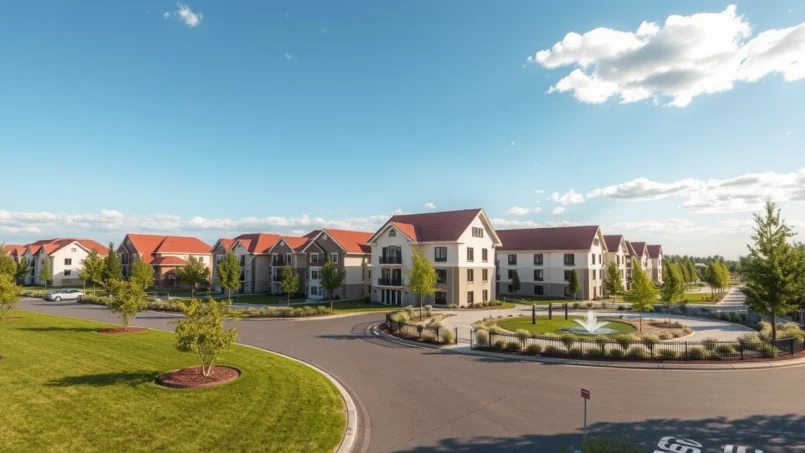
Located in northwest Broward County, in the heart of the Miami–Fort Lauderdale metropolitan area, Parkland has established itself as one of Florida’s most sought-after residential markets. Long sheltered from massive urbanization, the city was designed to maintain a very green character, with strict zoning rules aimed at preserving a park-like atmosphere. The result: an upscale living environment, some of the best schools in the county, safety above the state average, and a real estate market dominated by single-family homes and luxury residences.
For an investor, the area offers quality of life, high incomes (median household ~$200,000, average individual >$70,000) and a strong homeownership rate (~74%). Its strategic location between Boca Raton and Fort Lauderdale makes it a must-study market. However, after years of rapid increases, the market is entering a softer correction phase, offering buyers more negotiating power for the 2024-2026 period.
This article provides a detailed overview to assess whether, how, and where to invest in Parkland real estate, cross-referencing data points, market dynamics, quality of life, taxation, and financing strategies.
An Upscale Market in a Rebalancing Phase
Parkland is not an “average” Florida market: it clearly sits at the high end of the spectrum, both in price and standard of living. The median home price ranges from about $900,000 to $1.2M, well above the state median (around $374,000). Homes are mostly large villas or single-family houses, often in gated communities with clubhouses, pools, tennis courts, golf courses, and security services.
Recent Price Evolution: Between Correction and Long-Term Appreciation
The most recent data shows a dual movement: a short-term correction, but an upward trajectory over several years.
For example, we find the following order of magnitude:
| Indicator (Parkland residential) | Approximate Recent Value | Indicated Annual Change |
|---|---|---|
| Typical home value (average home value) | ≈ $1,040,689 | -3.7% |
| Median sales price (December 2025) | $840,000 | -13.8% |
| Median sale price per sq ft | $328/sq ft | -6.7% |
| Median listing price (August 2025) | $1.2M | -5.4% |
| Median sold home price (other source) | $979,000 | n/a |
| Price increase in 2023 | +6 to +9% | |
| Projected increase in 2024 (Southeast Florida, single-family homes) | ≈ +4% (moderate pace) |
These figures clearly illustrate the context: after the 2021–2022 surge, marked by bidding wars and offers above asking price, the rise in interest rates (from ~3% to nearly 7%) cooled demand. Prices have fallen in Parkland, more sharply than the Florida average, but remain well above their pre-pandemic levels.
For the long-term investor, a correction in the premium segment of a city with solid fundamentals (demographics, income, schools, safety) that remains highly attractive to families can represent an entry opportunity.
From a Seller’s Market to a More Balanced One
The most telling signal of this rebalancing is undoubtedly the lengthening of time on market. Where homes sold in just a few weeks in 2021–2022, the latest data shows a median time on market between 67 and 124 days depending on the source, an increase of about 60% year-over-year. At the state level, the Florida median is around 80 days, well above the national median of 50 days.
In practice, this means: this means:
– buyers have more time to compare, negotiate, and conduct due diligence;
– sellers must carefully position their price and presentation, or risk extended negotiations and steeper discounts.
Negotiation statistics confirm this trend:
| Negotiation Indicator (Parkland) | Recent Value |
|---|---|
| Median difference between sale and list price | ≈ -3.2% |
| Sales-to-list price ratio | ≈ 97% |
| Average discount mentioned in some analyses | -4 to -6% |
The “hot homes”, i.e., the best-positioned properties (in high-demand neighborhoods, well-presented, realistically priced), still sell relatively quickly (about 30–45 days) with limited discounts. For a buyer-investor, this is a less tense environment than 2021–2022, without being a distressed market.
Demographics, Income, and Demand: Attractive Fundamentals
To judge a market’s soundness, socio-demographic characteristics matter as much as price curves. On this front, Parkland checks many positive boxes for a 5–10 year investment horizon.
Growing Population and Family Profile
Parkland’s population is estimated between 33,000 and nearly 40,000 residents depending on the source, with a growth rate of about 2.6% per year and projections around 40,750 residents in 2025. Density remains moderate (about 2,860 inhabitants per square mile), reinforcing the city’s residential and airy character.
Average household size, indicating a strong family profile.
High Incomes and Low Poverty
Another key point for investors: the income level. Parkland ranks among Florida’s wealthiest cities:
| Income Indicator (Parkland) | Approximate Value |
|---|---|
| Median household income | ≈ $200,156 |
| Average individual income | ≈ $70,417 |
| Percentage of families below poverty line | ≈ 3.5% |
This purchasing power directly translates into:
– households’ ability to absorb high mortgage payments despite rising rates;
– demand for upscale features (pools, gourmet kitchens, impact windows, clubhouses, golf, etc.);
– resilience of rental demand in the single-family home and gated community segment.
Safety, Schools, and Quality of Life: The Drivers of Desirability
Parkland combines several “qualitative” assets that support residential demand:
Parkland stands out for its safe environment and abundant green spaces, offering an exceptional quality of life.
A crime rate estimated to be 69% lower than the Florida average.
A livability score of 75/100, considered excellent.
Nine municipal parks, trails, sports fields, an equestrian center, and a network of bike paths.
A “park city” atmosphere maintained by zoning rules that limit commercial development.
On the education front, the city stands out at the Broward County level. Several elementary schools boast exceptional GreatSchools scores, with math proficiency rates exceeding 80%:
| Public School in Parkland / Vicinity | GreatSchools Rating | % Students Proficient in Math |
|---|---|---|
| Heron Heights Elementary | 10/10 | 88% |
| Park Trails Elementary | 10/10 | 86% |
| Riverglades Elementary | 10/10 | 82% |
| Park Springs Elementary | 9/10 | 76% |
| Somerset Parkland Academy | n/a | 79% |
At the middle and high school levels, Westglades Middle School and Marjory Stoneman Douglas High School round out a top-tier public offering. The impact on home prices is tangible: historically, homes in the best school zones outperform by 10 to 15% in terms of appreciation.
For a rental investor, this translates into a steady pool of families willing to pay a premium to be in the right school district.
Neighborhood and Community Overview: Where to Invest in Parkland?
One of Parkland’s defining features is the very clear segmentation of its market into large planned communities, often gated and with extensive amenities. Each attracts a specific audience, with well-defined price ranges.
Major Family-Oriented and Upscale Communities
Several developments dominate the landscape:
| Community / Neighborhood | Positioning and Key Features | Typical Price Range (Sales) |
|---|---|---|
| Heron Bay | Master-planned, gated, 2 clubhouses, pools, 18-hole golf, strong appreciation | ≈ $750,000+ |
| Parkland Golf & Country Club | Greg Norman-designed golf, sports club, Mediterranean influence, very exclusive | ≈ $1.2M (median); up to $3.5M |
| MiraLago | Recent construction, clubhouse, sports courts, community atmosphere | ≈ $675,000 – $1.4M |
| Cascata at MiraLago | Extension of MiraLago, highly sought after, limited inventory | ≈ $850,000 – $950,000 |
| Watercrest | Luxury homes, lake views, modern architecture, family-friendly ambiance | ≈ $950,000 – $1.1M |
| Parkland Isles | “Affordable for Parkland” segment, family-oriented | ≈ $725,000 – $900,000 |
| Cypress Head | Spacious lots, 65-acre lake, strong resale value | ≈ $900,000 – $3.2M |
| Meadow Run / Fox Ridge / Tall Pines | Established, family communities with parks, tennis, pool | ≈ $445,000 – $2.9M depending on area |
| Four Seasons at Parkland (55+) | Senior community, 55+, club, services and care accessible | ≈ $725,000 (median) |
| Pine Tree Estates / The Ranches | Large properties, rural feel, sometimes equestrian, often no HOA | ≈ $1M – $4M |
For an investor, these differences translate into strategy choices:
In Parkland, the rental market segments by neighborhood. Heron Bay, MiraLago, Cascata, Watercrest, and Parkland Bay form the core of the upscale family market, highly sought after for single-family home rentals, offering modest yields but strong stability and good appreciation potential. The luxury segment (Parkland Golf & Country Club, Pine Tree Estates, The Ranches, Tall Pines) has a high entry ticket and longer selling times but attracts a solvent clientele, interesting for a wealth-focused investor. For a price/accessibility compromise targeting upper-middle-class families, Parkland Isles, Meadow Run, and Fox Ridge are often ideal. Finally, Four Seasons at Parkland represents a growing niche for ages 55+, subject to specific rental rules within that community.
More detailed neighborhood data confirms this hierarchy:
| Neighborhood (Examples) | Median Price | Median Price per Sq Ft | Rental Observations |
|---|---|---|---|
| Parkland Golf & Country Club | ≈ $1,387,500 | ≈ $456/sq ft | Median rent ≈ $9,500/month |
| Pine Tree Estates | ≈ $1,870,000 | ≈ $497/sq ft | Low density, 1 acre+ |
| Mira Lago | ≈ $1,254,444 | ≈ $359/sq ft | 12 homes for sale, 3 for rent |
These figures illustrate that Parkland is first and foremost a high absolute value market. Gross rental yield will rarely be spectacular, but it fits into a wealth-building logic within a defensive segment, driven by high-income households.
New Construction and Major Projects
For those interested in new builds or pre-construction, Parkland remains surprisingly dynamic despite strong land availability constraints.
Notable projects include:
Discover the main communities and new or near-completion real estate projects in Parkland, offering various options for families.
Final construction phase. A few lots or resales of nearly new homes, very popular with families.
Large new home community. Prices starting around $1.24M, 4 to 6 bedroom plans, 3,200 to over 4,300 sq ft.
52-home development in Heron Bay. Sizes from 2,635 to over 4,600 sq ft, 3–4 car garages, expected prices starting around $1.6M.
Future “downtown” of Parkland on a 34-acre site (former golf course). Intended as a commercial and community hub.
These projects play a dual role for investors: they offer purchase opportunities at the launch phase (often at a discount to future resale values) and help strengthen the city’s overall appeal by adding services and retail.
Rental Market: Strong Solvency, Measured Yields
Parkland’s rental market reflects the city’s upscale positioning. Rents are significantly higher than both the national average and Florida average.
Rental Levels and Property Types
Various sources indicate:
– average rent across all categories around $2,026/month in some general analyses, but
– median rent for Parkland listings cited at nearly $4,997/month for homes and large properties,
– typical ranges observed in 2024:
– 1-bedroom apartment: $2,400–$2,800/month,
– 2-bedroom: $3,000–$3,800/month,
– single-family home: often $4,500/month and above,
– for Parkland Golf & Country Club specifically, a median rent around $9,500/month.
A summary table helps visualize the order of magnitude:
| Property Type / Segment | Typical Monthly Rent Range |
|---|---|
| 1-bedroom apartment | $2,400 – $2,800 |
| 2-bedroom apartment | $3,000 – $3,800 |
| Standard single-family home (3–4 BR) | $4,500+ |
| Upscale homes (luxury communities) | $6,000 – $10,000+ |
In this context, the main challenge for the investor is not so much finding a solvent tenant – demand from families or high-income households remains strong – but buying at the right price so that gross yield exceeds a simple “cash parking” effect.
Recent Rental Trend: Slight Easing After the Surge
Statistics show:
Annual decline in average rents in some segments, a reduction of about $52 per month.
In other words: the explosive rent growth seen in 2021–2022 has calmed, and the market is normalizing. This coincides with new supply coming online in Florida and a slowdown in migration flows to the state. However, the relative scarcity of family home supply in Parkland and continued rise in purchase prices keep rents at a high level.
Property Management: A Highly Professionalized Market
In an environment where monthly rents easily exceed $3,000–$5,000, property management often goes through professionals. The Parkland–Coral Springs–Coconut Creek basin has several hundred management companies that handle:
Professional management of a rental property includes strict tenant screening (based on income, history, and references), rent collection with late fee enforcement, maintenance and repair handling (sometimes with 24/7 on-call service), regular inspections, and detailed financial reporting to the owner.
Some managers report, for example, collection rates of 98% and tenant retention rates around 90%, illustrating the regularity of rental income in this client segment.
For a remote or international investor, outsourcing management is almost a given, especially since local regulations (homeowner associations, rental rules, etc.) can be strict.
Cost of Acquisition: Price, Credit, Expenses, and Taxes
Investing in Parkland requires sizing the overall budget well beyond just the purchase price. Between mortgage payments, property taxes, insurance, and recurring expenses, the financial commitment is substantial.
Impact of Interest Rates on Monthly Payments
The rapid rise in rates has radically changed the purchasing power of households and investors. A simple example shows the impact:
| Financing Scenario (Primary or Rental) | Loan Amount | Approximate Rate | Monthly Payment (excl. taxes & insurance) |
|---|---|---|---|
| $900,000 home, 3% rate | $900,000 | 3% | ≈ $3,792/month |
| Same amount, 7% rate | $900,000 | 7% | ≈ $5,989/month |
| $600,000 loan, 3% rate | $600,000 | 3% | ≈ $2,529/month |
| $600,000 loan, 7% rate | $600,000 | 7% | ≈ $3,993/month |
In Q1 2024, average rates in Florida were around:
– 30-year fixed: 6.5 to 7.2%,
– 15-year fixed: 5.9 to 6.5%,
– 5/1 ARM: 5.5 to 6%.
For an investor, you must add to these monthly payments:
Beyond the purchase price, acquiring a property in Florida involves significant recurring expenses: property taxes (about 1.08% of value in Broward for a primary residence, more for an investment property), often high homeowners insurance, especially for hurricane coverage (2 to 4% of property value per year in the most exposed areas), HOA fees (can reach several hundred dollars per month), and a budget for maintenance and repairs (averaging 1 to 3% of property value annually).
Prudence Rule: Don’t Exceed 30% of Gross Income
Financial specialists recommend limiting housing expenses (mortgage, taxes, insurance, HOA) to 28–30% of gross income. In Parkland, given the price level, this rule translates into a very high entry barrier: in Southeast Florida, the annual income needed to buy a single-family home is estimated at around $168,000, while the combined income of two workers earning the average weekly wage does not exceed $115,000.
This gap explains why only a small fraction of renter households in the region can currently afford to buy, and why many potential buyers continue to turn to renting.
Taxation and Tax Advantages
Two elements combine:
Florida does not levy a state income tax, but compensates with relatively high property taxes (about 1.08% of value in Broward for a primary residence). A favorable “homestead” exemption applies to primary residences, but it does not directly apply to investment rental properties.
– Federal rental investment regime (USA)
– deductibility of most expenses related to the rental property (mortgage interest, taxes, insurance, management fees, repairs, advertising, business travel, etc.);
– ability to depreciate the building over 27.5 years for residential rentals (accounting depreciation deductible from taxable income);
– real estate gains taxed at the long-term capital gains rate (often 15% for most taxpayers);
– ability to defer this tax through mechanisms like a 1031 exchange (reinvesting in another like-kind property).
An investor in Parkland must therefore look beyond simple gross profitability: the combination of high rents, 27.5-year depreciation, and significant mortgage interest can turn modest cash flow into a more attractive after-tax return, especially over the long term.
Comparison with Neighboring Markets: Coral Springs, Coconut Creek, Margate, Tamarac
The question often arises: why invest in Parkland real estate rather than a cheaper neighboring city?
Some median price comparisons:
| Neighboring City (Broward / Surrounding) | Median Home Price (approx.) |
|---|---|
| Parkland | ≈ $900,000 |
| Coral Springs | $500,000 – $550,000 |
| Coconut Creek | $450,000 – $500,000 |
| Margate | ≈ $400,000 |
| Tamarac | ≈ $400,000 |
Parkland’s comparative advantages:
– often better-rated public schools;
– much lower crime rate;
– lower density, more greenery, perception of a “prestige city”;
– brand image that translates into home value appreciation and price stability.
Advantages of cities like Coral Springs:
Investing in mid-sized cities offers several advantages: lower entry prices, which can generate higher gross yields. It also allows access to a broader tenant base, including middle-class households, and benefits from a diversified real estate market with apartments, smaller homes, and multi-family properties.
For an investor:
– Parkland is a “quality and stability” bet, focused on the long term, potentially suitable for wealth-building profiles or families looking to combine residence and investment;
– Coral Springs or Coconut Creek may better suit cash-flow strategies, fix-and-flip, or portfolio diversification with higher yield.
Investment Strategies Suited to Parkland
Given the price level, resident demographics, and market trajectory, certain strategies are better suited to Parkland than others.
Buy-and-Hold Long-Term Rental in a Family Community
This is the most classic scenario: purchasing a single-family home in a sought-after community (Heron Bay, MiraLago, Cascata, Watercrest, Parkland Isles…), renting it to families who want access to Parkland’s schools and lifestyle without buying.
Strengths:
– generally solvent tenants willing to pay high rents;
– low vacancy rates in good neighborhoods;
– potentially robust capital appreciation over 10 years.
Points of caution:
– often limited gross yield (rent-to-price ratio is not spectacular);
– sometimes high HOA fees;
– pay attention to each community’s specific rental rules (minimum lease term, number of rentals allowed, etc.).
Pre-Construction or New Program Purchase
Investing at the launch of a program like Parkland Royale or Saltgrass at Heron Bay can allow:
Buying off-plan offers two main financial advantages: first, it allows you to benefit from lower entry prices than those seen on resales once the community is completed; second, it offers the possibility of taking advantage of builder incentives, such as a contribution to closing costs, a rate buydown via a specific in-house mortgage, or free upgrades to the home.
In return:
– delivery horizon of 9 to 12 months on average;
– construction risks and potential market changes between reservation and delivery;
– need to carefully review contract terms (penalties, finishes, payment schedules).
Wealth-Building Strategies on the Luxury / Ultra-Luxury Segment
In segments like Parkland Golf & Country Club, Pine Tree Estates, The Ranches, or Tall Pines, investing is more akin to wealth management:
Main characteristics and motivations of targeted clients for high-end investments.
Investment budget often above $1.5–2 million.
Senior executives, entrepreneurs, international buyers, and affluent retirees.
Capital preservation and growth, prioritizing this over immediate rental yield.
The investor must accept longer resale times and higher maintenance costs (large lots, pools, gardens, possibly equestrian facilities).
Buy vs. Rent Decision for an Owner-Occupant Investor
In a market where home rents easily exceed $5,000–$6,000/month, the line between high-end renting and buying becomes blurry for some households. For an investor planning to live in Parkland for five years or more, the “buy or rent” analysis must consider:
– equity building (principal repayment, appreciation);
– taxation (mortgage interest deduction on primary residence, homestead exemption);
– the prospect of converting the home into a rental property later (e.g., job relocation).
Once again, Parkland is well-suited to a residence-wealth logic, especially for families with school-aged children.
Risks, Constraints, and Outlook 2024–2026
No market is without risk, and Florida in general, including Parkland, faces several challenges.
Ongoing Correction in Florida: A Longer Landing Than Expected
At the state level, the median home value has declined about 5% year-over-year, after a near 80% increase over five years. Experts anticipate:
– near-zero or very moderate growth (0 to 1%) in 2026 in many metro areas;
– a market “in correction” until mid-2026, before potential stabilization.
For Parkland, this means:
– the probability of a new price surge in the short term is low;
– conditions will continue to improve for buyers (rising inventory, long time on market, frequent discounts).
However, this correction starts from a very high point, and the accumulated equity for owners remains substantial: a household that bought in 2019 and sold in 2024 could retain more than 50% additional equity according to some regional estimates.
Insurance and Climate Risks
The insurance crisis in Florida is a downside for all investors:
Some annual homeowners insurance premiums exceed $10,000 for coastal or high-climate-risk properties in the United States.
Parkland, located inland and bordered by the Everglades to the west, is not the most exposed to storm surge risk. However, wind risk (hurricanes) exists, and insurers do not offer deep discounts. Protection systems (impact windows, new roofs) can provide significant premium reductions, but at the cost of substantial upfront investments.
Interest Rates: Toward a Lower Plateau, But No Return to 3%
The most widespread forecasts for 2025–2026 suggest:
– a 30-year mortgage rate moving between the high end of 5% and the low end of 6% by end of 2026;
– rates already fallen back to around 6.6% in spring 2025, down from the 2023 highs.
A moderate decline in rates can:
A supportive measure can have three main effects: slightly improve household affordability, encourage some previously “locked-in” buyers to take the plunge, and support a gradual recovery in transaction volumes in the market.
But it would be imprudent to build an investment plan on the assumption of a quick return to 3% rates: the macroeconomic configuration that allowed that regime seems over.
Inventory, Migration, and Medium-Term Demand
Data shows that:
– Parkland inventory remains 26% below its pre-pandemic level, despite a recent rebound;
– Florida still has a positive net migration flow, but less intense than during the post-Covid peak;
– cities in the Northeast like New York remain major sources of buyers interested in Parkland.
At the same time:
– the supply of homes over $1 million represents a significant share of the inventory in Southeast Florida;
– affordability remains a barrier, especially for first-time buyers.
The most likely scenario is a continued “normalization” of the market: more homes for sale, longer transaction times, prices that rise slowly or stagnate in places, with strong differences between micro-markets (single-family vs. condos, coast vs. inland, etc.).
Conclusion: Parkland, a “Long-Term Quality” Investor Market
Investing in Parkland real estate is not about seeking a quick “flip” yield in a distressed market. It is about positioning yourself in an upscale territory, highly sought after by families and wealthy households, where value is anchored in robust fundamentals: safety, excellent schools, green spaces, sports infrastructure, proximity to Boca Raton and Fort Lauderdale, and a reputation as the “best city in Florida to raise a family” in many informal rankings.
Key takeaways for an investor:
Prices, while high, have corrected, offering a more reasonable entry point. The market has rebalanced with less competition and more time to analyze. A wealth-building strategy, targeting quality properties in desirable areas with a 5 to 10-year horizon, is coherent, despite contained gross rental yields and risks related to the economic climate, interest rates, and insurance costs.
For an investor who accepts these parameters, has the necessary capital for a high entry ticket, and knows how to leverage the right tax and financing tools, Parkland can be a cornerstone of a real estate portfolio focused on stability, capital preservation, and quality of life. The key is to approach this market with data-driven analysis, good knowledge of local communities, and ideally, the guidance of a professional experienced in the city’s specifics and its homeowner associations.
Disclaimer: The information provided on this website is for informational purposes only and does not constitute financial, legal, or professional advice. We encourage you to consult qualified experts before making any investment, real estate, or expatriation decisions. Although we strive to maintain up-to-date and accurate information, we do not guarantee the completeness, accuracy, or timeliness of the proposed content. As investment and expatriation involve risks, we disclaim any liability for potential losses or damages arising from the use of this site. Your use of this site confirms your acceptance of these terms and your understanding of the associated risks.

Cyril Jarnias is an independent expert in international wealth management with over 20 years of experience. As an expatriate himself, he is dedicated to helping individuals and business leaders build, protect, and pass on their wealth with complete peace of mind.
On his website, cyriljarnias.com, he shares his expertise on international real estate, offshore company formation, and expatriation.
Thanks to his expertise, he offers sound advice to optimize his clients' wealth management. Cyril Jarnias is also recognized for his appearances in many prestigious media outlets such as BFM Business, les Français de l’étranger, Le Figaro, Les Echos, and Mieux vivre votre argent, where he shares his knowledge and know-how in wealth management.





