
 Published on and written by Cyril Jarnias
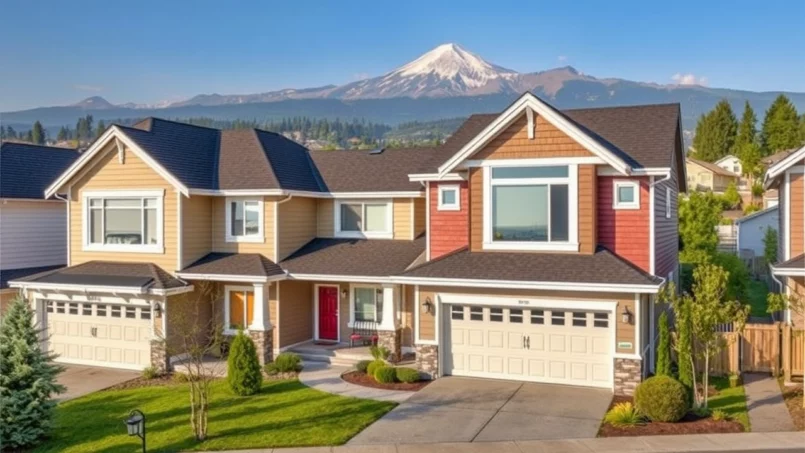
Investing in real estate in Tacoma is attracting more and more buyers, whether they come from Seattle, San Francisco, or other US metropolises. Long considered the “affordable alternative” to Seattle, the “City of Destiny” has become a full-fledged market, with its own dynamics, pockets of high profitability, risks, and solid growth prospects.
This article provides a data-driven, concrete analysis of the Tacoma real estate market, covering property types, strategic neighborhoods, price levels, potential returns, local taxes, rental regulations, financing options, and the crucial importance of effective property management.
A Favorable Economic and Demographic Context for Investors
Tacoma is the third-largest city in Washington State, located on Puget Sound, about 30–35 miles south of Seattle. The city has around 220,000 residents and the population is growing at a rate of nearly 0.8% per year, within a metro area of over one million people.
The local economy is diversified: healthcare, education, logistics, port activities, light industry, and a growing technology sector. Major employers include Joint Base Lewis‑McChord, the MultiCare hospital system, the Port of Tacoma (one of the largest container ports on the West Coast), and the University of Washington Tacoma campus. This solid economic base generates ongoing demand for housing, especially rentals.
Housing in Tacoma is about 30% cheaper than in Seattle, despite a cost of living higher than the national average.
This combination – population growth, economic diversification, a cost of living gentler than Seattle but higher than the national average – creates fertile ground for rental investment: solvent tenants, a high proportion of renter households (about 44–46% of households), and a sustained pace of rent increases over several years.
A Competitive but Still Affordable Real Estate Market
The Tacoma real estate market is classified as “very competitive.” Homes receive an average of two to three offers, and a significant share sells above the list price. The median sale-to-list price ratio hovers around 99–100%, meaning properties sell very close to their asking price.
Price Levels and Recent Dynamics
Sources vary by period and indicator, but the same general range appears: the median home price in Tacoma hovers around $470–520,000, depending on the month and calculation method (sale price, Zillow-type estimated value, list price, etc.). Prices per square foot show a more pronounced increase than raw prices, with year-over-year gains of roughly 3 to 11% depending on the period. Overall, the market has moved away from the 2020–2022 frenzy: increases continue but at a more moderate pace, sometimes nearly flat, without a collapse.
The median home price in the United States at the start of 2025.
Days on Market and Available Inventory
Selling times reflect market tightness. Depending on the period, homes sell in an average of 17 to 36 days, with “hot homes” going in a week. The inventory of homes for sale remains relatively low: between two and three months of supply, while a “balanced” market is around four to six months. In Pierce County, about 2.1 months of supply has been recorded, confirming a seller-friendly environment, though the situation is gradually rebalancing.
For an investor, the goal is to target properties with good immediate profitability and/or a high probability of medium-term appreciation, not to acquire a property without specific criteria.
A Robust and Growing Rental Market
The rental market in Tacoma is one of the city’s strong points for an investor. Several indicators converge: low vacancy rates, steady rent increases, a high proportion of renter households, and a diverse tenant profile (students, military personnel, young professionals, families, hybrid/remote workers, etc.).
Rents and Yields
Average rents vary by source and market segment, but a reliable order of magnitude can be identified.
Summary table of average rents by property type (citywide):
| Property Type | Average Monthly Rent (approx.) |
|---|---|
| Studio | ~$1,245–1,250 |
| 1 Bedroom | ~$1,420–1,480 |
| 2 Bedrooms | ~$1,750–1,800 |
| 3 Bedrooms | ~$2,150–2,500 |
| Single-Family Home | ~$2,200–2,400 |
Rents in Tacoma are generally 9–13% lower than the national average, which, combined with still-reasonable purchase prices, allows for attractive returns. We observe:
Overview of typical yield rates for rental investments in Tacoma, Washington, based on market data.
Typical gross yields of 8 to 12% for citywide multi-family properties.
Cap rates generally between 4 and 7% for well-located properties.
In areas like Proctor or Stadium, annual returns for long-term rentals are on the order of 7 to 9%.
At the Pierce County level, the average gross yield is around 6.2%, higher than King County (Seattle), which is around 4.8%.
Vacancy, Demand, and Tenant Profiles
Vacancy rates are low: multi-family vacancy was around 4.8% in 2024; other sources cite a rate around 4–5%, even below 3% in some segments. In sought-after neighborhoods, when properties are well-priced and properly marketed, the time to lease can fall under 30 days, sometimes two weeks near a new transit station or employment hub.
The main pools of tenants are young professionals, students, households in professional mobility, and people in residential transition (such as a separation). These groups form the core of rental demand due to their need for flexibility and, often, financial resources that do not allow for homeownership.
– Young professionals working in Tacoma or Seattle (thanks to the Sounder Train and I‑5);
– Healthcare personnel (major hospitals MultiCare, St Joseph, etc.);
– Military personnel and civilians associated with Joint Base Lewis‑McChord;
– Students from universities and colleges in Tacoma (University of Washington Tacoma, University of Puget Sound, Tacoma Community College, Pacific Lutheran University, Science and Math Institute, etc.);
– Families seeking lower housing costs than Seattle with good schools.
The short-term rental market (Airbnb and the like) adds an additional layer of demand, especially in central neighborhoods, near the waterfront and cultural hubs.
Mapping Strategic Neighborhoods for Investment
Investing in real estate in Tacoma requires a good understanding of the mosaic of neighborhoods, which blends former industrial areas in redevelopment, historic districts, transitional popular areas, and more residential suburbs.
Overview of Key Tacoma Areas
The table below summarizes some major city zones with their median prices and rents, based on various recent sources.
| Neighborhood / Area | Median Home Price (approx.) | Median Rent (approx.) |
|---|---|---|
| North End | ~$680,000 (range $466–741k) | ~$2,500 |
| Northeast Tacoma | ~$580–605,000 | ~$2,050–2,575 |
| West End | ~$610,000 (some sources <$400k) | ~$2,580 |
| Central Tacoma | ~$450–550,000 | ~$1,350–1,950 |
| New Tacoma / Downtown | ~$427–450,000 | ~$1,100–2,400 |
| South Tacoma / South End | ~$375–435,000 | ~$1,600–2,000 |
| Eastside | ~$405–425,000 | ~$1,400–2,500 |
| Browns Point | ~$975,000 | ~$2,100–3,000 |
| Proctor District | ~$707,000 | ~$2,500+ |
| Northshore | ~$850,000 | ~$2,500+ |
| Yakima Hill | ~$425,000 | ~$2,000+ |
These figures illustrate the range of entry points: expensive and highly desirable areas (North End, Proctor, Northshore, Browns Point), more affordable but rising neighborhoods (South Tacoma, Eastside, South End), and intermediate zones (West End, Central, Downtown, Northeast).
North End, Proctor, Old Town, North Slope: Heritage, Water Views, and Appreciation
The North End encompasses several micro-neighborhoods – Proctor, Old Town, North Slope Historic District, Yakima Hill, etc. – known for their older homes (Craftsman, Victorian, Cape Cod styles), tree-lined streets and, in some areas, views of Commencement Bay and Puget Sound.
Prices here are among the highest in the city, with medians sometimes exceeding $700–800. However, school quality is excellent (graduation rates around 94% for North End), crime rates are much lower than the Tacoma average, and rents are high, especially for family homes and small high-end units. Short-term rental performance is also very good here:
– North End (Airbnb): average revenue ~$45,300/year, average rate ~$197/night, occupancy ~63%, RevPAR ~$124/night.
– Proctor District: average revenue ~$46,400/year, average rate ~$205/night, occupancy ~62%.
The data indicates that, despite a high initial investment, strategies focused on appreciation and premium cash-flow (such as Airbnb or upscale long-term rentals) can be relevant in city centers. This approach requires accepting a slightly lower gross yield than in the periphery. It’s a type of investment that seeks a balance between property security, long-term appreciation, and neighborhood image.
West End, Point Defiance, West Slope: A Compromise Between Price, Quality of Life, and Profitability
The West End offers a mix of urban and suburban, with numerous parks (Point Defiance Park, Owen Beach, Titlow Beach, Kandle Park…), older homes, and good access to amenities. Prices vary widely depending on the source, with some datasets mentioning medians around $276–400,000, others up to $600,000; this reflects the area’s great internal diversity.
For an investor, these are interesting neighborhoods for 3-bedroom / 2-bathroom family homes aimed at long-term tenants, with good occupancy rates and appreciation potential linked to proximity to large green spaces and transportation corridors.
Central Tacoma and New Tacoma / Downtown: Centrality, Culture, and the Student Market
Central Tacoma, bordering 6th Avenue and close to downtown, presents a mix of old-world charm, accessibility, and neighborhood life. It features historic homes, small condos, and newer buildings, with median prices around $450–550,000 and median rents around $1,350–1,950.
Downtown (New Tacoma/Downtown) presents a dense, urban environment with a substantial supply of apartments, lofts, and mixed-use developments. Median prices are more affordable (around $422,000 to $450,000) than in the North End. The area attracts a large population of student renters and young professionals, thanks to several museums (Museum of Glass, Tacoma Art Museum, Washington State History Museum, LeMay – America’s Car Museum), proximity to the University of Washington Tacoma, and service by the Tacoma Link light rail.
On the Airbnb side, Downtown generates an average revenue of around $29,500/year, with an average rate of ~$147/night and occupancy of about 55%. This is not the most profitable short-term segment, but it offers good resilience thanks to tourist and business demand.
South Tacoma / South End, Eastside: Affordable Entry Points and Appreciation Potential
For investors seeking renovation properties, high gross yields, or a “value-add” strategy, South Tacoma, South End, and Eastside appear as privileged playgrounds. Median prices are lower, around $375–435,000, with rents remaining solid ($1,600–2,500), slightly more crime in some micro-areas, but also significant urban revitalization work underway.
Historical appreciation rates here are sometimes spectacular: some family neighborhoods have seen increases of 24% to over 50% in recent years. Areas like Eastside-Enact, with a historically very low median purchase price (around $160,000 in one source), illustrate the type of pockets where a heavy renovation strategy, or even building duplexes/triplexes thanks to zoning changes, can generate strong appreciation and decent cash flow.
Northeast Tacoma, Browns Point, Northshore: Views, Prestige, and Safety
Northeast Tacoma and pockets like Browns Point / Northshore are more affluent residential areas, often with water views, neighborhood parks, and an upscale suburban feel. Median prices are significantly higher (often $580–800,000, with Browns Point near $1 million), but crime is well below the Tacoma average, and household median incomes are high.
These areas are more suited for capital preservation and long-term appreciation than for maximizing gross yield. They are also relevant for high-end short-term rentals (like Airbnb) or for housing executives and affluent families.
Suburbs and Nearby Cities: Fircrest, University Place, Gig Harbor, Lakewood, Puyallup…
Around Tacoma, several municipalities offer complementary opportunities:
– Fircrest: small-town feel, “mid-century modern” housing stock, lower median prices (~$280,000) with good rental demand.
– University Place: excellent schools and green spaces, attractive to families, with stable rental potential.
– Gig Harbor: highly sought-after maritime setting, high prices but strong residential and tourist appeal.
– Lakewood, Parkland, Spanaway, Puyallup, Steilacoom, Fife, Federal Way, Bonney Lake, Kent, Waller: varied markets, some more working-class but with good rental demand and still-competitive entry prices, others experiencing strong value growth (Federal Way, for example, benefits from regional dynamics).
For an investor looking to diversify risk, mixing Tacoma with a few of these communities can be a good approach.
Focus on Short-Term Rentals in Tacoma
Airbnb data shows a short-term market already well established. Citywide, a typical listing can generate an average of around $39,300 in annual revenue, with an average daily rate near $176 and an occupancy rate of about 61%. RevPAR (Revenue Per Available Night) hovers around $108/night.
Performance varies significantly by neighborhood:
| Neighborhood (Airbnb) | Average Annual Revenue | Average Rate / Night | Occupancy Rate | Approx. RevPAR |
|---|---|---|---|---|
| Downtown | ~$29,500 | ~$147 | ~55% | ~$85 |
| North End | ~$45,300 | ~$197 | ~63% | ~$125 |
| Proctor District | ~$46,400 | ~$205 | ~62% | ~$128 |
| South Tacoma | ~$37,900 | ~$179 | ~58% | ~$106 |
| Northshore | ~$50,500 | ~$238 | ~58% | ~$139 |
| Yakima Hill | ~$45,300 | ~$194 | ~64% | ~$125 |
| North East (Airbnb) | ~$32,900 | ~$267 | ~54% | ~$148 |
We see that premium areas (Northshore, Proctor, North End, Yakima Hill) offer the best revenue, but also higher purchase prices. The trade-off is therefore between absolute profitability (cash flow) and relative profitability (return on capital invested).
Since 2024, Tacoma has tightened its regulations on short-term rentals. Obligations include obtaining a permit, complying with occupancy limits and parking rules, meeting safety standards, and collecting and remitting taxes. The number of rentals is also capped in certain areas. For an investor, it is crucial to factor in this compliance from the analysis stage and often to plan for a professional manager.
Rules, Taxes, and Risks Not to Be Underestimated
Investing in real estate in Tacoma involves, as everywhere, a regulatory and tax component that must be mastered.
Local Taxes: Property and Income
The State of Washington does not apply a personal income tax, which is an advantage for investors. However, property taxes are significant. In Tacoma, the median effective property tax rate is around 1.03% of taxable value, slightly above the national median (1.02%) and above the state average (0.88%). For a median home around $428–456,000, this typically represents an annual bill of about $4,400–4,700, a few thousand dollars above the national median.
Property tax amounts are deductible at the federal level, within applicable limits. Exemptions exist for seniors, veterans, or primary residences. It is possible to contest the county assessor’s valuation (Pierce County Assessor-Treasurer) in case of overvaluation, but the contest window is time-limited (e.g., until the end of August for that year’s assessments). Some property owners use specialized firms to optimize their property tax burden.
Beyond property tax, investors benefit from standard tools: deduction of mortgage interest related to rental activity, depreciation (27.5 years for residential), deduction of operating expenses (insurance, management, maintenance, repair work, utilities paid by the owner…), possible use of 1031 exchanges to defer capital gains tax upon sale, and more advanced strategies like cost segregation to accelerate depreciation of certain property components.
Rental Regulations and Tenant Rights
Washington State has strengthened tenant protections in recent years: rules on notices, limits on eviction procedures, notice periods for rent increases (at least 60 days), debates on rent increase caps tied to inflation (on the order of 3–7%). However, Tacoma is still perceived as more “flexible” and less complex than Seattle, where the rules are significantly more restrictive for landlords.
For an investor, it is essential to know local laws regarding eviction timelines, lease content, security deposit rules, right of access to the property, and restrictions on tenant screening. Mistakes in these areas can be costly. It is therefore recommended to rely on a property management agency expert in this regulatory framework.
Physical and Technical Risks
A significant portion of Tacoma’s housing stock dates from the early 20th century. This creates great renovation opportunities, but also risks: aging sewer lines (replacement can cost $10,000–20,000), weak foundations, obsolete electrical wiring, drainage issues, homes on steep slopes, flood-prone areas, unpermitted additions, etc.
Estimated percentage of homes in Tacoma exposed to flood risk.
Market Risk and Interest Rate Trends
The Tacoma market does not show the characteristics of a 2008-style bubble: no massive overbuilding, no widespread “toxic” loans, no wave of forced sales in the near term. However, rising mortgage rates (around 6–6.5% for a 30-year fixed in early 2025–2026) reduce affordability for households, slow transaction volume, and encourage many owners to hold onto their low-rate mortgages, limiting supply.
Forecasts for Tacoma point to moderate price appreciation, often in a range of 3 to 8% per year, with some analysts mentioning 15–20% cumulative growth over two years in baseline scenarios, or even about 14% over ten years for Tacoma City in certain projection studies. This remains very attractive for a long-term investor, provided one does not bet on exponential increases like those seen between 2020 and 2022.
Financing an Investment in Tacoma: Levers and Constraints
Financing an investment in Tacoma follows standard US market rules, with a few specifics related to current rates and possible programs.
Conventional Loans and Bank Requirements
For an investor-owned rental property not occupied by the owner, banks generally require: a complete tenant file, proof of income, statements of rent paid on time, and a guarantee or surety.
– a down payment of 20–25% (the higher the down payment, the better the rate);
– a credit score of at least 620, or even 700–740 for the best rates;
– cash reserves equivalent to several months of mortgage payments (often six months per property);
– a strict analysis of the debt service coverage ratio (DSCR), typically above 1.25.
Rates for this type of loan are generally 0.5 points higher than for a primary residence, with standard 30-year terms. Some lenders offer DSCR-based loans, where evaluation focuses on potential rental income rather than personal income. These offers typically require a 20–25% down payment and compliance with a minimum DSCR.
Owner-Occupancy Strategies and FHA/VA Programs
Investors looking to “live in their investment” can use interesting levers:
– FHA loan on a 2- to 4-unit property, with only 3.5% down payment if the buyer occupies one unit (house hacking);
– VA loan (for eligible veterans) can go up to four units with no down payment, if one unit is occupied.
These strategies allow entering the Tacoma market with much less initial capital, especially in more affordable neighborhoods (South Tacoma, Eastside, parts of Central or West End), and using rent payments from other units to ease the monthly payment.
Private Loans, Hard Money, and Multi-Family Financing
For heavy renovation projects or quick acquisition of undervalued properties, so-called “hard money” or private loans can be an option. They are characterized by:
Main characteristics of short-term financing or bridge loans for real estate projects.
Very fast setup times, possibly within 48 hours in some cases.
Higher interest rates than traditional loans, often starting at 8.99% or more.
Loan-to-cost ratios can reach 90% and higher for well-structured projects.
Analysis focused on the property’s value and project feasibility rather than the borrower’s personal income.
On a larger scale, institutional lenders (Fannie Mae, Freddie Mac, HUD, commercial lenders, CMBS, etc.) offer multi-family loans with LTVs of 70–80%, rates often indexed to 5- or 10-year Treasury yields, amortizations over 25–30 years, and fixed periods (5, 7, 10 years) with prepayment penalties.
In a market like Tacoma, where multi-family is growing and many construction projects are underway (several tens of thousands of units in the pipeline between lease-up, under construction, planned, or under study), this type of financing plays a key role for institutional investors or large portfolios.
Property Management: Key to Remote Profitability
The quality of management is a linchpin for turning a good purchase into a profitable investment. In Tacoma, the property management offerings are plentiful, with many companies specializing in residential, commercial, or a mix of both.
Typical Costs and Services
Management fees typically fall between 8 and 10% of collected rents in the Tacoma area, sometimes a little less (7%) for large portfolios, sometimes more (12%) for very comprehensive services or more difficult properties. Additionally, there are typically:
– leasing fees (often 50–100% of one month’s rent, or a flat fee of $600–1,200);
– lease renewal fees ($150–250);
– setup fees for a new property;
– possibly inspection or project management fees.
In return, services include advertising on major portals (Zillow, Redfin, Apartments.com, Zumper, etc.), tenant screening (applications, background checks, scoring), drafting leases compliant with Washington State law, rent collection, delinquency follow-up, maintenance coordination, periodic inspections, and financial reporting. Some agencies also offer guarantees (free tenant replacement if they leave within the first X months, partial coverage of eviction costs, guarantee on pet damage, etc.).
One month of vacancy can represent more than 8% of annual rental income loss for an owner.
Why Outsource Management in Tacoma?
For an investor who does not live in the area, or who wants to multiply properties, professional management allows them to:
– stay compliant with an evolving legal and tax framework;
– reduce the risk of poor tenant selection;
– delegate maintenance work and 24/7 emergencies;
– have access to up-to-date market data to set rents or decide on a sale;
– preserve time and energy for strategic analysis rather than operations.
Even for a local investor, outsourcing management can be profitable if they value their time and wish to build a significant-sized portfolio.
Investment Strategies Suited to the Tacoma Market
Investing in real estate in Tacoma is not just about “buy and hope.” The current context – higher rates, moderate price growth, strong rental demand, rising regulatory constraints – requires a conscious and structured approach.
Buy-and-Hold in Family Neighborhoods
The most classic strategy is to buy a single-family home or small multi-unit in a family neighborhood with good schools, moderate crime, and amenities (parks, shopping, transit). The goal is to:
– secure a stable rental income stream, thanks to long-term tenants (often families);
– benefit from gradual price appreciation (3–8% per year in conservative scenarios);
– take advantage of tax benefits (depreciation, interest, 1031…).
Areas like North End, West End, certain pockets of Central Tacoma, or suburbs like University Place and Fircrest are well-suited to this model, even if gross yields may be more modest (offset by lower vacancy risk and better capital appreciation).
House Hacking and Small Multi-Family
The zoning changes through the “Home in Tacoma” program, which opens more areas to duplexes, triplexes, and fourplexes, create fertile ground for house hacking: buying a 2–4 unit building, living in one, and renting out the others. This approach allows you to:
Buying your first property as a primary residence offers several key financial advantages. It allows you to benefit from more favorable financing, such as FHA or VA loans in the US, and get better rates on residential loans. This strategy drastically reduces your own housing cost by replacing rent with a credit payment that constitutes an investment. Finally, it is the preferred method for building a first rental portfolio with a limited initial down payment, for example by renting out part of the home (roommate) or through a future purchase for rental after refinancing.
Transitional neighborhoods like Eastside, South Tacoma, some pockets of South End, or areas near new transit stations offer good opportunities for this type of project.
Value-Add, Flip, and Repositioning
With an older housing stock and prices sometimes lower than Seattle’s for high-potential properties, Tacoma is good ground for “value-add” strategies:
Renovating older homes, including bringing them up to code, modernizing the kitchen and bathroom, and improving energy efficiency. Reconfiguring the interior to transform an impractical layout into a highly sought-after 3-bedroom, 2-bathroom standard. Adding an ADU (accessory dwelling unit) in the backyard, where zoning allows, to create a rental income stream or significantly increase property value. Converting an underutilized commercial space into residential units in certain redeveloping districts.
Concrete examples show that an ADU costing around $200,000 to build and generating $2,000/month in rent can pay for itself in about seven years, excluding additional property appreciation.
Regulated Short-Term Rentals and Mixed-Use
Short-term rental remains an interesting lever in tourist, historic, or culturally attractive neighborhoods (North End, Proctor, near the waterfront, Downtown, Old Town). The annual revenue and RevPAR figures are compelling, but regulatory constraints require very professional management.
A possible approach is to combine different uses within a single portfolio:
– long-term units in family neighborhoods for income stability;
– short-term units in tourist areas to boost cash flow;
– possibly, participation in mixed-use buildings (retail on ground floor, housing above) in revitalizing areas (Stadium District, Hilltop, Brewery District, Foss Waterway).
This internal diversification helps smooth out regulatory risks (e.g., if short-term rental rules tighten further) and economic cycles.
Positioning Yourself Smartly in Tacoma Today
Investing in real estate in Tacoma, in 2025–2026, means entering a market:
– more expensive than five years ago, but still below Seattle;
– where prices are no longer skyrocketing, but are rising steadily;
– with a tight rental market, low vacancies, and rising rents;
– subject to increasingly complex rules, especially for rentals and short-term stays;
– driven by major infrastructure projects (transit extensions, waterfront projects, parks and public spaces), which support demand and value.
To take advantage of this, the investor must:
To invest peacefully in rental real estate in Tacoma, it is crucial to follow a rigorous approach. Start by carefully selecting neighborhoods, cross-referencing criteria like entry price, expected rents, safety, school quality, upcoming urban projects, and the target tenant profile. Then, incorporate all recurring and one-time costs into your financial calculations: property taxes, insurance (typically between $800 and $1,800 per year for a duplex or house), property management fees, provisions for vacancy and maintenance, as well as borrowing costs. Build a realistic financing plan, focusing on the long-term sustainability of the monthly payment rather than just hunting for the lowest rate. Finally, adopt a long-term vision with a holding horizon of at least 5 to 10 years, because profitability in Tacoma relies on a combination of regular cash flow and gradual value appreciation, not short-term speculation.
In this context, Tacoma appears as a particularly relevant market for investors seeking a compromise between profitability, relative safety, growth potential, and underlying quality of life. The city is no longer just the “backyard of Seattle,” but a full-fledged real estate playground, where a well-thought-out strategy can produce solid and lasting results.
Disclaimer: The information provided on this website is for informational purposes only and does not constitute financial, legal, or professional advice. We encourage you to consult qualified experts before making any investment, real estate, or expatriation decisions. Although we strive to maintain up-to-date and accurate information, we do not guarantee the completeness, accuracy, or timeliness of the proposed content. As investment and expatriation involve risks, we disclaim any liability for potential losses or damages arising from the use of this site. Your use of this site confirms your acceptance of these terms and your understanding of the associated risks.

Cyril Jarnias is an independent expert in international wealth management with over 20 years of experience. As an expatriate himself, he is dedicated to helping individuals and business leaders build, protect, and pass on their wealth with complete peace of mind.
On his website, cyriljarnias.com, he shares his expertise on international real estate, offshore company formation, and expatriation.
Thanks to his expertise, he offers sound advice to optimize his clients' wealth management. Cyril Jarnias is also recognized for his appearances in many prestigious media outlets such as BFM Business, les Français de l’étranger, Le Figaro, Les Echos, and Mieux vivre votre argent, where he shares his knowledge and know-how in wealth management.





