
 Published on and written by Cyril Jarnias
Located on the shores of Long Island Sound, in the highly sought-after Westchester County, the city of Rye offers nearly everything high-end investors are looking for: immediate proximity to New York, a coastal setting, some of the best public schools in the country, a vibrant downtown, and a unique historic heritage. This combination makes it one of the most expensive and competitive residential markets in New York State, but also one of the most resilient.
For a French-speaking investor, the Rye (USA) real estate market is not characterized by bargain purchases. It is a legacy market, supported by very high purchasing power, limited land supply, and structurally strong demand for both buying and renting. A thorough understanding of its local dynamics is essential before any investment.
Rye, an Upscale Coastal Enclave at the Gates of Manhattan
Rye is a small city of approximately 16,000 residents, situated on the coast of Long Island Sound, about a forty-minute train ride from Grand Central to Manhattan. Connected to New York City by the Metro-North line and major arteries like I-95 and the Hutchinson River Parkway, it attracts both high-volume commuters and affluent remote workers – more than a quarter of the working population works remotely.
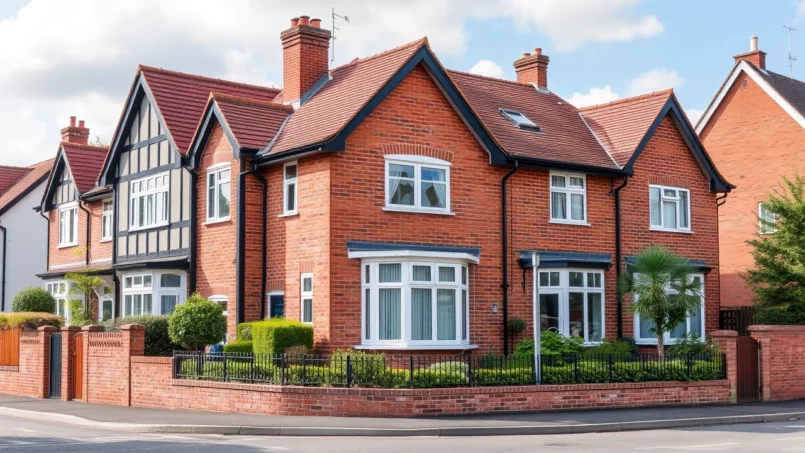
The city of Rye, far from the cliché of a bedroom suburb, combines a ‘Hamptons-meets-suburbs’ atmosphere with a rich historical heritage. Its urban landscape offers tree-lined streets, beaches, yacht clubs, large parks, and a historic shopping downtown around Purchase Street, all within a very close-knit and family-oriented social fabric. Historically, it was the summer residence location for illustrious families like the Astors or Rockefellers, and is home to listed sites such as the Knapp House (the oldest house in the county), the Jay Estate, the Boston Post Road Historic District, and the Playland amusement park, a National Historic Landmark.
This quality of life comes at a price: the per capita income exceeds $149,000, over 80% of adults hold a higher education degree, and crime rates are significantly below the national average. In practical terms, Rye positions itself as an upscale enclave where safety, schools, nature, and proximity to Manhattan sustainably support property values.
A Highly Competitive Sales Market, Despite a Recent Price Dip
From a strictly numerical perspective, Rye remains an expensive market, but the attentive investor will notice an interesting entry window linked to a recent correction.
In August 2025, the median listing price hovered around $1.9 million, down 25% year-over-year, with a median price per square foot of $683. Closed sales in the same month, however, showed a higher median price, around $2.2 million, with transactions averaging 4.38% above the asking price. In other words, sellers have started to adjust their expectations downward, but attractive properties continue to trade at a premium.
In November 2025, the median home sale price was $953,000, marking a 33.4% drop year-over-year.
This pullback hasn’t made Rye an “easy” market: many properties still receive multiple offers, some without contingencies, the final price typically exceeds the listing price by about 4%, and homes deemed “hot” sell for up to 10% above the asking price in as little as two weeks.
The ZHVI index for zip code 10580, at approximately $2.09 million, is up 6.4% year-over-year and properties sell in an average of 14 days, signaling a very attractive long-term market for a ‘buy and hold’ strategy, despite the high entry price.
A Numerical Overview of the Sales Market
The table below summarizes a few useful orders of magnitude.
| Indicator (Rye, NY) | Approximate Recent Value | Indicated Annual Change |
|---|---|---|
| Median listing price (August) | $1.9M | -25% |
| Median sales price (August) | $2.2M | n/a |
| Median sales price (November) | $953,000 | -33.4% |
| Median price per sq ft (listings, August) | $683 | n/a |
| Median price per sq ft (sales, November) | $699 | -7.2% |
| Average premium over listing price | ≈ +4 to +4.4% | highly competitive market |
| Premium on “hot” properties | up to +10% | |
| Average days on market (November) | 21 days (10 days last year) | days on market increasing |
| Number of sales (November) | 8 (13 a year earlier) | volume decreasing |
| Properties for sale (inventory snapshot) | 71 ($190K to $10.8M) | 7 new in one week |
This combination – price correction, moderate lengthening of time on market, but persistent premiums on attractive properties – describes a market that is adjusting after several years of rapid increases, without tipping into oversupply. For an investor, this means it is possible to negotiate better than yesterday, without expecting massive discounts.
A Patchwork of Neighborhoods, from Ultra-Luxury Waterfront to Emerging Areas
One of Rye’s assets for an investor is the diversity of its micro-markets. Within a compact perimeter, you find waterfront neighborhoods with stratospheric prices, more family-oriented areas with appreciation potential, and a very dynamic commercial downtown.
The “Trophy” Areas: Greenhaven, Milton, Grace Church Street
Greenhaven stands out as one of the most exclusive neighborhoods: large waterfront properties, unobstructed views, access to coves and a nearby nature reserve, a private enclave atmosphere. It features a housing stock of historic estates and contemporary villas, often on generous lots. Multi-million dollar transactions are the norm here.
Milton (or Milton Point) offers another facet of the very high-end: a nautical ambiance, white sand beaches, the American Yacht Club, and a pleasure residence vibe dating back to when Rye was a beach resort for wealthy New Yorkers. It is a highly sought-after area for primary residences of senior executives and investment bankers, as well as very high-end second homes.
The Grace Church Street neighborhood combines historic prestige with water views, benefiting from the heritage character of the former Grace Church district. For an investor, the goal is more legacy than speculative: acquiring property in an area where supply is structurally limited and demand comes from affluent buyers.
Downtown (City Center/Rye Village): Historic Charm and Liquidity
The center (often called City Center or Rye Village) gathers commercial streets like Purchase Street, lined with shops, galleries, cafés, restaurants, and service offices. This is a highly desirable area, particularly for clients who prioritize walkability, proximity to the train station, and a “village” lifestyle.
Rye’s downtown has a unique architectural identity and offers distinct real estate advantages for investors.
One- and two-story buildings, three-story apartment houses, historic facades, and lively sidewalks form a diverse urban landscape that is part of the city’s DNA.
This architectural diversity explains residents’ concerns about certain urban densification projects.
Centrality ensures excellent resale liquidity and the ability to generate high rents, both in residential and commercial properties.
Structured Historic Neighborhoods: Church Row, Dogwood Lane, Loudon Woods, Indian Village
Church Row concentrates Tudor-style buildings, notably the Blind Brook Lodge cooperative, within walking distance of the center and the Metro-North station. This is an ideal area for targeting mid-to-high-end housing, very popular with executives working in Manhattan.
Dogwood/Upper Dogwood Lane and Loudon Woods date back to the golden age of the Gilded Age, with large estate-type properties. Loudon Woods, designed on a grid plan by Stuyvesant Wainwright, combines traditional charm with contemporary renovations.
Indian Village, also developed by Wainwright between 1915 and 1930, features streets named after Native American tribes. It is a planned residential neighborhood with single-family homes of varying sizes, often on more manageable lots than waterfront properties, making it suitable for targeted renovation strategies (e.g., BRRRR) in the high-end segment.
Rising Family Areas: Hix Park, Mead Pond Estates, Milton Harbor
For those seeking a compromise between entry price and appreciation potential, several areas stand out.
Birthplace of poet Ogden Nash, this very family-oriented neighborhood, close to parks and beaches like Rye Town Park, offers a more “accessible” environment of single-family homes. It remains tied to its industrial history, including the former site of a mill, and is experiencing growing demand from young families, opening the door to renovation and resale projects.
Hix Park, neighborhood of Rye
Mead Pond Estates, developed in the 1950s on former farmland, offers a more typically “suburban” feel: ranch or colonial style houses, quiet streets, green surroundings. The original prices ($23,000 to $35,000 at the time) seem laughable today, but the homes, sometimes still in original condition, lend themselves well to modernization projects with potential added value.
Milton Harbor is a gated cooperative community on the marina, with direct water access and views of the boats. The local history of racing yacht construction (including an America’s Cup winner) adds a prestigious veneer. For the investor specializing in high-end condominiums, this is a very targeted micro-market where demand for high-end furnished rentals is strong.
Summary of Key Neighborhood Profiles
| Neighborhood | Primary Positioning | Investor Advantage |
|---|---|---|
| Greenhaven | Ultra-luxury waterfront | Legacy, very high barrier to entry |
| Milton / Milton Point | Nautical luxury (beaches, yacht club) | Strong primary and secondary home demand |
| Grace Church Street | Historic + water views | High resale value, land scarcity |
| City Center / Rye Village | Downtown, shops, train station | Liquidity, rent premium, mixed-use potential (residential/commercial) |
| Church Row | Historic Tudor, near train station | Targets executives, stable rental yield |
| Hix Park | Rising family area | Renovation opportunities, growing demand |
| Mead Pond Estates | 1950s suburban | Terrain for BRRRR strategies in high-end segment |
| Milton Harbor | Gated co-op, marina | Niche for high-end long- or medium-term rentals |
A Costly But Deep Rental Market: Long-Term and Short-Term
Rye is one of the most expensive rental markets in the United States, while also showing a limited vacancy rate. It is a prime territory for high-end long-term rental strategies, but also – with regulatory caution – for certain short-term rentals.
Rent Levels and Property Types
Figures from various sources vary by period but converge on a clear idea: the average rent far exceeds national standards. An order of magnitude for the median rent across all categories is around $3,000 to $3,200 per month, which is about 50% to 90% higher than the U.S. average depending on the reference used.
On the investment segment, specific estimates provide a fairly precise view:
| Type of Rental Property | Estimated Monthly Rent (Traditional) | Estimated Monthly Revenue (Airbnb) |
|---|---|---|
| 1 bedroom, 1 bathroom | ≈ $1,983 | ≈ $2,744 |
| 2 bedrooms, 1 bathroom | ≈ $2,588 | ≈ $3,378 |
| 3 bedrooms, 2 bathrooms | ≈ $4,743 | ≈ $6,946 |
The average occupancy rate for short-term rentals like Airbnb is around 65%, which is high for such an expensive market. For a three-bedroom at $6,946 in gross monthly revenue based on 65% occupancy, that translates to over $80,000 in theoretical annual revenue before expenses, which can support interesting cash flow on properties acquired at reasonable prices (which remains relative in Rye).
In traditional rentals, the 1% rule of thumb (monthly rent ≥ 1% of purchase price) is difficult to achieve in the core market but can be approached with studios, small downtown units, or well-negotiated properties in emerging neighborhoods.
Demand Boosted by Local Demographics and Proximity to New York
Several factors structure rental demand in Rye.
The area primarily attracts high-income residents working in intellectual or artistic professions, many of whom work remotely. This creditworthy clientele is often willing to rent before buying, either to familiarize themselves with the area or to prioritize rental flexibility in a very expensive real estate market.
Its proximity to Manhattan (35–40 minutes by train, about 50 minutes by car) also makes it a base for executives who no longer want to live in the city but maintain offices in New York. Direct access to highways (I-95, I-287, Hutchinson River Parkway) adds to the appeal.
Finally, the excellence of the Rye City School District is a major draw for families, especially expatriates or those on professional relocation. The school effect is documented: American literature indicates that a 5% increase in test scores can translate to a 2.5% increase in home values, and some studies estimate that homes near the best schools sell for up to 77% more. In Rye, where several elementary schools have maximum or near-maximum ratings, the impact on rents is evident.
Schools, the Invisible Driver of Property Appreciation
In a market like Rye, the school is not just a public service: it is an economic asset. Nine public schools in the city are rated “good” or “very good” by GreatSchools, in addition to three private or charter schools. Among the flagship institutions, Midland School, Osborn School, and F.E. Bellows Elementary have high ratings and very positive feedback from parents.
Studies from the Federal Reserve Bank of St. Louis, the National Association of Realtors, and ATTOM Data Solutions converge: homes in top school districts have higher resale values and faster appreciation, partly because families are willing to pay a significant premium to access them.
This is the credit rating assigned to the Rye City School District by Moody’s, reflecting its financial strength.
For the investor, this means two things. First, an investment plan must incorporate the school district map: a property just a few streets away but outside the district may suffer a significant discount. Second, the alignment of interests between parents, school authorities, and property owners maintains a dynamic of defending quality and education budgets, favorable in the long term for the appreciation of the housing stock.
Local Taxes: Heavy but Predictable Property Taxes
As in almost all of the northeastern United States, and even more so in Westchester County, property taxes in Rye are high. The median annual property tax bill is around $22,000 to $25,000, compared to $2,400 nationally. The median effective tax rate is estimated at around 1.64% to 1.7% of the property’s value, slightly below the New York State average but well above the U.S. average.
Annual property tax amount regularly exceeding $20,000 for a median property assessed between $1.56 and $1.82 million.
The system is based on a distinction between market value and assessed value, the latter potentially reduced by exemptions (primary residence exemption, senior exemption, STAR program). Each year, the county assessment district notifies property owners of an estimated market value and taxable value. Private tools like those offered by Ownwell or Granite help taxpayers – including investors – contest assessments deemed excessive and reduce the tax burden. Annual savings from successful appeals often amount to thousands of dollars.
For a real estate investor, it is crucial to accurately incorporate taxes, representing about 2% of the effort rate, into cash flow projections. This means targeting high rents and carefully managing expenses to achieve satisfactory net returns in a long-term ‘buy and hold’ strategy.
Simplified Example of Tax Impact
Imagine a property purchased for $2 million, with an effective assessed value of $1.8 million and an effective tax rate of 1.64%: the annual tax is around $29,500, or nearly $2,460 per month. On a long-term rental leased for $8,000 per month, the property tax alone absorbs about 30% of gross rents, before insurance, maintenance, and debt service. Hence the importance of optimized financing and a well-negotiated purchase price.
Investment Strategies Suited to the Rye Market
American textbooks list a wide range of possible strategies – buy and hold, BRRRR, fix and flip, short-term rental, wholesaling, investing in mortgage notes, etc. Not all are suitable for Rye, but several can work, provided they respect local specifics.
Legacy Buy and Hold
This is the most natural strategy for Rye: acquiring a quality home or apartment, leasing it long-term to a creditworthy clientele (families, executives, expatriates), and enjoying both cash flow and appreciation, driven by land scarcity, school dynamics, and local income levels.
Typical financing relies on conventional loans with 20-25% down payment, or more for multi-unit properties. Banks often require a credit score of at least 620, stable income, and several months of cash reserves. The cost of money is currently high in the U.S., making profitability simulations even more critical.
For an investor who owns their primary residence in the U.S., a Home Equity Line of Credit (HELOC) or a cash-out refinance can offer leverage at a cost generally lower than loans strictly dedicated to investment.
BRRRR in Targeted Micro-Markets
The BRRRR method (Buy, Rehab, Rent, Refinance, Repeat) involves finding undervalued properties, renovating them, putting them into rental, then refinancing based on their post-renovation value, recovering part of the invested capital.
In Rye, this model is difficult to apply in ultra-prime neighborhoods where even the smallest home is already “optimized.” However, areas like Hix Park, Mead Pond Estates, certain streets in Indian Village, or older buildings near the center may still contain homes from the 1950s-1970s that are little renovated. The renovation costs will be high, but the potential increase in value, especially if energy performance and aesthetics are also improved, can justify the operation.
Typical financing includes, alongside conventional bank loans, “hard money” loans on a very short term (often 12 to 36 months, with rates potentially up to 10–18%), useful for quick purchase and the renovation phase, before conventional refinancing.
Fix and Flip on Properties with High Architectural Potential
The “fix and flip” logic – buying low, renovating, selling – is very competitive in a market like Rye, where many investors and developers chase the same opportunities. However, buyers’ high sensitivity to architecture, quality, and building character creates niches.
Renovating older properties (Tudors, cottages, capes cods) into high-end products can generate added value, especially in central or historic areas. However, this project carries a dual risk: underestimating renovation costs on older buildings and the rapid evolution of regulatory requirements (flood risk, energy performance, parking).
Short-Term Rentals: A Regulated Opportunity
The potential gross yield for Airbnb-type rentals is attractive on paper in Rye, especially in summer when beaches, Playland, and parks attract vacationers. An average occupancy rate of 65% and higher monthly revenues than traditional rentals argue for this strategy.
In New York State, tourist rentals are subject to strict rules: a ban on rentals of less than 30 days in buildings with three or more units, requirement for the primary tenant to be present, and possible restrictions or bans via local or condo rules. Some municipalities are considering tighter regulations to preserve residential housing.
An investor interested in this segment must therefore work closely with a local specialized attorney, verify zoning, condo, and school district regulations, and consider hybrid models (medium-term furnished rentals for consultants, families in transition, etc.) rather than purely “tourist” rentals.
Passive Investment via Professional Property Management
For a non-resident investor (including foreign investors), one of the keys to success in Rye lies in delegating management. Players like Librett Real Estate Group or high-end concierge services based in Rye handle marketing, tenant screening, rent collection, maintenance, and financial reporting.
These providers, accustomed to the standards of the local clientele, know how to position the property on the right channels, set rents at the appropriate level, oversee work with reliable contractors, and ensure regulatory compliance (security deposits, inspections, building codes, etc.). This comes at a cost but largely protects the investment’s value, especially for a property worth over a million dollars.
Urban Planning, Development, and Risks: What to Watch For
A market as expensive and coveted as Rye is not immune to debates and tensions around urban development. Understanding this context helps better anticipate changes that can affect property values, positively or negatively.
Pressure for Downtown Densification
Rye’s historic center, especially Purchase Street, sees commercial rents reaching very high levels – around $65 per square foot, about $20 more than in other upscale neighboring centers. This high cost leads some property owners to consider raising or rebuilding up to the maximum allowed height, typically three stories.
Two mixed-use building projects (retail on the ground floor, apartments upstairs) have thus been approved on Purdy Avenue, one already built, the other in the preparatory phase. They illustrate the temptation to densify, even on a small scale, an urban fabric highly appreciated for its “mosaic” of low-rise buildings.
The absence of a recent comprehensive plan currently offers some flexibility to developers, as projects are approved according to existing rules. A multi-year planning process is now underway, with clear priorities: climate change adaptation and coastal risk management, diversifying the housing supply (including Accessory Dwelling Units or ADUs), developing soft transportation modes, and potential regulation of short-term rentals.
For the investor, these dynamics can create as many risks (changes in the morphology of certain blocks, potential neighbor conflicts) as opportunities (revaluation of well-located properties in areas poised to benefit from public investments, complete streets, landscaping).
Environmental Risks and Resilience
Rye, a coastal city, is exposed to flood risks, storms, and sea-level rise, particularly in areas like Milton Harbor or the Beaver Swamp Brook watershed. Flood episodes have already caused significant damage, even in riverside neighborhoods of neighboring towns like Harrison and Mamaroneck.
Authorities are collaborating with experts to analyze infrastructure vulnerability, update risk reduction plans, and revise zoning to limit new construction in the most exposed areas. The hydrological impact of neighboring development projects, such as large residential complexes in Harrison, is also being closely monitored for the city of Rye.
These environmental issues translate directly into the investor’s calculations: insurance premiums (including potential flood insurance), construction requirements, potential costs for future compliance, and market perception. Conversely, a properly situated property on higher ground, in a less exposed neighborhood with good access to parks and the sea, can benefit from this growing demand for “resilient” residences.
Buyer Mobility: A Market Connected to Coastal Metropolises
Residential migration data confirms Rye‘s status as a national and international destination market. Approximately 3% of buyers searching for homes in Rye come from outside the metropolitan area, with an overrepresentation of cities like Los Angeles, Honolulu, and San Diego. In other words, Rye speaks to a clientele from expensive coasts, accustomed to high prices and attracted by a coastal quality of life.
Rye residents who move tend to head towards other major cities on the East Coast and the Southern United States. Miami is the most popular destination, followed by Boston and Philadelphia. This trend shows that Rye is part of a network of interconnected high-end cities, where population movements remain concentrated within the same category of real estate markets.
For the investor, these trends suggest a relatively stable demand base: even if economic cycles push some households to arbitrate between markets, Rye will likely continue to attract a profile of high-income residents sensitive to the combination of coastline + schools + proximity to New York.
Legal Framework and Preparation: What an Investor Must Lock Down
Beyond the numbers, succeeding in an investment in Rye requires flawless preparation.
Real estate acquisition in the United States involves navigating a complex legal environment, including federal laws (such as the Fair Housing Act), state-specific regulations (e.g., strict lease laws and condo rules in New York), and local zoning rules. Due diligence must be comprehensive: it covers the property’s physical condition (structural, electrical, lead or asbestos inspection), title review (easements, mortgages, rights of way), and neighborhood analysis (development projects, environmental risks, school quality).
The contractual phase requires the assistance of a local real estate attorney: drafting or reviewing the contract, contingencies (financing, inspection, appraisal), potential conditions for selling another property, cost allocation, management of the closing period (often 8 to 10 weeks). In the case of short-term furnished rentals, a detailed review of condo regulations and municipal ordinances is imperative, under penalty of heavy financial sanctions.
Finally, the legal holding structure (individual name, LLC, or corporation) should be studied with a tax advisor and an attorney to optimize both asset protection and taxation (income tax, capital gains, tax treaties for foreign investors).
In Summary: A Premium Market, Demanding but Promising
Investing in real estate in Rye means accepting a simple equation: high entry prices, substantial property taxes, extreme demands on property and service quality, in exchange for advantages difficult to replicate elsewhere.
The city offers: services, cultural activities, modern infrastructure, green spaces, amenities for residents and visitors.
Discover the major assets of the city of Rye, combining exceptional quality of life, renowned education, and strategic real estate opportunities.
A vibrant downtown, vast parks, cultural amenities (Playland, museums, nature centers), and a friendliness recognized by its residents.
Top-tier public schools, a powerful driver of residential demand and property value appreciation.
Perfect geographic location for combining remote work and commutes to Manhattan, with the Metro-North station and direct highway access.
A competitive market that has seen a recent correction, opening windows of opportunity for patient and well-advised investors.
A deep rental market in the high-end segment: traditional rentals, mid-term stays, or, with caution, short-term.
The downside is a dense regulatory environment, heavy tax pressure, and a price level that leaves little room for error. In Rye, “deal” or speculative strategies are risky; the most suitable approaches are those that bet on the long term, rely on excellent local knowledge (neighborhood by neighborhood), and mobilize a strong network of local professionals.
For an investor seeking a rare real estate asset, in a micro-American city where education, coastline, and proximity to New York come together, Rye remains a top-tier destination.
Disclaimer: The information provided on this website is for informational purposes only and does not constitute financial, legal, or professional advice. We encourage you to consult qualified experts before making any investment, real estate, or expatriation decisions. Although we strive to maintain up-to-date and accurate information, we do not guarantee the completeness, accuracy, or timeliness of the proposed content. As investment and expatriation involve risks, we disclaim any liability for potential losses or damages arising from the use of this site. Your use of this site confirms your acceptance of these terms and your understanding of the associated risks.

Cyril Jarnias is an independent expert in international wealth management with over 20 years of experience. As an expatriate himself, he is dedicated to helping individuals and business leaders build, protect, and pass on their wealth with complete peace of mind.
On his website, cyriljarnias.com, he shares his expertise on international real estate, offshore company formation, and expatriation.
Thanks to his expertise, he offers sound advice to optimize his clients' wealth management. Cyril Jarnias is also recognized for his appearances in many prestigious media outlets such as BFM Business, les Français de l’étranger, Le Figaro, Les Echos, and Mieux vivre votre argent, where he shares his knowledge and know-how in wealth management.





