
 Published on and written by Cyril Jarnias
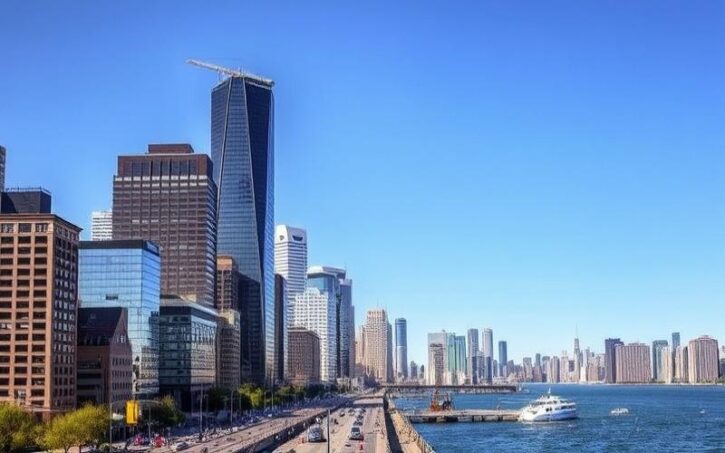
Located directly across from Manhattan on the other side of the Hudson, Jersey City has transformed over the past fifteen years from a former industrial city into a star real estate market. Panoramic views of New York’s skyscrapers, ultra-fast access to Wall Street, a dynamic economy, and exploding rental demand: all the ingredients are in place to attract investors, from the most seasoned to beginners.
Investing in Jersey City requires considering several key factors: high tax pressure, flood risks, rent regulation, and significant disparities between neighborhoods. Success depends on a fine understanding of the market and a strategic, informed choice among options such as long-term investment, coliving, short-term rentals, multi-family properties, new construction, or existing homes.
This article offers a deep dive into the local ecosystem: market dynamics, rental yields, neighborhood profiles, taxation, financing, risks, and outlook. The goal: to provide a practical decision-making tool for anyone considering investing in real estate in Jersey City.
A Strategic Market in Manhattan’s Shadow
Investing in real estate in Jersey City essentially means betting on the natural extension of the New York market, but at a lower price point and with a demand base that relies less and less solely on Manhattan.
Number of New Yorkers who moved to New Jersey in 2024, a 12% increase year-over-year.
With approximately 286,000 residents, the city is the second-largest municipality in New Jersey. It stands out for its relatively young median age (around 35) and high level of education: over half of adults hold at least a college degree. The median household income exceeds $95,000, with an even higher average income around $135,000 in certain areas, supporting significant rental capacity.
Between 2010 and 2022, household growth (+40%) outpaced housing stock growth (+24%), pushing the vacancy rate down from 15% to 4%. With 71% of residents being renters—well above the national average—Jersey City is a predominantly rental city, making it a natural market for investors.
Projections leave little doubt: without a massive acceleration in construction, Jersey City could face a shortage of 27,000 to 36,500 housing units by 2032, representing 20 to 27% of the current stock. In this context of relative scarcity, both rents and property values are likely to remain on an upward trend, barring a major macroeconomic shock.
Solid Economic Fundamentals Despite a More Nuanced Outlook
On paper, New Jersey does not show flashy macroeconomic prospects. Rutgers forecasts GDP growth of around 0.5% in 2025 and 0.4% in 2026, with an unemployment rate that could exceed 5% by 2026. Business leaders surveyed by the NJBIA are mostly cautious, even pessimistic, for the next two years, citing uncertainty, energy costs, tariffs, and labor costs.
Contrary to the general trend, Jersey City enjoys a robust economic situation. Its main advantage is its strategic proximity to New York’s financial and tech hub, while being located in New Jersey with lower costs than Manhattan. The city hosts financial giants like Goldman Sachs, JPMorgan, Citi, New York Life, RBC Capital Markets, and Fidelity, along with a dynamic ecosystem of startups and fintechs. Exchange Place, nicknamed “Wall Street West,” symbolizes this vitality with its office towers overlooking the Hudson.
The local job market has grown by about 8.5% year-over-year in some recent periods, driven by professional services, education, healthcare, leisure, and logistics. Meanwhile, demand for quality office space along the waterfront remains strong: the average office rent around the Hudson exceeds $44 per square foot, well above the rest of New Jersey but still significantly lower than Manhattan. This encourages corporations to set up back offices or tech hubs locally, strengthening the base of well-paid jobs.
Number of places Jersey City climbed in the ranking of U.S. real estate markets to watch in one year, moving to 2nd place for 2026.
Finally, the city benefits from heavy public and private investments: over $2 billion has been recently injected into its infrastructure, including waterfront improvements, water and sewer system upgrades, electric mobility, public transit, and urban parks. At the state level, nearly $60 billion in infrastructure investments is planned for 2026-2027, further enhancing connectivity and appeal along the Hudson corridor.
Prices, Transactions, Rents: Where Does the Residential Market Stand?
The latest data converges on the idea of a market that is “hot but not scorching,” where momentum remains positive but post-COVID euphoria is giving way to a form of normalization.
In December 2025, the median sale price in Jersey City was around $770,000, up about 2.7% year-over-year. According to various aggregators (Zillow, Redfin, Realtor.com), the median listing price is around $699,000, with a price per square foot between $515 and over $540, showing significant increases over twelve months (up to +12% in some reports).
The average home value estimated by the Zillow index is around $646,000, after an increase of about 30% over five years and nearly 86% since 2005. This level clearly places Jersey City among the most expensive markets in the country, but still well below Manhattan, where family apartments easily trade for over $1.5 or $2 million for comparable spaces.
The real estate market shows signs of slowing without overheating. Sales have dropped by about 70% in some year-over-year periods, held back by rising interest rates. Properties remain on the market for an average of 60 days before sale, a longer duration than the previous year but stable. Bidding wars are rare: a property typically sells for 1% below its asking price, although highly sought-after homes may sell at or slightly above the initial price in less than a month.
On the rental side, the picture is equally telling. According to various sources, the average rent ranges from about $3,100 to $3,800 per month across the entire stock, with a median around $3,200. Studios often rent for $2,400 to $3,100, one-bedrooms for about $3,000 to $3,400, and large two-bedroom apartments frequently exceed $4,000 in desirable areas.
In 2025, average rents for some two-bedrooms in Newport or along the waterfront exceed $5,000.
The following tables provide a summary overview of price levels and rents by major area, based on measured ranges.
Table 1 – Median Sale Prices by Residential Neighborhood
| Neighborhood / Area | Median Price or Range (USD) | Key Comment |
|---|---|---|
| Downtown / Historic | $720,000 – $950,000 (recent ~$940,000) | Most sought-after area, high tension |
| Newport | $600,000 – $1,200,000 | Waterfront, upscale towers, high HOA fees |
| Paulus Hook | $750,000 – $950,000 | Historic brownstones, very high-end |
| Exchange Place | $700,000 – $1,100,000 | “Wall Street West,” newer buildings |
| Waterfront (overall) | ≈ $750,000 | Skyline views, prestige, strong demand |
| The Heights | $450,000 – $550,000 | More affordable alternative in the north |
| Journal Square | $420,000 – $550,000 | Renaissance hub, large project pipeline |
| Bergen-Lafayette | $500,000 – $600,000 | Neighborhood in transition, near Liberty State Park |
| West Side | $400,000 – $500,000 | Along Hackensack River, growth potential |
| Greenville | $350,000 – $450,000 | Most affordable area, but higher risk |
| McGinley Square | $325,000 – $480,000 (median purchase ~$180,000) | Opportunity zone, tax incentives |
| Liberty Harbor | $600,000 – $900,000 | Marina, new construction, high-end |
Table 2 – Average Rent Levels by Property Type (Approximate)
| Property Type / Market | Average Monthly Rent (USD) | Observations |
|---|---|---|
| Studio (citywide) | ≈ $2,400 – $3,100 | Wide variation by neighborhood |
| 1 Bedroom (citywide) | ≈ $3,000 – $3,400 | Median around $3,200 |
| 2 Bedrooms (citywide) | ≈ $3,900 – $4,600 | Peak above $5,000 on the waterfront |
| 3 Bedrooms (citywide) | ≈ $2,800 – $5,800 | Highly variable; coliving common |
| Overall median rent | ≈ $3,200 | 68% to 95% above national average |
| Occupancy rate | > 95% | Multifamily vacancy around 2.8% only |
For an investor, these two dimensions—purchase prices high but still discounted relative to Manhattan, and rents themselves well above the national average—translate into yields that remain competitive for a “prime” market.
Gross yield estimates suggest rates of 4% to 6% for luxury condos, 6% to 8% for rental buildings or small condos, and up to 8% to 10% for certain properties operated as short-term rentals, subject to strict local regulations.
A City of Neighborhoods: Where to Invest in Jersey City?
The real question when investing in real estate in Jersey City isn’t whether to buy, but where. Micro-markets vary greatly in terms of price levels, tenant profiles, appreciation potential, and risks (crime, flooding, vacancy).
Downtown and Historic District: The Premium Core, But with Climate Risk
Jersey City’s historic center—Downtown, Van Vorst Park, Hamilton Park, Harsimus Cove, Powerhouse Arts District—is the showcase area. Here you’ll find impeccably restored Victorian brownstones, lofts in former industrial buildings, and upscale condo towers with 24/7 concierge, pools, gyms, and rooftop terraces. With a Walk Score near perfection (98/100), a unique concentration of restaurants on Newark Avenue, cafes, bars, and nightlife, it’s the top destination for young professionals working in Manhattan or on the waterfront.
Accessibility is excellent, notably via the Grove Street PATH station, which connects to the World Trade Center or Midtown in under twenty minutes. The area’s public schools are among the city’s best, such as Cornelia F. Bradford.
But this near-urban ideal has a downside: flood risk. Projections indicate that about 80% of properties in the Historic District could be highly exposed to floods and rising waters within the next thirty years. Investors must therefore factor in the cost of flood insurance and potential future constraints (resilience work, additional regulations).
In terms of yield, cap rates are rather moderate (4% to 5%), but the prospect of long-term capital appreciation remains solid, especially from a wealth-building perspective.
Waterfront, Newport, Exchange Place, Paulus Hook: Luxury, Views, and Express Commute
The waterfront, from Newport to Paulus Hook via Exchange Place, represents the most spectacular segment of the local market. Glass towers, Hudson River promenades, shopping centers like Newport Centre, manicured parks, marinas, and direct ferries to Manhattan: everything is designed to appeal to senior executives, expats, and high-income families.
Jersey City benefits from excellent connectivity to Manhattan, with short commute times but a high cost of living.
Connects Newport to the World Trade Center in ~8 minutes and Exchange Place to 33rd Street in ~12 minutes.
Crossing to Manhattan in about ten minutes.
Easily exceed $700,000 for a standard apartment and can reach over a million for exceptional views.
HOA fees in the most amenity-rich buildings can reach $800 to $1,500 per month, weighing on net yield. Despite this, the area remains attractive for investors targeting a corporate clientele willing to pay a premium for a quasi-Manhattan lifestyle without the same purchase prices.
Paulus Hook, with its cobblestone streets, historic brownstones, and a village-like atmosphere by the water, combines residential charm, excellent schools, and ferry + PATH access. The area is highly sought after by families, with prices reflecting this premium.
Journal Square and McGinley Square: The New Frontier of Appreciation
At the city’s geographic center, Journal Square was long just a transportation hub. Today, it is transforming into a true urban center, driven by a massive wave of real estate projects. Over 8,000 units are in the pipeline, including the iconic Journal Squared towers and other complexes like The Oakman.
The neighborhood is officially designated a “Transit Village” by New Jersey, facilitating access to funding for improvements around the PATH station. Its proximity to several higher education institutions ensures a steady flow of students and young workers, creating a favorable market for affordable rentals and coliving.
Purchase prices here remain significantly lower than Downtown, with medians around $420,000 to $620,000 depending on asset type and condition. In return, rents are rising quickly, as the area attracts not only students but also those who can no longer afford housing in the historic center. Unsurprisingly, cap rates often exceed 6%, making it one of the best yield/risk trade-offs in the city.
Just to the south, McGinley Square presents an even more “value” profile. With prices starting around $180,000 for certain fixer-uppers and a renaissance zone status offering tax incentives, this area attracts budget-conscious investors or proponents of “buy, rehab, rent, refinance.” The appreciation potential is real, but it requires thorough due diligence and a good handle on local urban issues.
The Heights: An Elevated, Family-Friendly Alternative
In the north of the city, The Heights overlooks the Hudson by about a hundred feet, hence its name. This residential plateau offers a mix of Victorian or Edwardian houses, brownstones, and small apartment buildings. Less densely built than Downtown, it provides a more “neighborhood” feel with parks, tree-lined streets, and a more family-oriented community.
The neighborhood lacks a PATH station but is connected to job centers by bus networks and the Light Rail. Many residents also choose biking or carpooling. The view of Manhattan from the cliffs is a strong selling point, both for occupants and appreciation potential.
Average prices are more affordable than in the center (around $450,000 to $680,000 depending on sources), while rents have risen sharply in recent years. This translates into attractive yields, sometimes above 6% on well-optimized configurations (subdivided houses, small multi-unit buildings).
Bergen-Lafayette, West Side, Greenville: Gentrification Laboratories
South and west of the center, several neighborhoods are undergoing rapid transformation, but at different stages.
Bergen-Lafayette, one of the city’s oldest areas, benefits from its proximity to Liberty State Park and the Hudson-Bergen Light Rail. The neighborhood blends older buildings, warehouses, and new residences. Investments like the $20 million redevelopment of Berry Lane Park, plus the arrival of charter schools, trendy restaurants, and cafes, are attracting artists, young families, and investors seeking cheaper alternatives to Downtown. Median prices are $500,000 to $600,000, with strong upside potential if gentrification continues.
The West Side, along the Hackensack River, is characterized by large green spaces (Lincoln Park, 273 acres, the city’s largest park) and less dense residential development. Major projects like the one by TAY Investments on Culver Avenue (365 units with pool, rooftop, retail spaces) illustrate the area’s rising momentum. Here, investors are betting on both job growth and the full repositioning of the riverfront.
Greenville, finally, is the most affordable area, with median prices between $350,000 and $450,000. Streets are often tree-lined, neighborhood parks are plentiful, and there are even upscale gated enclaves like Port Liberté with a private marina and water shuttle. However, it also has higher crime indicators than the rest of the city. Investors can achieve high gross yields, but must factor in greater risk and management effort (tenant selection, potential vacancy, security and insurance costs).
Transportation and Accessibility: The Key to Value
Real estate value in Jersey City is closely tied to proximity to heavy rail transit. The PATH system, the fifth busiest metro in the country with over 220,000 weekday trips, connects Jersey City to Manhattan, Hoboken, and Newark in minutes. The Hudson-Bergen Light Rail crisscrosses the city and links it to other Hudson County hubs. NY Waterway ferries provide fast connections to various Manhattan neighborhoods, supplemented by a dense NJ Transit bus network.
Percentage of additional annual housing price growth in Bayonne for each minute of walking time saved to a new light rail station.
For an investor, this means that walking distance to a PATH or Light Rail station is a parameter to value in every acquisition. Over a ten- to twenty-year horizon, the value difference between a property five minutes away versus twenty minutes away from a station can be substantial.
Annual cost in dollars of the bike-sharing system membership, reinforcing the city’s sustainable character.
Yields, Taxation, and Hidden Costs: What the Numbers Really Say
A successful investment isn’t solely based on the spread between rent and mortgage payment. In Jersey City, several structural costs eat into returns, starting with local taxation.
New Jersey is among the states with the highest property taxes in the U.S. At the state level, the average effective rate exceeds 2.3% of property value. Hudson County, where Jersey City sits, has a median of about 1.9%, while Jersey City itself is around 2.1%. In practice, this translates into an annual median bill of over $8,000, with peaks exceeding $13,000 in certain high-value zip codes, and up to $30,000 or more for luxury properties.
Cumulative dramatic increases in property tax rates in 2022 and 2023.
Investors do benefit from certain cushions: the ability to depreciate the property over 27.5 years for residential, deductibility of mortgage interest, and even the use of structures like 1031 exchanges to defer capital gains upon reinvestment. Exemptions also exist for specific categories (veterans, seniors, disabled), but these primarily apply to occupants rather than pure investors.
Add to that the operating costs: HOA fees for condos (sometimes $800 to $1,500 per month on the waterfront), parking ($150 to $200 per month in peripheral areas, up to $300 to $400 Downtown or Newport), utilities (about $310 to $480 monthly for a two-bedroom), non-owner-occupied insurance, and, where applicable, flood insurance in risk zones.
A wide range of financing solutions is available for investors in Jersey City, including conventional, FHA, or VA loans for owner-occupants, DSCR loans backed by rents, and hard money loans for renovations. Many specialized players (regional banks, investor lenders, private funds) operate in this market. It is important to factor in closing costs (2% to 5% of the purchase price) in the project’s financial modeling.
The table below provides a sample cost structure for a typical apartment at $600,000 intended for long-term rental.
Table 3 – Simplified Investment Budget Example for a $600,000 Property
| Expense Item | Estimated Amount (USD) |
|---|---|
| Purchase Price | 600,000 |
| Down Payment (20%) | 120,000 |
| Closing Costs (≈ 3% of price) | 18,000 |
| Annual Property Taxes (2.2%) | 13,200 / year ($1,100 / month) |
| Insurance (non-owner-occupied) | ≈ $2,000 / year ($167 / month) |
| HOA Fees (waterfront condo) | $900 / month (approximate) |
| Property Management (10% of $3,200 rent) | $320 / month |
| Routine Maintenance | ≈ $6,000 / year ($500 / month) |
On the revenue side, a rent of $3,200 to $3,400 yields annual gross income of $38,400 to $40,800. The gross yield (before expenses) is around 6.4% to 6.8%, but once all expenses are deducted—excluding financing—returns easily drop to around 3% to 4% net, underscoring the importance of targeting markets or segments that offer higher rents relative to purchase price (multi-family, repositioning neighborhoods, optimization through coliving or furnished rentals).
Rules of the Game: Rent Control, Tenant Rights, and Short-Term Rental Regulations
New Jersey, and Jersey City in particular, is characterized by a rental law that is rather protective of tenants. The city is among over a hundred municipalities in the state that have implemented rent control measures on buildings constructed before a certain date. Moreover, eviction procedures are regulated, relatively slow, and strict, requiring landlords to be very diligent in tenant selection and arrears management.
For investors targeting short-term rentals (like Airbnb), Jersey City is a “heavily regulated” jurisdiction. Active listings (about 1,400) are subject to a licensing system, of which only 55% are estimated to be fully compliant. The market has shifted toward medium-term stays (7 to 29 nights: 41% of cases; over 30 nights: 31%), targeting corporate or student furnished leases rather than pure tourism.
Performance remains notable nonetheless: a median monthly revenue around $2,500, with the top 10% exceeding $7,700 and the top 25% flirting with $4,800. Median occupancy rates hover around 60%, climbing above 80% for top-performing assets, especially around the center and waterfront. However, any strategy based on short-term rentals must be built in close coordination with municipal rules and anticipate potential tightening.
Investment Strategies: Long-Term, Value-Add, or Niche Opportunities?
The Jersey City market lends itself to several distinct approaches, each with its strengths and weaknesses.
The classic “buy and hold” strategy, on multi-family buildings or quality condos in central or transit-adjacent neighborhoods, offers an interesting combination of reasonable cash flow and, above all, appreciation over ten to fifteen years. Institutional investors recognize this: about 65% of the $177 million invested in the city in the first half of 2025 went into the apartment segment.
“Value-add” operations—buying an undervalued property, renovating it, and repositioning it on the market—are particularly suited to areas like McGinley Square, parts of Journal Square, Bergen-Lafayette, or West Side. For this type of project, using specific financing such as hard money or fix-and-flip loans, though more expensive, is often strategic. These faster, more flexible solutions can close deals that traditional banks might deem too risky.
Very wealth-oriented “core” strategies—acquiring a loft or a large condo facing Manhattan in Downtown, Newport, Exchange Place, or Liberty Harbor—won’t target spectacular current yields but rather inflation protection, leverage on price appreciation, and high liquidity upon resale.
Finally, operating high-end coliving or medium-term furnished rentals (three to twelve months) can be a relevant way to boost yield on larger spaces in neighborhoods served by PATH or Light Rail, while remaining within regulatory boundaries.
Risks and Blind Spots: What Investors Tend to Underestimate
The enthusiasm for Jersey City should not overshadow the risks specific to this market.
The first is climate-related. A significant portion of the built environment, especially along the waterfront and in historic Downtown, is in flood zones. Projections suggest the possibility of over 4,000 homes being permanently threatened by sea-level rise by 2070. As awareness of this risk spreads, insurers may adjust premiums, and authorities may tighten construction and renovation standards.
Rising property values and interest rates can undermine the profitability of a rental investment. A simple reassessment can push a property to the break-even point, reducing the owner’s ability to absorb rental vacancies or unexpected repairs. It is therefore crucial to consult experts to, if necessary, contest the tax assessment and explore available abatement programs.
Third element: political and regulatory risk. Between rent control, zoning rules, project hearings by planning authorities, and permitting requirements (zoning, environmental, etc.), developers and institutional investors report growing difficulties in launching large-scale operations. The example of massive projects, like a complex of over 2,000 units near the Powerhouse Arts District, illustrates that large developments no longer enjoy automatic administrative approvals.
A deeper-than-expected recession, a sustained rise in interest rates, or a sharp correction in the tech and finance sectors could affect high-end rental demand and discourage institutional investors. Although current scenarios project normalization without a price collapse, historically, the most dynamic markets are also the most exposed to corrections in the event of a shock.
How to Position Yourself Intelligently in the Jersey City Market?
Investing in real estate in Jersey City requires a granular and informed approach. A few principles emerge from the available data.
First, work at the infra-urban level. The difference in profile between a one-bedroom in Paulus Hook and a triplex in Greenville is so vast that they are, in practice, almost independent markets. Reports from national agencies (Zillow, Redfin, Realtor.com) and local databases (MLS) provide a useful foundation, but they must be supplemented with fine-grained knowledge of streets, upcoming development projects, and population trends by zip code.
To accurately assess the profitability of a rental investment, it is crucial to include all indirect costs: taxes, HOA fees, parking costs, any compliance costs (energy, flood), as well as property management fees if delegated. In Jersey City, for example, these elements can significantly reduce an attractive gross yield to a disappointing net return.
Furthermore, it is wise to think in terms of yield + appreciation combination. In already mature neighborhoods like Downtown or Newport, current yields will be moderate, but the appreciation effect, backed by land scarcity, remains powerful. Conversely, transitioning areas like Journal Square or Bergen-Lafayette may offer more generous immediate yields, with additional upside if gentrification consolidates.
Given historically high mortgage rates, currently between 6.5% and 7.5%, it is crucial not to overestimate the leverage of debt. Even with a projected slight decline by 2026, overly aggressive borrowing can amplify difficulties during temporary rental vacancies or tax increases. In an expensive, regulated market like Jersey City, maintaining a cash reserve and a reasonable debt ratio is essential to preserve the financial strength of the investment.
Despite these constraints, the fundamentals remain remarkably solid: a large and creditworthy tenant base, positive migration flow from New York and other major metros, chronic housing undersupply, economic dynamism sustained by finance and tech, and growing recognition from institutional investors… All factors that make real estate investment in Jersey City a relevant strategy for those who can combine patience, meticulous asset selection, and a sharp understanding of the local terrain.
Disclaimer: The information provided on this website is for informational purposes only and does not constitute financial, legal, or professional advice. We encourage you to consult qualified experts before making any investment, real estate, or expatriation decisions. Although we strive to maintain up-to-date and accurate information, we do not guarantee the completeness, accuracy, or timeliness of the proposed content. As investment and expatriation involve risks, we disclaim any liability for potential losses or damages arising from the use of this site. Your use of this site confirms your acceptance of these terms and your understanding of the associated risks.

Cyril Jarnias is an independent expert in international wealth management with over 20 years of experience. As an expatriate himself, he is dedicated to helping individuals and business leaders build, protect, and pass on their wealth with complete peace of mind.
On his website, cyriljarnias.com, he shares his expertise on international real estate, offshore company formation, and expatriation.
Thanks to his expertise, he offers sound advice to optimize his clients' wealth management. Cyril Jarnias is also recognized for his appearances in many prestigious media outlets such as BFM Business, les Français de l’étranger, Le Figaro, Les Echos, and Mieux vivre votre argent, where he shares his knowledge and know-how in wealth management.





