
 Published on and written by Cyril Jarnias
Investing in real estate in Winter Park can mean two very different things depending on whether we’re talking about Winter Park, Florida or Winter Park, Colorado. On one hand, an upscale, highly sought-after suburb of Orlando, with its cobblestone streets, top-rated schools, and high-end residential market. On the other hand, a Rocky Mountain resort built around a major ski area, driven by outdoor tourism that accounts for more than half of the local economy.
A successful investment requires understanding that two properties with the same name can fall under radically different legal, rental, and tax frameworks. It is crucial to avoid automatically transposing habits from one market, such as ski resorts, to another, like Florida, and vice versa. Each type of property follows its own economic model.
This article offers a detailed overview of both Winter Parks, drawing on recent market data, rental regulations, local tax rules, and major development projects. The goal: to help a French-speaking investor choose their camp—or combine both—with full knowledge of the facts.
Winter Park, Florida: Luxury suburb and long-term market
Winter Park, Florida, is located in Orange County, in the heart of the Orlando metro area. A city of nearly 30,000 residents, it stands out with a high average income—over $78,000 per person—and a relatively older population (median age around 44 years), a sign of a base of affluent professionals and retirees.
Its appeal rests on several pillars. First, quality of life: streets lined with moss-draped oaks, impeccably maintained Central Park, a chain of lakes, and lush green landscapes. Second, educational prestige, with Rollins College and well-ranked public high schools. Finally, immediate proximity to Orlando, one of the most dynamic job markets in the United States, and world-famous theme parks.
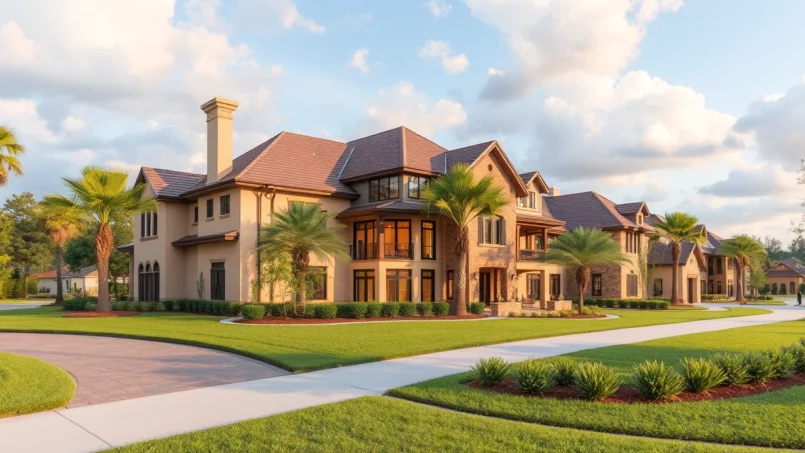
On the real estate front, Winter Park is considered one of the most expensive and desirable suburbs in the Orlando area. The historic core around Park Avenue concentrates luxury boutiques, restaurants, museums, and character homes. Lakeside neighborhoods regularly fetch seven-figure prices.
A market for primary residences and long-term rentals
Contrary to what the picture-postcard setting might suggest, Winter Park in Florida is not a vacation rental destination in the legal sense. The city is not zoned for short-term rentals in most residential neighborhoods. Renting for less than 30 days in a typical single-family home is effectively prohibited by municipal code in R‑1A, R‑1AA, R‑1AAA, or R‑2 zones.
This point changes everything for an investor. The dominant economic model is primary residence or long-term rental, not weekend Airbnb stays. Listings for a few nights in a neighborhood villa can expose owners to fines and code enforcement actions.
The traditional rental market remains solid nonetheless. Average rents hover around $1,446 per month for an apartment, slightly down year-over-year (–2.3%) but still competitive compared to the national average. For a one-bedroom, typical rent is around $1,446; a two-bedroom around $1,748; and three-bedroom units exceed $2,000. Across all property types (houses, condos, townhomes, rooms), average rents recorded in spring 2025 flirted with $1,795, roughly 10% below the U.S. average for the same period.
Rental demand in Winter Park is driven by several profiles: families attracted by school quality, professors and students from Rollins College, professionals working in downtown Orlando seeking a village lifestyle, and retirees looking for a cultural and green environment. The most affordable neighborhoods for renters are generally Winter Park Pines, Merrie Oaks, or Four Seasons. The most expensive areas are in Fairview or certain lakefront zones.
A key indicator for investors is that rents are described as “lucrative”, in a context of strong demand and limited supply. Time-to-lease is short, contributing to low vacancy rates.
Price levels and residential market dynamics
In terms of pricing, Winter Park clearly plays in the premium Florida market league. Recent data shows a two-speed market: a luxury core around the historic center and lakes, and a more affordable eastern part of the city.
Several figures help frame the price ranges:
| Indicator (Residential Winter Park FL) | Approximate Recent Value |
|---|---|
| Median sale price (overall) | ≈ $695,000 to $765,000 |
| Median price “luxury core” | ≈ $940,000 |
| Median price more affordable area | ≈ $430,000 to $475,000 |
| Median price per sq ft (converted from m²) | ≈ $411/sq ft |
| Typical price index value | ≈ $450,000 |
Zip code 32789, the historic and lakefront core, consistently shows medians between $1.1 and $1.3 million, with peaks beyond. Zip code 32792, more eastern, has remained around $450,000 to $480,000 for several years, making it the preferred playground for investors with more controlled budgets.
Recent price variations show a market in a stabilization phase rather than euphoria: after years of rapid increases, some indicators have corrected slightly, but over three years the cumulative appreciation remains above 40%. Over ten years, the average annual increase is around 8%, a high pace for an already mature market.
Sales activity illustrates a “somewhat competitive” market: on average, a home receives two offers, sells in 35 to 55 days depending on the season, and often goes for about a 3% discount off the asking price. Well-positioned “hot homes” can go in a week at or near list price.
Inventory and buyer/seller balance
The residential inventory volume typically ranges between 420 and 560 properties on the market simultaneously, with an active inventory of around 350 homes at certain points in 2025. The stock represents roughly 3.5 to 3.6 months of sales, a level close to theoretical equilibrium between buyers and sellers.
Nearly 37% of listings in the 32792 neighborhood required a price reduction in 2025, well above the Orlando average.
Other signals: the share of all-cash sales remains high, reflecting a clientele of wealthy buyers, often from Northeastern states. In some periods, nearly half of transactions in the historic core are cash-financed. But this share of cash buyers has declined from the post-pandemic peak, an indicator of a market normalizing.
Local taxes: High but regulated
For an investor, property taxes in Winter Park, Florida, are a parameter to watch closely. The city straddles two counties—Orange and Seminole—with slightly different effective rates.
Some reference points:
| Area | Median Home Value | Median Effective Rate | Median Property Tax |
|---|---|---|---|
| Winter Park (Orange) | ≈ $418,000 to $456,600 | ≈ 1.08–1.11% | ≈ $4,200 to $4,600 |
| Winter Park (Seminole) | ≈ $317,000 to $332,400 | ≈ 0.90–0.91% | ≈ $2,900 to $3,150 |
| Florida (overall) | ≈ $310,000 | ≈ 1.10% (eff.) | ≈ $3,260 |
| United States (overall) | ≈ $235,000 | ≈ 1.02% (eff.) | ≈ $2,400 |
The most sought-after zip codes mechanically amplify this tax burden. In 32789 (Orange side), a median price exceeding $630,000 translates to a median property tax bill above $6,000, with the 90th percentile beyond $20,000 for large lakefront properties. In 32792, amounts remain more modest.
Added to these rates is the breakdown of each dollar collected: roughly 42–44% goes to county public schools, nearly 28% to the city, another large quarter to the county, and a marginal fraction to special districts. Notably, the city has maintained the same municipal rate for nearly 18 years, but rising property values have boosted revenue by 41% in a few years. Funding for police and fire services relies heavily on these revenues.
Owner-occupants benefit from a range of exemptions (homestead exemption, assessment increase cap of 3%, senior or veteran exemptions) that can make the bill more manageable. However, a non-occupant investor does not always benefit from these protections—a point to verify with a local tax professional.
Rental rules: Long-term yes, short-term no
This is one of the determining factors for the business plan: Winter Park, Florida, is not a city open to very short-term rentals in standard residential neighborhoods. Stays under 30 days remain limited to certain commercial or mixed-use areas, or to establishments already licensed as hotels and condotel-style condos.
In an R-1 zoned area, purchasing a family home requires using it as a primary residence, secondary residence, or long-term lease (30 days minimum). Using platforms like Airbnb for short stays, while not explicitly prohibited, is not authorized and exposes the owner to fines and enforcement notices.
Strategies that fit the regulatory framework are therefore:
– Purchase for long-term rental to families or professionals,
– Purchase a second home rented out annually or on seasonal leases of more than 30 days,
– Using small accessory dwellings (guesthouses) as supplemental income, always on compliant durations,
– Investing in condos or townhomes located in zones where HOA rules and zoning tolerate more frequent rentals (to be verified case by case).
Profitability and financing: A market for solid portfolios
The high price levels and the cost of insurance, HOA fees, and maintenance in Florida require approaching Winter Park as a wealth preservation market rather than pure cash-flow. At a median price of $700,000 to $800,000, an investor financing at 6% over 30 years with 10% down would face monthly payments around $4,600 to $5,000, well above the average rent on a small apartment.
Feasibility is more likely on properties already positioned in the high-end segment, rented at significant rents to high-income households, or through medium-term appreciation strategies in transforming neighborhoods. Examples of revitalization like Hannibal Square show that a once-neglected area can be transformed in a few years through urban policies and targeted investments.
The key here is to carefully analyze the price-to-rent ratio, vacancy rates, and the trajectory of values over ten years. In parallel, the strength of Orlando’s economic fabric, its rapid population growth, and demographic profile (many millennials arriving each month) argue for sustained demand over the long term.
Geographic segmentation: Historic core vs. more affordable east side
To summarize, the residential market can be seen as two main submarkets:
| Winter Park FL Submarket | Primary Profile | Approximate Median Price | Key Characteristics |
|---|---|---|---|
| 32789 – Historic core / lakes | Luxury, lakefront homes, Park Avenue, Vias… | $1.1 to $1.3M (sale) | Rare inventory, many cash buyers, top-rated schools |
| 32792 – More affordable east side | Families, upper-middle class, investors | $450k to $480k | Larger inventory, more price reductions, active rentals |
For a first investment, 32792 may offer a more balanced risk/return profile, with a lower entry ticket, a vigorous rental market, and controlled price volatility. The historic core is more suited for already-capitalized investors seeking a wealth asset in a prestige market.
Winter Park, Colorado: Mountain resort and short-term rental goldmine
More than 3,000 kilometers away, Winter Park, Colorado tells a completely different story. Nestled in the Fraser Valley, this small mountain town lives to the rhythm of a major ski area, voted among the best in North America by USA Today readers. The slogan “Mountain Bike Capital USA” sums up its other face: a destination that, in summer, becomes a paradise for biking and outdoor sports.
Tourism is the backbone of the economy: over a million annual visitors to Grand County, with 61% of economic activity directly linked to outdoor recreation. Tourist spending nears $590 million per year. This influx feeds hotels, shops… and seasonal rental properties.
A market built for vacation rentals
Unlike its Floridian namesake, Winter Park, Colorado is naturally oriented toward short-term rentals. Municipalities regulate the activity but do not ban it. The question for an investor is not “can I do short-term?” but “where, how, and under what conditions?”
In terms of pricing, the town sits in the high range of mountain markets while remaining more affordable than giants like Vail or Breckenridge:
| Colorado Mountain Market | Median Home Value |
|---|---|
| Winter Park | ≈ $843,000 |
| Fraser (neighboring town) | ≈ $758,000 |
| Major resorts (Vail, Breck) | > $1,000,000 |
This gap gives investors a bit of breathing room who want a ski-in/ski-out property or close to the lifts without facing the stratospheric prices of other resorts.
Winter Park vs. Fraser: Regulatory trade-off and returns
Just a mile from Winter Park, the small town of Fraser plays a key role in investment strategy. It offers fewer restrictions on short-term rentals, and importantly, no local lodging tax, whereas Winter Park applies additional accommodation taxes. For the same type of property at a slightly lower acquisition cost, net cash flow on the Fraser side can be noticeably better, even if pure tourist demand is a bit more concentrated in Winter Park.
The two markets are, however, closely linked: the best seasonal rental listings are split roughly evenly between Winter Park and Fraser zip codes. Many visitors don’t even distinguish between the two towns, simply judging proximity to slopes, mountain views, and the presence of a hot tub.
Property types and rental performance
Vacation rental market data shows an interesting stratification by property size:
Market analysis shows that properties with 4+ bedrooms generate the highest annual gross revenues with solid occupancy rates, but they are rare and require a significant upfront investment. 2- and 3-bedroom properties form the core of the rental inventory, offering the best balance between occupancy rates, acquisition cost, and resale liquidity. Finally, studios or 1-bedroom units, with more modest revenue, represent an accessible entry point for a first investment or a gradual growth strategy.
Beyond size, certain attributes make a difference in the market:
– Direct proximity to the ski area, with a notable performance bonus for ski-in/ski-out properties,
– The ability to walk to downtown Winter Park (restaurants, bars, shops),
– The presence of sought-after amenities: spa or hot tub, fireplace, bike/ski garage, panoramic views, pet-friendly policy, landscaped outdoor areas.
Neighborhoods or complexes that frequently appear in performance analyses are, on the resort side, Lakota, Roam, The Landing, or Rendezvous programs on the Winter Park side. For a more urban and walkable environment, Hideaway Station, Arrow, or Trailhead Lodges, close to the center, check many boxes. In Fraser, certain lots in Rendezvous, Sunnyside Flats, or Meadow Ridge combine relatively contained prices with good seasonal demand.
Regulatory framework: Regulated but not banned
Short-term rentals are governed by a set of rules that vary depending on whether the property lies within the town of Winter Park, the town of Fraser, or unincorporated Grand County. An investor must absolutely verify the jurisdiction of their address before counting future Airbnb nights.
General principles in Winter Park (town):
– Mandatory to register the rental property before listing on Airbnb, VRBO, or equivalents,
– Assignment of a registration number to display on all listings,
– Annual renewal of registrations, with a fixed deadline of September 30,
– For very large capacity (more than 20 people), need to apply for a special use permit (“high impact STR”),
– Strengthened fire safety requirements: a recent ordinance mandates a Fire & Life Safety inspection by the East Grand Fire District, with a certificate to be provided at registration or renewal starting summer 2025.
In the rest of Grand County (unincorporated areas), a specific permit must be obtained from the planning department. Fees may depend on the maximum capacity of the dwelling, calculated per occupant, with an occupancy cap of 16 people per property under this framework. Payment processing fees (credit card, e-check) may also apply.
An STR operator’s responsibilities extend well beyond simple administrative formalities and cover essential operational, technical, and safety aspects.
Managing licenses, transport permits, and compliance with current national and European regulations.
Ensuring regular maintenance, mandatory technical inspections, and operational safety of all vehicles.
Recruitment, ongoing training, monitoring driving times and rest periods, verifying qualifications.
Compliance with loading, securing, dangerous goods transport (ADR), and traceability rules.
Compliance with emission standards (Euro), waste management (oils, tires), route optimization.
Taking out mandatory insurance (liability) and financial guarantees to cover operations.
– Designate a local contact available 24/7, a county resident, capable of responding within an hour in case of complaint or emergency,
– Respect quiet hours (typically 10 p.m. – 8 a.m.),
– Prohibit open fires during restriction periods, manage garbage to avoid attracting wildlife, and enforce parking rules (e.g., no overnight street parking in winter),
– Publish clear house rules on these points, often via a “good neighbor” sheet provided by the town.
Penalties for operating without a permit or violating rules range from fines to suspension, even revocation of the right to rent short-term.
Taxes and profitability: The impact of lodging taxes
Vacation rentals in Colorado are subject to a stack of taxes:
– State sales tax (2.9%),
– Local sales and lodging taxes (city, county, districts),
– Lodging tax proper, sometimes specifically allocated to tourism (as is the case in Fraser).
Platforms like Airbnb or VRBO often collect and remit a portion of these taxes on behalf of hosts, but not always all of them. The investor remains ultimately responsible for paying all amounts due. A Colorado Sales Tax ID is therefore essential for an owner generating regular rental income in Grand County.
Here again, Fraser stands out: no local lodging tax, which slightly lightens the overall burden compared to Winter Park. Over several tens of thousands of dollars in annual revenue, a few percentage points can matter.
To manage performance, databases like AirDNA allow estimating average revenue by property type, occupancy rate, average length of stay, and observed cash-on-cash returns. Comparative analyses with other Colorado towns show that more residential markets like Greeley or Colorado Springs may offer better returns on long-term rentals, but they don’t provide the mountain tourism exposure that a resort investor seeks.
Major projects: A $2 billion plan that changes the game
The structural driver for future appreciation in Winter Park is the “Winter Park Unlocked” transformation plan, a master plan estimated at nearly $2 billion. Led by Alterra Mountain Company, the town, the WPRA recreation association, and the U.S. Forest Service, it envisions a gradual overhaul of the ski area and base village.
The main components of the project include:
A major investment plan to expand and modernize the resort, improving the visitor experience and four-season offerings.
Adding approximately 700 acres of trails on the Vasquez Ridge side, significantly expanding skiable terrain.
Replacing the Looking Glass and Gemini lifts, including a new gondola for the ‘Connect Winter Park’ system.
Creation of two major gondolas: a town-center-to-base connection and another replacing Gemini.
Construction of a ~1,500-space public parking garage, new public spaces, parks, and pedestrian connections.
Adding approximately 450 rooms via three new hotels: an event hotel, a ski-in/ski-out lodge, and a slope-side hotel.
Improving infrastructure: restaurants, shops, event spaces, hiking and mountain biking trails.
The first phase, dubbed “Phase 1A,” has already entered detailed planning procedures. Construction could theoretically begin as early as summer 2026, subject to final approvals. Historically, major ski area modernization plans have a very clear impact on property values in the medium term, especially for properties located in areas directly affected by access and service improvements.
Another development horizon: new neighborhoods like Roam, a large residential project at the entrance to town, mixing condos, custom home lots, and flat/mountain housing, with a strong commitment to natural spaces (nearly 70% of the area preserved, restoration of the Fraser River banks, clubhouse project…). Prices there start around $630,000 for the smallest lots and soar beyond $2.3 million for certain high-end packages.
Workforce housing: An issue shaping the market
Like many resorts, Winter Park faces a growing imbalance between second homes/vacation rentals and affordable housing for local workers. The town has therefore multiplied “workforce housing” initiatives: deed-restricted subdivisions (Hideaway Junction), apartments dedicated to workers (Hideaway Place, Fireside Creek), public-private partnerships with rents indexed to a percentage of the area’s median income (80 to 120% of AMI).
For an investor, these programs play a dual role. On one hand, they limit social and political pressure against STRs by ensuring a minimum of housing for employees. On the other, they outline an interesting parallel market: long-term rentals to a stable working population, often seeking annual leases, less seasonal than tourists. Properties located outside the restricted programs but near these workforce housing pockets can benefit from sustained rental demand outside peak season.
Comparing the two Winter Parks: Which model for which investor?
Putting on the same level investing in real estate in Winter Park, Florida and investing in Winter Park, Colorado only makes sense if you are willing to contrast two almost opposing economic models.
To clarify, we can summarize the main differences:
| Key Dimension | Winter Park (Florida) | Winter Park (Colorado) |
|---|---|---|
| Market type | Luxury residential suburb of a major metro | Mountain resort/tourist town |
| Dominant strategy | Buy & Hold, long-term rental, wealth resale | Short-term rental (Airbnb/VRBO), second homes |
| STR legality | Very restricted in residential zones (30-day min) | Allowed but regulated: permits, registration, taxes |
| Entry price | High in historic core, moderate on periphery | High, but lower than some “star” resorts |
| Gross rental yield | Moderate, but with limited vacancy risk | Potentially high, but more seasonal |
| Demand driver | Orlando growth, schools, lifestyle | Snow & summer tourism, modernization master plan |
| Main risks | Insurance/HOA costs, hurricanes, property taxes | Tourism dependence, snow/weather climate risks |
In practice, an investor can ask themselves:
Before investing, assess your goals: need for quick liquidity vs. wealth building, ability to handle the administrative and tax complexity of tourist rentals vs. stability of a standard lease, tolerance for regulatory risk (variable by town like Winter Park), and eventual personal use of the property vs. pure financial logic.
For many international investors, combining both can make sense: a residential property in Florida as a wealth anchor in a solid urban market, and a condo or townhome in the resort to capture part of the growth in the global vacation rental market, estimated at over $80 billion.
How to structure your investment strategy in Winter Park
Whether you choose Florida or Colorado, or both, a few key principles can help structure your approach.
First, clarify your strategy: buy and hold, long-term rental, seasonal rental, or a mix. The parameters to analyze remain the same: price appreciation pace, population growth, vacancy rate, employment structure, industry diversity, and local income levels.
In Winter Park, Florida, high prices (often >$700k) require targeting high-income renters and considering profitability over the long term rather than immediate positive cash flow. In Winter Park, Colorado, the strategy is to adjust rates between high season (winter/summer) and shoulder seasons to optimize and smooth occupancy rates.
For financing, the interest rate environment around 6% on a 30-year mortgage requires substantial down payments or acceptance of high monthly payments. Using specialized lenders (hard money lenders) could be considered for fix-and-flip operations, but this is not the norm for a classic wealth investment in Winter Park.
Finally, day-to-day management should not be overlooked. In Winter Park, Florida, entrusting management to companies specializing in residential property—whether local firms or groups covering all of Central Florida—secures tenant screening, rent collection, compliance with local laws, and maintenance. In Winter Park, Colorado, vacation rental management companies play a central role, with offerings ranging from simple listing placement to full “white-glove” 24/7 service including cleaning, maintenance, concierge, and dynamic pricing.
Conclusion: Choose your Winter Park with full knowledge
Investing in real estate in Winter Park ultimately means choosing between two logics: that of a wealthy Florida suburb, fueled by Orlando’s growth and solid residential demand but strictly regulated for short-term stays; and that of a mountain resort in full transformation, boosted by a massive master plan and a largely tourism-driven economy, but subject to fluctuations in visitation and progressive regulation of vacation rentals.
Data shows a rise in values over the last decade, with projections suggesting normalization and more modest increases rather than a crash. To turn an approximate investment into a performing project, it is crucial to analyze micro-markets in detail (e.g., zip codes 32789 vs. 32792, Lakota vs. Fraser neighborhoods), master local zoning and rental rules, anticipate the impact of specific taxes, and surround yourself with locally based professionals.
In Florida as in Colorado, real estate in Winter Park is not a short-term bet. It is a game of patience, selection, and rigorous management, in markets that, despite their contrasts, share one thing: they attract, year after year, discerning buyers and residents who do not choose their place of life by chance.
Disclaimer: The information provided on this website is for informational purposes only and does not constitute financial, legal, or professional advice. We encourage you to consult qualified experts before making any investment, real estate, or expatriation decisions. Although we strive to maintain up-to-date and accurate information, we do not guarantee the completeness, accuracy, or timeliness of the proposed content. As investment and expatriation involve risks, we disclaim any liability for potential losses or damages arising from the use of this site. Your use of this site confirms your acceptance of these terms and your understanding of the associated risks.

Cyril Jarnias is an independent expert in international wealth management with over 20 years of experience. As an expatriate himself, he is dedicated to helping individuals and business leaders build, protect, and pass on their wealth with complete peace of mind.
On his website, cyriljarnias.com, he shares his expertise on international real estate, offshore company formation, and expatriation.
Thanks to his expertise, he offers sound advice to optimize his clients' wealth management. Cyril Jarnias is also recognized for his appearances in many prestigious media outlets such as BFM Business, les Français de l’étranger, Le Figaro, Les Echos, and Mieux vivre votre argent, where he shares his knowledge and know-how in wealth management.





