
 Published on and written by Cyril Jarnias
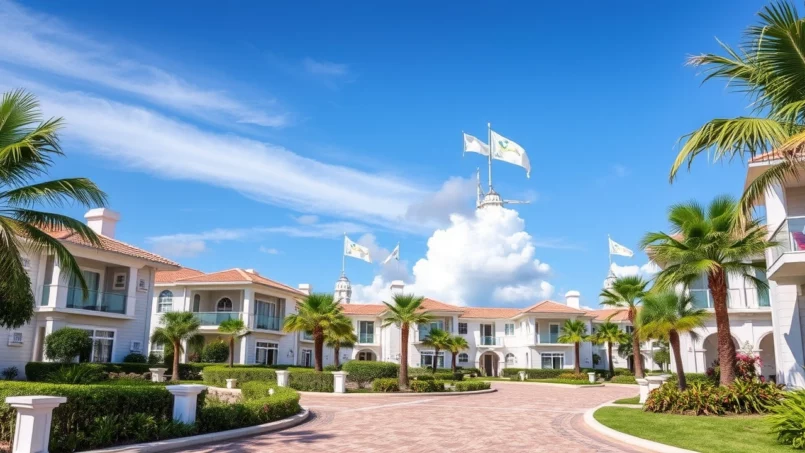
Nestled at the northern tip of Palm Beach County, Jupiter combines waterfront living, family-friendly neighborhoods, Florida’s tax advantages, and a dynamic economy. This mix makes it one of the most sought-after real estate markets on Florida’s east coast, for primary residences, second homes, and rentals—both traditional and seasonal.
Far from being a small seaside resort, Jupiter is a city of over 60,000 residents. It has direct access to major highways, located about 30 km from West Palm Beach and 130 km from Miami. The city offers spectacular beaches, nature parks, golf, highly rated schools, and an active community. The iconic red Jupiter Inlet Lighthouse is a local landmark overlooking the estuary.
For an investor, this idyllic setting isn’t enough: you need to understand the reality of prices, rents, taxes, climate risks, regulations, and, most importantly, the sometimes extreme differences between neighborhoods. That’s the purpose of this article: to decode, point by point, what “investing in real estate in Jupiter” truly means.
A High-End Market in a Normalization Phase
During the overheated years, Jupiter saw rapid price increases, flash sales, and multiple offers. Since the end of 2025, the market has been moving toward a more balanced environment. Prices are still holding up well, but the pace has changed.
Recent data shows a median sales price around $780,000 for the city, with an average price per square foot close to $447–$448. The Zillow Home Value Index places the average home value at about $675,000, down just over 5% year-over-year. In other words, this is more of an adjustment after an euphoric phase than a brutal correction.
Maximum time on market for a property, all types combined, can reach up to 105 days.
A Local Market Stronger Than the Rest of Florida
One of the key points for an investor is to place Jupiter in its regional context. The city belongs to the greater Miami–Fort Lauderdale–West Palm Beach metropolitan area—the only one among Florida’s eight major urban markets where projections still anticipate a slight price increase (around +1.1% for 2026), while the average for the state’s large metros is expected to decline by about 1.9%.
Jupiter’s real estate market benefits from solid demand, rooted in a desirable lifestyle rather than speculation. Its assets include ocean access, the Loxahatchee River, golf courses, marinas, a tropical climate, and proximity to West Palm Beach, Palm Beach, and major airports. The environment is perceived as safe and family-oriented. This “desirability premium,” coupled with limited land reserves in northern Palm Beach County, contributes to greater resilience than other areas in Florida.
Focus on Key Figures
To give you an idea of scale, the table below summarizes some recent indicators for Jupiter:
| Indicator | Approximate Value |
|---|---|
| Median sales price | $784,000 |
| Average price per sq. ft. | $447–$448 |
| Average value (ZHVI) | $675,651 |
| Average days on market | 84–85 days |
| Sale-to-list price ratio | ~96% |
| Number of listings for sale | 900–1,175 |
Even these “global” figures can be misleading: Jupiter is not a uniform market but a patchwork of micro-segments, ranging from affordable family neighborhoods to ultra-luxury enclaves worth tens of millions of dollars.
A Mosaic of Neighborhoods: From Affordable Family Living to Ultra-Luxury
In Jupiter, switching subdivisions often means switching markets. Price differences between neighborhoods can easily exceed a factor of 10. For an investor, the choice of area is never trivial: it determines the rental level, the type of tenant, local taxes—and even exposure to climate risks.
Abacoa: Urban Laboratory and Family-Friendly Value
Abacoa is one of the most iconic communities in the city. This vast planned project spanning over 2,000 acres mixes housing, retail, offices, sports facilities, and green spaces. You’ll find condos, townhomes, and single-family homes, often in Key West style with metal roofs and large screened porches.
The activity revolves around the Town Center, with its bars, cafes, shops, and year-round events: concerts, festivals, movie nights. It also hosts Roger Dean Chevrolet Stadium, where the Miami Marlins and St. Louis Cardinals hold spring training. The area is served by highly rated public schools and is easily accessible via I‑95.
Data shows a median price around $640,000 for Abacoa, with condos starting at about $300,000 and homes reaching several million. Median rents hover around $3,200 to $3,500 per month depending on sources, in an environment where properties rent easily to families, young professionals, and retirees attracted by the “town within a city” feel.
Investors benefit from solid demand, steadily rising values, and shorter resale times than Jupiter’s average. On the flip side, HOA rules vary by sub-neighborhood (New Haven, Tuscany, Valencia, Mallory Creek, Windsor Park…), and lots are sometimes smaller than some buyers are looking for.
The Bluffs: Beach Dream and Seasonal Profitability
The The Bluffs residential complex stretches between the Atlantic Ocean and the Intracoastal, on over 300 acres of coastal land. Its various components—The River, Ridge, River North, The Lakes, Ocean North, Ocean South, The Marina—offer a mix of homes, townhomes, and condos, often built in concrete in the 1980s.
The median home price in this real estate market is about $700,000.
For the investor, the main appeal lies in immediate beach proximity and a highly sought-after seaside ambiance. Median rents exceed $4,800 to $6,000 per month, especially in peak season, and demand for vacation rentals remains high. The downside: properties, while structurally sound, may need aesthetic upgrades, and time on market is longer than in purely residential areas.
Jupiter Farms: “Rural Luxury” for Those Who Want Space
West of the city, Jupiter Farms is a radical shift from golf and beach environments. Here, it’s large lots of 1 to 5 acres, custom homes, ranches, a true equestrian culture, all without an HOA. You’re 15–25 minutes from the ocean depending on traffic, but the vibe is decidedly country chic.
The median home price approaches $850,000, with a clientele willing to pay for space, the ability to have horses, a workshop, a garden, and no condo rules. Homes rent well to households seeking peace and privacy, often on longer leases. Average time on market is about 70 days, higher than downtown, but long-term appreciation prospects are good due to limited land.
For an investor, Jupiter Farms is better suited to a long-term hold strategy (family rental, vacation home) than pure flipping. Some infrastructure (roads, utilities) may be the owner’s responsibility, and commutes to school or shopping are longer, but the “upscale rural” positioning appeals to a specific clientele.
Admirals Cove, Bear’s Club, Jupiter Island: Ultra-Luxury as a Separate Asset Class
Jupiter is home to several enclaves reserved for a very wealthy clientele. Admirals Cove, for example, is a gated community in the south of the city, with a private marina, golf course, and high-end amenities. The median price recently hovered around $3 million, though some data sets place the median in the higher segment above $7 million if only certain property types are considered. The entry fee goes beyond the purchase price: mandatory golf membership costs around $300,000, with over $50,000 in annual dues and minimum club spending. The annual cost of ownership can thus exceed $55,000, before adding mortgage, taxes, insurance, and maintenance.
In communities like Bear’s Club, where villas surround a course designed by Jack Nicklaus, the average property value exceeds $8 million, with listings ranging from $4.3 million to over $46 million. Jupiter Island, while legally a separate municipality, belongs to the same lifestyle: large oceanfront or intercoastal properties are common in the $20, $30, $40, and $50 million-plus range.
In the Jupiter market, the luxury real estate segment operates almost as an independent market. Over 70% of transactions are in cash. Sales velocity is slower, with 110 to 140 days average wait for properties over $1.5 million. The $2–5 million bracket faces the most pressure. Meanwhile, the ultra-luxury segment above $10 million maintains price stability, though sales often close off-market through private networks.
The message is clear: investing in these enclaves is more about wealth preservation and transfer strategy than seeking classic rental yield. The buyer pool is small, rental versatility is very limited, but the “trophy” nature of some properties gives them a separate status.
“Value” Neighborhoods: Jupiter Village, Indian Creek, The Heights, Egret Landing
At the other end of the spectrum, several pockets still offer more affordable entry points into Jupiter, while benefiting from school quality and quality of life.
Jupiter Village, for example, is a subdivision of 735 single-family homes and villas, very family-oriented, with sidewalks and a neighborhood park. The average price is around $320,000, well below the city average. The population is young, with over 30% young adults and nearly 10% children. For an investor, this is fertile ground for family rentals or buy-renovate-resell strategies.
Indian Creek is another more accessible area, very popular with young professionals who work in Miami or Fort Lauderdale thanks to Turnpike proximity. With an average price around $495,000, three-bedroom two-bath homes, and easy access to infrastructure, it’s an ideal commuter market. It’s also good for long-term rentals.
The Heights of Jupiter (North Palm Beach Heights) offers a compromise between price and location, west of Abacoa. With an average of $700,000 and a reputation as a “value” neighborhood close to the center, it features many homes updated in the 2000s, a nice park, and a family clientele.
Egret Landing, often cited as a “good value in town”, consists of generously sized family homes with sports amenities, parks, and school proximity. Prices exceed $1 million but remain below those of golf clubs or ultra-luxury pockets.
Rental Real Estate in Jupiter: High Rents, Solid Demand
With rents well above the U.S. average and demand supported by tourism, retirees, and relocations, Jupiter is naturally seen as a highly attractive rental market.
Figures vary by source, but several observations converge: the median rent is around $3,500 per month, about 84% higher than the national average. Some data sets place the overall average rent around $4,100. A typical apartment rents for about $2,300–$2,600, a house for over $4,000, condos around $3,500, and individual rooms around $1,300.
The following table gives rough averages by property type:
| Property Type | Average Monthly Rent (approx.) |
|---|---|
| Studio / 1 bedroom | $1,900–$2,300 |
| 2 bedrooms (apartment) | $2,300–$2,800 |
| 3 bedrooms (house/townhome) | $3,000–$4,500 |
| 4 bedrooms | $5,000–$10,000 (or more) |
| Average single-family home | ~$4,200 |
The rental market is described as “hot”: demand is growing faster than the national average, well-located properties often go in a few days in peak season, and Florida’s lack of rent control gives landlords some leeway, though tenant price sensitivity is increasing.
Seasonal Rhythm and Tenant Profiles
Winter and spring concentrate the strongest demand, fueled by snowbirds and vacation stays. Many tenants come from the northeastern U.S. (New York, New Jersey, Massachusetts), California, Chicago, and also other parts of Florida.
Neighborhoods near the beach and activity hubs, like The Bluffs, Ocean Walk, Jupiter Inlet Colony, and some oceanfront or Intracoastal condos, attract a seasonal clientele willing to pay top dollar. Five-figure monthly rents are common in these areas, especially for villas with ocean views or private docks.
At the same time, long-term rental demand remains strong, driven by families attracted to well-rated schools (Beacon Cove Intermediate School, Limestone Creek Elementary, Jupiter High, etc.), young professionals working in growing sectors (healthcare, tech, services), and retirees looking to test the area before buying.
Neighborhoods like Abacoa, Rialto, Egret Landing, Indian Creek, and The Heights target a local audience with high rents that remain proportional to area incomes.
Profitability: What the Numbers Say
Based on aggregated data, investors typically see annual returns (cash-on-cash + appreciation) of 5 to 8%, with higher potential for short-term rentals like Airbnb/VRBO in the right areas and well-managed. Daily rates for seasonal rentals commonly range from $200 to $600 per night, with occupancy rates averaging 75–90% per year for properly positioned properties.
The key lies in managing ancillary costs: management fees (often 8–12% of rents), sometimes high HOAs, property taxes above the national average, insurance premiums that have doubled or even tripled in recent years, plus enhanced maintenance in a tropical climate (humidity, landscaping, salt, etc.).
Purchase Prices, Local Taxes, and Holding Costs
Jupiter is not a “budget” market. Typical homes far exceed the U.S. average, even “affordable” condos are in high price ranges, and recurring fees weigh on gross profitability.
Price Structure by Segment
The following price ranges give an idea of market access:
| Segment | Typical Purchase Price Range |
|---|---|
| Entry-level condo | $300,000–$500,000 |
| “Standard” single-family home | $500,000–$1,000,000 |
| Desirable family neighborhoods | $700,000–$1,500,000 |
| High-end golf communities | $1.5–5M (often more) |
| Ultra-luxury / waterfront | $7–$30M and up |
These ranges come with significant variation by neighborhood. For example, neighborhood-level analyses have found medians around $374,000 in Jupiter Village, $629,900 in Abacoa, $710,000 in The Bluffs, over $1.2 million in Palm Beach Country Estates, and up to over $7 million in Admirals Cove.
Property Taxes: Higher Than Average, but in a No-Income-Tax Framework
Florida does not levy a state personal income tax, making property taxes more central to the profitability calculation.
Median effective property tax rate in Jupiter, higher than national and Florida medians.
The reality is more complex: the taxable base accounts for exemptions (notably the homestead exemption, which can subtract up to $50,000 from the taxable value) and annual increase caps (Save Our Homes, which limits the assessment increase to 3% or the inflation rate for a primary residence). The longer a property is held as a primary residence, the larger the gap between market value and taxable value can become.
The following table summarizes some benchmarks:
| Area / Indicator | Approximate Value |
|---|---|
| Median effective rate Jupiter (PBC) | 1.26% |
| Median home value (Jupiter) | $438,450 |
| Median property tax (Jupiter) | $5,567 / year |
| Median property tax PBC | $4,412 / year |
| Median property tax Martin County | $3,867 / year |
Rates also vary by zip code. For example, in 33477 (very coastal area), median values are higher and tax bills follow the same trend. Conversely, areas like 33478 combine large lots with slightly lower rates, but high land values still keep the bill substantial.
Other Costs to Factor In: HOA, Insurance, Maintenance
One classic pitfall for an outside investor is underestimating recurring expenses:
HOA fees in communities with premium amenities (golf, marina, 24/7 security…) can exceed $1,000/month, especially with mandatory golf memberships. Home insurance has seen 200–300% increases in Florida, with newer properties benefiting from lower premiums. Flood insurance, mandatory in certain FEMA zones, can cost between $3,000 and $8,000/year in high-risk areas. Finally, maintenance is more expensive in a subtropical climate (AC, vegetation, salinity).
Climate Risk, Insurance, and Long-Term Value
Investing by the coast means confronting the climate question, even more so in South Florida. Jupiter is located in an area where projections for sea level rise, extreme heat, and climate events are particularly scrutinized.
Risk assessments indicate that nearly 77% of buildings in the city are exposed to significant flood risk, and about 79% of structures face a risk from wildfires, though this is considered relatively low. Almost all areas use FEMA maps to determine insurance requirements and building codes.
Regional studies already show an impact of sea level rise on real estate prices: in neighboring Miami-Dade County, homes threatened by frequent tidal flooding lost several dollars per square foot per year in relative value, for a cumulative estimated loss of over $465 million between 2005 and 2016. This phenomenon contributes to what some researchers call “climate gentrification,” with faster revaluation in relatively higher-elevation areas.
Regional Real Estate Studies
For Jupiter, long-term scenarios model sea level rises that could reach several feet by the end of the century. Beyond certain thresholds (between 3 and 4 feet of elevation), flooded areas and threatened values grow exponentially. Key infrastructure—roads (US‑1, Indiantown Road, SR 811), railways, utilities—could be underwater during extreme high tides by 2080–2100 in the most pessimistic scenarios.
For the investor, it’s not so much about fleeing Jupiter as integrating this data into the due diligence:
Before acquiring a property, check its elevation relative to base flood level via elevation certificates and consult FEMA maps as well as visualization tools (NOAA, ClimateCentral). Integrate costs by requesting home and flood insurance quotes into your profitability calculation. Evaluate existing mitigation measures (structure elevation, water-resistant materials, drainage, adapted landscaping) and inquire about local resilience policies (building codes, seawall projects, drainage improvements, natural habitat restoration).
Local and regional authorities—Town of Jupiter, Palm Beach County, regional climate consortium—are already working on adaptation: wetland restoration, road elevation segments, improved water and drainage networks, reinforcement of certain structures. These public investments help maintain long-term attractiveness, but don’t eliminate the need for each owner to protect themselves.
Investment Strategies Tailored to Jupiter
The appeal of investing in real estate in Jupiter isn’t simply about buying anywhere and hoping for mechanical appreciation. The choice of property type, strategy, and financing must be tailored to the local reality.
Long-Term Rentals in Family Neighborhoods
This is the most straightforward path for those seeking relatively stable cash flow and a long-term horizon. Typical targets:
– Single-family homes 3–4 bedrooms in Abacoa, Indian Creek, The Heights, Egret Landing, Jupiter Village, Paseos.
– Townhomes in well-maintained communities like Abacoa or The Bluffs (sub-sections River North, The Lakes…).
– Properties on large lots in Jupiter Farms for families wanting space.
Advantages: low vacancy rates, often stable tenants (families, professionals), strong demand driven by top-rated schools and overall quality of life. Disadvantages: high entry prices, sometimes modest cash flow relative to capital invested, especially early in the cycle with interest rates around 6%.
Short-Term and Vacation Rentals
Jupiter being a highly popular tourist and vacation destination, short-term rentals can generate higher income, provided you comply with local rules and manage the high/low season cycles.
Best suited properties:
– Beach condos and homes in The Bluffs, Ocean Walk, Jupiter Inlet Colony, some oceanfront complexes (Ocean Trail, Jupiter Ocean-Racquet Club, Sea Colony, etc.).
– Properties with direct access to the Intracoastal or the Loxahatchee River, featuring a dock.
Strengths: high nightly rates (a few hundred dollars per night), occupancy rates possibly reaching 80–90% per year in the best cases, diversification through Airbnb/VRBO platforms. Limitations: changing regulations, frequent HOA restrictions on short-term rentals, heavier management costs (cleaning, maintenance, concierge), more direct exposure to seasonality.
Targeted Fix-and-Flip on Properties Needing Updates
Jupiter’s housing stock includes many concrete homes from the 1980s–1990s, solid but sometimes dated. Opportunities arise for investors able to spot undervalued properties, finance renovations, and resell in desirable neighborhoods.
It is essential to identify and monitor the specific areas mentioned in the content, as they require particular attention.
– Older sections of Abacoa and The Bluffs, where structures are sound but finishes can be modernized.
– “Value” neighborhoods like Jupiter Village, Indian Creek, some parts of 33458, where improvements can push values up a notch.
– Aging waterfront homes, sometimes bought by developers for tear-down/reconstruction, requiring very precise projections (land cost, construction costs, resale value in the ultra-luxury segment).
This type of operation demands excellent knowledge of local construction costs, regulations (permits, hurricane codes), the resale market, and risks of a market downturn during the project.
New Developments and New Construction
Across Palm Beach County, new construction is considered one of the most interesting segments for 2026. Developers, facing higher rates and a slowdown in raw demand, are multiplying incentives: partial closing cost coverage, temporary interest rate buydowns, free option packages.
The asking price for medium-sized villas in neighboring towns of Jupiter, Florida, starts below this dollar amount.
Advantages for the investor:
– Home insurance is often much lower on new builds, thanks to recent construction standards and integrated hurricane protections.
– Little to no renovation work for the first few years.
– Initial property taxes based on land value, with gradual increases.
– Builder warranty and potential upside as the development fills up.
The trade-off is a higher price per square foot and a risk of temporary oversupply on some corridors (US‑1, Military Trail), even though Jupiter’s overall land supply remains constrained.
Financing, Taxes, and Management: Thinking Like a Professional Investor
Investing in real estate in Jupiter often requires more sophisticated financial structuring than buying a small house in a secondary city.
Florida banks and brokers offer a wide range of products: conventional loans with 20–25% down, jumbo loans for properties exceeding agency limits, DSCR (Debt Service Coverage Ratio) loans based on rental income, non-QM loans for non-standard profiles, construction or renovation loans, programs for foreign borrowers with 20–30% down.
To obtain real estate financing, typical criteria include a minimum FICO score of 620, a manageable debt-to-income ratio, cash reserves covering several months of expenses, and a minimum DSCR of about 0.75. Non-resident investors can access financing without a U.S. credit history but generally need to bring more capital.
On the tax side, investors benefit from no state income tax and federal regimes favorable to rental income: deductions for interest, property taxes, insurance, maintenance, depreciation. Florida also provides significant protection for primary residences (homestead) regarding creditors and inheritance, though this is less directly relevant for pure rental investments.
Managing a rental property in Jupiter involves many constraints (regulatory, distance, maintenance). Many owners therefore use specialized management companies, which are numerous in the area, offering full services for 8 to 12% of monthly rents. Some contracts include guarantees, such as partial coverage for unpaid rent or handling of eviction procedures within certain limits.
How to Position Yourself Smartly in This Market
Faced with abundant data and the complexity of the terrain, the best way to approach Jupiter is to clearly articulate your priorities:
To build a stable rental portfolio, prioritize well-served family neighborhoods like Abacoa. To maximize short-term income through seasonal rentals, target the waterfront (The Bluffs) while checking regulations. For luxury wealth diversification, communities like Admirals Cove are suitable, but costly to hold long-term. Finally, for opportunistic strategies (flips), homes needing renovation or transitioning lots are conceivable, provided you master regulatory and market risks.
In all cases, rigorous analysis—financial, climatic, insurance, tax—will make the difference between an appealing investment on paper and a portfolio that withstands cycles, storms, and regulatory changes. Jupiter, with its mature market, land scarcity, and enduring attractiveness, rewards those who take the time to understand its fine-grained geography rather than diving in blindly.
Investing in real estate in Jupiter involves a high cost justified by an exceptional location. This territory stands out for its solid fundamentals: a high quality of life, a dynamic economy, and strong residential demand. These factors suggest a long-term value creation potential superior to many other competing coastal markets.
Disclaimer: The information provided on this website is for informational purposes only and does not constitute financial, legal, or professional advice. We encourage you to consult qualified experts before making any investment, real estate, or expatriation decisions. Although we strive to maintain up-to-date and accurate information, we do not guarantee the completeness, accuracy, or timeliness of the proposed content. As investment and expatriation involve risks, we disclaim any liability for potential losses or damages arising from the use of this site. Your use of this site confirms your acceptance of these terms and your understanding of the associated risks.

Cyril Jarnias is an independent expert in international wealth management with over 20 years of experience. As an expatriate himself, he is dedicated to helping individuals and business leaders build, protect, and pass on their wealth with complete peace of mind.
On his website, cyriljarnias.com, he shares his expertise on international real estate, offshore company formation, and expatriation.
Thanks to his expertise, he offers sound advice to optimize his clients' wealth management. Cyril Jarnias is also recognized for his appearances in many prestigious media outlets such as BFM Business, les Français de l’étranger, Le Figaro, Les Echos, and Mieux vivre votre argent, where he shares his knowledge and know-how in wealth management.





