
 Published on and written by Cyril Jarnias
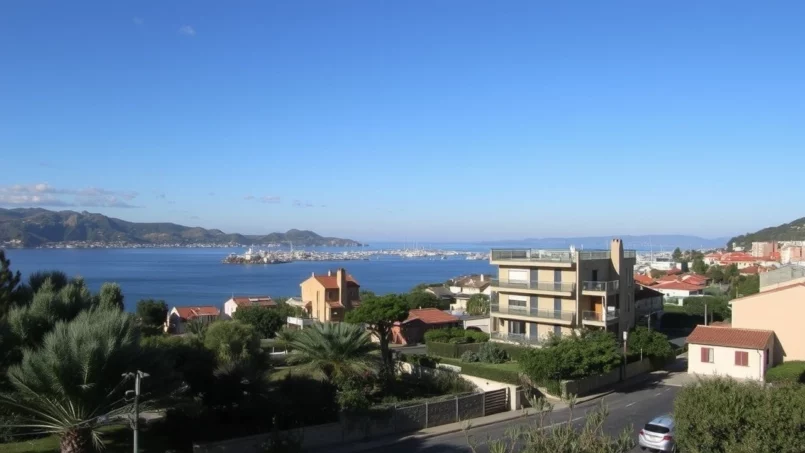
Ajaccio is no longer just a Mediterranean postcard. For many investors, the Corsican capital has become a veritable safe-haven market, driven by structurally strong rental demand, supply limited by geography, and a sometimes advantageous tax framework. Between the historic center, neighborhoods in full transformation, and new residences facing the sea, the city offers a range of investment scenarios, from a seasonal studio to a high-end villa.
To invest knowledgeably in Ajaccio, it is essential to rely on recent data concerning prices, rents, and yields. The choice of neighborhood, type of property, and suitable tax regime are determining factors for the project’s success. Ongoing urban projects should also be taken into account when analyzing the market.
A Tight but Stable Market: Why Ajaccio Attracts Investors
Ajaccio concentrates several strengths rarely found in the same territory. The city combines its status as a regional capital, a port and an airport connected daily to the mainland, massive tourist dynamism, but also a base of public sector and service jobs that ensures year-round economic activity. The result: demand for housing is not limited to the summer season.
Between 2018 and 2023, apartment prices increased by 5% per year and house prices by 7% per year on average.
This growth, however, remains less vertiginous than in some mainland metropolitan areas. Ajaccio is now among the most expensive cities in Corsica, but its prices remain significantly lower than those in Paris, Lyon, or Nice. For a mainland French investor, the price/quality of life ratio therefore remains attractive, especially since the city enjoys about 300 days of sunshine per year, a preserved natural environment, and a very strong image (Napoleon’s birthplace, historical heritage, fine sand beaches).
The Ajaccio real estate market is considered a hedge against inflation, with more stable dynamics than speculative areas. The high rental tension guarantees a very low vacancy rate even off-season, thus ensuring secure rental income.
Real Estate Prices in Ajaccio: Current Levels and Trends
The most recent data converges towards an average price between €4,100 and €4,600 per square meter depending on the source and date. As of January 1, 2026, the Fnaim index placed the average price at €4,174 per m², up 2% year-on-year and nearly 8% over three years. Other estimates from late 2025 report an average price around €4,500 per m², with a median price close to €3,900 per m².
The reality on the ground, however, is much more contrasted depending on the neighborhood, type of property, and view. The gap can exceed 200% between the least expensive sectors and the most prestigious addresses, with a range from about €2,700 per m² to over €8,000 per m².
Price Levels by Property Type
Overall, houses trade at a higher price per square meter than apartments, especially once you add a sea view, garden, or pool. Early 2026 Fnaim data is revealing:
| Property Type | Average Price per m² (approx.) |
|---|---|
| Apartment | €4,057 |
| House | €5,169 |
By refining by size, a fairly typical price profile is observed: studios and large family apartments command a higher price per square meter than intermediate 3-bedroom units, reflecting on one hand strong demand for small units (students, seasonal workers, young professionals) and on the other the scarcity of quality large units.
| Unit Size | Median Price per m² (all properties, Dec. 2025) |
|---|---|
| 1 room | €4,984 |
| 2 rooms | €4,196 |
| 3 rooms | €3,600 |
| 4 rooms | €3,659 |
| 5 rooms | €4,423 |
| 6 rooms | €4,355 |
Thus, studios show median levels above €4,900/m², while some more outlying 3-bedroom units can still be found around €3,500–3,600/m².
Old vs. New: What is the New Build Premium?
Ajaccio is experiencing significant new construction activity, driven by local and national developers, often within the framework of RT 2012 or BBC or E+C- labeled programs. These modern homes, better insulated and often featuring terraces, logically command higher prices.
In late 2025, the medians show a clear differential:
| Segment | Median Price per m² | 5-Year Change |
|---|---|---|
| Older Stock | €3,895 | +15% |
| New Build Stock | €4,191 | +9% |
This premium, around €300/m² in median, is partly justified by energy performance, builder guarantees (10-year, 2-year, completion guarantees), and reduced notary fees (acquisition costs around 2–3% of the price, versus 7–8% for older properties).
For a 70 m² 3-bedroom unit at €4,400/m² in a new build, the total investment (property + notary) is about €312,000.
Where to Invest in Ajaccio? Neighborhood Mapping and Opportunities
Ajaccio’s strength lies in the diversity of its micro-markets. It features both heritage sectors with modest net yields but secure appreciation, balanced residential neighborhoods, and areas in full transformation with a particularly interesting yield/capital gain profile for the “dynamic” investor.
Historic City Center, Old Port, and Citadel: The Heritage Heart
The historic center, around the Citadel, Old Port, Rue du Cardinal Fesch, or Cours Napoléon, concentrates the city’s strongest symbolic value. Cobblestone streets, colorful façades, proximity to shops, the port, and nightlife: this area is sought after by both tourists and urban professionals.
Price levels here are logically high. In the old center, apartments are around €4,000/m² on average, with peaks at €5,000/m² and above for renovated properties with a balcony and sea view. Houses, rarer, often exceed €6,000/m². On some emblematic thoroughfares like Cours Napoléon or Boulevard du Roi Jérôme, prices range between €4,500 and over €5,000/m² depending on condition and floor.
For an investor, this zone presents the characteristics of a safe-haven asset: it offers high liquidity for resale, an almost zero vacancy rate, and excellent attractiveness for furnished seasonal rentals. However, the entry ticket is high and gross yields are tighter. A strategy to optimize profitability involves leveraging the tourist season through short-term rentals, subject to complying with the applicable regulatory framework.
Route des Sanguinaires and High-End Coastal Sector
The Route des Sanguinaires and its surroundings (Trottel, Santa Lina, the “étrangers” area) embody the prestige segment of the Ajaccio market. This is where some of the city’s most expensive streets are located, like the Route des Sanguinaires itself or Boulevard Albert 1er, where average prices clearly exceed €5,800–6,000/m², with transactions potentially rising above €8,000/m² for rare properties (panoramic view, very large terrace, luxury residence).
| Premium Sector | Price Range per m² (approx.) |
|---|---|
| Route des Sanguinaires | €5,000–7,500 |
| Résidence des Îles | ~€5,600–7,000 |
| Parc Berthault | ~€5,400–5,600 |
| Le Casone / “étrangers” | >€5,300 |
This segment targets a clientele of affluent residents, retirees, and secondary residents, but also offers strong potential for luxury seasonal rentals. Classic gross yields (3.5–4%) are modest, but long-term appreciation is driven by land scarcity and growing international demand for this type of location.
Central Residential Neighborhoods: Parc Berthault, Pietralba, Saint-Jean…
Around the center, several residential neighborhoods offer a good compromise between price, quality of life, and rental potential.
Parc Berthault, with its gardens and proximity to the city center, features very high prices, often above €5,000/m² for apartments, and is highly sought after by families and executives. In contrast, neighborhoods like Pietralba, Saint-Jean, or Loretto offer calmer residential environments, with schools and shops, at slightly more accessible prices, generally between €3,800 and €4,000/m².
These sectors are suited for a long-term rental strategy (families, civil servants, healthcare workers) or for acquiring a primary residence with a perspective of reasonably secure capital gain.
Transforming Neighborhoods: Mezzavia, Aspretto, Rocade, Les Salines, Les Cannes, Finosello
This is where a large part of the mid-term value creation potential is at play. Several areas are subject to new development programs, urban redevelopment, and public investments: new clinic, sports and cultural facilities, transport projects, energy renovation of large housing complexes, etc.
Mezzavia, on the outskirts, is emblematic of this dynamic. Long perceived as remote, the area now benefits from the ring road, proximity to the airport, commercial zones, and numerous new residential developments. Prices remain contained here, often around €3,500–3,900/m², with new programs around €4,000/m². For family or student rentals, the price/rent ratio can be very attractive.
The Aspretto neighborhood, undergoing full transformation, offers modern real estate programs like “A Torra” or the “Genovese” residence. These apartments feature terraces and sea views, and are eligible for tax incentives like Pinel. The combination of still affordable prices, the possibility of a sea view, and the gradual beautification of the neighborhood makes this sector very attractive for investors.
Les Salines and Les Cannes, built post-war to address the housing crisis, now benefit from heavy renovation programs (over €5M planned for Les Salines in 2025) aimed at improving insulation and comfort. Prices remain below the Ajaccio average (around €3,500/m²), creating an entry point for investors with a more limited budget, with potential for capital gain if the neighborhood’s transformation is successful.
The Rocade, finally, positions itself as a strategic axis connecting the center, hospital, and commercial zones. Residences like “Carré Bodiccione” or “Les Terrasses du Stiletto” are emerging here, with modern apartments at prices sometimes starting around €3,800–4,000/m². This sector attracts a clientele of local households seeking functional, well-connected housing.
Outskirts and Neighboring Towns: Alata, Sarrola-Carcopino, Bastelicaccia…
Around Ajaccio, several towns complement the spectrum of investment possibilities: Alata, Sarrola-Carcopino, Bastelicaccia, Villanova, to name just the closest ones. They often offer single-family homes with land at prices per square meter lower than in the center.
| Outlying Town | Average Price per m² (approx.) |
|---|---|
| Alata | ~€4,400 |
| Sarrola-Carcopino | ~€4,000 |
| Bastelicaccia | ~€4,700 |
| Villanova | ~€4,700 |
These towns are particularly interesting for investors targeting local families or secondary residences, with moderate yields but a highly appreciated quality of life (mountain/sea view, more rural environment, parking ease).
Rental Market and Profitability: What Properties in Ajaccio Yield
From a rental perspective, Ajaccio falls into a rather high range for a city of its size, reflecting the imbalance between housing supply and demand.
Available figures indicate a median rent around €14/m² for apartments (excluding charges), with an overall average rent close to €15.5/m². Over five years, rents have increased by about 2.8%, a contained but steady evolution.
Rent Levels by Typology
Smaller units logically command higher rents per square meter, due to strong student and seasonal demand.
| Unit Type | Median Rent (€/m², 2025) |
|---|---|
| 1-bedroom | €12 |
| 2-bedroom | €16 |
| 3-bedroom+ | €11 |
| All units | €14 |
Concretely, for average monthly rents, the observed ranges are as follows:
| Unit | Location | Average Monthly Rent (approx.) |
|---|---|---|
| 1-bedroom | City Center | €650 (€500–800) |
| 1-bedroom | Outside Center | €560 (€400–700) |
| 3-bedroom | City Center | €1,050 (€800–1,300) |
| 3-bedroom | Outside Center | ~€1,100 |
Gross Yield: Center vs. Outskirts
By cross-referencing these rents with purchase prices, the average gross yield is around 4%. However, it varies significantly based on location and rental strategy.
| Location | Average Gross Yield (approx.) |
|---|---|
| City Center | 3.4% |
| Outside Center | 4.2% |
| Overall Average | ≈ 4.0–4.1% |
Well-located studios or 2-bedroom units, especially near the Old Port, achieve annual gross yields of 4.5% to 6% with classic furnished rentals, with possible summer “peaks” if exploited for short-term stays. 2-bedroom units in sought-after residential neighborhoods (Parc Berthault, Salario) range between 4% and 5.2%.
This is the average gross yield for single-family homes, particularly in the outskirts, illustrating the trade-off between heritage value and profitability.
The Weight of Borrowing Capacity
Added to these figures are important solvency indicators for any credit-financed investor. The price-to-income ratio around 7.3 and the price-to-rent ratio around 24–30 place Ajaccio in the category of markets relatively expensive compared to local purchasing power, which partly explains the importance of rental demand.
With a fixed 20-year loan rate of about 3.5%, the repayment of a loan for an average-priced purchase would represent over 50% of the income of a typical local household. This constraint maintains a high proportion of households in rental, thus creating durable rental demand. For an outside investor with higher income, this situation represents a market opportunity.
The Short-Term Rental Boom: Potential and Limits
The other major facet of the Ajaccio rental market is seasonal and short-term rentals, driven by platforms like Airbnb. Available figures show the scale of the phenomenon: over 2,300 active listings in late 2025, with revenue growth of about 30% year-on-year for this segment.
On average, a well-managed short-term rental property can generate around €19,000 to €25,000 in annual revenue, with an average daily rate between €90 and €110 and a median occupancy rate around 60–64%. In high season (July-August), monthly revenues can exceed €2,400–3,000, while in low season (January, November), they sometimes drop below €800.
The top 10% of seasonal rental listings generate over €22,000 in annual revenue.
Ajaccio, a Seasonal Market… But Not Only
Seasonality remains very pronounced: the summer months concentrate most of the revenue, while winter is quieter. Nevertheless, Ajaccio retains an advantage over small Corsican coastal villages: year-round activity linked to administrations, the hospital, the university, and the port. This allows for hybrid strategies, combining short-term in summer and medium-term (3–9 months) the rest of the year, notably for audiences like substitute healthcare workers, civil servants on assignment, or remote workers.
An Evolving Regulatory Framework
If, locally, regulations were until now relatively flexible (only a minority of properties were fully compliant), the national context is changing. France has embarked on a tightening of rules governing furnished tourist rentals: systematic registration of properties, potential quotas decided by municipalities, limitation on the number of nights for primary residences, financial penalties for exceeding limits, and increasing requirements regarding energy performance (progressive ban on “energy sieve” properties for seasonal rentals).
For an investor, seasonal rentals remain a powerful profitability lever. However, it must absolutely be preceded by a detailed analysis of local regulations and accompanied by a credible Plan B, such as conversion to classic or long-term furnished rentals, to secure the investment.
Demographics, Economy, and Rental Demand: What Supports the Market
To understand the solidity of the Ajaccio market, one must look beyond the postcards. The city has about 70,000 to 73,000 inhabitants depending on sources, with positive demographic dynamics (annual growth around 1% over the last decade, even more during some periods). The dominant age group is between 30 and 44, reinforcing demand for housing from active households and young families.
The housing stock is overwhelmingly composed of apartments (nearly 88–89%), of which 87% are occupied as primary residences, with secondary residences representing about 9–10%. The share of tenants slightly exceeds 50%, a high figure for a medium-sized city, illustrating the tension between purchase prices and local incomes.
Ajaccio’s economy is diversified, relying not only on tourism but also on administrations (headquarters of the Collectivité de Corse, state services), healthcare, commerce, and port logistics. This diversity stabilizes demand throughout the year. The presence of Napoleon Bonaparte Airport, with direct connections to several major French cities, reinforces its attractiveness for remote workers and mobile executives.
Added to this is a municipal policy focused on modernizing infrastructure: urban elevator project linking the lower and upper city, rehabilitation of the former Miséricorde hospital site into an eco-neighborhood, energy renovation of large housing complexes, enhancement of heritage (Citadel, emblematic squares, gardens). These projects reinforce the city’s overall attractiveness, which ultimately always reflects in property values.
Investment Typologies: From Bare Rental to Professional Furnished Rental
Investing in real estate in Ajaccio can take very varied forms, depending on the investor’s profile (cautious, balanced, dynamic) and their investment horizon.
Classic Bare Rental
Non-furnished rental, taxed as property income, remains suitable for those seeking management simplicity and a clientele of families or long-term tenants. In this framework, 2-bedroom, 3-bedroom, or 4-bedroom apartments located in well-served residential neighborhoods (Pietralba, Saint-Jean, Mezzavia, Rocade) are natural candidates.
Fiscally, the micro-property regime applies if annual gross rents do not exceed €15,000, with a standard deduction of 30%. Beyond that, the actual regime allows deduction of actual expenses (renovations, loan interest, co-ownership charges, property tax…).
Furnished Rental (LMNP or LMP)
Furnished rental, very common in Ajaccio given the weight of tourism, falls under the BIC regime (Business/Industrial/Commercial Income). Two statuses coexist:
Two tax regimes exist for furnished rentals. The LMNP (Non-Professional Furnished Landlord), accessible to most individuals, allows either a 50% deduction under the micro-BIC regime (below a revenue threshold), or depreciation of the property and furniture under the actual regime to reduce taxation. The LMP (Professional Furnished Landlord) is reserved for investors whose annual furnished rental revenue exceeds €23,000 and represents over 50% of household income.
In the Ajaccio context, furnished rental is particularly well-suited to small and medium-sized units: studios near the port or historic center, 2-bedroom units with a balcony in lively neighborhoods, 2/3-bedroom units on the outskirts near the hospital or employment zones for medium-term rental.
Seasonal and Multi-Period Rental
Short-term operation (like Airbnb) often allows to double the gross yield compared to a traditional bare rental, provided one targets tourist locations (Old Port, Citadel, Sanguinaires, Trottel, hyper-center) and offers an impeccable product. It also implies much heavier management: frequent cleaning, check-in/check-out, responding to reviews, rate optimization.
Given the national tightening on tourist furnished rentals (registration, potential quotas, capped rental days for primary residences, sanctions), many Ajaccio investors are turning to hybrid strategies: seasonal in summer, furnished long or medium-term the rest of the year, allowing them to stay within regulatory limits while optimizing yield.
New Build Investment with Tax Incentives
New construction occupies a growing place in the local supply, with programs like “Résidence U Candelu”, “Les Terrasses du Stiletto”, “A Suara”, “Biancarello”, “Résidence Althéa”, “Le Clara” on Route des Sanguinaires, or “Carré Bodiccione” on the Rocade. These operations, often eligible for incentive schemes (Pinel, interest-free loan…), meet the expectations of households seeking modern comfort and high energy standards.
Ajaccio is classified as a tight zone, which made the Pinel scheme applicable to new builds until the end of 2024 for certain programs, offering tax reductions in exchange for a rental commitment of 6 to 12 years at capped rents. Other national schemes remain available: Denormandie for renovation in certain sectors, Loc’Avantages for affordable rents with a tax advantage, and LMNP/LMP regimes for furnished investment.
Added to this is the interest-free loan (PTZ), extended nationally, allowing to finance up to 30% of the price of a new build for first-time buyers, which can be a factor for an investor combining a primary residence and asset investment.
Costs, Taxation, and Legal Framework: What to Include in Your Business Plan
Investing in real estate in France implies mastering, at a minimum, the mechanics of acquisition costs, taxation of rental income, and local taxes.
Purchase Costs: Notary Fees, Duties, and Other Expenses
For older properties, one must budget between 7% and 8.5% of the purchase price for so-called “notary fees”, which in reality mainly cover taxes paid to the state and local authorities. For new builds, these fees drop to around 2–3% of the price, which, in Ajaccio, represents a difference of several thousand euros for a 3-bedroom unit.
To these fees are generally added:
The minimum cost for a complete renovation of a 70 m² 3-bedroom unit in Ajaccio.
Taxes on Rents: Property Income vs. BIC
An investor will need to choose between bare rental (property income) and furnished rental (BIC) based on their strategy. The micro-property regime (30% deduction) suits small rental incomes without major renovations. The actual regime becomes more interesting once financing with credit, undertaking renovations, or bearing significant charges.
For furnished rentals, the micro-BIC offers a 50% deduction on revenue when it remains below a certain threshold. Under the actual regime, the possibility to depreciate the property and furniture can, in many cases, neutralize taxes for several years, especially for a new or very recent investment.
As a tight zone, Ajaccio allows access to aids like Loc’Avantages for controlled rents. These schemes come with stricter regulation of rent amounts and tenant income conditions.
Transfer, Capital Gains, and Real Estate Wealth Tax (IFI)
In the long term, one must keep in mind the taxation of capital gains: upon the sale of a non-primary residence property, France applies a capital gains tax of 19%, increased by social contributions. Deductions for the holding period apply starting from the sixth year, leading to a total exemption from income tax after 22 years and from social contributions after 30 years.
Significant real estate portfolios must also consider the Impôt sur la Fortune Immobilière (IFI) (Real Estate Wealth Tax), which applies to net real estate assets exceeding €1.3M. In a market where prices easily exceed €5,000/m² in some Ajaccio neighborhoods, it is not uncommon for asset investors to approach this threshold after a few acquisitions.
Financing and Investor Profile: Who Should Position Themselves in Ajaccio?
For a French investor, access to credit remains relatively attractive despite the rise in rates since 2022. Real estate loans over 20 to 25 years are generally negotiated around 3–4% for a good application in 2025–2026. Banks, however, require a larger personal contribution than before, often at least 10–20% of the price, or more for non-residents.
Ajaccio attracts several profiles:
Discover real estate strategies adapted to different investor profiles in the Ajaccio market, from the most cautious to the most dynamic.
Seeks a safe-haven asset by favoring the historic center, Route des Sanguinaires, or established residential neighborhoods (Parc Berthault, Pietralba). Accepts moderate gross yield for solid asset appreciation.
Turns towards 2/3-bedroom units in developing sectors like Mezzavia, Aspretto, Rocade, Les Salines, or Les Cannes. Combines correct rental yield (4–5%) and potential for appreciation thanks to urban projects.
Willing to bet on seasonal rentals or transforming neighborhoods. Seeks properties to renovate in the old center or small units with views in port and seaside sectors to optimize rents.
For non-residents (mainland or foreign), Ajaccio moreover offers interesting geographical diversification, on an island with a very specific market relatively decoupled from some mainland fluctuations.
Practical Tips for a Successful Investment in Ajaccio
Investing in real estate in Ajaccio requires reconciling several constraints: high rental tension, high prices in the best neighborhoods, national regulations on tourist furnished rentals, increasing requirements regarding energy performance. Nevertheless, some best practices emerge.
The value of a studio apartment varies considerably depending on its location and the target clientele associated with the neighborhood. For example, the same studio will not be valued the same way if it is located on a lively street in a historic center (attracting seasonal workers and tourists), on the Sanguinaires seafront (sought after by retirees or for secondary residences), or near a future hospital (interesting for civil servants or healthcare professionals). A precise diagnosis of the target clientele (seasonal workers, civil servants, families, retirees, remote workers) is therefore essential for the choice of neighborhood.
Secondly, energy quality is becoming a central criterion. French laws foresee the progressive ban on renting the most energy-consuming properties, including for short-term rentals, which obliges ensuring the property’s DPE (Energy Performance Diagnostic) rating or anticipating insulation work. In a market where many buildings date from the post-war period, this dimension is far from anecdotal.
This is the real net yield of a rental investment, after deduction of all structural costs, which can halve a stated gross yield of 5-6%.
Finally, surrounding oneself with local professionals remains a cornerstone: specialized real estate agencies, notaries accustomed to transactions with non-residents, wealth management advisors or tax specialists capable of optimizing the setup (choice of tax regime, potential structuring via an SCI, use of incentive schemes…). Ajaccio has an experienced network of players, accustomed to the issues of investors from the mainland or abroad.
Conclusion: A Market for the Informed, But with Solid Fundamentals
On the French scale, Ajaccio remains a niche market, both insular and very specific. But it is precisely this singularity that makes it a target in its own right for a well-informed investor. The combination of very robust rental demand, strong land constraints, an exceptional natural and cultural environment, and the progressive modernization of infrastructure makes Ajaccio real estate an asset with good reasons to hold its value over the long term.
The example illustrates different neighborhood/product/strategy combinations for an investor: a furnished studio near the port for regulated seasonal rental, a 3-bedroom unit in a recent residence in Mezzavia for year-round family rental, an apartment with a view of the gulf for an asset approach, or a house in the outskirts to balance personal life and investment. It highlights the importance of a lucid choice rather than the search for the ‘deal of the century’.
In a market where prices have already risen strongly but remain supported by solid fundamentals, analytical discipline – and the ability to project over 10 to 20 years – makes the difference. Ajaccio is not suited for short-term speculation, but for those seeking to diversify their real estate portfolio with a rare Mediterranean asset, invested in a transforming city, the Corsican capital offers a richer and more subtle playing field than it appears at first glance.
Disclaimer: The information provided on this website is for informational purposes only and does not constitute financial, legal, or professional advice. We encourage you to consult qualified experts before making any investment, real estate, or expatriation decisions. Although we strive to maintain up-to-date and accurate information, we do not guarantee the completeness, accuracy, or timeliness of the proposed content. As investment and expatriation involve risks, we disclaim any liability for potential losses or damages arising from the use of this site. Your use of this site confirms your acceptance of these terms and your understanding of the associated risks.

Cyril Jarnias is an independent expert in international wealth management with over 20 years of experience. As an expatriate himself, he is dedicated to helping individuals and business leaders build, protect, and pass on their wealth with complete peace of mind.
On his website, cyriljarnias.com, he shares his expertise on international real estate, offshore company formation, and expatriation.
Thanks to his expertise, he offers sound advice to optimize his clients' wealth management. Cyril Jarnias is also recognized for his appearances in many prestigious media outlets such as BFM Business, les Français de l’étranger, Le Figaro, Les Echos, and Mieux vivre votre argent, where he shares his knowledge and know-how in wealth management.





