
 Published on and written by Cyril Jarnias
Located a few kilometers from the capital, integrated into the Greater Paris Metropolis, and crossed by major urban projects, the city of Drancy is increasingly attracting real estate investors seeking yield without paying Parisian prices. Between a still affordable market, strong rental demand, the arrival of new metro lines, and a proliferation of new developments, this Seine‑Saint‑Denis municipality has changed in scale.
This article analyzes the essential criteria for investing in Drancy: price levels, profitability, winning property types, key neighborhoods, impact of infrastructure, applicable tax schemes, rental markets (long and short term), and ancillary costs to anticipate.
A Strategic Location at the Gates of Paris
Drancy boasts several geographical advantages that make it a natural market for active professionals wishing to stay close to the capital without bearing its costs.
The municipality is located approximately 6 to 10 kilometers northeast of Paris, in the inner suburbs.
The transport network is a central element of Drancy’s appeal. The RER B serves the town and reaches Gare du Nord in about fifteen minutes and Roissy Airport in about thirty minutes. The T11 Express tram connects Drancy to the RER C and line H in about fifteen minutes around the northern arc of Paris, while the T1 strengthens inter‑suburb accessibility. On the road side, the city is bordered by the A1, A3, A86, RN2, and RN3 highways, facilitating home‑to‑work commutes across the entire Île‑de‑France region.
Several major projects will strengthen the area’s accessibility: the future “Bobigny‑Drancy” station on line 15 to the south, the “Le Bourget” station on line 16 to the north, the extension of metro line 7 to Drancy, and the creation of a major Drancy‑Le Bourget interchange hub with 300 park‑and‑ride spaces. In metropolitan areas, this type of improvement has historically been a powerful driver of medium‑term real estate value increases.
A Dynamic Demography and a Highly Residential City
With over 71,000 inhabitants, Drancy is the fifth most populous municipality in Seine‑Saint‑Denis. Over the long term, the population is growing: +28.5% between 1975 and 2015, nearly +9% between 2000 and 2015, and an average annual rate close to +1% between 2014 and 2019. This demographic growth is accompanied by a relatively young population, with a median age around 36, and an average household size of 2.5 people.
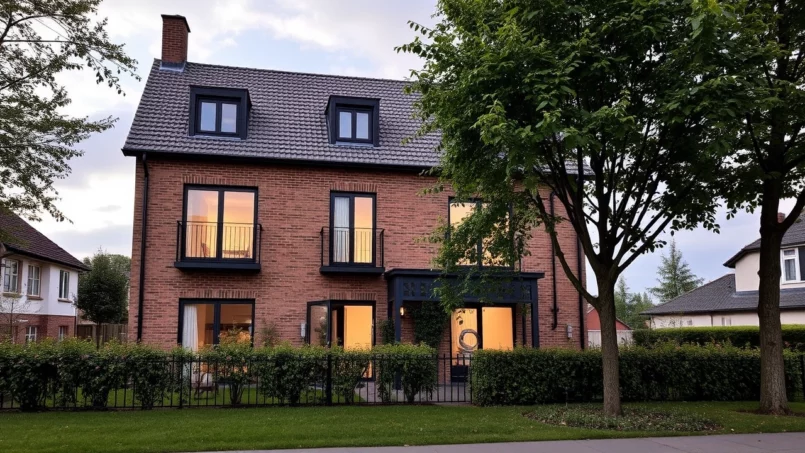
In a city of about 30,000 housing units, the housing stock is predominantly primary residences (over 90%). It is characterized by a high proportion of apartments (about 62%) while retaining a notable suburban dimension, with 36% houses, often in meulière stone or brick, and small apartment buildings. Social diversity is fostered by a significant share of social housing, representing 26 to 28% of primary residences, a factor that also influences the private market.
The homeownership rate is around 42–46% according to sources, versus over 50% tenants. In other words, the private rental market plays an essential role in access to housing, which is an important data point for an investor. The vacancy rate remains contained (around 6–7% of vacant housing), a level generally below the national average and consistent with a market described as “tight” at the scale of Île‑de‑France.
A Growing but Still Affordable Real Estate Market
Multiple databases converge: prices in Drancy have risen significantly in recent years, while remaining well below those of Paris and some neighboring municipalities like Bobigny or Montreuil.
Price Levels: Drancy vs. Department
Several sources place the average price per square meter around €3,200 to €3,700/m² for all housing, with variations depending on property type and data age. More detailed datasets, however, allow for a clear distinction between apartments and houses.
| Indicator | Drancy – Apartments | Drancy – Houses | Seine‑Saint‑Denis (apartments) | Seine‑Saint‑Denis (houses) |
|---|---|---|---|---|
| Average Price Observed (€/m²) | ~3,350 to 3,540 | ~3,210 to 3,470 (listings), ~3,600–3,800 (transactions) | 4,604 (median) | 3,681 (median) |
| Low Range (€/m²) | 2,590–2,660 | 2,430–2,570 | — | — |
| High Range (€/m²) | 4,200–4,380 | 4,080–4,230 | — | — |
| Position in the Department | Price < departmental average | Price slightly < average | — | — |
For apartments, some estimates place the average value around €3,400/m², while the departmental median exceeds €4,600/m². In other words, Drancy costs about 8 to 25% less than the average for apartments in Seine‑Saint‑Denis, making it a relatively affordable entry point to the inner suburbs.
The average price per square meter for houses in the area, slightly below the departmental median of €3,681/m².
Price Trends: Marked Increase, Then Stabilization
Over five to seven years, prices have risen significantly. Some data series mention an increase of about 15% over five years for apartments (from €2,800/m² in 2018 to €3,500/m² in 2023) and between +25 and +30% over seven years according to sources. These figures align with the regional trend: demand remained strong with limited supply in well‑served areas banking on the Grand Paris.
More recently, however, a clear slowdown is observed. Between 2023 and 2025, the average increase is only around 2 to 3%. Some datasets even record slight short‑term declines, particularly for houses: –3 to –4% year‑on‑year in some datasets. For apartments, trends fluctuate between a small decrease (–0.8% year‑on‑year) and a moderate increase (+1.6% over twelve months) depending on the source.
Sales have dropped by over 60% in two years, from nearly 700 transactions in 2022 to just over 200 in 2024, due to rising interest rates. The market, although still active, has become more selective and negotiation has intensified, especially for older houses that do not meet current standards for energy performance, proximity to transport, and comfort.
Neighborhood Segmentation: Significant Price Differences
Statistics by neighborhood show significant price differences within the municipality itself, on which the success of an investment often hinges.
| Neighborhood / Sector | Approximate Average Price (€/m²) | Main Characteristics |
|---|---|---|
| Paris Campagne | ~2,750 (general), ~3,350 (apart.) | Residential neighborhood near Parc de Ladoucette, green environment |
| Old Drancy / Center | ~2,800 (general), ~3,460 (apart.), up to 4,500–5,000 for recent | Town center, town hall, shops, strong rental demand |
| La Muette | ~2,700 to 3,075 | Large apartment complex area, apartment supply, strong history |
| Petit‑Drancy | ~3,280 | Residential suburban sector, north of Bobigny |
| Drancy‑Nord | ~3,800 | Sought‑after sector, well connected |
| Drancy‑Sud | ~3,500 | Potential in older properties needing renovation |
| Drancy East (commercial) | ~3,000 (more for retail) | Industrial/commercial zone |
| Drancy Village | ~3,500 (apart. 2023) | Neighborhood undergoing urban renewal, strong medium‑term momentum |
| Avenir Parisien (houses) | 2,057–5,656 (DVF) | Wide range, heavily dependent on condition and proximity to transport |
For an investor, this heterogeneity is both an opportunity and a pitfall: a recent two‑room apartment near a future metro station will not appreciate in the same way as a house far from transport, even within the same postal code.
Strong Rental Demand and Attractive Yields
Drancy is located in Zone A, meaning it is in an area of high rental tension according to the state. Île‑de‑France is home to over 12 million inhabitants, nearly 30% of the national GDP, and over 700,000 students. In this region, a rental property receives an average of 12 to 15 applications, far more within Paris itself. In this context, well‑served inner‑suburb cities like Drancy mechanically benefit from strong rental pressure.
Rents and Gross Yield
Rental figures vary by source but remain consistent with a “mid‑range regional” positioning, cheaper than Paris but significantly above the French average.
For long‑term rentals, several sources mention:
– an average rent around €14.9 to €20/m²/month depending on the neighborhood (e.g., €20/m²/month in Paris Campagne);
– levels of €16 to €20/m²/month for a three‑room apartment (T3), around €18/m² for a two‑room (T2), and up to €20/m² for a studio.
On aggregated data, the average rent in Drancy is about €20/m². Its recent evolution shows contrasting trends: an increase of 5% over two years is observed in some datasets, while other series indicate a slight decrease, with the price going from €21 to €19/m² between 2021 and 2023.
The impact in terms of yield is far from negligible. Several estimates place the average gross yield of a rental investment in Drancy around 6.39% to 6.9%, with other ranges from 4–5% to 6–7% depending on property type and location. At the departmental scale, the average yield is around 5.16%. In other words, Drancy ranks rather high among Seine‑Saint‑Denis municipalities in terms of yield.
As an indication, yield data by municipality in the department provide this overview:
| Municipality | Average Rental Yield (Gross) | Average Annual Rental Income (€) |
|---|---|---|
| Drancy | ~6.4–6.9% | ~11,400 |
| Bondy | 6.88% | 11,000 |
| La Courneuve | 6.43% | 13,300 |
| Bobigny | 5.80% | 14,500 |
| Aulnay‑sous‑Bois | 5.78% | 11,900 |
| Saint‑Denis | 5.40% | 11,400 |
| Le Blanc‑Mesnil | 5.37% | 13,100 |
| Montreuil | 5.35% | 13,200 |
| Le Bourget | 5.18% | 11,300 |
| Pantin | 4.48% | 15,500 |
It can be seen that Drancy compares favorably to most neighboring municipalities, with an interesting yield/price combination, especially for profiles targeting cash‑flow or building a medium‑term asset base.
Most Profitable Housing Types
The structure of Drancy’s residential stock naturally guides investment strategies. Approximately 21% of residences are two‑room apartments, 30% are three‑room apartments. This dominance of small and medium‑sized units is reflected in demand profiles: students, young professionals, small families.
Several property types stand out in terms of profitability, each offering specific advantages and prospects.
Measures the overall performance of a company relative to all its invested capital, including equity and debt.
Evaluates the specific return on equity contributed by the company’s shareholders or partners.
Focuses on the margin generated by sales activities, analyzing the effectiveness of marketing and sales strategy.
Measures the efficiency of the production or service process, before accounting for financial and tax charges.
– Studios: often the best gross yields (around 5% in some studies, or more in practice with good optimization), thanks to a lower entry cost and very strong demand from young professionals and students. Vacancy risks are lower, especially near transport and job centers.
– T2 (two‑room apartments): a key segment in Drancy, widely represented in the stock and highly sought after by young couples and singles. Rents are positioned around €18/m²/month and estimated gross yields are close to 4.5–5% according to some sources, more if the purchase is negotiated well.
– T3 (three‑room apartments): they constitute 30% of residences and attract families and managers. Gross yields are slightly lower (4–4.5% in some estimates), but rental stability is higher (average lease duration of three years in neighborhoods like Drancy Village).
– Ground floor apartments: often cheaper than higher floors, with lower charges (no elevator) and easier rental. They offer a good yield/price compromise for an investor.
– Garden‑level apartments: highly prized for direct access to outdoor space. In a post‑Covid context where outdoor space is highly valued, a well‑exposed garden‑level apartment can be worth 16 to 20% more than a comparable apartment without a garden. The higher purchase cost may, however, eat into part of the gross yield, but clearly improves liquidity and potential for capital appreciation.
Apartments with a balcony, terrace, or parking sell at a higher price and rent faster and for more. This combination represents an interesting long‑term investment, especially in anticipation of a resale after the improvement of local transport infrastructure.
The Decisive Weight of Infrastructure and Major Urban Projects
Research on the impact of major infrastructure shows that improved accessibility is one of the most powerful drivers of real estate value: increased selling prices, higher rents, better liquidity, and enhanced attractiveness for businesses. In Drancy, this pattern is almost a textbook case.
Grand Paris Express and Metro Extension Effect
Several major projects will profoundly change the commute time map for Drancy residents:
– Grand Paris Express Line 15: “Bobigny‑Drancy” station to the south, which will connect the city to major hubs like La Défense, Saint‑Denis Pleyel, or Champigny without going through central Paris.
– Line 16: “Le Bourget” station to the north, serving Drancy in a few minutes and linking the area to the east of Greater Paris and to La Défense in about a quarter of an hour.
– Extension of metro line 7: to Drancy’s town hall, bringing a large part of the population closer to the future network’s lines 16 and 17 and integrating the town center into the regional metro system.
– Drancy‑Le Bourget Interchange Hub: with a 300‑space park‑and‑ride lot funded by Île‑de‑France Mobilités, unique in the inner suburbs, designed to streamline multimodal travel (car + RER/metro).
Maximum documented increase in real estate value around new transport stations over a ten‑year horizon in some metropolitan areas.
Urban Renewal and Neighborhood Revitalization
Beyond transport, the city has been pursuing an active policy of urban renewal and new construction for several years. The stated goal is to modernize the housing stock, introduce buildings mixing private and social housing, install ground‑floor services, and beautify major avenues.
Several emblematic projects illustrate this momentum:
Discover the main urban renewal and development projects transforming Drancy’s landscape, creating new housing, amenities, and public spaces.
Conversion of a 6.5‑ha railway wasteland into a mixed‑use neighborhood. Program: 750 housing units (owner‑occupied, intermediate, social), 8,000 m² of retail, and a 5,000 m² cultural center with theater and cinemas. Delivery of phase 1 (306 units) scheduled Q2 2026.
Major restructuring with creation of a cultural center, shops, housing, a 5,400 m² landscaped square, a new 20‑class school, and landscaped roads. Goal: to open up the neighborhood and integrate it into the Greater Paris dynamic.
Development of 15 hectares including housing for about 1,500 residents and large green spaces. The project strengthens leisure and sports offerings, complementing the 33‑ha park of the Château de Ladoucette.
Transformation into commercial thoroughfares with the installation of the municipal police, medical offices, an employment center, and local shops, replacing former wastelands and poorly structured roads.
These programs are accompanied by investments in soft mobility (5.5 km of new bike lanes, over 750 additional parking spaces), in educational facilities (energy renovation of school groups, extension of nursery schools), and sports facilities (modernization of Charles‑Sage and Guy‑Môquet stadiums with synthetic turf).
In terms of real estate value, these developments improve quality of life, reduce nuisances, strengthen commercial and cultural attractiveness: all factors that, according to urban studies, contribute to price increases of 3 to 7% in the affected areas, on top of the transport effect.
New Developments: A Key Lever for Investment
The new‑build market in Drancy is particularly dynamic. The municipality currently has over twenty developments ongoing or upcoming, totaling hundreds of housing units offered off‑plan (VEFA), from studios to five‑room apartments.
In 2024, the estimated average price of a new apartment is €3,940/m², a slight increase compared to 2019.
For an investor, new‑build in Drancy offers several advantages:
– compliance with the latest environmental standards (RE2020, or RT2012 for some programs), ensuring good energy performance and thus controlled charges;
– attractiveness to tenants sensitive to comfort, brightness, outdoor spaces (balconies, terraces, gardens), and building amenities (bike storage, connected package lockers, home automation);
– possibility to benefit from targeted tax schemes (Pinel in Zone A, reduced VAT at 5.5% in ANRU areas, Interest‑Free Loan for first‑time buyers, even BRS on some projects);
– reduced notary fees (about 2–3% of the purchase price, versus 7–8% for older properties), lowering the overall investment cost.
There are numerous concrete examples: residences in the town center immediately near the RER B, developments on Avenue Henri‑Barbusse or Avenue Marceau with green spaces, adaptable apartments, penthouse terraces, green roofs. Some programs feature starting prices around €177,500 for a small unit in the Baillet neighborhood (with reduced VAT), or €218,000–€223,000 for two‑room apartments near the town center, often eligible for the Interest‑Free Loan.
Short‑Term Rentals: A Booming Segment
Alongside traditional rentals, Drancy is developing a short‑term rental market (e.g., Airbnb) driven by its proximity to Paris, the Stade de France, airports, and business hubs. Data collected for 2025 describe a market still relatively lightly regulated and growing.
This is the number of active seasonal rental listings recorded monthly in the studied area.
The performance indicators are telling:
– average daily rate (ADR) around €79 ($85), can rise to €114 in high season;
– annual occupancy rate close to 51%, with peaks above 56% in June and lows around 32% in November;
– average annual revenue around €14,400, or about €1,200 per month; this revenue averages €1,819 per month in high season (May to July).
| Time of Year | Average Monthly Revenue (€) | Average Occupancy Rate | Average ADR (€) |
|---|---|---|---|
| High Season (May–July) | ~1,819 | 52.2% | 114 |
| Intermediate Season | ~1,348 | 44.2% | 103 |
| Low Season (Jan., Mar., Nov.) | ~956 | 34.2% | 94 |
| Peak Month | ~1,985 | 56.1% | 123 |
| Weakest Month | ~904 | 32.0% | 92 |
This activity is driven primarily by a French clientele (over 60%), with a strong presence of younger generations (nearly half of travelers from post‑2000 generations). Travelers prioritize Wi‑Fi, a fitted kitchen, heating, and television—standards relatively simple to provide.
For an investor, this rental can be more profitable than a traditional rental, provided they master the regulations (permits, night limits), seasonality, and operational management. The best revenues can exceed €2,900 per month, with a median around €1,000–€1,100, which remains advantageous, especially on small units.
Tax Schemes and Investment Frameworks
Drancy’s positioning in Zone A and in an urban renewal neighborhood opens the door to many interesting tax levers for an investor.
Pinel, Reduced VAT, and Interest‑Free Loan
In Zone A, the city is eligible for the Pinel scheme for investment in new‑build properties intended for rental. This mechanism allows a proportional income tax reduction based on the purchase price (capped) in exchange for a commitment to rent for 6, 9, or 12 years, with capped rents and tenant income. In a market where rental demand remains strong, meeting these caps is rarely a problem, especially for small and medium‑sized units.
Reduced VAT rate applicable to the purchase of a new home for primary residence in certain Drancy neighborhoods classified as ANRU or QPV, subject to income conditions.
LMNP Status and Rental Taxation
The status of Furnished Non‑Professional Landlord (LMNP) proves particularly well‑suited for Drancy, given the high proportion of young professionals and students, and the rental tension. This status allows the landlord to benefit either from:
– a flat‑rate 50% deduction on rental income (micro‑BIC regime), for rental receipts below a certain threshold;
– or, under the actual expense regime, deduct all expenses (loan interest, repairs, management fees, insurance, property tax, etc.) and depreciate the property and furniture, which can eliminate a large part of taxable income for many years.
In a department where gross yields hover around 5–7% and prices remain below Paris, the LMNP is a powerful tool to optimize the taxation of one’s investment, especially for studios and furnished T2 units targeting young professionals.
Paris is subject to rent control, so it is crucial to know the reference rents by zone and property type. However, in this very tight market, a well‑located property in good condition, well‑laid‑out, and with good energy performance will rent easily, even at the maximum authorized rent.
Other Frameworks: Malraux, BRS, Professional BIC…
For more asset‑oriented investors, the Malraux law can come into play on certain heritage renovation projects, with tax deductions linked to major works. The Solidary Real Lease (BRS), already used in Drancy via the Yvelines solidary land organization on some programs, allows buying the building without the land, reducing the purchase price, in exchange for occupancy constraints and regulated resale: this is mainly relevant for owner‑occupation, but the presence of these schemes overall helps support real estate activity and stabilize neighborhoods.
Finally, furnished professional landlord status or structures using real estate civil companies (SCI) can be considered for large portfolios, but require specific tax and legal advice.
Ancillary Costs to Integrate into the Investment Plan
To assess the relevance of an investment in Drancy, it is not enough to compare purchase price and potential rent. Several additional costs must absolutely be factored into the calculation.
Notary and Acquisition Fees
For older properties, notary fees and transfer duties generally total around 7–8% of the price, similar to the rest of France. For new builds, they are reduced to about 2–3%, which constitutes a significant advantage in terms of initial cash outlay.
Concrete simulations show this difference: for a new 70 m² T3 apartment with an acquisition price of about €285,000–€291,000, notary fees would be around €5,700–€5,800, barely 2% of the price. For an older property of the same type at the same price, the notary fee bill would climb to around €20,000 or more, or nearly 7%.
Renovation and Repair Work
Drancy’s housing stock includes a high proportion of homes built between 1946 and 1970 (about 37% of primary residences), often energy‑inefficient and requiring work to meet current expectations and regulatory requirements (DPE, progressive ban on renting thermal sieves).
Average renovation costs are significant and must be anticipated in the project budget.
– light cosmetic refresh: from €240/m²;
– “light” renovation (general refresh): from €490/m²;
– complete renovation: about €860/m²;
– major renovation: around €1,200/m².
For a 70 m² apartment, a complete renovation will cost around €50,000, a major renovation rather around €70,000. The state subsidizes part of energy renovation work via various schemes (MaPrimeRénov’, eco‑interest‑free loan, etc.), and online simulators like Simul’aide allow estimating aid and the remaining cost. For an investor, these amounts must be weighed against the purchase discount for a property needing renovation and the increase in rent (and value) after work.
Property Tax, Charges, and Moving Costs
The observed property tax average in Drancy is around €2,000–€2,100 per year. For a mid‑year acquisition (e.g., in June), the pro‑rata share due by the new buyer according to the sale deed can represent about half this amount (around €1,000). In a financing plan, this annual charge must be integrated, as well as co‑ownership charges, often higher in new builds (elevator, collective heating, green spaces, etc.) but partially offset by better energy performance.
The average cost of a 300‑km move for a 50 m² home.
Which Neighborhoods to Prioritize for Investment?
In light of all these elements, certain sectors of Drancy stand out as particularly interesting for a rental or asset‑building investment.
For a rental investment in Drancy, each neighborhood offers specific strengths. Old Drancy / Town Center, the commercial and administrative heart, offers strong rental demand and decent yields, especially for furnished rentals or Pinel for new builds. Paris Campagne, a residential and green sector, is sought after by families and promises an upgrade. La Muette, with more accessible prices, is ideal for yield provided a rigorous property selection. Petit‑Drancy and Avenir‑Parisien, impacted by the future line 15, combine a pleasant setting and strong potential for capital appreciation. Finally, Baillet and Drancy Village, undergoing transformation, are conducive to off‑plan investments (Pinel, reduced VAT) with high potential upon delivery, despite short‑term construction risks.
Opportunities, Limits, and Outlook
Investing in real estate in Drancy means betting on a city in transition. Historically marked by an industrial and sometimes degraded social image, the municipality is undergoing a gradual upgrade, supported by the Grand Paris major projects, a proactive municipal urban renewal policy, and growing demographics.
The opportunities are real:
– purchase prices lower than many neighboring cities while offering close proximity to Paris;
– gross yields above the regional average, especially on small units;
– dynamic rental market, with a significant share of tenants and high tension in Île‑de‑France;
– potential for value creation linked to new transport infrastructure and urban revitalization;
– wide choice between older properties to renovate (possible discounts) and high‑performance new builds (advantageous taxation and controlled charges).
But certain limitations and points of vigilance exist:
The real estate market in Lille presents a heterogeneous landscape with significant disparities between neighborhoods, requiring a thorough knowledge of the area. Some traditional houses struggle to find buyers if they do not meet new standards for energy performance, comfort, and proximity to transport. The perception of certain sectors, in terms of safety or image, remains mixed despite municipal actions. A recent slowdown in prices and a drop in transaction volumes indicate a more selective market where overpricing is no longer accepted.
Medium‑term forecasts, however, remain rather favorable. Many experts anticipate a continued price increase in well‑connected Grand Paris municipalities, with growth rates potentially reaching several percentage points annually in the most sought‑after neighborhoods. In Drancy, the strengthening of transport, creation of new cultural and sports facilities, improvement of the residential stock, and attractiveness of tax schemes should maintain upward pressure, especially once the current phase of digesting rising interest rates is over.
For an investor, the key will be to combine:
– a good location: proximity to RER/metro/tram, neighborhood undergoing urban renewal, quick access to major employment hubs;
– a suitable property type: studios and T2 to maximize yield with furnished or short‑term rentals, T3 to secure rental stability;
– a clear tax strategy: Pinel for new builds in Zone A, LMNP for furnished properties, optimizing works for older properties;
– a quantified approach meticulously integrating all costs (notary fees, works, property tax, charges, potential property management costs) against realistic rents and not “optimistic” valuations.
Drancy is not a speculative market, but a territory of yield and progressive valorization, embedded in a powerful metropolitan dynamic. For those willing to seriously study its neighborhoods, figures, and projects, investing in real estate in Drancy can constitute a solid piece of an asset portfolio oriented towards the Greater Paris.
Disclaimer: The information provided on this website is for informational purposes only and does not constitute financial, legal, or professional advice. We encourage you to consult qualified experts before making any investment, real estate, or expatriation decisions. Although we strive to maintain up-to-date and accurate information, we do not guarantee the completeness, accuracy, or timeliness of the proposed content. As investment and expatriation involve risks, we disclaim any liability for potential losses or damages arising from the use of this site. Your use of this site confirms your acceptance of these terms and your understanding of the associated risks.

Cyril Jarnias is an independent expert in international wealth management with over 20 years of experience. As an expatriate himself, he is dedicated to helping individuals and business leaders build, protect, and pass on their wealth with complete peace of mind.
On his website, cyriljarnias.com, he shares his expertise on international real estate, offshore company formation, and expatriation.
Thanks to his expertise, he offers sound advice to optimize his clients' wealth management. Cyril Jarnias is also recognized for his appearances in many prestigious media outlets such as BFM Business, les Français de l’étranger, Le Figaro, Les Echos, and Mieux vivre votre argent, where he shares his knowledge and know-how in wealth management.





