
 Published on and written by Cyril Jarnias
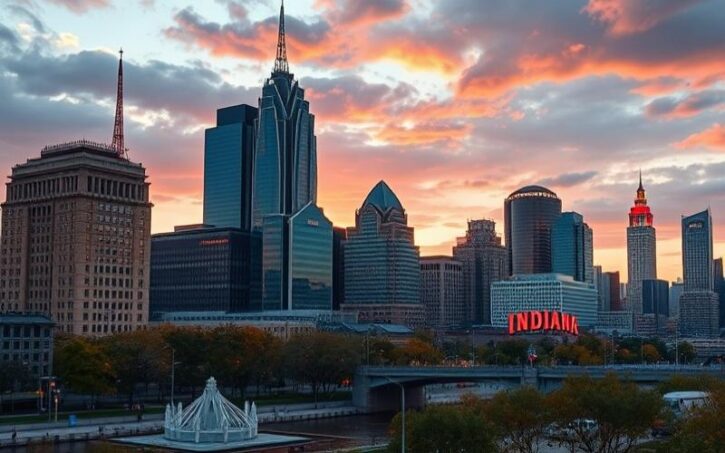
In 2025, the Indiana real estate market presents fertile ground for investors and buyers looking to navigate a rapidly evolving landscape, driven by ambitious infrastructure projects and robust economic growth. In this article, we will explore how cities like Indianapolis, with its growing urban dynamism, are emerging as hubs for young professionals and families, while rural areas offer unique opportunities thanks to agricultural technological advancements and the rise of remote work. As demand for energy-efficient and smartly designed homes intensifies, future trends promise an exciting transformation of the sector.
Price Stability in Major Cities Like Indianapolis
Current Real Estate Price Trends
Real estate prices in Indianapolis have seen a moderate increase in recent years, with average annual growth of about 4 to 6%. Compared to other major Indiana cities like Fort Wayne or Evansville, Indianapolis shows a stronger dynamic, driven by increased housing demand. Projections for 2025 suggest a stabilization around 3 to 5%, in line with national trends.Local Economic Factors
The job market, particularly in the healthcare and logistics sectors, plays a key role in housing demand. Population growth, fueled by an influx of young professionals, keeps pressure on prices. Additionally, urban development projects, such as downtown renovations, could widen disparities between neighborhoods.Impact of Public Policies
Tax incentives for developers and homeownership programs have temporarily boosted the market. However, increased regulation of rents or property taxes could slow this momentum, especially in gentrifying areas.Outlook and Key Neighborhoods
Suburban neighborhoods like Fishers and Carmel are expected to remain stable, thanks to their appeal to families. Conversely, transforming areas like Near Eastside could see fluctuations, depending on future investments. Caution remains warranted given national economic uncertainties.Good to know:
Real estate prices in Indianapolis, as well as in other major Indiana cities, have shown a trend toward stabilization, aided by stable local economic growth and a strong job market. Compared to 2023 levels, estimates for 2025 suggest a slight increase in some neighborhoods due to ongoing urbanization and rising demand. Most urban development is concentrated in central neighborhoods, where accessibility and economic dynamism attract new buyers. Public policies focused on affordable housing and support for local businesses also play a crucial role in this stability. However, some peripheral areas may experience price fluctuations, mainly due to variability in infrastructure investment. For those looking to invest, the Broad Ripple area stands out as particularly stable, with growing demand and an attractive quality of life.
The Impact of Auto Plants on the Rental Market
Impact of Auto Plants on the Rental Market in Indiana
The establishment and expansion of auto plants in Indiana have a significant impact on the local rental market. Job creation attracts a growing workforce, increasing demand for housing in areas near industrial sites. Between 2020 and 2023, the state saw a 12% rise in automotive sector jobs, fueling pressure on rental prices.Rental prices have increased by an average of 8% in counties housing major plants, such as Kokomo and Fort Wayne. This rise is driven by a shortage of available housing, as construction often fails to keep pace with demand. Temporary and seasonal workers exacerbate this tension by opting for short-term rentals.
Demographic shifts show an influx of young workers and families, altering neighborhood compositions. Some municipalities have launched residential development projects to address this growth, but construction delays slow market effects.
Real estate investors see this dynamic as a lucrative opportunity, particularly in suburban areas. However, high land costs and local regulations sometimes complicate projects. By 2025, analysts predict a gradual stabilization of prices, contingent on an increase in supply.
A real estate agent from South Bend testifies: “The plants have transformed our market. Landlords are raising rents, but tenants struggle to find affordable housing.” These tensions highlight the need for adapted urban planning.
Challenges include managing housing access inequalities, while opportunities lie in diversifying investments, such as student housing or shared accommodations. Local stakeholders must anticipate these changes to avoid a housing crisis.
Finally, prospects for 2025 will depend on public policies and private investments. Collaboration between industrialists and municipalities could mitigate imbalances and promote more balanced development.
Good to know:
The growing presence of auto plants in Indiana, as noted in Anderson and Fort Wayne, has significantly boosted rental demand, leading to a 15% price increase over two years and reduced housing availability. In 2023, the automotive sector, employing nearly 130,000 people, contributed to economic growth, facilitating the expansion of local communities that attract new residents. While this expansion offers lucrative opportunities for investors, it poses challenges in terms of affordable housing supply. Testimonials from real estate professionals indicate a growing need for investments in multifamily housing to meet demand, as some neighborhoods undergo rapid transformation, altering their social and demographic dynamics.
The Popularity of Renovated Old Homes in Indiana
The Surge in Renovated Old Homes in Indiana
In 2025, renovated old homes are experiencing growing appeal in Indiana, attracting buyers seeking historical charm and authenticity. According to the latest statistics, sales of these properties have increased by 18% year-over-year, accounting for nearly 25% of the state’s residential real estate market.Reasons Behind This Popularity
Buyers are drawn to unique architectural features, such as original moldings, hardwood floors, or antique fireplaces. These elements, often absent in modern constructions, add sentimental and aesthetic value. Additionally, historic neighborhoods often offer a greener setting and a tight-knit community.Benefits for Buyers
Beyond their charm, these homes represent a sustainable investment. Properties renovated with respect for their history see their value increase faster than the market average. Some even benefit from tax breaks through heritage preservation programs.Challenges to Anticipate
However, these projects are not without difficulties. Renovation costs can exceed estimates, especially if structural work is needed. Restrictions related to historical conservation also limit possible modifications, often requiring approval from specialized bodies.Impact on the Real Estate Market
This trend energizes historic neighborhoods, driving up prices in cities like Indianapolis or Bloomington. Real estate agents note a growing demand for these properties, sometimes at the expense of new homes, which are less prized for their lack of character.Future Outlook
Experts predict this trend will continue, driven by a generation of buyers attached to history and sustainability. Grant programs for renovation could further accelerate this movement, solidifying Indiana as a key market for renovated old homes.Good to know:
The popularity of renovated old homes in Indiana is experiencing a considerable surge in 2025, marked by a significant increase in real estate sales, notably a 15% rise in transactions compared to the previous year. This phenomenon is explained by the historical charm and unique architectural features these properties offer, attracting buyers seeking authenticity and distinction. However, renovating these homes poses challenges, particularly in terms of historical conservation and potentially high costs, requiring rigorous planning. The enthusiasm for these dwellings is helping to revitalize Indiana’s real estate market, creating new economic opportunities while rejuvenating entire neighborhoods. This trend is expected to continue, positively influencing the state’s overall appeal, though balancing heritage preservation and modernization remains a major challenge to ensure sustainable market development.
Growth of Suburban Areas for Remote Workers
Factors Favoring the Development of Suburban Areas
Remote workers in Indiana are favoring suburban areas for their better value-for-money housing, offering more space at lower costs than city centers. The availability of high-performance digital infrastructure, such as fiber optics, facilitates telecommuting. The appeal of a quieter, more spacious environment, with green spaces and a higher quality of life, reinforces this trend.Impact on the Local Real Estate Market
Growing demand for suburban housing is leading to a rise in property prices in these once more affordable areas. This dynamic could also widen housing access inequalities for local populations. Meanwhile, existing infrastructure, such as transport networks and public services, sometimes struggles to keep pace with this rapid growth.Challenges of Suburban Expansion
The development of suburban areas raises major challenges, including the need to improve transportation to reduce car dependency. Access to local services (schools, shops, healthcare) must also be strengthened to meet the needs of new residents. Without adequate planning, this expansion could lead to congestion and urban sprawl issues.Strategies by Authorities and Developers
Local authorities are considering tax incentives to encourage real estate developments suited to remote workers. Projects to expand digital networks and public transport are also planned. Developers are focusing on mixed-use neighborhoods, combining housing, coworking spaces, and amenities, to attract this new clientele while minimizing environmental impact.Good to know:
In Indiana, the growth of suburban areas for remote workers is becoming a notable phenomenon, driven by the search for more affordable and spacious housing than in urban centers. Robust digital infrastructure facilitates telecommuting, making these areas particularly attractive. This expansion is causing a notable rise in real estate prices on the outskirts, presenting the challenge of maintaining affordability. Local authorities and real estate developers are promoting strategies such as improving transport networks and expanding local services to better integrate these new suburban communities. However, proactive adjustments are needed to manage pressure on existing infrastructure and ensure sustainable development.
Disclaimer: The information provided on this website is for informational purposes only and does not constitute financial, legal, or professional advice. We encourage you to consult qualified experts before making any investment, real estate, or expatriation decisions. Although we strive to maintain up-to-date and accurate information, we do not guarantee the completeness, accuracy, or timeliness of the proposed content. As investment and expatriation involve risks, we disclaim any liability for potential losses or damages arising from the use of this site. Your use of this site confirms your acceptance of these terms and your understanding of the associated risks.

Cyril Jarnias is an independent expert in international wealth management with over 20 years of experience. As an expatriate himself, he is dedicated to helping individuals and business leaders build, protect, and pass on their wealth with complete peace of mind.
On his website, cyriljarnias.com, he shares his expertise on international real estate, offshore company formation, and expatriation.
Thanks to his expertise, he offers sound advice to optimize his clients' wealth management. Cyril Jarnias is also recognized for his appearances in many prestigious media outlets such as BFM Business, les Français de l’étranger, Le Figaro, Les Echos, and Mieux vivre votre argent, where he shares his knowledge and know-how in wealth management.





