
 Published on and written by Cyril Jarnias
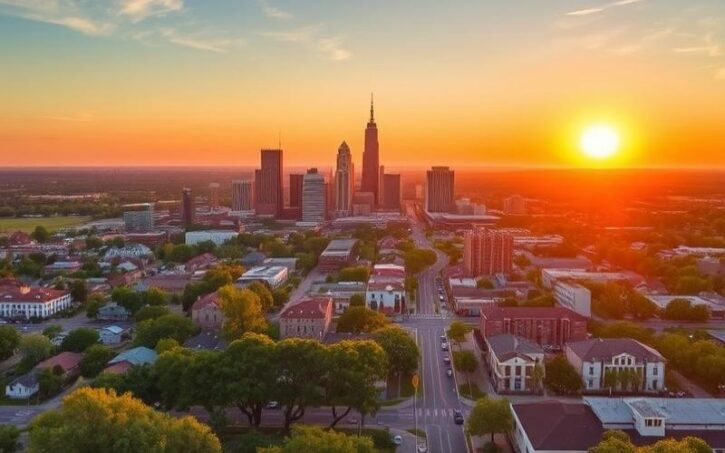
When discussing investing in real estate in Texas, one naturally thinks of Dallas, Fort Worth, or Austin. However, more and more investors – both American and foreign – are now looking towards a fast-growing city in the Dallas-Fort Worth metropolitan area: Investing in Real Estate in Mansfield. This market combines demographic dynamism, prices still affordable by Texas standards, a quality of life highly sought after by families, and a solid economic base that supports rental demand.
This article analyzes the local real estate market in Mansfield, Texas, using factual data. It aims to identify investment opportunities, property types to prioritize, neighborhoods to target, and provides a framework for evaluating returns, risks, and defining a strategy, specifically designed for a French-speaking investor.
Mansfield in the Dallas–Fort Worth Metroplex: A Strategic Location
Investing in real estate in Mansfield means first betting on a prime location within the Dallas-Fort Worth Metroplex. The city fully benefits from this proximity while maintaining a distinctly residential atmosphere. It is located about thirty miles from downtown Dallas and about twenty miles from Fort Worth, with quick access to major highways, especially US Highway 287 and State Highway 360.
The city of Mansfield benefits from a diversified economy, fueled both by the major employment hubs nearby (Dallas, Fort Worth, Arlington) in dynamic sectors (technology, finance, engineering, business services) and by the development of its own local activity centers (healthcare, education, logistics, retail). The presence of major employers like Mouser Electronics and Methodist Mansfield Medical Center anchors a stable local demand for housing, reducing risk for investors by guaranteeing a pool of potential tenants.
The living environment is clearly suburban: quiet residential neighborhoods, single-family homes with yards, well-rated schools, parks, and golf courses. This combination of “residential tranquility + quick access to major employment centers” is precisely what families and professionals are looking for, and forms a solid foundation for a medium- or long-term investment project.
Rent Levels and Affordability: A Competitive Yet Accessible Rental Market
One of the strengths of the local market is the rent levels, relatively attractive for tenants while remaining interesting for landlords considering the average incomes in the Dallas–Fort Worth area.
The most recent data indicate:
| Indicator | Value in Mansfield (TX) | National Comparison |
|---|---|---|
| Average monthly rent (all types) | $1,453 | 11% below the US average ($1,624) |
| 12-month change | -2.2% (i.e., -$32/month) | Trend toward moderation after the national spike |
| Average studio rent | $1,371 | — |
| Average 1-bedroom rent | $1,453 | — |
| Average 2-bedroom rent | $1,858 | — |
| Average 3-bedroom+ rent | $2,431 and up | — |
For an investor, this rent structure sends several signals. First, the environment remains competitive for tenants, since rents are significantly below the national average. This reduces pressure on vacancy during an economic downturn: when a household must adjust its housing budget, Mansfield remains more affordable than many comparable US markets.
The slight annual decline in rents (-2.2%) indicates a phase of normalization after years of high tension. For landlords, this requires adopting prudent financial projections without counting on constant increases. This stabilization can also represent an opportunity to enter the market.
Following the common rule often cited in the US – not spending more than 30% of monthly income on rent – a household needs to earn about $4,843 per month (just over $58,000 per year) to afford an average rent of $1,453. In the Dallas–Fort Worth employment basin, this income level corresponds to a broad active middle class, which fuels a continuous flow of demand for quality housing in a school-focused and family-oriented city like Mansfield.
Sale Prices, Value Dynamics, and Property Type Mix
On the acquisition side, investing in real estate in Mansfield means factoring in a price level already significantly higher than in secondary markets in Ohio or other Midwestern states, but still consistent for an attractive Texas suburb.
Available data for summer 2025 paints a fairly precise picture:
| Indicator | Value in Mansfield (TX) |
|---|---|
| Median list price (August 2025) | $525,000 |
| Annual change in median price | +1.8% |
| Median sale price | $515,000 |
| Average sale-to-list price ratio | -1.31% |
| Median price per sq ft (approx., via $/sqft) | $189/sqft |
| Number of properties for sale | 961 |
| Price range | $30,000 to $9.5M |
This price level reflects several characteristics. First, the market is driven by the residential appeal of the southern DFW metroplex. Second, the inventory is fairly diverse, with nearly a thousand properties for sale, ranging from very affordable lots to high-end properties exceeding several million dollars.
The median home price increased by 1.8% year-over-year, a sign of a balanced and controlled market.
The slight discount seen in sales relative to asking price (about -1.31%) indicates that buyers still have some negotiating room, even in a context of strong demand. For an investment project, it is therefore realistic to factor in some flexibility on the purchase price, especially for properties needing renovations or upgrades.
A Deep and Expanding Rental Market
The other key indicator for an investor is, of course, the size of the rental supply and the profile of available rental properties. Mansfield shows a solid volume, consistent with its size and role as a major residential city in the metro area.
There are approximately 314 rental properties listed, with rents ranging from about $1,100 to $7,500 per month. This very wide range reflects the coexistence of small apartments for young professionals or modest households, and large family homes or upscale properties, sometimes located on golf courses or near bodies of water.
Specialized platforms such as Apartments.com or HAR.com list about twenty apartment complexes in the city, including:
| Complex / Residence | Unit Types | Indicative Rent Range |
|---|---|---|
| The Alexander (1725 E Broad St) | 1 to 3 bedrooms | $1,420 to $3,465 / month |
| Main Street Lofts | Studios, 1-2 BR | Studios from ~$1,192, 1 BR from $1,085, 2 BR from $1,420 |
| Atwell, Mason & Mill, Watercrest at Mansfield | Upscale apartments | Mid to high price range |
This segment of structured apartments particularly attracts young professionals, singles, childless couples, and seniors looking to minimize maintenance. For an investor, buying a condo in one of these complexes – or, for a more capitalized operator, investing in a small building – allows targeting a mobile audience, often more tolerant of smaller space but demanding regarding amenities (pool, gym, common areas).
Demand for single-family home rentals in Mansfield remains strong, primarily driven by families with children. They are attracted by the Mansfield Independent School District schools and the perceived safety of residential neighborhoods. This market segment allows targeting monthly rents between $2,000 and $2,500, with lower tenant turnover rates than in urban rentals.
Neighborhood Mapping: Where to Invest in Mansfield?
Investing in real estate in Mansfield means understanding the mosaic of neighborhoods and subdivisions that make up the city. Many residential areas have very different profiles in terms of price range, prestige, appreciation potential, and rental risk.
Among the main neighborhoods and communities cited, we find:
| Neighborhood / Community | Positioning and Key Features | Price / Accessibility (Indications) |
|---|---|---|
| Walnut Creek Valley | Well-manicured landscapes, family atmosphere, reputable schools, strong community cohesion, surrounding a private country club | Sought-after neighborhood, rather upscale |
| The Arbors of Creekwood | Large lawns, mature trees, brick-paved streets, established atmosphere | Most expensive neighborhood, median prices around $520,000 |
| Hillcrest | More affordable segment, competitive prices | Most accessible neighborhood, median around $294,900 |
| South Pointe | Vast master-planned community, modern amenities, parks, trails, lakes | New homes often above $500,000 |
| Mira Lagos | Lake views, water recreation, open landscapes | Mid to upper-end residential segment |
| Kings Mill | Spacious properties, upscale positioning | High entry price points |
| Lakes of Creekwood | Custom home subdivision with three lakes, catch-and-release fishing | Luxury / custom segment |
| Strawberry Fields | Large lots, prestigious neighborhood | Upscale positioning |
| Mansfield National | Neighborhood organized around a public golf course, golf-themed streets | Very popular among golf enthusiasts and active retirees |
| Downtown Mansfield (historic center) | Older quarter, shopping streets, restaurants, walkable lifestyle | Interesting for renovation, small spaces, urban rental |
This overview illustrates a clear market segmentation. Some neighborhoods like The Arbors of Creekwood, Strawberry Fields, Kings Mill, or Lakes of Creekwood are safe bets for a long-term wealth strategy, with an audience that has strong purchasing power and high sensitivity to the quality of the environment, schools, and safety. Gross rental yields will often be more modest, but stability of values and the ability to resell at a good price over time play a key role.
The Hillcrest neighborhood, with a median purchase price of about $295,000 (the most affordable in the city), allows prioritizing investment strategies oriented towards cash-flow generation. Indeed, the ratio between purchase price and potential rents is more favorable. However, this opportunity comes with specific considerations: the tenant profile may be more varied and the risk of rental vacancy slightly higher than in other areas.
South Pointe and other large developing communities (Somerset, M3 Ranch, Colby/“Kobe” Crossing, etc.) offer a prime playground for those looking to invest in new construction, with the idea of capturing the value created by the ongoing urbanization of the southern metroplex.
Major New Communities: An Engine for Land Value
One of the standout features of the local market is the presence of large-scale master-planned communities, designed from the outset as complete neighborhoods integrating roads, green spaces, amenities, sometimes schools, and strict architectural guidelines.
Among the most iconic:
| Community | Area / Concept | Price Range and Builders |
|---|---|---|
| M3 Ranch | Over 900 acres, resort-style pool, trails, lake with waterfall | Homes between $500,000 and $1M, builders like American Legend, Perry Homes, John Houston, Highland Homes |
| South Pointe | Approximately 870 acres between Highway 360 and 287, many parks and bodies of water | Prices starting in the low $500,000s, builders David Weekley, Coventry, Boyd Homes, Kovanian, Grand Homes |
| Somerset | Planned subdivision south of 360 | Homes from the mid $400,000s to about $700,000, John Houston Homes, Chessar, Bloomfield |
| Colby Crossing | Garden home neighborhood near Broad Street | Prices from the high $400,000s to $900,000, Dre’s Homes and Windsor Homes |
| Birdsong, Watson Ranch, Bowers Ranch, Triple Diamond Ranch | New communities under development | Variable positioning, often mid to upscale |
For an investor, these developments offer several advantages. First, they are designed to attract a family clientele with comfortable incomes, willing to pay a premium for a new environment, recreational amenities, and architectural consistency. This translates into rents above the city average, especially for 4- or 5-bedroom homes.
The concentration of public and private investments (roads, utilities, schools, retail) in new areas tends to support land appreciation. Over a 10- to 15-year horizon, these subdivisions have a good chance of being among the most valued in the city, provided the regional economy remains dynamic.
On the flip side, entry prices are high and gross rental yields may be lower than in older or more modest neighborhoods. The investor must therefore be clear about their strategy: prioritize tenant quality, low vacancy, and long-term appreciation rather than very high immediate cash flow.
Safety, Quality of Life, and Schools: Drivers of Appreciation
An element that consistently appears in market studies: the safest neighborhoods with quality schools and a good level of services generally see their property values rise more steadily and hold up better during a downturn.
Mansfield is generally perceived as a safe city, with a relatively low crime rate compared to other areas in the DFW metroplex. Certain neighborhoods are explicitly cited as particularly secure, such as Walnut Creek Valley, Lowe’s Farm, Heritage Estates, Holland Estates, or Somerset. Community policing initiatives with neighborhood watch programs contribute to this reputation.
The Mansfield Independent School District (MISD) offers a quality educational framework with a variety of schools and specialized programs.
The district includes well-regarded high schools such as Mansfield High School and Lake Ridge High School.
Examples of renowned elementary schools: Willie Brown, Elizabeth Smith, Cora Spencer, and Nancy Neal Elementary.
MISD offers academies in STEM, arts, and Advanced Placement (AP) programs, an attractive factor for families.
For a residential landlord, investing in an area zoned for one of the top MISD schools generally increases the property’s appeal to creditworthy tenants and supports demand upon resale. This is typically the case in neighborhoods like Walnut Creek Valley, South Pointe, or Mira Lagos.
Cost of Living, Local Taxes, and Net Returns
Beyond just property prices, investing in real estate in Mansfield requires looking at the cost of living and the tax burden on owners. Cost-of-living data from the C2ER index indicate that Mansfield remains overall more affordable than Dallas or Fort Worth in most categories, especially housing.
The city stands out for having some of the lowest property taxes in the region. In the state of Texas, where these taxes represent a significant part of ownership costs, a moderate rate helps improve net annual returns, especially for high-value properties.
If we combine:
– an average rent below the national average but reasonable by DFW standards,
– sale prices in the median range for a Texas residential city of this profile,
– and relatively low local property taxes,
we get an environment conducive to classic buy-and-hold rental operations where one aims for both a reasonable positive cash flow and moderate but steady appreciation of the property value.
Nature of Rental Demand: Families, Professionals, Seniors
The city attracts a fairly broad spectrum of households, allowing investors to adapt their strategy to the target audience. Available demographic data indicate a diverse population, with about 60% White, 20% African American, 15% Hispanic or Latino, 4% Asian, and the rest from other origins. This diversity is reflected in the socio-economic structure of rental demand.
The monthly rent level for a well-located home targeting families with children, offering attractive occupancy stability for the investor.
Young professionals, whether they work in Mansfield itself or commute to Dallas, Fort Worth, or Arlington, tend to lean towards apartments in large complexes (Main Street Lofts, The Alexander, etc.) or small townhomes near major thoroughfares. Lower rents than in the “top school” neighborhoods allow them to stay within a reasonable budget while enjoying the suburban setting.
Finally, seniors and active retirees, drawn by golf courses (Walnut Creek Country Club, Mansfield National), nature parks (Oliver Nature Park, Katherine Rose Memorial Park), and a perceived safe environment, constitute an increasingly important clientele, particularly for single-story homes, easy-maintenance condos, or service-enriched residences.
Investment Opportunities: Buy-and-Hold, Flip, New Construction, and Repositioning
Given this landscape, several investment avenues clearly emerge.
A first strategy is to buy a single-family home in a solid family neighborhood (Walnut Creek Valley, parts of South Pointe, certain sections of Heritage Estates or Mira Lagos) and rent it long-term to a family. Gross yields can range around 4 to 6% depending on purchase price and rent, but the likelihood of prolonged vacancy remains limited, especially if the property is well-maintained and in a good school zone.
One strategy is to invest in older, more affordable neighborhoods like Hillcrest or certain areas around downtown. These properties have a lower entry price and can generate decent rent, thus offering potentially higher gross yields. However, this approach has trade-offs: the investor must be prepared for more significant maintenance, higher tenant turnover, and increased vacancy risk in the event of an economic downturn.
A third, more wealth-building path is to enter a large new community like M3 Ranch, Somerset, or Colby Crossing, with the idea of benefiting from the area’s gradual upgrade. This involves a substantial initial financial effort, often modest gross rental yields, but a bet on land value appreciation over ten to fifteen years, supported by the population growth of the southern metroplex.
Mansfield’s historic downtown presents opportunities for opportunistic investors. Value can be generated through renovation, change of use, or property division. This potential fits within a favorable context of revitalizing shopping streets, improving dining and entertainment offerings, and growing demand for a human-scale urban lifestyle.
Role of Local Real Estate Services and Platforms
For an investor, especially a foreign one, a fine understanding of the market comes through professional intermediaries. Agencies like the McGraw Group (Keela & Torrey McGraw, Front Real Estate Co.) or specialized structures like Southern Hills Home Buyers – which purchases homes for cash in the area – are part of this ecosystem.
Major online platforms (Apartments.com, HAR.com) provide a real-time view of inventory, rents, and listing trends. To calibrate return assumptions, quantitative data from sources like CoStar Group (for rents) and the C2ER index (for cost of living) are essential.
A savvy investor also cross-references this information with local statistics on appreciation, days on market, vacancy rates, and crime, to fine-tune their acquisition strategy neighborhood by neighborhood.
Risks and Factors to Monitor
Like any real estate market, investing in real estate in Mansfield is not immune to standard risks. A rapid rise in interest rates could weigh on buyers’ borrowing capacity and slow price growth. A regional economic downturn affecting major employers in the DFW metroplex would have a potential impact on rental demand and vacancy rates.
At the micro-local level, supply persistently exceeding demand in certain new communities could weigh on resale prices and rents. Furthermore, future changes in zoning or local taxation, if less favorable to residential investment, could durably affect project profitability.
Diversification by property type (single-family homes, condos, small multifamily) and by neighborhood (combining upscale and more affordable areas) remains the best way to smooth these risks. Additionally, prudence in assumptions about rent and value increases, as well as building cash reserves for maintenance and contingencies, are fundamental rules to follow scrupulously.
How to Build a Cohesive Strategy in Mansfield?
For a French-speaking investor discovering this market, a structured approach could involve several steps.
First, clarify your objectives: are you looking for intermediate-term supplemental income, long-term wealth appreciation, or a combination of both? The answer conditions the choice of neighborhoods and property types. A cash-flow-oriented profile would benefit from closely studying more affordable areas like Hillcrest or certain older neighborhoods, while a wealth-building profile will likely favor South Pointe, M3 Ranch, or upscale subdivisions around lakes and golf courses.
It is advisable to test the robustness of a rental real estate project by simulating various unfavorable scenarios. For example, evaluating the impact on returns if rents stagnate or decline slightly over 3 to 5 years, if borrowing rates remain high, or if the vacancy period between tenants lengthens. This analysis helps avoid overpaying for a property based solely on a temporarily favorable market climate.
It is also recommended to meet several local real estate agents, ideally those specialized in working with investors, to gather on-the-ground feedback on micro-neighborhood trends, tenant perceptions, school quality, or infrastructure projects that might impact a specific area.
Managing a property remotely from France or abroad is rarely realistic. It is advisable to use a local property manager. This professional handles tenant screening, rent collection, repair coordination, and regulatory compliance. This service comes at a cost, but also provides security. In a city with a sufficiently active rental market, this cost can generally be incorporated into the business plan without compromising the overall project profitability.
Conclusion: Mansfield, a Texas Market at a Crossroads
Putting all the available pieces together, investing in real estate in Mansfield appears as an interesting opportunity for an investor willing to commit to the long term and accept the specificities of a highly qualified suburban residential market.
The city accumulates several strengths: a strategic location in the Dallas–Fort Worth Metroplex, a diversified economy supported by solid employers, a family-oriented quality of life, attractive schools, safe neighborhoods, and a housing stock ranging from affordable homes to luxury subdivisions on golf courses or around lakes.
Purchase prices are already high compared to secondary markets in the Midwest, but remain consistent for a growing Texas suburb, especially considering relatively moderate property taxes and a cost of living lower than Dallas or Fort Worth. Rents, below the national average, offer a good compromise between tenant attractiveness and return potential for landlords.
As always, the key lies in careful selection of properties and neighborhoods, prudence in financial assumptions, and support from a strong local network. For a French-speaking investor looking to diversify their wealth into US dollars in a promising market, Mansfield certainly deserves serious consideration, not as a promise of spectacular short-term returns, but as a solid piece in a diversified Texas real estate strategy.
Disclaimer: The information provided on this website is for informational purposes only and does not constitute financial, legal, or professional advice. We encourage you to consult qualified experts before making any investment, real estate, or expatriation decisions. Although we strive to maintain up-to-date and accurate information, we do not guarantee the completeness, accuracy, or timeliness of the proposed content. As investment and expatriation involve risks, we disclaim any liability for potential losses or damages arising from the use of this site. Your use of this site confirms your acceptance of these terms and your understanding of the associated risks.

Cyril Jarnias is an independent expert in international wealth management with over 20 years of experience. As an expatriate himself, he is dedicated to helping individuals and business leaders build, protect, and pass on their wealth with complete peace of mind.
On his website, cyriljarnias.com, he shares his expertise on international real estate, offshore company formation, and expatriation.
Thanks to his expertise, he offers sound advice to optimize his clients' wealth management. Cyril Jarnias is also recognized for his appearances in many prestigious media outlets such as BFM Business, les Français de l’étranger, Le Figaro, Les Echos, and Mieux vivre votre argent, where he shares his knowledge and know-how in wealth management.





