
 Published on and written by Cyril Jarnias
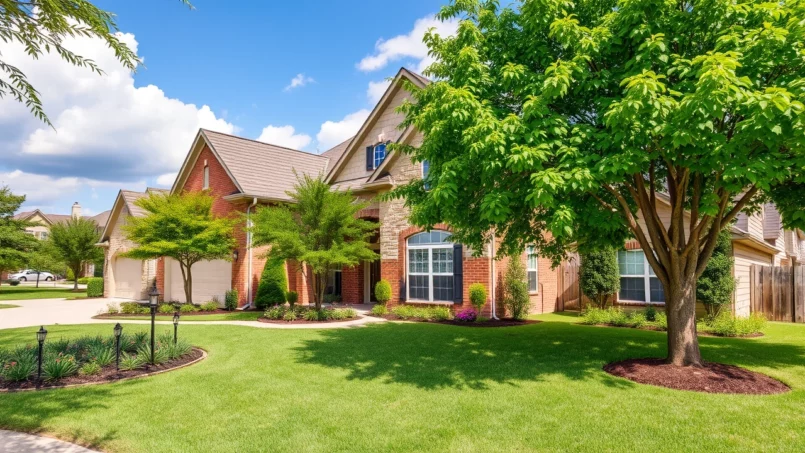
Fans of steady cash flow, long-term capital appreciation, and resilient markets—investing in Friendswood real estate checks a lot of boxes. This small town in Greater Houston, founded by Quakers in the late 19th century, has become one of the most sought-after residential markets in the region, driven by top-tier public schools, a very family-friendly quality of life, and sustained real estate growth.
Friendswood combines stability, appreciation potential, and diverse yield options (long-term or short-term rentals, new construction, resale, second homes). However, you must factor in local taxes, storm risks, the dual counties of Harris and Galveston, and specific financing rules.
This report offers a structured deep dive into the market to help you evaluate, quantify, and secure a Friendswood real estate investment, whether you’re a local investor, a newcomer to Texas, or a savvy buyer.
Friendswood: A Strategic Position in Greater Houston
Located about 22 miles south of Houston and 33 miles north of Galveston, Friendswood fully benefits from the metropolitan dynamic without suffering extreme urbanization. It lies west of Interstate 45 (Gulf Freeway), between Pearland and League City, on a generally flat area crossed by several bayous, including Clear Creek.
Travel time in minutes to reach William P. Hobby Airport from the area—a major advantage for frequent travelers.
The city straddles two counties, Harris to the northwest and Galveston to the southeast—a crucial factor for taxes, insurance, school district boundaries, and even certain regulatory constraints. The primary zip code is 77546.
With just over 40,000 residents, a median household income around $110,000, and a homeownership rate of over 76%, Friendswood resembles an affluent suburb, very family-oriented, focused on safety and community life, with a network of parks (over 250 acres), sports facilities, and municipal events.
Why Friendswood’s Real Estate Market Attracts Capital
Texas is already a leading state for real estate investment: population growth, a diversified economy, pro-business tax policies (no state income tax), quick foreclosure procedures, and relatively accessible financing. Within this environment, Friendswood stands out for several key characteristics.
An Expensive Market for Texas, But Supported by Demand
At the state level, Friendswood properties are among the pricier ones, yet they don’t rank among the nation’s most absurdly priced. Several indicators illustrate the market’s upscale trend:
| Indicator (citywide) | Approximate Value |
|---|---|
| Median home value | $431,000 – $534,000 |
| Typical home value (ZHVI Zillow) | ~$445,600 |
| Median list price (listings) | ~$431,800 |
| Median sold price (recent) | ~$503,000 – $557,000 |
| Median price per sq ft (approx.) | $178 – $204/sq ft |
Over the past few years, appreciation has been impressive: +111% cumulative over a decade, averaging 7.75% per year. Over the last twelve months, the increase is around 4.8%, with the most recent quarter annualized near 8.9%. These figures place Friendswood in the top tier of Texas for appreciation.
After a period of strong growth, the housing market shows a slight dip, with typical home value down 0.6% and median price down about 5.8% year-over-year. This correction, not a collapse, often creates a healthier environment more conducive to negotiation.
A Family Profile Driving the Large-Home Segment
One of the market’s defining characteristics is the average home size. The proportion of homes with four, five, or more bedrooms puts Friendswood ahead of 98% of U.S. municipalities. About 68.6% of homes have three or four bedrooms, and nearly three-quarters are owner-occupied.
This configuration supports:
– Strong rental demand from families seeking single-family homes,
– Sustained appreciation for larger homes,
– A higher entry price, but often lower risk of prolonged vacancies in good school zones.
The dominant property type is the single-family home (ranch-style from the 1960s-70s, traditional brick houses, contemporary builds, and custom homes).
Schools That Drive Value and Demand
When investing in Friendswood real estate, you can’t ignore the school district map. The city is famous for the quality of its public school system, a decisive factor for a family clientele willing to pay a premium to stay within certain boundaries.
Two major districts divide the territory:
| Zone | Main School District | Overall Reputation |
|---|---|---|
| Galveston County portion | Friendswood ISD (FISD) | Rated “A,” top in TX |
| Harris County portion | Clear Creek ISD (CCISD) | Very highly rated |
Friendswood ISD is consistently ranked among the best in Texas, with a high school and junior high rated “A” in most rankings, a favorable student-to-teacher ratio, and academic results above average. Several elementary and intermediate schools score 9 or 10 on GreatSchools.
In new construction, builders readily highlight this school district: of 40 recent new-build listings analyzed, 26 are associated with Friendswood High School and Friendswood Junior High, both rated “A,” which partly explains the higher prices in those subdivisions.
Direct consequence for investors: strong “flight to quality.” Properties well-positioned in the best school zones sell faster, hold their price better, and rent more quickly at higher rents.
A Market Still Slightly Favorable to Sellers, But More Negotiable
The market is generally described as a seller’s market with about 2.5 months of inventory, but signals are nuanced:
Average days to pending for a recent contract, with a median of 53 days across a broader sample.
On the supply side, there is a medium-term increase in the number of listings (over 30% more listings in 77546 year-over-year) but a decline in recent new listings. Days on market are increasing year-over-year, price reductions are more common, and inventory is rising after an extreme period of undersupply. The market is thus shifting from an overheated environment toward a balance that gives buyers a bit more room to negotiate.
Prices, Segments, and Neighborhoods: Where to Position Yourself for Investment?
One of Friendswood’s strengths is offering several “tiers” of market, ranging from more affordable neighborhoods to very upscale subdivisions, while remaining mostly residential and socio-economically homogeneous.
Price Ranges by Home Type
Transaction data show clear gaps depending on property size:
| Home Type | Average Sale Price |
|---|---|
| 3 bedrooms | ~$318,000 |
| 4 bedrooms | ~$517,000 |
| 5 bedrooms | ~$774,000 |
| 6 bedrooms | ~$1,454,000 |
| Home with pool | ~$647,000 |
| Starter segment (citywide) | $300,000 – $400,000 |
| Move-up segment | $450,000 – $700,000 |
| Luxury market (citywide) | $750,000 and up |
Meanwhile, several reports indicate a median price oscillating between $470,000 and nearly $570,000 in fall 2025 for 77546, with price per square foot climbing to around $200 (and sometimes above $204 in that same zip code).
In other words, an investor targeting a standard 4-bedroom family home in a good subdivision often faces an entry price above $500,000, especially in the most sought-after FISD neighborhoods.
Iconic Neighborhoods for Investment
Several subdivisions regularly appear in the data, with different profiles in price, dynamics, and potential strategy.
Some sample figures:
| Neighborhood | Median Price | Median Price/sq ft | Average Days on Market | Notes |
|---|---|---|---|---|
| Wedgewood Village | ~$275,000 | $152/sq ft | ~86 days | More affordable, rents ~$1,995 |
| Autumn Creek | ~$540,000 | $154/sq ft | ~55 days | Good mid-range market, strong rental activity |
| West Ranch | ~$725,000 | $192/sq ft | ~33 days | Upscale, few rental listings |
| The Forest of Friendswood | ~$702,000 (list) / $807,000 (sold) | $182–$192/sq ft | ~28–32 days depending on period | Very competitive, frequent multiple offers |
| Friendswood Lakes | ~$798,000 (Jan. 2025) | — | — | Annual increase ~38.7% |
Wedgewood Village illustrates a more accessible segment, suited for a cash-flow strategy with median rent around $1,995 and a median price significantly below the city median. The longer time on market reflects a less tight market, but also opportunities for better gross yield purchases.
Conversely, West Ranch or The Forest of Friendswood represent the family-oriented high end: large homes, generous lots, proximity to top-rated schools, quick time on market, and high competition. These areas are better suited for a long-term appreciation strategy or a primary/upscale second home than aggressive cash-flow, even though rental demand remains good there.
The Leverage of New Construction: Subdivisions and City Center
For an investor, new construction in Friendswood is no longer marginal. Between large residential programs and a massive mixed-use project in the works, it constitutes a major axis of the city’s future trajectory.
Recent Residential Communities
Several new or developing communities deserve particular attention, both for rental investment and medium-term resale.
Among them:
| Community (Friendswood) | Price Range (from) | Typical Size | No. of Lots / Status |
|---|---|---|---|
| Beamer Villas | ~$323,990 | 1,436 – 2,731 sq ft | 3-4 bed homes, zip 77546 |
| Legacy 65 | ~$619,990 | 2,671 – 3,915 sq ft | 3-5 bed, upper segment |
| Avalon at Friendswood 60s | ~$649,989 | ~3,000 – 3,690 sq ft | 3-5 bed, new phase |
| Avalon at Friendswood 70s | ~$699,900 | 3,174 – 4,614 sq ft | 4-5 bed, high-end |
| Friendswood Trails (D.R. Horton) | Variable | 306 lots (175 remaining) | Phased, expansion plans |
In Avalon at Friendswood, recent listings illustrate the positioning:
– Homes between ~$650,000 and over $1.5 million,
– Sizes from 3,000 to over 5,500 sq ft,
– 4 to 5 bedrooms, 3 to 5 bathrooms,
– Strongly tied to FISD planning, which boosts appeal for affluent families.
From an investor’s perspective, these programs are especially interesting for:
To optimize a second home investment, several strategies are possible: occasional short-term rentals, while ensuring compliance with local and HOA rules; resale over a 5- to 10-year horizon to capitalize on neighborhood appreciation and land scarcity; or possibly long-term leasing to professionals, provided rents are high enough to offset taxes and costs.
At the other end of the spectrum, Beamer Villas, with prices starting in the mid $300,000s, can offer a more accessible entry point while still benefiting from the city’s overall appeal.
Friendswood City Center: A Game-Changing Project for Future Value
To understand the trajectory of real estate investment in Friendswood over the coming years, look at a major project: the Friendswood City Center, a colossal mixed-use development on over 100 acres along FM 528, at the corner of Bay Area Boulevard.
This project, with an estimated cost of $750 million, includes:
– A 54-acre mixed-use district with retail, offices, restaurants, and entertainment,
– Approximately 150,000 sq ft of retail, 200,000 sq ft of office and medical space,
– A 500-unit apartment complex,
– A boutique hotel with around 150 rooms,
– A 5,000 sq ft convention center,
– 225,000 sq ft of condos in mixed-use structures,
– Spaces for neighborhood services and recreation.
A natural space deeded to the city, offering a variety of amenities for outdoor leisure and relaxation.
Several miles of bike and pedestrian paths for walking and cycling.
A lake dedicated to fishing, equipped with a pier for easy access.
Natural areas developed to preserve biodiversity.
Parking lots and public restrooms to welcome visitors in the best conditions.
Developers announce an expected economic impact of around $700 million for the municipality, and nearly $60 million in infrastructure spending, including the extension of Blackhawk Boulevard to connect FM 528 and West Bay Area Boulevard.
For an investor, this type of project changes the game:
– It boosts residential attractiveness (more recreation, restaurants, services),
– It supports the high-end rental segment nearby,
– It creates new demand for retail, office, and housing around the site,
– It solidifies Friendswood’s perception as a “city on the rise”, positively impacting medium/long-term appreciation.
Announced completion timelines are between three and four years from the start of vertical construction. Today’s investors positioning themselves near the future City Center are clearly banking on an anticipation effect.
Long-Term Rentals: Understanding the Numbers and Demand
Beyond resale, traditional rentals remain a pillar of Friendswood real estate investment. The rental market shows mixed signals but is generally favorable for medium-term holding.
Rent Levels and Recent Dynamics
Multiple sources give slightly different levels, but the overall picture is consistent.
| Rental Indicator (citywide) | Approx. Value |
|---|---|
| Median monthly rent (all properties) | ~$1,940 |
| Average rent (alternative source) | ~$2,200 |
| Average 1-bedroom rent | ~$1,339 |
| Average rent (other report) | ~$1,590 |
| Number of rental properties | ~141 (some sources) |
| Annual change in median rent | -4.9% |
| Change in number of rental listings | +42% year-over-year |
So we see:
– Rents above the national average (about +9% per one indicator),
– A notable increase in available rental inventory,
– A slight decline in median rents year-over-year, signaling a market absorbing more supply.
For an investor, properties remain attractive, but the strategy must be adjusted. Location, property quality, and rent price become key factors to avoid prolonged vacancies.
Examples of Single-Family Home Rents
Several listings illustrate the range of levels for homes:
| Address (examples) | Rent / month | Bedrooms | Approx. Size |
|---|---|---|---|
| 208 E Magnolia St #A | $2,000 | 2 | 800 sq ft |
| 4202 Townes Forest Rd | $1,900 | 3 | 1,435 sq ft |
| 17011 Bougainvilla Ln | $1,800 | 3 | 1,491 sq ft |
| 259 E Castle Harbour Dr | $2,050 | 3 | 1,712 sq ft |
| 2722 Safe Harbor Cir | $2,195 | 3 | 2,101 sq ft |
| 1117 Hancock Springs Ln | $4,500 | 6 | 3,498 sq ft |
You can see that 3-bedroom homes typically rent for around $1,800 to $2,200 depending on size and neighborhood, while large 5-6 bedroom homes in the best school areas can easily exceed $3,500 to $4,500.
Apartment Market: A Variety of Products
Friendswood and its immediate periphery also have a significant stock of rental buildings, including senior residences and older complexes, with a wide range of rents:
| Complex / Residence | Year | Type | Rent Range |
|---|---|---|---|
| Beldon (555 N Friendswood Dr) | 2019 | Senior | $1,585 – $2,285 |
| Ivy Point Friendswood | 2022 | Senior | $1,545 – $2,625 |
| Reserve at Autumn Creek | 2001 | Standard | $1,435 – $2,165 |
| Reserve at Baybrook | 2022 | Standard | $1,407 – $2,941 |
| August Friendswood | 2021 | Standard | $1,370 – $1,935 |
| Huntington Woods | 1991 | Standard | $1,280 – $1,745 |
| Stones Throw / Salem Square / others | 1970s-80s | Older | ~$800 – $1,500 |
This diversity allows for segmenting strategy:
– Smaller older units: higher gross yield, but heavier management and maintenance,
– Recent senior/upscale residences: higher rents, often lower vacancy, but also higher purchase price.
Short-Term Rentals and Airbnb: A Niche but Profitable Segment
For investors interested in furnished rentals like Airbnb/VRBO, Friendswood presents a market still modest in volume, but with very interesting top-end performance.
Short-term rental market data show:
The median occupancy rate for Airbnb listings in Saint Barthélemy is about 44%, with the top 10% exceeding 82%.
During peak season, an average property can aim for:
| Period | Average Monthly Revenue | Average Occupancy Rate | Average ADR |
|---|---|---|---|
| High season | ~$5,328 | ~51.7% | ~$275 |
| Low season | ~$3,355 | ~45.4% | ~$265 |
Travelers are over 95% domestic, with a large portion already coming from the Houston area—indicating frequent family use (visits, events, medical stays, or nearby business).
Local regulations are described as relatively unrestrictive, but each project must be verified on a case-by-case basis: the city may impose some rules, and many HOAs prohibit or restrict short-term rentals. This is a major point of caution before buying a property intended for this type of use.
Local Taxes, Insurance, and Counties: The Heart of the Matter
Texas compensates for the lack of individual income tax with high property taxes. In Friendswood, complexity arises from the city being split between two counties, each with its own rates and requirements, especially regarding insurance.
Property Tax Rates: Harris vs. Galveston
Total taxes combine city, school district, county, and drainage or flood control districts.
For 2025, the following order of magnitude is given:
| Component (Galveston) | Rate per $100 of value |
|---|---|
| City of Friendswood | 0.514172 |
| Friendswood ISD (FISD) | ~1.03–1.04 |
| Galveston County (roads/flood) | ~0.3257 |
| GCCDD Drainage District | ~0.1156 |
| Total Friendswood – Galveston | ~1.99–2.00 |
| Component (Harris) | Rate per $100 of value |
|---|---|
| City of Friendswood | 0.514172 |
| Clear Creek ISD (CCISD) | ~0.969 |
| Harris County + various entities | ~0.5793 |
| Flood Control District | ~0.0497 |
| Total Friendswood – Harris | ~2.11 |
In practice, this translates to effective rates around 1.5–1.6% for an average homeowner in each county according to various estimates, slightly below the Texas median (~1.67%) but above the national median (~1.0%).
Additionally, properties in Galveston County:
Median annual property tax amount in Galveston County, significantly higher than in Harris County.
Exemptions, Second Homes, and Rental Investment
Texas offers homestead exemptions for primary residences, but these do not apply to pure investment properties. Residents can significantly reduce their taxable base on their primary home, notably:
– 20% standard exemption on value at the city level (minimum $5,000),
– Significant flat amounts at the school district and county levels, further increased for those over 65 or with disabilities.
A non-occupant investor cannot claim these exemptions on a standard rental property. This directly impacts net cash flow: two identical properties, one as a primary residence and one as an investment, will not bear the same tax burden.
Flood and Wind Insurance: A Cost Not to Be Underestimated
Friendswood is located on the Gulf Coastal Plain, with low relief and several watercourses. The region is exposed to:
The region faces three main natural risks: flooding from heavy rains and bayou overflow, hurricanes and tropical storms (season from June to November), and, specifically on the Galveston side, coastal wind risk, which is explicitly factored in by insurers.
Key points for investors:
– Any property in a FEMA Special Flood Hazard Area will require mandatory flood insurance if financed by a loan,
– In Galveston County, windstorm insurance is nearly mandatory and may require a WPI-8 certification to be insured through the Texas Windstorm Insurance Association,
– The annual surcharge for a windstorm policy on a $500,000 home can reach or exceed $1,000 per year, compared to an equivalent property in Harris County where such insurance is generally not required.
In other words, two properties at the same purchase price, one in Harris County and one in Galveston County, can have very different cash-flow profiles once taxes and insurance are factored in. An investor must precisely model PITI (Principal, Interest, Taxes, Insurance) before making a decision.
Financing: A Toolkit for Structuring Your Acquisition
The Texas market, and Friendswood in particular, benefits from a wealth of financing products for rental investment or second homes.
Among the main tools available:
Discover the different types of real estate loans available for your investment or residence project in Friendswood, Texas.
Standard loans typically requiring a 20-25% down payment and a minimum credit score of 620.
For luxury properties exceeding the conforming loan limit (about $806,500 in 2025 for a single unit).
For multi-unit projects with the borrower occupying one unit. Offer favorable terms.
For investors, based on the property’s rental cash flow rather than personal income.
Fast financing solutions for renovation (fix-and-flip) or transitional (bridge) strategies.
Equity extraction (HELOC or home equity loan) on a primary residence to finance a new acquisition.
Specialized financing for foreign nationals without a U.S. credit history.
Again, the impact of local taxes and insurance premiums on the debt-to-income ratio or DSCR is significant. On a property in a flood zone with mandatory windstorm insurance, the total monthly payment can be noticeably higher, potentially pushing a file below the required DSCR threshold (e.g., 1.0 or 1.2 depending on the lender).
Risks, Constraints, and Specific Points of Vigilance
Investing in Friendswood real estate means betting on a rather stable, quality market, but it is not without risks.
Among the main aspects to monitor:
Buying a property in this region requires special attention to several factors: flood risk (check FEMA maps and claims history, especially near Clear Creek), hurricane exposure (inspect roofs and drainage), strict homeowners association (HOA) rules regarding appearance and rentals, often rising local taxes, heavy car dependence due to limited public transit, and demographic pressure on FISD schools which may lead to attendance zone changes.
Property Management: A Well-Established Local Ecosystem
For investors who don’t want to manage properties themselves, the property management offerings in Friendswood and Greater Houston are extensive.
You’ll find:
– Local players specializing in single-family homes and small multi-unit properties (Oak Loop Properties, Bay Property Management & Realty, 360 Realty Management, Flat Fee Landlord, etc.),
– Larger structures covering all of Texas, such as Silberman Realty,
– More innovative operators incorporating AI and rent guarantees (Belong),
– Providers dedicated to HOAs (Spectrum Association Management) for communities.
Typical services include:
– Rent estimation, marketing, and staging (photos, MLS, national portals),
– Tenant screening (income verification, background checks, credit, eviction history),
– Rent collection, follow-ups, and, if needed, eviction procedures,
– Coordination of repairs, periodic inspections, detailed reports,
– Financial accounting, direct deposits, tax assistance.
The quality of management is central to turning a good local market into a successful investment, especially in a demanding family segment where landlord reputation and maintenance strongly influence tenant duration and rental income stability.
Investment Strategies Adapted to the Friendswood Market
Based on the city’s profile and its numbers, several strategies emerge.
Medium-Term Buy & Hold with Emphasis on Appreciation
This is probably the most natural approach in Friendswood, given:
– Strong historical appreciation,
– Socio-economic stability,
– The role of schools as a structural driver of demand.
An investor buys a well-located home (good school district, preferably outside high-risk flood zones), rents or occupies it for a few years, then sells capitalizing on value growth. In this framework, net cash flow may be modest or even slightly negative (especially in premium segments), but the expected capital gains compensate.
Cash-Flow Rentals in Affordable Neighborhoods
In more affordable areas like Wedgewood Village or parts of Autumn Creek, the price-to-rent ratio can be more attractive for a high gross yield objective, provided you:
To succeed in a context where properties stay on the market longer, it’s crucial to negotiate the purchase price well. You also need to keep maintenance costs under control, especially on an often aging housing stock. Finally, prioritize a strategy less dependent on elite school zones and target basic rental demand, such as employees and middle-class families, for more stable profitability.
Targeted Short-Term Furnished Rentals
Even if the Airbnb market in Friendswood remains modest, there is a niche for well-equipped family homes, serving:
– Visiting families,
– Professionals on assignment in the NASA/Clear Lake area or the Texas Medical Center,
– Extended stays for medical treatment, training, or events.
In this strategy, you need to select: key elements contributing to overall success.
– Properties with at least 3 to 4 bedrooms, a nice yard,
– A convenient location (quick access to I-45, proximity to services),
– An HOA compatible with short-term rentals.
The leverage on monthly income can be significant compared to a traditional rental. However, this type of investment involves heavier management (or specialized management fees) and more pronounced seasonal fluctuations in revenue.
Second Home / Partially Occupied Residence
Finally, for households seeking a second home in the Houston area, Friendswood is often cited as a quality choice: proximity to the coast, relatively quick access to Houston, peaceful atmosphere, excellent high schools for children.
From a lender’s perspective, a second home must meet certain criteria (partial personal use, not primarily a rental investment, etc.), but may sometimes benefit from a more favorable loan-to-value ratio than a pure investment (up to 90% on conventional in some cases).
Conclusion: A “Premium Family” Market to Approach Methodically
Investing in Friendswood real estate means entering a market that is both demanding and rewarding. Demanding because entry prices are high for Texas, taxes and insurance weigh heavily on costs, the Harris/Galveston duality complicates calculations, and property quality (location, school, condition, natural hazards) makes all the difference.
Rewarding because the city combines:
This market stands out for historical appreciation well above average and a solid demand base driven by families and schools. Its resilience is reinforced by an attractive quality of life and a supportive economic environment, with the presence of NASA as well as the healthcare, energy, and service sectors. Finally, ambitious development projects like the City Center are likely to support future values.
For a rigorous investor, the winning equation rests on a few principles:
To invest in Friendswood, never separate your property choice from the school district map and flood/hurricane data. Carefully weigh the Harris and Galveston portions, factoring taxes and windstorm insurance into your yield calculation. Take advantage of a market that has become slightly more balanced to negotiate smartly, without expecting a massive downturn in this segment. Choose a strategy consistent with the neighborhood profile: prioritize long-term appreciation in premium subdivisions, cash flow in more affordable areas, and short-term rentals in pockets where regulations permit. Finally, surround yourself with local professionals (agent, broker, property manager, insurance specialist, tax advisor) who know Friendswood’s intricacies well.
With this approach, the city is no longer just a chic Houston residential suburb, but becomes structured investment territory, where every decision—address, county, property type, operating mode—can be optimized based on precise data rather than impressions.
Disclaimer: The information provided on this website is for informational purposes only and does not constitute financial, legal, or professional advice. We encourage you to consult qualified experts before making any investment, real estate, or expatriation decisions. Although we strive to maintain up-to-date and accurate information, we do not guarantee the completeness, accuracy, or timeliness of the proposed content. As investment and expatriation involve risks, we disclaim any liability for potential losses or damages arising from the use of this site. Your use of this site confirms your acceptance of these terms and your understanding of the associated risks.

Cyril Jarnias is an independent expert in international wealth management with over 20 years of experience. As an expatriate himself, he is dedicated to helping individuals and business leaders build, protect, and pass on their wealth with complete peace of mind.
On his website, cyriljarnias.com, he shares his expertise on international real estate, offshore company formation, and expatriation.
Thanks to his expertise, he offers sound advice to optimize his clients' wealth management. Cyril Jarnias is also recognized for his appearances in many prestigious media outlets such as BFM Business, les Français de l’étranger, Le Figaro, Les Echos, and Mieux vivre votre argent, where he shares his knowledge and know-how in wealth management.





