
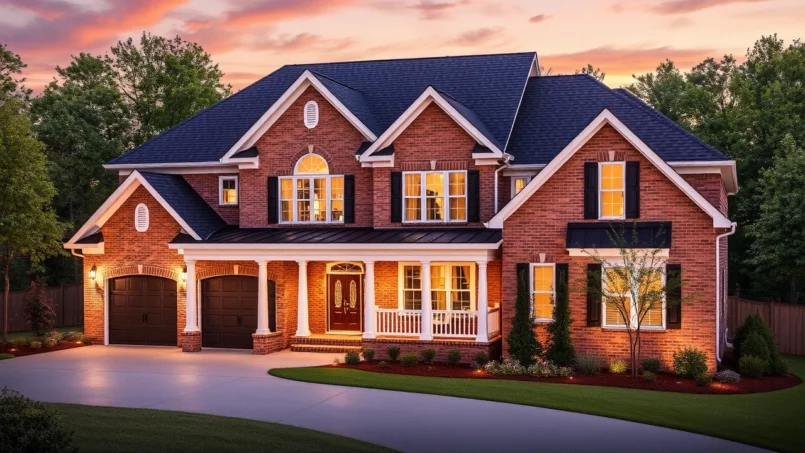
 Published on and written by Cyril Jarnias
Affluent city in northern Fulton County, Georgia, bordering the Chattahoochee River and about thirty minutes north of Atlanta, Johns Creek concentrates virtually all the ingredients that attract investors: strong residential demand, high incomes, public schools among the best in the state, and ambitious urban projects like Medley and the Town Center. At the same time, housing supply remains limited, a car is almost indispensable, and prices have reached levels that require a real strategy.
Investing in real estate in Johns Creek requires strategic analysis, not random purchasing. You need to weigh market segments (luxury, mid-range, rental, quick resale), neighborhoods, local taxes, demographic trends, and long-term prospects.
A tight residential market, but stabilizing
The Johns Creek market is classified as a “seller’s market“: demand still exceeds supply, even though signs of rebalancing are appearing.
Recent data show already high price levels and more moderate growth than at the height of the post‑Covid period.
Here is a summary of key residential indicators (data from several recent sources):
| Indicator | Approximate value | Comment |
|---|---|---|
| Median sale price (city) | $734,500 | +1.29% year over year |
| Median sale price (Dec. 2025) | $675,000 | -3.3% year over year for that specific month |
| Median listing price (Jul. 2025) | $752,500 | +3.1% year over year |
| Median price / sq ft | $230–240 | Slight annual decline recently, but strong increase over 3 years |
| Average days on market | 46 days (33–64 days depending on source) | Up compared to previous year |
| Sale-to-list price ratio | 98% | On average ~3% below list price, except for “hot homes” |
| Number of homes for sale | ~242 to 284 listings | Inventory up over 3 years |
At the same time, the average home value is around $680,000, with growth of about 1.4% over the last measured year, but a net jump over 3 years (more than 14% increase in median price and more than 12% for price per square foot).
The spectacular price surge is over, but the city maintains a solid appreciation trajectory in the medium to long term, supported by structural demand related to schools, safety, and skilled employment.
Cautious but broadly bullish forecasts
Several predictive models cited in studies give long-term estimates that are sometimes contradictory, but the common ground remains a trend of moderate growth:
| Time horizon | Projected price (example) | Estimated change |
|---|---|---|
| 1 year | $461,170 → $469,584 | +1.82% |
| 10 years | ≈ +11.55% | Moderate increase |
| 2030 (global example) | $500,362 | Indicative projection |
| 2035 (global example) | $514,458 | Indicative projection |
Furthermore, analyses showing an extremely strong increase (more than 100% over 12 months) should be viewed with caution: these are likely specific calculations for certain sub‑sectors or aggregated data over a broader area. All other sources tend to converge toward an average annual growth of 4 to 8% over several years, which remains above national and state averages.
For an investor, the lesson is twofold: betting on long-term appreciation is a relevant strategy, but buying at any price is no longer justified. This caution is all the more necessary since selling times tend to lengthen slightly and price negotiation is becoming more common in the market.
An ideal demographic and economic profile for investment
Johns Creek has established itself as one of the most sought‑after cities in the country. U.S. News even ranked it the “best place to live in the United States” for the 2025‑2026 period, after scrutinizing over 850 cities based on job market, healthcare services, education, quality of life, and cultural amenities.
High incomes, strong education, low poverty
The numbers speak for themselves:
| Socio‑economic indicator | Approximate value |
|---|---|
| Population (2022–2025) | 82,000 – 83,000 inhabitants |
| Median household income | $156,000 – $161,000 |
| Average individual income (depending on source) | $56,000 – $66,000 |
| Family poverty rate | 2.8% |
| College degree (bachelor’s or higher) | 71.3% of adults |
| Graduate or professional degree | 28.5% of adults |
| Unemployment rate | 2.3 – 3.6% |
This base of households with high purchasing power is a very favorable foundation for real estate, whether residential or commercial. However, the cost of living is 15 to 30% higher than the national average, which is directly reflected in rents and sale prices.
A powerful economic fabric, driven by tech and healthcare
The city is home to about 28,000 jobs on its territory, and 44,000 employed residents, generating significant commuter flows. Over 90% of residents work outside the city, mainly in Atlanta, Alpharetta, Sandy Springs, and Roswell, but Johns Creek also attracts nearly 22,000 outside workers each day.
Major sectors:
– professional, scientific, and technical services
– finance and insurance
– retail trade
– healthcare and social assistance
– accommodation and food services
Major employers include Alcon Laboratories, Emory Johns Creek Hospital, Macy’s Systems and Technology, Nordson Corporation, and the highly regarded Atlanta Athletic Club. The Johns Creek Technological Park, a vast mixed‑use hub of 1,900 acres, already has 5.8 million square feet of office space, technology and medical spaces, and employs nearly 10,000 people, with a potential for 18,000 to 20,000 jobs in the long term.
This base of skilled jobs secures rental demand over the long term, especially for executives, engineers, healthcare professionals, and professionals.
A solid but segmented rental market
Rental investment in Johns Creek can target families wanting to live near schools, executives on assignment at the Tech Park, expatriates, as well as niches like high‑end furnished rentals or medium‑term stays for executives on business trips.
Rent levels and recent dynamics
Compiled data show several series of figures depending on the source and period, but the underlying trend is clear: rents are significantly above the national average, with a slight recent correction in some segments.
| Type of housing | Approximate average monthly rent |
|---|---|
| 1‑bedroom apartment | ~$1,600 – $1,850 |
| 2‑bedroom apartment | ~$1,970 – $2,280 |
| 3‑bedroom apartment | ~$2,440 – $2,570 |
| Median rent all properties | $2,309 |
| Overall listing range | $1,300 – $8,200 |
| 3‑bedroom house (long‑term rental) | $2,200 – $2,800 |
| 4‑bedroom house | $2,800 – $3,500 |
Year over year, some indicators show a slight decline in median rent (about -4%), and over three years, a drop of around -12% in median rent in some databases, even as sale prices continued to rise. This decoupling reflects rising borrowing costs, which limit households’ monthly payment capacity and push part of the demand toward rentals while capping instant rent increases.
For very high‑end real estate products, investment strategies based solely on generating cash flow (rental income) are more complex to implement. However, these properties retain strong appreciation potential, with capital appreciation prospects that remain solid.
Vacancy rate and multifamily
The multifamily rental segment in Johns Creek is relatively small, with about a dozen large complexes, and remains very healthy:
| Multifamily indicator (example 2023) | Value |
|---|---|
| Number of apartment units | 2,599 |
| Vacancy rate | 7.2% |
| Average rent per unit | $2,156 |
| Average sale price per unit | $317,000 |
| Yield (average cap rate) | 4.7% |
There are virtually no new units under construction in this segment: zero deliveries over 12 months in recent CoStar reports. This scarcity of new supply could, in the medium term, support both rents and values, even though sensitivity to interest rate fluctuations remains high.
Neighborhoods with sharply contrasting profiles
The city is divided into about ten major residential neighborhoods, complemented by numerous subdivisions. For an investor, knowing these micro‑markets well is essential, as price levels, rental demand, and costs (especially HOAs) vary significantly.
Country Club of the South: the ultra high end
The benchmark gated community, Country Club of the South, spans about 900 acres and contains 745 residences, surrounding an 18‑hole golf course designed by Jack Nicklaus.
Features:
– homes averaging over 7,000 sq ft, often between 4,000 and more than 12,000 sq ft, with at least 5 bedrooms
– clubhouse of about 5,000 m², 12 tennis courts, 3 pools, fitness center, parks
– recent sale prices: from just under $1M to over $5M
– median listing price: $2M
– mandatory HOA fee: around $3,400–$3,800 per year
This neighborhood represents more of a “quality play” or wealth appreciation strategy than immediate cash flow. Tenants are rare and very demanding: expatriates, corporate executives, professional athletes, or senior managers. The investor must count on long holding periods and significant maintenance costs, but the long‑term appreciation potential is substantial and liquidity remains good in this luxury segment, as long as the local economy stays strong.
St. Ives Country Club and The Falls of Autry Mill: the profitable luxury segment
St. Ives Country Club offers a similar profile: secure community, 750 homes, 18‑hole golf course designed by Tom Fazio, clubhouse of 4,200 m², 16 tennis courts (including 6 clay), several pools, and a water slide.
– homes from 4,200 to over 11,000 sq ft
– prices: $900,000 to $2.8M, median price around $1.1M
– HOA for swim/tennis: ~$2,420/year
– optional golf club membership ($5,000 to $10,000/year)
A high‑end offering at a slightly more accessible price, offering exclusive services.
A luxury experience offered at an advantageous price compared to the market, without compromising on quality.
Maintaining the standards of excellence and premium services that characterize the establishment.
– 473 homes, generally between 4,000 and 8,000 sq ft, 5 to 7 bedrooms
– prices: $1 to $1.5M, average price around $1.3M
– clubhouse over 1,000 m², 12 lighted tennis courts, pools, gym
For an investor, these neighborhoods primarily target furnished or medium‑term rental clientele (executive housing, relocation of managers, families transferred by large companies and hospitals). Rents can reach and sometimes exceed $4,500 per month for large homes, with the possibility of hybrid models (mixing long and medium term), particularly suited to the needs of multinationals in the Tech Park.
Medlock Bridge, Seven Oaks, Huntington: the liquid heart of the family market
For a “classic” investment profile in a single‑family home intended for long‑term rental, several neighborhoods stand out for their size, school appeal, and a lower entry ticket than private country clubs.
The median price of a home in the Medlock Bridge neighborhood is around $741,000.
– Seven Oaks: 642 homes on more than 560 acres, developed from the late 1980s to the early 2000s. Homes from 2,600 to more than 8,000 sq ft, on lots of 0.3 to 0.7 acres. Recent sale prices: median at $837,500, listings between $780,000 and over $1.5M, HOA about $1,750/year. Full amenities (clubhouse, gym, pools, courts, lake, trails).
– Huntington: more intimate (≈80 homes), sizes around 3,100 to 4,700 sq ft, prices between $725,000 and $820,000, with pool and tennis. The strength of this neighborhood lies in its school zoning: Shakerag Elementary, River Trail Middle, and Northview High, all highly rated (9/10 or even 10/10).
These neighborhoods offer an excellent compromise between acquisition price, rental demand (families favor these subdivisions for the schools/amenities combination) and appreciation prospects as the Town Center and Medley projects ramp up.
Rivermont and Foxworth: the relative entry level
Within an expensive city, some neighborhoods offer more accessible tickets, interesting for fix‑and‑flip strategies or rental purchases targeting a mid‑level executive audience.
Overview of characteristics and median home prices in two different neighborhoods.
The most affordable neighborhood with a median sale price of $540,000.
Homes from 3,200 to 6,700+ sq ft, prices from $400,000 to $1.2M (median ~$630,000). HOA ~$900/year. Amenities: clubhouse, pool, tennis, playground.
For an investor focused on “value‑add”, these areas allow finding 1990s homes needing updating, in price ranges still compatible with $300,000–$600,000 after renovation budgets, typical of flip operations in the northern Atlanta area.
Belmore Park, Ward’s Crossing, and the new construction wave
New construction supply is limited in a city that is nearly 80% built out, but it does exist:
– Belmore Park: recent community (homes delivered in 2019‑2020), sizes of at least 3,000 sq ft (often with basement), average prices around $1M. Clubhouse, gym, tennis court, basketball court, playground, and sidewalks. Zoned for Northview High.
– Ward’s Crossing: recent development on State Bridge Road, with home plans of 3 to 4 bedrooms and 4 bathrooms, sizes between 2,400 and just over 2,800 sq ft, offered by The Providence Group. This type of product is representative of new offerings in Johns Creek: townhomes and compact but high‑end homes, targeting buyers seeking new construction in an elite school environment.
New construction products offer the advantage of lower maintenance costs and modern features (energy efficiency, home automation), but pure rental profitability is often lower upfront due to purchase prices at the top of the local range.
Major projects: Medley and the Town Center, catalysts for appreciation
Johns Creek has long suffered from a very “strip‑suburban” urban design, with linear shopping centers along Medlock Bridge / State Bridge roads and little true urban core. The municipality has launched an ambitious Town Center project to transform this image.
Medley: future mixed‑use heart of Johns Creek
Medley (also called The Medley) is at the center of this strategy. Developed by the same developer as Avalon in Alpharetta, this mixed‑use project of about 192 acres (43 acres in some sources, as it is part of a larger 192‑acre Town Center perimeter) plans:
| Medley component | Announced figures |
|---|---|
| Total investment | ≈ $350M |
| Retail/restaurant/entertainment space | > 200,000 sq ft |
| Class A office space | 110,000 sq ft |
| Luxury rental apartments | ≈ 750 to 900 units |
| Townhomes | ≈ 150 units |
Phase 1 is expected to open around 2025–2026 depending on the source, and the entire project is integrated into the overall Town Center vision, including a waterfront boardwalk, an amphitheater, a park, and pedestrian paths.
For investors, the impact is multiple:
– potential appreciation of nearby neighborhoods (Medlock Bridge, Huntington, Belmore Park, St. Ives) thanks to the creation of a true living center with retail, offices, and entertainment
– opportunities in mid/high‑end rentals around the future employment and leisure hub
– repositioning of existing commercial assets, such as Medlock Crossing, a 21‑acre center anchored by a Regal cinema, slated for redevelopment into a mixed‑use hub
An investor who anticipates these transformations can target areas within a few kilometers of the Town Center, likely to benefit from urban re‑qualification and increased desirability.
Investment strategies suited to Johns Creek
The combination of high incomes, already stretched prices, a high education level, and limited supply makes it essential to choose the right strategy.
1. High‑end residential buy‑and‑hold
Single‑family homes represent about 77% of the housing stock, with a majority built between 1980 and 2000 and many 4 or 5 bedroom properties. The homeownership rate exceeds 77–80%, with low vacancy (around 3.9%).
A buy‑and‑hold strategy aims to purchase a home (often between $500,000 and $900,000 in family neighborhoods) and rent it long‑term to a family attracted by the schools and quality of life. The three pillars of profitability are:
– solid monthly rent (often $2,500–$3,500 for 3–4 bedrooms)
– very high tenant quality (high incomes, low default rate)
– long‑term appreciation in a city with high perceived value, well ranked nationally
To balance cash flow, you must account for:
– significant property taxes (even though the effective local rate remains reasonable compared to other Atlanta area counties)
– sometimes high HOA fees ($500 to over $3,000 per year depending on the neighborhood)
– insurance costs above the national average (about 15% higher, or $800 to $1,800 per year for a standard home)
In this market, gross yields are generally lower than in Georgia’s secondary markets. However, this is offset by greater security, increased stability, and strong long‑term appreciation potential.
2. Fix‑and‑flip in the mid‑range segment
Northern Atlanta, including Johns Creek, is considered favorable for renovation‑resale strategies. Successful operations focus on purchase ranges between $300,000 and $600,000, with renovation budgets of $30,000 to $80,000, for a potential profit of $40,000 to $100,000 or more, if the renovated property can sell for 15 to 25% more than a similar unmodernized one.
In Johns Creek, this type of operation typically targets:
– 1990s homes needing updating in subdivisions like Rivermont, Foxworth, parts of Medlock Bridge, or mid‑sized developments
– properties that can be enhanced through modernization (kitchen, bathrooms, opening up spaces, basement finishing, energy optimization)
Competition from owner‑occupants is fierce, but demand for “move‑in ready” homes remains very high among high‑income families, willing to pay a premium to avoid managing a renovation.
Specific financing solutions (fix‑and‑flip loans, hard money loans, 100% LTV on purchase + renovation) are available, sometimes with a credit score as low as 620. In the current high‑rate environment, it is essential to strictly control the renovation budget and resale timeline.
3. Furnished short‑term or medium‑term rentals
Johns Creek and Fulton County allow short‑term rentals (like Airbnb), subject to obtaining licenses and complying with zoning, safety, and tax rules. The market is particularly well suited for a hybrid strategy, combining:
– short‑term rentals (local tourism, visiting families, stays related to sporting or cultural events)
– medium‑term rentals (business assignments, traveling nurses or doctors, expatriates, executives in training, temporary relocation)
– long‑term rentals during certain periods to smooth seasonality
Estimates for a luxury 4‑bedroom / 3‑bathroom home in Johns Creek indicate:
| Rental strategy | Estimated potential monthly income |
|---|---|
| Short‑term rental (STR) | $4,500 – $6,800 |
| Medium‑term “executive housing” | $5,200 – $7,500 |
| Hybrid strategy | $5,800 – $8,200 |
| Traditional long‑term rental | $3,200 – $4,200 |
Gross income can therefore be significantly higher than simple annual rental, but at the cost of:
– more intensive management (cleaning, concierge, marketing, platform management)
– higher variable costs (platform fees, services, high‑end furnishings)
– greater sensitivity to economic cycles and local regulations
Many property management companies specializing in northern Atlanta offer turnkey services including this type of hybrid strategy.
4. Commercial and office real estate: caution and targeting
The office market in Johns Creek represents about 2.8 million square feet, or approximately 3% of northern Fulton’s office inventory. Vacancy has dropped to around 10.4%, while rents reached a high of $25/sq ft, with an average sale price around $184/sq ft.
However, the city faces:
– competition from denser urban Atlanta neighborhoods with better transit access
– the shift toward remote work, which limits demand for large office floorplates
– an aging office inventory (Tech Park is over 35 years old) requiring significant upgrades
Opportunities exist mainly for: proactive individuals, innovative entrepreneurs, and those who can adapt to market changes.
– mid‑sized offices (under 10,000 sq ft) well located, suitable for medical, paramedical, technology, or legal professions
– repositioning and conversion operations into mixed‑use (office + residential or office + coworking) within the Town Center perimeter
Retail is faring better: 4.29 million square feet of retail space, a very low vacancy rate of 3.5%, and rents around $24.8/sq ft, supported by high income levels and a solid daily retail base. The risk comes more from a “retail leak” of about $760M per year, due to many residents shopping at newer centers outside the city (Avalon, Halcyon). Here again, Medley and the redevelopment of Medlock Crossing can offer opportunities for well‑positioned commercial spaces capable of capturing this outbound spending.
Local taxes and holding costs
For any investor, the profitability of a project is measured not only by rent or expected appreciation, but also by the annual holding cost.
Property taxes: a significant but manageable burden
Compiled data for Johns Creek and Fulton County show values that sometimes diverge depending on the exact scope (city alone, county, or ZIP). What to remember:
In a Georgia city, the median effective property tax rate is between 0.84% and 1.23%. This rate is higher than the county rate (0.75%) but close to the national average (1.02%). For 2025, the city set a municipal rate of 3.492 mills (i.e., $3.492 per $1,000 of assessed value), presented as the lowest in the county. It is important to note that in Georgia, a property’s assessed value is 40% of its market value, before any exemptions are applied.
Simplified example for a home worth $800,000 with no exemption:
– assessed value: $800,000 × 40% = $320,000
– municipal tax: 320 × 3.492 ≈ $1,117
– plus county, school, and any special district taxes, which can bring the total bill to several thousand dollars
For owner‑occupants, homestead exemptions (standard, senior, full value) significantly reduce the taxable base. A non‑occupant investor does not benefit from these provisions and must therefore factor a heavier tax burden into profitability calculations.
Ancillary costs: HOA, insurance, maintenance
The majority of homes in Johns Creek are in subdivisions with homeowners’ associations:
This is the annual amount that HOA fees can reach in high‑end gated communities.
Homeowner’s insurance costs about $800 to $1,800 per year, or 15% more than the national average. An annual maintenance budget of 1 to 3% of the home’s purchase price is often recommended, which amounts to $8,000 to $24,000 per year for a home worth $800,000, especially if anticipating roof, HVAC, or basement renovations.
Schools: the main driver of residential demand
One of Johns Creek’s strongest arguments for families, and therefore for investors, is the quality of its public school system. The city has about twenty public schools rated “good or better” and 11 private or charter schools.
Among the highest‑rated elementary schools (scores 8 to 10/10) are Lake Windward, Wilson Creek, Dolvin, Barnwell, State Bridge Crossing, Shakerag, Medlock Bridge, Ocee, and Findley Oaks. Middle schools like Autrey Mill, River Trail, or Taylor Road also show strong results. High schools such as Johns Creek High, Chattahoochee High, and Northview High are regularly ranked among the best in the state of Georgia.
For an investor, buying a home within the attendance zone of one of these schools is often a guarantee of sustained rental demand and price resilience during economic downturns. This is one reason Johns Creek has weathered the price declines that affected other parts of the Atlanta metro area better.
Risks and limitations to consider
Despite its many strengths, Johns Creek is not a magic market. Several risks and constraints must be factored into the investment project design.
The local real estate market presents opportunities but also specific constraints. Prices are already high, with few truly cheap options. Current interest rates, around 6%, limit purchasing power and can slow sales. The city is very car‑dependent due to limited public transit and often congested roads. The supply of developable land is nearly nonexistent, steering development toward renovation and densification. Finally, demand is sensitive to economic cycles in the tech, healthcare, and finance sectors, which employ a large share of the population.
The key to mitigating these risks is to diversify: for example, combine a property intended for long‑term appreciation in a country club, a more modest rental investment in a family neighborhood near schools, and possibly a commercial asset or small building in or near the future Town Center.
In summary: why Johns Creek remains a top choice
Investing in real estate in Johns Creek means betting on a suburb already established as “premium,” rather than on a neighborhood at the start of gentrification. Entry prices are high, immediate yields are often tighter than in secondary cities, but the following combination is rare:
–Quality of life and national image: city ranked best place to live in the United States, green environment, parks, golf, Chattahoochee River, low crime.
– Human capital: high median income, exceptionally high education level, low poverty, strong cultural diversity.
–Elite schools: a public system that attracts families from across the country and even abroad, a sustainable driver of residential demand.
–Urban prospects: transformative projects (Medley, Town Center, redevelopment of older shopping centers) likely to strengthen centrality, activity, and value of nearby neighborhoods.
–Still dynamic market: despite some slowdown, median value is rising, homes still sell relatively quickly, and rental vacancy remains under control.
Johns Creek is a market that requires a structured investment strategy. It rests on three pillars: first ensure wealth stability, then optimize cash flow through adapted rental models (long, medium, or short term), and finally create value through renovation and participation in urban redevelopment projects.
In this context, time becomes the main ally: more than short‑term “plays,” Johns Creek rewards those who can look ten or fifteen years ahead, relying on fundamentals – skilled employment, education, safety, city projects – that do not turn around overnight.
Disclaimer: The information provided on this website is for informational purposes only and does not constitute financial, legal, or professional advice. We encourage you to consult qualified experts before making any investment, real estate, or expatriation decisions. Although we strive to maintain up-to-date and accurate information, we do not guarantee the completeness, accuracy, or timeliness of the proposed content. As investment and expatriation involve risks, we disclaim any liability for potential losses or damages arising from the use of this site. Your use of this site confirms your acceptance of these terms and your understanding of the associated risks.

Cyril Jarnias is an independent expert in international wealth management with over 20 years of experience. As an expatriate himself, he is dedicated to helping individuals and business leaders build, protect, and pass on their wealth with complete peace of mind.
On his website, cyriljarnias.com, he shares his expertise on international real estate, offshore company formation, and expatriation.
Thanks to his expertise, he offers sound advice to optimize his clients' wealth management. Cyril Jarnias is also recognized for his appearances in many prestigious media outlets such as BFM Business, les Français de l’étranger, Le Figaro, Les Echos, and Mieux vivre votre argent, where he shares his knowledge and know-how in wealth management.





