
 Published on and written by Cyril Jarnias
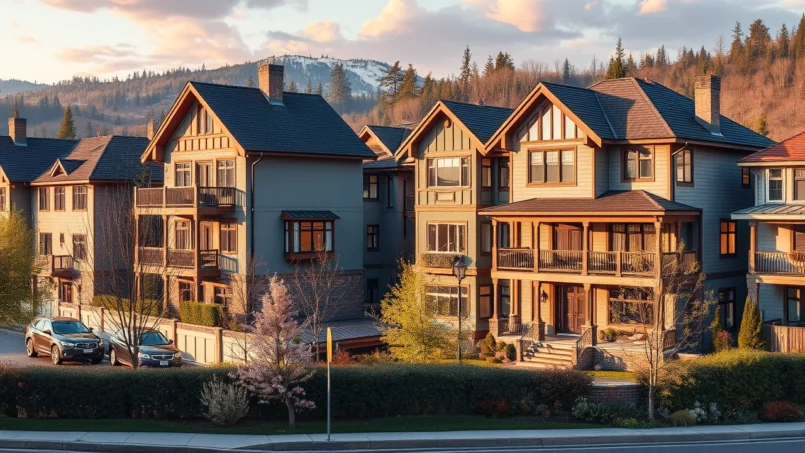
Saratoga has, over the years, become one of the most exclusive real estate markets in Silicon Valley. Nestled at the foot of the Santa Cruz Mountains, the city combines a green setting, a charming historic downtown, some of the highest-rated public schools in California, and immediate proximity to the Bay Area’s major tech hubs. For an investor, this blend of land scarcity, very high local incomes, and sustained demand creates an environment that is both attractive… and demanding.
This article provides a comprehensive guide to investing in real estate in Saratoga, California. It analyzes the numbers, local dynamics, risks, and strategies in this luxury market, including occasional comparisons with Saratoga Springs and Saratoga County (New York) to inform decisions.
Saratoga, a prestigious residential city at the heart of Silicon Valley
Saratoga has just over 30,000 residents, with a density of approximately 2,374 inhabitants per km². The population is older than the national average (median age around 51), but incomes are spectacular: the average individual income exceeds $120,000 per year, and 87% of homes are owner-occupied.
The high proportion of homeowners, strict zoning regulations, and the terrain limit the housing supply, maintaining sustained pressure on prices. However, Saratoga benefits from excellent connectivity to Silicon Valley employment hubs (San José, Cupertino, etc.), attracting executives and entrepreneurs seeking a peaceful living environment without sacrificing professional opportunities.
The historic downtown, known as “The Village,” offers restaurants, shops, Victorian buildings, and a small-town atmosphere, just minutes from major highways and tech companies. This contrast between hyper-proximity to employment centers and an almost village-like ambiance is one of the key drivers of local real estate value.
A very expensive seller’s market
Investing in Saratoga first and foremost takes place in a world of very high prices. The most recent data show a market clearly positioned in the luxury segment, with levels rarely accessible to first-time investors.
Price levels and valuation
The indicators from late 2025 illustrate the leap forward the city has made in terms of real estate appreciation.
| Indicator (Saratoga, CA – homes) | Recent Value |
|---|---|
| Typical home value (ZHVI) | ≈ $3.93M |
| Median sale price (Q4) | $4.30M |
| Average sale price (Q4) | $4.65M |
| Median sale price (December) | $3.50M |
| Median price per square foot | ≈ $1,600/sq ft |
| 1-year change (ZHVI value) | +2.3% |
Long-term data confirm the robustness of this progression. Over the past ten years, the median price per square foot has grown by an average of approximately 6.2% per year, and about 8.1% over the last five years. Even the financial crisis of 2008‑2009 only shook Saratoga temporarily: prices rebounded in less than a year, proof of the resilience of this high-end micro-market.
For the investor, entry into the market occurs at a high level. However, the probability of sustained value erosion has historically been low, provided Silicon Valley continues to attract talent and capital.
Sales speed and balance of power
The other key data point is the speed of transactions. In the fourth quarter of 2025, the median time to sell a home was about ten days, with an average of 18 days on the market. In December 2025, the average rose to 24‑33 days depending on the source, which remains extremely short for this price level.
| Market dynamics (homes, Q4 2025) | Data |
|---|---|
| Number of homes sold (Q4) | 44 |
| Days on market (median) | 10 |
| Days on market (average) | 18 |
| Sale-to-list price ratio | 102% |
| Share of sales below list price | 54% |
The sale-to-list price ratio above 100% confirms this is a seller’s market. Redfin-style analyses indicate that an “average” home can sell for approximately 3% above the asking price in about ten days, while properties considered “hot” sometimes sell for 8% above list in under two weeks, with multiple competing offers.
In a dynamic and competitive market, buyer-investors must act quickly, present extremely strong financial packages, and accept giving up some usual negotiating leverage, such as very aggressive price bargaining or including lengthy contingencies.
Condo and townhome segment: A more “affordable” entry point
While the single-family home market sets the bar very high, the condo and townhome segment offers a relatively less expensive entry, though it still remains clearly premium.
In December 2025, the median price for condos and townhomes was approximately $2.03M, with an average price of $2.09M. There were five sales in the month, five pending contracts, and four active listings. Properties sold at essentially the list price (99.9% of list price) in just about fifteen days.
| Condo / townhome market (Dec. 2025) | Data |
|---|---|
| Median price | $2,027,380 |
| Average price | $2,094,430 |
| Sales | 5 |
| Pending sales | 5 |
| Active listings | 4 |
| Sale-to-list price ratio | 99.9% |
| Days on market (average) | 15 |
For an investor who wants to get a foothold in Saratoga without immediately committing $4 to $5 million, these products can be interesting targets, especially in recent developments by groups like Pulte, with a high-end positioning and easier management of common areas.
A very expensive rental market, but heterogeneous across sources
Beyond the asset value, an investor cares about the ability of a property to generate regular income. On this point, rental data for Saratoga shows a pricey market, but less homogeneous than the sales market, especially depending on measurement methodologies (types of properties considered, scope, time of year, etc.).
Several studies give numbers that are sometimes contrasting, but they converge on one point: renting in Saratoga costs significantly more than the U.S. average.
Rent levels and dispersion
An analysis from September 2025 indicated an average rent of $4,300 per month, with 33 available properties and a range spanning from about $1,475 to $20,000 monthly. Another source from late 2025 reported a median of $6,097 for all properties, more than double the considered national average (a gap of over $4,000).
For a more precise view of the real estate market structure, it is recommended to refine the analysis by segmenting data according to different property types (apartment, house, etc.).
| Property type (rental, Dec. 2025) | Approx. average rent |
|---|---|
| Apartment | ≈ $2,545 / month |
| Condo | ≈ $3,297 / month |
| House | ≈ $8,100 / month |
| Room | ≈ $1,562 / month |
The segmentation by number of bedrooms confirms the surge in large homes, which directly appeal to affluent families and tech executives seeking comfort in larger spaces.
| Number of bedrooms (rental, Dec. 2025) | Approx. average rent |
|---|---|
| Studio | ≈ $1,613 / month |
| 1 bedroom | ≈ $2,455 / month |
| 2 bedrooms | ≈ $2,895 / month |
| 3 bedrooms | ≈ $4,350 / month |
| 4 bedrooms | ≈ $6,800 / month |
Some older datasets or those covering a limited scope (e.g., a segment of studios or small units) mentioned much lower average levels (around $1,442), even below the national average. These discrepancies remind us that a raw comparison of figures must account for the type and standard of the property.
Rental tension and recent trends
The observed trends show a market described as “WARM” by some portals: demand remains solid, but rents can undergo rapid adjustments. Over one year, one dataset noted a 3% decline (about $43 per month) for a particular panel, while another observed, over a shorter period, a 29% rise in one month and a 3% increase over one year, with the number of listings growing nearly 16% month-over-month and over 30% year-over-year.
For a real estate investor, the yield calculation cannot be based on a simple average rent. It requires a detailed analysis of the targeted property segment (e.g., large family home, recent condo, small unit), its market positioning (luxury, family, functional), and the point in the rental cycle (peak season or off-peak).
Saratoga’s neighborhoods: Understanding the map to refine your strategy
Investing in Saratoga is not simply about “buying in the city.” The mosaic of neighborhoods creates micro-markets, each with its own prices, tenant profiles, strengths, and constraints.
Ultra-prestigious areas: Montalvo, Glen Una, Golden Triangle, Fruitvale West
Neighborhoods like Montalvo, Glen Una, or the Golden Triangle represent the top tier. Montalvo surrounds the Villa Montalvo, a historic arts center, and consists of large estates on spacious lots, highly sought after for their architecture and privacy. Glen Una and the Golden Triangle, bordered by Saratoga Avenue, Saratoga‑Sunnyvale Road, and Cox Avenue, concentrate luxurious homes on quiet streets with quick access to major thoroughfares.
Estimated average home value in the upscale Fruitvale West neighborhood, in millions of dollars.
Family and “upper-middle” neighborhoods: Saratoga Woods, Blue Hills, Brookview, Parker Ranch
Saratoga Woods is known for its neighborhood life, community events, and mid-century style homes on good-sized lots. Blue Hills appeals to nature lovers, on the edge of the hills and within immediate reach of the highly-rated Blue Hills Elementary School and hiking trails.
Brookview and Parker Ranch offer homes ranging from 1960s houses to more recent custom villas, often on large parcels. For an investor, these areas can combine strong family demand, proximity to schools, and high rents, while sometimes remaining slightly below the top prices of the ultra-prestigious neighborhoods.
Downtown and The Village: A mix of historic charm and modern comfort
Downtown Saratoga and Saratoga Village concentrate shops, restaurants, cafes, and cultural events, with a housing mix of older homes, small apartment buildings, and modern condos. For an investor, there are more varied products: small condominium buildings, properties with potential for furnished rentals, or even renovation opportunities in older buildings.
The appeal of a “walkable” lifestyle is real here, especially among childless executives, older couples, or those drawn to the area’s architectural history.
Real estate market observer
Other neighborhoods: Greenbrier, Monte Vista, El Quito, etc.
Greenbrier offers a good combination of accessibility to transportation arteries and a peaceful residential atmosphere, with more modern homes. Other areas like El Quito, Saratoga Foothills, Monte Vista, or Portos complete the palette, each with its own price level, housing stock, and associated schools.
Detailed neighborhood data shows, for example, that an area like Southeastern Saratoga can have a median home price around $3.5M, a price per square foot close to $1,441, a median rent of approximately $4,297, with several dozen homes for sale and a few rentals, giving an idea of the price-to-rent ratio.
| Example neighborhood (Southeastern Saratoga) | Indicative data |
|---|---|
| Median home price | ≈ $3.50M |
| Median price per square foot | ≈ $1,441/sq ft |
| Median rent | ≈ $4,297 / month |
| Homes for sale | 43 |
| Rental properties | 6 |
Again, the investor must select a neighborhood consistent with their target tenant profile: families with children (proximity to schools), executives seeking transport links, retirees in search of tranquility, etc.
The “schools” factor: A major driver of demand
Saratoga owes part of its real estate success to the quality of its public schools. The city has over twenty public schools considered to be of good quality and several private or parochial institutions.
Presentation of the area’s elementary and middle/high schools, recognized for their academic excellence, particularly in mathematics.
Foothill, Saratoga Elementary, Marshall Lane, and Blue Hills Elementary Schools boast math proficiency rates above 80%.
Redwood Middle, Rolling Hills Middle, and other schools complete the region’s attractive educational offerings.
Saratoga High, Monta Vista, Lynbrook, Westmont, Prospect are among the renowned high schools in the area.
For a family, buying or renting in Saratoga is partly “buying” access to this school network. For an investor, this translates concretely into sustained rental demand for suitable homes (3‑4 bedroom houses, family condos) in areas served by these schools, and an ability to capitalize on this criterion when reselling the property.
Highly competitive market: How to position yourself as an investor
The competitive indicators are clear: Saratoga is a market where the buyer does not hold the cards. Competitiveness indices like the Redfin Compete Score rank the city in the “somewhat competitive” to “very competitive” category depending on the segment, with an average of two offers per property and extremely short selling times.
In this context, the successful investor is one who prepares in advance:
For financing of $2 to $5 million, the goal is to obtain a quick approval with a strong pre-approval letter. A conventional loan typically requires a 20-25% down payment, an excellent credit score (ideally 740+), a manageable debt-to-income ratio, and robust income documentation.
– Responsiveness: attractive properties can sell in under ten days. Therefore, you need to set up a watch on new listings (via MLSListings, Redfin, Zillow, etc.), be available for quick showings, and be able to make an offer immediately if the property fits the criteria.
In a market where sale prices often exceed list prices by 2 to 5%, systematically trying to negotiate downward on highly demanded (“hot”) products is ineffective. A more realistic approach is to target properties that have been on the market for a while, those that have already had price reductions, or atypical properties (requiring major renovations or having a non-standard layout), where competition is reduced.
– Local support: working with an agent highly experienced in Saratoga (several are cited in reports: Juliana Lee and her JLee Realty team, Mary Pope‑Handy and Clair Handy, or other local specialists) provides access to fine-grained market information, relevant comparables, and sometimes opportunities before they are fully exposed.
Financing an investment in Saratoga: Leverage with conditions
Given the amounts involved, the choice of financing is critical. Leverage can potentially multiply the size of your portfolio, but it also increases the sensitivity of the project to fluctuations in rents and interest rates.
Overview of main financing methods
Several financing options, both conventional and more sophisticated, can be used to invest in Saratoga.
– All-cash purchase: reserved for heavily capitalized investors, it offers a real negotiating advantage (firm offer, no loan contingency, quick closing). In a competitive market, offering cash can sometimes make the difference against other buyers. On the flip side, diversification capacity is limited and there is no leverage.
A conventional mortgage loan is the most common way to finance a rental property. It is offered by banks, credit unions, or traditional private lenders. These institutions typically require a down payment of 20 to 25% of the purchase price. The repayment term can extend up to 30 years, with fixed or variable interest rate options. The main constraints are administrative: sometimes lengthy processing times, heavy documentation requirements, and strict criteria regarding the borrower’s credit score and debt-to-income ratio.
– Short-term loans (bridge, hard money, private money): useful for fix-and-flip operations or for capitalizing on an opportunity requiring a quick close. They are secured by the property’s value rather than the borrower’s profile, but come with higher interest rates, significant fees, and a short term (1 to 3 years). In Saratoga, their use may make sense for properties with strong post-renovation appreciation potential.
Government programs like FHA, VA, and 203K loans exist for primary residence purchases or financing renovations. They can sometimes finance 2- to 4-unit buildings, provided the owner occupies one unit. In the Saratoga market, where prices far exceed the usual limits of these programs, their use is limited. However, “house hacking” arrangements (living in one unit and renting out the others) may exist on the margins.
– Portfolio loans and DSCR loans: for investors who already own multiple properties, lenders may offer portfolio loans covering several assets, or loans based on the debt service coverage ratio (DSCR), where the analysis focuses more on the rent’s ability to cover repayments. In a market with relatively low gross yields (as a percentage of price), however, rental projections must be solidly prepared to convince lenders.
– Using retirement savings or home equity: via self-directed IRA/401(k) accounts or home equity loans, HELOCs, cash-out refinances. These mechanisms are subject to strict tax rules (notably the prohibition of self-dealing when using retirement funds), but can provide the necessary down payment for a Saratoga project.
In California, actors like private lending companies or crowdfunding platforms offer financing dedicated to real estate projects, particularly for renovation, construction, or rental purchases. These solutions are available throughout the state, including Saratoga, and are not specific to any one city.
Preparing your file and managing risk
Regardless of the chosen structure, some fundamentals remain valid:
– Polish your credit profile (repay existing debts, reduce card balances, correct any scoring errors) to secure favorable terms.
– Build a significant down payment: on a $4M property, a 20% down payment is already $800,000. A larger down payment can enable better rate and fee negotiations.
– Present a solid business plan: property description, market analysis (sale and rental comps), cash flow projections, vacancy assumptions, maintenance and renovation budget, exit strategy (resale, refinancing, inheritance).
– Plan a safety margin: a property in Saratoga could sit vacant for a few weeks, require unexpected repairs, or incur high insurance costs. It is prudent to set aside a cash reserve covering several months of expenses and mortgage payments.
Yield or wealth: How to choose in Saratoga?
One of the key questions for an investor is whether Saratoga should be approached as a rental yield market or as a wealth preservation market. The numbers show that rents, although very high, are often modest relative to purchase prices that flirt with several million dollars.
On a $4.3M home renting, for example, for $8,000 per month ($96,000 per year), the gross yield is around 2.2%. Net (after property taxes, insurance, maintenance, management fees, potential HOA dues), it can drop to 1 to 1.5% depending on the case. For an investor seeking significant positive monthly cash flow, this is not necessarily the ideal place, especially with high leverage.
On the other hand, for a wealthy investor aiming for capital preservation and appreciation, the argument is different:
– Historical average annual price per square foot increase of around 6‑8% over 5 to 10 years.
– Scarcity of supply due to zoning constraints and topography.
– Demand driven by an extremely skilled and well-compensated employment base.
– City’s brand image (safety, schools, quality of life), supporting long-term prices.
A viable strategy therefore involves accepting a modest but relatively secure rental yield, betting on long-term capital gains, or considering the operation as a primary or secondary residence that, in addition to its use, benefits from very favorable appreciation dynamics.
Property management and local partners
In such a demanding market, the day-to-day management of the property cannot be improvised. It requires ensuring a level of service compatible with often very demanding tenant expectations, while guaranteeing compliance with the numerous regulations (building, environmental, fire, etc.) enforced by the city and county.
The Saratoga region and Silicon Valley offer a complete real estate ecosystem with specialized agencies, property managers, attorneys, insurers, and accountants. Property management services are also active in Saratoga Springs (NY), highlighting the importance of the sector for investors. In California, some players focus on high-value markets like the Bay Area.
For a non-resident or time-limited investor, delegating management to a local professional (tenant selection and oversight, rent collection, arranging technical interventions, financial reporting) is often a rational choice, even if it slightly reduces net profitability.
Risks and points of attention
Investing in a “premium” market does not eliminate risks; on the contrary, they are simply of a different nature than in a mid-sized city.
– Liquidity risk: although properties currently sell quickly, a major macroeconomic downturn, a sharp rise in rates, or a sectoral crisis in tech could lengthen selling times and temporarily weigh on prices.
The city of Saratoga imposes a strict framework for residential projects (additions, ADUs, conversions). It is essential to master zoning procedures, design review, and constraints regarding height, vegetation, and water management. Studies (geotechnical, tree preservation, fire compliance) are required, involving several city and county departments (planning division, Santa Clara County Fire Department, water authorities).
– Climate risk: as everywhere in California, risks of wildfires, heat, or strong winds must be considered. They affect insurance costs, mandatory work (defensible space, fire-resistant materials, etc.), and sometimes buyer appetite.
– Vacancy risk in the very high-end segment: certain very specific luxury properties (highly distinctive architecture, atypical layouts) may take longer to rent or resell if the market contracts or if the supply of comparable properties increases temporarily.
A prudent investor will incorporate these elements into their simulations and prioritize, as much as possible, “liquid” properties: well-located, well-maintained, with a rational floor plan and coherent positioning aligned with dominant demand.
Saratoga compared to neighboring markets: Cupertino, Los Gatos, Campbell
Comparing Saratoga to neighboring cities also helps gauge its relative attractiveness. In April 2024, Cupertino had a median sale price of about $2.94M (strong annual increase), Los Gatos was around $2.17M (slight decline), and Campbell around $1.75M (increase near 8%). Rents there remain high, especially for two-bedroom apartments (between $3,300 and $3,800), but below the average level observed in Saratoga.
Saratoga positions itself as a more expensive and prestigious market in the western ring of San José/Santa Clara, offering a perceived higher quality of life, making it a ‘luxury’ type investment.
What can an investor expect in ten years?
Numerical projections from some forecasting models predict a potential increase in Saratoga’s average home price of around 28% over ten years, with the projected average value clearly exceeding $4.4M by the early 2030s, then around $4.7M towards the middle of the following decade.
Even if they should be handled with caution, the forecasts indicate a continuation of nominal price increases, with fluctuations linked to economic cycles. This trend, observed for 15 years, relies on Silicon Valley’s continued major status, persistent land use restrictions, and Saratoga’s intact quality of life.
For the long-term investor, the central question is therefore not whether the value will increase over ten years – history suggests it will – but to verify that their financial situation, financing type, and management strategy allow them to hold over the long haul, even in the face of temporary setbacks (vacancies, unexpected repairs, recession, rising rates).
Conclusion: Saratoga, a market for patient and highly structured investors
Investing in real estate in Saratoga means playing in the big leagues. Entry tickets very often exceed $3 million for a home, gross rental yields are modest in proportion, buying competition is intense, and regulatory constraints are real. This is not a market for quick cash-flow chasers or undercapitalized investors.
For an investor with significant capital, a long investment horizon, and a wealth strategy, Saratoga offers distinct advantages: stability and steady price appreciation, exceptional quality of schools and living environment, a highly lucrative employment base, scarce market supply, and a deep, resilient luxury sector.
By working with recognized local professionals, carefully choosing the neighborhood and property type (family home in a good school district, high-end condo near The Village, prestige estate in Montalvo or the Golden Triangle), structuring coherent financing, and fully incorporating carrying costs, it is possible to build a very high quality real estate investment in Saratoga, closer to a wealth asset than a simple yield product.
In a world where many cities’ markets are becoming commoditized, Saratoga continues to embody a unique real estate niche: expensive, elitist, demanding, but for now remarkably solid.
Disclaimer: The information provided on this website is for informational purposes only and does not constitute financial, legal, or professional advice. We encourage you to consult qualified experts before making any investment, real estate, or expatriation decisions. Although we strive to maintain up-to-date and accurate information, we do not guarantee the completeness, accuracy, or timeliness of the proposed content. As investment and expatriation involve risks, we disclaim any liability for potential losses or damages arising from the use of this site. Your use of this site confirms your acceptance of these terms and your understanding of the associated risks.

Cyril Jarnias is an independent expert in international wealth management with over 20 years of experience. As an expatriate himself, he is dedicated to helping individuals and business leaders build, protect, and pass on their wealth with complete peace of mind.
On his website, cyriljarnias.com, he shares his expertise on international real estate, offshore company formation, and expatriation.
Thanks to his expertise, he offers sound advice to optimize his clients' wealth management. Cyril Jarnias is also recognized for his appearances in many prestigious media outlets such as BFM Business, les Français de l’étranger, Le Figaro, Les Echos, and Mieux vivre votre argent, where he shares his knowledge and know-how in wealth management.





