
 Published on and written by Cyril Jarnias
Tourism plays a crucial role in the American economy, and its influence on the real estate market is undeniable. With millions of visitors each year, the United States experiences a growing demand for tourist accommodations, which has significant repercussions on the real estate sector. From sunny Florida to the California coast and major metropolises like New York, the influx of tourists shapes the country’s real estate landscape.
Tourism in the United States is a true economic phenomenon. In 2024, the country welcomed over 80 million international visitors, generating substantial revenue for the local economy. This massive influx has a direct impact on the real estate market, creating sustained demand for short-term rentals and stimulating investments in popular tourist areas.
The interaction between tourism and real estate in the United States is complex and multifaceted. It influences not only property prices in sought-after destinations but also the types of properties sought and the investment strategies of market players. In this article, we will explore in detail how tourism shapes the American real estate landscape and what opportunities this creates for savvy investors.
Tourist Hotspots: Real Estate Markets in Overdrive
The most popular tourist destinations in the United States have become veritable El Dorados for real estate investment. These areas attract not only millions of visitors each year but also investors seeking attractive returns.
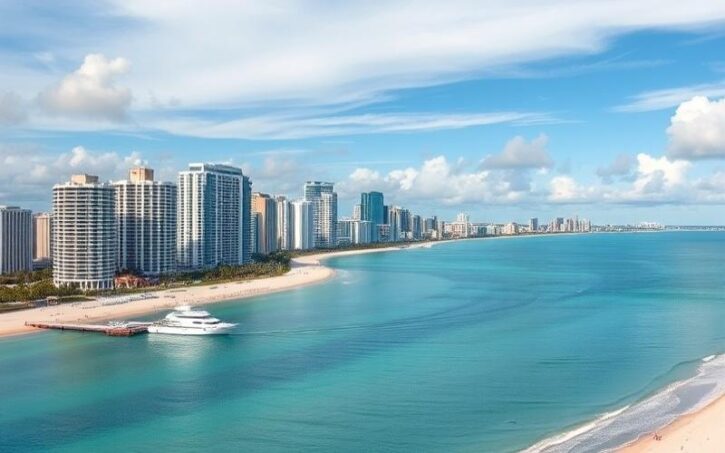
Florida, with its sandy beaches and tropical climate, remains a top choice for tourists and real estate investors. Miami, in particular, is experiencing an unprecedented real estate boom, fueled in part by tourism. According to data from the National Association of Realtors, the median home price in Miami increased by 10% in 2024 compared to the previous year, reaching $515,000[1].
California, with its iconic cities like Los Angeles and San Francisco, also attracts a large number of tourists and investors. The San Francisco real estate market remains one of the most expensive in the country, with a median home price of $1.3 million in 2024[2].
New York, the city that never sleeps, continues to fascinate tourists from around the world. The Manhattan real estate market, while experiencing fluctuations, remains robust with a median apartment price reaching $1.1 million in 2024[3].
Other tourist destinations like Las Vegas, Orlando, or Hawaii are also experiencing strong tourism-related real estate activity. In Hawaii, for example, the median home price on the island of Maui reached $1.2 million in 2024, partly due to sustained tourist demand[4].
Good to know:
The most popular tourist areas in the United States, such as Florida, California, and New York, are experiencing strong real estate activity with steadily rising prices, offering interesting but competitive investment opportunities.
The Tourism Effect: Upward Pressure on Real Estate Prices
The constant influx of tourists in certain regions of the United States has a significant impact on local real estate prices. This influence manifests in several ways, creating both opportunities and challenges for local residents and investors.
Tourist demand drives up real estate prices in the most sought-after areas. In Miami, for example, the average property price increased by 20% between 2020 and 2024, largely due to the city’s tourist appeal[5]. This trend is mirrored in other popular destinations like Los Angeles, where prices rose by 15% over the same period[6].
The impact of tourism on real estate prices is not uniform across the country. In some less touristy regions, prices remain more stable. However, even in these areas, the emergence of new tourist attractions can quickly drive up property values.
The seasonality of tourism also plays an important role in price dynamics. In destinations like Orlando or Las Vegas, rental prices can fluctuate significantly between high and low seasons, influencing investment and property management strategies.
It is important to note that this price increase, while beneficial for homeowners and investors, can create challenges for local residents. In cities like San Francisco or New York, the rise in housing costs partly linked to tourism has led to affordability issues for the local population.
Good to know:
Tourism exerts upward pressure on real estate prices in popular destinations, with increases of up to 20% over 4 years in some cities. This trend offers capital appreciation opportunities for investors but can create affordability challenges for local residents.
The Rental Investment Boom: A New Era for Tourist Real Estate
The rise of tourism in the United States has paved the way for a true revolution in the field of rental investment. Property owners and investors have quickly seized the opportunities offered by the growing demand for short-term accommodations, transforming the landscape of tourist real estate.
The emergence of online rental platforms like Airbnb and Vrbo has significantly facilitated access to the short-term rental market. In 2024, it was estimated that over 660,000 properties were listed on Airbnb in the United States, generating substantial income for their owners[7]. This trend has encouraged many investors to turn to purchasing properties specifically intended for tourist rentals.
Rental yields in tourist areas can be particularly attractive. In Miami, for example, the average gross rental yield for short-term rentals reached 6.5% in 2024, compared to 4.2% for long-term rentals[8]. This significant difference explains investors’ enthusiasm for this type of strategy.
Tourist rental investment is not limited to large cities. Vacation destinations like the ski resorts of Colorado or the beaches of North Carolina are also experiencing a rental investment boom. In these regions, tourism seasonality can offer opportunities for high income during peak periods.
However, the rise of short-term rentals is not without challenges. Many cities have implemented strict regulations to govern this practice, in response to residents’ concerns about the transformation of residential neighborhoods into tourist zones. Investors must therefore be attentive to local regulations before embarking on this type of investment.
Good to know:
Tourist rental investment is experiencing a true boom in the United States, with yields reaching up to 6.5% in some cities for short-term rentals. However, investors should be aware of local regulations that may limit this practice in certain areas.
Challenges and Opportunities in the U.S. Tourist Real Estate Market
The tourist real estate market in the United States offers many opportunities, but it also presents specific challenges that investors must consider. Understanding these issues is essential for success in this dynamic but complex sector.
One of the main challenges is the inherent volatility of the tourism sector. Global events, such as the COVID-19 pandemic, can have a significant impact on tourist flows and, consequently, on the profitability of real estate investments. Investors must therefore adopt a long-term vision and be prepared to face periods of declining demand.
Increased competition in popular tourist destinations can also pose challenges. With the growing number of properties available for short-term rentals, owners must redouble their efforts to stand out and attract customers. This may involve additional investments in property renovation and marketing.
However, these challenges come with significant opportunities. The geographic diversification of tourism in the United States offers investors the chance to target emerging, less saturated markets. Cities like Nashville, Austin, or Portland are experiencing rapid tourism growth and may offer interesting investment opportunities at more affordable prices than traditional destinations.
The evolution of traveler preferences also creates new investment niches. For example, the growing demand for authentic and local experiences opens opportunities in less touristy but booming neighborhoods. Similarly, business tourism and extended stays offer interesting prospects for investors able to meet these specific needs.
Technological innovation in the tourist real estate sector also presents opportunities. The use of home automation, automated management systems, and digital marketing tools can allow owners to optimize their income and reduce operational costs.
Good to know:
The U.S. tourist real estate market presents challenges such as sector volatility and increased competition, but also offers opportunities in emerging markets, specialized niches, and technological innovation. A strategic and well-informed approach is essential for success in this sector.
Future Outlook: The Evolution of the U.S. Tourist Real Estate Market
The future of the tourist real estate market in the United States looks both promising and complex. Emerging trends and structural changes in the tourism sector will continue to shape this market in the years to come.
The post-pandemic recovery of tourism should further stimulate the real estate market in popular destinations. According to forecasts from the U.S. Travel Association, the number of international visitors to the United States is expected to return to pre-pandemic levels by 2026, which could trigger a new wave of real estate investments in tourist areas[9].
The development of sustainable and responsible tourism could influence investment choices. Eco-friendly properties or those located in destinations emphasizing sustainable tourism could become more attractive to environmentally conscious travelers.
The evolution of work patterns, with the widespread adoption of remote work, could also have a significant impact on the tourist real estate market. Demand for medium-term rentals in attractive destinations could increase, offering new opportunities for investors able to adapt to this trend.
Technological advancements will continue to play a crucial role in the market’s evolution. The increasing use of virtual reality for property tours, artificial intelligence for booking management, and predictive analytics for price optimization could transform how investors manage their tourist properties.
Finally, regulation of the short-term rental sector will likely continue to evolve. Investors will need to remain vigilant and adapt to regulatory changes that could affect the profitability of their investments in certain areas.
Good to know:
The future of the U.S. tourist real estate market will be influenced by post-pandemic recovery, sustainable tourism, evolving work patterns, and technological advancements. Investors will need to remain flexible and innovative to seize emerging opportunities in this constantly evolving sector.
Conclusion: A Dynamic Market with Bright Prospects
The impact of tourism on the real estate market in the United States is undeniable and will continue to play a major role in the years to come. Popular tourist destinations offer attractive investment opportunities, with potentially high returns, particularly in the short-term rental sector.
However, this market is not without challenges. The volatility of the tourism sector, increased competition, and evolving regulations require a cautious and well-informed approach. Investors must be prepared to adapt to rapid market changes and innovate to remain competitive.
Despite these challenges, the long-term prospects for the U.S. tourist real estate market remain positive. The expected recovery of international tourism, coupled with evolving work and travel patterns, should continue to stimulate demand in this sector.
To succeed in this dynamic market, investors will need to adopt a strategic approach. This involves in-depth analysis of local markets, an understanding of emerging tourism trends, and the ability to quickly adapt to sector changes.
Ultimately, tourist real estate in the United States offers significant potential for savvy investors. With a thoughtful approach and effective management, this sector can offer attractive growth and return opportunities in the years to come.
Disclaimer: The information provided on this website is for informational purposes only and does not constitute financial, legal, or professional advice. We encourage you to consult qualified experts before making any investment, real estate, or expatriation decisions. Although we strive to maintain up-to-date and accurate information, we do not guarantee the completeness, accuracy, or timeliness of the proposed content. As investment and expatriation involve risks, we disclaim any liability for potential losses or damages arising from the use of this site. Your use of this site confirms your acceptance of these terms and your understanding of the associated risks.

Cyril Jarnias is an independent expert in international wealth management with over 20 years of experience. As an expatriate himself, he is dedicated to helping individuals and business leaders build, protect, and pass on their wealth with complete peace of mind.
On his website, cyriljarnias.com, he shares his expertise on international real estate, offshore company formation, and expatriation.
Thanks to his expertise, he offers sound advice to optimize his clients' wealth management. Cyril Jarnias is also recognized for his appearances in many prestigious media outlets such as BFM Business, les Français de l’étranger, Le Figaro, Les Echos, and Mieux vivre votre argent, where he shares his knowledge and know-how in wealth management.





