
 Published on and written by Cyril Jarnias
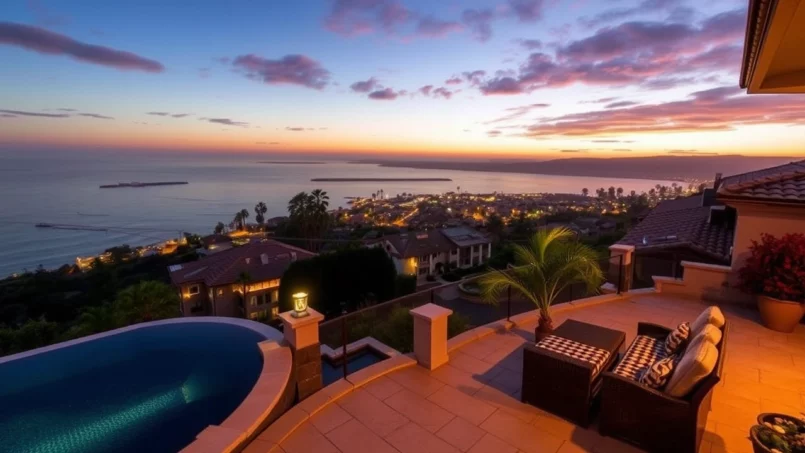
Nestled atop the cliffs of the Palos Verdes Peninsula, facing the Pacific, Rancho Palos Verdes combines nearly everything high-end investors seek: spectacular ocean views, some of the best public schools in the United States, a housing stock primarily composed of single-family homes, an ultra-residential setting, and reasonable access to the job hubs of Los Angeles and the South Bay. But behind the postcard, this affluent city also hides unstable ground, increasingly strict regulations—especially in the Portuguese Bend area—and a price level that leaves no room for improvisation.
For an investor, understanding this market means working on two levels simultaneously: long-term value, driven by scarcity and quality of life, and a set of risks (physical, such as landslides, earthquakes, fires, drought, and regulatory) that require particularly thorough due diligence.
A Very High-End Residential Market Structurally Tight
Rancho Palos Verdes has just over 41,000 residents, covering approximately 13.5 square miles, giving it a moderate density of around 3,000 people per square mile. The median household income exceeds $175,000, the average per capita income is around $86,500, and the poverty rate remains extremely low (about 4%). The real estate market logically reflects this demographic profile: predominantly owner-occupied, very expensive, and low volatility.
In 2023, the median value of owner-occupied homes is around $1.54 million, and several recent datasets confirm this high level, with nuances depending on the source and timeframe:
| Indicator (Entire City) | Recent Value Observed |
|---|---|
| Median Home Value (2019‑2023) | ~$1.54M |
| Median Sales Price (Nov. 2025) | $1.6M (+6.6% year-over-year) |
| Median Sales Price (Recent Window) | $1.85–$1.92M depending on source |
| Price per Sq Ft (Nov. 2025) | ~$741/sq ft (+2.2%) |
| Price per Sq Ft (Other Sources) | $780–$825/sq ft |
| Homeownership Rate | ~80.5% |
| Renter Share | ~19–22% |
Even when multiplying sources, a clear trend emerges: Rancho Palos Verdes is firmly in the very top tier of California markets. Annual increases of around 3% to 6% remain common, and some projections anticipate about a 16% appreciation in values over ten years, with an average price projected around $1.7 million by 2030–2035.
A Seller’s Market… But Less Euphoric
Several indicators show a market that is rather favorable to sellers, but which has significantly cooled after the post-COVID euphoria years. Indices like the Market Action Index (around 35 to 37) signal a slight advantage for sellers: prices hold, but buyers are more demanding and overpriced properties remain on the market.
Recent figures fall within this range.
| Market Dynamics | Observed Level |
|---|---|
| Average Days on Market | ~58 to 105 days depending on period |
| Average Number of Offers per Property | About 2 |
| Average Discount vs. List Price | ~5% (sold at ~95% of listing) |
| Proportion of Properties with Price Reductions | About 45–50% |
| Annual Housing Turnover Rate | ~1% of homes per year |
The key signal for an investor is twofold: qualified demand remains, driven by an affluent clientele, but price sensitivity has increased. A well-positioned property between $1.7 and $2.5 million in a sought-after neighborhood still sells relatively quickly, while overpriced properties pile up on the market and eventually concede significant reductions.
A Housing Stock Almost Entirely Composed of Single-Family Homes
One of the structural elements of the market lies in the very nature of the housing stock. More than 80% of the stock is made up of detached single-family homes, and the supply of apartments or large condominiums remains very limited, except for a few pockets like Peninsula Villas or some complexes near Palos Verdes Drive South.
| Housing Type | Approximate Count | Share of Stock |
|---|---|---|
| Detached Single-Family Homes | ~12,560 | ~83% |
| Multifamily Units (Apartment Buildings, Condos, Small Multi-Units) | ~409 additional units (2000‑2020) | Minority |
| Mobile Homes | +25 (2000‑2020) | Marginal |
| Total Housing Units | 15,500–16,300 | 100% |
This very low-rise character is part of Rancho Palos Verdes’ DNA: few large towers, many homes on generous lots, often with gardens and views. For an investor, this means two things: a structural scarcity of multifamily assets (hence high entry tickets but strong repositioning potential) and a rental market primarily driven by high-end family homes.
Highly Differentiated Sub-Markets Based on View, Neighborhood, and Topography
Rancho Palos Verdes is not a homogeneous block. Within a few miles, exposure, elevation, proximity to the ocean or landslide zones can cause prices to vary dramatically.
Overview of Main Neighborhoods
Among the most frequently cited areas: most cited areas
The Palos Verdes Peninsula consists of several distinct neighborhoods, each with its own characteristics. Miraleste / Palos Verdes Drive East features homes on the eastern slope with clear views at relatively accessible prices. Mira Catalina, at the far eastern end, is a quiet neighborhood with winding streets and generally lower prices. West Palos Verdes, along the cliffs, offers large properties with ocean views and direct access to coastal trails. Country Club, around the golf course, is renowned for its exceptional panoramic views combining golf and sea. The central ridge neighborhoods (Crest, Los Verdes, etc.) are more inland, less exposed to coastal hazards, with quiet streets and good schools. Eastview, to the east near San Pedro, has a unique school zoning feature, sometimes allowing entry into the prestigious Peninsula school district. Finally, Palos Verdes Drive South is a mixed area blending residences, hotel complexes, golf courses, and private developments with beach access.
In this patchwork, three variables dominate price formation: the view (full ocean view or not), proximity or lack thereof to unstable zones (Portuguese Bend and associated landslide complexes), and the quality of the micro-environment (noise, traffic, distance to schools).
A Rare Example of Multifamily: Peninsula Villas
While multifamily is rare in the city, Peninsula Villas well illustrates the type of deal possible in this segment. This complex at 5644 Ravenspur Dr spans nearly 1.86 acres, has 55,522 sq ft of built space and 48 apartments (plus one non-conforming unit), for a total of 95 beds. The mix is dominated by 2-bedroom duplex units:
| Peninsula Villas Characteristics | Data |
|---|---|
| Land Area | ~1.86 acres |
| Built Area | 55,522 sq ft |
| Number of Units | 48 + 1 non-conforming |
| Product Mix | Studio, 1 bed, many 2 bed (1.5 to 2 baths) |
| Asking Price | $450/sq ft |
| Current Cap Rate | ~3.5% |
| Pro Forma Cap Rate | ~6% (via rent repositioning) |
Many existing rents are below market, suggesting a classic value-add strategy: gradual rent increases during turnovers, common area and amenity upgrades, and brand image modernization. But the barrier to entry—in both capital and expertise—remains high.
An Expensive Rental Market, But Deep and Diversified
With a homeownership rate of over 80%, Rancho Palos Verdes is not a “renter’s market” at first glance. Yet the depth of the rental stock and rent levels reveal a genuine sub-market, fed by executives relocated to Los Angeles, families in transition, and an affluent clientele seeking an ocean-view home without buying.
Rent ranges vary by source (Zillow, Zumper, Apartments.com, RentCafe, Rentometer), property type, and period, but the convergence is clear: rents are significantly higher than the national average and even most neighboring communities.
| Overall Rental Indicator | Observed Level (Order of Magnitude) |
|---|---|
| Average Rent (All Types) | ~$3,200–$4,700/month depending on source and date |
| Overall Median (Dec. 2025) | ~$4,200/month (+120% vs. US average) |
| Average Apartment Rent (Nov. 2025) | ~$3,285 (average size ~1,130 sq ft) |
| Average House Rent | ~$5,950/month (high variability) |
| Average 1-Bedroom Rent | ~$2,600–$2,700/month |
| Average 2-Bedroom Rent | ~$3,400–$3,600/month |
| Average 3-Bedroom Rent | ~$4,400–$4,800/month |
| Average 4+ Bedroom Rent | ~$7,000–$8,000/month |
At the same time, there is a very wide dispersion, from small units around $2,000–$2,700 up to family homes comfortably exceeding $10,000 per month, or even $20,000 to $30,000 for certain exceptional properties.
A Price-to-Rent Ratio That Still Favors Long-Term Owners
With median purchase prices around $1.6–$2 million and typical monthly rents of $4,000 to $6,000 for a family home, the gross price-to-rent ratio often exceeds 25 years of rent. In the short term, this may seem unattractive from a classic cash-flow perspective. But two elements qualify this observation:
The rental clientele is highly creditworthy, which significantly reduces the risk of payment defaults. Moreover, capital appreciation has historically been high, with long-term price increases exceeding the national average.
For a wealth investor willing to accept a moderate current yield (or even slightly negative after expenses, taxes, and HOA fees) in exchange for exposure to a very defensive asset in terms of location, Rancho Palos Verdes remains coherent. For an investor focused on immediate cash flow, however, the market is significantly less suitable.
Short-Term Rentals Under Regulatory Pressure
The presence of a luxury resort like Terranea, Trump National Golf Club, and a myriad of trails, beaches, and viewpoints has naturally stimulated the development of short-term rentals like Airbnb. Figures mention an average occupancy rate of 66%, a daily rate around $163, and a median annual revenue of about $37,600 per listing.
The city is considering banning short-term rentals in single-family residential zones. A business plan based solely on this segment for a single-family home is therefore very risky. Any strategy must imperatively consider zoning, changes in municipal ordinances, and the reality of enforcement.
A Complex but Relatively Predictable Fiscal Environment
As everywhere in California, property taxation in Rancho Palos Verdes is governed by Proposition 13: the base tax is capped at 1% of the acquisition value, and the assessed value can only increase by 2% per year, except upon resale or major renovations triggering reassessment. Locally, the effective rate is slightly higher due to additional voter-approved taxes (schools, infrastructure, etc.).
| Local Tax Component | Indicative Level |
|---|---|
| Base Ad Valorem Rate | 1% of taxable value |
| Observed Effective Rate (RPV) | ~1.08–1.15% according to studies |
| Sales Tax | 9.75% (including 1% for the city) |
| Transient Occupancy Tax (Hotels) | 10% |
| Utility Users Tax (Electricity, Gas, Water) | 3% |
| Golf Tax | 10% on green fees (excluding state/county public courses) |
| Document Transfer Tax | $0.55 per $1,000 for the city (in addition to county) |
To this are added direct assessments, such as the storm drain user fee of about $90–$105 per year for a standard lot, as well as specific school taxes (notably for PVPUSD).
For an investor, it is crucial to distinguish a property’s market value from its taxable value. A long-term owner may benefit from a very low tax base, often disconnected from current value. Conversely, a new buyer sees their tax base reset to the purchase price, directly impacting cash flow. Programs like Propositions 60, 90, and 19 allow, under certain conditions (seniors, disabled persons, family transfers), to transfer a favorable tax base and mitigate this impact.
Exceptional Quality of Life Supporting Demand
If households are willing to pay such high prices in Rancho Palos Verdes, it’s because the city offers a rare cocktail in Southern California: spectacular landscapes, safety, elite schools, and the feeling of being far from the metropolis while remaining a drive away from employment hubs.
Schools Among the Best in the Country
The Palos Verdes Peninsula Unified School District (PVPUSD) is one of the main drivers of local real estate demand. It boasts high school graduation rates near 100% at its two major public high schools (Palos Verdes Peninsula High School and Palos Verdes High School), and an exceptionally high proportion of adults with higher education degrees (nearly 70% of those 25 and older hold at least a bachelor’s degree).
The score out of 10 achieved by many elementary schools in the city on GreatSchools, reflecting academic excellence.
For a rental investor, positioning a home in a highly rated school district significantly strengthens the property’s appeal, even at a contextually high rent.
Omnipresent Nature, Between Cliffs and Reserves
Rancho Palos Verdes boasts over 7,000 acres of open space, 25 miles of trails (in the Palos Verdes Nature Preserve, Abalone Cove, Forrestal, Portuguese Bend, Filiorum reserves, etc.), nearly wild beaches, and several golf courses. Point Vicente Interpretive Center, facing the historic lighthouse, is renowned for gray whale watching, while Wayfarers Chapel, designed by Lloyd Wright, was a long-time architectural icon before its preventive deconstruction due to landslides.
Discover the activities and advantages that make this region a privileged place to live, particularly suited to the era of telecommuting.
An outdoor-oriented lifestyle with hiking, golf, paddleboarding, and surfing.
Including watching the famous free-roaming peacocks in their natural habitat.
Working for a Los Angeles or tech employer in a spectacular and unspoiled environment.
Beneath the Veneer: A Unique Geological Risk in California
What truly distinguishes Rancho Palos Verdes from other upscale Los Angeles suburbs is less the price or schools than the uniqueness—and severity—of its geotechnical risk. The city is literally built on a massive landslide complex, particularly in the Portuguese Bend area and its sub-slides (Abalone Cove, Beach Club, Klondike Canyon, etc.).
A Subsurface Composed of Highly Unstable Clay Formations
The peninsula’s bedrock consists of a metamorphic core covered by younger sedimentary rocks. The key formation for slope stability is the Monterey Formation, locally over 600 meters thick. It notably includes the Altamira Shale, rich in volcanic tuff layers transformed into bentonite. This bentonite becomes extremely slippery when saturated with water, promoting landslides.
In Zone 2 of the Landslide Moratorium Area (about 112 acres), the subsurface is primarily composed of the Monterey Formation and ancient landslide deposits, covered with colluvium, alluvium, and fill. Geotechnical studies from the 1970s-1980s identified a translational landslide: a large mass of ground slowly sliding on an inclined clay plane towards the ocean.
A Risk Far from Theoretical: Destroyed Homes, Wrenched Roads, Evacuations
Since the 1950s, the Portuguese Bend Landslide (PBL) and its satellites have been in nearly continuous movement, with acceleration phases linked to rainfall and water inputs (irrigation, pipeline leaks, old septic systems, pools, etc.). The numbers speak for themselves:
In 2024, over 200 households were forced to evacuate the Portuguese Bend and Seaview neighborhoods due to the landslide acceleration.
Local authorities and experts agree on one central point: water is the primary driver of movement. Depressurization systems (pumping wells, hydraugers) can slow the landslides but not completely stop them. Two existing wells, each pumping over 130,000 gallons per day, have lowered the water table and reduced speeds, but the moving mass remains gigantic.
A Massive Public Response: Moratorium, Expropriations, Federal Funds
Faced with this reality, the city has progressively tightened its regulations. An initial Landslide Moratorium Ordinance was adopted in 1978 to prohibit any new construction in unstable areas. After legal challenges in the early 2000s, some owners obtained the right to build on vacant lots—and tragic irony, several of these recent homes are now red-tagged or in the process of being bought back by public authorities.
Since 2023–2024, the situation has reached a new threshold. Strong measures include:
Following the state of emergency declaration, a set of regulatory measures and aid programs have been implemented to manage risks in this unstable area.
Declaration of a local state of emergency followed by the California Governor, then a reinforced moratorium on construction within the landslide complex (715 acres, 400 homes, 130+ lots).
Ordinance from August 2025 permanently prohibiting any new residential construction in the area, even after the emergency moratorium expires.
Limited exception scheme allowing only identical reconstruction of existing buildings. Extensions, new garages, and pools are excluded.
FEMA buyout program targeting about twenty homes, with a $40M extension request to gradually convert the area into open space.
Simultaneously, heavy investments have been made to reinforce the depressurization well network, monitor movements via GPS and radar imagery (Sentinel-1, lidar), and coordinate public and private stakeholders through a Landslide Complex Working Group meeting weekly.
For an investor, the conclusion is unambiguous: areas mapped as part of the landslide complex (Portuguese Bend, portions of Seaview, Portuguese Bend Beach Club) have become, on a typical investment horizon, unsuitable for any speculative project. Even a very short-term opportunistic deal faces total uncertainty about future value and the physical viability of the property.
Other Natural Risks: Fire, Drought, Earthquake
The landslide is not the only risk to factor in. The city is located in an environment considered at high risk for wildfires: approximately 91% of buildings are exposed to significant fire risk, and this risk is expected to grow with climate change and the increase in “extreme fire weather” days. Studies indicate that in 21 of the city’s 23 census tracts, more than half of the buildings are threatened by fire at a level deemed significant.
Percentage of buildings with a 27% probability of experiencing flooding of about one foot over 30 years.
Seismically, the city sits within the geomorphic province of the Peninsular Ranges, a very tectonically active area. While the directly studied perimeter is not included in an Alquist-Priolo Earthquake Fault Zone—and thus has low exposure to surface fault rupture—it is susceptible to significant shaking from a major earthquake on the Palos Verdes, Newport-Inglewood, or Santa Monica faults, or of course the San Andreas fault system further north. Liquefaction risk proper is considered low to negligible in the studied areas, but seismically induced landslides on slopes and cliffs remain a serious threat.
A Shifting Regulatory Framework Impacting Investment Strategy
Beyond the landslide-related moratorium, the city is also at the heart of broader California debates about densification and the right to housing. Having failed to have its Housing Element (housing planning document) validated by the state on time, it became exposed to the famous “Builder’s Remedy,” which allows developers to submit dense projects deviating from local zoning, provided they reserve a fraction for affordable housing.
An emblematic project proposing four 11-story buildings with 482 units, including 20% low-income housing, in a residential canyon. The developer is requesting over twenty variances (parking, heights, etc.). This case illustrates the pressure to densify and the strong local opposition (groups like “Save the Canyon,” “Our Neighborhood Voices”), adding uncertainty and complexity for development investors.
Meanwhile, the municipality is preparing a complete update of its general plan, zoning code, and zoning map, and is considering banning short-term rentals in single-family neighborhoods. Investors focused on development or seasonal rentals must therefore monitor these regulatory developments very closely, lest their model be upended mid-course.
Realistic Investment Strategies in Rancho Palos Verdes
In this very specific context, several approaches remain relevant—provided one is highly selective.
Buy & Hold Wealth Strategy on Homes in Stable Areas
The most obvious option is to purchase a single-family home in a neighborhood outside mapped landslide perimeters, ideally near a top-rated school, with a partial or full view of the ocean or Santa Monica Bay. The goal is less about immediate cash flow (which will often be low after taxes and maintenance, especially with conventional bank financing) than building a hard-to-replace asset, insensitive to cycles, and highly valued by affluent family clientele.
Investors in this case should: invest strategically and assess the risks associated with each opportunity. They should also diversify their portfolios to minimize potential losses.
– Require a detailed geotechnical study for any significantly sloped parcel.
– Scrutinize seller disclosures (past ground movement, retaining wall work, presence of retention structures, etc.).
– Anticipate higher maintenance budgets (roofs, decks, gardens, potential drainage systems).
– Factor in the actual property tax after reassessment (1.08–1.15% of value, plus local assessments).
Repositioning of Small Condominiums and Existing Multifamily Assets
Given the scarcity of apartment buildings, each asset like Peninsula Villas or a small condo building is a natural candidate for value-add strategies: modernization, management optimization, gradual rent increases toward market levels, and improved services (parking, laundry, pool, landscaping).
With currently low cap rates (around 3.5%), the primary objective is not to generate high immediate cash flow, but to create medium-term value. This value is built through controlled increases in rental income and reduced vacancy risk. In this context, hiring a specialized management company, such as those operating in the South Bay, is strongly recommended to achieve these goals.
Medium-to-Long-Term Furnished Rentals Targeting a Corporate Clientele
The combination of high rents and restrictive short-term rental regulations suggests exploring an intermediate model: medium-to-long-term furnished leases targeting executives on assignment, expatriates, doctors, university professors, or relocated executives. This segment is less exposed to regulatory reversals than Airbnb, while allowing a premium to be charged for turnkey, well-equipped homes (office, fiber, high-end kitchen, landscaped garden).
In this context, an investor can seek a slightly higher yield than standard unfurnished rentals, without exposure to daily occupancy fluctuations.
Highly Selective Fix & Flip
Renovation-resale strategies can work in neighborhoods where demand remains strong for turnkey homes, especially for never-modernized 1950s–1970s properties. Key figures to monitor are then the average Days on Market by price segment, average renovation costs, and the potential margin after all expenses.
But in a city like Rancho Palos Verdes, this strategy must be handled with extreme caution:
– Permits for structural work can be lengthy and demanding, especially in sloped zones.
– Renovation costs (engineering, reinforcement, seismic upgrades, etc.) are significantly higher than in geotechnically simpler cities.
– The risk of discovering structural problems related to soil instability during construction is real in certain areas.
A savvy flipper will therefore prioritize historically stable neighborhoods, homes already on reputedly sound land, and will scrutinize city archives.
Due Diligence Heavier Than Elsewhere, But Essential
Investing in Rancho Palos Verdes is not investing in just any suburban subdivision. The high entry ticket, complex subsurface, fire risk, drought, changing regulations, and social pressure against densification require an unusual level of preparation.
Before entering escrow, a diligent investor should at minimum:
Before any purchase, it is crucial to: verify if the property is in a risk zone (landslide, fault, fire, flood); examine geotechnical reports and existing improvements; analyze the HOA or condominium regime in detail (budgets, reserves, projects); precisely budget property taxes and ancillary taxes; and understand local rules regarding rental and occupancy.
Relying on attorneys specializing in California real estate law, geotechnical engineers, and tax professionals familiar with Los Angeles County is not a luxury, but simple prudence.
Conclusion: A Safe Haven… For Very Savvy Investors
Rancho Palos Verdes concentrates, almost caricaturally, the contradictions of high-end California real estate: exceptional natural beauty, high standard of living, excellent public schools, safety, supply scarcity, and solid appreciation prospects on one side; highly specific physical risks, growing regulatory complexity, and very high entry tickets on the other.
For a long-term investor with substantial capital, willing to accept a moderate yield for a defensive Los Angeles residential market (excluding landslide zones), the city is a compelling option. Conversely, it is not recommended for investors seeking high leverage, immediate cash flow, or speculative operations in unstable areas.
In this setting of cliffs and villas with picture windows, investment discipline makes all the difference: the beauty of the landscape should never make you forget what lies beneath the surface.
Disclaimer: The information provided on this website is for informational purposes only and does not constitute financial, legal, or professional advice. We encourage you to consult qualified experts before making any investment, real estate, or expatriation decisions. Although we strive to maintain up-to-date and accurate information, we do not guarantee the completeness, accuracy, or timeliness of the proposed content. As investment and expatriation involve risks, we disclaim any liability for potential losses or damages arising from the use of this site. Your use of this site confirms your acceptance of these terms and your understanding of the associated risks.

Cyril Jarnias is an independent expert in international wealth management with over 20 years of experience. As an expatriate himself, he is dedicated to helping individuals and business leaders build, protect, and pass on their wealth with complete peace of mind.
On his website, cyriljarnias.com, he shares his expertise on international real estate, offshore company formation, and expatriation.
Thanks to his expertise, he offers sound advice to optimize his clients' wealth management. Cyril Jarnias is also recognized for his appearances in many prestigious media outlets such as BFM Business, les Français de l’étranger, Le Figaro, Les Echos, and Mieux vivre votre argent, where he shares his knowledge and know-how in wealth management.





