
 Published on and written by Cyril Jarnias
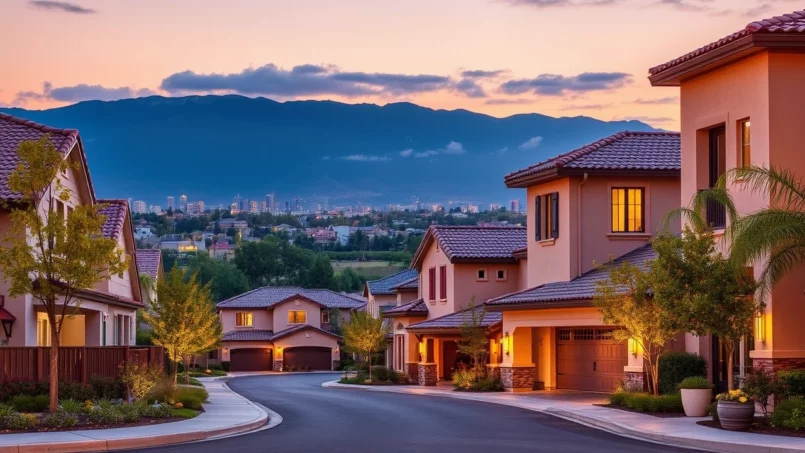
Investing in real estate in Yorba Linda means betting on one of the most solid and sought-after residential markets in Orange County. This city, nicknamed the “Land of Gracious Living,” combines affluent neighborhoods, excellent schools, low crime, and quick access to the employment hubs of Los Angeles and Anaheim. The flip side: very high entry prices, limited supply, fierce competition… but also steady appreciation and robust rental demand.
For a successful investment, it’s essential to analyze the market as a whole, identify promising neighborhoods, and accurately assess profitability by factoring in all costs (taxes, fees) and risks, especially climate-related ones. This approach helps define a suitable strategy, whether the goal is a primary residence, long-term rental, or acquisition of commercial/industrial assets.
Understanding Yorba Linda’s Profile and Fundamentals
Before discussing returns and strategies, you need to understand what makes Yorba Linda unique. The city is located in Orange County, about 30 kilometers from Los Angeles and about 10 kilometers from Anaheim, Disneyland, and Angel Stadium. It has approximately 68,000 residents, a median household income well above $120,000 (around $150,000 according to recent sources), and a homeownership rate near 82%.
Violent crime rate per 100,000 residents, well below the national average.
The city was designed and managed to preserve a high-end residential character: low density, plenty of green spaces, neighborhoods planned around golf courses or artificial lakes, and restrictive zoning policies. This severely limits new home construction, contributing to supply tightness and supporting prices.
An Expensive, Tight, and Historically Profitable Residential Market
The first thing to consider when thinking about investing in real estate in Yorba Linda is the price level. The median sales price was around $1.35 million in spring 2025, after a roughly 9.5% increase year-over-year. In 2024, single-family homes had a median of $1.33 million, townhouses about $944,000, and condos $605,000. Over the past decade, the average annual increase is approximately 5.9%, with a recent year seeing over 8% appreciation.
To give you a sense of scale, here is a summary of some key residential market values:
| Indicator (Residential) | Approximate Value |
|---|---|
| Median home price (spring 2025) | $1.35M |
| Median price range (by ZIP) | $1.23M – $1.46M |
| Median single-family home price (2024) | $1.33M |
| Median townhouse price | $943,900 |
| Median condo price | $605,000 |
| Price per sq ft (approx. 2025, $624/sqft) | ≈ $6,700/m² |
| Average annual appreciation (10 years) | 5.89% |
| Appreciation over recent 12 months | 8.35% |
In terms of dynamics, the market clearly favors sellers: the city has only about 1.5 months of inventory, with an average of 80 homes available at any given time for about 50 monthly sales. In April 2025, 74% of homes sold in under 30 days, and “hot” properties sometimes went in about twelve days. Most listings receive an average of 4 offers, and a Redfin competition score of 81 out of 100 confirms this high tension.
In late 2025, seasonal slowdown and rising rates led to a slight dip in the median sales price to around $1.3 million (-10.4% year-over-year). However, the price per square foot continues to rise (about $632/sqft in December, +8.3% year-over-year), confirming that the market sometimes corrects in the short term but that the underlying trend and demand fundamentals remain very strong.
Price Outlook and Investment Horizon
Medium and long-term projections confirm this potential. WalletInvestor models anticipate a median price increase from about $995,000 in 2025 to roughly $1.02 million in 2026, a rise of about 2.4% year-over-year, with a trajectory toward $1.11 million by 2030, representing a gain of roughly 11–17% over five to ten years depending on the scenario.
Forecasts for Orange County and California indicate moderate annual price appreciation, estimated between 1% and 4% for 2026. This trend is accompanied by an interest rate environment that should stabilize around 6%. The strong double-digit increases seen after the Covid-19 pandemic are over, but the market remains upwardly oriented, especially for well-located single-family homes.
For an investor, this means that a very short-term “flip” strategy is risky in this context: margins are compressing, financing costs are high, and data from some models even predict possible downward phases within 12 months. On the other hand, a long-term approach (5 to 10 years) on quality assets capable of generating decent rental cash flow appears consistent with the trends.
Impact of Interest Rates and the “Lock-In” Effect
The leverage of interest rates plays a central role. In early 2025, 30-year fixed rates were above 7%; by spring, they were hovering around 6.6%, then stabilized late in the year in a range of 6.1% to 6.4%. Major institutions anticipate rates between 5.9% and 6.4% for 2026.
Percentage of American homeowners with a mortgage at 5% or less, illustrating the lock-in effect on the market.
This lock-in helps keep supply reduced. Economists do anticipate a 5% to 10% increase in inventory countywide for 2026, which at Yorba Linda might mean perhaps one hundred additional homes hitting the market in the year, but that remains modest. As long as rates do not drop decisively below 6%, the flow of sellers will likely remain limited.
For an investor, the consequence is twofold: on one hand, competition remains high for every quality property; on the other hand, drastic inventory increases that could derail prices seem unlikely in the short term.
Where to Invest in Yorba Linda? Focus on Key Neighborhoods
Investing in real estate in Yorba Linda requires a good understanding of the mosaic of neighborhoods, each with its own property types, clientele, and price structure. The city is divided into 6 to 16 major areas depending on the source, but some clearly stand out as priority targets for residential investment strategies.
Bryant Ranch: The “Good Deal” on the Fringe
Bryant Ranch, on the west side of the city, is often seen as the “outlying” area, with 15 to 20 minutes of additional commute time for workers. This somewhat peripheral reputation paradoxically makes it one of the more “affordable” segments of Yorba Linda: homes typically sell between $1.1M and $1.6M, with a median around $1.485M.
Lots are larger, the atmosphere is very family-oriented, quiet, and close-knit, and importantly, the neighborhood is served by Bryant Ranch Elementary, rated 10/10 on GreatSchools, with test scores around 80% in reading and 70% in math. Homes under $1.7M often sell in 2 to 3 weeks, making it a good compromise between price and resale speed.
For an investor, Bryant Ranch attracts high-income first-time buyers and families seeking space and schools rather than proximity to major arteries. In the rental market, demand is strong for 3- to 5-bedroom family homes, but gross yield remains modest given the entry ticket.
Travis Ranch: The Classic American Suburb Play
Often considered the “picture postcard” neighborhood of the city, Travis Ranch was built mostly in the 1970s–1980s, with tree-lined streets, a strong sense of community, and a large park (Travis Ranch Park) featuring pools, sports courts, and trail access.
The Travis Ranch Elementary school serving this neighborhood scores 9 out of 10, boosting its appeal for families.
This is an ideal area for a “buy & hold” strategy on owner-occupied single-family homes, or for an investor targeting the stable high-end family market. Tenant turnover here is generally low, reducing vacancy costs.
East Lake Village: Lake Living and the HOA Model
East Lake Village is a planned community built around a private 15-acre lake, with a strong homeowners’ association (HOA). Homes here typically range from $1.4M to $1.9M, with a median between $1.58M and $1.6M, and HOA fees run about $150 to $250 per month, which is reasonable given the amenities.
These fees grant access to a highly valued set of amenities: lake access, kayaks, paddleboards, four pools, sports courts, and community events (including a Christmas boat parade celebrated for nearly four decades). The neighborhood is served by Lakeview Elementary (8/10 on GreatSchools) and represents a significant share of the city’s sales: over 35% of closings in November 2025.
East Lake attracts local families, out-of-state buyers, and enthusiasts of community living. For an investor, it’s a target for high-end family rentals, provided the HOA cost is fully factored in and the clientele will use the amenities—otherwise the price premium is hard to justify.
Fairmont: Good Location, Value for Money
The Fairmont neighborhood, older (1970s–90s) and central, offers homes in a range of $1.4M to over $2.5M. It features mature trees, a well-established urban fabric, and importantly, excellent school ties with Fairmont Elementary (9/10, 80% reading, 78% math).
Its particular advantage is that it often comes $100,000 to $200,000 lower in price for comparable size and features than other popular pockets of the city. It thus attracts “smart” buyers who prioritize location, school quality, and long-term resale strength over the prestige of a golf course or private lake.
For an investor, Fairmont can be a good entry point for a long-term project, with a slightly lower ticket while maintaining strong demand.
Vista del Verde and Kerrigan Ranch: The Ultra High-End
Vista del Verde is a large 843-acre development centered around the Black Gold Golf Club, a course rated 4.5 stars by Golf Digest. It offers a mix: condos and townhomes starting around $600,000, but also large upscale homes exceeding $2M. The median listing price for homes here is approximately $1.9M, making Vista del Verde one of the most expensive areas in the city. It is also served by Lakeview Elementary (8/10).
Median sales price recorded in August 2025 for properties in Kerrigan Ranch.
These neighborhoods primarily target “move-up buyers” with significant equity, households seeking multi-generational space, or buyers for whom privacy, views, and prestige are key criteria. For pure investment purposes, rents must be very high to cover the cost of capital, limiting opportunities to very high-net-worth profiles or luxury primary residence strategies.
Other Notable Areas
Beyond these flagship neighborhoods, several other areas deserve investors’ attention:
– Hidden Hills Estates: Custom home subdivisions on large lots (one-third to one acre), with median prices around $1.8M.
– Old Towne Yorba Linda: Historic center with a pedestrian core and more accessible prices, sometimes between $850,000 and $1M, interesting for value-add strategies or small rentals close to downtown.
– Parkside Estates, Rose Court, Enclave: Newer communities, sometimes gated, with well-appointed outdoor amenities.
– Savi Ranch: The city’s main commercial hub, central to future housing and mixed residential/commercial development issues.
The Rental Market: Tight, High Rents, and Tenant Profile
While the city is predominantly owner-occupied, the rental market is far from negligible. Approximately 18% of the housing stock is renter-occupied, representing around 4,000 units. Most rentals are family homes, consistent with the demographic and school profile.
Rental levels reflect the local standing. Available data shows averages that vary by source but paint a consistent picture of an expensive market:
| Property Type / Indicator | Estimated Average Level |
|---|---|
| Average rent (all unit sizes) | $2,500 – $3,600/month depending on source |
| Average 3-bedroom rent (apartment) | ≈ $4,000/month |
| Average 2-bedroom rent | ≈ $3,100/month |
| Average 1-bedroom rent | ≈ $2,350/month |
| Studio | $1,550 – $1,750/month |
| Overall rent range | ≈ $980 – $15,500/month |
| Average apartment size | 800 – 1,000 sqft |
Rents are thus 55% to nearly 100% higher than the national average, which is explained by local incomes, quality of life, and scarcity of supply. A large portion of renters are families: approximately 70% of renter households are family households, 43% with children. The dominant age groups are 35-44 and 45-54, with high educational attainment (nearly half have at least a bachelor’s degree).
In a tight housing market, well-located rental properties are leased very quickly, with nearly 75% of units finding tenants in under 30 days. Available inventory can shrink to just a couple dozen properties. This strong demand is driven by households that, while not wanting or being able to buy at current prices, actively seek the area’s advantages, such as school quality and a safe environment.
For an investor, the challenge is to achieve reasonably positive cash flow despite high purchase prices, significant taxes, and rising costs (HOA, maintenance, insurance). Condos and townhomes, with lower entry prices, may offer a better rent-to-price ratio, even though HOA fees eat into profitability.
Property Taxes, Cost of Living, and Impact on Profitability
Local taxation is an element that absolutely cannot be overlooked when deciding to invest in real estate in Yorba Linda. The cost of living is approximately 56% higher than the U.S. average, and property taxes constitute a significant recurring expense.
The effective property tax rate in California, including the base levy and local assessments, ranges between 1.1% and 1.3% of the purchase value.
Specific data for Yorba Linda highlights the following approximate figures:
| Tax Indicator (Residential) | Indicative Value |
|---|---|
| Median effective rate, Yorba Linda | ≈ 1.17 – 1.18% |
| Median effective rate, Orange County | ≈ 1.14% |
| Median effective rate, California | ≈ 1.21% |
| Median annual tax in Yorba Linda | $8,000 – $8,400 |
| Median annual tax in the United States | ≈ $2,400 |
| Median bill on an $800,000 home | $8,800 – $10,400/year |
In addition to these taxes, some subdivisions also have Mello-Roos taxes, special assessments to fund schools, roads, parks, and other infrastructure in newer developments (planned communities like East Lake Village or Kerrigan Ranch, for example). These taxes can last 20 to 40 years and, on some properties, can nearly double the property tax bill.
Annual dollar amount that taxes can reach on a property valued at $1.3 million.
Relief programs exist (homeowner’s exemption, tax base transfers for those over 55), but they mainly benefit owner-occupants, not rental investors. Options to challenge the assessed value also exist, with average savings estimated around $1,100 per year when successful, but this requires proving overvaluation.
Climate Risks, Insurance, and Total Cost of Ownership
The California context increasingly demands consideration of climate risks and their financial impacts. Yorba Linda is no exception: approximately 79% of properties face a moderate wildfire risk, and 98% face extreme heat risk. Projections indicate a 200% increase in days above 97°F (≈36°C) over the next 30 years, with about 21 such days per year by 2055.
Direct consequences:
As climate risks like wildfires worsen, insurers adjust their offerings, directly impacting property owners. For instance, in Orange County, average collective insurance premiums for condos in at-risk areas rose from $200–300 to $400–600 per month over ten years. In response, buyers are becoming more discerning, now favoring fire-resistant materials, efficient air conditioning systems, and water-wise landscaping in their purchases.
For an investor, this means that before buying, it becomes essential to obtain a precise insurance quote for the targeted property, otherwise you may later discover a premium two or three times higher that ruins the financial structure. Hillside neighborhoods or areas near previous burn zones are especially sensitive to this issue.
On the flip side, properties incorporating solar panels, improved insulation, efficient cooling systems, and “fire smart” landscaping can command higher valuation and stronger demand, both for sale and rental.
Residential Opportunities: Which Strategies to Prioritize?
Given prices, rates, taxes, and risks, what are the coherent strategies for investing in real estate in Yorba Linda?
Several approaches emerge from the data and local practices.
1. Long-Term on Quality Family Homes
For investors with significant capital and a long horizon (10 years or more), single-family homes in neighborhoods with strong school demand (Bryant Ranch, Travis Ranch, East Lake Village, Fairmont) remain solid bets.
The goal is not necessarily immediate positive cash flow, but a near self-financing balance, with the backdrop of steady capital appreciation driven by land scarcity, demographic stability, and quality infrastructure. Rental income can then serve as partial cost coverage while waiting for a later sale.
2. Condos and Townhomes: Better Entry for Rental
Townhouses and condos, with median prices around $600,000 to $950,000, often provide a more manageable entry point. Even with HOA fees around $400 to $600/month, the combination of loan + taxes + expenses can sometimes be more easily covered by rents, especially if the property is well-located (near schools, shops, or the Yorba Linda Town Center).
These property types are particularly well-suited for a long-term buy-and-hold strategy to build a rental portfolio. They offer a more balanced risk/return profile than investments in large multi-million-dollar villas.
3. ADUs and Space Optimization
California now facilitates the creation of Accessory Dwelling Units (ADUs) on residential properties. In Yorba Linda, where lots are often generous and rental demand is strong, adding a studio or small rental unit to an existing lot can turn a break-even operation into a positively cash-flowing investment.
Before starting, it’s crucial to check local zoning rules and setback requirements. Construction costs also need to be anticipated and budgeted. This type of project can be viable because it responds to the same family and professional demand that already supports the real estate market.
4. More Technical Strategies: Creative Financing, Co-Investment
Given high interest rates and high entry prices, some investors explore alternative financing schemes: sellers offering seller financing, occasional use of “hard money” loans for short-term deals, or multi-party investment structures (co-investment, LLCs, etc.).
These structures do not change the market fundamentals, but can make it easier to overcome the initial barrier. However, they require perfect legal and tax expertise and, ideally, the support of a local broker well-versed in Orange County practices.
Commercial and Industrial Real Estate: A Second Investment Engine
Investing in real estate in Yorba Linda is not limited to residential. The city has a particularly dynamic commercial and industrial fabric, driven by a diversified local economy, a major hub at Savi Ranch, and over 1,000 businesses (plus 1,500 home-based operations).
Specialized platforms list around 24 to 26 commercial properties for sale at any given time: offices, retail spaces, industrial buildings, warehouses, commercial land, multi-family buildings. Commercial rents fall within a wide band, with annual per-square-foot values ranging from under $20/year (light industrial) to over $50/year (premium office/medical).
A municipal database, powered in partnership with LoopNet, allows identification of available spaces based on various criteria (size, use type, rent, visibility, road access).
Yorba Linda Commerce Center: A Textbook Case
Among the emblematic industrial opportunities, the Yorba Linda Commerce Center, on Prospect Avenue, illustrates well the type of product sought by institutional or high-net-worth investors.
A park of 14 buildings totaling 279,229 sqft, built in the late 1980s and featuring an exceptional occupancy rate.
279,229 sqft across 14 buildings. 83 units with ceiling heights of 14 to 20 feet. Numerous grade-level doors. M‑1 zoning (light manufacturing).
Fully leased with a reported occupancy rate of 99‑100%. 80% of interior spaces have been recently refreshed.
Roofs, LED lighting, renovated parking, HVAC systems, paint, landscaping, and major interior refresh.
The financial data presented shows a target sale price of approximately $80.98M, or $290/sqft. The projected return (cap rate) starts around 4.62% in year one, rising to 5.76% in year two and 6.23% in year three, assuming, among other things, the conversion of some leases to triple net (NNN) on the north parcel while the south portion remains on “gross” industrial leases.
Here is a simplified summary:
| Key Parameter – Yorba Linda Commerce Center | Value |
|---|---|
| Total building area | 279,229 sqft |
| Number of buildings / units | 14 buildings / 83 units |
| Total target price | $80,976,410 |
| Price per sqft | $290/sqft |
| Occupancy rate | ≈ 99–100% |
| Projected cap rate – Year 1 | 4.62% |
| Projected cap rate – Year 2 | 5.76% |
| Projected cap rate – Year 3 | 6.23% |
Such an asset illustrates the depth of the local industrial market: a well-maintained multi-tenant park, located in close proximity to residential neighborhoods, offering future mixed-use redevelopment potential, or even residential, if zoning policies evolve.
More broadly, an expanded search reveals over 100 industrial properties for sale in the area, representing nearly 1.5 million square feet with a total estimated value of over $70M, with prices ranging from $185,000 to nearly $12M per unit and an average price around $2.9M.
For an investor seeking stable rental income, contractual indexation, and diversification away from residential, the industrial park of Yorba Linda and its immediate surroundings represent a serious alternative, provided one masters the cycles specific to commercial real estate.
Regulatory Environment and Housing Policies: A Parameter to Watch
One particular aspect of Yorba Linda is the very strong control over urban planning. The city has had to contend with California state housing production requirements (RHNA): it must plan for zoning to accommodate 2,415 new housing units over the 2021‑2029 period, roughly 10% more inventory.
After a tense political debate and an initial failed measure (Measure Z rejected in 2022), the city received approval for its “Housing Element” from the State Department in 2022, followed by final certification after a massive vote in favor of Measure JJ in 2024. The plan identifies 18 potential development sites for approximately 1,929 net housing units and includes several levers:
Measures and projects implemented to diversify the housing supply and revitalize urban areas.
Rezoning certain commercial areas, such as Savi Ranch, to allow mixed-use combining housing and commercial activities.
Development of affordable housing, including the Altrudy II project providing 64 affordable apartments for seniors aged 62 and over.
Streamlining processes for creating Accessory Dwelling Units (ADUs) to increase rental supply.
Establishment of specific ‘overlay zones’ to promote affordable housing or use of faith-based land.
For an investor, this framework means new products will come to market: townhomes, middle-income residences, subsidized housing. However, the volume remains limited, and the city aims to preserve its suburban character and landscape identity, reducing the risk of overbuilding. It will be important to monitor new projects (City Ventures, Olson Company, etc.) which may create windows of opportunity in new construction, sometimes at competitive prices compared to highly valued existing homes.
Property Management and Professional Ecosystem
Investing in real estate in Yorba Linda without being on the ground, or without a detailed understanding of California regulations, can quickly become complex. However, the local market is rich with specialized professionals (agents, management companies, legal firms), for both residential and commercial.
Many property management companies (APG Properties, Good Life Property Management, TrueDoor, Genuine Property Management, etc.) offer full services: tenant screening, move-in/move-out inspections, rent collection, repair coordination, compliance monitoring, financial reporting, and, for some, guarantees on vacancy or protection against non-payment.
Percentage of collected rents charged monthly as fees for delegated management of residential properties by non-resident investors.
Regarding the initial transaction, local agents specializing in Yorba Linda (such as those from Canyon Realty, First Team Real Estate, Pinnacle Real Estate Group, or teams like the Bald Brothers Team or individual advisors very active in the sector) play a key role in:
– Identifying the right micro-locations (quiet streets vs. busy arteries, exposure to natural hazards, school district boundaries).
– Properly assessing resale and rental potential.
– Negotiating in a multiple-offer context, sometimes above the listed price.
Given the competition and financial stakes, a “solo” approach is rarely advisable in this market.
How to Build a Coherent Investment Strategy for Yorba Linda?
Given all these factors, an investor looking to position themselves in Yorba Linda should structure their thinking around a few key axes.
First, clarify your horizon and risk/return profile: this market is much better suited to a long-term portfolio seeking capital preservation and growth than to a purely speculative approach. Next, determine whether you are targeting residential (house, condo, ADU), commercial/industrial rental, or a mix of both.
For residential, you will need to be equipped to finely analyze net cash flows, incorporating:
Beyond the purchase price and loan rate, acquiring a property involves several recurring and one-time fees to include in your budget.
Borrowing rate estimated between 6% and 6.5% in the short term. Also plan for property taxes and any Mello-Roos taxes.
Include HOA fees for applicable properties and homeowners insurance, particularly crucial in wildfire-prone areas.
Budget for maintenance costs, especially if the property is older, to avoid unpleasant surprises.
The most reasonable approach is often to target slightly positive or neutral cash flow after financing, relying on medium/long-term appreciation as the true wealth-building engine.
In the industrial/commercial segment, the work shifts toward lease analysis (term, indexation, expense type – gross vs. NNN), historical occupancy rates, recent improvements, and repositioning potential (e.g., partial conversion to higher-value uses).
The success of any real estate investment, regardless of segment, requires thorough due diligence. This includes visits at different times of day, testing commute times to job centers, verifying school boundaries, studying natural hazards, analyzing neighborhood price histories, and consulting local experts.
Investing in real estate in Yorba Linda means accepting a high entry point in exchange for one of the most sought-after environments in Orange County, a historically stable market, and solvent demand, provided you approach this terrain with precise numbers, a long-term vision, and appropriate professional guidance.
Disclaimer: The information provided on this website is for informational purposes only and does not constitute financial, legal, or professional advice. We encourage you to consult qualified experts before making any investment, real estate, or expatriation decisions. Although we strive to maintain up-to-date and accurate information, we do not guarantee the completeness, accuracy, or timeliness of the proposed content. As investment and expatriation involve risks, we disclaim any liability for potential losses or damages arising from the use of this site. Your use of this site confirms your acceptance of these terms and your understanding of the associated risks.

Cyril Jarnias is an independent expert in international wealth management with over 20 years of experience. As an expatriate himself, he is dedicated to helping individuals and business leaders build, protect, and pass on their wealth with complete peace of mind.
On his website, cyriljarnias.com, he shares his expertise on international real estate, offshore company formation, and expatriation.
Thanks to his expertise, he offers sound advice to optimize his clients' wealth management. Cyril Jarnias is also recognized for his appearances in many prestigious media outlets such as BFM Business, les Français de l’étranger, Le Figaro, Les Echos, and Mieux vivre votre argent, where he shares his knowledge and know-how in wealth management.





