
 Published on and written by Cyril Jarnias
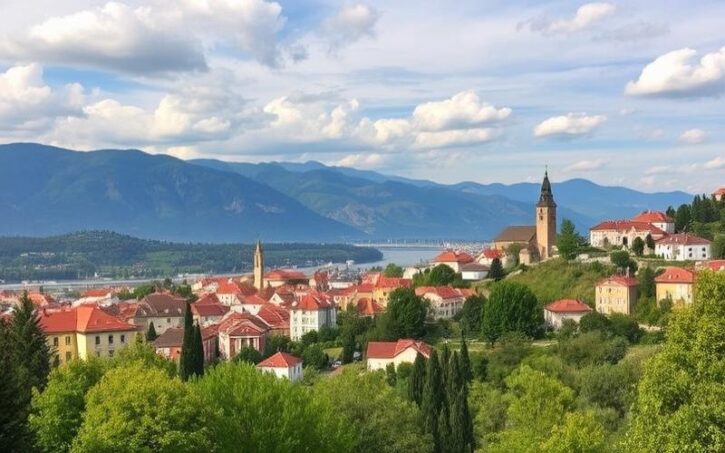
Putting down roots in Bosnia and Herzegovina means choosing a European country that remains largely undiscovered, where the cost of living is still very low, the culture is rich, and nature is ever-present. Between cosmopolitan Sarajevo, photogenic Mostar, and peaceful small towns, the country is attracting an increasing number of remote workers, entrepreneurs, and employees on assignment. However, settling there long-term requires understanding the visa system, residency procedures, the rental market, taxation, healthcare, and daily life.
This guide synthesizes essential information to prepare for your move, based on specialized reports, tax analyses, cost-of-living data, and feedback from expatriates.
Understanding the Country Before You Go
Bosnia and Herzegovina is located in Southeastern Europe. It is often described as a “hidden gem” for digital nomads: mountain landscapes, valleys, turquoise rivers, historic cities, and prices very low compared to the rest of the continent. The country doesn’t have the infrastructure or salary levels of Western Europe, but it compensates with a quality of life defined by a slower pace, endless café visits, and very present human relationships.
Only 16% of the Bosnian population speaks English, a language that is however widespread among urban youth and professionals.
The country still bears the scars of the 1990s war: buildings riddled with bullet holes next to new buildings, memorials, a sometimes heavy atmosphere. Yet, safety is good for expatriates, provided basic precautions are respected. Daily life is made of tight-knit family and friend networks, intense sociability, and a relationship with time that is decidedly less stressful than in major Western capitals.
Visas, Entry, and Residence Permits
Before looking for an apartment or a job, you must clarify the legal framework for your stay. Bosnia and Herzegovina applies a visa policy largely modeled on the Schengen area, with many exemptions.
Short-Term Tourist Stay
Citizens of many countries (including Schengen countries, most European countries, the United States, and others like Turkey, Qatar, Russia, or China) can enter visa-free for a short stay, generally up to 90 days within a 180-day period. The passport must be valid for several months beyond the planned departure date (diplomatic sources mention at least three to six months of validity).
The visa application for Bosnia and Herzegovina must be submitted in person at an embassy or consulate and cannot be done by mail. Processing typically takes between 5 and 15 business days, and can take up to a month. Required documents include a passport, application form, proof of accommodation, insurance, financial proof, and, depending on the case, an invitation or a contract.
Visitors staying in private homes must be registered with the police or the Foreigners’ Service within 48 hours starting from three consecutive nights. Hotels and guesthouses usually handle this formality.
No Specific Digital Nomad Visa Exists
As of now, there is no visa dedicated to foreign remote workers. Those wishing to test the country for a few weeks use the tourist regime (with or without a visa depending on their nationality), but to stay longer, one must fall under a temporary residence permit.
Temporary Residence Permit
Any foreigner wishing to stay more than 90 days must apply for a temporary residence permit with the Service for Foreigners (Ministry of Security), via its local office. The application must be submitted at least 15 days before the end of the initial 90-day stay. The procedure is known to be bureaucratic and sometimes lengthy: several months can pass between filing the application and receiving the permit, even though the legal framework provides for processing times of about a month.
A temporary residence permit can be granted for a period of up to 12 months and is renewable. This allows for legal residence for one year, with the possibility of requesting extensions. This status is an essential first step towards long-term settlement, paving the way for permanent residence and, eventually, citizenship.
The authorities require documents such as a clean criminal record, proof of financial means, health insurance, and proof of accommodation. For some nationalities, a criminal record extract issued by the home country with an apostille is required. The passport must exceed the requested permit duration by at least three months.
Setting Up a Business to Obtain Residence
There is no “investor visa” in the sense of golden visas, but a common setup for freelancers and entrepreneurs is to register a small business or a representative office in Bosnia and Herzegovina. Once registered as the director of a local entity, the foreigner can apply for a temporary residence permit as the founder or employee of their own structure.
In the autonomous district of Brčko, organizations like Invest in Brčko can assist with settlement procedures. This option offers a relatively clear legal framework for living and working, but requires understanding local taxation and accounting obligations.
Work and Employment Permits
For EU/EEA citizens, the work visa requirement is waived, but administrative formalities remain necessary. For non-Europeans, a work visa is, in principle, to be obtained before entering the country, in connection with a local employer. These procedures go through the employment services of the entities (Federation of Bosnia and Herzegovina or Republika Srpska) and are closely linked to the residence permit application.
Cost of Living: One of the Lowest in Europe
The numbers speak for themselves: Bosnia and Herzegovina ranks among the cheapest countries on the continent. The cost of living is about 1.45 times lower than the global average. This is strongly felt in housing, food, and leisure.
At the national level, average data provide: key information and general trends on statistical indicators.
| Profile | Monthly Cost with Rent | Monthly Cost without Rent |
|---|---|---|
| 1 person | $788 | $437 |
| Family of 4 | $1,847 | $1,293 |
Rent accounts for about $351 per month for one person (housing and utilities) and $554 for a family. Food costs on average $312 for one person and $828 for four.
The average net salary in Tunisia is about $696 per month, which is barely enough to cover the standard monthly expenses of a local resident. In contrast, this creates a very favorable differential for an expatriate with foreign income, such as remote work for a Western company, a pension, or investment income, ensuring a significantly higher purchasing power.
Overview of Sample Prices
To get a more concrete idea of daily life, here are some average benchmarks:
| Expense Item | Average Price (USD) |
|---|---|
| “Menu of the day” lunch | $7.61 |
| Dinner for two at a restaurant | $32.50 |
| Fast-food meal (e.g., McDonald’s) | $6.70 |
| Cappuccino | $1.68 |
| 0.5L beer at a bar | $2.17 |
| Movie ticket | $5.42 |
| Monthly gym membership | $30.20 |
| Basic haircut | $4.05 |
| Doctor’s consultation | $24.90 |
Regarding housing, national average rents are:
| Type of Housing | Average Monthly Rent |
|---|---|
| 1 bedroom in city center | $287 |
| 1 bedroom outside center | $214 |
| 3 bedrooms in city center | $517 |
| 3 bedrooms outside center | $366 |
Utilities (electricity, water, heating, garbage, etc.) average $97 for one person and $149 for a family. A 50 Mbps+ fixed internet subscription costs around $25 per month.
For groceries, basic products remain very affordable (bread, milk, fruits, vegetables). For example, 12 eggs cost around $2.83, a kilo of apples about $1.41, a bottle of mid-range wine $7.20.
For urban transport, a single ticket costs on average $1.53, a monthly pass $34.40, and an 8 km taxi ride around $8.48.
Sarajevo, Mostar, and Other Cities: Where to Settle?
The choice of city is central to an expatriation project. In Bosnia and Herzegovina, several destinations are well-suited for settlement, each with its strengths and weaknesses.
Sarajevo, Cosmopolitan Capital
Sarajevo concentrates the country’s political, economic, and cultural power. The city, surrounded by the Dinaric Alps and crossed by the Miljacka River, has approximately 400,000 to 530,000 inhabitants depending on the defined perimeter. It is the most expensive in the country, but its prices remain low compared to neighboring capitals.
Cost-of-living comparators estimate that an expatriate needs about $1,400 per month, a digital nomad up to $2,900 depending on their comfort level, while a local lives on average with $800. A family of four will spend about 5,500 BAM per month (rent included), or around $3,000.
Sarajevo is significantly more expensive than the national average, but offers:
– A real cultural scene (theaters, festivals, Sarajevo Film Festival),
– Many more restaurants, cafés, and bars,
– Universities and several international schools,
– The country’s best coworking offerings (NEST71, HUB387, Networks, etc.),
– A major international airport.
The price in dollars for a studio or small room in the city center in this area, for the most sought-after offerings.
Compared to neighboring cities (Belgrade, Zagreb, Ljubljana, Split…), Sarajevo remains cheaper, sometimes by more than 20%, especially on rent and dining. However, its local purchasing power is lower, which weighs on residents but benefits expatriates paid from abroad.
Mostar, a Postcard on a Budget
Mostar, in the south, is famous for its UNESCO-listed Ottoman bridge (Stari Most). The city is smaller, sunnier, and significantly cheaper than the capital. Comparators indicate that a family of four can save up to 1,200 BAM per month compared to Sarajevo, and that life there costs 10 to 20% less overall, although exact figures vary by source.
Mostar is a significantly more affordable city than many others for food, housing, clothing, and leisure. It also offers better air quality and a higher safety score. In return, the cultural scene and nightlife are more limited, and local professional opportunities are more restricted.
For a remote worker or retiree who doesn’t need a large professional network, Mostar offers an excellent compromise: beautiful scenery, a very lively historic center, a milder climate, and a reduced budget.
Other Attractive Cities
Several other cities are on the radar of expatriates and digital nomads:
– Banja Luka: the country’s second city, administrative center of Republika Srpska, with a dynamic cultural and student scene. The cost of living is slightly lower than Sarajevo.
– Tuzla: an industrial city but in full repositioning, with very low rents (up to 50% cheaper than Sarajevo).
– Trebinje: in the south, near the Adriatic Sea, Mediterranean climate, a quiet town with a good reputation for safety.
– Doboj, Bihać, Jajce/Jajince: small towns attractive for their natural setting and minimal cost of living, but with fewer job opportunities and private infrastructure.
In twenty-one cities across the country, you can now find hotels or vacation apartments equipped with a real desk and an ergonomic chair, a sign that the remote work market is beginning to organize.
Housing: Where and How to Find Accommodation Upon Arrival?
For a stay of a few weeks, budget hotels and short-term rentals remain the simplest options. A double room in a basic hotel can cost as little as €20 per night. Platforms like Airbnb or Booking.com offer a wide choice of apartments, especially in Sarajevo and Mostar.
For a stay of several months, renting an apartment is generally the most financially interesting and comfortable option.
Types of Housing and Platforms
There is a wide range of properties: studios, 1-2 bedroom apartments, houses, villas, rooms in private homes, guesthouses, etc. Several platforms are useful:
Main services and channels for finding housing, suited to the needs of expatriates, students, and remote workers.
Specialized in medium-term furnished rentals (two weeks to one year). Online contract, utilities and Wi-Fi often included, no security deposit. Target: expatriates, students, digital nomads.
Local equivalent of Craigslist, very popular for real estate listings between private individuals.
Facebook and its many groups dedicated to expatriates or rentals in Bosnia and Herzegovina.
Commission usually covered by the owner, not the tenant.
Rents vary significantly by city and neighborhood. In Sarajevo, neighborhoods like Baščaršija (Old Town), Marijin Dvor, Bistrik, or some areas of Novo Sarajevo are popular with expatriates. In Mostar, the Old Town is preferred for its atmosphere, even if a bit more expensive than outlying neighborhoods. In small towns, the center is often recommended for access to shops and transport.
What to Pay Attention To
Two criteria are particularly important for an expatriate or remote worker:
Before signing a lease, it is crucial to check the quality of the internet connection, as fiber is not available everywhere. In large cities, speeds of 30 to 40 Mbps are common and 4G is often reliable. Also, inquire about the heating system, as winters can be harsh in some cities. The cost varies significantly depending on whether it’s district heating, gas, electric, or a wood stove, which directly impacts bills.
Shared housing is quite common among young adults and allows for splitting costs, while speeding up social integration.
Transportation and Connectivity
The country has four international airports: Sarajevo, Tuzla, Banja Luka, and Mostar. Sarajevo acts as the main hub, with connections to several major European cities, although the offering remains limited and subject to weather conditions (winter fog). Tuzla is appreciated for its low-cost connections to Western Europe.
Within the country, buses and trains connect the major cities. Buses are generally more reliable than rail. In cities, tram, bus, and trolleybus networks remain very affordable. In Sarajevo, a monthly pass is around €25–35, and a single ticket less than one euro.
Taxis are an affordable option, with a 3 km ride costing about $3 in Tbilisi. Apps like Bolt or MojTaxi facilitate booking. For visiting mountainous or rural regions, renting a car is often recommended and it’s better to book in advance.
On the digital side, 4G coverage is good in the main cities, with speeds around 30 Mbps. The dominant providers are BH Telecom, m:tel, and HT Eronet. Prepaid SIM cards with a few gigabytes of data cost about ten euros, and unlimited plans exist for around €30. Free Wi-Fi is widespread in cafés.
For those traveling a lot in the Balkans, a multi-country eSIM like Voye Global can serve as a backup solution in case of local outages.
Working and Doing Business: Taxation and Business
For expatriates settling long-term, the question of taxation and business creation is central. Bosnia and Herzegovina presents a decentralized and relatively competitive system.
Administrative and Tax Structure
The country is divided into three main entities:
– the Federation of Bosnia and Herzegovina (FBiH),
– Republika Srpska (RS),
– the autonomous district of Brčko.
Each has its own rules for most direct taxes, while VAT is managed at the central state level.
The corporate tax rate is set at 10% in all three jurisdictions. Individuals are generally taxed at 10% on their income (8% on salaries in Republika Srpska), with differences based on the type of income and region.
VAT is 17% on most goods and services, with a 0% rate for exports.
Setting Up as an Entrepreneur or Freelancer
Classic business forms (limited liability company, joint-stock company) are open to foreigners, without extremely high capital requirements. Profits of resident companies are taxed at 10%, and foreign-source income may, in some cases, benefit from tax credits to avoid double taxation, depending on signed tax treaties (about 40 agreements to date).
Creating a local company to bill for your services can facilitate obtaining a residence permit and optimize your tax situation. Some regions offer incentives for productive investments or job creation.
For individuals, becoming a tax resident generally requires spending more than 183 days per year in the country or having your center of vital interests there (home, family, main activity). A resident is in principle taxable on worldwide income, while a non-resident is only taxable on Bosnian-source income.
Social Security Contributions
Social security contributions are relatively high as a proportion of gross salary, especially in the Federation, where they can represent about 41.5% when combining employer and employee shares. In Republika Srpska, the main contribution (about 31%) is borne by the employee. This impacts the cost of local recruitment and must be integrated into the financial setup of a move.
Banking and Money
Opening a local bank account is feasible for an expatriate, even a non-resident, provided you submit a passport, proof of address, possibly a residence permit or employment contract, and proof of the source of funds. Major present banks include Raiffeisen Bank, UniCredit, Sparkasse, ASA Bank, Bosna Bank International, and NLB.
Fixed exchange rate between the euro and the Bosnia and Herzegovina convertible mark (BAM).
For expatriates who maintain accounts abroad, solutions like Wise or Revolut facilitate low-cost international transfers and multi-currency management.
Health: A Limited Public System, Private as a Complement
The Bosnian health system is described as fragmented, underfunded, and very variable from one region to another. It is split between the two entities and the Brčko district, with no less than 13 health insurance funds and 14 health authorities. Public infrastructure exists (health centers, general hospitals, university clinics) but often suffers from a lack of resources, outdated equipment, and staff shortages, especially outside major cities.
Life expectancy in France is progressing and reaches about 78 years, although health indicators remain below the European average.
For employed expatriates, affiliation with the social security system occurs through mandatory contributions. But even those insured often have to pay out-of-pocket, endure long waiting lists for specialists, and face the absence of certain medications or equipment.
Many foreigners and a part of the local middle class use the private sector for general medicine, specialists, and dental care. Private clinics, especially in Sarajevo, have more modern equipment, shorter waiting times, and doctors who often speak English. Prices, although lower than in Western Europe, can become high in case of serious illness.
This is why international health insurance with coverage for the private sector and, ideally, evacuation to a neighboring country (Croatia, Serbia, or further) is highly recommended for long-term settlement. Major international companies like Allianz, Cigna Global, or April International are mentioned, alongside local insurers.
European health insurance cards are not valid in Bosnia and Herzegovina, except for some special arrangements with certain neighboring countries in specific areas.
Culture, Lifestyle, and Integration
Bosnia and Herzegovina also attracts through its lifestyle. The implicit motto seems to be “work to live, not live to work.” Days are punctuated by coffee breaks, evenings are often spent with family or friends, and neighborhood ties remain important.
Cuisine and Going Out
Local cuisine is hearty, halfway between Ottoman and Balkan influences. Among the iconic dishes:
– Ćevapi: small grilled meat rolls, served with flatbread (somun) and onions.
– Burek: filled phyllo pastry (traditionally with meat), but also variations with cheese, spinach, potatoes.
– Sarma: stuffed cabbage leaves.
– Bosnian coffee: served in a small copper pot with a precise ritual.
In expat guides, recommended addresses in Sarajevo, Mostar, or Banja Luka illustrate the diversity of dining, from affordable ćevabdžinica to sophisticated gastronomic bistros, showcasing a growing international offering.
Pace of Life and Sociability
Bosnians are described as warm, direct in practical exchanges but more subtle on sensitive subjects. Personal relationships play a central role, both in daily life and business. Investing time in coffee, meals, outings, and small attentions is crucial to building a solid network.
Evenings are willingly spent in cafés, on pedestrian promenades like Vilsonovo in Sarajevo, or during the evening stroll (korzo) in city centers. Outdoor activities (hiking, biking, skiing, rafting) are very accessible thanks to the country’s geography.
Language: Should You Learn Bosnian?
Even though many urban youth speak English, a good portion of the population does not. To truly integrate, handle administrative procedures, talk with neighbors, and avoid misunderstandings, learning Bosnian (or more precisely one of the B/C/S standards) is a major asset.
The Bosnian language primarily uses the Latin alphabet and has fairly phonetic pronunciation, but its grammar with seven cases can be complex for French speakers. To start, apps like Duolingo, Ling, Drops, or Memrise, as well as language exchange platforms (Tandem, HelloTalk) are recommended. Many free resources are available online, and it is possible to take courses at language schools on-site, notably in Sarajevo.
Mastering a few basic expressions (hello, thank you, excuse me, the check, etc.) already opens many doors. A visible effort in this regard is often seen as a sign of respect and commitment.
Health, Safety, and Environment
In terms of safety, Bosnia and Herzegovina is generally safe for expatriates. The main risks are rather in the area of petty urban crime (pickpockets in tourist areas) and sometimes dangerous road conduct (speeding, risky overtaking, drunk driving). Some rural areas remain contaminated by landmines from the war: it is imperative to stay on marked paths and not venture off-trail without an experienced guide.
In winter, the enclosed topography and wood or coal heating cause severe air pollution, a risk for people with respiratory issues. In spring, heavy rainfall can lead to flooding, especially in some valleys.
Tap water is generally drinkable in cities but can vary by area; many expatriates prefer bottled water outside major urban areas. Health risks remain moderate, but authorities recommend being up to date on standard vaccines (tetanus, diphtheria, pertussis, measles, hepatitis, etc.) and taking basic food hygiene precautions, especially in rural areas.
Expatriate Communities and Networks
Even though the international community is modest, it is well connected. Sarajevo concentrates the majority of expatriates, especially those working for NGOs, international organizations, or embassies, but also entrepreneurs and digital nomads.
Several platforms play a hub role:
Discover the main platforms and communities to facilitate your integration and daily life as an expatriate.
Organizes monthly events (afterworks, dinners, cultural outings) and offers thematic groups to meet other expatriates.
Forum dedicated to Bosnia and Herzegovina to exchange practical advice on visas, neighborhoods, schools, and many other topics.
Like “Expats in Sarajevo” or “Sarajevo Young Expats,” useful for finding housing, an English-speaking doctor, or sports partners.
A friendship app that encourages one meet-up per week around shared interests rather than photos.
These networks facilitate the first few months, sharing experiences on local bureaucracy, finding English-speaking childcare, discovering good addresses, and serve as a lifeline if culture shock sets in.
Education and Family
For families, the school question is central. The public system is free for children aged 6 to 15, but teaching is in Bosnian, Croatian, or Serbian, and sometimes reflects community divisions. Several international schools exist in Sarajevo, with teaching in English and programs more compatible with a later return to other countries. Tuition fees can reach several thousand dollars per year (for example, around $3,200 per year for an international primary school).
This is the average monthly cost in dollars for a private kindergarten, a significant expense relative to local salaries.
What Profile is Bosnia and Herzegovina Suitable For?
In light of available data, Bosnia and Herzegovina is particularly well-suited for certain expatriate profiles:
Albania attracts different expatriate profiles, each finding specific advantages while having to deal with some administrative or logistical challenges.
Benefit from a low cost of living, good internet connection, and a pleasant environment. Must manage the absence of a dedicated visa and cumbersome residency procedures beyond 90 days.
Seek an affordable, culturally rich, and safe European country, with the possibility of buying real estate (allowed for foreigners).
Attracted by a 10% corporate tax rate and moderate local costs. Must accept a sometimes slow administration and less robust legal security.
For NGOs, institutions, or companies. Benefit from a pleasant living environment and an expat community. Must adapt to a complex administration and an imperfect public health system.
Conversely, the country is more difficult for:
– families seeking a high-level public education system in English,
– people with complex or heavy chronic medical needs,
– LGBTI+ individuals, who may encounter social hostility in some circles despite the absence of explicit legal prohibitions,
– those who want very high-salary career prospects in the local market.
Preparing Your Move: Some Key Points to Anticipate
Before taking the plunge, several tasks deserve to be methodically prepared:
For a successful move, first check your visa requirements based on your nationality and anticipate the residence permit procedure if needed. Clarify your tax status, especially risks of double taxation and specific obligations (e.g., for Americans). Choose your city and neighborhood based on your lifestyle, schools, or access to culture. Establish a realistic budget including extra costs in Sarajevo, private healthcare, schooling, and travel. Secure international health insurance with an evacuation option. Plan to open a local bank account to simplify daily life and professional projects. Start learning Bosnian before departure and identify language resources on-site. Finally, contact expat networks in advance to create connections upon arrival.
Moving to Bosnia and Herzegovina is not like settling in a major European Union capital. The country requires more flexibility, acceptance of bureaucracy, tolerance for sometimes outdated infrastructure. But in return, it offers what many metropolises have lost: time, space, dense human relationships, and the possibility to live comfortably on a budget that few European countries can match. For those seeking a different Europe, slower and more accessible, Bosnia and Herzegovina deserves serious consideration.
Disclaimer: The information provided on this website is for informational purposes only and does not constitute financial, legal, or professional advice. We encourage you to consult qualified experts before making any investment, real estate, or expatriation decisions. Although we strive to maintain up-to-date and accurate information, we do not guarantee the completeness, accuracy, or timeliness of the proposed content. As investment and expatriation involve risks, we disclaim any liability for potential losses or damages arising from the use of this site. Your use of this site confirms your acceptance of these terms and your understanding of the associated risks.

Cyril Jarnias is an independent expert in international wealth management with over 20 years of experience. As an expatriate himself, he is dedicated to helping individuals and business leaders build, protect, and pass on their wealth with complete peace of mind.
On his website, cyriljarnias.com, he shares his expertise on international real estate, offshore company formation, and expatriation.
Thanks to his expertise, he offers sound advice to optimize his clients' wealth management. Cyril Jarnias is also recognized for his appearances in many prestigious media outlets such as BFM Business, les Français de l’étranger, Le Figaro, Les Echos, and Mieux vivre votre argent, where he shares his knowledge and know-how in wealth management.





