
 Published on and written by Cyril Jarnias
Moving to Benin, whether for a professional assignment, an entrepreneurial project, or a lifestyle choice, is not something to be taken lightly. Behind the image of a stable and relatively safe country in West Africa lies a sharply contrasting reality: limited infrastructure outside major cities, a surprisingly high cost of living for a poor country, a fragile healthcare system, but also an incredibly rich culture, a tolerant society, a dynamic business environment, and a very active diaspora.
This guide synthesizes factual data from multiple sources to provide an accurate picture of expat life in Benin. It also details the essential steps required to settle there long-term.
Understanding Benin Before Packing Your Bags
Benin is a coastal state in West Africa, bordered by Togo to the west, Nigeria to the east, and Burkina Faso and Niger to the north. Porto-Novo is the official capital, but Cotonou is the center of economic, de facto political, and social life. The currency is the CFA franc (XOF), the official language is French, the international dialing code is +229, and the country operates on 220V – 50Hz.
Benin is the heir to powerful pre-colonial kingdoms like that of Abomey and was a major center of the slave trade in Ouidah. A former French colony named Dahomey, it experienced a Marxist period under Mathieu Kérékou before a peaceful transition to democracy in 1990. Today, it is considered one of the most stable and democratic states in its region.
The population exceeds 12 million inhabitants, with over 40 ethnic groups. The Fon represent nearly 40% of the population, followed by the Adja (approximately 15%). The vast majority of residents are concentrated on the coastline along the Gulf of Guinea, particularly in the Abomey-Calavi – Cotonou – Porto-Novo corridor.
Climate, Seasons, and Environment: What It Means for Daily Life
The climate is tropical, hot, and humid. On the coast, two dry seasons (December–April and July–September) alternate with two rainy seasons (April–July and September–November). Average annual rainfall on the coast is around 1,360 mm, with episodes of intense rain, strong winds, and high humidity. Annual high temperatures hover around 86 °F (31 °C).
In the north, the rainy season is concentrated from June to September. The rest of the year is marked by the dry season, during which the Harmattan blows—a hot, dusty wind from the Sahara between December and March. This wind significantly reduces visibility and dries out the environment.
The practical consequences for an expat are numerous. Rural roads sometimes become impassable during the rainy season; floods are frequent, including in some urban areas. The coastline experiences strong ocean currents: swimming is dangerous, drownings are frequent, and beaches are rarely supervised. The hot, humid climate favors mosquitoes and tropical diseases, a central factor for health.
Economic Portrait: A Poor Country with a Deceptive Cost of Living
Despite average growth of about 5% per year since the early 1990s, Benin remains a poor country. GDP per capita (PPP) is around $1,500–1,600, one-third of the population lives below the international poverty line, and the economy relies heavily on agriculture.
Cotton accounts for about 40% of the country’s GDP, forming the pillar of its economy.
Paradoxically, for an expat benefiting from foreign income, the cost of living is not necessarily low. Cotonou ranks among the 28% least expensive cities in the world, but for local salaries, the economic capital is very expensive: living in Cotonou costs about 9 times the average local salary, and 8.6 times the national average. Benin ranks 134th out of 197 countries for cost of living, with a level on average 1.5 times lower than the global average, but with a significant difference between local expenses and imported goods.
Cost of Living: Some Numerical Benchmarks
Estimates provide the following general ranges:
| Situation | Cotonou (XOF) | Benin (XOF) | Cotonou (USD, approx.) |
|---|---|---|---|
| Single person, with rent | 586,956 | 635,353 | 793 |
| Single person, without rent | 462,000 | 442,000 | 462 |
| Family of 4, with rent | 1,492,909 | 1,423,968 | 1,869 |
| Family of 4, without rent | 1,349,000 | 1,296,000 | 1,349 |
These figures are averages. They vary depending on the type of housing, lifestyle (dining out, international school, frequent travel, etc.), and whether or not private services are used (healthcare, security, domestic help).
Cotonou is ranked the best city to live in Benin, but the country as a whole ranks 176th globally for quality of life. This position reflects not an unpleasant life, but strong inequalities in access to services, infrastructure, and income.
Where to Settle: Cotonou, Porto-Novo, Ouidah, and Others
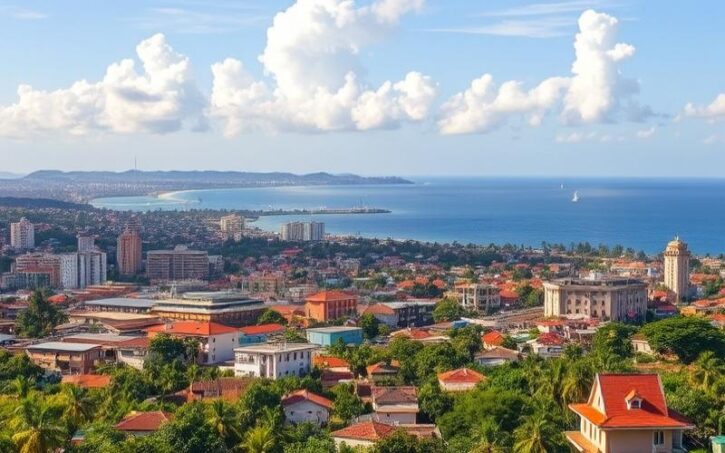
Almost all expats settle in Cotonou. The city, with about 679,000 inhabitants, concentrates the deep-water port, the Cotonou-Cadjehoun International Airport, the Dantokpa market—the largest market in West Africa—and most businesses, NGOs, embassies, and international schools.
Discover the main cities of Benin, each offering a unique experience, from the official capital to historical and university centers.
Smaller official capital, offering a calmer, more “provincial” setting, with museums, colonial remnants, and less pollution.
A former stronghold of the slave trade, attracting visitors for its historical and religious heritage linked to Voodoo.
City noted for its importance in Benin’s urban landscape.
Notable city, especially for its university, a center of higher education in the north of the country.
City renowned for its rich history, former capital of the Kingdom of Dahomey.
The road network is about 6,787 km long, of which only 1,357 km are paved, mainly in urban areas. Outside these axes, especially during the rainy season, a 4×4 is highly recommended. The rail network is limited (578 km of single track, no international connections). In practice, an expat’s daily life is therefore often organized on the scale of a city and its immediate surroundings.
Entry Formalities: Visa, E-Visa, and Residence Permit
Even before considering a long-term stay, one must enter the territory legally.
Short-Stay Visa and E-Visa
Most foreigners who are not citizens of ECOWAS must obtain a visa before arrival. Benin has implemented an official e-visa platform (https://www.evisa.gouv.bj), allowing for online applications for tourist, business, or transit visas. The e-visa exists as a single-entry version (30-day stay) or multiple-entry (30 or 90 days).
The passport must be valid for at least six months after the arrival date, with a blank page. The application is made online between 7 and 90 days before travel, with a form, payment of fees, and receipt of the visa by email, to be printed and presented upon arrival.
Some travelers (many African states, Haiti, Indonesia, Israel) are exempt from visas for short stays, but the situation varies by nationality. Cruise passengers can stay up to 72 hours without a visa.
Residence Permit and Long-Term Stay
As soon as the stay exceeds a few months, the question of long-term residence arises. Foreigners residing for more than three months must obtain a residence permit (Carte de Séjour), issued by the Ministry of the Interior and Public Security, via the Office of Emigration and Immigration. Procedures can be initiated on the national public services portal.
Several types of residence permits exist: temporary, ordinary, and the 10-year card. To obtain the latter, one must notably justify more than 10 years of residence and have entered the country before the age of 35. Minors, diplomats, and similar profiles are generally exempt from certain obligations. National identity documents are managed by ANIP, but for an expat, the residence permit remains the reference document.
Working in Benin: Work Permit, Professional Visas, and Taxation
Many expats come to Benin for an assignment: NGO, cooperation, embassy posting, development project, management role in agriculture or industry, or a private investment project. Salaried employment almost always requires a work permit.
Work Permit: Procedure and Timelines
To engage in paid activity, a work permit is required for most foreigners who are not members of UEMOA/ECOWAS. This permit must be applied for before starting the job, ideally before arrival, via the Beninese embassy in the country of origin or in coordination with the employer.
A standard application file notably includes a valid passport (at least 6 months), photos, a form, a signed employment contract or letter of intent, proof of qualifications, medical certificates, a recent criminal record extract (less than three months old), a CV, proof of financial means, and a yellow fever vaccination certificate. The employer must prove they could not find a local candidate and be legally registered in Benin.
Submitting the work permit application is generally done with the Ministry of Labor or the General Directorate of Labor and Employment (DGTE). Processing times typically vary between two and six weeks, with a usual duration of 4 to 6 weeks, which can be reduced to 2 to 4 weeks for the simplest cases. The permit, generally valid for one year and renewable, is strictly tied to a specific job and workplace: any change in function or region requires new administrative validation.
Costs range from $200 to $500 USD depending on the type and duration of the visa and permit.
Types of Visas and Professional Statuses
Several categories of work visas exist, depending on the nature of the activity: employment in a private or public company, work for an NGO, investment, journalistic missions, conference participation, etc. The mentioned subcategories include, for example, employment visas for private or public companies, visas for NGOs, investment, journalist, or conference visas.
There is no specific visa for digital nomads. Self-employed individuals must generally follow a separate procedure and cannot be “sponsored” like regular employees; they must prove their activity and comply with tax and registration rules.
Taxation, Social Charges, and Labor Law
Tax residents—individuals living and working in the country for more than 183 days per year—are taxed on their worldwide income, while non-residents are taxed only on their Beninese-source income. Income tax is progressive. A scale frequently cited for expats is as follows:
| Monthly Income Bracket (XOF) | Tax Rate |
|---|---|
| Up to 50,000 | 0% |
| 50,001 – 130,000 | 10% |
| 130,001 – 280,000 | 15% |
| 280,001 – 530,000 | 20% |
| Above 530,000 | 35% |
Other sources mention a cap at 30%, which shows that regulations evolve and justifies checking updated rates at the time of starting the job.
Employer social charges represent about 15.4% of gross salary, excluding work accident insurance.
Permits for Family and Permanent Residence
Spouses and minor children can obtain dependent visas based on the primary worker’s status. They must provide proof of family relationship, sufficient financial means, and medical certificates. As a general rule, dependents do not have the right to work without a full permit.
In the longer term, pathways to permanent residence exist, notably through several years of uninterrupted legal residence, stable employment, social integration, sufficient resources, and a clean criminal record.
Opening a Bank Account and Managing Your Money
For a stay of a few weeks, an international bank card may suffice. But as soon as the stay extends over several months, opening a local account becomes almost essential.
Without an account in Benin, expats quickly face problems: repeated cash withdrawals, high bank fees, unfavorable exchange rates, inability to be paid locally or to easily settle major expenses (rent, services, school fees). An account in CFA francs allows for withdrawals without local surcharges, depositing salaries or fees, and requesting local payment methods (card, consumer credit, possibly mortgage or professional credit).
Banks and Available Services
Among the most frequently mentioned banks are Bank of Africa (BOA), Banque Atlantique, Ecobank, United Bank for Africa (UBA), Diamond Bank, Société Générale Benin, Orabank, African Investment Bank, FEMA Bank, or Coris Bank International Benin (present in Cotonou, Avenue Steinmetz). Most offer an ATM network, online banking, and mobile apps.
Most mobile banking services require a local phone number and a registered SIM card. “Mobile Money” (Momo) is commonly used for daily payments, money transfers, and settling certain bills. However, opening a proper bank account is generally conditional upon having regular residence status.
Required Documents
Documents generally requested from an expat to open an account include: a valid passport, proof of residence, proof of income, and a social security number.
– valid passport ;
– valid visa ;
– residence permit or, failing that, proof of ongoing application;
– consular registration card (embassy card);
– proof of local address (electricity, water bill, or certificate);
– sometimes Tax Identification Number (TIN);
– proof of professional activity (employment contract, employer letter, company registration);
– proof of income (payslips, bank statements) and, for business accounts, company registration documents and commercial registry extract.
Some banks may be more flexible, accepting, for example, a passport and an embassy card as a basis for opening a simple account. Opening is almost always done in-branch; 100% online opening offers for non-residents are limited.
After submitting the file, signing forms, and making an initial deposit (the amount varies by bank), the customer receives their payment methods: a bank account statement (RIB), a checkbook or passbook, and a debit card. The account typically becomes operational the day after these items are delivered.
Cost of Living and Budget: Untangling Appearances
To evaluate your budget, it’s useful to detail the main expense categories: housing, food, transportation, healthcare, education, leisure, communications. The figures below provide general ranges in dollars and CFA francs.
Housing
In Cotonou, a one-bedroom, 40 m² apartment in the city center costs on average around $233 per month, compared to $140 for an equivalent apartment in a cheaper neighborhood. For a three-room, 80 m² apartment, prices are around $413 in the city center and $249 in a more affordable area.
Utilities (electricity, water, garbage, air conditioning) can add up quickly: about $127 per month for one person, $192 for a family. A fixed internet subscription (50 Mbps and above) costs around $45–52 monthly. Nationwide, average prices remain similar: about $213 for a one-bedroom in the city center, $506 for a three-bedroom, $119–182 for utilities, and $51.90 for internet.
In CFA francs, some benchmarks are given: an 85 m² furnished apartment in an expensive neighborhood is around 377,700 XOF per month, compared to 300,000 XOF in a more “normal” neighborhood. Utilities for two people in 85 m² are around 60,000 XOF; for a 45 m² studio, around 12,000 XOF. Internet access (8 Mbps) costs about 17,576 XOF.
Food and Restaurants
Meals at restaurants remain affordable but highly dependent on the level of the establishment. In Cotonou, a simple lunch in town can cost about $4.80, a dinner for two in a nicer restaurant around $30, a fast-food meal around $9.30. A lunch menu in a business district nationwide is around 2,500 XOF, a fast-food “combo” meal 7,000 XOF.
Basic products, like milk, eggs, flour, or bread, are often used as indicators to estimate the cost of a typical shopping basket. Their price and evolution give an idea of the average food budget and cost of living.
| Product (Cotonou / Benin) | Approximate Price |
|---|---|
| Milk 1 L | $2.60 / 1,300 XOF |
| Bread 0.5 kg | $1.33 |
| Rice 1 kg | $1.50 |
| Eggs (12) | $2.33 / 1,103 XOF |
| Local cheese 500 g | 1,576 XOF |
| Tomatoes 1 kg | 1,500 XOF |
| Apples 1 kg | 1,250 XOF |
| Chicken (500 g – 1 kg) | 1,235 XOF / $5.99 |
Imported products (European cheeses, brand-name cereals, organic products, certain alcohols) quickly increase the bill.
Transportation
Urban transport relies heavily on motorcycle taxis (“zemidjans”), bush taxis, and a few buses. For an expat, safety often leads to preferring private car taxis, or even a personal vehicle with a driver.
In Cotonou, a local transport ticket costs about $1.76 (1,000 XOF) per ride, a monthly pass around $26 (4,347 XOF). An 8 km taxi ride is about $13.40. Gasoline costs around $1.07 per liter (about 690 XOF), with a gallon noted at 2,267 XOF in some data. A typical monthly transport budget is estimated at $81.80 for a single person, $228 for a family of four.
Health, Leisure, Education, Communication
Private healthcare, leisure, and international education weigh heavily in an expat’s budget, much more than food or transport.
Some benchmarks:
| Item | Approximate Cost in Cotonou |
|---|---|
| General practitioner consultation | $26.90 (~10,000 XOF in some cases) |
| Box of antibiotics (12 doses) | 5,000 XOF |
| Gym, monthly membership | $41.80 / ~23,000 XOF |
| Cinema ticket | $7.52 |
| Private daycare/preschool (month) | $136 or 70,000–166,667 XOF |
| International primary school (year) | ~$5,776 or 3–4.5 M XOF |
| Mobile plan with data (10+ GB) | 25,000 XOF / month |
| High-speed internet (60+ Mbps) | 25,000–42,500 XOF / month |
These expense categories largely structure the budget of expat families, especially schooling.
Finding Housing: Neighborhoods, Types of Housing, and Platforms
The majority of expats in Cotonou settle in neighborhoods known to be safe and relatively well-equipped with services, such as Haie Vive (restaurants, bars, shops), Fidjrossè and Fidjrossè-Plage (close to the sea), Cocotiers, Aïbatin, Agla, Mènontin, Zogbo, or the areas around Place de l’Étoile Rouge.
Housing is found through local networks, agencies, or platforms like Airbnb, offering a variety of options (apartments, villas, etc.). They can be furnished or unfurnished, and often include security services (24/7 guards, cameras), amenities (pools, generators), and internet solutions (fiber, Starlink).
Rentals are often negotiable. Rents may be advertised per night, week, month, or year, sometimes with agency fees (e.g., 20% commission, 10% “act” fees), and additional charges like electricity (especially air conditioning). Some listings mention electricity costs that can reach €6 per day if the A/C runs often.
For a relocation project, it’s common to start with a few weeks in a furnished short-term rental, then look for a more stable lease on-site, with the help of agents or local contacts.
Healthcare: Public System, Private Sector, and Insurance
The Beninese healthcare system remains fragile. It is managed by the Ministry of Health and structured into 12 departments, themselves divided into 34 health zones, each with health centers, district hospitals, and referral facilities. In practice, the quality of public care is very uneven, with chronic problems of under-equipment, staff shortages, medicine scarcity, and significant distances in rural areas.
Public coverage (RAMU, universal health insurance scheme) mainly targets the local population for basic care (prevention, maternity, vaccinations) and doesn’t really apply to expats.
The private healthcare sector has developed, notably in Cotonou and major cities, responding to growing demand and the gaps in the public sector. It offers clinics and polyclinics that are generally better equipped, with reduced wait times, sometimes English-speaking staff, and a wider range of services. However, care is fully paid for out-of-pocket. Cash payment remains the norm, and bank cards are not systematically accepted.
Diseases and Health Risks
The main health threats for an expat are those of a tropical country: malaria, yellow fever, typhoid, hepatitis, diarrheal diseases (cholera, parasites), dengue, chikungunya, schistosomiasis, meningitis (Benin is in the “meningitis belt”), but also HIV/AIDS, tuberculosis, and rabies.
Tap water is not considered potable. It is advised to drink only boiled or sealed bottled water, avoid ice of uncertain origin and unpasteurized milk, and consume well-cooked food. Mosquitoes necessitate the systematic use of repellents, covering clothing in the evening, and mosquito nets.
Entry into the country requires a yellow fever vaccination certificate (yellow card). Vaccination against hepatitis A and B, typhoid, tetanus, diphtheria, and possibly rabies is also recommended, along with taking antimalarial prophylaxis. A medical consultation 4 to 6 weeks before departure is strongly advised.
Reference Facilities and Medical Evacuation
Several reference facilities exist in Cotonou: the National University Hospital Center (CNHU), the Mother and Child Hospital for maternity and pediatrics, as well as reputable private clinics like Benin Medical Care, Clinique Bénin, Clinique Internationale de Cotonou, Clinique Saint Michel, Polyclinique Les Cocotiers, Clinique d’Akpakpa, or Centre Médical Avicennes.
But for complex interventions (cardiac, neurosurgery, major trauma, cancer, etc.), the preferred solution often remains evacuation to a better-equipped country. That’s why organizations recommend taking out a robust international health insurance, covering private care, major hospitalizations, and, if needed, repatriation or transfer to a suitable medical facility.
Among Allianz, Cigna, IMG, VUMI, and others, the offerings are wide and often customizable (hospitalization only, outpatient care, dental, maternity, mental health, etc.). A specialized broker can help choose a suitable plan, ensuring that local clinics actually accept it.
Safety, Crime, and Areas to Avoid
Compared to some neighbors, Benin is often perceived as relatively safe. But this image must be nuanced. Several foreign governments recommend increased caution throughout the country and formally advise against travel to the northern border areas, particularly near Burkina Faso, Niger, and certain Nigerian states.
The Pendjari and W National Parks, as well as some hunting corridors, are exposed to deadly terrorist attacks against military posts and, more rarely, tourist kidnappings. Groups affiliated with AQMI and JNIM are reported, along with a possible Boko Haram threat. Kidnappings of foreign nationals and local guides have been documented.
In major cities, the most common forms of crime remain theft, assault, carjackings, and pickpocketing, especially in Cotonou, in tourist areas, around Dantokpa (to be avoided at night), near bars and hotels, and on certain beaches. Assaults can be armed and occur at night on roads.
Various scams are also prevalent: online romance scams, fake business opportunities, employment fraud, bank phishing, hacking, email extortion. Authorities also mention occasional fraud or corruption attempts by some state agents or law enforcement.
Recurring recommendations are classic: limit night travel, avoid walking alone in poorly lit neighborhoods in the evening, do not display valuables, use official taxis, be very cautious with motorcycle taxis, keep documents secure (copies on you, originals safe), secure your residence, and follow embassy advisories regarding areas to avoid.
Emergency numbers notably include 117 for police, 118 for fire, 112 for some emergency services, with a special anti-corruption number (“Green Line”) at 166 according to some sources.
Culture, Society, and Codes of Conduct
To understand Benin, one cannot ignore its religious and cultural diversity. Three major groups coexist: Christianity (Catholic and Protestant), Islam (very present in the north, but also in southern cities), and Voodoo, often called “vodun,” which remains at the heart of traditional practices and even has a national celebration day. This coexistence creates a highly syncretic religious landscape, where festivals and ceremonies punctuate social life.
The country retains a French administrative, educational, and legal heritage, but local cultures and languages (Fon, Yoruba, Adja, Mina) are omnipresent. French is essential for work, administration, and media, but using a few words in a local language is a sign of respect.
Social codes rest on a few strong principles. Greetings are essential: one doesn’t just say a quick “hello”; one asks about the family, health, and a handshake can last a few seconds. Greet with the right hand, the left being considered less respectful. Respect for elders is paramount: greet them first, speak to them gently, avoid postures perceived as casual (hands in pockets, abrupt tone), and serve them food or drink first.
Dress modestly, especially outside Cotonou or during formal and religious events: cover shoulders and knees, and avoid overly suggestive clothing. Wearing a traditional wax cloth outfit is often well-regarded. Regarding behavior, public displays of affection (kissing, embracing) between partners are rare and can be frowned upon, while holding hands between same-sex friends is common and socially neutral.
Communication is often indirect. Refusing an invitation or request is done with tact, to avoid offense. Outbursts of anger in public are very poorly viewed; patience is valued, as is acceptance of the famous “African time,” this flexibility regarding schedules and appointments. Professionally, businesses combine modern practices and fairly marked hierarchies: decision-making often remains concentrated in the hands of leaders, and building a relationship of trust takes precedence over contracts.
Education: Local and International Schools
The public education system is theoretically free since 2007, with French as the language of instruction. But it suffers from chronic lack of resources, overcrowded classes, and uneven quality, which pushes most expats towards Cotonou’s international schools.
Benin offers a diversity of international institutions aligned with different educational systems: British, American, French, Indian, as well as bilingual or Christian structures. While their tuition fees are rarely affordable by local standards, they generally offer small class sizes, recognized international programs (Cambridge, IB, AP, French exams, CBSE), and often language support.
Annual costs for an international primary school can range between 3 and 4.5 million CFA francs, or several thousand dollars per year. For an expat with a family, this budget item weighs as much, if not more, than housing.
For higher education, the major public institution is the University of Abomey-Calavi, complemented by the University of Parakou and various specialized schools like ENEAM (National School of Applied Economics and Management). These structures host some African foreign students, but few children of Western expats, who often go elsewhere to study.
Transport and Daily Mobility
Mobility in Cotonou is marked by dense traffic, chaotic flow, an impressive number of motorcycles and zemidjans, and limited road infrastructure, especially off main arteries. Driving rules are not well respected, vehicles are sometimes poorly maintained, lighting is insufficient at night, making night travel particularly risky.
Expats often prefer vehicles with drivers. Formal public transport is rare; collective transport relies heavily on motorcycle taxis (zemidjans). The latter present significant risks: road safety (few helmets, aggressive driving) and personal safety (risk of assault). Several embassies advise against their use, particularly at night.
Long-distance travel is by bus, shared taxis, or private vehicle. As secondary roads are sometimes impassable during the rainy season, it’s best to plan for some flexibility. The Cotonou–Parakou train exists but the rail network remains minimal.
The Cotonou-Cadjehoun International Airport is the main entry point for expats. It serves several African capitals, as well as Paris, Brussels, Istanbul, and a few other connections depending on airlines.
Expat Community, Networks, and Social Life
The expat community remains modest compared to other African capitals. It includes French, Americans, Lebanese, Indians, Ghanaians, Nigerians, Europeans from various countries, as well as a significant presence of aid workers, missionaries, and NGO employees.
The main structured networks for expats in Cotonou are primarily digital. InterNations is the major global network, organizing monthly events, thematic groups (culture, cuisine, sport), and offering help forums. Other platforms like Expat.com or ExpatWoman.com serve as exchange spaces for practical topics: housing, school or doctor recommendations, and administrative procedures.
For specific communities—Nigerians, Indians, French, Americans—national associations, religious groups, business circles, and WhatsApp or Facebook networks exist, offering practical and social support. The Beninese diaspora itself is structured, with a High Council of Beninese Abroad and active associations in Europe, North America, and elsewhere.
On-site, an expat’s social life is often built around a few places: restaurants and bars in Haie Vive, cafés, sports clubs, churches or mosques, cultural venues (Fondation Zinsou, museums in Abomey, Ouidah, or Porto-Novo), and occasional events (festivals, exhibitions, concerts).
Working with Benin: Opportunities and Constraints for Investors
The country seeks to attract foreign investment to diversify its economy beyond cotton and informal cross-border trade with Nigeria. Several institutions—trade promotion agency, chambers of commerce, international cooperation programs—support foreign companies, with incentives like tax breaks or facilitation.
To hire in Benin without creating a subsidiary, specialized providers (like Playroll or G-P) can act as an “Employer of Record.” They handle payroll, legal compliance, work permits, and can also manage housing, insurance, and schooling for employees’ families.
Challenges are not lacking: evolving regulatory environment, limited infrastructure, difficulty enforcing certain contracts, administrative delays. Here again, surrounding oneself with legal and financial advisors familiar with the country is crucial.
Preparing Your Relocation: Some Concise Advice
Relocating to Benin as an expat means accepting a context where many things work, but rarely like in Europe or North America. To maximize your chances of success, it’s useful to:
For a successful expatriation to Sub-Saharan Africa, meticulous preparation is essential. Master at least French and, if possible, acquire some notions of a local language. Anticipate health concerns: check your vaccinations, take out insurance, assemble a medical kit, and identify private clinics. Carefully prepare your documents (passport, e-visa, vaccination certificates, criminal record, diplomas) for permit procedures. Establish a realistic budget including housing, private healthcare, international schooling, secure transportation, and partially imported food. Research neighborhoods, the rental market, and schools before signing a contract. From the preparatory phase, establish local contacts and join online expat communities. Regularly check safety recommendations and areas to avoid, especially in the north. Finally, approach cultural differences with humility, patience, and a genuine willingness to understand.
With serious preparation, an open mind, and a good dose of pragmatism, life in Benin can offer a rare blend: immersion in a vibrant culture, a strong on-the-ground experience, and professional opportunities not found everywhere. The key is not to underestimate the very concrete challenges of relocation, from housing to healthcare, paperwork, security, and schooling, and to rely as much as possible on the experience of those already living there.
Disclaimer: The information provided on this website is for informational purposes only and does not constitute financial, legal, or professional advice. We encourage you to consult qualified experts before making any investment, real estate, or expatriation decisions. Although we strive to maintain up-to-date and accurate information, we do not guarantee the completeness, accuracy, or timeliness of the proposed content. As investment and expatriation involve risks, we disclaim any liability for potential losses or damages arising from the use of this site. Your use of this site confirms your acceptance of these terms and your understanding of the associated risks.

Cyril Jarnias is an independent expert in international wealth management with over 20 years of experience. As an expatriate himself, he is dedicated to helping individuals and business leaders build, protect, and pass on their wealth with complete peace of mind.
On his website, cyriljarnias.com, he shares his expertise on international real estate, offshore company formation, and expatriation.
Thanks to his expertise, he offers sound advice to optimize his clients' wealth management. Cyril Jarnias is also recognized for his appearances in many prestigious media outlets such as BFM Business, les Français de l’étranger, Le Figaro, Les Echos, and Mieux vivre votre argent, where he shares his knowledge and know-how in wealth management.





