
 Published on and written by Cyril Jarnias
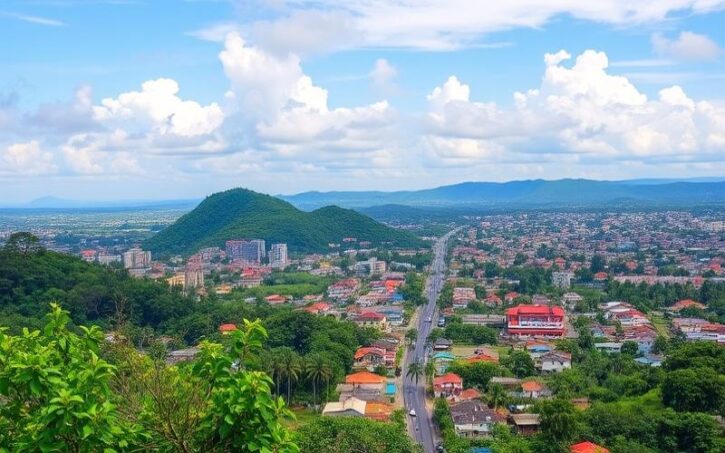
Moving to Liberia is nothing like a typical relocation. The country offers both real professional opportunities, a warm population, spectacular nature… and a material and security environment that remains challenging. Before packing your bags, you must accept this ambivalence: Liberia can be an intense and enriching life experience, provided you arrive prepared, well-informed, and properly insured.
This guide synthesizes key data from economic, security, health, and practical reports to assess the country’s compatibility with your project and facilitate your settlement under the best conditions.
Understanding Liberia: Context, History, and On-the-Ground Reality
Liberia is located on the West African coast, between Sierra Leone and Côte d’Ivoire. It was born in the 19th century as a settlement colony for freed slaves primarily from the United States. The Republic was proclaimed in 1847, making it one of the oldest independent states on the continent.
Recent history has been marked by two civil wars (1989–2003) that caused approximately 250,000 deaths, destroyed much of the infrastructure, and drove many Liberians into exile. From 2005 onward, elections deemed free opened a new political phase, with the election of Ellen Johnson Sirleaf, Africa’s first female president, later a Nobel Peace Prize laureate.
Nearly two-thirds of Liberia’s population lives below the international poverty line.
The economy is dominated by raw materials: rubber, gold, iron, timber, commercial agriculture, and fishing. The state seeks to attract investors through tax exemptions and fast-track procedures for business creation, but bureaucracy, land tenure insecurity, and weak infrastructure still hinder development.
The climate is tropical, hot, and humid, with a rainy season from May to October and a dry season influenced by the Harmattan, a dusty wind from the Sahara. The territory includes dense forests (Sapo National Park), savannas, beaches, and still-preserved natural areas.
Politically, Liberia remains a presidential republic, with a fragile institutional system, endemic corruption, and a significant presence of UN agencies and NGOs that play a key role in the economy and decision-making.
For an expatriate, this means not projecting Western standards onto daily life: limited infrastructure, weak public services, importance of personal networks and international actors.
Cost of Living: Between “Cheap” Statistics and Expatriate Reality
A first look at the numbers might give the illusion of a low-cost country. Comparative data shows that Liberia, and Monrovia in particular, are significantly cheaper than many major Western cities, and even several African capitals.
Cost Overview
Aggregated data shows disparities between “local” estimates and expatriate lifestyle. To better visualize, here is a summary table for Monrovia:
| Profile | Average Monthly Cost (USD, with rent) |
|---|---|
| Local Resident (average) | ≈ 533–536 |
| Expatriate (source 1) | ≈ 1,579–1,581 |
| Digital Nomad | ≈ 2,705 |
| Family of 4 (expat) | ≈ 3,061 to 3,174 |
On a national scale, Liberia is ranked among the world’s least expensive states in terms of raw cost of living. Monrovia is in the top 10% of the “cheapest” cities globally. But this image is misleading for an expatriate who wishes to maintain a certain level of comfort and safety standards.
The local median salary after tax is around 118 USD per month according to some sources, or 400–700 USD according to other estimates. In any case, most Liberians can only cover a fraction of their monthly needs with their income. Maintaining a “Western” lifestyle therefore requires having income significantly higher than local salaries.
Housing and Real Estate
Housing costs vary enormously depending on the neighborhood, security level, and comfort level (presence of a generator, water tank, perimeter wall, etc.).
Some ballpark figures for Monrovia:
| Type of Housing | Approximate Monthly Rent (USD) |
|---|---|
| Studio / 1 bedroom downtown (low estimate) | 220–230 |
| 1 bedroom downtown (other data) | 600–830 |
| 1 bedroom outside city center | 95–150 |
| 3 bedrooms downtown | 400–1,825 |
| 3 bedrooms outside city center | 270–270+ |
For an expatriate, suitable housing is mainly found in certain neighborhoods of Monrovia (Sinkor, Mamba Point, Congo Town) or in secure “compounds,” often with 24/7 security, fencing, and a generator. Rents there are significantly higher, and many landlords require 6 to 12 months of rent paid in advance.
Real estate purchase should be handled with caution. The average price can exceed 1,500 USD/m² downtown. Above all, the legal framework stipulates that land ownership is reserved for Liberian citizens: a crucial point for expatriate investors. Long-term lease arrangements exist, but require serious legal support.
Daily Expenses and Services
For daily life, dining out and certain services remain affordable, while access to “modern” comforts (reliable electricity, fast internet, imported goods) is expensive.
Some benchmarks:
| Item / Service | Indicative Price (USD) |
|---|---|
| Simple lunch (daily menu) | ≈ 3.20 |
| Dinner for two (average restaurant) | ≈ 20–25 |
| Higher-end “expat” meal | Sometimes 25–50 per person |
| 0.3L soda | ≈ 1 |
| 0.5L local beer in cafe/bar | 1.8–2 |
| 0.5kg bread | ≈ 0.60 |
| 1L milk | ≈ 1.20 |
| 1kg rice | ≈ 1.20 |
| 1kg chicken | ≈ 4.4 |
| Cappuccino | ≈ 1.9 |
Electricity distributed by the public grid remains unreliable and does not cover the entire territory. Private generators are therefore the norm in expatriate housing. Fuel and maintenance add to the bill.
The monthly cost for reliable fixed internet can exceed 150 USD in the Philippines, compared to an average of 25 USD for a mobile plan.
Entertainment remains cheap compared to the West: gym membership around 25 USD, movie ticket around 4–5 USD, simple haircut around 3 USD.
Transportation and Getting Around
Public transportation is rudimentary: shared taxis, crowded minibuses, motorcycle taxis (“pein-peins”) and tricycles (“kekes”) make up most of the offering. They are cheap but often dangerous, poorly maintained, and sometimes associated with petty crime.
| Transport Elements | Cost or Characteristic |
|---|---|
| Single local transport ticket | ≈ 0.30–0.35 USD (sometimes more) |
| Estimated monthly pass | ≈ 13–20 USD |
| 8km taxi ride | ≈ 6 USD |
| Liter of gasoline | ≈ 1.0–1.1 USD |
For an expatriate, renting or owning a 4×4 with a driver is often recommended, especially outside Monrovia and during the rainy season. This represents a significant budget item (fuel, maintenance, driver’s salary).
Typical Budget for an Expatriate
Specialized guides converge on a range of monthly expenses for a single person or a couple living in reasonably comfortable conditions in Monrovia:
| Expense Category | Monthly Range (USD) |
|---|---|
| Housing (2–3 secure bedrooms) | 1,000 – 2,500 |
| Electricity / generator / water | 400 – 800 |
| Food (incl. imported products) | 600 – 1,000 |
| Internet & mobile | 100 – 250 |
| Transport (vehicle, fuel, driver) | 300 – 600 |
| Outings, restaurants, entertainment | 200 – 500 |
| Private security (guard services) | 150 – 300 |
This quickly adds up to a budget of 2,500 to 4,500 USD per month for an expatriate or couple posted in Monrovia, more for a family with children enrolled in an international school.
Monrovia and Its Neighborhoods: Where to Live as an Expatriate
Monrovia concentrates the majority of expatriates, NGOs, international institutions, embassies, and “modern” services. Most employers repeatedly warn against frequent travel outside the capital, especially at night. Living in Monrovia or its immediate periphery is therefore the most realistic solution.
Main Neighborhoods
Several neighborhoods consistently appear in recommendations for expatriates, along with some more affordable peripheral areas.
| Neighborhood / Area | Profile and Main Characteristics |
|---|---|
| Sinkor | Lively neighborhood, mixed residential/commercial, many bars and restaurants, near the beach, major axis Tubman Boulevard. |
| Mamba Point | Diplomatic heart (embassies, international organizations), considered safer, Atlantic Ocean view, high rents. |
| Congo Town | Relatively quiet residential area, presence of schools and universities, mix of houses and apartment buildings. |
| Paynesville | Expanding suburb, dynamic markets, more affordable housing. |
| New Kru Town | Popular area, marked music and dance culture, on Bushrod Island. |
| West Point | Very dense peninsula oriented towards fishing, but considered high security risk. |
| Broad Street | Main commercial street downtown, offices, shops, restaurants. |
| Old Road | Relatively quiet residential area, wide range of housing. |
| Gardnersville | Developing area with local markets, lower housing costs. |
| Logan Town | Lively neighborhood with markets and food stalls. |
| Caldwell | More peaceful and affordable periphery, lower-cost housing. |
For an expatriate working for an international mission, Sinkor, Mamba Point, and certain parts of Congo Town remain the preferred choices: presence of secure residences, proximity to offices, popular restaurants (especially near Silver and CeCe beaches), and relatively easy access to main roads.
Housing Style
The typical model for expatriates is a solid house or an apartment in a secure compound:
A secure expatriate residence typically includes a perimeter wall, often topped with barbed wire, and 24/7 guard presence. To cope with sometimes failing local infrastructure, it is equipped with a diesel generator to handle frequent power cuts, as well as a water tower and sometimes a water treatment or filtration system. Several expatriate dwellings may share the same plot, forming a “micro-community.”
Serious listings can be found through:
Several options are available for finding housing during an expatriation: you can use your employer’s housing services, contact agencies specializing in expatriate support (like Relocation Africa or local agencies such as Retaj Real Estate), leverage word-of-mouth within the expatriate community, or, for a temporary solution, use platforms like Airbnb (noting that prices there are often very high compared to the local market).
It is recommended to have rental contracts checked by a local lawyer and to clearly clarify who pays for what (generator maintenance, fuel, repairs, guards, etc.), as well as the duration and renewal conditions.
Security and Crime: Realistic Approach and Personal Protocol
Anyone considering living in Liberia must directly address the security issue. Reports converge: the crime level is high, police capabilities are limited, and foreigners can be targeted due to their perceived wealth.
The most frequent crimes are opportunistic theft (snatched bags, pickpocketing), burglaries, and assaults, sometimes with knives or firearms. Monrovia concentrates much of this delinquency, especially in heavily frequented areas like certain parts of Sinkor, Mamba Point, busy markets, or beaches.
Public safety deteriorates significantly at night, in a context of frequent power cuts and limited street lighting. Assaults have been reported in taxis, on beaches, in nightclubs, and near some popular neighborhoods.
Outside the capital, risks include land conflicts, illegal mining activities, tensions around rubber plantations, as well as the presence of criminal groups or former fighters in some remote areas, especially near the borders with Côte d’Ivoire and Sierra Leone.
Security Principles for Expatriates
Recurring recommendations for serious expatriates (NGOs, diplomacy, large companies) include:
To stay safely, it is crucial to reside in secure housing (with wall, guards, robust doors), avoid walking alone at night even in expatriate neighborhoods, and limit nighttime travel outside the capital, avoiding isolated roads. You must also not display signs of wealth in public, be very cautious in entertainment venues (nightclubs, bars, beaches), have a defined security plan with procedures and emergency contacts, always carry ID, and plan for redundant communication means (two SIM cards, WhatsApp).
It is also advised to avoid straying from main roads passing through sensitive areas like parts of the Firestone rubber plantation or illegal mining zones.
A point not to underestimate: in case of a serious problem (assault, accident, medical emergency), emergency assistance is often limited. “911-type” services exist on paper but function poorly. The solution often lies with your private network: driver, colleagues, security company, personal doctor, and, for serious medical issues, evacuation abroad.
Health: Living in a Country Where the Hospital is Not an Option
The Liberian healthcare system is one of the most fragile in the world. The civil war destroyed much of the infrastructure, and the Ebola epidemic in 2014–2015 further shook an already drained system. It lacks everything: qualified personnel, equipment, medicines, emergency systems.
Even in Monrovia, public hospitals and most clinics lack the equipment, supplies, and hygiene standards needed to handle complex situations. The best facilities (e.g., Saint Joseph Catholic Hospital, some private hospitals, or structures supported by NGOs) can manage common illnesses but are in no way a substitute for a European-level hospital.
In case of a serious accident, heart attack, major surgery, or critical condition, evacuation to a better-equipped country (Ghana, South Africa, Europe, sometimes the United States or India) is the rule. These medical repatriations are extremely costly and impossible without robust insurance explicitly including this coverage.
Frequent Health Risks
The landscape of health risks in Liberia includes:
– Malaria: omnipresent, including in Monrovia, often due to Plasmodium falciparum, the most severe form.
– Yellow fever: endemic, vaccination mandatory for entry.
– Waterborne diseases: diarrhea, typhoid, cholera possible.
– Tuberculosis, HIV (prevalence about 1–1.3% of adults).
– Arboviruses: dengue, chikungunya, Lassa fever in some areas.
– Schistosomiasis: from contact with contaminated fresh water.
– Risks related to poorly controlled food: food poisoning, parasitic infections.
Tap water must never be drunk without treatment (boiling, filtration, disinfection). Animal-source foods must be well cooked, fruits and vegetables properly washed and, if possible, peeled. Milk is often unpasteurized and must be boiled.
Medical Preparation Before Departure
Several measures are strongly recommended:
Consult a doctor specialized in travel medicine 6 to 8 weeks before departure. Update basic vaccinations (diphtheria-tetanus-polio, measles-mumps-rubella, hepatitis A and B, typhoid, possibly rabies depending on exposure) and get vaccinated against yellow fever (certificate mandatory for entry). Discuss appropriate malaria prophylaxis. Assemble a personal medical kit including common medications, backup antibiotics, emergency malaria treatment if recommended, bandaging materials, and several months’ supply of any chronic medications. Finally, ensure your insurance covers care in Liberia, medical evacuation, and does not exclude tropical diseases.
Many expatriates use a few private clinics in Monrovia for minor issues (minor infections, minor trauma, follow-up for simple conditions), but consider by default that any serious case justifies departure to Accra, Johannesburg, or Europe.
Entry Formalities, Visas, and Work
Entry to Liberia is controlled and most foreigners need a visa, except notably citizens of ECOWAS who benefit from a short-stay exemption.
Visa and Entry Conditions
In most cases, you must obtain a visa before arrival from a Liberian embassy or consulate. Several types exist: tourist, business, missionary, official, transit. They can be single entry (validity 1 to 3 months) or multiple entry (up to 1, 2, or 3 years).
Documents typically required are:
– Passport valid at least 6 months beyond entry date, with blank pages.
– Completed application form.
– Passport photos.
– Accommodation reservation or invitation letter.
– Travel itinerary (flights).
– Proof of financial means.
– Yellow fever vaccination certificate.
– Proof of Covid vaccination in some cases, depending on the period.
– For business or missionary visas: invitation or mission letter.
Liberia offers a Visa on Arrival (VoA) and an e-visa, but under specific conditions: absence of diplomatic representation in your country, business travel, etc. The Visa on Arrival requires online pre-approval and is only issued at Roberts International Airport.
Visa fees vary greatly by nationality, validity duration, and processing speed, ranging from around sixty dollars to several hundred dollars for long-term multiple-entry visas.
Any sum over 10,000 USD in cash upon entry must be declared. Upon exit, you cannot carry more than 7,500 USD in bills, unless using banking instruments (wire transfers, bank checks).
Work Permit and Residence
Working legally in Liberia requires obtaining a work permit, separate from the visa. In practice, it is usually the employer (NGO, company, international institution) that handles this procedure.
Typical documents for a work permit include:
To work professionally in Monaco, presentation of the following documents is generally required.
A signed employment contract or offer letter from a Monegasque employer.
A valid residence permit, essential for staying and working in the Principality.
A detailed CV presenting your professional background and skills.
Copies of diplomas and professional certificates. Note: some foreign diplomas (e.g., British) are generally recognized.
A criminal record extract or police certificate issued by your country of origin.
A medical certificate attesting to your fitness for work.
The specific form provided by Monaco’s Ministry of Labor, to be completed.
The cost of a work permit can reach 1,000 USD per year, with a processing time of about 2 to 3 weeks. The permit is often tied to a specific employer and position, with annual renewal.
Once compliant on the work side, you must also obtain a tax identification number (Tax Identification Number) from the tax administration, then a social security number from the relevant national agency.
Certain professions are reserved for Liberians, for example practicing law. Medicine is strictly regulated, requiring passing an exam before the national council (Liberia Medical and Dental Council).
Banking, Money, and the Hidden Cost of an “All-Cash” Economy
Liberia is a largely cash-dominated economy. The local currency is the Liberian dollar (LRD), but the US dollar is very widely accepted and serves as a reference in many contracts (rents, vehicles, expatriate services).
International bank cards are accepted in a few major hotels, supermarkets, and stores in Monrovia, but this is absolutely not the norm. Payment terminals can malfunction due to unstable internet. Traveler’s checks are virtually unusable, and ATMs are rare, often empty, and do not always accept foreign cards.
For a long stay, this implies: meticulous planning, an adequate budget, and accounting for various logistics such as housing and meals.
For a smooth setup, it is advised to arrive with a significant amount of US dollars in cash to cover at least the first few months of expenses. This sum should be secured in a safe, either at your home or hotel. In parallel, arrange with your employer to set up fund transfer solutions, such as wire transfers to a local bank account or using services like Western Union or MoneyGram.
Opening a Bank Account
Liberian banks are supervised by the Central Bank. The sector is developing, with several commercial institutions (GTBank, Ecobank, UBA, Liberia Bank for Development and Investment, etc.). It is theoretically possible to open a local, even multi-currency account, including as a non-resident, subject to providing:
List of supporting documents generally requested by banking institutions to complete a subscription file.
Passport or other official ID (national ID card, residence permit).
Recent document proving address (electricity, gas, water, phone bill, lease, accommodation certificate).
Documents demonstrating the origin of income or funds (bank statements, pay slips, employer attestations, tax notices).
One or several recent passport photos conforming to current standards.
In some cases, bank or professional reference letters may be required to complete the file.
Banks apply KYC/AML verification procedures (anti-money laundering). Processing times vary from a few days to several weeks depending on the complexity of the file and the type of account (personal, business, savings account, term deposit, etc.).
Services offered (international transfers, currency exchange, cards, online banking) exist but remain less fluid than in major financial centers. The reliability of the network and IT systems can be problematic.
For a posted expatriate, opening a foreign currency account (generally USD) can simplify managing local expenses and reimbursements.
Working in Liberia: Key Sectors and Professional Reality
Liberia is not a destination where you come “to look for a job on the spot” hoping to find one quickly. Most expatriates are recruited from abroad for a specific mission, often with a package including housing, vehicle, health insurance, and specific security conditions.
The major employment sectors for foreigners are:
– International organizations and UN agencies.
– International NGOs (humanitarian, health, education, governance, environment).
– Mining and agribusiness companies (rubber, palm oil, mines).
– Diplomatic missions.
– Some banks and telecom operators.
Professional opportunities in this sector cover a wide range of fields, including project management, engineering, health, logistics, finance, governance, and training. It is important to note that many positions require strong field experience, acquired in fragile or post-conflict contexts.
Labor codes provide for a standard duration of 8 hours per day, 48 hours per week. Usual hours are Monday to Friday, 8 am to 5 pm, sometimes with a half-day on Saturday in the public sector or certain institutions. Banks generally close around 3 pm.
The management style remains hierarchical, with marked respect for authority and seniority. In professional relations, neat appearance is important, titles are widely used, and meetings can start late while being formally demanding.
Schools, Family, and Daily Life
For expatriate families, the main concern is schooling. The supply of international schools is limited, essentially concentrated in Monrovia. The American International School of Monrovia (AISM), for example, follows an American curriculum, is accredited by an American agency, and hosts a limited number of students on a well-equipped campus (labs, library, sports fields, Wi-Fi).
Other private institutions (French-speaking, English-speaking, sometimes with British or Lebanese orientation) exist, but their level remains uneven and their fees often high. Tuition fees can reach several thousand dollars per year, to be factored into the family budget.
For younger children, private nurseries and kindergartens exist, with monthly fees generally around 80–130 USD. It is important to note that they do not necessarily offer the same supervision standards as found in Europe or North America.
Social Life and Local Culture
On the social front, Liberians are known to be warm, laughing, attached to greetings and contact. It is good manners to greet people in the street, exchange a few words, respond to greetings: ignoring someone who greets you is perceived as rude.
Rules of politeness include: using courtesy formulas, respecting personal space, listening attentively during a conversation, and using appropriate language.
– Use the right hand to give or receive an object (using the left hand alone is frowned upon).
– Respect elders, often called “Pa” or “Ma”.
– Offer your seat to a pregnant woman or elderly person.
– Avoid public displays of affection between men and women.
Despite stated values, a significant gap persists regarding gender-based violence, polygamy common in some areas, and female genital mutilation.
Regarding individual freedoms, it should be known that homosexuality is criminalized, and LGBTQ+ people face an extremely hostile environment. For an expatriate concerned, this implies great discretion.
Religion is omnipresent in public space, with a majority of Christians, a significant Muslim community, and a strong influence of traditional beliefs, including the existence of secret societies like Poro and Sande. Public holidays combine national holidays, Christian holidays, and Muslim holidays.
Getting Around: Difficult Roads, Limited Flights, and Risky Motorcycle Taxis
The Liberian road network is very uneven. Some major roads are paved and relatively well-maintained: Monrovia – Roberts International Airport, Monrovia – Buchanan, Monrovia – Ganta (Guinean border), Monrovia – Bo Waterside (Sierra Leonean border). Most other roads are dirt, often potholed, muddy, and dangerous during the rainy season.
Driving in Liberia exposes you to significant risks: potholes, poorly maintained vehicles, lack of lighting, aggressive driving, ubiquitous motorcycles, regular checkpoints, sometimes illegal. For an expatriate, using a local, experienced driver is highly recommended.
The main international airport (Roberts) is located about 60 km from Monrovia and has security and service levels below international standards. Most Western airlines do not serve the country directly, connecting Liberia via regional hubs like Casablanca or Accra. For limited domestic or regional flights, Spriggs Payne Airport is used.
Maritime travel is not without risks: presence of piracy and attacks against some vessels in the Gulf of Guinea, port authorities with limited means.
Within cities, especially Monrovia, the motorcycle taxi remains the fastest means… and one of the most dangerous. For an expatriate, it is better to use known taxis, recommended or managed by hotels, or the vehicle with driver provided by the employer.
Expatriate Networks, Communities, and Integration
Despite the relatively modest size of the country, the expatriate community is active and rather close-knit, especially in Monrovia. Several networks and platforms facilitate contact, mutual aid, and socializing.
Online communities like InterNations bring together expatriates of multiple nationalities (NGOs, diplomats, consultants, entrepreneurs, etc.) and regularly organize events, dinners, outings, and excursions (e.g., to Harper or Robertsport beaches). These platforms also serve as forums for very practical questions: housing, security, schools, health, where to shop, etc.
Specific structures, such as mentoring and career development networks, are dedicated to Liberians from the diaspora and their partners. They contribute to the country’s economic reconstruction and can serve as valuable relays for expatriates involved in joint projects.
For remote workers and digital nomads, some coworking spaces exist, some open 24/7, with coffee and internet connection more reliable than average. Shared office desk subscriptions are around 50 USD per month for a simple “hot desk”.
Conclusion: For Whom is Liberia a Good Expatriation Destination?
Living in Liberia is neither an extended beach vacation, nor a comfortable expatriation in the sense understood in major metropolises. It is a post-conflict country still very poor, with a devastated healthcare system, significant crime, precarious infrastructure, a challenging health climate, and fragile institutions.
But it is also a place where :
Discover the key aspects of a rewarding professional and personal experience in a new country.
Your work can have a tangible impact in development, health, education, governance, or infrastructure projects.
The population is, in its vast majority, resilient, welcoming, and curious about foreigners.
Nature remains spectacular, from beaches to primary forests, for those who take the time to discover it.
Costs, although high for an expatriate, remain significantly lower than in many major Western cities.
Liberia is suitable essentially for expatriates who are:
Expatriates are typically sent by solid organizations (NGOs, UN, diplomacy, multinational). They benefit from a complete package including secure housing, vehicle, health insurance with evacuation, and security support. They are psychologically prepared for a materially difficult and sometimes unstable environment, and ready to integrate strict security rules into their daily lives.
For this profile, Liberia can become a strong, professional, and human experience, at the crossroads of West Africa, African-American history, and contemporary major development challenges.
The key lies in anticipation: understanding the local reality, budgeting honestly for costs, obtaining essential insurance, building a network before arrival, carefully choosing housing and partners. With these precautions, settling in Liberia can be demanding, but not unreasonable.
Disclaimer: The information provided on this website is for informational purposes only and does not constitute financial, legal, or professional advice. We encourage you to consult qualified experts before making any investment, real estate, or expatriation decisions. Although we strive to maintain up-to-date and accurate information, we do not guarantee the completeness, accuracy, or timeliness of the proposed content. As investment and expatriation involve risks, we disclaim any liability for potential losses or damages arising from the use of this site. Your use of this site confirms your acceptance of these terms and your understanding of the associated risks.

Cyril Jarnias is an independent expert in international wealth management with over 20 years of experience. As an expatriate himself, he is dedicated to helping individuals and business leaders build, protect, and pass on their wealth with complete peace of mind.
On his website, cyriljarnias.com, he shares his expertise on international real estate, offshore company formation, and expatriation.
Thanks to his expertise, he offers sound advice to optimize his clients' wealth management. Cyril Jarnias is also recognized for his appearances in many prestigious media outlets such as BFM Business, les Français de l’étranger, Le Figaro, Les Echos, and Mieux vivre votre argent, where he shares his knowledge and know-how in wealth management.





