
 Published on and written by Cyril Jarnias
Stretching nearly 2,000 kilometers along the Indian Ocean, a relatively low cost of living, vibrant cities like Maputo, and giant gas projects: Mozambique is attracting more and more expatriates. But moving there shouldn’t be improvised. Between sometimes opaque visa procedures, a tight housing market, a fragile healthcare system, and the language barrier, it’s better to arrive prepared.
This guide summarizes essential information for a successful move, particularly to Maputo, the main city for expatriates. It is based on studies, cost-of-living data, and on-the-ground experience.
Understanding the country before you go
Mozambique is a large country in Southern Africa bordered by Tanzania, Malawi, Zambia, Zimbabwe, South Africa, and Eswatini. Over 32 million people live there, mostly in rural areas, with great ethnic and linguistic diversity. The capital, Maputo, concentrates most expatriates, private services, banks, and the best hospitals.
Climate, geography, and daily constraints
The climate is tropical with two distinct seasons. From November to April, the rainy season brings heat and high humidity, with a risk of cyclones on the coast and floods that disrupt roads and services. From May to October, the dry season is more pleasant, with milder temperatures and generally clear skies.
To get an idea, here is a concrete example to mention in relation to the article’s content, including some explanations if necessary.
| Period | Average Temperatures | Characteristics |
|---|---|---|
| July | 55–75 °F | Dry season, cool nights |
| February | 72–88 °F | Rainy season, heat and humidity |
| June/July Maputo | ~66 °F | Mild conditions |
| Jan/Feb Maputo | ~79 °F | Hot and humid |
In the north, rains start earlier and last longer. Some areas, like the Parque Nacional do Limpopo, have conditions close to a hot desert. These climate realities have concrete consequences: impassable roads during the rainy season, mosquitoes and malaria, and difficulty accessing certain services outside major cities.
A developing economy and strong inequalities
Mozambique is among the world’s poorest countries, with a GDP per capita below $700 and a life expectancy around 60 according to sources. International indices rank it very low in terms of standard of living, freedom, and perception of corruption.
The liquefied natural gas project led by TotalEnergies has projected annual production in the tens of millions of tons.
For an expatriate, this translates into a highly polarized job market: on one hand, extremely low local wages, on the other, attractive expatriation packages in energy, NGOs, and certain services. And a dual market for housing, health, and education: a very cheap but basic local supply, and a significantly more expensive “international standard” supply.
Mozambican bureaucracy is known for being slow and nitpicky. It’s better to anticipate entry and stay procedures well in advance.
Main types of visas
Mozambique offers several visa categories, each with a specific framework:
| Visa Type | Main Purpose | Typical Duration | Right to Work? |
|---|---|---|---|
| Visitor/Tourist Visa | Tourism, family visits | 30 days (single entry), up to 90 days (multiple) | No |
| Business Visa | Meetings, prospecting, conferences | 30 or 60 days | No, no salaried employment |
| Work Visa (Visto de Trabalho) | Confirmed employment with a local company | Up to 1 year, renewable | Yes, for the designated employer |
| Residence Visa | Long-term settlement, linked to work permit | Variable, linked to status | Depends on associated permit |
| Transit Visa | Transit to another country | Short, based on itinerary | No |
| Dependent Visa | Spouses and dependent children of a work permit holder | Aligned with main permit | No (except with separate permit) |
There is no specific visa for “digital nomads.” Those who work remotely for a foreign employer in practice use tourist or business visas, with the limitations and risks that entails.
Furthermore, citizens of several SADC countries (including South Africa, Tanzania, Zambia, Zimbabwe, Botswana, Malawi, Eswatini, Mauritius, etc.) can enter visa-free for short tourist stays, usually up to 90 days.
Procedures and required documents
Requirements vary by visa type, but consistently include:
For a Brazilian visa application, prepare: a passport valid for at least 6 months after the return date with at least two blank pages; a legibly completed application form in Portuguese, English, or French; recent passport photos; proof of financial means; proof of accommodation (hotel reservation or lease); a return or onward travel ticket. For a long-stay visa, add a recent medical certificate and criminal record extract. All documents in another language must be accompanied by a Portuguese translation by a sworn translator.
Processing times vary greatly: some embassies announce one to two weeks for initial review, then a few business days for visa issuance, but in reality, the process can take 2 to 8 weeks, even up to 90 days. Fees are non-refundable if refused.
A little-known point: many visas must be used within 60 days of issuance, otherwise they become invalid.
Working in Mozambique: work permits and quotas
To be legally employed, a foreigner needs both:
1. A work visa to enter the country. 2. A work permit issued by the Ministry of Labor (MITESS).
The system operates with foreign workforce quotas depending on the company size:
| Company Size | Number of Employees | Maximum Share of Foreign Employees |
|---|---|---|
| Small | 1–10 | 10 % |
| Medium | 11–100 | 8 % |
| Large | 101+ | 5 % |
As long as the employer stays within its quota, the procedure is simpler. Beyond that, it must demonstrate the absence of a qualified Mozambican candidate for the position, justify at length the need for an expatriate, and, since a recent reform, prove that the job offer was advertised (via a form at INEP or public notice) without any suitable local candidate applying.
The employer must first obtain authorization from the Ministry of Labor. The future employee then applies for a work visa and, upon arrival, requests a residence permit (DIRE) within 30 days. It is recommended to start the process 3 to 4 months before the start date.
Working without authorization exposes you to fines, deportation, and, for the company, sanctions that could harm its reputation with the authorities.
Family, long-term residence, and naturalization
Spouses and dependent children of a legally compliant expatriate can obtain a dependent visa and a correlated residence permit. They must prove the family relationship (marriage, birth certificates) and demonstrate that the permit holder has sufficient resources.
Permanent residence becomes an option after about five years of continuous legal stay, subject to a clear criminal record and stable means of subsistence. The process is lengthy and, in practice, few expatriates go as far as applying for citizenship, which is not an automatic extension of a work permit.
Cost of living: an affordable country, an expensive expat life
Cost of living figures confirm a frequent reality in poor countries: local life is cheap, but maintaining a “Western” lifestyle quickly drives up the bill.
Typical budgets and international comparison
Data compiled from several Mozambican cities indicates a single expatriate spends on average between $1,200 and $3,000 per month depending on the city, comfort level, and type of housing. Beyond $3,000 monthly, it’s considered a very high standard of living compared to the local norm.
To give a general idea:
| Profile | Average Monthly Cost (with rent) | Observations |
|---|---|---|
| Single person (all cities) | $900–$1,400 | Depending on source and housing type |
| Couple | ~$1,900 | |
| Family of 4 | $2,000–$2,700 | Comfortable but excluding international schooling |
The capital Maputo is more expensive than the national average, but remains much cheaper than major Western metropolises: about 73% cheaper than New York, more than 50% cheaper than Toronto or Dublin. However, some northern cities like Pemba have a cost of living up to 30% higher than Maputo, largely due to the oil and gas boom.
Key information on average net salary and budget considerations for expatriates
The real average net salary in the country is around $170–$400 per month according to sources.
This amount is largely insufficient to cover a typical expatriate budget.
Expatriates not paid in foreign currency or without an international package can quickly find themselves financially constrained.
Housing: the #1 expense
Housing absorbs a very significant portion of the budget, especially in Maputo where quality supply is scarce and in high demand. The market is poorly regulated, with little protection for tenants and frequent rent increases.
The price ranges can be summarized as follows:
| Housing Type (Maputo) | Area | Average Monthly Rent |
|---|---|---|
| 45 m² furnished studio | Expensive neighborhood | ~$770 |
| 45 m² furnished studio | “Normal” neighborhood | ~$425 |
| 1 furnished bedroom | City center | $440–$750 |
| 1 furnished bedroom | Outside center | $260–$520 |
| 3 bedrooms | City center | $800–$1,580 |
| 3 bedrooms | Outside center | $470–$1,100 |
| High-end villa (Polana, Sommerschield) | Expat neighborhood | $2,000–$3,000 |
| Simple apartment (Alto-Maé, Baixa, popular areas) | More modest neighborhood | $200–$400 |
In some smaller towns, like Nampula, rents around $400–$1,000 exist, sometimes with poor quality housing even at over $400 per month. In Pemba, prices can exceed $2,500 for a furnished apartment in an “expensive” neighborhood.
Security deposits are generally high, equivalent to one to three months’ rent (often three in sought-after neighborhoods), and must be paid upfront. It is also common for the landlord to ask for one month’s rent in advance. For expatriates, it is advisable to negotiate coverage of the lease or at least the security deposit by their company.
Utilities, internet, and daily expenses
Basic costs remain moderate but rise quickly if you require a reliable internet connection, air conditioning, or comfort close to European standards.
Some benchmarks:
| Expense Item | Average Cost |
|---|---|
| Electricity + water + waste (85 m²) | ~$155 / month |
| Electricity + water (studio) | $80–$90 / month |
| High-speed fixed internet (60 Mbps+) | $70–$130 / month |
| Mobile plan with 10 GB+ | 500–1,500 MZN (approx. $8–$25) |
| Average electricity (all cities) | ~$22 / month |
| Average water (all cities) | ~$15 / month |
The electricity infrastructure is fragile: blackouts are frequent, even in Maputo and Matola. Many expatriate homes have backup diesel generators or solar systems. Tap water is not potable: it must be boiled/filtered or you must buy bottled water, which slightly increases the budget.
Regarding food, the price difference between local and imported products is striking. Tropical fruits, vegetables, rice, and local fish are cheap, but cheeses, wines, and branded products from Europe or South Africa can cost as much, if not more, than in Europe.
Some examples of food prices:
| Product | Indicative Price |
|---|---|
| Simple lunch in business district | ~$6–$7 |
| Cheap meal at a restaurant | $9–$11 |
| Full menu for two (mid-range restaurant) | $35–$54 |
| Chicken (1 kg, breast) | ~$5 |
| Milk (1 L) | $1.5–$1.8 |
| Dozen eggs | $2–$2.2 |
| Local cheese (500 g) | $7–$10 |
| Local beer (0.5 L supermarket) | ~$1 |
| Decent bottle of wine | ~$8–$10 |
For leisure, prices remain very affordable compared to Europe: a cocktail downtown is around $4, a cinema ticket $5–$7, a gym membership around $35–$50 per month.
Health, insurance, and medical expenses
Basic care in private clinics remains accessible: a short consultation with a private doctor costs about thirty dollars, while medical evacuation can easily exceed $25,000, even reaching over $100,000.
Therefore, comprehensive international health insurance with evacuation coverage is considered essential. The average budgets observed for expatriates are around:
| Private healthcare item | Average Monthly Cost (all cities) |
|---|---|
| International health insurance | ~$95 ($40–$190) |
| Prescription drugs | ~$50 ($10–$180) |
| Doctors and dentists | ~$55 ($15–$140) |
Families with children, people with chronic health problems, or expatriates working in remote areas should plan for high levels of coverage, explicitly including air evacuation to South Africa.
Living in Mozambique: where to live, how to find housing
The choice of neighborhood and type of housing is decisive for quality of life. Most expatriates concentrate in Maputo, in a few well-identified neighborhoods.
Maputo’s flagship neighborhoods
Historically, the city is divided between the “Cidade cimento” (colonial quarter, near the sea, planned streets, solid buildings) and more informal “caniço” type zones inland. Most expatriates reside in the Cidade cimento, where embassies, large companies, international schools, and the best private hospitals are located.
Among the most sought-after neighborhoods:
Presentation of Maputo’s main neighborhoods favored by the expatriate community, with their characteristics, advantages, and atmosphere.
Iconic neighborhood with modern buildings, restaurants, cafes, shops, Polana Shopping Center mall, embassies, and international schools. Safe atmosphere and high standard of living.
High-end residential area with spacious villas, embassies, Cronistas park, quick access to business centers, and the presence of the private Lenmed hospital. Among the highest rents and very low vacancy rates.
Central mixed neighborhood combining housing, shops, and services like the private AYAmed clinic. Less luxurious but well-located and evolving.
Historic and commercial center with markets, train station, and colonial buildings. Offers urban and local life but is more exposed to petty crime.
Coastal strip oriented towards beach and leisure, with seafood restaurants and vibrant nightlife. An area under development with large real estate projects.
Integrated into Costa do Sol, this quiet residential neighborhood is appreciated by families for its compromise between beach, tranquility, and more affordable rents.
Neighborhoods like Alto Maé or Malhangalene offer more affordable houses and apartments, often occupied by the urban middle class and expatriates with more limited budgets.
A often complicated housing search
The country suffers from a shortage of housing suitable for expatriate demand, especially in Maputo. Apartments are often spacious, but maintenance, security, finish quality, and the reliability of services (water, electricity, internet) can be lacking.
The housing search relies heavily on informal networks like word-of-mouth, expatriate groups, or notices in cafes and clubs frequented by foreigners. Online real estate portals (Property24, Mozambique Houses, Jumia MZ, Mais Vendas) are a useful starting point but may not accurately reflect the market reality or property quality.
Real estate agencies exist, especially for the mid/high-end segment, but are poorly regulated and charge high commissions. Many expatriates turn to relocation companies that handle the entire process: pre-selecting housing, visits, security checks, negotiation, opening water and electricity accounts, choosing an internet provider, etc.
Lease contract, deposits, and legal aspects
Leases are generally signed for one year, renewable, sometimes longer. They are almost always written in Portuguese, which requires being assisted by a bilingual colleague, lawyer, or translator to avoid bad surprises.
Schematically, there are two markets:
– A formal market in expensive neighborhoods, with written contracts, often signed before a notary.
– An informal market in popular or peri-urban areas, governed by oral agreements – the majority of tenants in Maputo are said to live this way, which complicates any recourse in case of conflict.
Security deposits can reach three months’ rent (often including the first month), which is a significant sum. It is strongly recommended to:
To optimize the return of your security deposit, it is advisable to conduct a detailed photographic inspection report upon moving in. Clarify in writing financial responsibilities for repairs, painting, or damaged equipment. Finally, it is prudent to research local practices beforehand, as the refund can sometimes be slow or partial.
Leases also serve as supporting documents for long-stay visas and residence permits (DIRE). A document called “Boletim Individual de Alojamento” may be required by immigration services to attest to the applicant’s housing.
Services, security, and daily life at home
Most expatriate housing is located in secure buildings or compounds: guards at the entrance, fences, sometimes private security service. In a context where burglaries and vehicle thefts are not uncommon, this offers welcome peace of mind.
Power outages lead many households to install generators or solar batteries. Bottled gas is widely used for cooking, with refill or exchange points in the city, sometimes with delivery.
Employing domestic staff is common among the upper middle class and expatriates: housekeeper (empregada), nanny (baba), driver. A salary of around $350 per month for a full-time housekeeper is frequently cited, which remains high by local standards but affordable on a foreign-currency salary. It’s important to properly register these employees, respect labor rights, and contribute to the social security system (INSS) if necessary.
Health: risks, system, and strategy for expatriates
The Mozambican public healthcare system has made progress since the end of the civil war but remains inadequate: staff shortages, limited infrastructure, strong regional disparities, medicine shortages. The majority of the population depends on basic services, often far from their homes.
Expatriates, legally, do not have access to the public system and must turn to the private sector.
Public sector and health realities
The country faces a high burden of disease: malaria, HIV/AIDS, tuberculosis, cholera, respiratory and diarrheal infections remain among the leading causes of death. The central hospitals in Maputo, Beira, and Nampula represent the top of the public pyramid but operate with very constrained resources.
Outside major cities, distances, road conditions, and availability of qualified personnel are major obstacles. Many studies highlight that nearly a third of Mozambicans who report a need for care forego consultation, mainly due to distance, transport cost, or lack of accessible facilities.
Private offerings for expatriates
The private sector, still limited in volume, has developed mainly in Maputo and a few large cities. In Maputo, several establishments have become reference points for foreigners:
Main private hospitals and clinics in the Mozambican capital, offering a range of services from general medicine to specialties and emergency care.
Modern hospital located in Sommerschield II, with ICU services, maternity, advanced radiology (CT and MRI), and various specialized services.
A set of private clinics and hospitals (Clinica de Especialidades, Clinica da Sommerschield, AYAmed) covering general medicine, some specialties, surgery, and emergency services.
The International SOS clinics in Maputo and Pemba also provide consultations, emergency stabilization, and organization of medical evacuations.
The level of these facilities is incomparable to the public sector: better hygiene, newer equipment, shorter wait times, more English-speaking practitioners. However, even the best private hospitals in the country quickly reach their limits with very complex pathologies, serious accidents, or certain types of specialized surgery.
In these cases, the common practice is evacuation to South Africa, primarily Johannesburg, which concentrates reference hospitals and heavy equipment. Operators like Air Rescue, Netcare 911, or Medi Response organize evacuations by air ambulance from Mozambique.
Health insurance: an absolute must
For an expatriate, settling without robust international health insurance is extremely risky. Ideally, a policy adapted to Mozambique should:
For an expatriation to Africa, it is essential to take out international health insurance. This must cover care in local private clinics and hospitals, include hospitalization, outpatient care, maternity, dental, and optical guarantees. It must also explicitly provide for and fund medical evacuation by air (to South Africa or elsewhere) and repatriation, with minimum coverage of $100,000 for this crucial guarantee. 24/7 emergency assistance via a dedicated hotline is indispensable.
The local health insurance market remains underdeveloped and sometimes poorly regulated. There are cheap “health plans,” but some private providers refuse to treat their insured due to payment delays. Large international companies (Cigna, Allianz, AXA, Bupa, etc.) offer products better suited to expatriation, often through specialized brokers.
Prevention, vaccinations, and frequent diseases
Mozambique is an area of endemic malaria, with risk year-round, heightened during the rainy season. Protection relies on several levels:
Before departure, consult a doctor to discuss appropriate prophylactic treatment (doxycycline, mefloquine, etc.). On site, consistently protect yourself from mosquito bites with impregnated bed nets, DEET-based repellents, and covering clothing in the evening. If symptoms like fever, headache, or severe fatigue occur during or after travel, see a doctor quickly and get a blood test.
Since tap water is not potable, it’s imperative to drink boiled, filtered, or bottled water and take basic food precautions to limit the risk of cholera, dysentery, or other diarrheal diseases.
Health authorities and specialists recommend being up to date on:
– Basic vaccines: tetanus, diphtheria, polio, measles, mumps, rubella.
– “Traveler” vaccines: hepatitis A, typhoid, possibly hepatitis B and rabies depending on exposure.
– Yellow fever vaccine: required only if arriving from a country where the disease is endemic.
HIV is very prevalent in the population; condom use and caution in risky practices are essential.
For a long-term stay, it’s wise to have a complete health check-up, address any non-urgent dental or surgical procedures before departure, and bring a supply of essential medications with prescriptions.
The official language of Mozambique is Portuguese, but the country is home to several dozen Bantu languages (Makhuwa, Changana, Sena, Nyanja, etc.). About half the population speaks Portuguese, but only 15–20% have it as a mother tongue, mostly in urban areas and the south.
For a new arrival, this has several implications:
– In Maputo, a good command of Portuguese greatly facilitates administrative procedures, access to services, and work relations.
– English is spoken by only a small minority (a few percent), though the situation is improving in tourism, business, and expatriate circles.
– Outside major cities, you often find yourself facing interlocutors speaking mainly a local language and more or less approximate Portuguese.
Why learn Portuguese quickly
Mastering Portuguese is key to:
For successful integration, it is essential to be able to handle administrative documents, contracts, and bills. Accomplishing daily tasks like shopping or calling on services is also necessary. Expanding your social network beyond the expatriate community and understanding local cultural nuances and social codes are equally important.
Even without aiming for perfection, learning basic greetings and expressions helps build trust. Mozambique has a culture of politeness and contact; a well-placed “Bom dia,” “Tudo bem?” or “Obrigado” goes a long way.
A few useful phrases to start:
– “Bom dia” (good morning), “Boa tarde” (good afternoon), “Boa noite” (good evening).
– “Como estás?” or “Tudo bem?” (how are you?).
– “Por favor” (please), “Com licença” (excuse me), “Desculpa” (sorry).
– “Eu quero…” (I would like…), “Eu não falo muito português” (I don’t speak Portuguese very well).
The Mozambican accent is close to the European one, with phonetic particularities influenced by local languages, which can be surprising at first but is learned quickly with practice.
Daily life, habits, and security
Mozambican culture blends African heritage, Portuguese influence, and Indian and Arab contributions. The pace of life is generally slower and less confrontational than in many Western countries. People are often described as warm, polite, and non-confrontational.
In cities, a break around noon is common. Markets are central for shopping and social life. Shopping there can reduce the food bill and allow discovery of local products like cassava, corn, rice, beans, tropical fruits, fish, and seafood.
Regarding cuisine, a few specialties quickly become favorites:
– Matapa: stew of cassava leaves, shrimp, peanuts, and coconut milk.
– Grilled chicken with peri peri.
– Prego sandwich.
– Grilled fish and seafood, especially prawns.
Regarding security, Mozambique is not without risks. In large cities like Maputo, Beira, Nampula, or Nacala, the following are observed:
The example illustrates the gradation of offenses and crimes, ranging from petty crime (pickpocketing, bag snatching, burglary) and car parts theft, to more violent acts like armed robbery or nighttime assaults in certain areas. It also mentions the concerning rise in kidnapping for ransom, targeting particularly wealthy businessmen.
Active terrorist movements in the province of Cabo Delgado, in the north, make some districts completely inadvisable. Official recommendations advise avoiding all non-essential travel to several districts of Cabo Delgado, Nampula, and Niassa, with the exception of Pemba, which remains accessible but under vigilance.
In Maputo itself, areas like some stretches of Avenida Marginal are advisable to avoid on foot at night. A curfew is in effect on several urban beaches (including Costa do Sol) between 7 PM and 5 AM, following a series of violent crimes.
Basic precautions remain effective:
– Avoid walking alone at night, especially in poorly lit areas.
– Do not display jewelry, high-end phones, or large sums of money.
– Use known taxis or ride-hailing services rather than hailing a random car.
– Prefer secure housing (guarded, fenced, controlled access).
Working, doing business, and managing your money
Professional opportunities concentrate around a few sectors:
– Energy and resources (gas, coal, mining).
– Large NGOs and development agencies.
– Infrastructure-related projects, telecoms, agriculture.
– Services, notably private healthcare, international education, tourism.
Job market for expatriates
Expatriates are often recruited for highly skilled or management positions in the energy and mining sectors, or in international NGOs (Care, World Vision, Save the Children, VSO, SNV, etc.). The LNG project in the north generates massive demand for engineers, technicians, logistics, security, health, and support services, with some contracts on a rotation basis (28 days on site / 28 days off) rather than family expatriation.
To hire a foreign employee, companies must first demonstrate that no Mozambican candidate is suitable for the position. This justification occurs through the quota system or, failing that, the ‘outside quota’ procedure. In this context, proficiency in Portuguese, the country’s official language, is frequently an advantageous and decisive criterion for the candidate.
Teleworking for a foreign employer, in “digital nomad” mode, remains a gray area from an immigration standpoint, but many international freelancers and consultants consider it cautiously, relying on Maputo’s hotels and cafes offering decent Wi-Fi and coworking spaces.
Opening a bank account and managing income
Several major banks operate in the country: Millennium bim, Standard Bank, BCI, Moza Banco, FNB, First Capital Bank, among others. Their network is primarily urban, with a strong concentration in Maputo.
To open an account, you generally need: a valid ID document, proof of address, and possibly a pay stub or other proof of income.
To open a bank account in Mozambique, individuals must provide several supporting documents. Here is the list of papers generally requested by banking institutions.
A valid passport is required for applicant identification.
A tax identification number (NUIT) obtained from the local tax administration.
A recent proof of address (water, electricity bill, etc.).
For salaried employees: an employment contract or recent pay stubs.
For non-residents: sometimes a reference letter from the home bank (‘Carta Abonatória’).
Residents can have accounts in metical (MZN), but also in foreign currency (USD, EUR, ZAR), subject to exchange control rules. Non-residents can also open accounts, but funds must come from abroad.
Transfers and withdrawals of foreign currency are regulated, with caps for cash withdrawals and documentary requirements as amounts become significant. In practice, many expatriates are paid into an account abroad and transfer to Mozambique only what is needed to cover local expenses.
Bank cards work in major hotels, restaurants, and supermarkets in Maputo, but caution is still advised regarding fraud and skimmers on some ATMs. In more rural areas, cash is king.
Education for expatriate children
The Mozambican public system suffers from chronic underfunding, overcrowded classes, and very poor results in reading and math in primary school. The language of instruction is Portuguese, which most children do not master upon entering school, leading to high failure and dropout rates.
Expatriate families almost always choose international school.
Major options in Maputo and Matola
The capital concentrates the majority of establishments offering internationally recognized programs:
Overview of the main international schools offering various programs in Maputo and its surroundings.
Located in Costa do Sol, offers the full IB cycle (PYP, MYP, DP) for ages 3-18. Has over 70 nationalities represented.
Founded in 1975, follows the British curriculum and Cambridge programs (IGCSE, A-Levels).
The only institution offering the complete French national curriculum, accredited by AEFE.
Institution offering the IB program with boarding option, known for the quality of its diploma results.
Enko Maputo, Willow, Woodrose, Grandeur, Escola Portuguesa de Moçambique. Portuguese, Mozambican, Cambridge, or Calvert programs, often with bilingual teaching.
In other cities (Beira, Nampula, Pemba, Tete, Chimoio), the supply exists but is more limited, with a few international schools (Stella Maris, Chimoio International School, Emerald, Young Gemynds, etc.), often focused on the Cambridge curriculum.
Costs and practical aspects
Tuition fees represent one of the heaviest expenses for an expatriate family. The ranges observed for reputable international schools are generally between $8,000 and $20,000 per year per child, sometimes more for higher grades or boarding.
Some Mozambican private schools offer annual tuition fees around $700 to $900.
Given the high demand for good schools in Maputo, places are limited. It is strongly advised:
– To begin enrollment procedures as soon as the expatriation contract is signed.
– To visit the establishments if possible.
– To negotiate a “school allowance” in the expatriation package.
Minor children joining an expatriate parent are covered by their residence permit and in principle do not need a separate student visa for primary or secondary school. However, those who come for higher education at Mozambican universities must apply for a specific student visa. Higher education is in Portuguese, mainly at Eduardo Mondlane University and the Pedagogical University of Maputo.
Getting around, driving, and traveling in the country
Getting around Mozambique requires some adaptation. Driving is on the left, roads range from decent highways to broken dirt tracks, and public transport is rudimentary.
Driving and personal vehicle
For a short stay (up to 90 days), an international driver’s license associated with the national license is accepted. For a longer stay, you must obtain a local license from the National Institute for Land Transport.
Main road risks:
– Potholes, poor signage, insufficient lighting.
– Dangerous behavior (speeding, reckless overtaking).
– Pedestrians, animals, vehicles in poor condition driving without lights.
– Flooding and degraded road surfaces during the rainy season.
It is strongly advised not to drive at night outside cities. A 4×4 vehicle is almost essential for frequent travel off main roads, as some routes become impassable during rains.
Police checks are frequent: always carry vehicle papers, insurance, license, reflective vests, and warning triangles. Third-party insurance is mandatory, and attempts at extortion or corruption are not rare; it’s better to stay calm, courteous, and demand a receipt for any fine.
Public transport and taxis
Public transport relies mainly on minibuses called chapas: cheap, omnipresent in all cities, but often crowded, poorly maintained, and unsafe. For an expatriate, they can be useful for short daytime trips with company but do not constitute a comfortable or secure daily solution.
In Maputo, official taxis and ride-hailing services are a common transport option. Their fares are generally reasonable, but it is often necessary to negotiate the trip price upfront, as vehicles are frequently without meters. For greater safety and to avoid bad surprises, it is advisable to use providers recommended by your hotel, company, or other trusted expatriates.
For long distances, intercity buses and trains exist but remain slow, often overcrowded, and poorly adapted to Western comfort standards. In practice, many expatriates opt for air travel between major cities, via the national airline LAM or other operators, despite sometimes high fares and changing schedules.
Ferries and traditional boats (dhows) serve some islands, like Inhaca, but safety standards vary; inquire about the condition of boats and the reputation of operators.
Integrating into the expatriate and local community
Despite challenges, Mozambique – and particularly Maputo – offers a rich social life for those who know how to open up and use the right networks.
Platforms like InterNations, Expat.com, or friend-finding apps allow meeting other expatriates, sharing tips on neighborhoods, schools, doctors, or service providers. Clubs, associations, and informal circles regularly meet around shared interests (sports, literature, cultural life, mutual aid).
Although English is common, making the effort to speak Portuguese, even a few words, facilitates relations with Mozambican colleagues, neighbors, and shopkeepers. Respecting local codes of politeness, pace, and culture is greatly appreciated and often translates into great hospitality from Mozambicans.
—
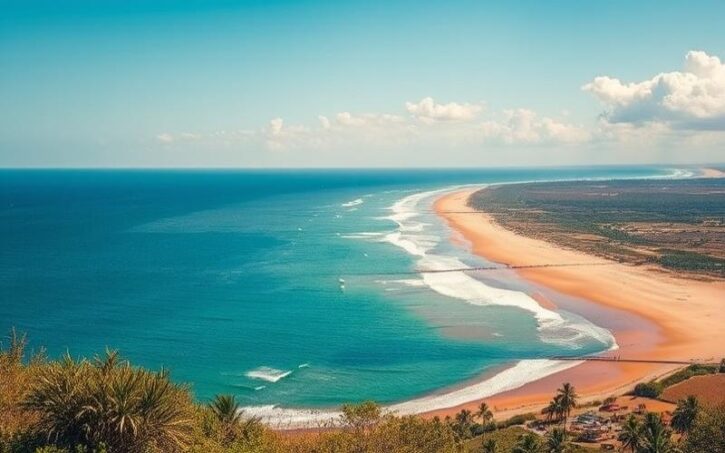
Moving to Mozambique as an expatriate means accepting a certain level of uncertainty and structural imperfections, in exchange for a rich experience: pleasant climate, untouched beaches, tasty cuisine, a sense of adventure, and a concrete role in a country undergoing transformation. Meticulous preparation – on the administrative, financial, health, and linguistic fronts – can turn this venture into a lasting success.
Disclaimer: The information provided on this website is for informational purposes only and does not constitute financial, legal, or professional advice. We encourage you to consult qualified experts before making any investment, real estate, or expatriation decisions. Although we strive to maintain up-to-date and accurate information, we do not guarantee the completeness, accuracy, or timeliness of the proposed content. As investment and expatriation involve risks, we disclaim any liability for potential losses or damages arising from the use of this site. Your use of this site confirms your acceptance of these terms and your understanding of the associated risks.

Cyril Jarnias is an independent expert in international wealth management with over 20 years of experience. As an expatriate himself, he is dedicated to helping individuals and business leaders build, protect, and pass on their wealth with complete peace of mind.
On his website, cyriljarnias.com, he shares his expertise on international real estate, offshore company formation, and expatriation.
Thanks to his expertise, he offers sound advice to optimize his clients' wealth management. Cyril Jarnias is also recognized for his appearances in many prestigious media outlets such as BFM Business, les Français de l’étranger, Le Figaro, Les Echos, and Mieux vivre votre argent, where he shares his knowledge and know-how in wealth management.





