Relocating to Yemen as an Expat: A Comprehensive Guide to Understanding the Ground Reality
Published on and written by Cyril Jarnias
Relocating to Yemen as an expatriate is no ordinary undertaking. This is not about a simple change of scenery or a “fresh start in the sun,” but about settling in a country at war, marked by a major humanitarian crisis, a fragile healthcare system, and chronic insecurity. Yet, the country remains a land of contrasts: millennia-old culture, UNESCO-listed historic cities, a population dedicated to hospitality, and a relatively low cost of living for those with foreign income.
Good to know:
This guide offers a direct overview of life in Sana’a, the main destination for expatriates in Yemen. It presents figures and describes in detail daily life, mandatory administrative procedures, and the main risks to assess before moving.
Understanding the general context before leaving
Moving to Yemen today means first and foremost accepting to live in a country officially classified as a conflict zone. Major Western governments – the United Kingdom, the United States, Canada, among others – explicitly recommend avoiding all travel, including to the island of Socotra. The country is considered “high risk” due to civil war, terrorism, organized crime, and weak security institutions.
Warning:
The conflict has fragmented Yemen: the Houthis control the north (Sana’a), while the internationally recognized government and other groups dominate the south (Aden). This situation, constantly evolving, is highly volatile, with movement restrictions, road closures, and checkpoints that can appear at any time.
Before any serious consideration of an expatriation, several realities must be kept in mind:
Tip:
The country is classified as a “war zone.” The terrorist threat is high, with the presence of groups like Al-Qaeda in the Arabian Peninsula and branches of the Islamic State. Kidnappings of foreigners occur and can involve terrorist groups, criminal networks, and armed tribes alike. Public services, particularly health and electricity, no longer function normally. Finally, the majority of the population lives below the poverty line and depends on humanitarian aid.
In this context, most expatriates present in Yemen are neither “digital nomads” nor adventurous retirees, but humanitarian personnel, diplomats, employees of international organizations, or large companies linked to the oil sector or a few export activities (coffee, textiles, agri-food). Their presence is generally governed by strict security protocols and often associated with accommodation in secured compounds.
Portrait of the country and Sana’a: demography, society, and culture
Yemen, officially the Republic of Yemen, spans over 455,000 km² at the southern tip of the Arabian Peninsula. The country has over 40 million inhabitants according to recent estimates, with an extremely young population, very low per capita income (GDP per capita around a few hundred dollars), and a human development index ranked among the lowest in the world.
3000000
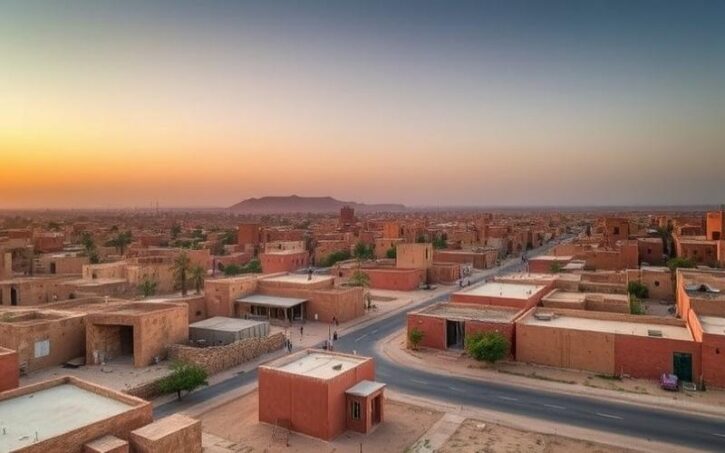
Sana’a, the historic capital of Yemen, has approximately 3 million inhabitants.
Yemeni society is largely tribal and patriarchal. The extended family plays a central role, with the head of the family – often the eldest man – making major decisions. Solidarity bonds within clans and villages are essential for survival, especially since the beginning of the conflict. In this social system, the concept of wasta – a network of intermediaries, connections, and recommendations – comes into play in many procedures: business, administration, informal justice.
Example:
The majority religion in Yemen is Islam, divided mainly between Sunni (notably Shafi’i rite) and Shiite (notably Zaydi rite) branches. This faith deeply structures society, influencing daily rhythms through calls to prayer, leading to the closure of businesses on Friday, and imposing strict respect for the Ramadan fast. Furthermore, the country is home to small minority religious communities, including Christians and Hindus, as well as a historic but now very reduced Jewish presence.
English is only mastered by a minority, estimated around 9% of the population. In Sana’a, in business circles, international organizations, and some private services, the use of English is more common, but knowledge of a few Arabic phrases greatly facilitates integration and shows respect.
Cost of living in Sana’a: a poor country, a cheaper but demanding expatriation
The paradox of Yemen is that it ranks among the countries with the lowest cost of living in the world while being an extremely difficult environment. Global statistics rank the country around 178th place out of nearly 200 for cost of living, roughly half as expensive as the global average. Sana’a is among the 12% least expensive cities on the planet.
Economic situation in Yemen for expatriates
Comparison of purchasing power between foreign currency income and local salaries, highlighting economic disparities.
Expatriates’ purchasing power
For an expatriate with foreign currency income, purchasing power is, on paper, high.
Average local net salary
The average net salary is around 110 dollars per month.
Cost of living
The cost of living represents 4.9 to 5 times the average monthly net salary.
Expenses covered by a local salary
Estimates for Sana’a suggest the following average monthly budget depending on profile:
Profile
Budget excluding rent (USD)
Budget with rent (USD)
Budget with rent (YER, approx.)
Single person
~318
~560
~512,000
Family of four
~922
~1,331
~1,055,000
The cost remains about 11.7% lower in Sana’a than the national average, which may be surprising but reflects data compiled from various sources. In practice, expatriates requiring a “Western” standard (comfortable housing, fast internet, private generator, motorized transport, eating out) will find their actual monthly budget easily exceeds these indicative levels, especially when including insurance, regular travel abroad, and security expenses.
Housing in Sana’a: rents, buying, and market reality
For an expatriate, the first major budget line remains housing. In Sana’a, advertised average rents are relatively modest compared to major regional capitals:
Type of housing
Area
Average monthly rent (USD)
Average monthly rent (YER, approx.)
1-bedroom apartment
City center
180 – 249
40,000 – 43,000
1-bedroom apartment
Outside center
110 – 160
23,000 – 26,500
3-bedroom apartment
City center
~447
~99,000
3-bedroom apartment
Outside center
294 – 340
~64,500
Nationally, average rents are slightly higher, highlighting the very approximate nature of the data and strong local disparities. It is also important to keep in mind that many expatriates do not live in “standard” apartments, but in secured residences, villas rented long-term by NGOs, UN agencies, or companies. These arrangements can be significantly more expensive, sometimes even negotiated in other currencies.
Real estate purchase, in the current context, is rarely advisable for a foreigner. The prices given for Sana’a – over 1,600 dollars per square foot in the city center – show in any case an opaque market, without reliable online tools or strong legal protection. At the national level, indicative per square meter figures show a wide range, reflecting a fragmented market affected by war.
Real estate advice for foreigners in Yemen
Several constraints add to this:
– absence of structured real estate agencies as in Europe ;
– difficulty verifying the legal ownership of properties ;
– importance of informal arrangements, often through local intermediaries (wasta) ;
– security imperative: proximity to sensitive points, exposure to fighting, checkpoints, risks of bombing.
Under these conditions, most expatriates opt for renting within a secured setup arranged by their employer. For an independent profile, finding suitable housing will require time, reliable local contacts, and a fine appreciation of risks.
Bills and recurring expenses: energy, internet, transport
Once housed, an expatriate must anticipate several recurrent costs related to the fragility of infrastructure.
Basic utilities (electricity, water, garbage, sometimes heating or air conditioning) for an 80–90 m² apartment officially range around 40 to 80 dollars per month. In practice, power cuts are so frequent that many urban households resort to private or shared generators, with an additional cost for fuel.
Good to know:
High-speed internet is often scarce and unstable. A subscription advertised between 26 and over 70 dollars per month for 50–60 Mbps can offer very variable quality. For a teleworking expatriate, it is essential to plan backup solutions (multiple providers, 4G dongles, even satellite), leading to significant additional cost.
For mobile phones, a voice + data plan (at least 10 GB) runs around 11 to 15 dollars per month. It’s affordable, but coverage remains uneven and subject to the vagaries of conflict.
Good to know:
Urban transport is very cheap (ticket a few cents, taxi ~1$). Official fuel is inexpensive (0.80 to 1.04$/liter). However, fuel shortages, long queues, poor road conditions, and insecurity on certain routes significantly complicate the use of a personal vehicle.
Foreign governments consider public transport unsafe for their nationals, especially outside major cities. Intercity travel is typically done by secured convoy or via private operators with excellent knowledge of the terrain. In this context, a seemingly modest transport budget can quickly increase when security constraints are added.
Eating out and social life: between local cuisine and contextual constraints
Yemeni gastronomy is one of the country’s great cultural assets: long-simmered rice and meat dishes, various breads, spicy stews, exceptional coffee, renowned honey. For an expatriate, eating at restaurants or buying basic goods remains financially accessible.
Some typical prices in Sana’a can be summarized:
Product / Service
Average price (USD)
Average price (YER, approx.)
Simple meal at a local restaurant
3 – 8
1,500 – 1,900
Meal for 2 at a mid-range restaurant
20 – 24
5,500 – 6,600
Fast-food meal (e.g., burger + drink)
4.5 – 9.8
2,000 – 2,500
Cappuccino
1.9 – 4.1
~900
Bottle of water (33 cl)
0.48 – 0.73
120 – 175
Milk (1 L)
1 – 1.2
600 – 750
White bread (500 g)
0.5 – 0.64
260 – 330
Rice (1 kg)
~1.15 – 1.2
~940
Chicken (fillets, 1 kg)
4 – 4.3
2,550 – 2,800
Beef (1 kg, round cut)
6.7 – 24
6,000 – 6,800
The food budget will therefore remain modest for a household with Western income, even with frequent restaurant meals. But this relative comfort masks a harsh reality: for the local population, inflation, currency devaluation, and dependence on imports make access to sufficient food increasingly difficult. Some regions are on the brink of famine, and humanitarian aid plays a crucial role.
Warning:
Alcohol consumption is very restricted for religious and legal reasons: prohibited in public and with limited availability. Non-Muslim expatriates may consume in private, but access is complicated, expensive, and often informal.
Paid leisure activities retain moderate rates: gym membership between 25 and over 80 dollars per month, movie ticket around 4 to 6 dollars, tennis court rental per session from 10 to 15 dollars. But in practice, the offer of “Western-style” leisure is limited, and many venues are closed or difficult to access due to the security situation.
Healthcare system: a critical point for any expatriation project
This is likely the most decisive chapter. The Yemeni healthcare system is today one of the most fragile in the world. Even before the war, the country suffered from significant deficiencies: low medical density, poorly equipped hospitals, incomplete health coverage. The conflict has finished bringing the infrastructure to its knees.
Less than half of health facilities are fully functional. According to geospatial analyses, about 30% of the population lives more than 30 minutes from a functional primary care center, and over 40% more than an hour from a hospital. In reality, actual accessibility is further degraded by damaged roads, checkpoints, fighting, fuel shortages.
Example:
Al-Thawra Hospital in Sana’a is an example of a major facility in Yemeni cities. As a level I trauma referral center, it has specialized services like dialysis, cardiac surgery, and stroke treatment. However, it also illustrates the general difficulties of the healthcare system, suffering from chronic shortages of electricity, medicines, equipment, and staff, despite its status as a leading facility.
Several points must be emphasized for a future expatriate:
– the average quality of public care is low ;
– private facilities, although better, remain far from European or North American standards ;
– medical evacuations are frequent for serious emergencies, to countries like Egypt, Jordan, or India;
– there is no organized pre-hospital emergency system: little or no ambulance service, under-equipped ambulances, erratic emergency numbers.
50
Yemen has less than half the number of healthcare professionals recommended by the WHO.
The health consequences are visible in the indicators: shortened life expectancy, very high maternal and child mortality, resurgence of diseases thought to be controlled (cholera, diphtheria, polio, measles), massive malnutrition. For pregnant women, the situation is particularly alarming: access to prenatal care is very limited and obstetric complications are a major cause of death. Many organizations clearly advise against pregnancy in Yemen, including for expatriate women, given the risks.
In this context, international health insurance including emergency medical evacuation is not a comfort but a prerequisite. It is unrealistic to rely solely on the local system for serious pathologies or complex procedures.
Children’s schooling: international offerings and limits
Another key dimension for an expatriate family: education. The Yemeni public system offers free and compulsory schooling from 6 to 14 years on paper, but actual enrollment rates and teaching quality are far from international standards. Infrastructure is lacking, many schools are partially destroyed or lack functional sanitation or running water.
Good to know:
For foreign families, private and international institutions are the main option in Sana’a. Several schools offer American, British, or French programs, often with bilingual sections. They prepare for internationally recognized diplomas such as IGCSE, A-Levels, or the International Baccalaureate.
The international educational landscape can be summarized around a few common traits:
– programs modeled on Western systems (US, UK, France) ;
– language of instruction primarily English, with Arabic and sometimes French classes;
– reduced numbers, smaller classes than in public schools ;
– tuition fees high relative to local incomes, but comparable or slightly lower than other Gulf capitals.
Available figures provide some orders of magnitude for private education expenses:
Type of institution
Indicative cost
Currency / period
Private kindergarten / preschool
77 – 89 USD / month
per child
International primary school
3,200 – 4,600 USD / year
per child
These amounts vary by school, level, services (school transport, cafeteria, extracurricular activities), and the current security situation. In such an unstable context, it is essential to check directly with each institution:
Good to know:
The institution is currently open. Specific security measures are in place. Access is permitted for foreign children. Part of the schooling can be done remotely if necessary.
It is also important to remember that a sudden deterioration in the political situation can lead to temporary school closures, forcing families to switch to online learning solutions or consider a hasty departure.
Administrative procedures: visas, residence, and work permits
Legally, entering and residing in Yemen involves navigating a particular regulatory framework, marked both by formal laws and the realities of a state in crisis.
The general rule is clear: most foreigners need a visa issued before departure by a Yemeni diplomatic mission. Visas on arrival, which existed for many countries until 2010, are now restricted to a limited number of nationalities, mostly regional (notably some Arab and Muslim countries). In practice, consulates severely limit visa issuance, primarily for:
– people of Yemeni origin (able to prove their lineage) ;
– employees of international organizations, diplomats, journalists, and specialized personnel ;
– certain business or cooperation profiles on official invitation.
A standard visa application file typically includes: a completed visa application form, a valid passport, ID photos, proof of address, travel insurance certificate, proof of financial means, a flight ticket, and supporting documents for the purpose of travel.
Good to know:
To prepare a visa application file, it is necessary to provide: a passport valid for at least six months after the stay, a completed form, ID photos, and an invitation letter or work contract for professional visas. You must also attach a medical certificate attesting to the absence of contagious diseases, sometimes a criminal record extract, as well as proof of financial means and accommodation.
Processing times can reach two weeks or more, depending on coordination between the diplomatic post and authorities in Sana’a or other decision centers.
For a long stay, the visa is only the first step. The law on the entry and residence of foreigners defines several categories of residence permits: special, ordinary, and temporary. In current practice, the vast majority of expatriates fall under a renewable temporary stay, linked to an employment contract and sponsorship by a local employer (ministry, registered NGO, Yemeni company, or recognized international entity).
Usual obligations include:
– registering with immigration services within a given timeframe ;
– reporting any change of address ;
– only engaging in professional activity for the designated sponsor ;
– renewing documents on time.
To work legally, a separate work permit is in principle mandatory, issued by the competent ministry (social affairs and labor), always based on sponsorship by an employer. The latter must justify hiring a foreigner, provide a contract, proof of its legal registration, and generally bear the procedural costs.
Finally, Yemeni naturalization remains theoretically possible after many years of residence, mastery of Arabic, and demonstration of complete integration. But this is not a realistic prospect for most expatriates in the current context, especially since dual citizenship is not recognized.
Security and daily life: balancing risks and routines
Even for an experienced expatriate, living in Yemen implies accepting a significantly higher level of risk than in most countries. Foreign authorities highlight several major threats:
– terrorism (bomb attacks, armed assaults, rocket fire) potentially targeting official buildings, oil infrastructure, hotels, markets, crowded public places;
– kidnappings targeting foreigners, sometimes later sold to terrorist organizations;
– violent crime in a context of widespread arms circulation;
– mines and unexploded ordnance in some regions, particularly in the south and central mountainous areas.
Warning:
The situation is aggravated by persistent, disruptive factors: power and water cuts, chronic fuel shortages, road blockades, protests at risk of escalating, and checkpoints with unpredictable controls.
In this climate, an expatriate’s daily life is often highly regulated by security protocols established by their employer. These measures can include:
– accommodation in a fortified residence, with armed guards, high walls, strict access procedures;
– travel only in a vehicle with an experienced local driver, sometimes in convoy;
– limiting outings to certain zones deemed safer;
– prohibition from frequenting certain public places (very lively cafes, crowded markets, demonstrations);
– instructions for discreet dress and behavior to avoid drawing attention.
Tip:
Foreign women are particularly exposed to risks of harassment or assault, although many also report experiences of respect and protection from their host communities. In any case, very conservative attire (legs and arms covered, headscarf, even abaya in some areas) is strongly recommended to blend into the environment and limit tensions.
The importance of a trusted local network cannot be overstated. Experienced guides, well-connected Yemeni colleagues, attentive neighbors, members of the established expatriate community all serve as relays for:
– finding housing ;
– interpreting signals of deteriorating security ;
– identifying the least dysfunctional hospitals or clinics ;
– anticipating shortages.
Expatriate networks, solidarity, and social integration
Despite the context, there are structured expatriate communities in Yemen, notably in Sana’a. Platforms like InterNations or certain dedicated forums bring together foreigners from dozens, even hundreds of different countries, exchanging practical advice, warnings, tips, and sometimes professional contacts.
These networks often serve as a psychological and logistical “safety net”. Testimonies from members mention a valuable welcome upon arrival in Sana’a: help understanding neighborhoods, recommendations for doctors, schools, domestic staff, and even job opportunities for spouses.
Good to know:
Yemeni society relies heavily on informal solidarity networks to cope with the war. Studies show many families survive through mutual aid: interest-free loans, food sharing, hosting displaced relatives, and forming communal funds for healthcare. This social fabric, though extremely strained, constitutes a model of resilience.
For an expatriate, integrating tactfully into these dynamics – respecting differences and avoiding any condescending attitude – can provide essential human anchoring. Codes of politeness, the importance of formal greetings, the value placed on hospitality, the central role of the majlis (reception room) and qat sessions (leaves chewed during social gatherings) are all cultural elements worth understanding, even if one does not always wish to participate fully.
Banks, money, and the real cost of a managed expatriation
The official currency is the Yemeni rial (YER). The country operates largely on cash, electronic payments being still uncommon outside of some banks and large companies. In major cities, several banks operate under the supervision of the Central Bank, offering current and savings accounts in rials or foreign currencies (USD, euros, Saudi riyal, etc.).
Opening an account is possible for a foreigner, but requires:
– a valid passport and often a residence permit ;
– proof of local address ;
– sometimes a letter from the employer or host organization ;
– an initial deposit, the minimum amount of which varies by bank.
Good to know:
In the Yemeni economic context (devaluation, risks of capital controls, instability), it is recommended for expatriates to limit the use of the local banking system to operational daily needs, such as receiving local salary, paying rent, or cash withdrawals. It is advisable to keep the majority of one’s assets abroad.
The overall cost of a “secured” expatriation in Yemen far exceeds the theoretical cost of living figures. In addition to daily expenses (housing, food, transport, communications, possible children’s education), one must include:
– salary risk premium often paid by employers;
– high-end health and repatriation insurance;
– costs of secure logistics (guards, vehicles, generators, fuel, redundant communication systems);
– regular travel outside the country to recharge, manage health, or comply with internal rotation policies.
For this reason, a long-term settlement in Yemen without a safety net (no solid contract, no structured organization behind you) is extremely risky.
Should you relocate to Yemen as an expatriate?
This guide does not aim to discourage in principle, but to frame the terms of a choice that is nothing like a classic expatriation. NGO director, humanitarian doctor, petroleum engineer, researcher, consultant on mission for an international organization: for these profiles, Yemen can constitute a unique terrain for professional and human engagement, with heavy responsibilities and potentially major impact.
Warning:
For a self-employed teleworker, a retiree, or a couple with young children, settling in Yemen under current conditions is strongly discouraged due to the significant risks and difficulties.
– objectively very high personal risk level ;
– extremely limited access to quality healthcare, particularly for emergencies, maternity, and serious pathologies;
– strong administrative and mobility constraints;
– possible isolation due to security measures;
– closure or uncertain functioning of many schools and services.
Before making a decision, it is essential to:
Tip:
Before traveling to a risk zone, it is crucial to take several precautions: carefully read travel advisories issued by your government, exchange with expatriates already on the ground via existing networks, take out insurance offering coverage suitable for conflict zones, and clarify with your employer or local partner the exact conditions regarding security, housing, and access to care.
Relocating to Yemen as an expatriate today is not a lifestyle choice, but an engagement in a crisis environment. For those who go with full awareness, with a robust security setup and a clearly defined mission, the experience can be profound and meaningful. For others, prudence demands considering less dangerous alternatives, perhaps discovering Yemeni culture from a distance, while awaiting more stable days.
Cyril Jarnias
Cyril Jarnias is an independent expert in international wealth management with over 20 years of experience. As an expatriate himself, he is dedicated to helping individuals and business leaders build, protect, and pass on their wealth with complete peace of mind.
On his website, cyriljarnias.com, he shares his expertise on international real estate, offshore company formation, and expatriation.
Thanks to his expertise, he offers sound advice to optimize his clients' wealth management. Cyril Jarnias is also recognized for his appearances in many prestigious media outlets such as BFM Business, les Français de l’étranger, Le Figaro, Les Echos, and Mieux vivre votre argent, where he shares his knowledge and know-how in wealth management.
To provide the best experiences, we use technologies like cookies to store and/or access device information. Consenting to these technologies will allow us to process data such as browsing behavior or unique IDs on this site. Not consenting or withdrawing consent, may adversely affect certain features and functions.
Functional
Always active
The technical storage or access is strictly necessary for the legitimate purpose of enabling the use of a specific service explicitly requested by the subscriber or user, or for the sole purpose of carrying out the transmission of a communication over an electronic communications network.
Preferences
The technical storage or access is necessary for the legitimate purpose of storing preferences that are not requested by the subscriber or user.
Statistics
The technical storage or access that is used exclusively for statistical purposes.The technical storage or access that is used exclusively for anonymous statistical purposes. Without a subpoena, voluntary compliance on the part of your Internet Service Provider, or additional records from a third party, information stored or retrieved for this purpose alone cannot usually be used to identify you.
Marketing
The technical storage or access is required to create user profiles to send advertising, or to track the user on a website or across several websites for similar marketing purposes.

 Published on and written by Cyril Jarnias






