
 Published on and written by Cyril Jarnias
Moving to the Comoros as an expatriate means choosing a tropical archipelago still untouched by mass tourism, but also a poor country with limited infrastructure and a living environment very different from Western standards. Before settling in Moroni, Anjouan, or Mohéli, it is essential to understand the cost of living, residency procedures, and the realities of housing, health, internet, schooling, and banking.
This guide uses quantitative data, placed in the context of an expatriate’s daily life, to help you build a solid and financially viable project.
Understanding the context: a seductive but fragile archipelago
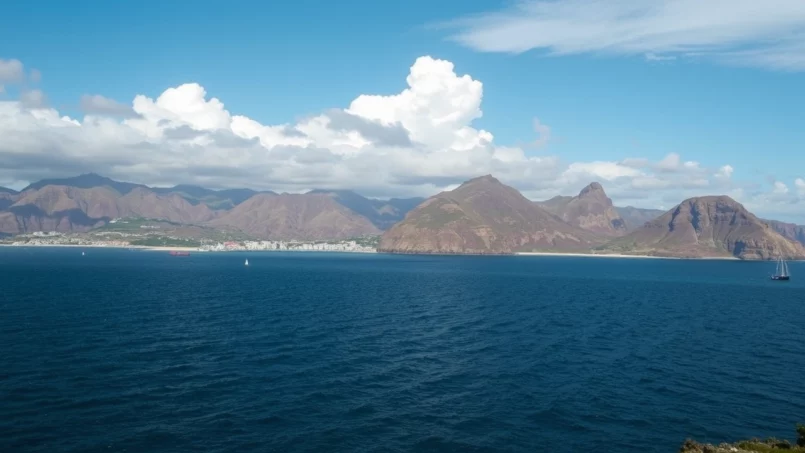
The Comoros, officially the Union of the Comoros, is a small island state north of the Mozambique Channel, between Madagascar and the coast of Mozambique. The archipelago comprises three main islands under Comorian sovereignty (Grande Comore/Ngazidja, Anjouan/Nzwani, Mohéli/Mwali) and claims Mayotte, which remains a French department.
The population is around 850,000 to 900,000 inhabitants, making it a sparsely populated but very densely occupied country. The economy is largely agricultural, with a few flagship products: ylang-ylang, vanilla, cloves. The country is ranked among the poorest in the world: nearly 40% of the population lives below the poverty line, GDP per capita is around $1,400 to $1,784, and the Human Development Index remains low.
The capital Moroni concentrates the majority of administrative services, international housing, schools, and better-equipped clinics. The climate is tropical marine, with a hot and humid season (November to April, risk of cyclones) and a cooler, drier season (May to October).
Before going further, it is useful to keep in mind that many “quality of life” indicators are very low: the overall quality of life index is estimated at 12, the country is ranked 187th out of 197 for residential appeal, the human freedom score is around 3.8, and corruption is very present (perception index at 20). Life on-site can be pleasant for a properly compensated expatriate, but the context remains that of a fragile developing country.
Cost of living: a country cheaper than the West, but not “low-cost”
Available data shows a nuanced picture. The Comoros are not an “ultra low cost” destination as one might imagine.
For an expatriate, the main budget items break down as follows:
| Profile | Total Monthly Cost (with rent) | Cost excluding rent |
|---|---|---|
| Single person | 1,207 USD | 472 USD |
| Family of 4 | 2,774 USD | 1,519 USD |
These averages remain well below U.S. costs: the general price level is about 42% lower than in the United States, with an estimated cost of living 56% lower. For the same comfort level:
A family would need about 3,170 USD per month in the Comoros for a standard of living equivalent to 5,375 USD in the United States.
But one key element completely changes the perspective: local salaries. Estimates vary, but several sources indicate:
– Average local net salary between 159 and 675 USD per month;
– Cost of living about 7.6 times higher than the lowest average salary cited;
– The lowest average salary covers only… 0.1 months of typical “expat” expenses.
An expatriate compensated according to international standards will find life affordable in the Comoros, while a foreigner trying to live on a local salary would quickly encounter financial difficulties. On a global scale, the cost of living index in the archipelago is slightly above the world average, with a coefficient of 1.06.
To understand how a household budget is structured, detailed data shows the average distribution of expenses:
| Expense Category | Share of Monthly Budget | Average Expense (KMF) | Observed Range (KMF) |
|---|---|---|---|
| Housing | 24% | 69,000 | 6,900 – 1,000,000 |
| Food / Groceries | 28% | 58,000 | 5,800 – 870,000 |
| Transportation | 7% | 23,000 | 2,300 – 350,000 |
| Health | 10% | 16,000 | 1,600 – 240,000 |
| Education | 5% | 14,000 | 1,400 – 210,000 |
| Other Goods / Services | 5% | 9,200 | 920 – 140,000 |
| Savings | 16% (on average) | 72,000 (≈160 USD) | 7,200 – 1,100,000 |
Nearly 60% of surveyed individuals report saving, with higher savings rates among single people (20% of income on average) than among families (15%).
For an expatriate, these figures show two things: on one hand, it is realistic to build a savings capacity if paid by a foreign company or NGO; on the other hand, the cost of living is not negligible and requires real budgetary preparation.
Currency, exchange, and banking environment
The local currency is the Comorian franc (KMF). It is a predominantly cash economy: bank cards are rarely accepted outside certain hotels or restaurants in the capital, and ATMs are scarce, especially outside Moroni.
The indicative exchange rate gives a general idea:
| Currency | Equivalent in KMF |
|---|---|
| 10 USD | ≈ 4,300 KMF |
| 100 USD | ≈ 43,000 KMF |
And conversely: The flow of information and the relationships between actors evolve according to a dynamic pattern that deserves analysis.
| Amount in KMF | Equivalent in USD |
|---|---|
| 100 KMF | ≈ 0.232 USD |
For a long-term stay, it is wise to have both:
– an account abroad (or in your home country) for large transfers and savings;
– and, if needed, a local or offshore account based in the Comoros.
The country is indeed developing an offshore banking activity, with physical structures like BIC‑Comoros and digital banks like The Kingdom Bank or Jetonbank. These institutions often offer:
Discover the essential features to manage your finances on a global scale.
Open and manage accounts in numerous currencies (USD, EUR, GBP, CHF, JPY, and several dozen others).
Benefit from Visa or equivalent cards for your daily expenses and travel.
Send money abroad via the SWIFT network, fast and secure.
Manage your accounts wherever you are thanks to our online and mobile banking platforms.
Opening an account generally involves:
– Valid passport, proof of address, proof of funds source;
– sometimes a professional reference letter;
– a minimum deposit (for example 10,000 KMF for some savings or current accounts, or more significant amounts around 1,000 USD for digital banks oriented towards “offshore”).
For domestic transfers, a national real-time gross settlement system exists, but you will mainly use it through your bank or employer.
In practice, day-to-day, an expatriate will still pay most expenses in cash. It is advisable to arrive with a reserve in euros or dollars, to exchange at local banks, and to limit dependence on ATMs.
Housing in the Comoros: Moroni, the main hub
For an expatriate, the main entry point is the city of Moroni, on Grande Comore. This is where the following are concentrated:
– the majority of apartments and houses suited to “international” standards;
– hotels, residences, and lodges that can serve as temporary solutions;
– services (private clinics, international schools, administrations, somewhat more stable internet connections).
There are also possibilities on Anjouan (Mutsamudu) or Mohéli, notably via eco-lodges or guesthouses, but for year-round installation, Moroni remains the most common choice.
Rental levels: from studio to villa
Market data shows a fairly wide price range, with significant variation depending on:
– location (central Moroni, residential neighborhoods, coastal villages);
– standard (simple local house, furnished “European” apartment, villa with garden, secure residence);
– size.
On average, the following amounts are cited:
| Type of Housing | Average Amount | Comment |
|---|---|---|
| Furnished 85 m² apartment, expensive area | 227,554 KMF (≈527 USD) | Sought-after residential areas |
| Furnished 85 m² apartment, standard area | 158,325 KMF (≈367 USD) | More “local” sectors |
| Furnished 45 m² studio, expensive area | 112,450 KMF (≈261 USD) | |
| Furnished 45 m² studio, standard area | 75,000 KMF (≈174 USD) | |
| 1 bedroom (40 m²) city center (global market) | ≈675 USD | Globally comparable data |
| 1 bedroom (40 m²) more affordable | ≈566 USD | |
| 3 bedrooms (80 m²) city center | ≈1,440 USD | |
| 3 bedrooms (80 m²) more affordable | ≈1,173 USD |
For Moroni, some indications in euros give a more concrete picture:
| Type of Property in Moroni | Monthly Rent (approx.) |
|---|---|
| 1 bedroom city center | 650 € |
| 1 bedroom outside center | 540 € |
| 3 bedrooms city center | 1,250 € |
| 3 bedrooms outside center | 1,015 € |
It is clear that rents for “comfortable” apartments in Moroni are far from negligible: for well-located properties, they approach prices found in some medium-sized European cities.
For purchase, the advertised prices per square meter are of the same order:
| Type of Purchase | Average Price per m² |
|---|---|
| Apartment city center | 1,626 USD/m² |
| House in the outskirts | 1,385 USD/m² |
Property types: from guesthouse to seaside villa
Housing options are quite varied:
– villas or family houses with several bedrooms, garden, terrace, sometimes private water reserve and parking;
– F1 to F4 apartments, often furnished, with air conditioning and equipped kitchen;
– modern studios with sea view, sometimes part of a residence;
– eco-lodges and beachfront bungalows on Grande Comore or Mohéli, more suited to a semi-touristic lifestyle than a true primary residence.
Examples of typical properties show the standards offered:
– 5-bedroom houses with two kitchens (gas inside, charcoal outside), garden, water reserve, and parking;
– residences like “Le Paradis Bleu” in Maluzini, 5 minutes from Moroni center, offering T2 to T4 apartments with sea view and airport transfers;
– recent studios with balcony and kitchenette, close to the center;
– seaside houses in fishing villages a few kilometers from Moroni.
For a long-term installation, it is often recommended to:
When moving abroad, it is advisable to: 1) Book temporary accommodation (hotel, guesthouse, Airbnb) for the first few weeks, time to visit the area. 2) Visit several properties with the help of a local intermediary (real estate agency, expatriate contact, recommended owner). 3) Scrupulously check certain essential points: water access, quality of the electrical grid, mobile and internet coverage, as well as proximity to shops and schools.
Utilities and services: water, electricity, internet
Recurring charges represent a moderate part of the budget but must be anticipated, especially since infrastructure is fragile.
Average data gives:
| Item | Average Monthly Cost |
|---|---|
| Electricity, water, gas (85 m²) | 15,000 KMF (≈35 USD) |
| Utilities studio 45 m² | 10,000 KMF (≈23 USD) |
| Internet 8 Mbps | 8,788 KMF (≈20 USD) |
| Fast Internet (50 Mbps+) | ≈75.7 USD |
In Moroni, some estimates in euros mention:
– 100 € for basic services (electricity, water, waste) for an 85 m²;
– about 66 € per month for fast fixed internet access;
– over 30 € for a mobile plan with calls and over 10 GB of data.
It should be kept in mind that: it is essential to stay focused on our objectives and not get distracted by peripheral elements.
– power outages are frequent, sometimes necessitating investment in a generator or solar solutions;
– water supply is irregular in some neighborhoods; having a tank or water reserve is a real plus;
– fixed internet remains rare, the vast majority of connections are via 3G/4G, sometimes through “4G box” routers.
Food and daily life: grocery basket and restaurants
Food represents the largest expense category for a household, at about 28% of the monthly budget. Prices vary depending on whether you consume local or imported products.
Some benchmarks in local currency (KMF):
| Product / Service | Approximate Price (KMF) | USD Equivalent (rounded) |
|---|---|---|
| Simple lunch menu in business district | 4,750 | ≈11 |
| Fast-food combo | 3,314 | ≈8 |
| Daily bread for two | 199 | ≈0.46 |
| Whole milk 1 L | 947 | ≈2.19 |
| Dozen eggs | 1,422 | ≈3.30 |
| Tomatoes 1 kg | 1,123 | ≈2.60 |
| Apples 1 kg | 1,167 | ≈2.70 |
| Potatoes 1 kg | 738 | ≈1.71 |
| Local beer 0.5 L in supermarket | 1,000 | ≈2.32 |
| Coca‑Cola 2 L | 1,103 | ≈2.56 |
And on average in dollars for some basic products:
| Product | Average Price (USD) |
|---|---|
| Average lunch menu | 6.37 |
| Dinner for two | 19.40 |
| Fast‑food | 8.28 |
| Milk 1 L | 4.48 |
| Bread 0.5 kg | 0.59 |
| Rice 1 kg | 1.75 |
| Dozen eggs | 5.17 |
| Cheese 1 kg | 8.04 |
| Chicken breast 1 kg | 4.40 |
| Beef steak 1 kg | 12.80 |
| Bananas 1 kg | 1.24 |
| Oranges 1 kg | 1.64 |
| Water 1.5 L | 1.34 |
| Mid-range bottle of wine | 17.36 |
| Pack of cigarettes | 2.95 |
In absolute terms, basic products remain affordable, but imported products (cheeses, quality meats, wines, alcoholic beverages) are expensive. To reduce the bill, an expatriate would do well to align more with the local diet (fish, rice, fruits, tropical vegetables, Comorian dishes).
The cost of a dinner for two in a restaurant frequented by expatriates.
Transportation: getting around damaged roads and risky sea links
Transportation represents on average 7% of monthly expenses, but its importance exceeds this percentage: it determines your safety and comfort of life.
The indicative costs are as follows:
| Service / Product | Average Price (indicative) |
|---|---|
| Single local transport ticket | ≈0.63 USD (≈0.54 € in Moroni) |
| Monthly transport pass | ≈33.20 USD (≈28.75 €) |
| 8 km taxi ride | ≈8.89 USD |
| Gasoline 1 L | 625 KMF (≈1.45 USD) |
| Gasoline 1 gallon in Moroni | ≈10.18 € |
Roads are a major weak point:
– the main “rocade” around Grande Comore is decent, but many secondary roads are narrow, potholed, poorly marked;
– night lighting is rare, stray animals are common, fatal accidents are numerous;
– there is no real roadside assistance.
It is strongly advised against driving at night outside urban areas. To drive, an international driver’s license is required. A foreign license (like a UK card-format license) is only accepted for a few months; beyond that period, a local procedure to obtain a license should be planned.
Public transport (minibuses, shared taxis) is often crowded, irregular, and sometimes unsafe. For an expatriate, the most realistic options are:
– private taxi, with fare negotiation before the ride;
– car rental with driver;
– personal car, keeping in mind import constraints (vehicle age limits, standards, taxes calculated on a CIF basis).
Inter-island links (ferries, boats) should be approached with caution: overloading, low presence of safety equipment, accidents with loss of life. Air travel remains more expensive but safer when available.
Health: a very limited system, evacuation as a safety net
For an expatriate, health is a central issue. The Comoros do not have a high-performing national health system, nor medical standards comparable to those in Europe or North America.
The main lines of the medical landscape are as follows:
– absence of universal public coverage;
– under-equipped public hospitals, often overcrowded, with frequent water and electricity cuts;
– lack of medications, equipment, specialized exams (CT scan, advanced imaging), specialist doctors;
– very few pharmacies, and irregular stock;
– limited private sector, concentrated in Moroni, somewhat more comfortable but exposed to the same shortages.
Some benchmarks on the costs of usual care.
| Service / Product | Indicative Price KMF | USD Equivalent (approx.) |
|---|---|---|
| General practitioner consultation | 5,000 | ≈12 (local data) |
| Average medical consultation | — | ≈17 (global data) |
| Cold medicine (6 days) | 1,000 | ≈2.32 (≈3.65 USD according to another source) |
| Simple haircut | — | ≈3.94 |
| Monthly gym membership | 25,000 | ≈58 (≈35.55 USD global average) |
The real challenge is not so much the cost as the quality and access. In case of a serious problem (cardiac emergency, complex surgery, major trauma, high-risk delivery…), medical evacuation to Mayotte, Réunion, Madagascar, Mauritius, or South Africa is often essential. The cost of such an evacuation can climb to 250,000 USD.
For an expatriate, a solid international health insurance is not an option: it is an absolute necessity. It should ideally cover:
Before departure, check your insurance coverage for hospitalization, outpatient care, evacuation, and medical repatriation. Remember to declare chronic or pre-existing conditions. If traveling with family, inquire about maternity-related coverage. Finally, ensure your contract provides coverage in neighboring countries with better medical infrastructure.
Health-wise, one must also consider:
– vector-borne diseases (malaria, dengue, chikungunya): antimalarial prophylaxis advised, mosquito nets, repellents, covering clothing;
– risk of traveler’s diarrhea, typhoid, cholera: caution with water (bottled or treated) and raw foods;
– presence of rabies (dogs, wildlife): pre-exposure vaccination to consider;
– broad vaccination recommendations (hepatitis A and B, typhoid, meningitis, polio, DTP booster, measles, flu, etc.).
Maternity and pediatric care are improving thanks to international programs, but the maternal mortality rate remains high and not all high-risk pregnancies can be managed locally under good conditions.
Internet and telephony: essential, but imperfect
For a modern expatriate, connectivity is no longer a luxury. However, in the Comoros, the internet remains expensive and relatively slow, even if the situation has improved thanks to submarine cables (EASSy, FLY‑LION3, AVASSA, 2Africa project).
In 2025, it is estimated that: *
– approximately 312,000 people use the internet, representing 35.7% of the population;
– 679,000 active mobile connections, most of which are 3G/4G compatible.
The mobile market is a duopoly:
| Operator | Position / Particularities |
|---|---|
| Comores Telecom | Historic public operator, mobile brand Huri |
| Telma / Yas Comores | Private operator from the Axian group, arrived in 2016 |
4G coverage reaches a good portion of the population (about 84%), but average speeds remain modest (around 9 Mbps). 5G pilot tests were authorized in 2025, with coverage still marginal.
Fixed internet access (ADSL, fiber) is very limited for individuals, with only a few thousand subscriptions in the entire country. The majority of internet traffic goes through mobile networks. It is common to use 4G routers for home connections.
Costs remain high:
– 1 GB of mobile data costs on average around 12.50 USD, well above many neighboring countries;
– an “entry-level” monthly plan can represent over 6% of the average national income;
In Mayotte, prepaid SIM cards are available at the Prince Saïd Ibrahim International Airport as well as in phone operator stores. To register a line, presentation of a passport is mandatory. For an expatriate, this is the most common and simplest solution for mobile phone access.
– a local SIM for voice, daily data, and local services;
– possibly an international eSIM to keep a foreign number or benefit from multi-country data packs.
Power cuts directly affect network quality; operators have generators but continuity is not always guaranteed. Public Wi‑Fi remains rare, limited to certain hotels, cafes, or lodges.
Visa, residency, and legal framework: building a medium or long-term project
All foreigners need a visa to enter the Comoros, no exemption regime exists for ordinary tourists. The most common formula is the visa on arrival, issued at main airports and ports.
Entering the territory
General conditions include:
– passport valid for at least 6 months after the intended departure date;
– return ticket or proof of onward travel;
– payment of a tourist visa fee (usually 30 € or 50 USD for a stay up to 45 days);
– for some nationalities, proof of sufficient financial means.
A 24-hour transit visa can be issued free of charge. Some holders of diplomatic passports from specific countries (Libya, China) benefit from partial exemptions, but this does not concern the majority of expatriates.
For a stay exceeding the short-stay duration, it is necessary to obtain a specific status. Options include a business visa, work visa, student visa, or a residence permit.
Working or studying: specific visas and residence permits
For an employed expatriate, the classic scheme is as follows: the employee is seconded by their employer to another country for a fixed period, while retaining their original employment contract.
– a local employer (company, NGO, institution) sponsors you for a work visa;
– this visa requires providing employment contract, proof of qualifications, civil status documents and sometimes a criminal record;
– it leads to a temporary residence permit, generally for one year, renewable.
For a student, the student visa is obtained upon presentation of:
– letter of acceptance from a Comorian institution;
– proof of financial means;
– medical certificates (including sometimes a negative HIV test);
– health insurance;
– return ticket.
The student residence permit must be applied for on-site, generally within 90 days of arrival.
There also exist, in the longer term, permanent residence permits for long-established foreigners, based on:
– several years of regular residence;
– stable income;
– proficiency in French and Comorian;
– a clean criminal record.
In all cases, it is strongly recommended to anticipate: processing times can range from a few days to several weeks, with possible extensions if additional documents are requested. Renewals should be initiated at least one to two months before expiration.
Overstaying should be avoided: a visa overstay of 1 to 30 days can lead to a two-year entry ban; between 30 and 90 days, a three-year ban, plus fines and possible legal action.
Working, investing, and doing business: assets and obstacles
For entrepreneurs or expatriate managers, the Comoros offer some opportunities, but in a complex environment.
Sectors identified as promising are:
– niche agriculture (vanilla, ylang‑ylang, cloves, processed products);
– fishing and aquaculture;
– tourism (eco-lodges, diving, hiking, nature tours);
– renewable energy;
– certain services (telecoms, digital solutions, offshore finance).
The regulatory framework provides: the standards and conditions to be met to ensure compliance of activities carried out.
Foreigners can create different types of companies (sole proprietorships, joint ventures, LLCs) but must register with the Commercial Court and obtain a tax identifier. Specific licenses are required for regulated sectors like telecoms, mining, or fishing. The tax system is characterized by a high corporate tax of 50% and a standard VAT of 10%.
The country is part of COMESA, which theoretically opens preferential access to some regional markets. However, the domestic market is very small, logistics costs are high, and infrastructure is insufficient (roads, ports, energy, digital).
Comorian business circles strongly prioritize human relationships, trust, and integration into the local fabric. Their corporate culture is a mix of African, Arab, and French influences.
– marked hierarchy, respect for titles and elders;
– decisions often slow, requiring multiple validations;
– importance of “cultural fit” in recruitment (up to 83% of employers would place this criterion above technical skills for intermediate and senior positions).
For an expatriate, this implies: adapting to a new country, navigating cultural differences, handling administrative formalities, establishing social networks, and relearning daily living.
– devoting time to building the local network;
– avoiding overly direct or aggressive negotiation approaches;
– respecting prayer times and the Islamic calendar (Ramadan, Eid, etc.) when planning meetings.
Education and schooling: limited options, especially for secondary
If you come with a family, the school question is crucial. The Comorian public education system is inspired by the French model but suffers from chronic lack of resources: overcrowded classes, dilapidated buildings, shortage of textbooks, teachers’ salaries paid late, frequent strikes.
Enrollment rates have improved, but quality remains very uneven. Many children combine Koranic school and public school, and a significant proportion leave the system before finishing secondary school.
For expatriate children, two options are generally considered:
1. local public or private French-speaking schools; 2. international schools or recognized French-program schools.
Moroni hosts in particular:
Annual tuition fees at École Henri Matisse (AEFE network) start from 1,464 euros.
Global figures on the cost of private schooling give an order of magnitude:
| Type of Educational Service | Average Cost |
|---|---|
| Private nursery / preschool (per month) | ≈414 USD |
| International primary school (per year) | ≈14,572 USD |
In Moroni, specific data mention a private preschool at about 356 € per month, and international primary schools around 12,563 € per year.
In practice, for an expatriate family, schooling can become the main expense item if one wants an education conforming to Western standards. Some parents therefore opt for:
– expensive but comprehensive international schooling on-site;
– or distance learning solutions (CNED, online schools), combined with local supervision.
The Comoros remain a relatively calm country in terms of crime: petty crime exists (pickpocketing, opportunistic theft, burglaries of poorly secured houses), but serious violence is rare. Basic precautions are generally sufficient:
– avoid walking alone at night, especially in isolated areas;
– do not display valuables;
– secure the doors and windows of your home.
More concerning are sometimes:
Travel within the Comoros can be affected by occasional political unrest (roadblocks, clashes), dangerous maritime transport conditions (overloaded ferries, faulty safety equipment), and significant natural risks (cyclones, torrential rains, volcanic activity of Karthala).
Regarding customs, society is deeply Muslim and conservative. Foreigners are expected to:
Visitors must adopt behavior respectful of local customs. This includes modest dress (shoulders and knees covered, especially for women) outside beaches, avoiding public displays of affection, and strict observance of Ramadan customs (no food, drink, or smoking in public during the day). Alcohol consumption is prohibited in public spaces and drunkenness can be penalized. Any illegal activity, such as promoting other religions or homosexual relations, is severely punished.
Social relations are organized around strong concepts of solidarity and respect: the extended family, neighborhood networks, ceremonies, religious practice. Hospitality is a cardinal value: a benevolent expatriate, respectful of codes and curious about local culture, is generally very well received.
Building a realistic expatriate budget
By grouping the various quantified elements, we can outline the typical monthly budget for an expatriate in Moroni.
For a single person:
– rent for a decent furnished studio or small apartment: 250 to 600 USD;
– utilities (water/electricity/gas): 20 to 70 USD;
– internet / phone: 20 to 80 USD depending on usage;
– food (mix of home cooking and eating out): 200 to 350 USD;
– transportation (taxis, gas if car, a few inter-urban trips): 50 to 150 USD;
– routine health, leisure, clothing, miscellaneous: 100 to 200 USD.
Estimated monthly cost for a family of four living comfortably, including larger housing, schooling, and higher consumption expenses.
The global figures (1,207 USD for a single person, 2,774 USD for a family) therefore prove consistent.
For this expatriation to be viable and economically useful, it is strongly recommended that:
– your net monthly compensation be significantly higher than these amounts, to account for travel, unforeseen events, and savings;
– your employment package ideally include at least part of the housing, schooling, and international health coverage.
In summary: who is a move to the Comoros suited for?
The Comoros are neither a “low-cost paradise”, nor an urban environment densely equipped like major African capitals. It is an archipelago with a fragile economy, spectacular nature, a welcoming but highly codified society, and limited infrastructure in health, transport, energy, and digital.
An expatriation there is more suitable for:
Long-term installation in the Comoros mainly suits three types of profiles. First, assigned profiles, such as employees of NGOs, international agencies, companies, or cooperation projects, who benefit from a solid contractual framework. Second, entrepreneurs aware of local logistical and regulatory constraints, ready to invest in niches like responsible tourism, quality agriculture, or specialized services. Third, expatriates seeking a simpler island life with stable financial resources from abroad.
It will be less suitable for:
– people dependent on a highly performing healthcare system;
– families looking for a great diversity of international schools;
– low-income freelancers looking to “live on little”: the real cost of living, especially in housing and connectivity, is higher than it seems.
With a well-prepared project, an appropriate budget, and deep respect for the local culture, settling in the Comoros as an expatriate can nonetheless offer a rare life experience: that of a small country with a strong identity, where the sea, volcanic mountains, and human relations structure a daily life very far from over-equipped metropolises.
Disclaimer: The information provided on this website is for informational purposes only and does not constitute financial, legal, or professional advice. We encourage you to consult qualified experts before making any investment, real estate, or expatriation decisions. Although we strive to maintain up-to-date and accurate information, we do not guarantee the completeness, accuracy, or timeliness of the proposed content. As investment and expatriation involve risks, we disclaim any liability for potential losses or damages arising from the use of this site. Your use of this site confirms your acceptance of these terms and your understanding of the associated risks.

Cyril Jarnias is an independent expert in international wealth management with over 20 years of experience. As an expatriate himself, he is dedicated to helping individuals and business leaders build, protect, and pass on their wealth with complete peace of mind.
On his website, cyriljarnias.com, he shares his expertise on international real estate, offshore company formation, and expatriation.
Thanks to his expertise, he offers sound advice to optimize his clients' wealth management. Cyril Jarnias is also recognized for his appearances in many prestigious media outlets such as BFM Business, les Français de l’étranger, Le Figaro, Les Echos, and Mieux vivre votre argent, where he shares his knowledge and know-how in wealth management.





