
 Published on and written by Cyril Jarnias
Moving to Angola as an expatriate means accepting a real change of scenery: a country still rebuilding after a civil war, driven by oil and minerals, with a capital ranked among the most expensive in the world, but also a warm population, superb beaches, and real professional opportunities. To keep the adventure exciting and prevent it from turning into an obstacle course, you must arrive well-prepared, both administratively and financially, as well as logistically and for your family.
This guide synthesizes factual information from specialized reports on essential themes for expatriates: housing, cost of living, taxation, visas, health, the school system, security, and the banking system. It aims to provide a clear vision of living conditions on the ground.
Understanding the Angolan Context Before Leaving
Even before discussing housing or salary, it’s useful to situate Angola in its political, economic, and social context. The country is emerging from a long civil war that ended in 2002. Since then, the state has bet on its natural resources—oil, gas, minerals, diamonds—to finance rapid but very uneven reconstruction.
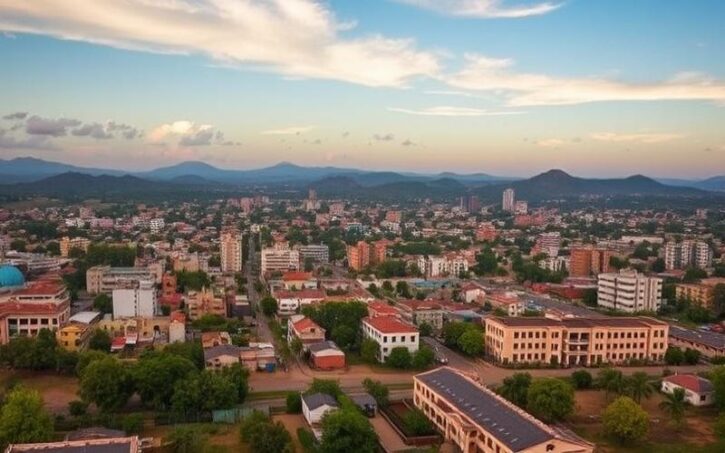
Luanda, initially designed for 700,000 inhabitants, is now home to several million, causing significant urban planning problems.
Politically, Angola is a unitary presidential republic with a dominant party. President João Lourenço has been leading a reform program for several years aimed at attracting foreign investors, notably through a new private investment law, privatizations, and a gradual overhaul of the tax system.
This is the number of million inhabitants the country has, now exceeding 37 million.
Angola remains a demanding environment. Infrastructure is incomplete, administration is cumbersome, poverty is omnipresent, and water and electricity cuts are frequent. In return, expatriates often benefit from higher salaries, packages including housing, schooling, and international health insurance, and real career advancement potential in strategic sectors.
Living and Working in Luanda: Opportunities and Realities
Luanda is the beating heart of the country: the political, economic, and industrial capital, and the hub for oil and related services, it attracts the vast majority of expatriates. The city is described as dynamic, cosmopolitan, with intense nightlife, a rich music scene (kizomba, semba, kuduro), and a culture strongly marked by Portuguese and Brazilian heritage.
Luanda is regularly ranked among the world’s most expensive cities for expatriates, due to rents, imported goods, and costly private services. The standard of living is highly contrasted, with secure residences and modern infrastructure coexisting with vast slums and failing public services.
Professionally, the main employing sectors for foreigners are oil and gas, mining, construction and engineering, finance, telecoms, but also high-end hospitality, private medicine, and international education. Some expatriates come as entrepreneurs or investors, encouraged by reforms to the private investment law which now allow, in most sectors, setting up without a mandatory local partner, while ensuring the possibility of repatriating profits and dividends (under certain conditions and with constraints related to currency availability).
For expatriate employees, it is common to be offered a high salary accompanied by a hardship premium. This premium aims to compensate for difficulties related to the cost of living, security conditions, and limitations of local infrastructure in the host country.
Visas and Immigration Procedures: Plan Ahead to Avoid Blockages
One of the first hurdles when moving to Angola is the administrative complexity of visas and residence permits. There are many types of visas: work visa, mission visa, temporary stay visa, business visa, student visa, family reunification visa, investor visa, etc. Not all grant the same rights.
The work visa is central for a professional expatriation project. It is issued to allow temporary salaried activity, generally for a company registered in Angola. Its particularity is that it is tied to a specific employer and function: changing positions or companies原则上 requires a new application.
The employer must initiate the application by justifying the absence of local labor. Angolan law requires that at least 70% of employees be nationals (maximum 30% foreigners). After ministerial validation, the Migration and Foreigners Service authorizes the Angolan consulate or embassy to issue the visa.
The list of required documents is long: notarized employment contract or offer letter, criminal record translated into Portuguese and legalized, translated and legalized diplomas and CV, medical certificate, yellow fever vaccination certificate, letter from the employer taking responsibility for the stay and repatriation, proof of the legal and tax existence of the Angolan company, etc. For tourist or business visas, requirements are lighter but remain strict (notarized invitation, proof of means of subsistence, etc.). Authorities also require that the passport be valid for more than six months, with several blank pages, and impose precise standards for ID photos.
The legal processing time for a work visa is theoretically 15 days. However, feedback shows it’s more realistic to expect between two and six months in practice. This time is necessary to gather, translate, legalize, and have all required documents validated. It is therefore crucial to initiate procedures well in advance. To optimize the process, it’s recommended to get assistance, if possible, from a specialized service or the HR department of the host company.
Some travelers can obtain an e-visa for a visit or tourism upon arrival for short stays, or benefit from a 30-day tourist visa exemption, but this does not apply to work visas. For an installation project, you must go through the classic consular route and plan with sufficient lead time.
Once on site, the holder of a work visa must register with the SME to obtain a residence permit. Work visas can cover a few months (missions), one year (temporary stay), or two to three years (long-term contracts), with the possibility of renewal. Access to permanent residence generally requires many years of continuous legal residence.
Family members can apply for a family reunification visa, but this permit does not automatically grant the right to work: that requires a specific visa or permit.
Finding Housing: A Delicate Mission in a Very Tight Market
Housing is probably the most sensitive point for expatriates in Angola, and particularly in Luanda. The oil boom led to an influx of high-income foreign workers, while the supply of quality, secure housing remains very limited. Result: historically very high rents, which remain today at levels far above those of many capitals.
The first thing to know is that, in most cases, expatriate housing is organized and financed by the employer, especially in the oil sector or within large embassies. These companies often have secure residences or compounds with guards, pools, sports fields, shops, and integrated services. For an expatriate alone without housing support, the search can quickly become a headache, both in terms of price and security.
The neighborhoods most sought after by foreigners in Luanda are Talatona (considered the “modern heart” of the city), Alvalade, Bairro Azul, Coqueiros, as well as some sectors of Luanda Sul and Miramar. These areas concentrate modern condominiums offering a comfortable environment with recent apartments, gardens, pools, gyms, children’s play areas, party rooms, and sometimes nearby schools or nurseries. Specialized directories list over a hundred of these gated residences in Luanda.
To grasp the market, some rough figures are useful. Available reports indicate that an unfurnished three-bedroom apartment in central Luanda can reach around $7,000 per month, excluding charges, while similar properties outside the hyper-center drop to around $3,600. Recent listings show rents in kwanzas ranging from a few hundred thousand to several million Kz per month, with substantial condominium fees. For an expatriate, even a one-bedroom apartment in a safe area easily negotiates above $1,000 to $2,000, sometimes much more in the most sought-after buildings.
The law requires rents to be in kwanzas, but they are indexed to the dollar. Landlords frequently require a security deposit equivalent to 6 to 12 months’ rent, payable in advance, plus the first month. Without employer assistance, this sum is difficult to manage. Some also require a guarantor (individual or bank).
The formal rental market is highly professionalized for properties aimed at expatriates. Without company support, it is recommended to use a licensed real estate agent. Brokers must be licensed by the Angolan Institute of Real Estate Agents (IAIA) and their license is verifiable. The absence of an MLS-type service means there is no single database of available properties, hence the importance of using multiple channels: specialized portals (Angola-Property.com, Angola-RealEstate.com, AngoCasa), classifieds, expatriate forums, word of mouth. In the outskirts, a vast informal rental market exists, but it is neither regulated nor legally secure, with oral or summary contracts that leave the tenant very vulnerable.
The lease, often in Portuguese, can be for a fixed or indefinite term (by default, 2 years renewable). The law regulates rents in local currency, price revisions, and notice periods (min. 30 days for the tenant, 6 months for the landlord in early termination). A detailed inventory is crucial, as the landlord can withhold the deposit for abnormal damage. If the property is returned in good condition, the deposit must be fully refunded, but consulting a lawyer to assert one’s rights is advised.
The question of furnishings also needs to be anticipated. In Luanda, you can find both furnished and unfurnished accommodations. For a short or medium-term stay, renting furnished avoids the very high costs of shipping furniture. Many expatriates leaving the country sell their furniture at good prices, which can be an interesting alternative.
Indicative Example of Monthly Rents
The figures below, from various sources, give a rough idea, but variations are significant depending on the neighborhood, security, and quality of the property.
| Type of Housing | Location | Indicative Monthly Rent Range |
|---|---|---|
| 1-bedroom furnished | Secure central Luanda | $1,000 – $2,000 USD |
| 2–3 bedroom furnished, expat standard | Popular Luanda neighborhoods | $1,500 – $4,000+ USD |
| 3-bedroom unfurnished, high-end | Luanda hyper-center | ~$7,000 USD |
| 3-bedroom unfurnished | Luanda periphery | ~$3,600 USD |
| 2–3 bedroom apartment, secondary cities | Benguela, Lobito, Lubango | $600 – $1,800 USD |
In this context, the first practical advice is simple: negotiate from the start that housing (as well as condominium fees and possibly electricity and water) is covered by the employer, or at least that your package takes the level of rents into account.
Cost of Living: An Expensive Country for Expatriates, Especially in Luanda
On an international scale, Angola is not ranked among the most expensive countries for locals, but for a foreigner accustomed to certain comfort standards, the perception is quite different. Cost of living studies show that, overall, Angola remains cheaper than the world average if housing is excluded. But Luanda reverses this trend due to skyrocketing rents and the price of imported goods.
Comparisons indicate that the total cost of living (housing included) in Angola would be about 40% lower than in the United States, but this average hides disparities between the capital and other regions. Luanda is, for example, significantly cheaper than Washington DC or Tokyo in aggregate, but more expensive than Johannesburg or Addis Ababa, and is still perceived by expatriates as “very expensive” for anything related to Western standards (imported food, cars, electronics, international schools, private healthcare).
Average monthly cost of living for a single person in Angola, including rent.
Average local salaries remain modest (around $2,000 to $3,500 net according to some sources for skilled positions in cities), which creates an enormous gap with expatriates, who are often much better paid. Gross domestic product per capita remains relatively low, which is felt in the quality of public services.
In many destinations, routine food expenses show significant disparities. Meals in traditional local restaurants often remain affordable, offering good value for money. On the other hand, international chain or Western-cuisine establishments charge prices equivalent to, or even higher than, those in major European cities. For groceries, supermarkets offer a mixed basket: local products like fresh fruits, vegetables, and certain fish are generally inexpensive, while imported items (cheeses, cereals, wines, frozen meals) are sold with a significant markup, often two to three times more expensive than in Europe.
Examples of Prices in Luanda
| Expense Item | Indicative Price (USD or AOA) |
|---|---|
| Simple meal in a local restaurant | $6 – $12 USD |
| Meal for 2 in a mid-range restaurant | ~$31.5 – $48 USD (approx. 50,000 Kz) |
| Fast-food meal at an international chain | ~$7 – $8 USD (approx. 7,000 Kz) |
| Cappuccino | ~$3.5 USD (approx. 3,400 Kz) |
| Local beer (0.5 L, bar) | ~$1.5 – $1.8 USD (approx. 1,200 Kz) |
| Milk (1 L) | approx. $1.4 USD (approx. 1,800 Kz) |
| Bread (0.5 kg) | ~$0.7 USD (approx. 1,100 Kz) |
| Eggs (12) | ~$1.6 – $2.2 USD (approx. 2,000 Kz) |
| Fixed-line Internet monthly | $40 – $90 USD (approx. 125,000 Kz for high-speed offers) |
| Mobile subscription (calls + data) | $10 – $30 USD |
| Gym membership | $30 – $90 USD |
| Public transport ticket | ~$0.35 – $0.5 USD (500 Kz) |
Regarding transport, gasoline is relatively cheap, but the automobile market is expensive (an international compact like a Golf or Corolla costs several tens of thousands of dollars). Many expatriates use a driver provided by the company, both for security reasons and because driving in Luanda is considered stressful.
Electricity and water, for their part, are not excessively expensive on paper, but the near-systematic need for generators and oversized water tanks (especially in individual houses) significantly increases charges. An important clause to check in the lease or agreement with the employer: who pays for the generator fuel and the maintenance of backup equipment?
Health: Why International Insurance is Essential
The Angolan healthcare system is one of the country’s weak links. Despite an ongoing reform and public investments (national health development plan, creation of a drug regulatory agency, etc.), the reality remains that of an underfunded public network, with aging infrastructure, a shortage of doctors, nurses, and equipment, especially outside major cities.
Public hospitals are in principle free for all, but the quality of care is far from Western standards: lack of equipment, drug stock-outs, long waiting lines, sometimes deficient hygiene. Even the best public hospitals in Luanda do not meet the usual expectations of expatriates.
In Luanda, with the public health system being limited, almost all foreigners and affluent Angolans turn to the private sector. Private clinics and hospitals, like the Luanda Medical Center, offer significantly superior services: modern equipment, 24/7 emergency care, and for some, at least partially English-speaking medical staff. These facilities are often internationally accredited and oriented towards the expatriate clientele.
But these private care comes at a price, generally payable in cash upfront. Many expatriates take out international health coverage that covers not only private care in Angola but also, in case of serious illness or complex surgery, medical evacuation to South Africa, Namibia, Portugal, or other better-equipped countries. Evacuations are frequent for serious cases, high-risk maternity, or procedures requiring very high-level technical facilities.
Infectious diseases like malaria, cholera, typhoid, and hepatitis are endemic and constitute major causes of morbidity. Access to potable water is not guaranteed, even in Luanda, necessitating the use of filtered or bottled water. Vaccination and prevention campaigns are regularly reminded.
Health recommendations for Angola therefore include updating all basic vaccinations (diphtheria-tetanus-pertussis, measles-mumps-rubella, polio, flu, COVID-19), as well as complementary vaccines depending on the duration and nature of the stay (hepatitis A and B, typhoid, yellow fever, possibly rabies). The yellow fever vaccination is mandatory for entry into the country, and a vaccination certificate is required by immigration services. For malaria, drug prophylaxis may be prescribed in addition to mosquito protection measures.
The conclusion is clear: before leaving, you must choose a solid international health insurance that covers private care in Angola, emergency evacuations, hospitalizations abroad, and possibly maternity, pediatrics, or dentistry if you are coming with family. Many insurers specialized in expatriation (Cigna Global, Allianz, AXA, etc.) offer modular coverage with high, even unlimited annual ceilings.
Education: International Schools and Children’s Schooling
For expatriate families, children’s education is a major issue. The Angolan public school system is largely considered insufficient by international standards, particularly beyond primary school. In practice, most foreign parents turn to Luanda’s international schools, which offer British, American, international (IB), or French programs.
The supply of international schools in Angola is limited and concentrated essentially in Luanda. The main institution is Luanda International School (LIS), a large English-language school supported by oil companies. It offers all International Baccalaureate programs (PYP, MYP, DP) from kindergarten to high school. Tuition fees are very high (several tens of thousands of dollars per year per student) and are generally covered by employers in the oil and para-petroleum sector.
There are also schools following the British curriculum (Cambridge-type schools with IGCSE and A-Levels), a French school (Lycée français Alioune-Blondin Bèye, preparing for the French baccalaureate), Portuguese schools, and a few bilingual establishments. These schools mainly recruit expatriate teachers and emphasize security, modern infrastructure, and small class sizes. The trade-off is a very high cost, especially as supply is limited: it is imperative to apply early for enrollment, as waitlists are frequent.
Order of Magnitude for Tuition Fees
Available data indicates, as a guide, the following amounts in Luanda:
| School Level | Approximate Cost |
|---|---|
| Kindergarten / preschool (monthly) | $800 – $850 USD |
| International primary school (annual) | $13,000 – $25,000 USD |
| Secondary / international high school (annual) | up to ~$60,000 USD in the most expensive schools |
These figures illustrate how much schooling can become the top expense for an expatriate family, sometimes ahead of housing if the latter is covered. It is therefore essential to negotiate an education allowance in the expatriation contract, or direct reimbursement of tuition fees by the employer.
Luanda suffers from severe traffic congestion, with few major arteries connecting expatriate residential neighborhoods to the city center. A home-to-school commute can easily exceed an hour during peak times for a distance under 10 km. A common strategy is to choose housing close to the children’s school, even if it lengthens the parents’ commute to their workplace.
Security and Daily Life: Constant Vigilance, But No Paranoia
In terms of security, Angola has made a lot of progress since the end of the civil war, but Luanda remains a major African city with a non-negligible crime level. The most frequently reported offenses are armed robberies, carjackings, burglaries, and opportunistic attacks, especially in neighborhoods frequented by foreigners.
Recommendations from foreign chancelleries converge: avoid walking alone at night, limit walking as much as possible in certain areas, do not display jewelry, valuable watches, or phones, be very cautious during cash withdrawals, and favor a private vehicle, ideally with a driver who knows the city and its risk areas well. It is also advised not to walk between bars and restaurants at night on the Ilha do Cabo peninsula, and to use pre-booked taxis via recognized apps or through the employer/hotel.
Most expatriates live in secure buildings or compounds, with access control, 24/7 guards, and sometimes video surveillance, which considerably reduces the risk of intrusion. Furthermore, multinational companies implement safety measures like shuttles, drivers, procedures in case of incidents, and specific travel guidelines.
Outside Luanda, some regions remain sensitive. The oil-rich province of Cabinda has experienced episodes of violence involving armed groups, with incidents targeting foreigners in the past. Similarly, some mining areas in the northeast are subject to occasional warnings. Official recommendations often advise limiting travel in these regions to what is strictly necessary and staying informed via diplomatic services.
Driving in Angola presents multiple dangers: disregard for traffic rules, degraded roads, insufficient lighting, landmine risks in some rural areas, and road destruction during rains. It is strongly recommended to use an experienced local driver and favor convoy travel in 4×4 vehicles for intercity trips.
Despite these constraints, daily life is not reduced to fear. The Angolan population is generally described as welcoming, warm, with a strong sense of humor and social skills. Meetings happen easily in restaurants, clubs, churches, associations, or expatriate networks. Platforms like InterNations, informal groups (national communities, sports clubs, NGOs), or friend-finding apps allow for quickly building a social network, essential for feeling less isolated and for obtaining on-the-ground information (recommended doctors, available housing, shopping tips, etc.).
Banking System, Taxation, and Money Management
Managing finances is another aspect to anticipate well. Angola remains a primarily cash economy, even though the use of bank cards and digital transfers is progressing. International cards (Visa, Mastercard) are not accepted everywhere, especially outside Luanda, and there are risks of scams or fraud. Most expatriates therefore open an account with a local bank to receive their salary and pay daily expenses.
Opening an account is in principle possible for non-residents with a work visa or residence permit. The country’s major banks (BFA, BAI, BIC, among others) offer accounts in kwanzas and sometimes in foreign currency, with a local debit card, online services, and, for some, the possibility of international transfers. Required documents are generally a passport, a copy of it, a visa or residence permit, sometimes an employment contract, and an initial deposit whose amount depends on the bank. Some institutions issue the bank card on the same day.
Angola applies strict exchange controls. Transfers of funds abroad are regulated by the National Bank of Angola. Angolan residents have annual ceilings for purchasing foreign currency, with exceptions for health or education. Expatriates theoretically have the right to repatriate their income, but practical difficulties (currency shortages, administrative cumbersome) can cause delays. Many then use services like Western Union, often with high fees.
In parallel, important tax reforms are underway. Until now, personal taxation relied on several separate taxes (employment income, capital income, real estate income), with logic primarily based on the source of income (taxation of what is earned in Angola, without strict consideration of tax residency for individuals). A draft new Personal Income Tax Code plans to shift to a unified system, where residents would be taxed on their worldwide income and non-residents on their Angolan-source income, with residency defined from a threshold of 90 days of presence in 12 months.
For an expatriate employee, income tax is generally deducted at source by the employer via a payroll withholding system, according to progressive brackets. Mandatory social security contributions, for residents and nationals, amount to 8% for the employer and 3% for the employee, funding pensions and family benefits. Double taxation treaties (e.g., with Portugal, China, the United Arab Emirates) can avoid cumulative taxation, but the specifics depend on each situation.
For people considering investing or starting a business in Angola, corporate law offers several forms (limited liability company, joint-stock company, branch). The private investment law classifies investments into categories (internal, external, mixed) and provides for different regimes (prior declaration, special, contractual) giving access to tax advantages (reduced corporate tax rates, partial VAT or customs duty exemptions) depending on the sector, geographic location, and volume of jobs created for nationals.
Practical Life: Transport, Electricity, Internet, Shopping
Daily life in Angola is characterized by a permanent alternation between modernity and constraints. Regarding transport, the public transport offer is considered very insufficient and unreliable. Local minibuses are cheap but generally not recommended for expatriates for safety and comfort reasons. Most foreigners travel by private car, often driven by an Angolan driver employed by their company or by themselves. Local ride-hailing apps are also appearing and can be a complementary solution.
In Luanda, traffic jams are omnipresent, particularly on major arteries connecting residential neighborhoods (like Talatona and Luanda Sul) to the city center. A trip of a few kilometers can thus exceed an hour during peak times. It is therefore crucial, when choosing housing, to consider the location of workplaces and schools to limit the duration and frequency of daily commutes.
The public power supply is far from stable. Power cuts are frequent and can last several hours, or more, depending on the neighborhood. Many high-end buildings and subdivisions have generators (power generators) and water tanks, which allows them to ensure service continuity. But this has a cost, passed on via condominium fees or directly billed to tenants. In less affluent areas, power cuts and water shortages are part of daily life.
The Internet offering has improved thanks to fiber optic deployment in major cities and the presence of operators like Unitel or Movicel. However, speeds can be variable and outages are not rare. Many cafes, restaurants, and shopping centers offer Wi-Fi, useful as a backup, but this does not replace a reliable fixed connection for remote work.
For shopping, several supermarket chains and shopping centers have developed, especially in Luanda: you can find imported products, sometimes from major international brands, but at significantly higher prices than in Europe or North America. Local markets, on the other hand, offer fruits, vegetables, fish, and meat at more accessible prices but require good knowledge of the places and a minimum of Portuguese to negotiate. Some expatriates keep the habit of stocking up when they find rare products or when they travel abroad.
Integrating and Enjoying Your Expatriation
Beyond material aspects, successfully settling in Angola also means adapting to a different culture and lifestyle. Angolan society is marked by strong respect for elders and hierarchy, great sociability, and a certain flexibility in time management. In business, personal relationships are essential: decisions are often made after establishing trust, which requires patience and presence. Communication can be indirect, and mastery, at least basic, of Portuguese makes a considerable difference in daily as well as professional interactions.
To facilitate your installation and social life in Angola, it is recommended to join the many available expatriate networks. These include national associations (British, French, Portuguese, Indian clubs…), informal groups, sports clubs (nautical, golf), charitable organizations, professional networks (binational chambers of commerce, AmCham Angola), and active online communities. These networks offer access to reliable information, allow sharing of practical resources (recommendations for a driver, an English-speaking doctor, a housekeeper), and help reduce the feeling of isolation in the face of ambient poverty and daily challenges.
You must also be psychologically prepared for the confrontation with sometimes extreme poverty, especially in Luanda where pockets of great wealth border informal neighborhoods devoid of basic services. Many expatriates testify to the difficulty of living in secure “bubbles” surrounded by poverty, which can cause moral unease. Others choose to get involved in associative or volunteer projects to bring a contribution, however modest, to the local community.
In Summary: Prepare Well to Better Enjoy Your Installation
Moving to Angola as an expatriate is neither an extended tourist stay nor an “easy” expatriation in a hyper-structured capital. It’s a project that requires meticulous preparation: clarifying your package (housing, health, schooling, air tickets, bonuses), understanding security, health, and administrative realities, anticipating difficulties in the rental market, traffic, the banking system, and fund transfers.
For those who accept its constraints, Angola offers rare professional opportunities, a rich human environment, a vibrant culture, and spectacular landscapes. The key to success is to approach this experience as a well-considered life project, arming yourself with reliable information, good insurance, a solidly negotiated contract, and showing flexibility and curiosity.
Disclaimer: The information provided on this website is for informational purposes only and does not constitute financial, legal, or professional advice. We encourage you to consult qualified experts before making any investment, real estate, or expatriation decisions. Although we strive to maintain up-to-date and accurate information, we do not guarantee the completeness, accuracy, or timeliness of the proposed content. As investment and expatriation involve risks, we disclaim any liability for potential losses or damages arising from the use of this site. Your use of this site confirms your acceptance of these terms and your understanding of the associated risks.

Cyril Jarnias is an independent expert in international wealth management with over 20 years of experience. As an expatriate himself, he is dedicated to helping individuals and business leaders build, protect, and pass on their wealth with complete peace of mind.
On his website, cyriljarnias.com, he shares his expertise on international real estate, offshore company formation, and expatriation.
Thanks to his expertise, he offers sound advice to optimize his clients' wealth management. Cyril Jarnias is also recognized for his appearances in many prestigious media outlets such as BFM Business, les Français de l’étranger, Le Figaro, Les Echos, and Mieux vivre votre argent, where he shares his knowledge and know-how in wealth management.





