
 Published on and written by Cyril Jarnias
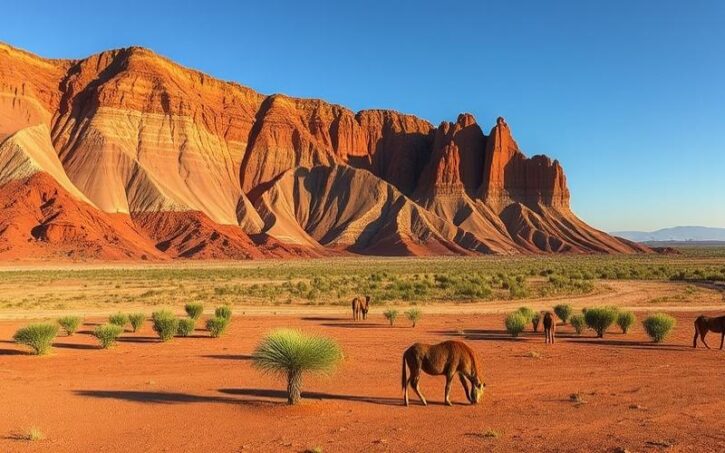
Moving to Namibia as an expatriate means choosing a quiet, politically stable country that is still relatively sparsely populated, yet with a rapidly developing capital and a highly regulated job market. From the Namib Desert to the green residential neighborhoods of Windhoek and coastal towns like Swakopmund or Walvis Bay, the country attracts lovers of wide-open spaces, families seeking security, and skilled professionals alike.
This guide covers all the essential practical aspects for a successful expatriation: administrative procedures (visas, work), choosing a city and neighborhood, finding housing, budget management (cost of living, banking), as well as health, education, and transportation. It also addresses importing personal goods and vehicles and provides information on the country’s social and security context.
Understanding Namibia Before You Go
Namibia is located in southwestern Africa, bordered by the Atlantic Ocean to the west and by Angola, Zambia, Botswana, and South Africa inland. The country is vast but sparsely populated: only about 2.3 to 2.5 million inhabitants for a territory that ranks among the largest in the world.
Windhoek, Namibia’s capital, is the center of the country’s political, economic, and cultural life. With an estimated population between 330,000 and 430,000, it is a major metropolis on a national scale but remains a modest city globally. It serves as the main entry point for expatriates, as it concentrates most skilled jobs, the best private hospitals, the main international schools, a large part of the shopping malls, and key government departments.
The climate is overall hot and dry, with more than 300 sunny days per year and average temperatures in Windhoek hovering around 66 °F (19 °C) in the austral winter and 79 °F (26 °C) in summer. Rainfall is rare, concentrated over a few months and in modest amounts. The air is often very dry, which can be surprising at first. Air quality remains good on average, far from the standards of polluted major cities.
Namibia’s GDP per capita is approximately $4,415 USD, reflecting an average standard of living lower than that of Europe.
Visas, Work, and Legal Framework for Expatriates
Before discussing housing or schools, the first question is that of the right to stay and work. Namibia strongly protects its job market and closely controls economic immigration.
Entering Namibia: Visas, Exemptions, and e-Visa
Many nationals can enter Namibia without a visa for short stays for tourism or certain business trips (meetings, visits, prospecting, medical care) for up to 90 days per calendar year. This is the case, for example, for citizens of neighboring countries like South Africa, Botswana, or Zambia, as well as several states outside Africa.
For many nationalities, a visa is required and can be obtained on arrival in Namibia for tourism. It generally authorizes a stay of up to 90 days and is issued at main points of entry like the international airports of Windhoek and Walvis Bay. Fees vary depending on the traveler’s origin (approximately 1,200 NAD for African Union citizens, 1,600 NAD for others), with reduced rates for children aged 6 to 11 and free for those under 6.
Namibia has also implemented an e-visa system via an official portal. This system is particularly relevant for expatriates who wish to avoid queues upon arrival and for certain types of visas (notably for work or study) that are not automatically issued at the border. The e-visa is generally valid for three months from its issue date and allows a stay of up to three months from entry, but it must not be confused with a work permit.
In all cases, it is essential to have a passport valid for at least six months after the intended date of entry with several blank pages. Authorities also require a return or onward ticket, proof of sufficient financial means, and, if applicable, a yellow fever vaccination certificate if the traveler transits through an endemic area.
Working in Namibia: A Highly Regulated Market
Obtaining a work permit in Namibia is generally difficult and time-consuming. Authorities apply a strict “national preference” policy: the employer must demonstrate that they could not find a suitable Namibian candidate and that the position requires skills rare in the local market.
Presentation of the different categories of permissions used to manage access and rights within a system.
Define who can view or open a specific file, folder, or resource.
Control write, edit, or delete rights for data and files.
Allow launching or executing a specific program, script, or command.
Grant extended privileges to configure the system, manage users, or modify critical settings.
– short-term work visas or permits (up to 3 or 6 months) for temporary assignments, training, or technical assistance;
– longer work permits, often lasting one to three years, for formal employment with a local company;
– specific schemes for skills considered critical, for example in engineering, health, advanced agriculture, information technology, renewable energy, or certain mining sectors.
Low or medium-skilled professions are very rarely open to foreigners, given the high local unemployment. There is currently no official visa designed for “digital nomads” in the classic sense: working remotely for a foreign company while residing in Namibia remains a somewhat ambiguous situation, which should be approached cautiously and with up-to-date legal advice.
Work permit applications for Namibia can be submitted either through Namibian embassies and consulates or directly in the country to the Ministry of Home Affairs, Immigration, Safety, and Security. Official processing times are about 8 to 10 weeks for a complete application, but they can extend to several months in practice, especially for long-term permits. It is highly recommended to initiate procedures three to four months before the intended start date and not to start working before officially receiving the permit.
The documents required are numerous: passport, employment contract, diplomas and certificates of experience, police clearance certificate, medical and radiological certificate, international health insurance, company justifications (registration, motivation letters, proof of local candidate searches). All documents must be in English or accompanied by a sworn translation.
Family, Dependents, and Long-Term Residence
Spouses and children of a work permit holder can apply for dependent visas allowing them to reside legally in the country but are not automatically authorized to work. Paid employment requires a specific permit.
After several years of continuous residence, some categories of expatriates may consider applying for permanent residence. However, there is no automatic pathway: each application is examined on a case-by-case basis, depending on length of stay, skills, resources, and economic contribution.
Where to Live in Namibia: Overview of Cities and Neighborhoods
Even though Namibia is best known for its deserts, parks, and landscapes, the daily life of expatriates is mainly concentrated in a few cities.
Windhoek: Capital, Economic Hub, and Expatriate Center
Windhoek is almost a mandatory stop. The city remains modest in size internationally but offers an interesting combination of modernity, relative safety, and surrounding mountain landscapes. It is generally considered “quiet, spacious, and not overcrowded.” Traffic is quite fluid – commute times for expatriates are mostly between 5 and 20 minutes, with a slight peak around noon.
The capital consists of very contrasting neighborhoods, some favored by expatriates, others much more modest.
Several residential neighborhoods stand out for medium or long-term stays:
| Neighborhood | General Profile | Main Assets for Expatriates |
|---|---|---|
| Klein Windhoek | Affluent, very green suburb, frequented by expatriates | Safety, quiet, proximity to downtown, shops, restaurants |
| Ludwigsdorf | Luxury neighborhood, adjacent to Klein Windhoek | Large properties, gardens, high-end schools, privacy |
| Eros | Mixed residential/commercial area | Proximity to private clinics (Medi-Clinic, Eros Clinic), schools, views |
| Avis | Peaceful suburb near the Avis Dam reserve | Natural setting, hiking, ideal for families and retirees |
| Olympia | Southwestern area, middle and upper classes | Houses with gardens, stadiums, schools, shopping malls |
| Suiderhof | More affordable neighborhood in the south | Good cost/safety compromise, access to main roads and industrial area |
| Pioneers Park | West of the city, dynamic | More affordable rent, proximity to University of Namibia, cafes |
| Hochland Park | Family residential, mountain views | Large plots, good reputation for investment |
| Luxury Hill | Hill overlooking downtown | Luxury villas, panoramic views, high privacy |
| Windhoek North | Quiet residential area | Tight-knit community, easy access to downtown |
| Windhoek West | Emerging, mixed sector | Proximity to university, “authentic” urban vibe |
| Klein Kuppe | Affluent area with The Grove Mall | Ideal for long stays, access to mall and clinic |
The central districts (CBD, downtown) group offices, shops, cultural institutions (National Museum, National Theatre, Christ Church, Parliament Gardens) and varied accommodation options. The atmosphere is more lively and a bit noisier, with more petty opportunistic theft.
Other areas are more utilitarian: the Southern Industrial Area mainly attracts business travelers, while the surroundings of the Eros domestic airport primarily host travelers in transit.
Coastal Cities: Swakopmund and Walvis Bay
On the Atlantic coast, two cities often come up in expatriation plans.
Swakopmund, known for its German-inspired architecture, offers a cooler and more humid climate than the interior, with a seaside atmosphere. Expatriates appreciate neighborhoods like Vineta, with good schools and numerous recreational spaces, the downtown surroundings for dining and restaurants, or new urban extensions (Extension 15) offering investment potential and vacation rentals.
Discover the most sought-after residential neighborhoods in Walvis Bay, each offering a unique living environment, from family-friendly quiet to waterfront luxury.
A quiet and secure neighborhood, particularly suitable for families.
Offers a lifestyle directly on the oceanfront.
A highly sought-after waterfront neighborhood with strong demand for high-end properties.
Inland Towns and Small Localities
Outside the capital and coast, some expatriates choose medium-sized or small towns for a more rural lifestyle, provided they can work remotely or in specific local sectors (agriculture, conservation, tourism).
Omaruru, for example, attracts those seeking a small-town atmosphere, with some modern amenities but a slower pace of life. Other names appear in cost of living comparisons, like Rundu, Katima Mulilo, Ondangwa, Otjiwarongo, Otavi, or Mariental; property prices there are generally lower than in Windhoek, but medical, educational, and commercial infrastructure are more limited.
Housing: Rents, Purchase, and Market Realities
The Namibian real estate market, particularly in Windhoek, is described as a landlord’s market, where demand exceeds the supply of quality housing.
Finding Housing: What Do Expatriates Look For?
Most expatriates with a comfortable budget opt for three- or four-bedroom single-family homes, often with a pool, large terrace, braai (barbecue) area, and a garden that is more mineral (stones, drought-resistant plants) than grassy. Security systems are generally advanced: alarms, electric fences, high walls, window bars, sometimes security patrols.
There are also modern apartments, notably in secure complexes, as well as serviced or “corporate serviced apartments” for stays of a few months. For singles or young workers, house-sharing is common to reduce costs.
Rental contracts are generally signed for a duration of one year. A security deposit of one to two months’ rent is required. It is highly recommended to visit the property in person before committing, as standards can vary considerably.
Price Ranges: Rents and Purchase
Market data for Windhoek gives a fairly clear range:
| Type of Housing (Windhoek) | Average Monthly Rent (NAD) | Observed Range (NAD) |
|---|---|---|
| Studio / 1 Bedroom – downtown | ~9,300 | 7,800 – 15,000 |
| Studio / 1 Bedroom – outside downtown | ~6,900 | 4,500 – 11,000 |
| 3 Bedrooms – downtown | ~21,750 | 12,000 – 35,000 |
| 3 Bedrooms – outside downtown | ~16,500 | 9,000 – 25,000 |
For an expatriate, rents typically range between 15,000 and 45,000 NAD per month, depending on size, neighborhood, and level of luxury. Rent for a family home in a “safe” area frequently exceeds 12,000 NAD.
On the purchase market, the average price per square meter in Windhoek is around 20,000 NAD/m² downtown and 16,000 NAD/m² in the suburbs. Converted to dollars, this gives a median price of around $75,000 USD for a standard house in the capital, knowing that high-end properties sell for significantly more. Prices in small towns and rural areas remain substantially lower.
Furnished Rentals, Hotels, Airbnb: Temporary Solutions
For a gradual setup – for example, while looking for a school and house – it is common to spend a few weeks in a furnished rental or hotel.
Average figures in Windhoek are:
– Hotel: about $70 USD per night, or about $1,500 USD per month for an extended stay;
– Airbnb: median around $54 USD per night, or about $1,600 USD per month depending on listings.
Furnished apartments for long stays are few and often expensive (some cost around 9,000 NAD for small spaces). Many expatriates opt for Airbnb or serviced apartment residences for assignments of a few months.
Practical Tips to Avoid Pitfalls
In a tight market, rental scams are developing, especially in high-demand areas like Windhoek, Swakopmund, or Walvis Bay. To limit risks, it is prudent to:
– use recognized and registered real estate agencies;
– systematically verify the identity and property rights of the landlord;
– refuse to pay a significant deposit without viewing the property or without a written contract;
– be wary of offers that seem “too good to be true” or come with an artificial sense of urgency;
– keep all proof of payments and deposits.
At the end of a lease, disputes over the return of the deposit are not uncommon. The landlord must provide a detailed breakdown of any deductions (damages beyond normal wear and tear, unpaid rent). In case of disagreement, the dispute can be brought before the Rental Housing Tribunal.
Cost of Living: What Does Windhoek Really Cost?
According to cost of living comparators, Windhoek appears as the most expensive city in Namibia, while still being slightly cheaper than the global average. At the same time, salaries are often insufficient to cover an “expatriate” standard of living without foreign income or an international company salary.
Typical Monthly Budget
Aggregated figures for Windhoek give the following order of magnitude (average amounts, including rent):
| Household Profile | Average Monthly Cost (USD) |
|---|---|
| Single person | ~1,249 |
| Couple (2 adults) | ~1,770 |
| Family of 4 (2 adults + 2 children) | ~2,505 |
These amounts include rent. If we subtract the housing portion, we get, for example, about $829 USD in monthly expenses excluding rent for a single person, and about $1,959 USD excluding rent for a family of 4, in a standard comfort configuration.
The possible lifestyle scale is quite wide. For a “very frugal” lifestyle, a single person can manage with about $600 USD per month (rent included) and a family with just over $1,100 USD, at the cost of compromises on neighborhood, housing size, and some leisure activities. At the other extreme, a comfortable to luxurious lifestyle can easily reach $2,400 USD per month for a single person and nearly $5,000 USD for a family of 4.
This is the median monthly net salary in Windhoek, in US dollars, which barely covers an expatriate budget without a frugal lifestyle.
Food and Restaurants
Many products being imported, food is not always cheap, but local meat is abundant and of good quality, which helps contain costs for this item.
In Windhoek, a simple meal at an inexpensive restaurant costs around 190 NAD. A full dinner for two at a mid-range restaurant is around 700 NAD. A typical fast-food meal costs around 90 NAD. A local draft beer (pint) generally costs 25 to 35 NAD in a bar or cafe, a cappuccino around thirty NAD.
In terms of groceries, in Windhoek, you’ll find prices like:
– 1 liter of milk around 15 NAD;
– 1 kg of fresh chicken around 60 NAD (less for frozen);
– 1 kg of beef between 60 and 100 NAD depending on the cut;
– 1 kg of apples for less than 20 NAD;
– a bottle of mid-range wine around 100 to 110 NAD.
Compared to the rest of the country, restaurant prices in Windhoek are higher (by about 20 to 25%), while the difference for groceries remains limited.
Transportation, Fuel, and Travel
Fuel in Namibia is around 82 NAD per gallon (i.e., a little over one US dollar per liter based on conversions), with temporal variations obviously. A taxi ride of a few kilometers in Windhoek costs about 10–20 NAD in a shared taxi (the most common mode) and around $8 USD for an 8 km trip in a private taxi.
A local transport ticket costs about 13 NAD, but public transport offerings are very limited on a national scale, consisting mainly of shared minibuses and some intercity buses. The private car therefore remains the dominant mode of transport, involving significant costs: insurance, maintenance, fuel, and depreciation of a vehicle that is generally expensive to purchase due to imports.
Housing, Electricity, Internet
Utilities (electricity, water, waste) for a standard apartment cost around 2,000 to 2,400 NAD per month, with higher bills for houses with pools or air conditioning. Water is expensive and scarce: it is often wise to negotiate its inclusion in the rent to avoid unpleasant surprises.
An unlimited domestic internet connection of about 50 to 60 Mbps is billed around 900 to 950 NAD per month in the capital. However, network quality remains very variable; many expatriates describe the internet as “very slow” and “unreliable.” Quality coworking spaces, like those managed by Regus, charge around $240 USD per month for a nomadic desk.
Safety, Living Conditions, and Social Realities
Namibia enjoys a reputation as a relatively safe country in Southern Africa, especially compared to neighboring South Africa. Nevertheless, it is not a country free from crime, far from it.
Crime and Precautions to Take
Street crime is essentially opportunistic: pickpocketing, bag snatching, break-ins of vehicles or homes, credit card fraud. Violent assaults remain statistically rare but do occur. Downtown Windhoek and some popular areas can be more sensitive, especially at night.
Almost all expatriates in the city live in houses or secure complexes, with anti-intrusion systems and fences. Burglaries are frequent enough to justify this level of equipment.
For getting around, it is recommended:
For your safety, it is advisable to avoid walking alone at night in less frequented areas, not to display valuables (smartphones, jewelry…), and to use only registered taxis (with an official number) or recognized companies like Dial-a-cab, especially in the evening. Never hail an unknown taxi on the street, as this practice has led to thefts and assaults.
In case of emergency, the police number is 1011, and the ambulance can be contacted at 211111 according to sources.
Driving and Road Hazards
Namibia’s main roads are generally well maintained, but as soon as you venture onto secondary routes or dirt tracks, risks increase very quickly. Serious accidents are frequent, especially on gravel roads where speed is often excessive for the actual grip.
Several factors increase risks:
– left-hand driving, which requires an adjustment period;
– animals (livestock, wildlife) on the road, especially at night;
– slippery tracks near the coast in case of maritime fog;
– drunk driving still too common;
– fatigue on long distances in near-desert areas.
Authorities and embassies strongly advise against driving at night outside urban areas. For long trips in isolated regions, it is recommended to carry spare tires, at least 5 liters of water per passenger, to inform someone of your itinerary, and ideally to have a satellite phone.
Society, Diversity, and Sensitive Issues
The country is officially open and democratic, but the social reality is mixed. Freedom of expression is generally respected, the attitude towards foreigners is friendly, and English, even rudimentary, is fairly widespread, which facilitates basic integration.
However, some groups remain vulnerable. The social climate towards LGBTQ+ persons is described as hostile. Alcohol consumption is very high and weighs on certain social dynamics, including during the week. So-called “soft” drugs, like cannabis, are illegal.
The cultural and nightlife of Windhoek exists, with bars, some clubs, and restaurants, but remains limited. Many expatriates feel “there isn’t much to do,” apart from nature outings (hiking, safaris, day trips) and cafes. The weekend atmosphere can sometimes seem strange or a bit heavy for those coming from lively major capitals.
Health, Medical System, and Insurance
For an expatriate, the question of health is central, especially as Namibia faces several public health challenges (HIV, tuberculosis, malaria, road accidents, occasional cholera outbreaks in the north).
Public vs. Private: Two Worlds
The Namibian health system is dual: a large public sector and a more restricted but better-equipped private sector. The Ministry of Health and Social Services manages a network of primary care facilities, district hospitals, intermediate hospital centers, and a referral hospital.
Approximately 84–85% of the population depends on the public system, which officially remains accessible to all, including foreigners. However, the reality is:
– insufficient staffing;
– long waiting times;
– a sometimes restricted range of services (e.g., for dialysis, transplants, certain complex surgeries);
– strong disparities between cities and rural areas.
The private sector, mainly located in Windhoek and major cities, offers medical standards comparable to those of Europe or South Africa, with well-trained doctors and modern equipment. However, care is expensive, and facilities generally require upfront payment or insurance guarantee before proceeding with any significant treatment.
Among the major private institutions, we can mention:
– Mediclinic Windhoek, in the capital;
– Lady Pohamba Private Hospital, also in Windhoek;
– Welwitschia Hospital in Walvis Bay, which houses, for example, the country’s first pulmonology center.
In Windhoek, there are several public and private hospitals in total, as well as a large number of clinics and pharmacies. About 80% of the country’s medical personnel practice in the capital, accentuating the difference in care quality with the rest of the territory.
Diseases, Risks, and Prevention
Namibia must contend with three major health scourges: HIV/AIDS, tuberculosis, and malaria. The adult HIV prevalence rate remains high (around 12–15% depending on age groups) but is lower than that of some neighbors. The north of the country is the area most affected by malaria, while Windhoek and the south have little or no exposure to this disease.
Before departure, it is recommended to consult a travel medicine service. Frequently suggested vaccinations are for hepatitis A and B, typhoid, rabies (especially for stays in rural areas), universal boosters (polio, MMR, etc.), and sometimes cholera for at-risk areas. Malaria chemoprophylaxis is generally advised for stays north of Windhoek during the rainy season.
Tap water is treated in cities, but contamination episodes (E. coli and other bacteria) have led many expatriates to prefer bottled or boiled water, depending on the city and neighborhood. A specialized site on water quality by city can help adjust habits.
Health Insurance: A Must
For an expatriate, international health insurance is not a luxury, but a necessity. In practice, many local companies and private clinics require cash payment, leaving it to the patient to seek reimbursement from their insurer. Having a contract with direct billing in certain Namibian or South African hospitals is a real plus.
Minimum needs for a medium or long-term stay include:
– coverage for consultations and hospitalizations in private facilities;
– medical evacuation (to South Africa notably, for certain treatments);
– emergency care, including surgery;
– possibly maternity and perinatal care if the family expands while there;
– coverage for chronic diseases if necessary.
Several major international insurers offer contracts dedicated to expatriates, with high coverage limits, a partner network, and a 24/7 emergency hotline. Some local insurers like Nammed or “medical aid” funds may suit residents already well-established in the country, but for an initial setup, international contracts generally offer more flexibility.
Schools and Education: Options for Families?
Namibia allocates a very significant portion of its budget to education, and the country boasts a high literacy rate for the region. Public education is free at primary and secondary levels, but the offerings remain very unequal, with high student-to-teacher ratios and still insufficient results in many schools.
National School System
School is compulsory for ten years, roughly between ages 6 and 16 (until the end of grade 10). The system is structured as follows:
– pre-primary (ages 3–5), non-compulsory but expanding;
– primary (grades 1 to 7), compulsory, with the use of a local or dominant language in the region at the beginning, then switching to English as the language of instruction from grade 4;
– junior secondary (grades 8 to 10), concluded by a junior secondary certificate;
– senior secondary (grades 11 and 12), optional, with national exams of the NSSCO (ordinary level) then NSSCAS (advanced subsidiary level) type for university access.
The quality of public schools varies greatly by region. For expatriates, especially those from highly structured educational systems, the limitations of the public system (such as overcrowded classrooms, shortage of well-trained teachers, and learning difficulties in English for non-English speaking students) make the option of private and international schools the most frequent choice, at least for secondary education.
International and Private Schools in Windhoek and on the Coast
Windhoek concentrates the majority of international schools and well-resourced private institutions. You can find:
Overview of the main private and international educational institutions in the Namibian capital, offering varied study programs and distinct pedagogies.
The only IB school in the country, offering the Primary Years Programme (PYP), IGCSE, and the IB Diploma. International pedagogy with a very diverse teaching staff.
A private German school, bilingual (German/English), welcoming students from kindergarten to upper secondary.
An English-medium Christian school following mainly the Namibian curriculum.
Another private Christian school of English-speaking tradition.
Windhoek Gymnasium Private School, The Windhoek Waldorf School, and other institutions combining national curricula and foreign pedagogical influences.
In Swakopmund and Walvis Bay, there are also smaller private and international schools, like the International School of Walvis Bay or various ” Privatschulen” of German-speaking tradition.
Tuition fees at these schools are high on a Namibian scale but often lower than those of major Western metropolises. As an indication, an international school in Windhoek often charges between about 65,000 and over 200,000 NAD per year depending on the level (preschool vs. high school). Local private schools, without an IB label, have lower fees but are far from free.
Places can be limited, especially at key levels (Grade 1, Grade 7, high school), and some institutions require entrance tests and a good level of English to accept foreign students. It is advisable to contact schools several months in advance, send translated report cards in English, and anticipate the study permit application for foreign children if applicable.
Transportation: Getting Around Town and Traveling the Country
In Namibia, the car is king. Structured public transportation is almost non-existent on a national scale.
The capital is quite compact and suitable for walking in central areas during the day. Nevertheless, many expatriates use cars for almost everything, if only for safety reasons (walking after dark is not recommended in many areas).
The local taxi system is mainly based on shared vehicles (“cabs”) with fixed fares for usual routes (about 10 to 20 NAD per trip). These small shared taxis follow informal routes and take several passengers, similar to minibuses. For more direct trips or when traveling in the evening, it is recommended and safer to use officially registered taxi companies, recognizable by their identified fleet and a reservation phone number.
Between Cities: Car, Combis, Bus, or Plane
To get to different regions of the country, several options exist:
An overview of the different options for getting around the country, from the most flexible to the fastest.
The most flexible means, provided you can drive on the left and on dirt roads.
Connect main cities at attractive fares (about 16 NAD per 100 km). Variable safety and comfort levels.
Companies like Intercape Mainliner or Town Hoppers. Intercity connections safer than many minibuses, but limited schedules.
Serves major cities, but at a very slow pace with many stops.
Departing from Eros Airport (Windhoek). Connect to northern cities and the Caprivi Strip. Expensive but considerable time saving.
For expatriates who need to travel frequently to the north or the Angolan border, the plane is attractive but costly. Most favor the car, sometimes in informal carpooling or combined with private shuttles.
Banks, Money, and Practical Taxation
The Namibian banking sector is modern and well regulated, with commercial banks comparable to those in South Africa.
Opening an Account: Conditions for Foreigners
An expatriate can open a local bank account, but most banks require seeing a valid work or residence permit. A simple tourist visa is rarely sufficient for a fully operational account. The documents generally required are:
– valid passport;
– work/residence permit or, sometimes, a letter from a local employer;
– proof of address (lease, electricity bill, etc.);
– proof of source of funds (payslips, employment contract, etc.).
Opening a bank account involves a rigorous “Know Your Customer” process and compliance with anti-money laundering regulations. Once opened, the account generally offers a local debit card, access to online banking, and basic services (transfers, bill payments). Specific accounts for non-residents exist, but they may be subject to particular constraints regarding fund movements and the origin of income.
Banking Costs and International Transfers
Each transaction by card or in a branch is in principle subject to a small government levy (0.2 NAD per debit). International transfers generally go through SWIFT, with non-negligible fees and often unfavorable exchange margins.
For a money transfer abroad, it is advisable to compare bank fees with those of specialized providers. You should also inquire about exchange limits and the justifications required for large amounts, such as for the acquisition of real estate or a vehicle.
On the tax front, Namibia applies a source-based taxation principle: in simplified terms, income generated locally is taxable in Namibia, while income coming from abroad may, in some cases, escape local tax. There is no wealth tax, nor inheritance or gift duties in the classical model, but it is essential to consult a tax advisor to correctly articulate the regimes of the country of origin and Namibia.
Importing Your Goods, Car, and Pets
Many expatriates want to bring their furniture, sometimes their vehicles or pets. Namibia belongs to the Southern African Customs Union, which implies specific rules.
International Move: Personal Effects
Personal effects and household goods used for at least one year can, under certain conditions, be imported duty-free and VAT-free, provided the owner:
– has resided abroad for at least one year before the move;
– imports the goods within six months following their arrival in Namibia;
– does not sell or rent these goods during their stay.
This is the provisional total rate (20% duty + 16.5% VAT) to be paid pending regularization of the status for exemption.
Personal Vehicle: A Sensitive Subject
Importing a used car is more complex. In summary:
To import a vehicle duty-free upon return or permanent relocation, several conditions must be met: only one vehicle per family, owned and used for at least one year before import. It cannot be resold for two years. Very old vehicles (varying thresholds, e.g., 8 or 12 years) and left-hand drive vehicles (except for diplomats) are generally prohibited. Outside of exemption, taxes apply: customs duties (15% to 30+% of value), VAT (16.5%), ad valorem tax (0.2% to 9%), and sometimes a CO₂ tax.
The formalities involve an import permit, a de-registration certificate from the country of origin, proof of ownership, proof of payment, and standard customs clearance documentation. Since 2023, used cars must arrive transported on a specialized car carrier.
Pets
Pets must in principle go through an approved quarantine facility and obtain an import permit. Up-to-date vaccinations (including rabies, administered between 30 days and 6 months before arrival) and a health certificate are essential. In case of non-compliance, authorities can refuse the animal entry, impose prolonged quarantine, or, in extreme cases, order its euthanasia.
It is often simpler to transit via a regional hub with good quarantine infrastructure (Johannesburg, for example) before the final transfer to Namibia.
Working and Doing Business: Opportunities and Obstacles
Namibia is often described as a difficult business environment: administrative procedures are long, the domestic market is narrow, and competition in some sectors is strong. On the other hand, niches exist, particularly in:
Main promising economic sectors offering development and investment prospects.
Mining and related resource extraction activities.
Agricultural production and processing adapted to semi-arid environments.
Development of lodges, safaris, and exclusive nature experiences.
Investment and development in green energy sectors.
Services in engineering, health, and Information and Communication Technology (ICT).
For a foreign company that wants to hire without immediately creating a local subsidiary, there are providers known as “Employer of Record” (EOR), who handle the legal hosting of the employee, payroll, social declarations, and sometimes visa sponsorship, for a fee. This is an interesting option to test the market with one or two employees on the ground.
Integration: Expatriate Networks and Daily Life
The expatriate community in Namibia, and in Windhoek in particular, is quite small but active. The turnover is significant, with many foreigners coming for contracts of a few years with NGOs, diplomatic missions, mining companies, or international organizations.
Platforms like InterNations and online expatriate or digital nomad communities (specialized websites, social media groups) are valuable for finding housing, schools, doctors, and other services. Some travel blogs also offer practical guides on local accommodation and logistics.
Daily life remains very different from that of large European metropolises: fewer cultural events, fewer niche shops, but more time for outdoor activities, weekends in the desert or on the coast, informal gatherings at each other’s homes.
In Conclusion
Moving to Namibia as an expatriate means accepting a compromise: a spectacular natural setting, a welcoming capital that is calm, rather safe, and English-speaking, in exchange for a restricted job market, sometimes slow bureaucracy, limited leisure offerings, and very real challenges in health, education, and road safety.
This country is particularly suitable for:
This example concerns the main profiles suited for expatriation, notably: skilled professionals recruited by a local or international company; families ready to invest in private or international schools; self-employed individuals with stable remote income seeking a more serene environment than major African cities; and retirees with solid resources and good health insurance.
To succeed in this expatriation, the key is preparation: anticipate the visa and work aspect, model a realistic budget, carefully choose your neighborhood and school, get robust health insurance, and take the time to understand local realities, beyond the postcards of the desert and safaris.
With these elements in hand, Namibia can become, for several years, a unique anchor point, between modernity and desert immensity, where one learns to live at a different tempo, under an almost always blue sky.
Disclaimer: The information provided on this website is for informational purposes only and does not constitute financial, legal, or professional advice. We encourage you to consult qualified experts before making any investment, real estate, or expatriation decisions. Although we strive to maintain up-to-date and accurate information, we do not guarantee the completeness, accuracy, or timeliness of the proposed content. As investment and expatriation involve risks, we disclaim any liability for potential losses or damages arising from the use of this site. Your use of this site confirms your acceptance of these terms and your understanding of the associated risks.

Cyril Jarnias is an independent expert in international wealth management with over 20 years of experience. As an expatriate himself, he is dedicated to helping individuals and business leaders build, protect, and pass on their wealth with complete peace of mind.
On his website, cyriljarnias.com, he shares his expertise on international real estate, offshore company formation, and expatriation.
Thanks to his expertise, he offers sound advice to optimize his clients' wealth management. Cyril Jarnias is also recognized for his appearances in many prestigious media outlets such as BFM Business, les Français de l’étranger, Le Figaro, Les Echos, and Mieux vivre votre argent, where he shares his knowledge and know-how in wealth management.





