
 Published on and written by Cyril Jarnias
Moving to the Solomon Islands is about more than just securing a roof with a lagoon view. In this remote Pacific archipelago, finding suitable housing means navigating a tiny rental market, fragile infrastructure, land tenure systems governed by custom, and a sometimes harsh natural environment. For an expatriate, volunteer, researcher, or digital nomad, a successful stay depends as much on choosing the right neighborhood and type of accommodation as it does on administrative preparation, budget, and security considerations.
This article provides key benchmarks, figures, and practical advice for finding, visiting, negotiating, and living in accommodation in the Solomon Islands, whether in Honiara or on a more remote island.
Understanding the Country Before Starting Your Housing Search
Even before scanning listings, it’s essential to grasp the context in which you’ll be living. The Solomon Islands form a Melanesian state in Oceania, consisting of six main islands and over 900 smaller islands, with a land area of approximately 28,400 km². The capital, Honiara, is located on Guadalcanal Island, known for the battle of the same name during World War II.
The population of the Solomon Islands is between 700,000 and 800,000 people, with nearly 80% living in hard-to-reach rural villages.
The climate is hot and humid year-round, with average temperatures around 26–28 °C (79–82 °F), a distinct rainy and cyclone season, and active seismic activity, as the archipelago lies on the Pacific Ring of Fire. Add to this some natural hazards unfamiliar to newcomers, such as saltwater crocodiles or certain sharks, particularly near coasts and mangroves.
This combination of isolation, tropical climate, natural hazards, and strong customary influence directly impacts the housing market: difficult access to construction materials, unreliable power and internet grids, land primarily held under customary tenure, and marked inequalities between the capital and the provinces.
Honiara, the Epicenter of the Rental Market for Expatriates
For most foreigners, the housing search starts – and often ends – in Honiara. The capital, with approximately 65,000 inhabitants, concentrates almost all formal job opportunities, administrative services, major companies, banks, referral hospitals, and private schools. It’s also where you’ll find the majority of modern housing, hotels with workspaces, and coworking spaces.
The area concentrates major infrastructure like Henderson International Airport, the main port, the National Museum, and the large Central Market, essential for fresh produce supply. However, this centrality comes with pronounced urban issues: youth unemployment, high inequality, precarious housing on the outskirts, and sporadic insecurity.
Certain neighborhoods or areas are regularly advised against at night, due to theft, assaults, or tensions: White River, Burns Creek, Sun Valley, areas around certain bridges (Lungga, Mataniko), squatter settlements, the vicinity of the Central Market, Point Cruz, Chinatown, Kukum, Borderline, or the Japanese Memorial at Mt Austin. For an expatriate, these realities require considering a home’s location not just in terms of distance to the office or school, but also safety, neighborhood reputation, and ease of access during the day as well as after dark.
Living in the Provinces: Total Immersion, Limited Services
Outside Honiara, other centers can attract foreigners, especially those working in the humanitarian sector, research, adventure tourism, or religious missions. Among them, Gizo (Western Province), Munda (New Georgia Island), Auki (capital of Malaita), or Tulagi (former capital) are often mentioned.
These small regional towns have some services: a referral hospital or health center, a few banks or ATMs, provincial administrations, and small shops. They offer a more relaxed atmosphere, often spectacular natural surroundings – lagoons, forests, diving sites – and a very dense community life.
But settling there long-term means accepting:
In island territories like the Solomon Islands, anticipate internet connections that are often limited or unstable (even though some lodges or offices may offer solutions like Starlink). Access to specialized services (healthcare, international schooling, banking) can be restricted. Furthermore, supplies depend heavily on cargo ships, ferries, or small planes and are therefore sensitive to weather disruptions.
The most famous islands and lagoons, like Marovo Lagoon, Rennell, or Tetepare, are even farther from essential services. They are perfect for a stay of a few weeks or months for a specific project but are rarely suitable for long-term family relocation unless accommodation is directly arranged by an employer or a managed project.
What Types of Housing Are Found in the Solomon Islands?
The housing stock accessible to foreigners is limited but diverse, with strong differences between Honiara and the provinces. Overall, we can distinguish several main categories.
In the capital, the offerings for expatriates include: access to international schools, leisure clubs, and support services to facilitate integration.
– Furnished studios and apartments, often with air conditioning, a small equipped kitchen, internet, and cleaning service;
– Individual houses or villas, in town or on the outskirts (e.g., in Lungga, Tasahe Ridge, Point Cruz), sometimes with a garden, parking, and sea view;
– Coliving spaces, where several tenants share a kitchen, living room, sometimes an office and terrace, with a private bedroom;
– Hotels and aparthotels with services (reception, cleaning, dining, sometimes a pool and gym).
In the most sought-after residences, you often find: green spaces, modern facilities, enhanced security, and proximity to amenities.
Discover the essential amenities and services offered to ensure your comfort and safety during your stay.
Air conditioning in bedrooms, sometimes in all rooms for a pleasant environment.
Equipped with a refrigerator, stove, microwave, and basic cookware.
Internet connection (local Wi-Fi or via Starlink) and sometimes a dedicated workspace.
Access to a pool, gardens, a barbecue, and terraces for relaxation.
Secure parking with 24/7 guard service available.
Backup generator and water tanks to mitigate outages and secure supply.
Rentals are typically monthly, quarterly, or yearly, with some flexibility depending on landlords and agencies. Platforms like Airbnb, Booking, or Flatio, as well as local agencies, allow you to find these properties and book without necessarily paying a hefty security deposit upfront.
Among the concrete examples documented, we can cite independent studios in Honiara with free airport transfer, filtered water, Wi-Fi, kitchenette, private bathroom, and shared laundry, or Bilikiki Hideaway, a studio 3 km from the center, in a fenced garden with permanent security, king-size bed, AC, Starlink, and TV with streaming.
In the Provinces: Family Guesthouses, Ecolodges, Simple Bungalows
On islands like Gizo, Munda, Auki, or Peava, the offerings consist mainly of:
– Family-run guesthouses managed by locals;
– Ecolodges, often dedicated to diving or ecotourism;
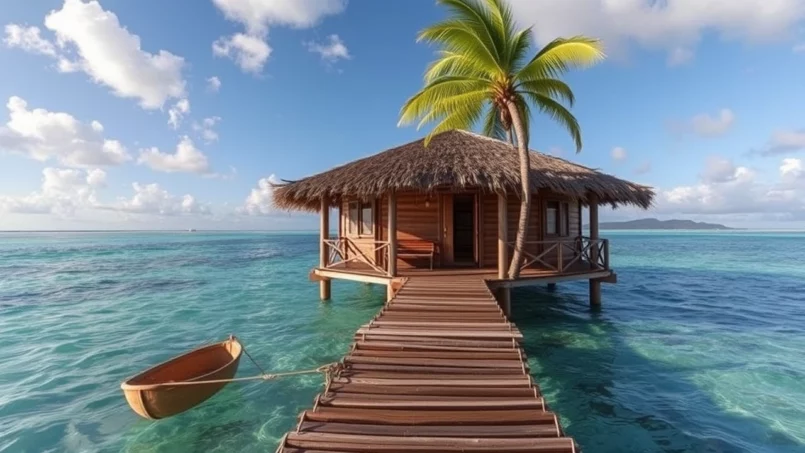
– Small resorts with overwater bungalows;
– Simple houses for rent;
– Housing provided by the employer (NGO, religious mission, research project).
Accommodation ranges from rustic stilt bungalows with shared facilities and solar lighting to comfortable villas with multiple bedrooms, a kitchen, and direct lagoon access. In villages, comfort is very basic, often without running water or continuous electricity. Some accommodations may offer Wi-Fi.
Accommodations like Water Bungalow Pepele Lodge in Marovo Lagoon illustrate this model: small family-run operation, nature activities (kayaking, snorkeling, bush walks), immersion in island life… but limited amenities and dependence on local resources.
Renting in a Village: Cultural Immersion and Logistical Constraints
Some foreigners opt for an extended stay in a village community. This can take the form of a room with a host family, a simple bungalow, or a small house. The main appeal is immersion in *kastom* and local daily life, with strong ties built with families and chiefs.
Conversely, this type of housing assumes:
– Accepting the absence of privacy as understood in the West;
– Respecting strict dress and behavioral codes (modesty, no conspicuous alcohol, no public displays of affection);
– Getting used to a community and religious rhythm of life (sacred Sunday, village meetings, customary ceremonies);
– Coping with very rudimentary infrastructure (rainwater, latrines, no reliable mobile network).
How Much Does Housing Cost in the Solomon Islands?
The rental market is characterized by high rents relative to local income levels and a wide price range depending on standard and location. Available figures, expressed in Solomon Islands dollars (SBD), provide some benchmarks.
Orders of Magnitude for Monthly Rents
Field data and cost-of-living databases indicate the following ranges:
| Type of Housing | Location | Monthly Rent (SBD) | Observations |
|---|---|---|---|
| Studio / 1 bedroom | City Center | 3,500 – 6,000 | Average around 4,300 SBD |
| 1 bedroom | Outside Center | 3,000 – 10,000 | High variation depending on security and comfort |
| Apartment / 3-bedroom house | City Center | 5,000 – 40,000 | Includes very high-end properties |
| Apartment / 3-bedroom house | Outside Center | 4,000 – 25,000 | Villas, staff quarters, residential neighborhoods |
| “Luxury” secure apartment | Honiara (compound) | Up to ~1,700 USD | 24/7 security, generator, sea view, etc. |
To put these amounts in local context, the average net salary is around 2,987.50 SBD per month, meaning rents targeted by expatriates are often out of reach for the majority of residents.
At the same time, basic expenses excluding rent remain high, with a common estimate of 1,400 to 2,000 USD per month for a single person, and up to 2,800–3,700 USD for a family of four wanting a “Western” level of comfort.
Housing Cost Within the Overall Budget
For an expatriate, housing is one of the heaviest expenses, but you must also factor in utilities (electricity, water, waste, internet), which can rise quickly due to generators, power cuts, and expensive internet subscriptions.
Average monthly cost in SBD of basic service bills (electricity, water, garbage) for an 85 m² apartment in the Solomon Islands.
A summary table helps visualize these costs:
| Expense Item | Monthly Range (SBD) | Comment |
|---|---|---|
| Rent studio/1 bed. Honiara center | 3,500 – 6,000 | Standard expat |
| Rent 3 bed. Honiara center | 5,000 – 40,000 | Very variable depending on standard |
| Utilities electricity/water/waste (85 m²) | 1,000 – 6,000 | Average ~4,333 SBD |
| High-speed internet (60 Mbps theoretical) | 450 – 1,000 | Average ~817 SBD, higher in Honiara |
| Mobile plan (10 GB+) | 100 – 400 | Approx. 120 SBD in Honiara |
In summary, for a single expatriate living in a decent studio in Honiara, a monthly budget for rent + utilities + internet can easily reach the equivalent of 800 to 1,200 USD, even before counting food, transportation, and leisure.
Buying Property in the Solomon Islands: A (Nearly) Impossible Mission for an Expatriate
Financial data on real estate purchases in the Solomon Islands are even more perplexing than rental data. Market indicators point to exorbitant prices per square meter and almost non-existent budget accessibility for an average household.
As an indication, compiled figures indicate:
| Indicator | Estimated Value |
|---|---|
| Price/m² apartment city center | ~700,000 SBD |
| Price/m² apartment outside center | ~500,000 SBD |
| Price to Income Ratio | 1,004.18 |
| Average mortgage interest rate (20 years) | 16.33% per year (10–20%) |
| Gross rental yield city center | 0.15% |
| Gross rental yield outside center | 0.18% |
| Loan Affordability Index | 0.01 |
The message is clear: the property market is extremely inaccessible relative to local incomes, with very high interest rates and negligible gross rental yields. Add to this the fact that about 95% of land is under customary tenure, held by clans or lineages, and that long-term commercial leases (up to 75 years) are complex to obtain and subject to recurring land disputes, and you have a context where direct purchase by a foreign individual is more the exception than the rule.
For a typical expatriate, the most realistic option is to rent accommodation, possibly through a long-term lease in a secure compound, rather than seeking to become a property owner.
Where to Look for Your Future Housing?
In a country where supply is limited and the informal sector significant, the search phase must combine several channels.
International platforms like Airbnb, Booking, or Flatio are mainly used to organize the first few weeks: a furnished studio, aparthotel, or guesthouse serving as a base while you understand the city, scout neighborhoods, and meet local contacts. They have the advantage of offering already-rated properties, limiting initial paperwork, and avoiding paying large security deposits upfront.
For a medium or long-term stay in Honiara, especially for a villa or upscale apartment, it is advisable to go through local real estate agencies or managers of secure residences. Furthermore, employers (like NGOs, companies, or institutions) often have reliable contacts and reserved staff housing; using this network is wiser than searching alone.
Finally, in the provinces, guesthouses, ecolodges, and community networks act as the “real estate market.” A simple online search will highlight places like La lagune Haus or Kajoro Sunset Lodge, but many village accommodations are only listed through word-of-mouth, local organizations, or specialized tourism providers.
Settling In Step by Step: Strategy for the First Months
Given the country’s isolation, health risks, and administrative constraints, the settlement period must be planned carefully.
First, Ensure Your Legal Status and Insurance
For a short stay, many nationals (Schengen, EU, US, Australia, New Zealand, UK, Canada, Japan, and several Pacific states) benefit from a visitor’s permit issued on arrival in Honiara, usually for 30 days, extendable up to 90 days within 12 months. Some countries are directly entitled to 90 days visa-free. You must then present a passport valid for at least six more months, a return or onward ticket, and proof of sufficient funds.
The visitor’s permit does not allow working, engaging in local trade, or conducting paid religious missions. For a stay of more than three months involving professional activity, investment, studies, or formalized volunteer work, it is necessary to apply in advance for a long-stay visa. To work, a work permit sponsored by a local employer is required. Processing times are 4 to 8 weeks for the work permit, plus an additional 2 to 4 weeks for the entry visa once the permit is approved.
Authorities may require a medical examination, including an HIV test for stays exceeding 90 days. Refusal can lead to an entry ban or deportation. It is therefore not advisable to improvise your status once on the ground.
Regarding health, hospital services are limited and uneven. The National Referral Hospital in Honiara suffers from under-equipment, provincial facilities are rudimentary, and medical evacuations to Australia are expensive. Taking out international insurance including medical evacuation is not an option but a condition of basic prudence for anyone coming to settle.
Start with Temporary Accommodation
Given the scarcity of quality properties and the need to judge a neighborhood firsthand (noise, safety, neighbors, night activity), it makes sense to arrive with a temporary booking for a month or two in a furnished studio, guesthouse, or aparthotel. This allows:
Before signing a lease, it is crucial to physically visit the accommodation. Then test commute times to your work, school, or daily services. Also, check practical aspects like internet connection quality, electricity stability, and water quality. Finally, seek advice from colleagues, neighbors, or other expatriates to identify the areas best suited to your needs.
Studios like those at Tasahe Ridge (Ridgeback Oceanview) illustrate this pivot accommodation function: fenced complex, ocean view, 24/7 security, generator, relative proximity to the business district and airport. In parallel, a simpler studio in town but well-connected may suit a tighter budget while allowing exploration of the surroundings.
Assess the Real Value of a Property
In an environment where power outages, water shortages, and erratic connections are the norm, a property’s value is not just the listed rent or square footage. Before deciding, it’s useful to audit what one might call the real “use value” of the property.
This means checking:
– The presence of a generator and its proper functioning;
– The existence of water tanks, the quality of filtered water or the availability of bottled water;
– Internet stability, ideally by requesting a live video call from the property to test speed and latency, and checking Wi-Fi coverage in all rooms;
– Access security: fence, exterior lighting, doors and windows with locks or grills, presence of guards;
– Exposure to natural hazards: proximity to a flood-prone river, a coastal area vulnerable to tsunamis, or areas known for the presence of unexploded ordnance.
It is recommended to visit the property at different times of the day, even in the evening, to gauge the noise level, traffic, street activity, lighting, and neighborhood habits.
Negotiating Your Lease: Room for Maneuver and Leverage in Honiara
Even though the market remains tight, some general negotiation principles apply in the Solomon Islands, especially when dealing directly with an owner or a small agency.
Committing to a longer lease term than the norm (e.g., two years instead of one) can justify a rent reduction. Similarly, offering to pay several months in advance, or even a full year, is a strong bargaining chip. This practice can lead to a price reduction of 5 to 20%, provided the contract is secured and your counterpart’s identity is verified.
Agreeing to take care of certain minor maintenance tasks (gardening, minor non-structural repairs) in exchange for a moderate rent is sometimes discussed, particularly for houses with land. The main thing is to record these agreements precisely in the lease to avoid any ambiguity.
Finally, presenting a stable and reassuring tenant profile – employment contract, valid residence visa, references from previous landlords, insurance – strengthens credibility and negotiating power, especially in a context where expatriate turnover can be high.
Security: Choosing a Home Without Closing Your Eyes
Statistics and feedback converge: the Solomon Islands are often described as “rather safe” on a regional scale, but Honiara shows a perceived high level of crime, with a crime index exceeding 60 and a particularly strong sense of insecurity at night.
The risks include snatch theft, pickpocketing, home and vehicle burglaries, physical or sexual assaults, and harassment, especially towards women. Police forces have limited resources and may take time to intervene. Crime tends to increase around Christmas or during periods of political tension (elections, parliamentary debates, crises).
Preferring a compound with a fence, guards, exterior lighting, and strict access procedures is a key protection strategy for expatriates.
– Always lock doors and windows, even during the day;
– Avoid displaying valuable items (computers, cameras, jewelry) near openings;
– Organize nighttime travel by vehicle or in groups, avoiding certain sensitive areas;
– Stay informed about the local situation via the press (Solomon Star News, Island Sun) and expatriate networks.
For LGBTQ+ individuals, there is an additional specific legal and social risk: homosexual acts are criminalized, with possible prison sentences, and public hostility can be strong. This impacts the choice of neighborhood, type of shared housing, and how couples behave in private and semi-private spaces.
Daily Living in Your Home: Water, Electricity, Internet
Once settled, the challenge is no longer finding housing, but making it work daily in a country where infrastructure remains fragile.
Electricity runs on 230/240 V – 50 Hz, but power cuts are frequent, sometimes several times a week, even per day. Many residences favored by expatriates have a generator, but you need to check who pays for fuel, operating hours, and actual capacity for intensive use (air conditioning, freezers, etc.).
Tap water is not potable, so budget for bottled water or a reliable filtration system. Even for accommodations indicating a three-stage filtration system, it is essential to verify filter maintenance schedules.
Connectivity is one of the main pain points. On average, speeds can drop to 0.5 Mbps, making any telework activity requiring high-definition video conferencing very difficult. Under the best conditions, peaks of 10 Mbps are possible, but instability and latency remain problematic. Some solutions like Starlink, already used by some studios or ecolodges, bring notable improvement, but at a cost.
For a remote worker, it’s prudent, before signing a lease, to request a live connection test from the property (video call, speed test), check 4G coverage as a backup solution, and identify available coworking spaces in Honiara or Gizo.
Local Culture, Customary Land Tenure, and Neighborhood Life
Living in the Solomon Islands isn’t just about living in a house or apartment: it’s also about fitting into a social fabric structured by the “wantok” system, a mutual assistance network based on belonging to the same language or clan. For a foreigner, respecting customary hierarchy, chiefs, and elders is crucial, especially outside the capital.
Most land, beaches, paths, and lagoons belong to clans. Access is never entirely free. It is necessary, especially in the provinces, to ask permission from the chief or a clan representative before using a path, beach, or dive site. A small contribution (customary fee or gift) may be expected.
This land reality also has an indirect impact on housing: disputes over plot rights are frequent and can complicate long-term leases. Going through an employer or an already established entity, which has secured its usage rights, is a way to guard against such situations.
To facilitate your daily integration, adopt a few basic principles: greet warmly with a handshake and a smile, use respectful titles, and dress modestly, covering shoulders and knees, especially in villages and churches. Respect people’s privacy by avoiding photographing them without permission. Finally, be aware that certain gestures are taboo: never touch someone’s head and avoid pointing an accusatory finger.
Sunday is a sacred day: most businesses close, and attending a religious service is the norm. Living in a residential neighborhood means accepting hymns, bells, and Sunday gatherings as part of the soundscape.
Housing and Mobility: Getting Around Without Putting Yourself in Danger
The choice of residence and mode of transport are closely linked. Almost the entire paved road network is concentrated on Guadalcanal and Malaita, mainly around Honiara. Elsewhere, dirt roads, coral tracks, and precarious bridges dominate. Driving at night is not recommended: lack of lighting, pedestrians, animals, potholes, unpredictable behavior.
For an expatriate in Honiara, a 4×4 vehicle is often necessary, especially to navigate degraded roads during the rainy season. Regarding a driver’s license, using a national license accompanied by an international driving permit is generally accepted for a period of four months. After this period, it is mandatory to obtain a local driver’s license from the tax administration.
Public transport consists of informal minibuses and taxis, useful but unreliable and sometimes associated with pickpocketing. For inter-island connections, ferries and small boats are essential but often overcrowded and insufficiently equipped with safety gear; authorities even recommend bringing your own life jacket.
All these constraints must be considered when choosing a residence: proximity to the workplace, ease of reaching the airport, access to schools for children, but also avoiding areas deemed dangerous or flood-prone.
Managing Your Housing Budget in a High Cost-of-Living Country
Cost-of-living indices place the Solomon Islands among the most expensive countries in the Pacific, more costly than Australia or New Zealand for consumer goods excluding rent, even though rents remain lower in absolute terms. This gap is largely due to the fact that many products are imported and heavily taxed in a country with very low local purchasing power.
To budget properly for life there, anticipate these four key budgets: rent, which varies according to comfort and security level; utilities (energy, water, internet), often higher than expected; food, where local products are affordable but imported ones very costly; and transport, depending on the need for a vehicle, taxi use, and travel between islands.
A single person aiming for a comfortable standard of living, with secure housing in Honiara, should seriously consider an overall envelope of 1,400 to 2,000 USD per month, excluding “ultra-luxury” rent. For a family, the upper thresholds of 2,800 to 3,700 USD are quickly reached once you add international school fees, insurance premiums, and any regular travel to Australia or other regional hubs.
In Conclusion: Housing Suited to Your Project
Finding housing in the Solomon Islands requires a broader vision than simply comparing rents. Between the archipelago’s isolation, fragile infrastructure, the predominance of customary land, and security challenges in Honiara, the choice of neighborhood, type of housing, and lease fits into a larger whole: residency status, health coverage, transport organization, integration into the local community.
In practice, the most solid approach is to: gather the necessary data, analyze trends, and formulate informed recommendations.
For a successful stay, prepare your visa and insurance considering the country’s medical and administrative specificities. Book temporary accommodation upon arrival to evaluate services (water, electricity, internet, security) and explore neighborhoods. Prefer secure compounds or housing managed by established local operators, especially in Honiara. In the provinces, accept simpler comfort for cultural immersion and an exceptional natural environment. Always integrate the customary logic into your relations with land, beaches, and natural spaces.
In the Solomon Islands, good housing isn’t just shelter: it’s a key element of a “living ecosystem” that must remain functional despite the vagaries of the climate, infrastructure, and politics. By taking the time to assess this ecosystem as a whole, negotiate pragmatically, and respect local customs, it becomes possible to transform a distant posting into a rare life experience, rather than a series of costly improvisations.
Disclaimer: The information provided on this website is for informational purposes only and does not constitute financial, legal, or professional advice. We encourage you to consult qualified experts before making any investment, real estate, or expatriation decisions. Although we strive to maintain up-to-date and accurate information, we do not guarantee the completeness, accuracy, or timeliness of the proposed content. As investment and expatriation involve risks, we disclaim any liability for potential losses or damages arising from the use of this site. Your use of this site confirms your acceptance of these terms and your understanding of the associated risks.

Cyril Jarnias is an independent expert in international wealth management with over 20 years of experience. As an expatriate himself, he is dedicated to helping individuals and business leaders build, protect, and pass on their wealth with complete peace of mind.
On his website, cyriljarnias.com, he shares his expertise on international real estate, offshore company formation, and expatriation.
Thanks to his expertise, he offers sound advice to optimize his clients' wealth management. Cyril Jarnias is also recognized for his appearances in many prestigious media outlets such as BFM Business, les Français de l’étranger, Le Figaro, Les Echos, and Mieux vivre votre argent, where he shares his knowledge and know-how in wealth management.





