
 Published on and written by Cyril Jarnias
Moving to western Mauritania as an expatriate means choosing a Sahelian country at the crossroads of the desert and the ocean, with a relatively low cost of living, but also very specific constraints regarding security, health, climate, and administrative procedures. This guide compiles the key information for preparing a relocation project, focusing mainly on the western part of the country, home to Nouakchott and Nouadhibou, the two major economic and urban centers.
Understanding Western Mauritania: General Framework and On-the-Ground Realities
Before buying a plane ticket or negotiating a contract, it is essential to understand Mauritania’s geographical, political, social, and economic context.
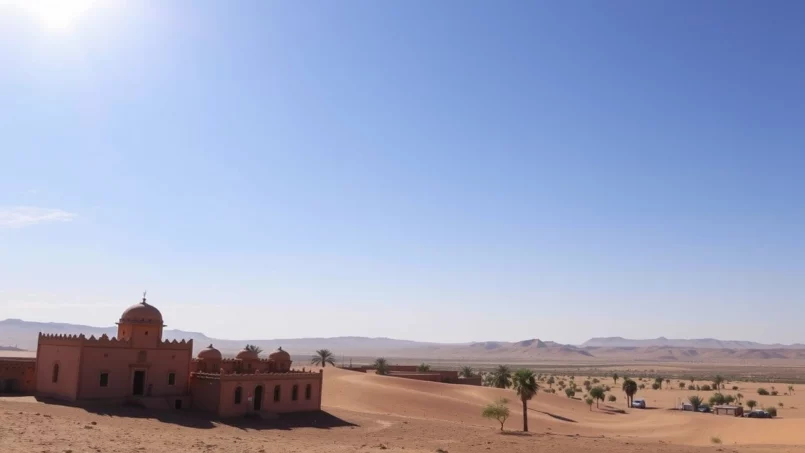
Mauritania, officially the Islamic Republic of Mauritania, is located in Northwest Africa, bordered by the Atlantic to the west, Western Sahara, Algeria, Mali, and Senegal. Over 90% of the territory is desert, with only a tiny fraction of land being truly fertile. The western part concentrates most of the urban population, modern infrastructure, and potential expats: the capital Nouakchott on the Atlantic coast, and Nouadhibou further north, with its major fishing and mining export port.
Nouakchott, initially designed for 15,000 inhabitants at Mauritania’s independence, is now home to between 1 and 1.5 million people.
Mauritania is a nearly 100% Muslim country (Sunni Islam). Religion structures social life, legal norms, and much of daily customs, especially regarding morals, dress, and consumption (prohibition of alcohol, importance of the month of Ramadan, etc.).
Global Indicators: Standard of Living, Cost, and Freedoms
In terms of international indicators, Mauritania is among low-income countries. GDP per capita is around $2,083, and average life expectancy is approximately 68.5 years. The Human Freedom Index is rated around 5.41, reflecting a constrained political and institutional context.
Although Mauritania is about 1.7 times cheaper than the global average and Nouakchott is among the 20% least expensive cities, adopting a Western-standard lifestyle (high-end housing, private healthcare, international schooling, imported goods) is significantly more costly than the local way of life.
The average net salary in the country is around 22,775 MRU, and about 30,150 MRU in Nouakchott, roughly equivalent to $225 per month on average. However, estimates suggest the monthly cost of living is about 3.6 to 3.8 times higher than this average salary if aiming for Western comfort. In other words, most expatriates do not rely on local salaries but on international remuneration, expatriate allowances, per diems, or external income.
Cost of Living in Western Mauritania: What to Expect?
Understanding the cost structure is a key step in negotiating an expatriation package, calculating a budget, or deciding to bring a family.
Overview of Monthly Expenses
Available estimates show considerable gaps between a very simple lifestyle and an “expatriate” lifestyle. The figures below, primarily based on Nouakchott, provide an order of magnitude.
Table 1 – Estimated Monthly Cost (USD) in Mauritania
| Profile | Without Rent (USD) | With Rent (USD) |
|---|---|---|
| Single (entire country) | ~364–767 | ~661–1,217 |
| Couple (cities) | ~1,231.6 | ~1,681.6 |
| Family of 4 (entire country) | ~1,066–1,788.1 | ~1,525–2,373.1 |
| Single in Nouakchott | ~365 | ~662 |
| Family of 4 in Nouakchott | ~1,068 | ~1,527 |
These ranges clearly illustrate that the housing category blows up the budget as soon as you aim for a central neighborhood and a furnished, air-conditioned home.
In comparison, Mauritania is about 36–37% cheaper than the United States (excluding rent) and 53% cheaper including rent. Compared to Australia, there is a discount of around 33–34% on consumer prices and nearly 47% when including housing.
Housing: Rent, Purchase, and Neighborhoods
In western Mauritania, real estate pressure concentrates on Nouakchott, then Nouadhibou. The choice of neighborhood strongly influences price, especially if seeking proximity to embassies, NGOs, international organizations, or main administrative offices.
Typical rents for expatriates in Nouakchott fall within fairly wide ranges.
Table 2 – Example of Monthly Rents in Nouakchott (in MRU)
| Type of Accommodation | Location | Monthly Rent Range (MRU) | Approximate Equivalent (USD) |
|---|---|---|---|
| 1-bedroom apartment | City Center | 4,000 – 11,195 | 180 – 285 |
| 1-bedroom apartment | Outskirts | 4,000 – 7,836 | 140 – 220 |
| 3-bedroom apartment | City Center | 20,000 – 33,376 | 356 – 995 |
| 3-bedroom apartment | Outskirts | 10,000 – 16,792 | 238 – 428 |
| 85 m² furnished, “expensive” neighborhood | Prime Area | ~25,000 | ~650 |
| 85 m² furnished, “normal” neighborhood | Standard Area | ~15,000 | ~390 |
| 45 m² furnished studio, “expensive” neighborhood | Prime Area | ~22,000 | ~570 |
For an expatriate, neighborhoods like Tevragh-Zeïna, Ksar, certain areas of Nouakchott-Ouest, and sectors near embassies concentrate most high-end offerings. In Nouadhibou, residential areas like Cansado or some central city districts attract international profiles, especially in industrial fishing and the mining sector.
For purchases, reported average prices per m² for Nouakchott show a market that remains moderately expensive for the region, especially in the city center.
Table 3 – Real Estate Purchase Prices in Nouakchott
| Location | Average Price per m² (MRU) | Comments |
|---|---|---|
| City Center | ~1,034 – 24,155 | Approx. $3,400 / m² indicated |
| Outside Center | ~672 – 11,148 | Approx. $1,150 / m² |
| Premium Villa in Tevragh-Zeïna | ~$200,000 | High-end |
| Studio in Arafat | ~$50,000 | Outskirt neighborhood |
| Buildable Land (per m²) | ~$100 | Depending on location |
Rental yields remain modest (around 1.8% in the center, 3.2% on the outskirts) and the market suffers from high vacancy rates. For a newly arrived expatriate, renting is therefore clearly preferable to buying, at least for the first few years.
Daily Expenses: Food, Transportation, Services
Apart from housing, daily living costs are relatively attractive, especially for local food and urban transportation.
Table 4 – Some Average Prices (Nouakchott, in MRU)
| Category | Example / Unit | Price Range (MRU) |
|---|---|---|
| Simple meal at a restaurant | Dish at a small restaurant | 100 – 300 |
| Meal for 2, mid-range | “Decent” restaurant | 500 – 1,500 |
| Fast-food meal | Burger + drink type meal | 238 – 280 |
| Milk (1 L) | Supermarket | 50 – 70 |
| White Bread (~450 g) | Bakery | 9 – 14 |
| Rice (~500 g) | Market | 13 – 59 |
| Eggs (12) | Market / supermarket | 60 – 134 |
| Chicken (lb) | Supermarket | 50 – 127 |
| Apples (lb) | Imported | 27 – 82 |
| Bottled Water (1.5 L) | Store | 20 – 40 |
| Bus / Minibus Ticket | Single trip | 15 – 22 |
| Monthly Transportation Pass | Subscription | 600 – 1,150 |
| Taxi (starting fare) | Pick-up | 20 – 50 |
| Gasoline (1 L) | Gas station | 38 – 70 |
| Electricity (85 m²) | Monthly, average use | 3,500 – 10,000 |
| Fixed Internet (60 Mbps+) | Monthly | 2,000 – 2,500 |
For food, local products (rice, basic vegetables, tea, fish) remain affordable, while imported products (cheeses, European fruits, non-pork charcuterie, etc.) can be noticeably more expensive than in Europe. “Westernized” dining in expatriate neighborhoods is also significantly pricier than local eateries.
Getting around the city is mainly done via shared taxis and minibuses, where individual fares are low, but safety and comfort levels vary. Many expatriates opt for vehicles with drivers, especially for intercity travel.
Healthcare System: Limitations and Strategies to Adopt
One of the most sensitive points of life in western Mauritania for an expatriate is healthcare. The care system remains far below Western standards, despite some better-equipped private facilities in the capital.
Care Options: Public vs. Private
The country has a network of health posts, health centers, and regional hospitals, but many of these structures suffer from shortages of equipment, medication, and qualified personnel. In Nouakchott, the National Hospital is the main public reference facility, and specialized hospitals exist (ophthalmology, cardiology, psychiatry). Nouadhibou also has a regional hospital.
Alongside these, a few private clinics have developed, mainly in the capital: for example, Clinique Chiva, Clinique Ibn Sina, or other establishments targeting a wealthy local clientele and expatriates. These facilities provide much better quality services than the public sector but remain limited when it comes to complex cases.
For serious pathologies such as major surgery, interventional cardiology, oncology, or high-risk obstetrics, expatriates are usually referred to specialized centers in Dakar (Senegal) or Casablanca (Morocco), as local facilities lack comprehensive technical capabilities.
International Health Insurance and Medical Evacuation
In this context, subscribing to a robust international health insurance is not an option, but a necessity. Priority elements to cover are:
– coverage for private hospital care in Mauritania
– emergency medical evacuation to Dakar, Casablanca, or a European country
– coverage for routine consultations and common pharmacy expenses
– possibly maternity and pediatrics, depending on your family situation.
The cost of medical evacuation can easily exceed several hundred thousand dollars if a medicalized aircraft is needed. Hence the importance of a contract specifically calibrated for the West African Sahel, which includes evacuation in the basic coverage.
It is highly recommended to arrive with your long-term medications (for hypertension, diabetes, psychiatric treatments, etc.). The local pharmacy supply is unpredictable, and the presence of counterfeit medicines cannot be ruled out.
Specific Health Risks
Mauritania is an endemic zone for several tropical and infectious diseases:
– Malaria present year-round in much of the country
– Water- or food-borne diseases: infectious diarrhea, typhoid, cholera
– Viral diseases: hepatitis A and B, measles, polio, meningitis, yellow fever, etc.
International health authorities recommend updating a wide range of vaccinations before departure (hepatitis, typhoid, yellow fever, tetanus, etc.). The yellow fever vaccination is even required for entry for travelers coming from at-risk countries.
To minimize daily risks, it’s best to adopt simple habits: drink only bottled or treated water, avoid raw or undercooked food in establishments with questionable hygiene, protect against mosquitoes (mosquito nets, repellents, covering clothing), and be attentive to signs of dehydration in an extremely hot and dry climate.
Security, Stability, and Daily Life in Western Mauritania
Major Western embassies (UK, US, Canada, etc.) generally adopt a cautious stance towards Mauritania: they recommend avoiding certain regions (especially the east and northeast) due to the terrorist threat, risk of kidnappings, and the presence of armed groups in the Sahel. Prohibited military zones exist in the northeast, and landmines remain near the border with Western Sahara.
In western Mauritania, Nouakchott and Nouadhibou are considered significantly safer than the eastern border areas, but urban crime is increasing: snatch-and-grab thefts, burglaries, sometimes armed assaults.
Caution dictates:
For a stay in Mauritania, it is advised to avoid walking on Nouakchott’s beaches at night and in certain sensitive neighborhoods like “Le Cinquième”, Cité Plage, or Dar Naim. Minimize nighttime travel outside urban areas as much as possible. For any desert excursion (Adrar, Tagant regions, roads towards Chinguetti or Tichit), it is imperative to travel in a convoy accompanied by an experienced guide. Also adapt your behavior: avoid any display of wealth, remain vigilant in the car, and keep doors locked.
For expatriate families, the capital remains livable, particularly in certain residential neighborhoods (Tevragh-Zeïna, some areas of Nouakchott-Ouest). The small international community, centered around embassies, major NGOs, and foreign schools, offers a relatively structured social environment.
Administrative Procedures: Visas, Residence Permit, and Work Permit
Relocating to western Mauritania as an expatriate inevitably involves a sometimes lengthy and bureaucratic administrative process. Starting early is crucial, especially as procedures can take several weeks to several months.
Entry Visas: Short and Long Stay
Most foreigners need a visa to enter. The most common practice is to obtain a visa on arrival (Nouakchott-Oumtounsy airport, border posts), often for an initial duration limited to 30 days. Some countries benefit from partial exemptions, but for an expatriation project, this is not sufficient.
For a prolonged stay or employment, a long-stay visa is usually required, which can be valid for one year and renewable. Fees vary by nationality and duration (tariff grids distinguish nationals of Arab and African countries from other nationalities).
To prepare the application, you will generally be asked for:
List of essential documents to prepare before your departure for travel abroad.
Must be valid for at least 6 months after the entry date into the destination country.
Prepare several recent ID photos conforming to international standards.
Bank statement, employment contract, or employer letter attesting to your financial resources.
Vaccination certificate (like for yellow fever) and sometimes a medical certificate, depending on the destination.
Round-trip transport tickets and accommodation proof (hotel, rental, or invitation).
Work Permit and Residence Permit
To work legally, three components combine:
1. an appropriate entry visa (long-stay visa or work visa depending on bilateral agreement) 2. a work permit, requested by the employer in Mauritania 3. a residence permit issued by the General Directorate of National Security.
The work permit is based on several criteria: the employer must demonstrate that no Mauritanian worker can fill the position, that the foreign candidate possesses the required skills, and that no infringement of foreign labor law has been committed in the last five years.
Three permit categories exist:
– A: valid for 1 year, renewable
– B: valid for up to 4 years
– C: for expatriates residing for over 10 years in the country.
A typical application includes a copy of the passport, the employment contract, the expatriate’s diplomas and CV, a police certificate from the country of origin, a medical certificate, proof of company registration and tax compliance, and a letter detailing the necessity of hiring a foreigner.
Once the permit is obtained, the residence permit is applied for, with documents such as a housing attestation, medical examination results, proof of entry into the country (passport stamp), and biometric fingerprinting. The validity period is generally between 1 and 2 years, renewable as long as the employment contract continues.
Cumulative processing times (job posting, labor market test, visa, work permit, residence permit) can reach 8 to 14 weeks or more. Many companies therefore use specialized service providers (Employer of Record, law firms, etc.) to secure the procedure.
Family and Reunification
An expatriate with a work permit and a residence permit can, in principle, bring their spouse and minor children. They must demonstrate sufficient income, provide legalized civil status documents (marriage, birth certificates), medical certificates, and criminal record extracts for adults. Applications are generally made to the same offices as for the main residence permit.
Working in Western Mauritania: Key Sectors and Market Reality
The Mauritanian economy rests on a few major pillars:
– Mining, especially iron ore (transported by one of the world’s longest trains, connecting Adrar to the port)
– Hydrocarbons (the country is among Africa’s new oil producers)
– Fishing, very rich off the coast of Nouadhibou, but under-exploited
– Livestock
– International cooperation and development (NGOs, UN agencies, donors)
– Education and healthcare, where a deficit in specialized skills leaves room for foreign profiles.
Nouakchott, in the west, concentrates the administration, company headquarters, universities, and diplomatic missions. Nouadhibou is the hub for industrial fishing and mining exports, and it is in this city that most job opportunities for expatriates are found.
Official policy favors hiring Mauritanians whenever possible, but highly technical or managerial skills are still in demand: mining engineers, oil and gas specialists, energy specialists, senior managers in major NGOs, doctors, international teachers, finance managers, etc.
Expatriate teachers and administrative staff are present in institutions like the American International School of Nouakchott, TLC International School, New Birth School (bilingual Cambridge program), or French-type lycées. International mining or oil companies recruit through their own portals, regional headquarters, or specialized platforms for Africa.
Housing and Integration in the Neighborhoods of Western Mauritania
Choosing where to live is one of the first concrete decisions when relocating. For most expatriates, Nouakchott-Ouest, Tevragh-Zeïna, certain sectors of Ksar, and areas around embassies and major international schools are the preferred zones.
In these neighborhoods, the supply consists of:
– Individual villas with gardens and sometimes pools
– Furnished apartments in secure compounds
– Studios or small apartments in mixed-use buildings.
Platforms like Airbnb, Flatio, or specialized African sites offer numerous accommodations (studio, 2-room, 3-room apartments, serviced residences) for short to medium durations. These options are ideal for an initial exploratory stay before committing to an annual lease via a local agency or network.
In all cases, it is recommended to:
– Visit properties at different times of the day (noise, traffic, security)
– Verify the actual availability of electricity and water, the presence of possible backup generators
– Clarify the sharing of charges (electricity, water, internet, security, cleaning)
– Ensure the contract is clear on duration, rent revision, and termination terms.
For families, proximity to an international school, neighborhood quality, and accessibility to private clinics often weigh more than the pure size of the accommodation.
Education and Family Life: What Options for Children?
For expatriates with children, schooling is a central issue. In the Nouakchott area, several international institutions structure the offer:
Overview of the main international schools in Nouakchott, offering American, British, or French curricula.
School from kindergarten through high school following an American curriculum, with English as the language of instruction. It holds international accreditations and favors small class sizes.
School with an American curriculum, also offering instruction in French, Arabic, and optional Islamic studies. Enrolls about 170 students of many nationalities.
The only institution claiming Cambridge International accreditation in Mauritania. Bilingual English-Arabic program with an emphasis on Islamic studies and Quran memorization.
Network offering a complete French curriculum leading to French and/or Mauritanian diplomas.
Tuition fees at these international institutions generally range between $5,000 and $15,000 per year per child, often representing one of the heaviest budget items for expatriate families. To this are sometimes added enrollment fees, school transport, catering, and extracurricular activity costs.
Most expatriate families prefer these schools to guarantee educational continuity (IB, Cambridge, French baccalauréat, etc.) in case of a new expatriation or return to the home country.
Culture, Religion, and Social Codes: Adapting Without Denying Yourself
Relocating to western Mauritania involves navigating a society deeply rooted in Sunni Islam, with conservative social norms. The country officially only recognizes Islam as a religion, and non-Muslim religious activities are heavily regulated, even prohibited when they take the form of proselytism.
In daily life, expatriates must respect simple but essential customs:
Wear modest clothing (covered shoulders, long pants/skirts, avoid low necklines and tight outfits). Women should have a scarf for religious places or rural areas (the melahfa is common). During Ramadan, avoid eating, drinking, or smoking in public during the day. Use the right hand for eating, greeting, and exchanging objects. Greet with “As-salamu alaykum” and reply “Wa alaykum as-salam.” Accept hospitality (tea, snacks) when invited, as “karama” is a cultural pillar.
Relations between men and women are governed by strict norms: adultery, prostitution, and homosexual relations are criminalized, with very severe penalties on paper. In practice, expatriates often live in a somewhat more permissive social “bubble,” but it remains essential not to display behavior contrary to local morals in public.
Transportation, Travel, and Infrastructure
In western Mauritania, major road arteries connect Nouakchott to Nouadhibou to the north along the coast, then inland (Atar, Zouerate, etc.), and south to Rosso and the Senegalese border. Despite paved roads on main corridors, the general state of the network remains fragile, and even limited bad weather can render some routes impassable for non-adapted vehicles.
In the city, traffic is dense and driving rules are poorly respected, leading to frequent accidents. Taxis and minibuses, the main public transport means, do not meet usual safety standards for Western travelers.
To drive, an international driver’s license accompanied by the original national license is required. Many expatriates opt for a 4×4 vehicle with a driver, especially for travel outside urban areas.
Nouakchott-Oumtounsy International Airport, about 26 km from the city center, handles the main international connections. Nouadhibou also has an airport, but its flight offerings are more limited.
Expatriate Networks, Social Life, and Leisure
Even though the expatriate community in western Mauritania remains modest, it is sufficiently structured to offer a support and socialization network. Platforms like InterNations or Expat.com list groups in Nouakchott, where diplomats, NGO employees, engineers, teachers, entrepreneurs, and freelancers meet.
Shared activities often revolve around: collaboration, resource sharing, and collective engagement.
Discover the main social, sports, and cultural activities offered to enrich community life and leisure.
Participate in shared meals to strengthen bonds and share convivial moments.
Enjoy trips to the coastline to relax and recharge by the sea.
Explore the Adrar and Tagant regions through unforgettable desert adventures.
Practice various disciplines like soccer, running, or fitness to stay active.
Attend events organized by foreign cultural centers, notably the French cultural center.
Local leisure activities include fishing (especially in Nouadhibou), trips to the beaches, discovering Saharan heritage (ancient caravan cities), and participating in cultural or music festivals. Nightlife in the Western sense is limited due to the alcohol ban and religious framework, but restaurants and cafes offer convivial evenings, often in private circles.
Planning Your Relocation: Some Practical Guidelines
Preparing for an expatriation to western Mauritania requires anticipating several practical elements:
For a smooth stay, plan a comprehensive budget including rent, school fees, international health insurance, travel, and the extra cost of imported goods. Regarding health, have a check-up before departure, update your vaccinations, subscribe to insurance covering medical evacuation, and assemble a personal medical kit. For security, register with your embassy’s registry, regularly follow travel advisories, and favor housing in a reputedly safe area. Ensure you have a valid passport, certified copies of your diplomas and civil status documents, as well as necessary apostilles or legalizations. Finally, for banking, open a local account in Ouguiya, maintain accounts in your home country, and organize international transfers anticipating foreign exchange controls.
In a country where modernity coexists with sometimes fragile state structures, the success of an expatriation largely depends on preparation, the on-the-ground network, adaptability, and a clear-eyed view: western Mauritania can offer a very strong professional and human experience, provided one accepts its constraints and relies on reliable information rather than clichés.
Disclaimer: The information provided on this website is for informational purposes only and does not constitute financial, legal, or professional advice. We encourage you to consult qualified experts before making any investment, real estate, or expatriation decisions. Although we strive to maintain up-to-date and accurate information, we do not guarantee the completeness, accuracy, or timeliness of the proposed content. As investment and expatriation involve risks, we disclaim any liability for potential losses or damages arising from the use of this site. Your use of this site confirms your acceptance of these terms and your understanding of the associated risks.

Cyril Jarnias is an independent expert in international wealth management with over 20 years of experience. As an expatriate himself, he is dedicated to helping individuals and business leaders build, protect, and pass on their wealth with complete peace of mind.
On his website, cyriljarnias.com, he shares his expertise on international real estate, offshore company formation, and expatriation.
Thanks to his expertise, he offers sound advice to optimize his clients' wealth management. Cyril Jarnias is also recognized for his appearances in many prestigious media outlets such as BFM Business, les Français de l’étranger, Le Figaro, Les Echos, and Mieux vivre votre argent, where he shares his knowledge and know-how in wealth management.





